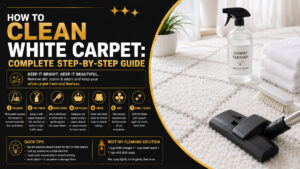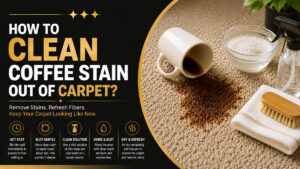
Use a carpet-labeled neutral or mildly alkaline cleaner, a vacuum, white microfiber cloths, and the least moisture that removes the soil. For synthetic wall-to-wall carpet, a properly used hot-water extraction machine gives the deepest practical household clean; for wool, silk, jute, viscose, or an unknown specialty rug, use the manufacturer’s instructions or a qualified rug cleaner instead.
Key Facts at a Glance
A carpet-cleaning solution must match the fiber, dye stability, backing, and soil type.
Hot-water extraction is usually the strongest residential method for synthetic carpet, but it can damage carpet through over-wetting.
Dish soap, laundry detergent, bleach, ammonia, and undiluted vinegar are poor general-purpose carpet cleaners.
Blotting is safer than rubbing because friction can distort pile yarns and spread a spill.
Carpet should dry completely, typically within 6-24 hours after extraction; damp carpet beyond 24 hours needs immediate drying action.
A professional cleaner is preferable for widespread urine, flooding, mold, delicate fibers, or stains that have migrated into the backing.
What Should I Use to Clean My Carpet?
The safest general-purpose combination is a carpet-approved low-residue detergent, cool or lukewarm water for spot treatment, a vacuum with a beater-bar setting appropriate for the carpet, and white absorbent towels. Use an enzyme product only for protein-based pet accidents, and use a solvent-based product only when its label specifically approves the carpet fiber.
Product choice depends on three variables: fiber, soil, and moisture tolerance. Nylon and polyester carpet generally tolerate labeled extraction detergents, while wool, silk, viscose, and plant fibers require gentler chemistry and controlled moisture. The Carpet and Rug Institute recommends following the carpet manufacturer’s care instructions because fiber construction and backing differ even when two carpets look identical.
Which carpet cleaner is safest for synthetic carpet?
A low-residue extraction detergent designed for nylon, polyester, or polypropylene is the safest deep-cleaning choice for most synthetic carpet. Select a product with dilution instructions, avoid unapproved optical brighteners or disinfectants, and perform a colorfastness test before treating the visible area.
For a small spill, use a ready-to-use carpet spotter rather than mixing a strong concentrate. Apply enough to dampen the towel or lightly moisten the spot, not enough to soak the backing. A typical 1-square-foot spot needs about 1-2 tablespoons of solution, followed by repeated blotting with clean water.
Can I use dish soap, laundry detergent, or vinegar?
Dish soap and laundry detergent are poor substitutes for carpet detergent because their surfactants can leave a sticky film that attracts soil. Vinegar may reduce some alkaline odors, but undiluted vinegar can affect dyes, backing adhesives, or natural fibers, and it does not neutralize every carpet contaminant.
Never mix vinegar with bleach, ammonia, hydrogen peroxide, or commercial cleaners. Chemical combinations can release irritating or toxic gases. A labeled carpet product is easier to dose, rinse, and evaluate than a kitchen substitute.
| Product or ingredient | Suitable use | Main risk | Safer instruction |
|---|---|---|---|
| Carpet extraction detergent | Synthetic carpet cleaning | Overdose and sticky residue | Follow machine-label dilution |
| Carpet spotter | Small isolated stains | Color change or browning | Patch-test, then blot |
| Enzyme cleaner | Fresh pet urine, vomit, or feces | Incomplete rinsing or odor persistence | Use only on label-approved fibers |
| Dish soap | Emergency tiny grease spot only | Residue and rapid resoiling | Use one diluted drop, then rinse |
| Chlorine bleach | None for ordinary carpet | Permanent dye loss and fiber damage | Do not use |
| Ammonia | None as a general cleaner | Dye change and irritating vapor | Do not use |
| White vinegar | Limited odor or mineral adjustment | Dye, backing, and fiber incompatibility | Avoid as a default cleaner |
How Does Carpet Cleaning Work?
Carpet cleaning combines dry soil removal, chemical action, dwell time, agitation, and controlled extraction. The industry often describes these interacting factors as T.A.C.T.: time allows chemistry to work, agitation separates soil, chemical action loosens bonds, and temperature can improve oily-soil removal.
Vacuuming comes first because sand and grit can account for much of the abrasive wear in traffic lanes. Cleaning solution then surrounds oily binders and particulate soil. Agitation moves the solution through the pile, while extraction removes suspended soil and moisture.
Temperature helps, but hotter is not automatically better. Excessive heat can shrink or discolor natural fibers and can soften adhesives. For residential work, the carpet label, machine instructions, and fiber manufacturer’s limits override a generic temperature recommendation.
Why is dry vacuuming the first step?
Dry vacuuming removes loose grit before water turns that grit into a heavier slurry. Vacuum slowly in two directions, making roughly 6-8 passes per heavily trafficked area and emptying the canister or bag before suction falls.
A vacuum cannot remove oils dissolved into the fiber, and extraction cannot compensate for skipped vacuuming. This is why a quick machine pass over unvacuumed carpet often produces gray streaks and a dirty recovery tank.
What Equipment and Cleaner Do I Need?
A basic spot-cleaning kit needs a vacuum, white cotton or microfiber towels, a measuring spoon, a spray bottle for clean water, a carpet-approved spotter, and a small soft brush. Deep cleaning synthetic carpet adds a portable extractor or rental machine, the matching detergent, protective plastic or foil for furniture legs, and air movement.
Use white towels because colored cloth can transfer dye. Use a soft brush only when the carpet manufacturer permits agitation. A stiff deck brush can untwist looped fibers, fuzz cut pile, or create a visible texture change.
Before You Start
| Requirement | Typical specification |
|---|---|
| Small-spot time | 10-20 minutes per stain |
| Whole-room time | 2-4 hours, excluding drying |
| DIY difficulty | Moderate for synthetic carpet; high for wool or viscose |
| Spotter quantity | 1-2 tablespoons per square foot |
| Extraction detergent | Label dilution, commonly 1-4 ounces per gallon |
| Drying target | 6-24 hours after wet extraction |
| Air movement | 1-2 fans for a small room |
| Prerequisite | Manufacturer care label and hidden color test |
How Do I Clean Synthetic Carpet at Home?
Deep-clean synthetic carpet with seven controlled steps: vacuum, identify the soil, test the solution, pre-treat, agitate lightly, extract with limited water, and dry rapidly. A 12-by-15-foot room typically requires 2-3 hours of active work and 6-24 hours of drying, depending on humidity, airflow, carpet density, and machine performance.
Step 1: Inspect the Carpet and Read the Label
Identify nylon, polyester, polypropylene, or an unknown blend before applying chemicals. Look for loose seams, delamination, damaged backing, browning, color bleeding, and areas previously saturated by water.
Do not wet damaged backing. Cleaning can make delamination worse by separating the face fiber from the backing.
You will know it worked when: the carpet has no loose edges or visibly unstable backing in the cleaning area.
Common mistake: treating a specialty rug like wall-to-wall synthetic carpet.
Step 2: Vacuum Slowly
Remove furniture that can be moved safely, then vacuum the entire area slowly. Use crevice tools at baseboards and under furniture edges, where grit accumulates.
You will know it worked when: the vacuum collects visible grit and the pile changes direction without leaving sandy residue.
Common mistake: using maximum brush agitation on a looped or delicate pile.
Step 3: Treat Stains by Soil Type
Blot liquid spills from the outside toward the center. Apply a small amount of appropriate spotter to a white towel or directly to the stain according to the label, then allow 5-10 minutes of dwell time unless the product specifies otherwise.
Use an enzyme cleaner for fresh biological soils, a solvent carpet spotter for oily residue, and a tannin or acidic spotter for coffee or tea only when the label permits. Unknown stains should receive the mildest compatible treatment first.
You will know it worked when: transfer to the white towel decreases without dye appearing on the towel.
Common mistake: rubbing aggressively, which spreads liquid and damages yarn.
Step 4: Test Colorfastness
Apply the chosen solution to a hidden corner or inside edge. Press a white towel over the area for 10-15 seconds, then check the towel and carpet for dye transfer, lightening, browning, or texture change.
A failed test means stop. No cleaning method can safely guarantee colorfastness on an unstable dye.
You will know it worked when: the white towel remains clean and the test area looks unchanged after drying.
Common mistake: testing only while wet, because some browning or dye migration appears during drying.
Step 5: Apply Pre-Spray Sparingly
For extraction, apply a carpet pre-spray evenly rather than saturating traffic lanes. A typical residential product may cover 500-1,000 square feet per gallon of mixed solution, but the label is the controlling specification.
Allow about 5-10 minutes of dwell time. Do not let the chemical dry on the fibers, and do not use a strongly alkaline pre-spray on wool or an unapproved natural fiber.
You will know it worked when: oily soil looks softened and the carpet remains damp, not wet enough to reach the pad.
Common mistake: increasing concentration instead of improving vacuuming and agitation.
Step 6: Extract with Overlapping Passes
Fill the machine with the manufacturer’s recommended solution and make one slow wet pass followed by one or two slower dry-only passes. Overlap adjacent cleaning lanes by about 1-2 inches to avoid stripes.
Work toward the room exit. Empty dirty water before suction declines, and never leave the machine stationary while its spray is active.
You will know it worked when: recovered water becomes lighter and the carpet feels only lightly damp.
Common mistake: making repeated wet passes because the carpet still looks dark before it dries.
Step 7: Accelerate Drying
Open windows when outdoor humidity permits, run fans across the carpet, use air conditioning or a dehumidifier, and keep people and pets off the area until dry. Lift furniture legs onto foil or waterproof blocks when the manufacturer allows furniture to remain in place.
A carpet that remains wet beyond 24 hours has a greater odor and microbial-growth risk. If the pad is soaked, surface fans alone may not solve the problem.
You will know it worked when: the pile feels dry at the tips and base, and no cool dampness transfers to a dry hand.
Common mistake: closing the room because the surface appears clean.
Which Carpet-Cleaning Method Should You Choose?
Hot-water extraction is the best general deep-cleaning option for most synthetic residential carpet, encapsulation is better for lightly to moderately soiled carpet that must dry quickly, and dry compound cleaning is useful when moisture must be minimized. Bonnet cleaning and shampooing can improve appearance but usually provide less complete soil removal.
“Steam cleaning” commonly refers to hot-water extraction, not a machine injecting pure steam. The machine sprays heated water and detergent, then vacuums the liquid and suspended soil. The difference matters because excessive water, rather than steam temperature alone, causes many residential failures.
| Method | Best application | Typical active cost | Typical dry time | Main limitation |
|---|---|---|---|---|
| Hot-water extraction | Synthetic carpet, heavy soil, pet areas | $25-$100 DIY rental; $120-$250 professional room or small home | 6-24 hours | Over-wetting and slow drying |
| Encapsulation | Commercial lanes, moderate soil, frequent maintenance | $20-$60 DIY chemical and equipment use | 1-2 hours | Limited performance on saturated grease |
| Dry compound | Delicate rugs and low-moisture situations | $0.40-$0.75 per square foot professional | 0-2 hours | Powder residue if vacuuming is weak |
| Bonnet cleaning | Surface appearance in commercial traffic lanes | $0.15-$0.35 per square foot typical service | 2-5 hours | Pushes some soil deeper |
| Shampooing | Older surface-cleaning systems | $0.15-$0.35 per square foot typical service | 4-12 hours | Foamy residue and re-soiling |
Is hot-water extraction better than dry carpet cleaning?
Hot-water extraction removes more deeply suspended soil when the carpet can tolerate moisture and can dry promptly. Dry compound and encapsulation methods reduce downtime, but they rely more heavily on thorough vacuuming and are less suitable for deeply embedded grease, saturated urine, or heavily compacted mud.
The strongest method depends on the failure you need to prevent. A low-moisture method is preferable to a wet method that leaves the pad damp for two days. For a typical synthetic living room, extraction usually wins; for an occupied office or moisture-sensitive rug, low-moisture cleaning may win.
When should I rent a machine or hire a professional?
A rental machine is reasonable for a small synthetic-carpet home with ordinary traffic soil, accessible rooms, stable backing, and enough ventilation to dry within 24 hours. Professional cleaning is safer for whole-home extraction, extensive pet contamination, water damage, recurring odor, delicate fibers, and carpet with uncertain construction.
Typical US rental pricing is $25-$70 for 24 hours, plus about $15-$30 for detergent. Professional household cleaning commonly totals $120-$250, although minimum charges of $75-$125 and regional travel fees can change the invoice.
How Do Fiber Type and Stain Type Change the Answer?
Fiber type determines chemical and moisture tolerance, while stain type determines the cleaning chemistry. Nylon and polypropylene generally tolerate more alkaline synthetic-carpet products than wool, viscose, silk, jute, or sisal, but every fiber still requires a hidden test and label compliance.
| Fiber or construction | Safer approach | Avoid | Professional threshold |
|---|---|---|---|
| Nylon wall-to-wall | Labeled extraction detergent, moderate agitation | Bleach and excessive heat | Large urine areas or delamination |
| Polyester | Low-residue extraction, controlled rinse | Strong solvents and over-wetting | Persistent oily traffic lanes |
| Polypropylene | Mild extraction or encapsulation | High heat and aggressive brushing | Severe grease or crushed pile |
| Wool | Wool-approved low-moisture or specialist cleaning | High alkalinity, high heat, soaking | Most large stains and browning |
| Viscose or rayon | Specialist dry or controlled rug cleaning | Water, friction, common carpet machines | Nearly every significant stain |
| Jute, sisal, or coir | Manufacturer-approved dry methods | Saturation and alkaline cleaners | Water rings, browning, or odor |
How should I clean wool carpet?
Use a wool-approved product, minimal moisture, low agitation, and rapid drying for wool carpet. Wool can shrink, felt, brown, or lose dye stability when exposed to heat, strong alkalinity, prolonged wetness, or aggressive mechanical action.
Do not assume a dry-cleaning powder is automatically safe. Some powders contain solvents or fragrances that may be unsuitable for a particular rug backing. A certified rug cleaner should inspect valuable, hand-knotted, antique, or color-unstable wool before treatment.
How should I clean pet urine from carpet?
Use an enzyme cleaner labeled for carpet and pet urine, apply enough to reach the contaminated fibers, follow its dwell time, then extract or blot according to the label. Surface deodorizer alone cannot remove urine that has reached the backing or pad.
A small fresh spot may need 1-2 cups of correctly diluted solution, while a large or repeated accident can contaminate the pad and subfloor. Ultraviolet inspection can locate older deposits, but it does not measure contamination depth. Professional treatment or pad replacement may be necessary.
| Stain or soil | First treatment | Dwell or contact time | Avoid |
|---|---|---|---|
| Fresh mud | Dry completely, vacuum, then spot-clean residue | 5-10 minutes | Wet-vacuuming liquid mud |
| Coffee or tea | Blot, then labeled tannin spotter | 5-10 minutes | Heat before color removal |
| Grease or cooking oil | Carpet-safe solvent spotter | Label-directed, often 3-10 minutes | Water alone |
| Blood, milk, or egg | Cool water and enzyme product | 5-15 minutes | Hot water at first |
| Pet urine | Enzyme treatment | Label-directed, often 10-30 minutes | Ammonia-based cleaner |
| Candle wax | Harden, scrape, absorb with controlled warmth | 1-3 minutes per section | Direct high heat |
What Are the Most Common Carpet-Cleaning Mistakes?
The most damaging mistakes are over-wetting, overdosing detergent, rubbing stains, skipping a color test, and drying too slowly. Each mistake can create a secondary problem that is harder to remove than the original soil, including browning, wicking, resoiling, odor, texture damage, or backing failure.
Why does a carpet stain come back after cleaning?
A returning stain usually results from wicking, where dissolved soil or staining liquid in the backing moves upward as the carpet dries. Blot the area, apply a small amount of compatible low-residue cleaner, cover it with a white towel, and weigh the towel lightly until moisture transfers upward.
Do not flood the spot again. If the stain returns repeatedly, the contaminant may be in the pad or subfloor, requiring deeper extraction or replacement.
Why does carpet smell musty after washing?
A musty odor usually indicates slow drying, over-wetting, contaminated equipment, or moisture trapped in the pad. Run fans and a dehumidifier immediately, increase air exchange, and inspect the carpet edge and pad if the odor persists beyond 24-48 hours.
Antimicrobial spray is not a substitute for moisture removal. If water damage, sewage, or visible mold is involved, stop using household chemicals and contact a water-damage or remediation professional.
Can carpet cleaning remove allergens?
Carpet cleaning can remove a portion of dust, particulate allergens, and allergen-containing soil, but no household method guarantees complete allergen removal. Regular HEPA-filter vacuuming, source control, humidity management, and washing pet bedding remain necessary.
The Asthma and Allergy Foundation of America identifies dust-mite control and humidity reduction as important measures; cleaning carpet does not eliminate the allergen sources themselves. Avoid claiming that a detergent “sanitizes” carpet unless the product has a registered label for that use and the application follows it.
What Should You Do After Cleaning?
Keep traffic off damp carpet, replace or clean vacuum filters, rinse extraction equipment, and record the product dilution used. Furniture can create rust or dye-transfer marks when placed directly on wet carpet, so use foil or approved protective blocks until the carpet and furniture feet are dry.
Vacuum again after encapsulation has dried and crystallized, usually after 1-2 hours. Do not vacuum wet compound. Dry compound cleaning also depends on high-quality post-vacuuming, because remaining powder can feel gritty and attract soil.
A maintenance schedule prevents restorative cleaning. Vacuum entryways and traffic lanes several times weekly, treat spills immediately, use entrance mats, and deep-clean synthetic carpet when traffic soil remains after routine vacuuming, commonly every 6-12 months in busy homes.
Frequently Asked Questions
Is baking soda safe for carpet?
Baking soda is usually less chemically aggressive than bleach or ammonia, but it is not a complete carpet cleaner. Fine powder can lodge in dense pile, overwhelm a vacuum motor, or leave alkaline residue, and fragrance blends may affect sensitive occupants. Use a labeled carpet deodorizer sparingly, then vacuum thoroughly.
Can I clean carpet with hydrogen peroxide?
Hydrogen peroxide can lighten some organic stains, but it may also bleach carpet dyes and weaken fibers with repeated or concentrated use. A carpet-specific peroxide product is safer than household-strength peroxide because its concentration and instructions are controlled. Always test an inconspicuous area and never mix peroxide with other cleaners.
How often should carpet be professionally cleaned?
Many households schedule professional cleaning every 12 months, while homes with pets, children, allergies, or heavy traffic may need service every 6-12 months. Frequency should follow visible soil, odor, and traffic rather than a fixed calendar. Frequent wet cleaning is harmful if the carpet cannot dry completely.
Should I vacuum before using a carpet cleaner?
Yes. Vacuum before applying water or detergent, preferably with slow overlapping passes. Dry soil removal reduces abrasive grit and prevents the extractor from turning loose debris into a wet residue. Vacuuming after encapsulation or dry compound cleaning is also necessary to remove crystallized or absorbent soil carriers.
Why does carpet turn brown after cleaning?
Browning can occur when moisture dissolves soil or natural backing compounds and draws them toward the tips during drying. It is more common with natural fibers, jute-backed rugs, older carpet, and over-wet cleaning. Controlled moisture, rapid drying, and fiber-appropriate chemistry reduce the risk; persistent browning needs specialist treatment.
What is the cheapest safe way to clean carpet?
For a small spill, the cheapest safe method is a vacuum, white towels, clean water, and a small amount of labeled carpet spotter. For a whole synthetic room, a $25-$70 extractor rental plus $15-$30 detergent is typically less expensive than professional service, but only when the operator can control water use and drying.
The Bottom Line
For ordinary synthetic carpet, use a labeled low-residue carpet detergent with a properly operated hot-water extraction machine, preceded by slow vacuuming and spot testing. For wool, viscose, silk, jute, valuable rugs, extensive pet urine, flooding, or carpet that cannot dry within 24 hours, choose a specialist instead. The safest answer to “what should I use to clean my carpet” is the least aggressive compatible product that removes the soil without saturating the backing.