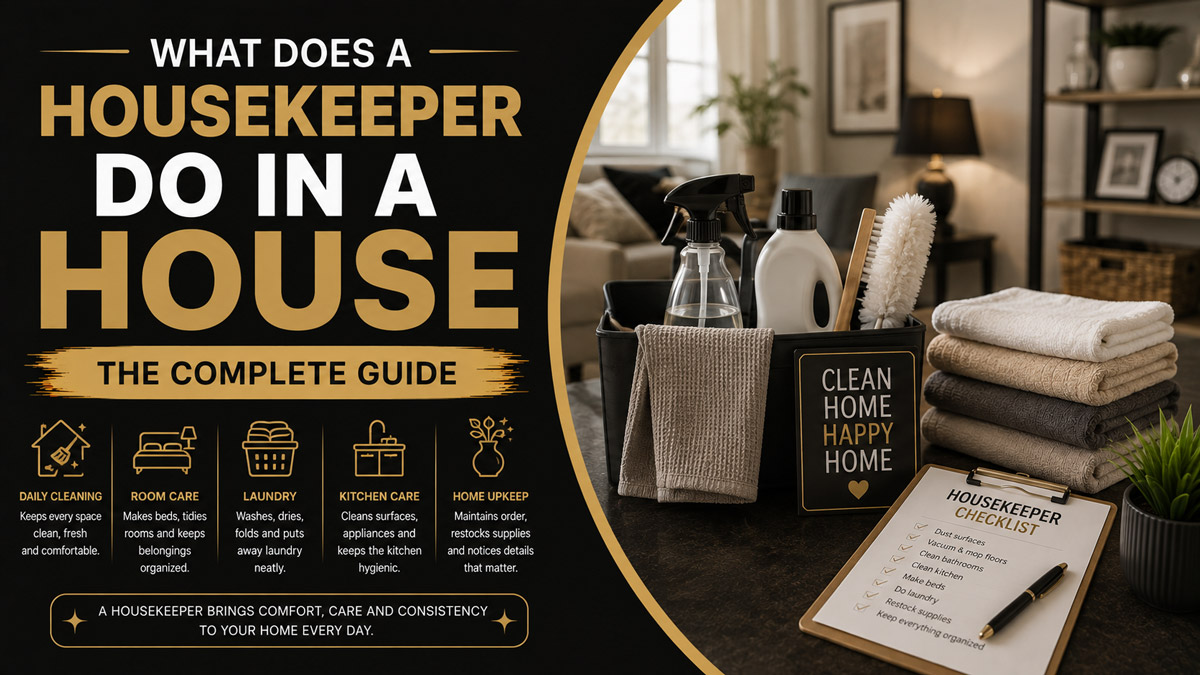
When property owners ask exactly what does a housekeeper do in a house, the answer centers on consistent residential maintenance. A housekeeper is a domestic professional hired to manage the daily cleanliness, physical organization, and sanitary baseline of a private residence. They execute scheduled surface cleaning, floor care, and room resetting to maintain the property’s aesthetic standards over time.
Key Facts / At a Glance
- Core Function: Consistent maintenance of residential sanitation and organization.
- Standard Timeframe: 3 to 6 hours per standard maintenance visit.
- Average Hourly Rate: $25 to $50 per cleaner, depending on regional markets.
- Average Flat Rate: $120 to $300 per session for a standard 3-bedroom home.
- Primary Liability: Employers must distinguish between independent contractors (1099) and household employees (W-2) for tax compliance.
Core Scope: What Are the Standard Duties of a Housekeeper?
A professional housekeeper follows a structured operational workflow to guarantee efficiency. Randomly wiping surfaces wastes time and risks cross-contamination. Professionals utilize a specific top-to-bottom, dry-to-wet progression to systematically reset a home.
The Six-Step Daily Workflow
The standard operational procedure for a residential cleaning session includes six distinct phases.
1. Inspection and Assessment
The process begins with a rapid property walk-through. The housekeeper identifies priority zones, notes unusual messes, and reviews any specific requests left by the client. This allows them to stage their supplies efficiently and estimate the time required for heavy-traffic areas.
2. Tidying and Sorting
Before any sanitization occurs, the professional removes physical obstacles. They clear personal clutter from countertops, pick up stray clothing, strip soiled bed linens, and load dirty dishes into the dishwasher. Clearing surfaces completely is a prerequisite for proper wet cleaning.
3. High-to-Low Dusting
Dusting always precedes floor care. The housekeeper starts at the highest points in the room to allow debris to fall. They dust ceiling fans, crown molding, light fixtures, window sills, and floating shelves. Professionals typically use extended microfiber wands to capture dust rather than simply pushing it off surfaces with feather dusters.
4. Wet Surface Sanitization
Once dry dust is removed, the professional applies liquid cleaning agents. They scrub kitchen countertops, bathroom sinks, shower enclosures, and toilets. A trained housekeeper understands chemical compatibility. They will use pH-neutral stone cleaners on marble counters, heavy degreasers on range hoods, and mild acidic solutions for calcium buildup on glass shower doors.
5. Floor Care
With surfaces sanitized and all debris knocked to the floor, the housekeeper vacuums carpets, area rugs, and soft upholstery. Hard floors require a two-step process. The professional vacuums or sweeps the hard surfaces first, followed by wet mopping. They match the mopping solution to the flooring material to avoid stripping the finish from hardwood or leaving a film on ceramic tile.
6. Staging and Resetting
The final phase focuses on the visual aesthetic of the home. The housekeeper makes the beds with fresh linens, fluffs sofa cushions, perfectly aligns decorative items, empties all wastebaskets, and spritzes room neutralizer. This step transforms a sterile room into a welcoming environment.
Room-by-Room Protocol Breakdown
Beyond the general workflow, specific rooms require specialized attention. Housekeepers manage micro-tasks that homeowners frequently overlook.
In the kitchen, duties extend past wiping the counters. A housekeeper degreases the exterior of the range hood, shines stainless steel appliances along the grain, sanitizes the microwave interior, and wipes down the primary touchpoints like cabinet hardware and refrigerator handles.
Bathroom sanitation requires aggressive chemical management. The housekeeper scrubs the grout lines inside the wet area, removes soap scum from the shower basin, sanitizes the exterior U-bend of the toilet, and wipes down the bathroom exhaust fan grate to prevent mold accumulation.
For living areas and bedrooms, the focus shifts to careful material handling. Professionals vacuum beneath the edges of area rugs, wipe the baseboards free of pet hair, and polish wooden furniture using appropriate conditioning oils.
How Frequently Should Housekeeping Tasks Be Completed?
Not every task requires attention during every visit. A professional housekeeper rotates deep cleaning duties alongside standard maintenance to prevent the home from degrading over time.
| Maintenance Task | Recommended Frequency | Typical Time Allocation | Practitioner Standard |
| Sanitizing kitchen sinks and counters | Every visit | 15-20 minutes | Use color-coded microfiber to prevent cross-contamination. |
| Changing bed linens and making beds | Weekly | 10-15 minutes | Hospital corners for aesthetic staging; wash on high heat. |
| Mopping sealed hardwood floors | Weekly or Bi-weekly | 20-30 minutes | Use barely damp microfiber mops to prevent water damage. |
| Dusting ceiling fans and high fixtures | Monthly | 10-15 minutes | Use a pillowcase over fan blades to trap falling dust. |
| Deep cleaning interior oven space | Quarterly | 45-60 minutes | Apply degreaser, let sit for 30 minutes before scrubbing. |
| Washing interior window glass | Bi-annually | 30-45 minutes | Clean on cloudy days to prevent chemical solutions from drying too fast. |
What Tasks Fall Outside a Housekeeper’s Scope?
Homeowners often confuse a housekeeper with a property manager or a heavy laborer. Establishing clear boundaries prevents friction and protects the worker from injury.
- Heavy Lifting: Housekeepers do not move furniture weighing more than 25 pounds. If you need the carpet under a solid oak bed frame vacuumed, you must move the bed yourself prior to their arrival.
- Biohazard Cleanup: Standard domestic workers do not clean up human or animal waste, blood, or hazardous mold infestations. These situations require specialized remediation crews with industrial protective gear.
- Exterior Maintenance: Duties are restricted to the interior of the home. Housekeepers do not pressure wash driveways, clean gutters, or wash exterior second-story windows.
- Deep Carpet Extraction: While standard vacuuming is included, operating industrial hot-water carpet extractors requires distinct training and equipment.
- Childcare and Pet Training: Unless explicitly hired under a hybrid “nanny-housekeeper” contract, cleaning staff are not responsible for supervising toddlers or walking dogs.
Which Type of Housekeeping Professional Should You Hire?
The scope of a housekeeper’s duties changes drastically based on their employment structure. You must align your hiring model with your household’s operational demands.
Live-In Housekeepers
Live-in staff reside on the client’s property, typically in a dedicated suite or guest house. They provide comprehensive, full-time care. Beyond standard cleaning, their duties expand into lifestyle management. They handle daily cooking, grocery shopping, complex laundry management, and vendor coordination. This model carries a high fixed cost, including salary, room, and board, and results in a significant loss of residential privacy. It suits large estates or high-net-worth families requiring constant environmental management.
Full-Time Live-Out Housekeepers
These professionals work a standard 35 to 40-hour week but commute to your home daily. They manage large properties by rotating deep cleaning zones day by day. Because they are on-site daily, they handle ongoing organizational projects, such as cataloging seasonal wardrobes or organizing pantry inventories. The homeowner assumes the responsibilities of a formal employer, managing payroll taxes, workers’ compensation, and paid time off.
Part-Time Housekeepers
Part-time cleaners visit a home one to three times a week for specific sessions lasting three to five hours. They focus strictly on core maintenance duties like laundry, bathrooms, kitchens, and floors. They do not handle daily cooking or long-term organizing. This is the most common model for busy professional households that need baseline sanitation management without the burden of full-time employee administration.
Independent Cleaner vs. Agency: Which Is Better?
When hiring part-time help, you must choose between directly hiring an independent cleaner or contracting a housekeeping agency. The decision hinges on your tolerance for administrative work versus your desire for a personalized relationship.
Independent cleaners typically offer lower hourly rates because they do not carry corporate overhead. You build a direct, highly customized relationship with the worker. They learn your family’s specific routines, where every toy belongs, and exactly how you like your shirts folded. However, if an independent cleaner gets sick, you have no backup coverage. You also carry the burden of ensuring they are legally allowed to work and determining if they qualify as a household employee for tax purposes.
Agencies charge a premium for their services, but they remove the management friction. Legitimate agencies arrive fully insured and bonded against property damage or theft. They conduct strict background checks on all staff. If your regular cleaner calls in sick, the agency immediately dispatches a substitute. The trade-off is a frequent rotation of different staff members in your home, leading to less personalized service.
| Employment Model | Average Hourly Rate | Liability and Taxes | Optimal Household Match |
| Independent Part-Time | $25 to $40 | Homeowner must assess 1099 vs W-2 status. | Budget-conscious families wanting long-term relationships. |
| Agency Part-Time | $40 to $60 | Agency handles all payroll, taxes, and insurance. | Busy professionals demanding zero management hassle. |
| Full-Time Live-Out | $30 to $45 | Homeowner acts as legal W-2 employer. | Large homes requiring daily physical upkeep. |
| Full-Time Live-In | Negotiated Salary | High complexity (room/board tax offsets apply). | Estates and high-net-worth lifestyle management. |
How Much Does a Housekeeper Cost?
Pricing models vary heavily based on regional cost of living, property size, and the depth of the required cleaning. Professionals charge either by the hour or by a flat rate per session.
The average hourly rate ranges from $25 to $50 per cleaner. An agency operating in a high-cost metropolitan area will sit at the top of this range, while an independent cleaner in a rural market will sit at the bottom.
Flat rates offer more predictability for homeowners. A standard maintenance cleaning for a 3-bedroom, 2-bathroom family home typically costs between $120 and $300 per session. This standard session generally requires 3 to 6 worker-hours to complete.
Initial cleanings or move-in deep cleanings require significantly more labor. A professional must scrub months of accumulated grime before they can begin a standard maintenance schedule. These deep cleans demand 8 to 12 total worker-hours and often cost between $400 and $600. Labeled practitioner guidelines suggest homeowners budget exactly double their expected weekly maintenance fee for the initial deep clean.
How to Draft a Household Service Level Agreement (SLA)
Assuming tasks will simply get done leads to frustration. The most effective way to manage a housekeeper is to draft a written Service Level Agreement (SLA) before the first shift begins.
An SLA clearly defines the expected outcome of the relationship. It must explicitly list what rooms are cleaned during every visit and what tasks are completed on a rotating schedule. For example, the SLA should state that the kitchen floor is mopped weekly, but the interior of the refrigerator is wiped down only on the first Tuesday of the month.
Include specific clauses regarding chemical usage. If you require the use of non-toxic or green cleaning products, the SLA must state whether you supply those specific chemicals or if the housekeeper is responsible for procuring them. The document must also define the cancellation policy, outlining how much notice either party must give to cancel a session without financial penalty.
Common Mistakes When Hiring a Housekeeper
Homeowners frequently sabotage the effectiveness of their cleaning staff by failing to understand the professional relationship. Avoiding these specific errors ensures you receive the full value of the service.
Unclear Expectations and Scope Creep
Assuming a housekeeper will automatically wash baseboards, iron dress shirts, or clean the inside of an oven without prior agreement leads to immediate conflict.
- The Fix: Rely on the written SLA. If you need additional tasks performed outside the standard agreement, request them a week in advance and expect to pay for the extra time required.
Neglecting to “Clean Before the Cleaner”
Leaving heavy personal clutter everywhere forces the professional to spend paid hours sorting your documents and toys. A housekeeper cannot sanitize a countertop covered in unopened mail.
- The Fix: Spend exactly ten minutes doing a basic sweep of personal clutter before they arrive. Put away clothes, clear the kitchen island, and pick up floor toys. This allows the staff to focus immediately on hard surface sanitization.
Poor Communication Regarding Pets or Fragile Items
Failing to mention a dog that bolts out open doors, or not pointing out an antique vase that requires specialty care, risks property damage or lost pets.
- The Fix: Walk through the home during the initial onboarding. Explicitly tag fragile items that should not be dusted and map out pet-safe zones where doors must remain closed.
How Do You Prepare for Your Cleaner’s First Visit?
The initial visit sets the operational tone for the entire working relationship. Preparation eliminates the friction of navigating a new property.
First, secure your valuables. While professionals are trustworthy, securing cash, jewelry, and sensitive financial documents prevents accidental disposal or misplacement during aggressive surface clearing.
Second, define the access protocols. Provide the housekeeper with their own unique alarm code rather than your master code. This allows you to track exactly when they enter and exit the property. If you live in a gated community, register their vehicle with the security desk in advance.
Third, consolidate your cleaning supplies if you are providing them. Place the vacuum, fresh mop heads, paper towels, and all chemical agents in a single, accessible utility closet. Forcing a cleaner to hunt for glass cleaner in three different bathrooms wastes billable time.
Frequently Asked Questions
Do I need to provide the cleaning supplies and equipment?
Independent cleaners often expect the homeowner to provide the vacuum, mop, and chemical agents, which prevents cross-contamination between different clients’ homes. Agency staff typically arrive fully equipped with commercial-grade supplies. Always clarify this in your initial SLA.
Should I tip my housekeeper?
Tipping independent cleaners is not strictly required but is standard practice during the holidays, typically equivalent to the cost of one regular cleaning session. Agency cleaners are often tipped $10 to $20 per visit, as they receive only a fraction of the total agency fee as their hourly wage.
What is the difference between a housekeeper and a maid?
Historically, a maid performs light surface cleaning and bed-making within a larger staff hierarchy. A housekeeper holds a management-level position, overseeing the entire operational maintenance of the home, including deep cleaning schedules, inventory management, and sometimes vendor supervision.
How do I handle taxes for a private housekeeper?
If you hire an independent contractor who controls their own hours, brings their own supplies, and works for multiple clients, you pay them via 1099. If you dictate their exact schedule, provide the equipment, and they work primarily for you, the IRS generally classifies them as a household employee, requiring you to withhold and pay W-2 payroll taxes.
Can I ask my housekeeper to run errands or cook?
Part-time agency cleaners generally refuse errands or cooking due to insurance liabilities. Full-time or independent housekeepers may agree to these tasks, but you must negotiate this as a distinct job requirement with a corresponding increase in their hourly compensation.