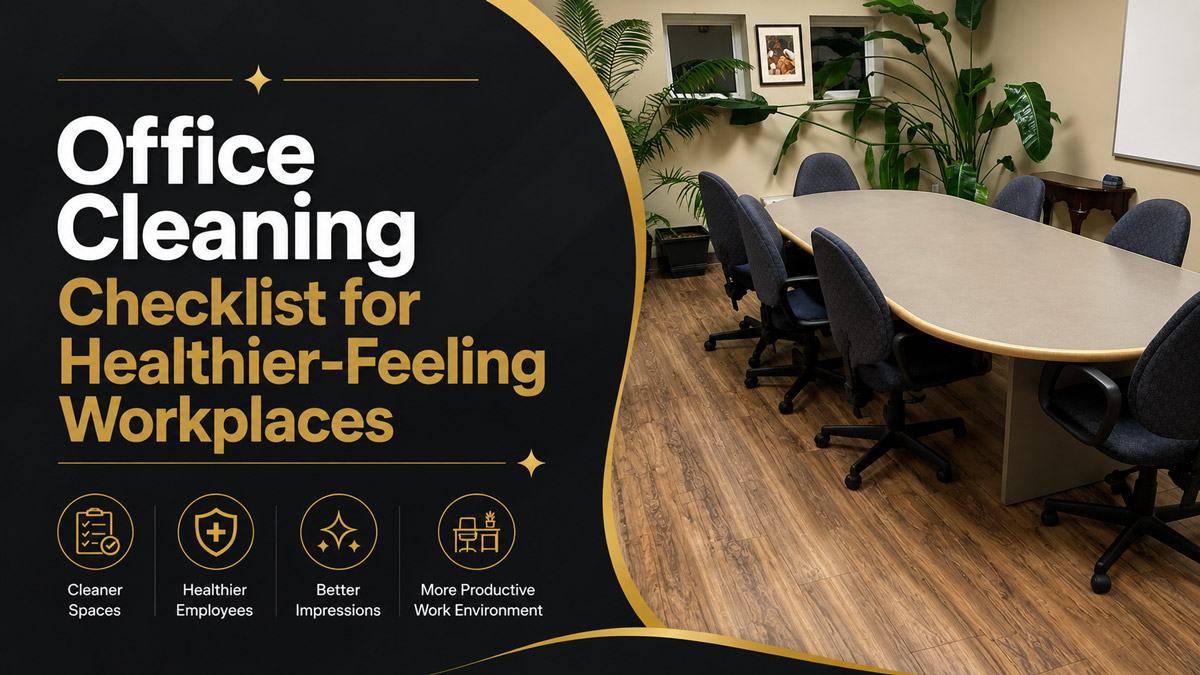
An office checklist works best when it describes observable tasks, clear boundaries, and who is responsible. Broad instructions such as “clean the office” leave too much open to interpretation. A zone-based list gives staff and the cleaning team a shared reference without promising a medical outcome.
The goal is a workplace that looks orderly, supports daily use, and can be reviewed consistently. The appropriate frequency for each task depends on occupancy, room use, workplace policy, and current conditions.
Start with zones, not individual products
Map the workplace into functional areas before listing tasks. A small office may have only a few zones; a larger suite may need separate sections for each floor or department.
Useful zones include:
- Entry and reception
- Workstations and shared desks
- Conference and meeting rooms
- Break room or kitchenette
- Restrooms
- Corridors, stairs, and other circulation paths
- Storage, utility, or restricted rooms
Mark rooms that are off-limits and surfaces that should not be disturbed. Confidential papers, active equipment, personal workstations, and specialized devices need workplace-specific handling rules.
Entry and reception checklist
The entrance sets the first visible standard. A practical list may include accessible floor care, reachable ledges, door glass, reception counters, and orderly placement of shared items. Note whether exterior approaches or windows are separate services.
Inspect entry mats and high-traffic paths for visible soil or wear. Carpet condition varies, so identify concerns for assessment rather than assuming a specific cleaning result.
Workstations and meeting areas
Decide which desk surfaces are cleared and available for cleaning. Staff should secure papers, food, drink containers, and fragile personal objects. Cleaning professionals should not have to guess what can be moved.
Possible checklist items include:
- Reachable shared table and counter surfaces
- Conference-room tables after materials are removed
- Accessible floor areas and traffic lanes
- Emptying approved ordinary waste containers
- Visible touchpoints included by workplace policy
Electronics and specialized equipment should follow manufacturer and workplace instructions. Do not add unapproved liquids or methods to a generic cleaning checklist.
Break-room care
Break rooms combine food, shared surfaces, and frequent traffic, so ownership must be especially clear. Employees may be responsible for removing personal food and washing individual dishes, while the cleaning scope may cover counters, sinks, table surfaces, appliance exteriors, approved waste, and floors.
Include a process for abandoned food and overflowing containers. The cleaning team should not have to decide what belongs to an employee or what may be discarded.
Restrooms and supplies
List the fixtures, mirrors, counters, floors, and approved touchpoints included in the service. If supply checks are expected, name each supply and identify where replacement stock is stored. Assign a workplace contact for low inventory, plumbing problems, damage, or access issues.
Cleaning cannot substitute for repairs. Leaks, broken dispensers, failed ventilation, and damaged fixtures should be reported through the appropriate maintenance process.
Floors, carpets, and circulation paths
Different floor materials may need different handling. Record the material in each zone and note transitions, damaged areas, loose mats, cables, and blocked paths. Identify carpeted rooms, stairs, and traffic lanes separately if carpet cleaning is being considered.
Keep emergency routes, doorways, and access to building equipment clear. Do not use a cleaning checklist to store objects temporarily in a required passage.
Build an evening access plan
Evening service needs more than a door key. Document:
- Approved arrival and departure windows
- Parking and building entry instructions
- Alarm, elevator, and lock-up procedures
- Restricted areas and no-touch surfaces
- Waste collection locations
- A primary contact and a backup for urgent access questions
Test the instructions before the first service. Update them when staff, locks, building rules, or alarm procedures change.
Review by observation
Use concrete checks: Was the approved waste removed? Are agreed surfaces accessible and addressed? Were restricted rooms left untouched? Are any maintenance problems documented? This is more useful than vague ratings and avoids implying a health or medical guarantee.
Review the checklist after office changes, unusual events, construction, or shifts in occupancy. The right plan is the one that reflects the workplace as it is now.
For a scoped evening schedule and break-room care plan, request a free estimate for commercial office cleaning.