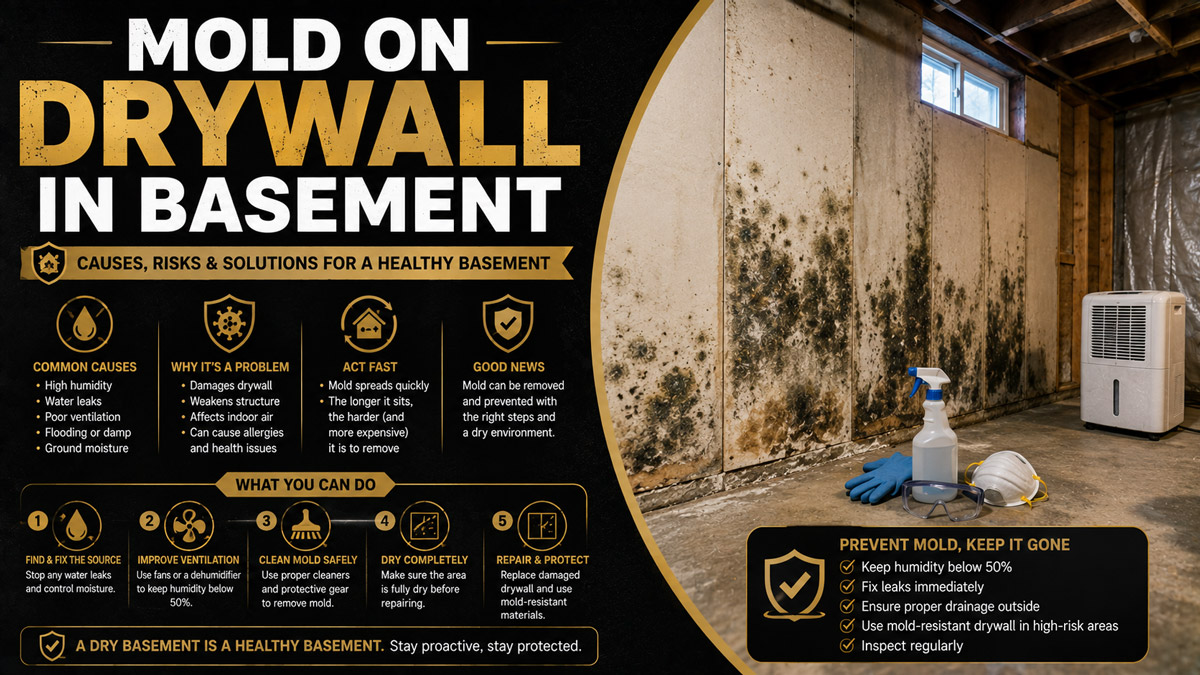
Mold on drywall in basement spaces is a fungal colonization of the porous gypsum paper core caused by sustained moisture exposure. Because the cellulose paper provides an abundant food source, deeply infested panels cannot be surface-cleaned and require complete physical extraction. Removing the contaminated material immediately stops structural decay and prevents dangerous spores from circulating through your home ventilation system.
Key Facts / At a Glance
- DIY remediation is only safe and effective for isolated surface growth covering less than 10 square feet.
- A standard half-inch sheetrock panel absorbs up to eight pounds of water when exposed to basement flooding.
- Fungal spores activate and begin colonizing wet cellulose materials within 24 to 48 hours of initial water contact.
- Professional extraction and containment projects typically cost between $10 and $30 per square foot.
- Wood framing studs must reach a verified moisture content below 15 percent before you can install replacement wall panels.
What Causes Mold on Drywall in Basement Environments?
Mold forms on basement walls because below-grade environments constantly experience condensation, and the paper backing of standard sheetrock supplies the exact organic cellulose that fungi require for food. Fungi exist everywhere in the natural environment as microscopic airborne spores. These dormant spores float harmlessly through the air until they land on a wet, hospitable surface. When standard paper-faced gypsum board absorbs water, it creates an ideal incubation chamber.
Basements face unique building science challenges that upper levels do not. Hydrostatic pressure from the surrounding soil constantly pushes liquid water against the concrete foundation. If the foundation lacks adequate exterior waterproofing, moisture moves through the porous concrete via capillary action. This moisture vapor eventually reaches the interior wall cavity. If builders install fiberglass insulation and standard drywall without a proper vapor retarder, the warm interior air meets the cold foundation wall. This temperature differential causes condensation to form directly on the backside of the drywall paper.
The mechanism of colonization involves microscopic root structures called hyphae. Fungi send these hyphae deep into the porous paper and the inner gypsum core. As the organism feeds on the cellulose, it breaks down the structural integrity of the wallboard. Because the roots penetrate the material entirely, applying topical cleaners to the visible side of the wall does absolutely nothing to the dense root system established on the backside.
How Long Does It Take for Fungi to Grow?
Spores activate and begin multiplying within 24 to 48 hours when the surrounding relative humidity exceeds 60 percent. Once the paper facing becomes saturated from a foundation leak or a burst pipe, the biological clock starts ticking immediately.
Certain aggressive species, such as Stachybotrys, spread across damp wallboard at a rapid rate of 2.5 millimeters per day. Because moisture often originates from the concrete foundation behind the framed wall, up to 70 percent of the backside of a drywall panel can be completely covered in fungal growth before a single spot becomes visible to the homeowner on the finished interior side. By the time you see dark spots forming above the baseboards, a massive colony has likely existed inside the wall cavity for several weeks.
Main Types of Basement Drywall Mold
Color alone is not a definitive diagnostic tool for fungal species, but visual characteristics provide immediate clues about the severity of the moisture problem. Different organisms require different levels of water saturation to thrive.
Stachybotrys Chartarum (Toxic Black Mold)
Stachybotrys presents as a dark green or black growth with a slimy texture when wet and a dry, sooty texture when deprived of moisture. This specific organism requires excessive, continuous moisture to grow. It typically appears only after severe, long-term water damage, such as a persistent pipe leak inside a wall cavity or repeated basement flooding. Stachybotrys produces mycotoxins that cause severe respiratory distress and allergic reactions in humans. It feeds aggressively on the high-cellulose paper backing of sheetrock.
Aspergillus and Penicillium
Aspergillus displays green, white, yellow, or brown colors with a powdery or fuzzy texture. Penicillium features a distinct blue-green or teal color with a velvety appearance. Both of these genera are highly adaptive and can grow in much lower humidity conditions than black mold. They are the most common primary colonizers following a minor water event. Penicillium spreads incredibly fast across water-damaged building materials and often covers the entire lower half of a flooded basement wall within a matter of days.
Cladosporium
Cladosporium appears olive-green, gray, or brown with a dense, suede-like texture. Unlike many other species that require warm conditions, Cladosporium frequently populates colder basement surfaces. You will typically find it growing near poorly insulated HVAC ducts, around basement windows, or in unconditioned storage closets where cold air causes condensation to form on the wallboard.
How Can You Tell If It Is Mold or Efflorescence?
You can differentiate the two using the spray bottle test, where efflorescence dissolves in water while fungal growth smears and remains solid. Basements often develop a white, powdery residue on concrete walls and masonry surfaces near the drywall. Homeowners frequently mistake this harmless mineral salt for white mold.
Efflorescence occurs when water moves through concrete, dissolves natural minerals, and leaves salt deposits behind as the water evaporates into the basement air. Fungi, conversely, are living biological organisms. If you spray a suspicious white patch with water and it immediately vanishes or dissolves, you have efflorescence. If the substance repels the water, holds its shape, or smears like dirt when wiped, you are dealing with an active fungal colony.
The Health Impacts of Mycotoxin Exposure
Prolonged exposure to indoor fungal growth causes significant immune system responses, ranging from mild allergic reactions to severe respiratory illness. When a colony matures on a basement wall, it releases thousands of microscopic spores into the air to reproduce. A single square inch of infested wallboard can hold up to 10 million spores.
When the home HVAC system kicks on, the return air ducts often pull these spores from the basement and distribute them throughout the upper levels of the house. Inhabitants inhale these particles, triggering an immune response. Common symptoms include chronic coughing, eye irritation, persistent sinus congestion, and skin rashes. Prolonged exposure to the specific mycotoxins produced by Stachybotrys can lead to neurological fatigue, headaches, and the aggravation of asthma symptoms in vulnerable individuals. Children, the elderly, and individuals with compromised immune systems face the highest risk of severe health complications from neglected basement infestations.
Step-by-Step Remediation Process
Removing contaminated wallboard requires strict adherence to safety protocols to prevent cross-contamination. If you rip panels off the wall without containment, you will launch billions of spores into the indoor air.
Step 1: Assessment and Safety Gear
The first step involves evaluating the total square footage of the damage and equipping proper personal protective equipment. The Environmental Protection Agency states that homeowners can safely manage infestations smaller than 10 square feet. If the growth exceeds this limit, or if the water resulted from a contaminated source like a sewer backup, you must halt the process and hire a certified remediation professional.
Before touching any damaged material, put on an N95 or P100 respirator mask. Wear safety goggles without ventilation holes to prevent spores from entering your eyes. Use heavy-duty nitrile gloves to protect your skin from both the mycotoxins and the chemical cleaning agents.
Step 2: Isolation and Containment
You must physically seal the work area off from the rest of the home. Use heavy 6-mil plastic sheeting and high-adhesion painters tape to completely block all basement doorways, stairwells, and HVAC supply and return vents.
Professionals set up a negative air machine equipped with a HEPA filter during this phase. This machine pulls air out of the containment zone, filters out 99.97 percent of microscopic particles, and exhausts the clean air outside the house. This negative pressure ensures that when you cut the wallboard, no airborne dust or spores can drift upstairs into the living areas.
Step 3: Controlled Demolition
You cannot save heavily infested paper-faced panels. Use a sharp utility knife to score the gypsum board and cleanly cut out the contaminated sections. You must cut at least 12 inches past the last visible sign of fungal growth to ensure you capture the hidden root systems spreading inside the core.
Do not use power saws to cut the panels, as the high-speed blades generate massive amounts of contaminated dust. Once you remove a section, place it immediately into a heavy-duty, 6-mil contractor trash bag. Double-bag the debris and seal the bags tightly with duct tape before carrying them through the house to the exterior trash receptacle.
Step 4: Framing Treatment and Antimicrobial Application
Once the wallboard is gone, you must inspect the exposed wood wall studs and the concrete foundation behind them. Wood is porous, but fungi generally sit closer to the surface of dimensional lumber than they do in soft gypsum.
Use a stiff-bristled nylon brush to aggressively scrub the wood framing and concrete surfaces. Apply an EPA-registered antimicrobial solution or undiluted 3 percent hydrogen peroxide directly to the wood. Scrub the surfaces until all visual staining disappears. Wipe the area clean with disposable microfiber cloths.
Expert Insight: Never apply chemical treatments to the framing until you have physically scrubbed the top layer of biological material away. Chemicals cannot penetrate a thick layer of dead organic matter to reach the roots underneath.
Step 5: Deep Drying and Moisture Verification
You must force the underlying structural materials to release their trapped water before you can rebuild the wall. Place commercial-grade refrigerant dehumidifiers and high-velocity air movers inside the containment zone. Keep the equipment running continuously for 48 to 72 hours.
Do not guess when the wood is dry. Use a digital pin-type moisture meter to test the studs. The wood framing must reach a verified moisture content below 15 percent. If you install fresh sheetrock over studs that contain 18 percent moisture, the trapped water will immediately colonize the new paper backing, restarting the entire disaster.
What Are the Costs and Timeframes for Professional Removal?
Professional mold removal typically costs between $1,500 and $6,000 and requires three to seven days for complete structural drying. The exact price depends heavily on the linear footage of the affected walls and the depth of the water penetration into the subfloor or framing.
Attempting to save money on a massive infestation by doing it yourself often leads to secondary damage upstairs, which costs significantly more to fix than the initial basement problem. The table below outlines typical professional project scopes.
| Scale of Infestation | Average Cost Range | Typical Duration | Best For |
| Minor Surface Growth | $500 to $1,500 | 1 to 2 Days | Small utility closets, isolated window leaks under 15 square feet. |
| Standard Basement Wall | $1,500 to $3,500 | 3 to 5 Days | Wallboard removal along one or two walls, containment, HEPA vacuuming. |
| Severe Structural Infestation | $4,000 to $7,000 | 5 to 10 Days | Complete lower-wall tear out, framing decontamination, intense dehumidification. |
| Reconstruction Phase | $800 to $2,500 | 2 to 4 Days | Hanging new panels, taping, mudding, and applying primer to the repaired area. |
Which Removal Solution Should You Choose?
You should choose an EPA-registered antimicrobial for structural framing and complete physical removal for porous panels. Different chemical agents interact with biological cellular structures in very different ways. Choosing the wrong liquid can actually accelerate the structural damage.
Many homeowners reach for whatever cleaning chemicals sit under the kitchen sink, completely unaware of the complex chemistry required to destroy hyphae.
| Chemical Solution | Active Mechanism | Pros | Cons |
| Chlorine Bleach | Oxidizes surface proteins rapidly. | Cheap, instantly removes dark color stains. | Cannot penetrate porous wood, leaves excess water behind, feeds deep roots. |
| 3% Hydrogen Peroxide | Effervescent action breaks down cell walls. | Non-toxic byproduct (water and oxygen), penetrates wood grain effectively. | Requires aggressive physical scrubbing, mildly bleaches wood finishes. |
| White Vinegar | Mild acetic acid alters the pH environment. | Very safe, cheap, disrupts up to 80% of fungal species. | Strong odor, ineffective against heavy structural infestations. |
| Commercial Antimicrobials | Crushes spores chemically and leaves a barrier. | EPA registered, prevents immediate regrowth on framing. | Expensive, contains synthetic chemicals requiring proper ventilation. |
Common Mistakes When Treating Basement Mold
Homeowners frequently make critical errors during the cleanup process that guarantee the problem will return within weeks. Avoiding these specific failure modes saves thousands of dollars in secondary repairs.
The Bleach Blunder
Spraying chlorine bleach on porous building materials is the single most common and destructive mistake homeowners make. Household bleach consists of roughly 5 percent sodium hypochlorite and 95 percent water. The chlorine chemical structure is too large to penetrate the dense cellular structure of wood or the compressed core of gypsum. As a result, the chlorine remains on the surface and evaporates, temporarily bleaching the color out of the surface growth. Meanwhile, the 95 percent water content soaks deeply into the material, feeding the hidden root system. The colony will return darker and denser a few days later.
Painting Over Active Colonies
Applying mold-resistant paint directly over an active colony guarantees failure. Encapsulating paints and primers are designed to prevent spores from attaching to clean surfaces. They contain mild mildewcides that cannot kill an established root system. If you paint over active growth, the organism will simply use the moisture from the wet paint to accelerate its growth. It will rapidly decay the paint film from the inside out, causing the new paint to bubble, peel, and flake off the wall within a few months.
Ignoring the Root Moisture Source
Cleaning the wallboards without fixing the foundational leak ensures the problem will repeat itself indefinitely. Fungi are a symptom of a water problem, not the root disease itself. If you perform a flawless remediation but fail to fix the broken sump pump, seal the foundation crack, or install an adequate dehumidifier, the airborne spores present in every home will colonize the new building materials the exact moment they become wet again.
Insurance and Long-Term Prevention Strategies
Understanding how insurance companies view fungal damage dictates how you approach the financial aspect of the remediation. You also need a comprehensive strategy to harden your basement against future moisture intrusion.
Will Homeowners Insurance Cover the Damage?
Insurance policies usually cover mold damage if it results from a sudden and accidental peril like a burst pipe, but they deny claims resulting from long-term seepage or neglected maintenance.
If a washing machine hose bursts and floods the finished basement, standard HO-3 policies typically cover the water mitigation and the subsequent mold removal, up to a specific sub-limit (often capped between $5,000 and $10,000). However, if the water entered through a porous foundation wall over six months due to poor exterior grading, the insurance adjuster will deny the claim under the “wear and tear” or “neglected maintenance” exclusion clauses. Always document the sudden source of the water with photographs before beginning any demolition.
How Do You Prevent Regrowth After Remediation?
You prevent regrowth by installing inorganic wallboard materials and maintaining a constant indoor humidity level below 50 percent. Standard paper-faced drywall has absolutely no place in a below-grade environment.
Expert Insight: When rebuilding a basement after a flood, strictly utilize fiberglass mat gypsum panels. These boards replace the organic paper facing with an inorganic fiberglass mat. Because they contain zero cellulose, fungi have nothing to eat, even if the material gets wet during a future plumbing failure.
In addition to upgraded materials, climate control is mandatory. Purchase a high-capacity, auto-draining basement dehumidifier. Set the humidistat to 45 percent and connect the drain hose directly into a floor drain or sump pit. By removing the airborne moisture before it can condense on the cold foundation walls, you eliminate the primary trigger for fungal activation.
Frequently Asked Questions
Can mold inside basement walls make you sick?
Yes, concealed fungal growth releases microscopic spores and mycotoxins that travel through wall cavities and into your living spaces. Inhaling these particles triggers severe allergic reactions, chronic asthma flare-ups, persistent coughing, and neurological fatigue, particularly in children and immunocompromised adults.
Does a dehumidifier kill existing fungal colonies?
No, lowering the humidity will not kill an established colony. A dehumidifier removes the moisture from the air, which forces the organism into a dormant state and stops it from spreading further. However, the root system remains alive inside the drywall and will immediately reactivate the moment moisture returns.
How far past the visible stain should I cut the drywall?
You must cut out the material at least 12 to 18 inches beyond the last visible sign of staining or softening. The microscopic hyphae spread much further inside the porous core than what you can see on the painted surface. Cutting a wider margin ensures you extract the entire organism.
Is it safe to sleep upstairs while basement remediation occurs?
It is safe only if the work area is perfectly contained with heavy plastic sheeting and negative air pressure machines venting to the outside. If you attempt demolition without proper containment, billions of disturbed spores will travel upstairs through the HVAC system, making the home temporarily unsafe for occupation.
Should I use household fans to dry a wet basement wall?
No, you should never point household fans at a wet, contaminated wall before setting up proper HEPA containment. Standard fans will forcefully blow the loose spores off the surface and scatter them across the entire basement, contaminating clean furniture, carpets, and adjacent building materials.
Will vinegar permanently remove the dark stains on my basement framing?
Vinegar effectively alters the pH level to disrupt fungal growth, but it does not contain bleaching agents. It will neutralize the biological threat on the surface of the wood studs, but the dark, cosmetic staining left behind by the dead colony will remain until you sand the wood.