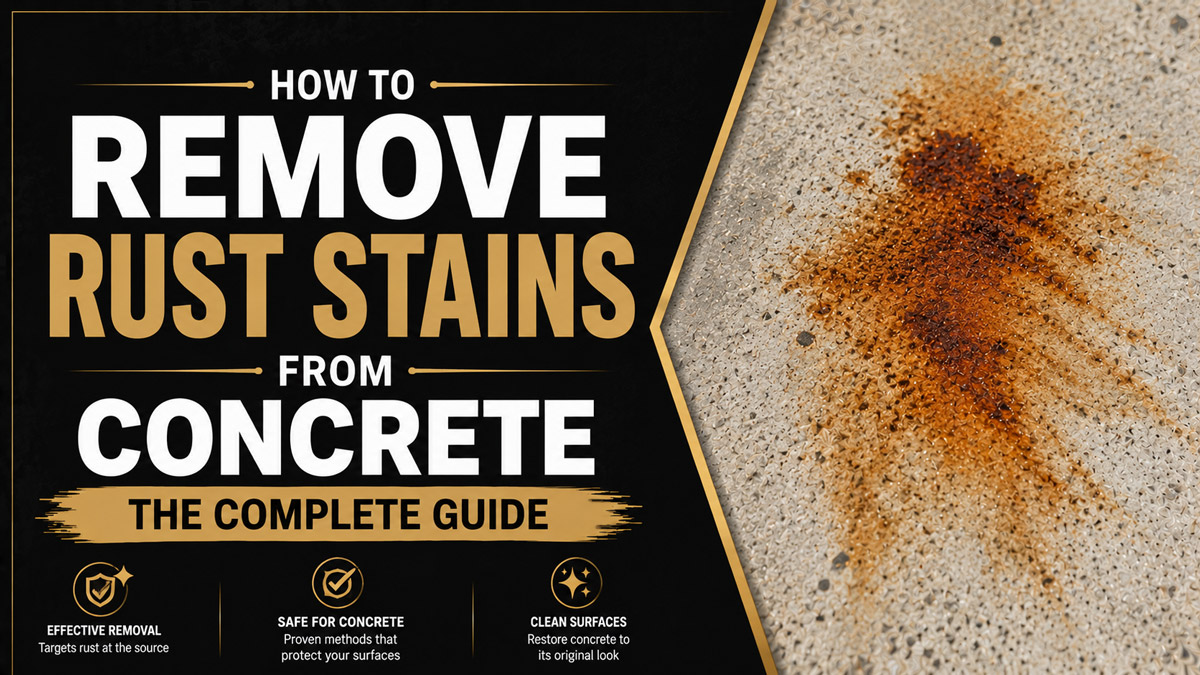
To figure out how to remove rust stains from concrete, you need the right balance of chemical dissolution and mechanical scrubbing. This seven-step process takes roughly one hour and relies on applying an acidic solution, agitating the surface, and immediately neutralizing the reaction to prevent permanent surface etching. Success depends entirely on timing the neutralization phase correctly.
Before You Start
Understanding your materials and environment is essential before mixing chemicals. Rust is iron oxide bonded with calcium silicate hydrate in the concrete. Alkaline soaps cannot wash it away. You must dissolve it with an acidic solution (pH 1.0 to 3.0), which requires exact safety and containment measures.
- Total Time Required: 45 to 65 minutes.
- Difficulty Level: Intermediate.
- Typical Cost: $25 to $55 for tools and chemicals.
- Prerequisite Conditions: Ambient temperature between 50°F and 80°F (10°C to 26°C). Do not apply acid in direct afternoon sunlight.
Required Tools and Materials
| Item | Quantity / Specification | Typical Cost | Purpose |
| Rust Remover | 1 quart Muriatic acid (31.45%) OR 1 gallon White Vinegar (5%) | $5 – $12 | Dissolves the iron oxide chemical bond. |
| Neutralizer | 2 cups baking soda per gallon of water | $2 – $4 | Halts the acid reaction to prevent etching. |
| Scrub Brush | 1 stiff-bristle nylon brush (acid-resistant) | $8 – $15 | Agitates the stain. |
| Mixing Bucket | 1 heavy-duty 5-gallon plastic bucket | $4 – $6 | Contains the diluted acid. Never use metal. |
| Stirring Stick | 1 wooden paint stirrer | $1 | Mixes the acid solution safely. |
| Safety Goggles | 1 pair indirect-vent chemical splash goggles | $10 – $15 | Protects eyes from exothermic splattering. |
| Respirator | Half-face mask with acid-gas cartridges | $25 – $35 | Filters dangerous hydrochloric fumes. |
| Gloves | 1 pair heavy-duty nitrile or rubber gauntlets | $8 – $12 | Protects hands and forearms from chemical burns. |
Process Summary
The table below outlines the extraction process at a glance.
| Step | Action | Typical Time | Most Common Mistake |
| 1 | Secure the area and protect plants. | 10 mins | Failing to saturate nearby soil with water. |
| 2 | Clean and degrease the surface. | 5 mins | Leaving oil spots that block the acid. |
| 3 | Pre-wet the concrete matrix. | 5 mins | Applying acid to bone-dry concrete. |
| 4 | Apply the rust removal agent. | 15 mins | Pouring water into acid instead of acid into water. |
| 5 | Agitate the stain. | 5 mins | Using a wire brush instead of nylon. |
| 6 | Neutralize the chemical reaction. | 5 mins | Rinsing with plain water without baking soda. |
| 7 | Rinse and inspect. | 10 mins | Using excessive pressure washer PSI. |
Step-by-Step Process for Removing Concrete Rust
Step 1: Secure the Area and Protect Surroundings
Clear the concrete surface completely and saturate all surrounding vegetation and soil with fresh water.
Move all metal furniture, vehicles, and tools at least 20 feet away from the work zone. Acid fumes can corrode nearby unprotected steel within hours. Take a garden hose and heavily water any grass, flowerbeds, or shrubs adjacent to the concrete. Wet soil dilutes accidental chemical runoff, whereas dry soil will quickly absorb the acid and kill plant root systems. Tape off any nearby metal downspouts or drain covers using heavy-duty plastic sheeting and painter’s tape. Finally, put on your chemical splash goggles, acid-gas respirator, long sleeves, pants, closed-toe shoes, and nitrile gloves.
You’ll know it worked when the surrounding soil is muddy and all adjacent metal fixtures are wrapped in plastic.
Common mistake: Skipping the respirator. Muriatic acid emits toxic hydrogen chloride gas the second you open the bottle.
Step 2: Clean and Degrease the Surface
Scrub the rusted area with warm water and a heavy-duty degreasing dish soap to remove all surface contaminants.
Acid cannot penetrate organic oils or synthetic greases. If a car has dripped engine oil over a rust stain, the acid will simply roll off the oil and fail to touch the iron oxide underneath. Pour a mixture of warm water and dish soap over the area. Scrub vigorously with your nylon brush for two minutes. Rinse the soap away completely with clean water.
You’ll know it worked when water sheets flat across the concrete rather than beading up on hidden oil spots.
Common mistake: Using an ammonia-based cleaner to degrease. Mixing ammonia residue with acid creates lethal chloramine gas.
Step 3: Pre-Wet the Concrete Matrix
Spray the concrete surface with clean water until it is fully saturated but free of standing puddles.
This step dictates the survival of your concrete slab. Concrete is highly porous. If you apply a strong liquid acid to dry concrete, capillary action pulls the chemical deep into the internal matrix. The acid will eat away the structural cement paste far below the surface. By pre-wetting the slab, you fill those microscopic pores with neutral water. This forces the acid to remain on the top surface where the rust stain lives.
You’ll know it worked when the concrete looks uniformly dark and damp, but no pools of water remain in the low spots.
Common mistake: Leaving deep puddles on the slab. Standing water will over-dilute your chemical mixture the moment you apply it.
Step 4: Apply the Rust Removal Agent
Mix one part acid into ten parts water in your plastic bucket, then pour the solution directly onto the rust stain.
If dealing with a light, fresh stain from a metal bucket left in the rain, use pure white vinegar (5% acetic acid) directly from the bottle. For deep, dark stains, you must use muriatic acid (hydrochloric acid). Fill your plastic bucket with exactly 10 cups of clean water. Slowly pour 1 cup of muriatic acid into the water while stirring gently with your wooden stick. Let the solution sit on the stain for 5 to 10 minutes. Watch closely for a foaming or bubbling reaction.
You’ll know it worked when the acidic solution begins to fizz slightly upon contacting the iron oxide.
Common mistake: Pouring water into acid. You must always add acid to water. Adding water to a pool of concentrated acid causes an instant, violent exothermic reaction that will boil and spit concentrated acid into your face.
Step 5: Agitate the Stain
Scrub the treated stain vigorously with your stiff-bristle nylon brush in tight circular motions.
Mechanical agitation is necessary to break apart the chemical bonds once the acid loosens them. Press down firmly with both hands and scrub the entire perimeter of the stain. Work from the outside edges toward the center to prevent spreading the rust pigment across clean concrete. If the surface begins to dry out during scrubbing, lightly mist it with your acid mixture. Never let the acid dry completely on the slab.
You’ll know it worked when the dark orange rust color begins to lift and suspend itself in the liquid foam.
Common mistake: Using a wire brush. Steel bristles snap off during scrubbing, lodge inside the concrete pores, and create brand-new, deeper rust stains after the next rainstorm.
Step 6: Neutralize the Chemical Reaction
Pour a neutralizing solution of two cups of baking soda mixed into one gallon of water over the entire scrubbed area.
You cannot stop an acid reaction simply by washing it away. The acid will continue eating the calcium in the concrete long after you finish scrubbing. According to the American Concrete Institute guidelines for surface preparation (ACI 515.1R), a neutralizing wash is mandatory. Stir the baking soda into a fresh bucket of water until dissolved. Pour this alkaline mixture directly over the acid.
You’ll know it worked when the surface foams up violently for a few seconds, then settles into a flat, inert liquid.
Common mistake: Skimping on the baking soda. If the ratio is too weak, residual acid will pit and weaken the top layer of your driveway overnight.
Step 7: Rinse and Inspect the Concrete
Flush the neutralized area thoroughly with a high-volume garden hose or a pressure washer set below 1500 PSI.
Start rinsing at the highest elevation point of your concrete slab and push the water downward toward a safe drainage area. Ensure the runoff flows onto the pre-wetted soil or down a designated utility drain, avoiding sensitive flowerbeds. Keep the nozzle moving continuously. Once the concrete dries, inspect the area. The rust should be gone, leaving behind clean gray concrete.
You’ll know it worked when the dried concrete matches the surrounding color without any orange shadows or white chalky residue.
Common mistake: Using a zero-degree red tip on a pressure washer. Concentrated high pressure will carve permanent gouges into the acid-softened concrete.
Common Mistakes and How to Fix Them
Even careful practitioners occasionally encounter issues when dealing with porous masonry and reactive chemicals. Troubleshooting effectively separates a temporary setback from permanent property damage.
Etched or Chalky Concrete Surface
Leaving muriatic acid on the slab past the 10-minute mark strips away the smooth cement paste, exposing the rough aggregate gravel beneath. The surface will look shockingly white, chalky, and feel like rough sandpaper.
You cannot un-etch concrete. The chemical structure has been physically removed. To fix this, you must thoroughly sweep away the loose calcium dust. Apply a thin layer of polymer-modified concrete patching compound to smooth the texture. Alternatively, apply a tinted, opaque concrete sealer over the entire driveway to hide the color discrepancy.
Embedded Steel Bristles Causing New Rust
Many homeowners use cheap carbon-steel wire brushes to scrub stubborn stains. One week later, the concrete develops dozens of tiny, bright orange dots where the broken steel bristles rusted in the rain.
To fix this, you must run a high-powered magnet over the dry concrete to pull out loose steel fragments. Treat the new micro-stains with a natural acidic application like pure lemon juice or white vinegar. Let the natural acid sit for 20 minutes, scrub with a nylon brush, neutralize with baking soda, and rinse.
Acid Burns from Improper Mixing
Pouring water into a bucket of acid rapidly boils the water, projecting acid onto the concrete surface outside your target zone. This leaves chaotic, bleached splash marks across the slab.
To fix this aesthetic damage, you have to acid-wash the entire concrete slab to ensure a uniform color. This is a massive undertaking requiring specialized pump sprayers and highly diluted muriatic solutions (1 part acid to 20 parts water). Most practitioners choose to hire a professional concrete restoration company to perform a whole-driveway acid wash.
The Rust Stain Did Not Budge
If you applied white vinegar for 30 minutes and the dark orange stain remains identical, the iron oxide has penetrated deep into the concrete’s capillary system. Natural acids lack the molecular strength to break deep bonds.
To fix this, you must upgrade your chemical agent. Purchase commercial-grade oxalic acid or muriatic acid. Oxalic acid is specifically formulated to target iron oxide and is often safer for beginners than muriatic acid. Follow the exact seven-step process again, ensuring the concrete is pre-wetted before applying the stronger chemical.
Rust Returned Within Weeks
You successfully removed the stain, but a fresh orange halo appeared in the exact same spot a month later. This happens because the source of the iron oxide was never eliminated.
Check the area directly above the stain. Look for dripping air conditioning condensation lines, leaky outdoor faucets, cast-iron patio furniture, or metal gardening tools left on the ground. Additionally, verify your lawn fertilizer does not contain iron sulfate. Overspray from iron-heavy fertilizers will cause thousands of tiny rust spots on concrete. Remove the source, repeat the cleaning process, and apply a silane-siloxane penetrating sealer to block moisture from entering the pores.
Variations for Different Concrete Types
The standard chemical process assumes you are working with an unsealed, standard broom-finish exterior driveway. Different concrete finishes require modified approaches to prevent catastrophic damage to dyes and sealers.
Stamped or Colored Concrete
Stamped concrete utilizes integral color pigments and surface release agents to mimic natural stone. Applying harsh muriatic acid to colored concrete will instantly bleach the dyes, ruining the aesthetic.
For colored surfaces, abandon strong acids. Use a commercial, non-acidic rust remover specifically formulated for delicate masonry (often containing chelating agents like EDTA). Apply the chelating gel to the stain. It works by binding to the iron molecules and suspending them in the gel without attacking the calcium base. Wipe the gel away after 30 minutes and rinse gently.
Polished Indoor Concrete
Indoor polished concrete floors in garages or basements have a densely refined surface often treated with lithium densifiers. Harsh chemicals will strip the polish, leaving a dull, porous patch.
Do not use high-volume water indoors, and never use muriatic acid without industrial ventilation. Substitute oxalic acid powder mixed into a thick paste with water. Apply the paste directly to the rust stain like a poultice. Cover the paste with plastic wrap and tape down the edges. Leave it for 24 hours. The poultice draws the rust out of the floor via reverse capillary action. Remove the dried paste, wipe with a damp cloth, and apply a fresh coat of concrete polish to the spot.
Large Scale Driveway Stains
If you have a 30-foot trail of rust down your driveway caused by a leaking battery or an old metal wheelbarrow, scrubbing by hand is impossible.
Rent a 3-gallon chemical-resistant polyethylene pump sprayer. Dilute oxalic acid at a ratio of 1 pound of powder per 1 gallon of warm water. Spray the solution evenly across the entire rusted path. Let it dwell for 15 minutes. Instead of hand-scrubbing, rent a heavy-duty floor machine (a walk-behind rotary scrubber) equipped with a grit-nylon brush attachment. Run the machine over the wet acid, then apply your baking soda neutralizer via a second pump sprayer.
Time and Cost Analysis for Rust Removal
Knowing the time and financial commitments helps you decide whether to tackle this yourself or hire a pressure-washing professional.
| Material / Requirement | DIY Cost Range | Professional Cost Range | Time Commitment |
| Natural Acid Method (Vinegar/Lemon) | $15 – $25 | N/A (Pros use chemicals) | 45 minutes |
| Chemical Method (Muriatic/Oxalic) | $35 – $60 (Includes PPE) | $150 – $300 | 65 minutes |
| Poultice Method (Indoor/Polished) | $20 – $40 | $200 – $400 | 24 hours (dwell time) |
| Large Scale Spray Method | $80 – $120 (Equipment rental) | $300 – $600 | 3 to 4 hours |
A typical professional power washing company charges between $0.20 and $0.40 per square foot for standard cleaning, but targeted chemical stain removal usually incurs a flat minimum service fee of $150 to $200. If your stain covers less than three square feet, the DIY chemical method offers the highest return on investment.
Frequently Asked Questions
Will WD-40 remove rust from concrete?
WD-40 is a water-displacement lubricant designed for metal parts, not porous masonry. Spraying it on concrete will create a deep, permanent oil stain that traps the underlying rust, making the spot impossible to clean with traditional acids.
Can I use a pressure washer instead of a brush?
A pressure washer cannot replace mechanical scrubbing for chemical stain removal. While high PSI can blast away top-layer dirt, it forces water over the stain too quickly to break chemical bonds. You must use a brush to agitate the acid into the pores.
Is CLR safe for driveway concrete?
CLR (Calcium, Lime, and Rust Remover) contains lactic acid and gluconic acid. Because concrete is composed heavily of calcium, CLR will dissolve the cement paste holding the slab together. The manufacturer explicitly states not to use CLR on concrete.
Does Coca-Cola actually remove concrete rust?
Coca-Cola contains trace amounts of phosphoric acid, which can slowly convert iron oxide into water-soluble iron phosphate. However, the heavy corn syrup leaves a sticky residue that attracts dirt and insects. White vinegar is a cheaper, cleaner, and more effective household alternative.
How do you dispose of the neutralized acid runoff?
Once you apply the baking soda solution, the liquid chemically converts into harmless salt water. According to standard environmental safety guidelines, you can safely wash this neutralized saltwater runoff onto adjacent soil or down a standard municipal storm drain.
Taking the time to understand the chemical process dictates your success. By properly prepping the slab, applying the right acidic agent, and meticulously neutralizing the reaction, you can safely remove rust stains from concrete and restore the appearance of your property.