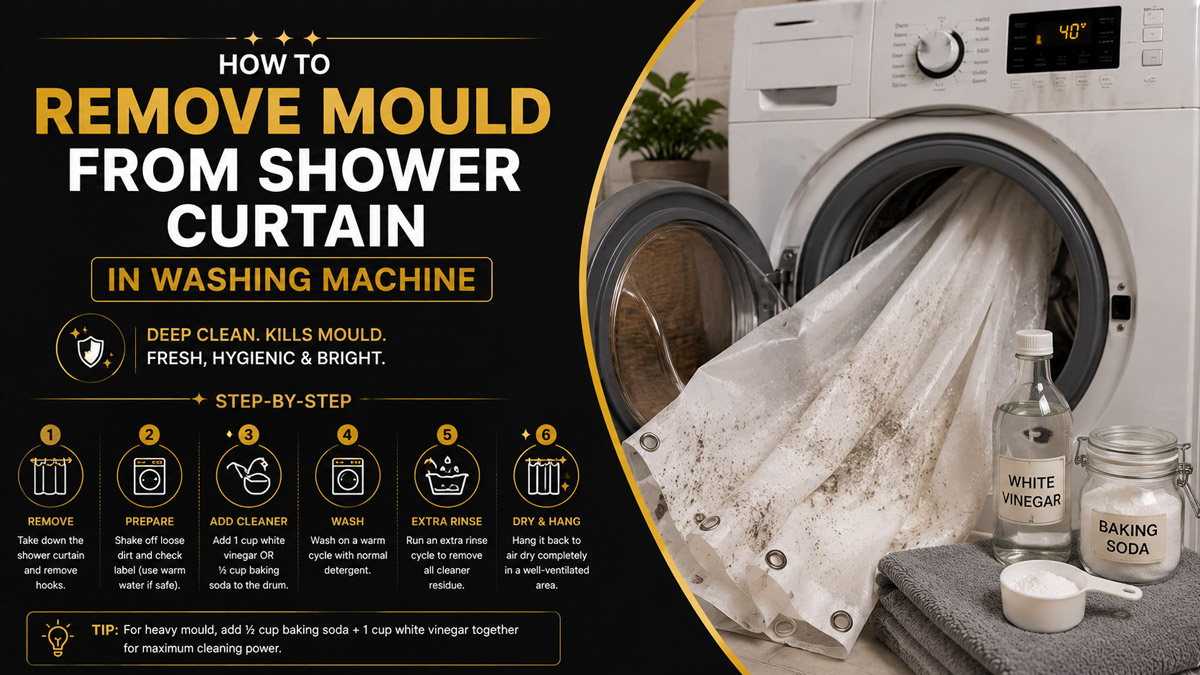
If you need to know how to remove mould from shower curtain in washing machine, the most effective method involves combining physical agitation with mild chemical cleaners. You must wash the curtain on a gentle cycle using warm water, regular laundry detergent, half a cup of baking soda, and two buffer towels, followed by one cup of white vinegar during the rinse cycle. This approach destroys the fungal spores, lifts embedded stains, and protects the structural integrity of both plastic liners and woven fabrics.
Key Facts at a Glance
- Buffer towels provide essential scrubbing friction to dislodge mold from smooth plastic surfaces.
- Baking soda deodorizes and lifts stains during the primary wash cycle.
- White vinegar breaks down mold cell walls and neutralizes alkaline soap residues during the rinse cycle.
- Plastic liners require low spin speeds (400-600 RPM) to prevent ripped grommets.
- Drying a plastic curtain in a heated tumble dryer will permanently melt or warp the material.
Before You Start: Project Parameters
Successfully cleaning a shower curtain requires minimal investment but strict adherence to temperature and chemical rules. You should gather all materials before beginning the process to ensure the machine cycle runs without interruption.
- Total Time Required: 45 to 60 minutes for the wash cycle, plus 2 to 4 hours for air drying.
- Difficulty Level: Beginner.
- Estimated Cost: $0.50 to $1.50 per load for household ingredients.
- Required Tools: Washing machine, two clean white bath towels, standard laundry detergent.
- Required Chemicals: 1/2 cup baking soda, 1 cup distilled white vinegar.
- Prerequisites: Identify whether your curtain is made of PEVA plastic, PVC vinyl, cotton, or polyester.
The Science of Fungal Removal
Mould thrives in bathrooms because the environment consistently provides high humidity, warmth, and a steady food source. The black or pink spots on your curtain are typically fungal colonies of Aspergillus or the bacteria Serratia marcescens feeding on lingering soap scum and body oils.
Washing machines eliminate these colonies through two distinct mechanisms working simultaneously. The first is physical agitation. The water movement alone is insufficient to scrub a smooth plastic surface. Adding heavy bath towels creates necessary friction against the curtain, essentially scrubbing the plastic as the drum rotates. The second mechanism is chemical breakdown. Baking soda creates a mildly alkaline environment that lifts embedded grime. Following this with acetic acid (white vinegar) in the rinse cycle lowers the pH, destroying the cellular structure of remaining mold spores and washing them down the drain.
Detailed Process on How to Remove Mould From Shower Curtain in Washing Machine
Executing this process correctly prevents permanent damage to your curtain. Follow these exact steps to maximize mold removal while protecting the delicate plastic or fabric fibers.
Step 1: Remove Hardware and Prepare the Curtain
Removing all plastic or metal rings prevents permanent damage to your washing machine drum. Take the curtain down from the rod and unclip every hook. Inspect the curtain for severe black mold clusters at the bottom hem. If the bottom is heavily stained, spray those specific areas with a preliminary coat of white vinegar before carrying the curtain to the laundry room.
- Success Checkpoint: You will know it worked when the curtain is completely free of hardware and lightly pre-treated.
- Common Mistake: Leaving metal roller balls attached, which can shatter the glass door of a front-loading machine.
Step 2: Load the Machine with Buffer Towels
Place the shower curtain into the washing machine drum loosely. Add two clean, light-colored bath towels. The towels must be light-colored to prevent dye transfer onto a clear or white plastic liner. The terry cloth loops on the towels act as millions of tiny scrub brushes during the wash cycle.
- Success Checkpoint: The drum should be roughly half full, allowing plenty of room for water circulation.
- Common Mistake: Overstuffing the machine with additional laundry, which stops the towels from moving freely against the curtain.
Step 3: Add Detergent and Baking Soda
Add your normal dose of regular liquid laundry detergent to the dispenser drawer. Next, pour exactly 1/2 cup of dry baking soda directly into the machine drum on top of the towels and curtain. Do not put baking soda in the detergent dispenser, as it can clump and block the water lines.
- Success Checkpoint: The alkaline baking soda is positioned to mix immediately with the wash water.
- Common Mistake: Mixing baking soda and vinegar together at this stage. They neutralize each other instantly, leaving you with useless salt water.
Step 4: Configure the Machine Settings
Set the washing machine to a gentle or delicate cycle. Select a warm water temperature ranging from 90°F to 105°F. Select a low spin speed. Standard top-loaders should be set to their lowest spin setting, while front-loaders should be manually dialed down to 400 or 600 RPM.
- Success Checkpoint: The machine is programmed for a low-impact, warm bath that will not melt plastic.
- Common Mistake: Selecting a sanitary or heavy-duty cycle. Water temperatures above 120°F will permanently warp PEVA liners.
Step 5: Administer the Vinegar Rinse
Pour 1 cup of distilled white vinegar into the machine’s fabric softener dispenser. If your machine lacks a dispenser, you must monitor the cycle and manually pour the vinegar into the drum exactly as the rinse cycle begins. The vinegar must be applied after the detergent has drained away.
- Success Checkpoint: The acidic vinegar contacts the fabric only after the alkaline detergent is gone, killing the remaining spores.
- Common Mistake: Using cleaning vinegar with high acidity (above 6%), which can degrade rubber seals in the washing machine over time.
Step 6: Execute the Cycle and Air Dry
Start the machine and allow the cycle to finish completely. Immediately remove the curtain once the drum unlocks. Shake it out to remove heavy water droplets. Carry the damp curtain back to the bathroom and hang it on the rod, spreading it out completely flat so air can circulate.
- Success Checkpoint: The curtain hangs without overlapping folds, allowing moisture to evaporate rapidly.
- Common Mistake: Placing a plastic liner in the tumble dryer. Even the lowest heat setting can cause the plastic to melt onto the metal dryer drum, ruining both appliances.
Material Guide and Optimal Machine Settings
Different shower curtain materials possess varying tolerances for heat and physical stress. You must adjust your washing strategy based on the specific composition of your liner.
| Curtain Material | Safe Water Temperature | Maximum Spin Speed | Drying Method | Safe Cleaning Agents |
| PEVA / PVC Plastic | Warm (90°F – 105°F) | 400 – 600 RPM | Air dry strictly | Vinegar, Baking Soda |
| Woven Cotton | Hot (120°F – 130°F) | 800 – 1000 RPM | Tumble dry low | OxiClean, Vinegar |
| Polyester Fabric | Warm (90°F – 105°F) | 600 – 800 RPM | Air dry or Tumble low | Enzyme cleaners, Vinegar |
| Hemp / Linen | Cold (60°F – 80°F) | 400 – 600 RPM | Air dry strictly | Mild detergent only |
Chemical Cleaning Agents Comparison
Choosing the right chemical agent determines whether you successfully eliminate the fungus or simply bleach it invisible while leaving the spores intact. You should always select the least toxic option that accomplishes the goal.
| Cleaning Agent Name | Recommended Volume | Target Mould Severity | Material Compatibility |
| Distilled White Vinegar | 1 cup per load | Light to moderate spotting | Excellent for all plastics and fabrics |
| Baking Soda | 1/2 cup per load | Surface soap scum and odors | Excellent for all materials |
| Oxygen Bleach (OxiClean) | 1 scoop per load | Heavy stains on colored items | Safe for fabrics, ineffective on smooth plastic |
| Liquid Chlorine Bleach | 1/2 cup per load | Severe black mold on white items | Destroys fabric fibers over time, yellows clear plastic |
Vinegar remains the superior choice for bathroom mold. A study by the National Center for Healthy Housing (2022) indicates that a 5% acetic acid solution effectively penetrates the porous structures where mold roots itself, killing the spores completely. Chlorine bleach merely removes the pigment from the fungal colony, leaving the root structure intact to regrow when moisture returns.
Project Metrics and Financial Breakdown
Understanding the time and financial investments highlights why regular maintenance is vastly superior to replacing your bathroom accessories. The economics heavily favor monthly washing.
| Project Phase | Estimated Time Investment | Estimated Cost Range | Key Action Required |
| Preparation | 5 to 10 minutes | $0.00 | Remove all metal and plastic hardware |
| Washing Cycle | 45 to 60 minutes | $0.50 to $1.50 | Add buffer towels and specific cleaning agents |
| Stain Treatment | 30 minutes (if needed) | $0.25 to $1.00 | Scrub severe mold clusters prior to washing |
| Drying Phase | 2 to 4 hours | $0.00 | Hang curtain fully extended in ventilated room |
Replacing a heavy-duty PEVA liner costs between $15.00 and $25.00, whereas washing it with pantry staples costs pennies. A high-quality liner can survive two years of monthly machine washing if you respect the temperature limits.
Common Mistakes and How to Fix Them
Even careful homeowners occasionally ruin a curtain during the washing process. Recognizing these failure modes allows you to correct the issue or prevent it from happening again.
Mistake 1: Using Hot Water on Plastic Liners
Washing a PEVA liner in hot water causes the plastic to warp, wrinkle permanently, or melt. If your liner comes out heavily wrinkled but not melted, hang it back on the rod immediately. Run a hot shower for twenty minutes with the bathroom door closed. The heavy steam will naturally relax the plastic fibers and pull the wrinkles out. If the plastic is fused together, it must be discarded.
Mistake 2: Mixing Chlorine Bleach and Vinegar
Mixing these two chemicals in the washing machine creates toxic chlorine gas. You should never combine them under any circumstances. If you accidentally pour both into the machine, immediately cancel the cycle, open the windows in your laundry room, evacuate the area, and run a drain-and-spin cycle remotely if your machine allows it.
Mistake 3: Tearing the Grommets on a High Spin
Using a 1200 RPM spin cycle creates intense centrifugal force that rips the metal grommets straight out of a plastic curtain. To fix minor tears at the top hem, apply waterproof heavy-duty duct tape over the torn area and punch a new hole through the tape for the curtain ring.
Mistake 4: Leaving the Curtain in the Drum
Allowing the wet curtain to sit inside the closed washing machine for several hours encourages rapid bacterial growth. The curtain will develop a distinct sour, musty odor. You must run the entire wash cycle a second time using only one cup of vinegar to neutralize the new bacterial blooms before hanging it to dry.
Expert Insights for Specific Situations
Your living situation and bathroom usage should dictate exactly how you manage shower hygiene. Hotel housekeeping standards mandate specific protocols that translate well to residential environments.
The High-Traffic Family Bathroom
If four people shower in the same bathroom daily, the curtain never fully dries. You must transition to a machine-washable, antimicrobial polyester fabric curtain. Wash this fabric curtain every three weeks on a standard warm cycle. Never wait for visible black spots to form.
The Budget-Conscious Renter
Renters dealing with poor bathroom ventilation should stick strictly to the vinegar and baking soda method on cheap PEVA liners. Do not waste money on expensive heavy-weight PVC curtains, as the lack of an exhaust fan guarantees mold growth regardless of material quality. Wash the lightweight liner every month.
The Hard Water Household
Homes with heavy mineral content in their water supply will notice that soap scum bonds aggressively to shower curtains. The alkaline minerals in hard water neutralize the cleaning power of regular detergent. You must double the amount of white vinegar used in the rinse cycle to cut through the calcium deposits hiding the mold spores.
How to Prevent Mould Recurrence
Cleaning the curtain addresses the symptom, but you must alter the bathroom environment to cure the disease. Mold requires moisture and food. Removing either element halts colonization.
You must spread the curtain completely flat after every single shower. Pushing the curtain to one side creates deep, dark, damp folds where mold thrives. Second, run your bathroom exhaust fan during the shower and leave it running for exactly 30 minutes after you turn the water off. The American Society of Heating, Refrigerating and Air-Conditioning Engineers (2023) notes that reducing indoor bathroom humidity below 50% within an hour of showering effectively starves fungal spores of necessary moisture. Finally, consider purchasing a daily shower spray containing a mild hydrogen peroxide solution. Misting the bottom hem of the curtain daily prevents soap scum from adhering to the plastic, eliminating the primary food source for bacterial and fungal growth.
Frequently Asked Questions
Can I leave the plastic hooks on the curtain in the washing machine?
No, you must remove all plastic and metal hooks before washing. The hooks can easily snap under the agitation, damage your washing machine drum, or get caught in the drainage pump and cause severe mechanical failure.
Should I use front-loading or top-loading machines for this process?
Both machine styles work exceptionally well, but top-loading machines with aggressive center agitators require extra caution. If you use an older top-loader, ensure you select the absolute most delicate cycle to prevent the central post from stretching or tearing a plastic liner.
How do I clean mold off a shower curtain without taking it down?
Create a mixture of equal parts warm water and white vinegar in a spray bottle. Spray the moldy sections heavily, let the solution sit for twenty minutes, and wipe the area aggressively with a microfiber cloth. Rinse the area with the showerhead.
Is it safe to wash a shower curtain with regular clothes?
You should avoid washing a moldy curtain with your everyday clothing to prevent spore cross-contamination. Always use clean bath towels as the buffer items, as they are durable enough to withstand the friction and can be easily sanitized in a subsequent hot water load.
Why did my clear plastic shower curtain turn cloudy after washing?
Cloudiness on clear plastic occurs when hard water minerals react with alkaline detergents or chlorine bleach. You can reverse this chemical reaction by soaking the curtain in a bathtub filled with warm water and two cups of white vinegar for an hour before air drying.
The Bottom Line
Mastering how to remove mould from shower curtain in washing machine guarantees a hygienic bathroom environment without relying on harsh, toxic chemicals. By leveraging the physical friction of bath towels alongside the chemical reactions of baking soda and vinegar, you can continually restore your liner to pristine condition while extending its functional lifespan. Always prioritize proper drying techniques and daily ventilation to minimize the frequency of deep cleaning required.