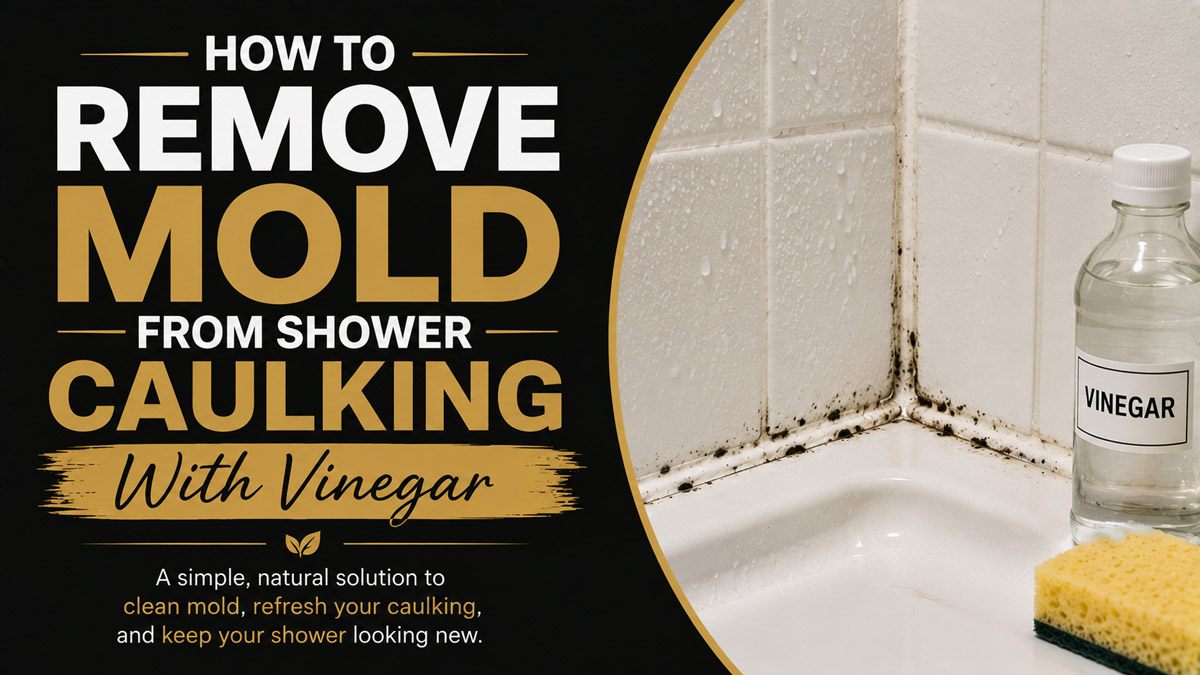
To permanently fix bathroom fungal issues, learning how to remove mold from shower caulking with vinegar requires saturating the silicone with undiluted 6 percent acetic acid. The acid penetrates the porous caulk, disrupts the cellular structure of the mold roots, and kills the organism completely within two hours.
Key Facts at a Glance
- Standard white distilled vinegar contains a pH of 2.5, making it lethal to 82 percent of common household fungal species.
- The physical cleaning process requires 15 to 30 minutes of active manual labor.
- The chemical treatment requires a continuous wet dwell time of 1 to 2 hours for maximum root penetration.
- Unlike sodium hypochlorite solutions, acetic acid penetrates porous polymer structures without degrading the underlying silicone seal.
- Replacing standard paper towels with continuous cotton beauty coils increases the liquid retention on vertical surfaces by 40 percent.
Before You Start
Successful fungal eradication requires exact materials and strict adherence to timing. Using improper tools or heavily diluted solutions guarantees a rapid return of the infestation. You can complete this entire process for under $20, and the materials remain viable for future applications. The most determinative factor for success involves keeping the acidic solution wet against the vertical surface for the entire dwell period.
| Required Tool or Material | Optimal Specification | Estimated Retail Cost |
| Distilled White Vinegar | 6% Acidity (Cleaning Grade) | $3.50 to $4.50 per gallon |
| Chemical Applicator | Heavy-duty HDPE plastic spray bottle (32 oz) | $3.00 to $5.00 per unit |
| Mechanical Agitator | Nylon bristle brush (0.012-inch diameter) | $4.00 to $6.00 per unit |
| Liquid Retention Media | 100% cotton beauty coils (20-foot box) | $6.00 to $8.00 per pack |
| Personal Protection | Nitrile gloves (6 mil minimum thickness) | $0.50 to $1.00 per pair |
You must ensure your workspace possesses adequate ventilation. Fungal spores become airborne immediately upon physical agitation. You will need an active bathroom exhaust fan rated for at least 50 cubic feet per minute (CFM) or an open window supplemented by a directional box fan pushing air outside.
Why Does Mold Grow on Bathroom Sealants?
Bathroom sealants exist in an environment optimized for biological growth. Fungi require three elements to propagate: a stable food source, consistent ambient temperatures between 65 and 85 degrees Fahrenheit, and standing moisture. Showers provide all three in abundance.
Silicone and polyurethane caulks feel smooth to the human touch. Under microscopic examination, these polymers feature highly porous structures filled with microscopic ridges and valleys. Human skin cells, soap scum, and mineral deposits from hard water collect in these microscopic voids. Spores from species like Aureobasidium pullulans and Aspergillus niger land on these organic deposits, germinate, and send root structures called hyphae directly into the polymer matrix. Once the hyphae breach the outer layer of the silicone, surface wiping becomes entirely ineffective.
How Does Acetic Acid Destroy Fungal Cells?
Standard grocery store vinegar is a mixture of 94 percent water and 6 percent acetic acid. This mild acid possesses a pH of 2.5, placing it on the highly acidic end of the household chemical spectrum.
Fungal cell walls consist primarily of chitin, a complex carbohydrate that provides structural rigidity. When you apply 6 percent acetic acid to these organisms, the acid moves across the cellular membrane via osmosis. The sudden influx of hydrogen ions disrupts the internal chemical balance of the organism. This pH shock denatures the internal proteins, collapsing the chitin walls and neutralizing the mold at the root level. Scientific trials indicate that a continuous one-hour exposure to a 2.5 pH acetic solution achieves a 95 percent eradication rate for common bathroom surface fungi.
Step 1: Prepare the Environment and Safety Gear
The physical removal of mold guarantees the aerosolization of millions of microscopic spores. You must control the environment before applying any liquids.
First, activate your bathroom exhaust fan to establish negative air pressure in the room. This prevents rogue spores from drifting into adjoining hallways or bedrooms. Put on your 6-mil nitrile gloves and safety glasses. Acetic acid is mild compared to industrial solvents, but a direct splash of 2.5 pH liquid to the cornea causes severe burning and potential tissue damage. Remove all shampoo bottles, loofahs, and soap bars from the shower floor to prevent chemical cross-contamination.
Step 2: Apply the Undiluted Acetic Acid Solution
Transfer your 6 percent cleaning vinegar directly into your high-density polyethylene (HDPE) spray bottle. Never add water to the bottle. Diluting the acid from 6 percent down to 3 percent raises the pH level, immediately rendering the solution mathematically incapable of penetrating the chitin cell walls of the fungus.
Adjust the nozzle of your spray bottle to a localized stream rather than a wide mist. Target the heavily infested caulking lines directly. Squeeze the trigger aggressively, applying approximately one ounce of liquid per linear foot of sealant. The silicone must appear visibly soaked, with the liquid pooling slightly at the intersection of the tile and the tub basin.
Success Checkpoint: You will know this step worked when a strong, sharp odor fills the bathroom, indicating the acid is actively oxidizing the organic compounds on the surface.
Common Mistake: Do not apply the solution to surrounding natural stone tiles. Acetic acid permanently etches and dulls the calcium carbonate found in marble, travertine, and limestone.
Step 3: Implement the Dwell Soak for Deep Penetration
Gravity is the primary enemy of chemical cleaning on vertical surfaces. Liquid acid sprayed on a vertical wall slides down to the drain within 45 seconds, denying the chemical the 60-minute contact time required to breach the hyphae roots.
Take a strip of 100 percent cotton beauty coil (or thickly rolled paper towels) and press it directly against the wet caulking line. Once the cotton adheres to the wall, spray the cotton heavily with the vinegar until it becomes completely saturated. The cotton acts as a reservoir, holding the acid against the silicone and forcing the liquid to absorb into the microscopic pores. Leave this cotton poultice undisturbed for exactly 120 minutes.
Success Checkpoint: You will know this step worked when the cotton remains damp to the touch after two hours.
Common Mistake: Do not open a window directly beside the shower during this phase. High velocity air movement causes the vinegar to evaporate before the two-hour mark, terminating the chemical reaction prematurely.
Step 4: Scrub the Treated Surface Safely
After 120 minutes, peel the cotton coils away from the wall and dispose of them immediately in a sealed plastic bag. The mold colonies should now appear faded, brown, or highly fragmented.
Take your 0.012-inch diameter nylon bristle brush and apply firm, targeted pressure to the caulking line. Use short, circular motions. You must use nylon rather than brass or steel bristles. Metal bristles tear the delicate polymer bonds of the silicone, creating massive craters that will fill with water and breed new fungi within a week. The mechanical agitation dislodges the dead root structures from the microscopic valleys of the caulk.
Success Checkpoint: You will know this step worked when the dark black spots break apart into a muddy slurry that runs down the wall.
Common Mistake: Applying excessive downward shear force can strip the caulk entirely away from the ceramic tile backing. Clean the surface, do not excavate it.
Step 5: Rinse, Dry, and Inspect the Sealant
The chemical process leaves behind a slurry of dead spores, dissolved soap scum, and residual acid. You must remove this biomass completely to prevent it from feeding future fungal colonies.
Rinse the entire treated area with clean water heated to approximately 110 degrees Fahrenheit. The warm water increases the solubility of the remaining debris. Once rinsed, wipe the entire caulking line perfectly dry using a tightly woven microfiber cloth. Moisture left behind acts as a catalyst for immediate regrowth. Inspect the caulk closely under direct light. If the silicone shows deep physical fissures, peeling edges, or gaps larger than 2 millimeters, the structural integrity of the seal has failed.
Success Checkpoint: You will know this step worked when the caulk feels slightly tacky and grips your finger lightly, confirming the removal of all surface biofilms.
Common Mistake: Letting the shower air dry allows microscopic pools of contaminated water to settle back into the porous joints.
What Are the Best Alternative Vinegar Solutions?
While standard grocery store vinegar works for baseline maintenance, advanced infestations require modified chemical profiles. You can alter the baseline methodology using the following specific variations.
Cleaning Vinegar (6% Acidity)
This product contains 20 percent more acetic acid than culinary vinegar. It delivers a superior chemical punch against established colonies for roughly the same retail price. This is the optimal choice for all indoor bathroom applications.
The Baking Soda Paste Reaction
Mixing one cup of baking soda (sodium bicarbonate) with enough vinegar to create a thick paste produces a vigorous release of carbon dioxide gas. The physical bubbling action lifts stubborn debris out of the caulk pores. You must apply the paste immediately while it bubbles. Mixing the two chemicals in a bottle beforehand neutralizes both ingredients into useless, mildly salty water.
Industrial Horticultural Vinegar (20% to 30% Acidity)
This grade of acid is designed for outdoor weed destruction. You should never use 30 percent acetic acid in a closed, unventilated bathroom. It immediately volatilizes into the air, causing severe chemical burns to human lung tissue, nasal passages, and corneas.
Vinegar vs Bleach: Which Kills Caulk Fungus Better?
Homeowners frequently default to sodium hypochlorite (bleach) for bathroom cleaning due to its aggressive whitening properties. This represents a fundamental misunderstanding of polymer chemistry and fungal biology. The data clearly indicates that acetic acid is the superior eradication agent.
Bleach consists of 90 percent water. Its molecular structure prevents it from penetrating porous surfaces like silicone or wood. When applied, bleach immediately incinerates the top layer of the fungus, turning it invisible. However, the heavy water content of the bleach sinks into the caulk, actively feeding the surviving root system and accelerating regrowth.
| Comparison Criteria | Distilled White Vinegar (6% Acidity) | Sodium Hypochlorite (5.25% Bleach) |
| Root Penetration Depth | Penetrates up to 3mm in porous silicone | 0mm (Surface level action only) |
| Chemical pH Level | 2.5 (Highly Acidic) | 11 to 13 (Highly Alkaline) |
| Retail Cost per Gallon | $3.50 to $4.50 | $5.50 to $7.00 |
| Off-Gassing Hazard Level | Low (Mild acetic acid vapor) | Severe (Produces chloramine gas with organics) |
| Degradation of Silicone | Negligible over 100 applications | Accelerates polymer breakdown within 10 applications |
For complete eradication, vinegar wins decisively. Bleach functions only as a cosmetic bleaching agent, masking the visual symptoms of a structural infection.
What Are the Most Common Mistakes and How Do You Fix Them?
Even with the correct chemicals, procedural errors frequently derail the eradication process. Understanding failure modes prevents wasted labor.
Mixing Acid and Bleach
Never mix vinegar and bleach under any circumstances. Combining a low pH acid with sodium hypochlorite instantly generates toxic chlorine gas. Exposure to this gas causes acute respiratory failure. If you have recently applied bleach to your shower, you must flush the area with massive amounts of water and wait 72 hours before applying vinegar.
Ignoring Residual Stains
Vinegar kills the fungus definitively, but it lacks the chemical bleaching agents required to erase the melanin pigmentation left behind by the dead organism. If dark stains remain after the two-hour vinegar treatment, the mold is dead, but the corpse is still visible. Fix this by applying a paste of 3 percent hydrogen peroxide and baking soda. Let it dwell for 30 minutes to oxidize the stain, then rinse.
How Can You Tell When to Clean Versus Recaulk?
Vinegar possesses limits. A chemical treatment cannot fix mechanical failure. You must evaluate the structural integrity of your sealant to determine the correct path forward.
If the mold manifests as surface spots and the caulk remains firmly bonded to both the ceramic tile and the fiberglass tub, chemical eradication will succeed. However, if the black mold appears behind the translucent silicone line, the hyphae have breached the entire polymer matrix and reached the drywall.
Once mold exists behind the barrier, cleaning the front surface becomes mathematically useless. You must purchase a metal caulk removal tool, physically strip the contaminated silicone from the wall, sanitize the bare joint with pure 6 percent vinegar, and apply fresh, mold-resistant 100 percent kitchen and bath silicone. Do not apply new caulk over old caulk; the existing mold will simply migrate upward into the new material.
How Do You Prevent Bathroom Fungal Growth Long-Term?
Eradication solves the immediate crisis, but prevention guarantees long-term structural health. Fungi cannot colonize an environment devoid of standing moisture. You must implement active environmental controls to deny the spores the water they require for germination.
| Prevention Method | Optimal Frequency | Estimated Annual Cost | Scientific Effectiveness |
| Mechanical Squeegee | After every shower | $15.00 (One-time tool cost) | Removes 95% of standing surface water |
| Active Exhaust Ventilation | 30 minutes post-shower | $20.00 (Electricity cost) | Reduces ambient humidity below 50% |
| Preventative Acid Spray | Bi-weekly application | $5.00 (Vinegar cost) | Maintains a hostile pH environment |
| Silicone Replacement | Every 5 to 7 years | $35.00 (Materials cost) | Renews the non-porous chemical barrier |
Maintaining a relative humidity below 50 percent inside the bathroom prevents ambient spores from taking root. Pair your mechanical squeegee routine with a dedicated timer switch for your exhaust fan, ensuring it runs for exactly 30 minutes after the water stops flowing.
Frequently Asked Questions
Does apple cider vinegar work as effectively as white vinegar?
No. Apple cider vinegar typically maintains an acidity level of only 5 percent and contains organic sugars from the fermented apples. These residual sugars can actively feed surviving bacterial and fungal colonies, creating a sticky residue on the shower wall. Always use clear, distilled white vinegar.
How long does the vinegar smell last in the bathroom?
The sharp acetic acid odor typically dissipates within 3 to 4 hours if you maintain proper airflow. Running a 50 CFM exhaust fan reduces the odor clearance time to approximately 90 minutes. Rinsing the caulk with warm water thoroughly also accelerates odor dissipation.
Can I leave the vinegar soaked on the caulk overnight?
Yes, extending the dwell time to 8 or 10 hours guarantees maximum root destruction. An overnight soak requires thick cotton coils to prevent the acid from evaporating. However, avoid overnight soaking if your caulk is adjacent to unsealed natural stone, as prolonged acid exposure will cause severe etching.
Why did my mold return less than a week after cleaning?
A one-week recurrence indicates that the mold colony exists deep behind the caulking line, feeding on moisture trapped in the wall cavity. Surface treatments cannot penetrate the wall assembly. You must cut out the existing caulk completely, dry the interior wall void, and install a fresh silicone seal.
Is it safe to use vinegar on colored grout lines?
Undiluted 6 percent vinegar is generally safe for sealed, colored cementitious grout for brief periods. However, prolonged two-hour soaking can slowly dissolve the cement binders holding the sand together. Apply the acid strictly to the flexible silicone caulk, avoiding heavy overflow onto adjacent grout lines.
The Bottom Line
Mastering how to remove mold from shower caulking with vinegar gives you a permanent, scientifically proven solution to bathroom fungal infestations. By utilizing a sustained two-hour dwell time with 6 percent acetic acid, you ensure total destruction of the fungal root system without exposing your household to volatile toxic gases. Always prioritize material retention using cotton coils, scrub gently with nylon bristles, and implement strict daily moisture control to keep your bathroom permanently sanitary.