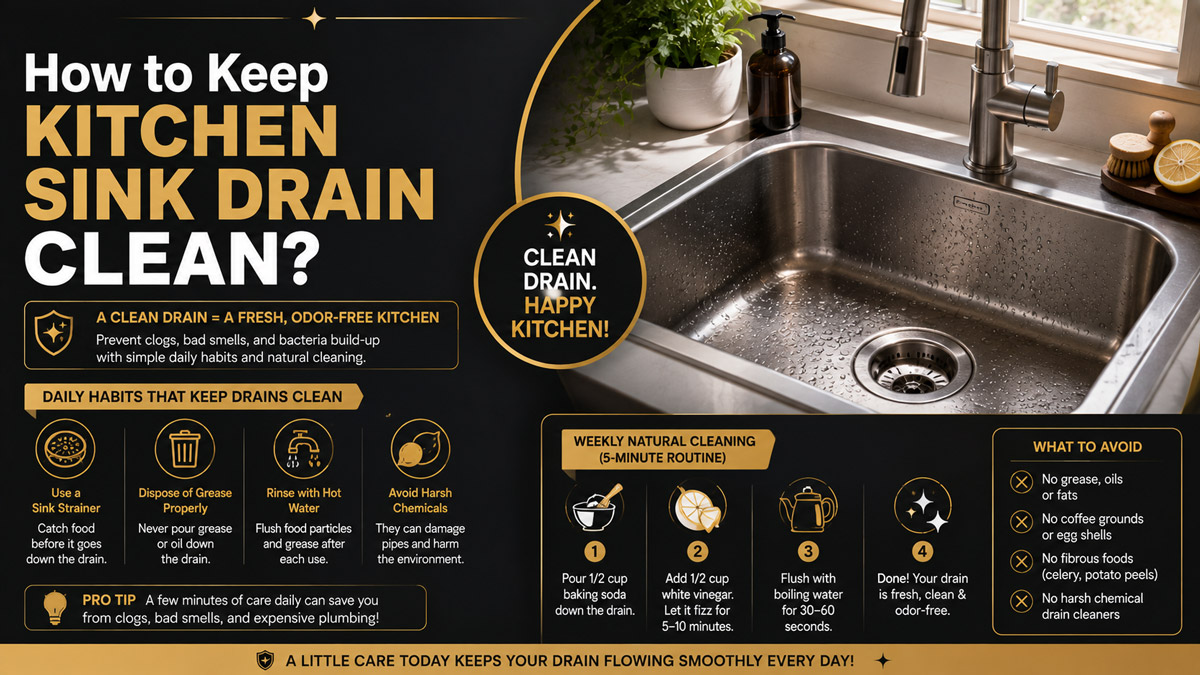
To successfully learn how to keep kitchen sink drain clean, fresh, and flowing freely, you must apply a 20-minute weekly maintenance routine. By mechanically scrubbing the entrance, triggering a trapped baking soda and vinegar reaction, and flushing with hot water, you eliminate grease and odors. Trapping the chemical reaction inside the pipe is the single most critical factor for success.
Before You Start
- Time Required: 20 minutes (5 minutes active, 15 minutes waiting).
- Difficulty: Beginner.
- Cost: Under $2 per treatment.
- Tools & Materials:
- 1/2 cup baking soda
- 1 cup white vinegar
- 1 kettle of boiling water (approx. 4–6 cups)
- 1 tablespoon degreasing dish soap
- 1 old toothbrush
- 1 drain stopper, small plate, or wet rag
- Paper towels
- Prerequisites: Ensure the sink is completely empty of dishes and standing water before beginning.
5 Steps to Clean and Deodorize Your Drain
Step 1: Scrub the Drain Opening and Splash Guard
Remove the sink strainer and scrub away visible slime around the drain opening using an old toothbrush and one tablespoon of degreasing dish soap. If you have a garbage disposal, lift the rubber flaps of the splash guard and aggressively scrub the black, greasy underside. Run warm tap water for exactly 10 seconds to flush these loose particles down the pipe.
- Success Checkpoint: You’ll know it worked when the rubber flaps feel squeaky clean to the touch and no black residue transfers to your finger.
- Common Mistake: Only cleaning the top of the splash guard. The underside is the primary source of kitchen sink odors.
Step 2: Dry the Drain Interior Completely
Wipe the stainless steel rim and the first few inches inside the drain opening bone dry using a paper towel. Stop the tap from dripping.
- Success Checkpoint: The metal surface inside the drain has a matte appearance with no visible water droplets.
- Common Mistake: Skipping this step. If you pour baking soda into a wet drain, it immediately turns into a paste and clogs the entrance rather than falling deep into the P-trap where it is needed.
Step 3: Insert the Baking Soda Deep into the Pipe
Pour exactly 1/2 cup of dry baking soda directly down the center of the drain opening. Tap the sides of the sink basin gently with your knuckles to vibrate any lingering powder down the hole.
- Success Checkpoint: The visible surface of the sink is clean, and the baking soda is resting out of sight down in the pipe.
Step 4: Trigger and Trap the Vinegar Reaction
Pour 1 cup of white vinegar down the drain immediately after the baking soda, then instantly cover the drain opening with a stopper or small plate. If you have a double-basin sink, plug the second drain with a wet rag simultaneously. Leave the drain completely undisturbed for 15 minutes.
- Success Checkpoint: You will immediately hear an intense fizzing and crackling sound. The stopper traps the expanding carbon dioxide gas, forcing the bubbling action downwards against the grease rather than up into the sink.
- Common Mistake: Leaving the drain uncovered. The path of least resistance for the expanding gas is upward; without a stopper, the cleaning power evaporates into the open air.
Step 5: Perform the Final Hot Water Flush
Pour a full kettle (4–6 cups) of boiling water directly down the drain to melt and flush away the loosened soap scum and grease. Pour slowly in a steady stream directly into the center of the hole to avoid splashing scalding water onto your hands.
- Success Checkpoint: The water should drain instantly, forming a tight, fast-moving vortex at the bottom of the sink.
- Common Mistake: Pouring rapidly from a high distance, causing dangerous splashback.
Common Mistakes and How to Fix Them
The Drain Smells Even After Cleaning
- The Cause: Rotting food particles are stuck to the garbage disposal blades or trapped under the rubber baffle, bypassing the chemical reaction.
- The Fix: Disconnect the disposal power. Fill the disposal with 2 cups of ice cubes and 1/2 cup of coarse rock salt. Turn on the cold water and run the disposal until the ice is crushed. The hard ice and salt physically scour the blades clean.
Water Drains Slowly After the Flush
- The Cause: The baking soda and vinegar successfully loosened a large chunk of congealed grease, but it became lodged further down the P-trap.
- The Fix: Use a standard cup-style sink plunger. Fill the sink basin with 2 inches of warm water. Block the second sink drain tightly with a wet rag (vital for creating a vacuum), place the plunger over the clogged drain, and plunge vigorously 5–10 times.
Toxic Gas Formation
- The Cause: Mixing bleach into a sink that was recently treated with vinegar (or vice versa). This chemical combination instantly creates toxic chlorine gas.
- The Fix: Evacuate the kitchen area immediately, open nearby windows for cross-ventilation, and once safe, flush the drain with massive amounts of cold tap water for 5 straight minutes to dilute the chemicals.
Process Variations for Different Setups
Thin or Older PVC Pipes
Intense boiling water (212°F / 100°C) can deform, soften, or melt thin plastic P-traps over time. If your under-sink plumbing utilizes cheap PVC or flexible plastic accordion pipes, do not use boiling water. Instead, turn your kitchen faucet to its hottest setting and run hot tap water (usually around 120°F–140°F) for 60 seconds to flush the drain safely.
Heavy Garbage Disposal Usage
If you frequently grind fibrous foods (celery, potato peels, coffee grounds), the standard chemical reaction may not be abrasive enough to clear the resulting paste. Once a month, supplement this guide by grinding a sliced lemon or lime (rinds included) along with cold water to break down fibrous buildup and introduce natural citric acid degreasers.
Time, Cost, and Frequency
- How Long Does It Take: Expect to spend 5 minutes of active cleaning and 15 minutes of passive waiting.
- What Does It Cost: Pennies per application. A bulk box of baking soda and a gallon of white vinegar will cover 6 months of weekly maintenance for under $10 total.
- How Often: Perform this exact routine once every 7 days. Weekly repetition prevents grease from solidifying to the point where commercial chemical drain cleaners become necessary.
Frequently Asked Questions
Can I use commercial chemical drain cleaners weekly?
No. Caustic store-bought drain cleaners generate intense heat inside the pipe to dissolve clogs. Using them weekly will slowly erode older metal plumbing, warp PVC pipes, and destroy the rubber seals in your garbage disposal.
Is dish soap enough to keep a drain clear on its own?
While degreasing dish soap prevents minor fat buildup during daily washing, it cannot dissolve hard water minerals or eliminate bacterial slime on its own. It must be paired with the mechanical agitation of baking soda and the acidity of vinegar for complete maintenance.
Should I pour cooking fat down the drain if I flush it with hot water?
Never. Liquid grease mixed with hot water simply travels further down your home’s main sewer line before cooling, solidifying, and creating severe, expensive blockages deep in your plumbing system. Wipe greasy pans with a paper towel before washing.
Why do you specify white vinegar instead of apple cider vinegar?
White vinegar has a standardized acidity level (usually 5%) which creates a reliable, vigorous reaction with baking soda. Apple cider vinegar is often unfiltered, contains sugars that leave a sticky residue, and is unnecessarily expensive for plumbing maintenance.
Mastering how to keep kitchen sink drain clean requires nothing more than consistency. By treating your plumbing to this simple baking soda and vinegar flush every weekend, you will never have to deal with surprise clogs, foul odors, or emergency plumbing bills again.