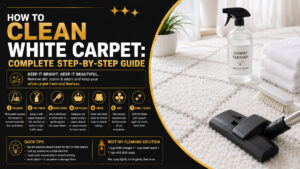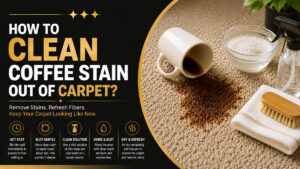
Carpet stays clean longest when loose soil is removed before foot traffic grinds it into the pile, spills are treated immediately, and low-moisture or hot-water deep cleaning is matched to the carpet fiber. Vacuum high-traffic zones at least twice weekly, use entry mats, and deep-clean when soil remains after vacuuming or according to the manufacturer’s care schedule.
Key Facts at a Glance
- Most active households should vacuum carpet at least twice weekly, while homes with pets often need daily or near-daily cleaning in traffic lanes.
- Slow vacuum passes remove more embedded soil than fast passes because the suction head has more time to lift grit from the pile.
- Hot water extraction is a deep-cleaning process, not necessarily literal steam cleaning; excessive water and detergent create drying and resoiling problems.
- Carpet should dry completely within roughly 6-12 hours after a properly performed residential extraction, although humidity, padding, and airflow can extend that period.
- Blot stains from the outside toward the center, and test every cleaning solution on an inconspicuous area before wider use.
- Wool, sisal, seagrass, jute, and other natural fibers require label-specific care and can be damaged by excess water or alkaline products.
Why Does Carpet Get Dirty So Quickly?
Carpet becomes visibly dirty because outdoor grit, skin flakes, food particles, oils, and pet material settle between fibers and then move deeper under pressure. Foot traffic acts like repeated abrasion: sharp mineral particles rub against yarn surfaces, while oily residue binds additional soil to the pile.
The Carpet and Rug Institute states, “The most important thing you can do to keep your carpet looking good is to vacuum regularly.” That advice matters because routine dry-soil removal prevents contamination from becoming a wet-cleaning problem.
Clean from the top down. Dust ceiling fans, shelves, and baseboards before vacuuming, then remove shoes at the door and place walk-off mats at entrances. A scraper mat outside removes coarse particles, while an absorbent mat inside reduces moisture and fine soil transfer.
What Makes a Carpet-Care Routine Effective?
An effective routine has four layers: prevention, dry removal, targeted spot treatment, and periodic restorative cleaning. Prevention reduces incoming soil, vacuuming removes abrasive particles, spot treatment stops liquid contamination from setting, and deep cleaning removes residue that ordinary suction cannot reach.
Carpet cleaning chemicals also work through specific mechanisms. Agitation loosens soil, detergent suspends it, and extraction or vacuuming removes the suspended material. Leaving detergent behind reverses the benefit because sticky residue attracts soil after the carpet dries.
How Often Should You Vacuum Carpet?
Vacuum carpet two times per week in ordinary active households, increase to three or more times in entrances and hallways, and vacuum pet areas daily when hair, dander, or tracked litter accumulates. Frequency should follow soil loading rather than a rigid calendar.
| Household condition | Main carpet areas | Typical vacuum frequency | Deep-cleaning interval |
|---|---|---|---|
| One or two adults, no pets | Bedrooms and living rooms | 1-2 times weekly | Every 12 months |
| Children or frequent visitors | Living rooms and corridors | 2-4 times weekly | Every 6-12 months |
| One or more pets | Traffic lanes and pet zones | Daily to 4 times weekly | Every 3-6 months |
| Allergy-sensitive household | All occupied rooms | 3-7 times weekly | Every 3-6 months |
| Rental turnover or heavy occupancy | Entire carpeted area | Daily during occupancy | Before each turnover |
Use two slow passes in low-traffic rooms and four to six passes in heavily used lanes, changing direction on alternating sessions. Empty the bag or canister before it becomes packed, clean washable filters as directed, and replace disposable filters on the manufacturer’s schedule.
A motorized brush roll lifts hair from cut-pile carpet, but it can snag looped Berber, fray weakened edges, or damage delicate wool. Set the height so the brush contacts the pile without making the vacuum difficult to push.
How Should You Vacuum for Better Soil Removal?
Vacuum in parallel lanes with overlapping passes, moving slowly enough that the machine removes visible grit rather than redistributing it. Begin at the farthest corner, work toward the exit, and use a crevice tool along baseboards and under furniture once weekly.
Do not rush corners. Edges collect lint and dry soil because ordinary vacuum heads rarely seal against baseboards. Move lightweight furniture periodically, but never drag heavy furniture across the pile.
What Should You Do Before Deep Cleaning Carpet?
Before deep cleaning carpet, identify the fiber, read the manufacturer’s warranty and care label, vacuum thoroughly, remove movable furniture, and test the cleaning solution in a hidden area. The preparation usually takes 20-45 minutes and determines whether wet cleaning produces a clean, evenly colored, fast-drying result.
Before You Start
| Requirement | Typical specification |
|---|---|
| Time | 2-4 hours for a 400-600-square-foot area, plus 6-12 hours drying |
| DIY rental cost | $30-$50 for a machine, plus $15-$25 for solution |
| Materials | Vacuum, extractor, white towels, measuring cup, gloves, fan |
| Cleaning solution | Product-labeled dilution, commonly 2-4 ounces per gallon |
| Water | Hot tap water unless the machine or carpet label specifies otherwise |
| Prerequisite | Hidden-area test, clear floor, functioning suction and filters |
Never assume a carpet can tolerate the same product as upholstery or hard flooring. Wool and plant fibers can bleed, shrink, brown, or develop permanent texture changes when exposed to unsuitable moisture, heat, agitation, or pH.
How to Deep-Clean Carpet at Home
A careful home extraction follows seven steps and commonly takes 2-4 hours before drying. The most important factor is moisture control: use enough solution to suspend soil, then make enough dry passes to recover it without saturating the backing or pad.
Step 1: Remove Loose Soil
Vacuum the entire area slowly, then make additional passes along entrances, hallways, and visible traffic lanes. Pick up pet hair, gravel, threads, and debris by hand rather than forcing large particles through the vacuum.
You will know this step worked when the vacuum canister still collects little loose material after a final pass. The common mistake is wetting first, which turns dry grit into a heavier, more difficult slurry.
Step 2: Treat Spots Individually
Scrape solids with a spoon, blot liquid spills with white towels, and apply a small amount of compatible spot cleaner to the towel or stain rather than flooding the carpet. Work from the outside edge toward the center and allow the label-specified dwell time, often 5-10 minutes.
You will know the treatment is working when color transfers to the towel without spreading outward. The common mistake is aggressive scrubbing, which distorts pile direction and can untwist or fuzz the yarn.
Step 3: Prepare the Extractor
Fill the machine with hot tap water and measure low-residue detergent according to the product label. Do not use boiling water, dish soap, laundry detergent, or an unmeasured homemade mixture unless the carpet and machine manufacturers specifically approve it.
You will know the machine is ready when the tanks are seated, the filter is clean, and the spray nozzle produces an even pattern. The common mistake is adding extra detergent because more foam appears to promise more cleaning.
Step 4: Clean in Small Sections
Divide the room into sections of approximately 25-40 square feet. Make one controlled wet forward-and-back pass, then make two or three slow extraction-only passes without spraying.
You will know the section is adequately cleaned when the carpet looks evenly damp rather than glossy or waterlogged. The common mistake is holding the trigger continuously, which overloads the face yarn, backing, and pad.
Step 5: Rinse When the Product Requires It
Some detergents require a clear-water rinse, while others are formulated for single-pass extraction. Follow the label rather than assuming that extra rinsing always improves results, because unnecessary water can lengthen drying and increase backing exposure.
You will know the rinse is sufficient when recovered water becomes less foamy and the carpet has no slippery or tacky feel after drying. The common mistake is leaving alkaline or sticky residue behind.
Step 6: Restore Carpet Direction
Gently groom the pile in its original direction with a carpet rake or soft brush, keeping pressure light. Grooming removes visual marks from the machine head and improves airflow through the pile.
You will know the pile is correctly positioned when shading appears consistent from the room entrance. The common mistake is brushing wet wool, looped carpet, or weakened areas with enough force to pull yarn.
Step 7: Dry the Room Completely
Open doors, run fans, use a dehumidifier, and keep people and pets off the carpet until it is fully dry. Place furniture on protective tabs or foil if it must return before drying, and do not replace rugs while moisture remains underneath.
You will know the carpet is dry when the pile and pad feel neutral rather than cool or damp, and no musty odor develops. The common mistake is judging dryness only by the surface, because padding can retain water after the face fibers feel dry.
Which Cleaning Method Fits the Carpet?
Hot water extraction usually provides the most complete residential soil removal, while encapsulation offers faster drying for lightly to moderately soiled synthetic carpet. Dry compound cleaning suits moisture-sensitive materials, and bonnet cleaning is mainly an interim surface process rather than a restorative treatment.
| Method | Moisture and drying | Suitable carpet | Main limitation |
|---|---|---|---|
| Hot water extraction | Moderate to high; typically 6-12 hours | Nylon, polyester, many wool carpets when approved | Overwetting can damage backing or pad |
| Encapsulation | Low; typically 20-60 minutes | Commercial nylon and low-pile synthetic carpet | Limited removal of deep sand and heavy grit |
| Dry compound or powder | Very low; typically under 1 hour | Sisal and selected moisture-sensitive fibers | Solvent and powder residues require thorough removal |
| Bonnet cleaning | Low to moderate; typically 1-4 hours | Commercial interim maintenance | Can move soil deeper and wear pile if overused |
“Steam cleaning” is often used as a consumer term for hot water extraction, but the processes are not identical. Many extractors spray heated water and detergent, agitate the carpet, and recover the solution with vacuum; the machine may produce little or no actual steam.
Hot water extraction is not automatically the best choice for every carpet. It is unsuitable for unapproved natural fibers, loose seams, unstable dyes, or areas where the backing cannot dry quickly. A professional should inspect those conditions first.
Is Encapsulation Better Than Hot Water Extraction?
Encapsulation is better for frequent, low-moisture maintenance in commercial or lightly soiled synthetic carpet, while hot water extraction is better when embedded soil, allergen-containing debris, or detergent residue must be physically flushed and recovered. The correct choice depends on fiber, soil depth, drying capacity, and warranty instructions.
How Do You Keep Carpet Clean With Pets?
Pet households should combine daily dry removal, immediate spot treatment, and enzyme-based products for protein-containing urine or vomit contamination. A vacuum with a sealed filtration system and a suitable motorized head removes hair and dander, but no vacuum can correct urine that has reached the pad.
Blot fresh urine without pressing downward, then use an enzymatic cleaner labeled for carpet and allow its full contact time. Ultraviolet light can help locate older urine deposits, although it cannot identify every contaminant or replace odor assessment.
Deep-clean pet areas every 3-6 months when traffic is heavy. If odor returns after drying, the contamination may be in the backing or pad, requiring localized treatment or replacement rather than repeated surface shampooing.
How Do You Clean Carpet for Allergies?
Allergy-focused carpet care relies on frequent HEPA-filtered vacuuming, moisture control, and removal of settled dust rather than perfume or deodorizer. Vacuum three or more times weekly in occupied rooms, use slow passes, and keep sensitive occupants away during vacuuming and wet extraction.
The American Lung Association recommends controlling indoor allergens through regular cleaning and moisture management, but carpet cannot be treated as a sterilized surface. Hot water extraction can remove allergen-bearing soil, yet a 212°F claim is not a safe universal operating target for residential carpet.
Avoid loose powders if they become airborne during application or recovery. Also avoid heavy fragrance products, which add volatile compounds without removing the soil causing the odor.
How Do You Remove Common Carpet Stains?
Treat carpet stains according to the material, not merely the color. Use white towels, small applications, clean water where appropriate, and a hidden-area test; never mix bleach, ammonia, acids, or commercial products.
| Stain type | First action | Suitable next step | Avoid |
|---|---|---|---|
| Coffee, tea, juice | Blot with a dry white towel | Mild labeled carpet spotter, then blot | Hot rubbing and colored cloths |
| Grease or oil | Lift solids without spreading | Manufacturer-approved solvent spotter | Flooding with water first |
| Pet urine | Blot immediately | Enzyme cleaner with full dwell time | Steam before odor treatment |
| Mud | Let the deposit dry | Vacuum, then spot-treat residue | Wetting fresh mud into slurry |
| Candle wax | Harden with ice in a bag | Lift flakes and use approved heat method | Direct high heat on fibers |
| Red wine | Blot and dilute carefully | Carpet-safe stain product | Salt piles and aggressive scrubbing |
Stain removal may fail when dye has chemically altered the fiber, bleach has stripped color, or a liquid has reached the backing. Professional treatment can improve appearance, but it cannot always restore original color.
How Do You Dry Carpet Safely?
Carpet dries safely when the surface, backing, and pad receive continuous airflow and indoor humidity stays controlled. Typical extraction drying takes 6-12 hours, but dense pile, cold weather, poor ventilation, and wet padding can extend the period to 24 hours or longer.
Use two or more fans for a large room, run a dehumidifier in humid weather, and avoid closing the room. Do not apply vinegar to damp carpet as a default odor cure; vinegar can leave an acidic residue, and it does not correct water trapped beneath the carpet.
If the carpet remains wet after 24 hours, feels squishy, develops a musty odor, or shows brown discoloration, stop adding products and contact a water-damage or carpet-cleaning professional. Mold risk depends on moisture duration and material conditions, not a universal fixed hour.
What Are the Most Common Carpet-Cleaning Mistakes?
The most damaging errors are overwetting, over-dosing detergent, scrubbing, ignoring filters, and treating every fiber identically. Each mistake either pushes contamination deeper, damages yarn, slows drying, or creates residue that attracts new soil.
- Overwetting: Reduce spray passes, increase extraction-only passes, and improve airflow. Persistent dampness requires pad and backing inspection.
- Excess detergent: Re-extract according to the product’s rinse instructions. Sticky carpet that resoils quickly often contains residue rather than insufficient soap.
- Aggressive scrubbing: Stop rubbing, blot with a white towel, and groom the pile after drying. Fuzzing or untwisting is usually permanent.
- Clogged vacuum filter: Empty the bag or canister and clean or replace filters before judging the machine’s performance.
- Wrong brush setting: Raise or disable the brush on looped, shag, delicate, or natural-fiber carpet.
- Furniture returned too soon: Use protective tabs and wait until both carpet and pad are dry to prevent dye transfer, rust marks, or compression.
A practitioner’s useful rule is to leave less water in the carpet than seems necessary. Machines remove soil through recovery, not through the amount of liquid sprayed.
How Should You Care for Different Carpet Fibers?
Carpet-fiber chemistry determines how much heat, moisture, alkalinity, and agitation the material can tolerate. Nylon is resilient but can show stains without protective treatment, polyester resists many water-based stains but can retain oily soil, and wool requires gentler, label-approved procedures.
| Fiber or material | Typical strength | Main risk | Care approach |
|---|---|---|---|
| Nylon | Resilient pile and strong wear resistance | Staining and heat-set texture changes | Vacuum often; approved extraction works well |
| Polyester | Good resistance to many water-based stains | Oily soil and pile crushing | Use low-residue products and slow vacuuming |
| Wool | Natural resilience and appearance retention | Shrinkage, dye bleeding, alkaline damage | Use wool-approved products and trained cleaners |
| Sisal or seagrass | Natural texture and low moisture tolerance | Browning, shrinkage, edge damage | Prefer dry methods and manufacturer guidance |
| Olefin | Moisture and bleach resistance in some products | Crushing and oily soil | Use controlled agitation and thorough extraction |
Fiber labels do not tell the whole story. Backing, dye method, pile construction, installation age, seams, and previous chemical treatments can change the safe method.
What Does Professional Carpet Cleaning Cost?
Typical professional residential carpet cleaning costs about $30-$60 per room or $0.25-$0.50 per square foot, while complicated pet treatment, stairs, moving furniture, minimum service charges, and metropolitan labor rates increase the total. Request an itemized quote that separates cleaning, stain treatment, deodorizing, and protection.
| Service situation | Typical price range | Typical time on site | Main cost variable |
|---|---|---|---|
| One standard room | $30-$60 | 30-60 minutes | Minimum visit charge |
| 400-600 square feet | $100-$250 | 1.5-3 hours | Soil level and furniture |
| Pet urine treatment | $75-$300 additional | 30-120 minutes | Pad and backing penetration |
| Stairs | $3-$10 per step | 30-90 minutes | Number and construction |
| Whole-home professional extraction | $200-$600 | 3-6 hours | Area, access, and region |
DIY rental equipment can cost $45-$75 before accessories, solution, transportation, and the value of your time. Professional cleaning becomes more economical when the carpet is expensive, heavily soiled, wool, unusually wet, or covered by a warranty with specific maintenance requirements.
How Do You Fix Carpet Problems After Cleaning?
Carpet problems after cleaning require diagnosis before another chemical application. Wicking, browning, rippling, odor, and sticky resoiling have different causes, so repeating the same cleaning process can worsen the defect.
| Symptom | Likely cause | Immediate response | Professional threshold |
|---|---|---|---|
| Stain returns while drying | Wicking from backing or pad | Blot, towel, and weight lightly | Returns after a second controlled treatment |
| Carpet feels sticky | Detergent residue | Label-approved rinse extraction | Persists after drying |
| Musty odor | Slow drying or wet pad | Fans, dehumidifier, inspection | Odor remains beyond 24-48 hours |
| Ripples or buckles | Moisture, installation, or tension issue | Dry fully without stretching | Waves remain after drying |
| Brown edges or patches | Browning from backing or natural fiber | Stop wetting and document area | Color change persists |
| Fuzzy or pulled loops | Excess agitation or snagging | Stop brushing and vacuum gently | Visible yarn damage |
Wicking occurs when dissolved soil in the backing travels upward as moisture evaporates. A clean absorbent towel placed over the spot during drying can reduce surface migration, but recurring wicking often requires controlled professional treatment.
Permanent ripples do not reliably disappear within 48 hours. Some temporary looseness resolves as carpet dries, but persistent buckling usually requires inspection and possible power-stretching, not more water.
How Can You Keep Carpet Clean Longer?
The lowest-cost maintenance is soil prevention at entrances and prompt removal of abrasive particles. Use exterior and interior mats, remove outdoor shoes, keep food in designated areas, trim pet nails, place felt protectors under furniture, and rotate rugs or furniture positions to distribute wear.
Schedule a monthly inspection of seams, stairs, thresholds, and traffic lanes. These areas reveal installation problems and soil accumulation before the entire room requires restorative cleaning.
What Is the Best Routine for a Busy Home?
For a busy home, vacuum entrances and traffic lanes daily or every other day, vacuum remaining rooms twice weekly, treat spills immediately, and inspect pet zones weekly. Deep-clean every 3-6 months when children, pets, or allergies create sustained soil loads.
For a low-traffic home, vacuum occupied rooms once or twice weekly and arrange annual deep cleaning if the carpet remains dry, odor-free, and visibly clean. Manufacturer instructions override generic schedules.
FAQ
Can I vacuum carpet every day?
Yes, daily vacuuming is safe for most durable synthetic carpet when the brush height is correct and the vacuum does not snag loops. Daily cleaning is useful for pets, tracked grit, and allergy-sensitive homes. Delicate wool, shag, and looped carpet need gentler settings and should be monitored for fuzzing or pulled yarn.
Should I use baking soda on carpet?
Baking soda can temporarily absorb odor at the surface, but it does not remove contamination in the backing or pad. Fine powder can also load vacuum filters and become airborne. Use a small amount only when the carpet and vacuum manufacturer permit it, vacuum thoroughly, and address the odor source.
How long should I wait before walking on cleaned carpet?
Wait until the carpet feels completely dry, commonly 6-12 hours after extraction. If walking is unavoidable, use clean socks and avoid replacing furniture or rugs until the pad is dry. Shoes, pets, and heavy furniture can reintroduce soil or create compression while the fibers remain vulnerable.
Can carpet cleaner remove old stains?
Carpet cleaner can remove old stains when the colorant remains on or near the fiber surface, but success is limited by dye chemistry, heat damage, bleaching, and contamination in the backing. A professional may improve the appearance, yet some permanent discoloration cannot be cleaned away.
How do I stop carpet from smelling after cleaning?
Dry the carpet and pad rapidly with fans and dehumidification, then identify the source of the odor. Do not mask a persistent smell with fragrance or vinegar. Pet urine, spilled milk, contaminated padding, and microbial growth may require localized extraction, enzyme treatment, pad replacement, or water-damage remediation.
The Bottom Line
The most reliable way to keep carpet clean is to prevent incoming soil, vacuum slowly on a schedule matched to household traffic, treat spills before they migrate, and deep-clean with a fiber-compatible method. Use controlled moisture, minimal detergent, complete drying, and professional help for natural fibers, contaminated padding, permanent ripples, or recurring odors. That routine keeps “how to keep carpet clean” from becoming repeated emergency stain removal.