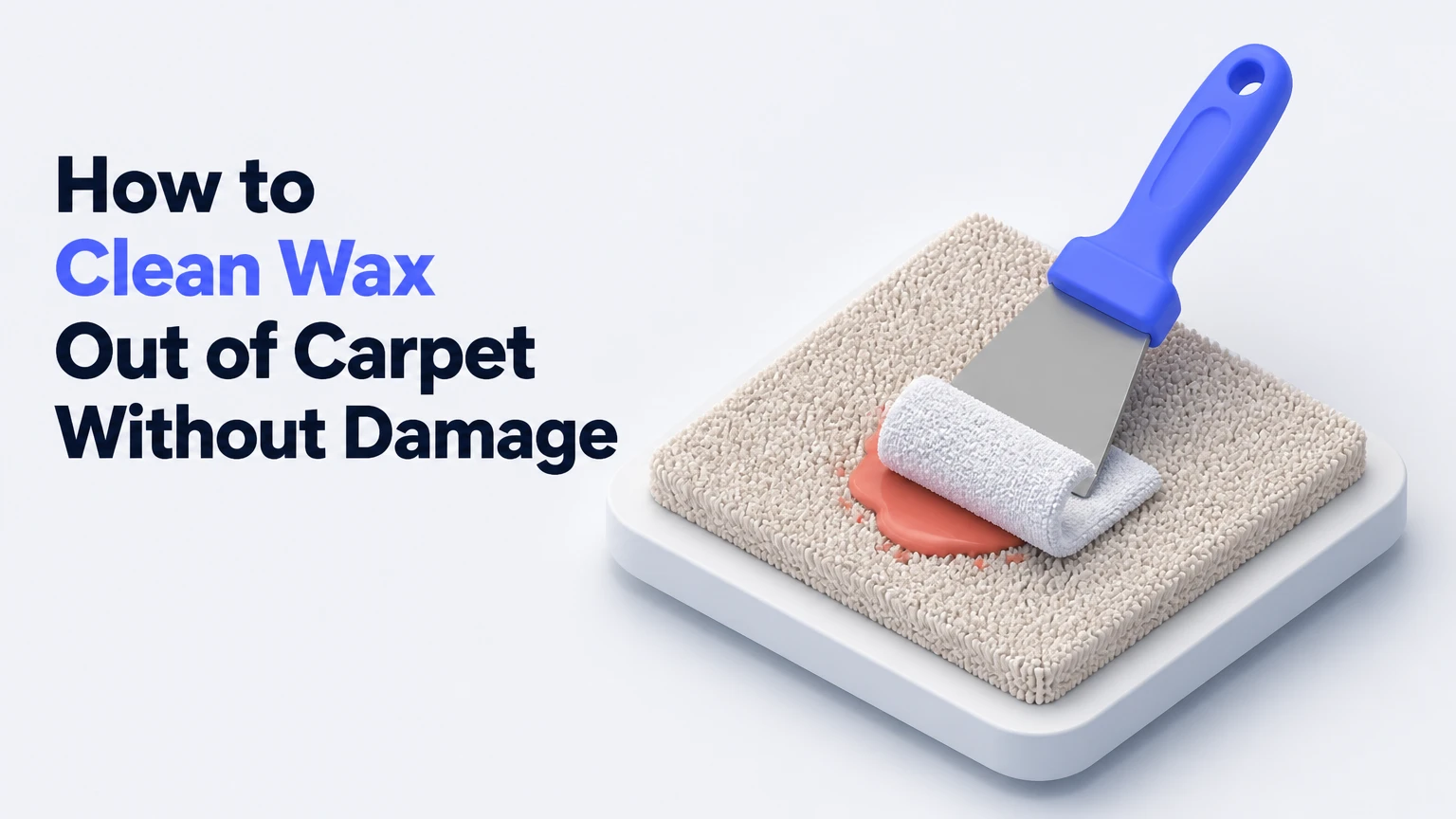
To clean wax out of carpet, harden the spill with ice, scrape away the brittle pieces, then transfer remaining wax into plain paper with controlled low heat. Blot any dye or oily residue afterward. The process usually takes 20-30 minutes, but wool, silk, antique, glued, or visibly melted carpet requires professional treatment.
Key Facts / At a Glance
Ice hardens candle wax in approximately 10-15 minutes, making the spill safer to remove mechanically.
A dull spoon or butter knife removes surface wax without cutting carpet yarn when held nearly parallel to the pile.
Plain white paper or unprinted kraft paper absorbs liquefied wax; newspaper and colored paper can transfer ink.
A hairdryer on low is easier to control than an iron, especially on polyester, olefin, and polypropylene carpet.
Never rub liquid wax sideways, because friction spreads oil and candle dye across more fibers.
Wool, silk, antique rugs, glued carpet, and heat-damaged fibers are poor candidates for aggressive DIY treatment.
What Happens When Wax Gets Into Carpet?
Carpet wax removal combines cooling, mechanical lifting, and controlled absorption. Candle wax is a solid at room temperature, but heat softens the wax enough for absorbent paper to draw it away from carpet yarn through capillary action.
Most household candle wax contains paraffin, soy wax, beeswax, fragrance oils, pigments, or a blend of these materials. Paraffin and soy wax commonly soften within the broad range of approximately 45-65°C, or 113-149°F, although the exact temperature varies by formulation and additives.
The carpet itself changes the difficulty. Low-pile nylon carpet releases shallow droplets relatively easily, while plush polyester, Berber loops, shag, and carpet with a thick pad can hold wax below the visible surface. A red candle can also leave pigment after the wax disappears.
The transfer process has two separate goals:
- Remove solid material without spreading it.
- Move softened residue from the carpet into a disposable absorbent sheet.
Those goals require opposite temperatures. Cold helps with scraping; gentle warmth helps with transfer. Applying heat first to a fresh spill usually enlarges the affected area.
Is wax permanently damaging to carpet?
Wax is usually removable from intact synthetic carpet, but excessive heat can permanently fuse or deform synthetic fibers. A wax stain is a contamination problem; a shiny, flattened, melted patch is a fiber-damage problem.
Carpet yarn made from nylon, polyester, or olefin can lose its original texture when exposed to excessive heat. A stationary iron can flatten pile, create a glossy patch, or melt fiber tips into a hard mass. Cleaning cannot restore polymer that has fused.
Natural fibers have a different risk profile. Wool can tolerate moderate warmth better than some synthetics, but wool rugs can shrink, felt, bleed dye, or develop a watermark when over-wetted. Silk is especially sensitive to heat, friction, solvents, and moisture.
How to Clean Wax Out of Carpet Step by Step
The safest general sequence is freeze, scrape, vacuum, transfer, and blot. Prepare 20-30 minutes for a small spill, and use a hairdryer before an iron because low moving heat gives better control over carpet temperature.
Before You Start
| Requirement | Typical specification | Why it matters |
|---|---|---|
| Time | 20-30 minutes | Allows 10-15 minutes of freezing and repeated transfer |
| Cost | $0-$8 | Uses household ice, paper, a spoon, and a vacuum |
| Ice protection | 1 sealed plastic bag plus 1 towel | Prevents meltwater from wetting the carpet |
| Scraping tool | Dull spoon or butter knife | Lifts wax without cutting yarn |
| Absorbent sheet | Plain white paper towel or unprinted kraft paper | Receives softened wax without ink transfer |
| Heat source | Hairdryer on low, or iron on low without steam | Softens residue in controlled areas |
| Finishing cloth | White microfiber cloth | Shows whether dye or oil remains |
Before treating the spot, identify the carpet fiber if possible. Check a leftover installation sample, manufacturer label, lease documents, or the rug-care tag. Test every liquid and heat method in an inconspicuous area first.
Do not begin with water. Water does not dissolve ordinary candle wax, and wetting the area can spread soluble dyes or drive residue toward carpet backing.
Step 1: Harden the Wax With Ice
Place ice cubes in a sealed plastic bag, wrap the bag in a thin towel, and set it directly over the wax. Leave the covered ice in place for 10-15 minutes, or until the wax feels hard and flakes rather than bends.
The plastic bag prevents condensation from entering the carpet. A bare ice cube can create a second stain, particularly on carpet over wood subfloor, jute backing, or moisture-sensitive adhesive.
For a large spill, divide the area into sections approximately 4-6 inches wide. Treating one section at a time keeps the wax cold while you work and prevents the outer edges from softening.
You will know the wax is ready when a fingernail pressed against the surface does not leave a smear. If the wax still feels rubbery, chill it for another 5 minutes.
Common mistake: Do not use a freezer pack directly against the carpet. Some packs leak colored gel, and condensation can wet the backing.
Step 2: Scrape and Vacuum the Hardened Pieces
Hold a dull spoon or butter knife almost parallel to the carpet, then lift the wax from the outside toward the center. Use short, light strokes rather than digging downward between the yarns.
Pick up large flakes by hand and vacuum the remaining crumbs immediately. A crevice tool can reach between pile rows, but keep the nozzle slightly above delicate loops so suction does not pull or distort the construction.
A metal blade, craft knife, or razor can sever pile fibers and leave a visible bald line. A stiff plastic card is a safer alternative for wool or fine, tightly woven carpet.
You will know Step 2 is complete when no raised wax chunks remain and the vacuum removes only tiny crumbs. A pale, greasy shadow is normal at this stage; it is treated during the transfer step.
Common mistake: Scraping toward the edge can push wax underneath adjacent tufts. Work toward the center and collect loosened pieces before they warm.
Step 3: Transfer Remaining Wax Into Paper
Place two layers of plain white paper towel or unprinted brown kraft paper over the residue. Warm a small section with a hairdryer on low, keeping the nozzle 4-6 inches above the paper and moving continuously.
Heat for 10-15 seconds, then lift the paper and inspect it. If a translucent or colored spot appears on the paper, replace that section with a clean area and repeat. Never return a wax-loaded section to the carpet.
A hairdryer is preferable because it does not press a hot soleplate against the pile. If a hairdryer cannot finish the job, use an iron on its lowest dry setting, with steam fully disabled, and touch the paper for only 2-3 seconds at a time while moving constantly.
The goal is to soften the wax, not heat the carpet backing. Do not use a high setting, and do not hold the iron stationary. Iron thermostats measure the soleplate, not the actual temperature at carpet level, so a “synthetic” label is not a guarantee of safety.
You will know the transfer worked when fresh paper remains clean after two short heating cycles and the carpet pile retains its original texture.
Common mistake: Do not use newspaper, printed paper bags, or colored napkins. Heat can transfer ink or dye into light carpet.
Step 4: Blot Oil and Candle Dye Residue
After the wax is removed, inspect the area under bright, indirect light. If the carpet feels oily or retains a colored halo, blot with a white microfiber cloth lightly dampened with a manufacturer-approved carpet spotter.
For many synthetic carpets, a small amount of 70% isopropyl alcohol can help with residual dye, but it is not universally safe. Apply the alcohol to the cloth, never directly to the carpet, and test for color loss before treating the visible spot.
Blot from the outside edge toward the center. Rotate to a clean part of the cloth after each press, and stop when the cloth no longer picks up color.
Do not saturate the carpet. Excess liquid can carry dye into the backing, loosen adhesive, or create a ring as the spot dries. Place a dry towel over the area and press gently to remove residual moisture.
Common mistake: Do not rub an alcohol-treated spot. Friction can fuzz carpet yarn and spread dissolved pigment beyond the original wax mark.
Step 5: Rinse, Dry, and Restore the Pile
If a carpet spotter was used, follow its label instructions for rinsing. Many products require a small amount of clean water followed by thorough blotting, while some low-moisture products should not be rinsed.
Dry the area with a clean towel and normal room airflow. Avoid placing furniture over the spot until the carpet is completely dry, which commonly takes 2-6 hours depending on ventilation, pile depth, and moisture quantity.
Once dry, vacuum in the direction of the pile. A soft carpet brush can lift compressed fibers, but brush only after confirming that no wax remains.
The finished area should have the same color, hand-feel, and sheen as surrounding carpet. A hard, glossy, or permanently flattened patch indicates heat damage rather than removable residue.
Which Wax-Removal Method Should You Use?
For most small spills, ice followed by paper transfer is the best balance of effectiveness and fiber protection. A hairdryer is the lowest-risk heat option, while solvent treatment is a finishing step for dye or oil, not a substitute for removing solid wax.
| Method | Best use | Typical time | Main risk | Recommended surface |
|---|---|---|---|---|
| Ice and scraping | Fresh or thick wax | 10-20 minutes | Moisture from leaks | Synthetic, wool with care |
| Hairdryer and paper | Residual paraffin or soy wax | 10-20 minutes | Overheating pile | Low-pile synthetic |
| Iron and paper | Deep residue after scraping | 5-15 minutes | Melted or flattened fibers | Heat-tolerant synthetic only |
| Isopropyl blotting | Dye or oily film | 5-10 minutes | Color loss or backing damage | Tested synthetic carpet |
| Professional extraction | Large, deep, delicate, or old spills | 1-3 hours onsite | Moisture and drying delay | Wool, silk, antique, commercial |
Is an iron or hairdryer safer for carpet?
A hairdryer is safer for most carpets because it delivers moving, indirect heat and does not apply pressure. An iron can transfer deeper wax more quickly, but the stationary soleplate can flatten or melt synthetic yarn before the operator notices.
Use an iron only after removing surface wax and only with plain paper between the soleplate and carpet. Keep the iron dry, use the lowest setting, touch for 2-3 seconds, and move to a clean paper section after every pass.
Carpet and Rug Institute stain guidance commonly uses the instruction, “Never rub a carpet stain.” The same principle applies to wax: pressure and sideways movement spread contamination, while controlled lifting limits the affected area.
Can you remove wax without heat?
Yes. Ice, scraping, vacuuming, and repeated absorbent blotting can remove a shallow spill without heat, although deeply embedded wax may remain in the pile or backing.
Use the no-heat method for wool, silk, heat-sensitive blends, antique rugs, and carpet with uncertain fiber content. Chill the spot, scrape gently, vacuum, then press dry paper over the residue under a flat book for 15-30 minutes.
Replace the paper when it becomes translucent. This approach is slower and may not remove wax wrapped around yarn near the backing, but it avoids thermal damage.
What Changes for Different Carpet Types?
Carpet fiber and construction determine whether heat, alcohol, or moisture is acceptable. Synthetic low-pile carpet generally tolerates the controlled transfer method best, while wool, silk, shag, Berber, and glued carpet need lower mechanical and thermal stress.
| Carpet type | Preferred approach | Heat guidance | Liquid guidance |
|---|---|---|---|
| Nylon, low pile | Ice, scrape, hairdryer, paper | Low moving heat | Test spotter first |
| Polyester or olefin | Ice, scrape, hairdryer, paper | Avoid stationary iron | Minimal moisture |
| Berber or loop pile | Ice, plastic card, vacuum | Hairdryer only if needed | Blot between loops |
| Wool rug | Ice, gentle lifting, paper pressure | Avoid DIY iron | Wool-safe cleaner only |
| Silk or antique rug | Remove loose wax only | No DIY heat | Professional treatment |
| Shag carpet | Sectional chilling and vacuuming | Keep heat above pile | Avoid soaking backing |
How do you clean wax from shag or Berber carpet?
Shag and Berber carpet require sectional treatment because long fibers and loops can hide wax below the visible surface. Chill a 4-6 inch section, lift flakes with a plastic card, and use a crevice attachment gently above the pile.
Do not drag a knife across looped yarn. One cut loop can unravel along a row, creating damage much larger than the original spill.
Use a hairdryer only if paper can lie flat over the affected section without crushing the pile. For thick shag, professional extraction or controlled low-moisture treatment is often safer than trying to reach the backing with an iron.
Can you use the iron method on wool carpet?
Avoid a household iron on wool carpet unless the rug manufacturer specifically permits controlled heat. Wool can shrink, felt, bleed, or develop a tide mark when heat and moisture combine.
For a small wool spill, harden the wax, lift surface pieces with a dull plastic tool, and press dry paper onto the residue without adding water. If dye remains, stop rather than escalating to alcohol or oxygen bleach.
An expensive wool, silk, hand-knotted, Persian, or antique rug should go to a cleaner experienced with natural fibers. Photograph the spill before treatment and tell the cleaner whether the wax contained fragrance, pigment, or glitter.
How Do You Remove Colored Candle Wax?
Colored candle wax needs two treatments: physical wax removal and pigment reduction. Finish the freeze, scrape, and paper-transfer stages first, because applying a dye treatment while wax remains can lock oily pigment farther into the pile.
| Residue appearance | Likely cause | First treatment | Stop condition |
|---|---|---|---|
| Translucent halo | Fragrance oil or wax film | Paper transfer, then blotting | Paper stays clean |
| Red or blue shadow | Candle pigment | Tested carpet spotter | Color begins spreading |
| Brown or gray mark | Soot, dirt, or oxidized dye | White-cloth blotting | Cloth stops darkening |
| Hard shiny patch | Melted synthetic fiber | No chemical cleaner | Texture remains fused |
| Ring around spot | Uneven moisture drying | Blot and air-dry | Ring remains after drying |
For colorfast synthetic carpet, apply a small amount of oxygen-based carpet spot treatment only if its label permits the fiber and color. Follow the dwell time exactly, commonly about 5 minutes, then blot with a clean white cloth.
Never mix oxygen products with alcohol, chlorine bleach, ammonia, or other spotters. Chemical mixtures can create fumes, discolor carpet, or damage backing.
A red stain that remains after repeated careful treatment may be chemically bonded pigment. Professional cleaners can identify whether the color needs reduction, oxidation, or replacement, whereas repeated home applications usually increase the halo.
What If Wax Has Reached the Carpet Pad?
Wax in the carpet pad is harder to remove because the pad can absorb and later release softened residue. If wax reappears after the surface looks clean, the source is probably below the carpet face rather than a failed final blot.
For a small accessible spill, repeat chilling and surface transfer over several short sessions. Do not flood the area with hot water or solvent, because liquid can spread wax laterally through foam or fiber pad.
A large spill, wax near a seam, or repeated wicking usually requires lifting the carpet edge so a professional can inspect the pad and tack strip. In some cases, replacing a small section of pad is more reliable than saturating the entire assembly.
Do not use a rented carpet machine as the first response. Hot-water extraction may mobilize wax but cannot guarantee that the residue is captured before it moves into the pad or backing.
Common Mistakes and How to Fix Them
Rubbing a fresh spill
Rubbing spreads liquid wax across the yarn tips and increases the stain diameter. Place a paper towel over the spill, lift straight upward, then chill the remaining film.
Applying heat before scraping
Early heat turns a compact blob into a broad oily smear. Re-harden the area with bagged ice, remove the loose material, and restart with clean paper.
Holding the iron in one place
A stationary iron can melt polyester or olefin tips within seconds. Stop immediately, allow the carpet to cool, and inspect for gloss, hardness, or fused yarn.
Using a colored or printed absorbent
Ink and paper dye can transfer under heat. Replace it with plain white paper towel or unprinted kraft paper.
Pouring solvent directly onto the stain
Direct application can over-wet backing and create a larger chemical ring. Put a small amount on a white cloth, test first, and blot from the perimeter inward.
Scraping looped carpet aggressively
Cutting one Berber loop can cause unraveling. Use a plastic card, lift rather than slice, and refer extensive damage to a carpet repair technician.
When Should You Call a Professional Cleaner?
Call a professional when the carpet is wool, silk, antique, hand-knotted, glued, commercially installed, or visibly heat-damaged. Professional treatment is also appropriate when the spill exceeds approximately 12 inches, reaches the pad, contains heavy dye, or has already been treated with several chemicals.
Typical professional pricing varies by region and minimum service charge. A small residential spot may cost approximately $75-$150 because many companies apply a minimum visit fee, while a full room commonly costs about $100-$300 depending on size, access, fiber, and treatment complexity.
| Situation | Typical DIY cost | Typical professional range | Likely drying time |
|---|---|---|---|
| Small synthetic spot | $0-$8 | $75-$150 minimum | 2-4 hours |
| Large single-room spill | $8-$25 | $100-$300 | 4-8 hours |
| Wool or specialty rug | $5-$20 | $100-$500+ | 1-3 days |
| Pad or seam contamination | $10-$40 | $150-$600+ | 6-24 hours |
| Multiple rooms | $30-$75 | $200-$600+ | 6-24 hours |
Prices are typical planning ranges, not fixed rates. Ask whether inspection, dye treatment, furniture movement, travel, and rug pickup are included.
A professional cannot reverse melted fibers. Cleaning can remove remaining wax and pigment, but fused yarn may require trimming, patching, or partial carpet replacement.
How Long Does Wax Removal Take and What Does It Cost?
A small surface spill usually takes 20-30 minutes and costs nothing when ice, paper, a spoon, a vacuum, and a hairdryer are already available. Deep, colored, shag, or pad-level contamination can require 1-3 hours of treatment and several hours of drying.
Do not judge the result while the carpet is damp. Moisture can temporarily darken fibers and make a residual ring appear more severe; inspect again after the area has dried completely.
The most useful cost decision is whether the carpet is replaceable. A free household method is sensible for a small spill on ordinary synthetic carpet, but experimenting with solvents on a valuable rug can create damage that costs far more than professional cleaning.
What Should You Do After Removing the Wax?
Vacuum the dry area in the direction of the pile and compare its texture with surrounding carpet. If the pile is soft, the color is even, and fresh paper remains clean after a final brief test, the wax has been removed.
If the area feels greasy, repeat paper transfer before applying more chemicals. If a red or blue shadow remains, use only a tested, fiber-compatible dye treatment or stop for professional assessment.
Record the candle type, carpet fiber, products used, and treatment times if the stain needs escalation. That information helps a cleaner avoid repeating an incompatible chemical process.
Frequently Asked Questions
Does vinegar dissolve candle wax in carpet?
Vinegar does not reliably dissolve ordinary paraffin, soy, or beeswax. Vinegar is water-based, while wax is oil-based, so vinegar can wet the carpet without removing the solid residue. Use chilling, scraping, absorbent paper, and controlled warmth instead, then treat any remaining dye separately.
Will baking soda remove wax from carpet?
Baking soda can absorb a small amount of surface oil after the wax is removed, but it does not break apart a solid wax blob. Sprinkle it only on a dry, thin oily film, leave it for 15-30 minutes, and vacuum gently. Do not use baking soda as a replacement for scraping.
Can Goo Gone remove candle wax from carpet?
A citrus-based adhesive remover may soften oily residue, but it is not automatically safe for every carpet fiber, dye, or backing. Test the product in a hidden area, follow its label, use minimal liquid, and blot thoroughly. Remove solid wax first so the product does not spread the spill.
How do you remove wax from carpet without an iron?
Freeze the wax with bagged ice for 10-15 minutes, scrape with a dull plastic tool, vacuum the chips, then press dry paper over the residue under a flat weight. Replace the paper as it absorbs oil. This no-heat method is slower but safer for wool and heat-sensitive rugs.
Why does candle wax keep coming back after cleaning?
Wax can wick upward from carpet backing or pad as the area warms and dries. Repeating short freeze-and-transfer cycles may remove a shallow deposit, but recurring residue after two careful attempts suggests contamination below the carpet face. A professional should inspect the backing and pad.
Can melted carpet fibers be repaired with cleaner?
Carpet cleaner cannot restore synthetic fibers that have melted or fused. A technician may trim a tiny hardened tip cluster, repair a damaged section with matching carpet, or replace a patch. If the area is visibly shiny, hard, or permanently flattened, stop applying heat and solvents.
The Bottom Line
To clean wax out of carpet, freeze the spill, scrape and vacuum the hardened pieces, transfer the remaining film into plain paper with low moving heat, and blot dye or oil with a tested carpet-safe product. Use no-heat treatment for wool and specialty rugs, and call a professional when wax reaches the pad or heat has fused the fibers.