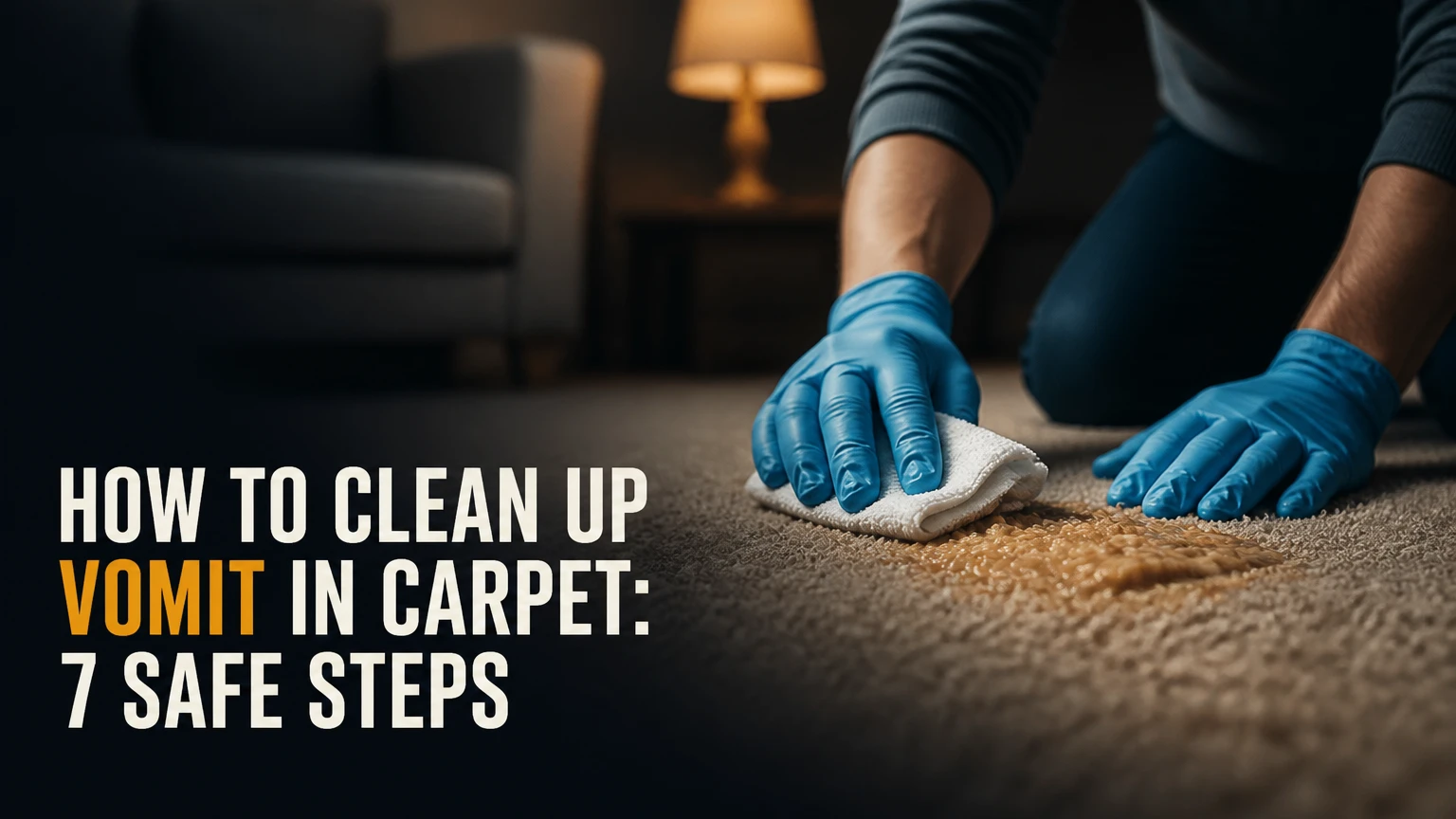
To clean up vomit in carpet, put on gloves, remove solids without pressing them down, absorb excess moisture, treat the area with a carpet-safe enzymatic cleaner, blot, rinse lightly, and dry the carpet completely. Fresh contamination usually takes 20-40 minutes to remove, while deep odor can require 12-24 hours of drying and a second treatment.
Key Facts
Use a spoon, dull scraper, or stiff cardboard to lift solids from the outside toward the center.
Baking soda absorbs surface moisture, but it does not disinfect carpet or remove deeply embedded proteins by itself.
Enzymatic cleaners can digest organic residue, but the product label determines safe dwell time and carpet compatibility.
Never mix vinegar, hydrogen peroxide, bleach, ammonia, or commercial cleaners in the same container.
Most spot-cleaned carpet needs 12-24 hours to dry; damp padding can retain odor longer.
Wool, silk, viscose, jute, and antique rugs require more cautious treatment than standard synthetic carpet.
What You Need Before Cleaning Vomit From Carpet
Gather protective equipment, dry absorbent material, a scraper, white towels, cool water, and a carpet-labeled cleaner before disturbing the spill. A prepared setup prevents repeated trips across a contaminated area and reduces the chance of pushing residue into the carpet backing.
Supplies and typical quantities
| Item | Typical quantity | Purpose |
|---|---|---|
| Disposable nitrile gloves | 1-2 pairs | Protect hands from biological residue |
| Face covering or mask | 1 | Reduce exposure to droplets and odor |
| Spoon, dull knife, or cardboard | 1 | Lift solid material |
| Heavy-duty trash bag | 1 | Contain contaminated waste |
| Baking soda or cornstarch | 1-2 cups per square foot | Absorb surface moisture |
| White paper towels or microfiber cloths | 10-20 | Blot without transferring dye |
| Carpet-safe enzyme cleaner | 250-500 milliliters | Break down organic residue |
| Fan or dehumidifier | 1 unit | Accelerate drying |
Open windows if practical, keep children and animals away, and avoid kneeling directly on the affected carpet. If the vomiting may be caused by norovirus, wear gloves and clean surrounding touch points after the carpet is finished. The Centers for Disease Control and Prevention describes norovirus as “a very contagious virus that causes vomiting and diarrhea,” so household hygiene matters when illness is suspected.
Do not use a revolving vacuum brush on wet material. Do not pour a large volume of water onto the spot. Excess liquid can carry contamination into the pad, tack strip, or subfloor.
How to Clean Up Vomit in Carpet
Cleaning vomit from carpet requires four actions: lift solids, absorb moisture, apply a compatible cleaner, and dry the carpet and pad. The sequence matters because scrubbing or soaking too early spreads food particles and liquid below the visible stain.
Step 1: Protect the area and remove solid material
Put on gloves and a mask, then place a trash bag beside the spill. Use a spoon, dull table knife, plastic scraper, or folded cardboard to lift solid material from the outer edge toward the center.
Keep the scraper nearly parallel with the carpet. A vertical scraping motion can force particles between the fibers. Deposit each load directly into the bag rather than carrying it across the room.
You will know this step worked when: no visible chunks remain and the carpet pile has not been flattened by pressure.
Common mistake: pressing paper towels onto a thick spill. Paper towels are useful for liquid, but they smear solid food into the tufts.
Tie the waste bag securely. Remove gloves by turning them inside out, wash your hands with soap and water, and put on a fresh pair before continuing if the first pair becomes soiled.
Step 2: Absorb remaining liquid without scrubbing
Cover the damp area with a layer of baking soda or cornstarch approximately 3-6 millimeters thick. Leave it for 15-30 minutes, or until the powder forms damp clumps, then lift the clumps with a scraper or vacuum only if the vacuum manufacturer permits that material.
Baking soda is an absorbent and odor-reducing powder, not a complete biological cleaner. It does not reliably extract all liquid from carpet padding, neutralize every stain, or sanitize a contaminated surface. Cornstarch can absorb moisture but may leave an organic residue if it remains damp, so remove it thoroughly.
Use short suction passes if vacuuming is appropriate. A standard household vacuum should not contact wet vomit or wet powder because moisture can damage the motor and distribute contamination.
You will know this step worked when: the surface feels damp rather than wet, and no liquid transfers when a folded white towel receives firm, brief pressure.
Common mistake: leaving powder overnight on a damp spot. Powder mixed with moisture can form a paste that settles deeper into the pile.
Step 3: Apply a carpet-safe enzymatic cleaner
Choose an enzymatic product whose label specifically names carpet or upholstery. Apply enough to dampen the contaminated fibers and, when the liquid clearly penetrated the backing, enough to reach the same depth without flooding the floor.
Enzymatic formulas vary. Some contain protease, amylase, or lipase enzymes; others use microbial cultures that produce enzymes while the product remains damp. The claim that every enzyme cleaner contains “live bacteria” is inaccurate, and enzyme chemistry does not make a product automatically safe for wool, silk, dyed rugs, or every carpet adhesive.
Read the label for dwell time. A typical spot treatment remains damp for 10-30 minutes, while odor treatments may require several hours. Do not combine an enzyme product with bleach, disinfectant, vinegar, ammonia, peroxide, or detergent unless the manufacturer explicitly permits that combination.
Blot from the outside edge inward with white towels. Rotate to a clean towel section whenever color transfers. Apply a second small amount of cleaner if the towel continues to pick up residue.
You will know this step worked when: the towel shows little or no food color, and the sharp odor decreases as the area remains damp.
Common mistake: spraying enzyme cleaner and immediately vacuuming it away. Removing the product before its stated dwell time reduces contact with the organic residue.
Step 4: Rinse lightly, extract, and dry
After the cleaner has completed its labeled dwell time, lightly mist the spot with cool or lukewarm water and blot again. Rinsing removes loosened residue and cleaner, but excessive rinsing can drive liquid into the pad.
Press clean towels onto the area, replace them as they become damp, and place a fan so air crosses the carpet surface. If possible, lift furniture off the spot and run a dehumidifier in the room. Avoid sealing a damp carpet under plastic because trapped moisture can encourage odor and microbial growth.
For a small spot, drying commonly takes 12-24 hours. Thick carpet, humid weather, dense padding, and a large spill can extend that period to 24-48 hours.
You will know this step worked when: the fibers feel dry at the tips and base, the carpet does not feel cool or spongy, and no odor returns after the fan is removed.
Common mistake: judging dryness by the surface alone. Push a dry towel firmly into the carpet and pad area; moisture that reaches the towel indicates additional drying is needed.
Step 5: Vacuum the dry carpet
Vacuum only after the carpet is fully dry. Use slow passes in two directions to remove powder residue and restore the pile.
A vacuum cannot remove contamination that remains in the pad. It is a finishing tool, not a substitute for liquid extraction or enzyme treatment.
Step 6: Inspect under normal lighting
Check the area after drying in daylight and again under the room’s normal lighting. Yellow or brown coloring may result from bile, food dyes, carpet-fiber discoloration, or a visible edge caused by uneven drying.
Do not automatically apply a stronger chemical when a faint mark remains. Test any stain treatment on an inconspicuous area, wait until it dries, and compare color before treating the visible spot.
Step 7: Re-treat only the source of odor
If odor remains, identify whether it comes from the fiber, backing, pad, nearby baseboard, or waste container. Apply a second enzyme treatment only when the first treatment did not reach the contaminated depth or the product label recommends repeat use.
Persistent odor after two careful treatments often indicates pad contamination. At that point, surface spraying can add moisture without solving the source.
Which Carpet Cleaner Works Best?
A carpet-labeled enzymatic cleaner is usually the best first choice for vomit because vomit contains proteins, fats, starches, and other organic residue that ordinary fragrance products may leave behind. A light rinse and extraction are better for removing volume, while peroxide is primarily a cautious color-correction option.
| Method | Typical cost | Contact or drying time | Best use | Main limitation |
|---|---|---|---|---|
| Enzymatic carpet cleaner | $8-$25 per bottle | 10 minutes to several hours; 12-24 hours drying | Protein residue and odor | Requires compatibility test and correct dwell time |
| Baking soda | $1-$5 per box | 15-30 minutes; 2-6 hours if damp | Surface moisture and mild odor | Does not sanitize or remove pad contamination |
| White vinegar solution | $1-$4 per bottle | 5-10 minutes; 6-12 hours drying | Limited odor reduction on compatible synthetics | Acidic solution can affect dyes, backing, or wool |
| 3% hydrogen peroxide | $2-$6 per bottle | 5-15 minutes | Small discoloration on colorfast synthetic carpet | Can lighten fibers and damage wool or silk |
| Portable extractor rental | $30-$60 per day | 1-3 hours of extraction; 12-48 hours drying | Large or deep spills | Overwetting can damage pad and subfloor |
| Professional cleaning | Typically $150-$300 minimum | Same-day visit; 12-48 hours drying | Pad penetration or extensive contamination | Higher cost and access may be delayed |
The price ranges above are typical consumer ranges, not fixed quotes. Geography, carpet size, treatment area, travel charges, and contamination severity change professional pricing.
Is vinegar and baking soda a good combination?
Vinegar and baking soda should not be mixed as the primary cleaner. The acid and alkaline powder react immediately, producing carbon dioxide, water, and a diluted salt solution; the fizz can lift loose debris, but the reaction largely consumes both ingredients before they can perform their separate functions.
If a manufacturer permits vinegar on the carpet, use a dilute solution by itself, then blot and rinse lightly. Do not apply vinegar over an enzyme product unless the product label says it is compatible. Acidic liquids may also affect natural fibers, backing adhesives, and unstable dyes.
Can hydrogen peroxide remove a yellow vomit stain?
Three-percent hydrogen peroxide can lighten some yellow or brown discoloration on colorfast synthetic carpet, but it should be treated as an oxidizer rather than a universal vomit cleaner. Test one hidden area first, use a small amount, wait 5-15 minutes, and blot thoroughly.
Avoid peroxide on wool, silk, viscose, dark rugs, antique carpets, and fibers with uncertain dye stability. Never mix peroxide with vinegar or chlorine bleach. If the test spot changes color, stop and use a professional rug or carpet technician.
What Changes for Different Carpet Materials?
Synthetic nylon, polyester, and polypropylene carpet generally tolerates a properly labeled enzyme product better than wool, silk, viscose, or jute. Fiber identity, dye stability, backing construction, and installation type all affect the safe treatment.
| Carpet material | Safer first action | Avoid | Escalate when |
|---|---|---|---|
| Nylon | Scrape, enzyme test, blot, dry | Strong peroxide without testing | Odor remains after two treatments |
| Polyester | Cool-water blotting and labeled enzyme | High heat and aggressive brushing | Dye or food color remains |
| Polypropylene | Prompt extraction and enzyme test | Solvent cleaners and flooding | Liquid reaches pad |
| Wool | Lift solids, minimal moisture, professional wool-safe treatment | Peroxide, ammonia, high-pH products | Any visible dye bleed or browning appears |
| Silk or viscose | Remove solids and stop at gentle blotting | Saturation, enzyme products, scrubbing | Any stain remains after initial blot |
| Jute or sisal | Dry removal and specialist advice | Water soaking and household chemicals | Liquid penetrates the woven backing |
Wool is a keratin-based protein fiber, so a standard enzyme product designed for pet urine or synthetic carpet may damage it. Natural-fiber rugs also dry unevenly and can develop browning or tide marks after wet treatment.
For a removable rug, place towels beneath the affected area if the manufacturer permits spot cleaning. For installed carpet, avoid lifting the edge unless you know how to replace the tack strip safely.
How Do You Clean Dried Vomit From Carpet?
Dried vomit needs rehydration before removal, but the liquid must be controlled so the residue does not spread into the pad. Start by scraping brittle material, then place a cool, damp white towel over the spot for 5-10 minutes before lifting softened residue.
Repeat small applications rather than soaking the area. Once the bulk is removed, use an enzyme cleaner according to its label, blot the loosened material, and dry with airflow.
Dried material often leaves a ring because dissolved residue migrates toward the edge during evaporation. A professional extractor can flush the affected area more evenly when the ring covers more than a few inches or the carpet is light-colored.
How Do You Remove Vomit Smell From Carpet?
Vomit odor disappears only when the organic source is removed, not when fragrance is sprayed over the carpet. If the smell returns after drying, treat the backing and pad at the depth reached by the original liquid, then extract and dry the area thoroughly.
Persistent odor troubleshooting
| Symptom after drying | Likely source | Appropriate response | Typical next step |
|---|---|---|---|
| Sharp odor at the surface | Residue in fiber tips | Repeat labeled enzyme treatment | Dry for 12-24 hours |
| Odor returns in humidity | Contaminated pad | Deep extraction or pad inspection | Professional service |
| Musty smell with cool carpet | Trapped moisture | Increase airflow and dehumidification | Check subfloor |
| Odor near baseboard | Splash or wicking beyond spot | Clean adjacent trim safely | Inspect carpet edge |
| No odor but visible stain | Residual dye or oxidation | Colorfastness-tested spot treatment | Rug specialist if needed |
Do not cover a damp spot with plastic wrap or a heavy object for an extended period unless the product instructions specifically require it. Occlusion can slow evaporation and trap moisture against the pad. Odor treatment needs contact, extraction, and drying, not simply a longer period of wetness.
Common Mistakes and How to Fix Them
Scrubbing the stain
Scrubbing spreads liquid sideways, bends carpet fibers, and pushes food particles into the backing. Stop rubbing, remove loose material with a scraper, and switch to vertical blotting with fresh white towels.
Using hot water or steam first
Hot water is not automatically a permanent “protein-setting” treatment, but heat and steam can spread a biological spill, soften backing adhesives, and make drying more difficult. Use cool or lukewarm water for the initial cleanup; use hot-water extraction only after bulk residue is removed and the carpet manufacturer permits it.
Flooding the carpet
A carpet pad is absorbent and may hold liquid below the visible stain. If the area feels spongy, remains cool after 24 hours, or smells worse as it dries, stop adding products and arrange extraction.
Applying chemicals without testing
Peroxide, vinegar, alkaline detergents, and enzyme products can alter dye or fiber texture. Test each product separately in a hidden location and allow the test to dry before judging the result.
Vacuuming wet powder or vomit
Household vacuums are not designed for wet biological material. Use a wet/dry vacuum only if it is cleanable and intended for that purpose, and disinfect the container and attachments according to the manufacturer’s instructions.
Mixing cleaning products
Never mix bleach with ammonia, vinegar, acids, peroxide, or unknown cleaners. Chemical reactions can release irritating or dangerous gases and can damage the carpet. Use one product at a time, rinse lightly when appropriate, and allow the area to dry before changing methods.
When Should You Use a Carpet Extractor or Professional Cleaner?
Use a portable extractor when vomit covers a broad area, visibly reaches the carpet pad, or leaves odor after surface treatment. Use a professional carpet cleaner for natural-fiber rugs, extensive contamination, repeated vomiting, sewage involvement, or moisture that remains after 24-48 hours.
| Situation | DIY spot treatment | Portable extractor | Professional service |
|---|---|---|---|
| Fresh spot under 15 centimeters | Usually sufficient | Usually unnecessary | Unnecessary |
| Spot 15-60 centimeters with odor | Possible after testing | Useful | Consider if odor returns |
| Multiple spots in one room | Time-consuming | Practical | Useful for uniform drying |
| Visible pad saturation | Poor fit | May help if properly operated | Recommended |
| Wool, silk, or antique rug | High damage risk | Usually avoid | Recommended |
| Illness-related contamination over a large area | Limited | May spread contamination if misused | Recommended |
Typical professional service costs range from $150-$300 for a minimum visit in many U.S. markets, while larger rooms, furniture moving, extraction, antimicrobial treatment, and pad replacement can raise the total. Request a written scope that separates cleaning, deodorization, and pad or subfloor work.
A professional cleaner is not automatically better for every small spill. For a fresh synthetic-carpet spot, prompt scraping, controlled enzyme treatment, and complete drying usually provide the best balance of cost and risk.
How Long Does the Cleanup Take?
A fresh vomit spot usually takes 20-40 minutes to clean actively and 12-24 hours to dry. Dried residue, thick padding, high humidity, and deep odor can extend the process to 24-48 hours or require a second treatment.
| Cleanup stage | Typical duration | Completion signal |
|---|---|---|
| Protective setup | 2-5 minutes | Gloves, bag, and tools ready |
| Solid removal | 5-15 minutes | No chunks remain |
| Powder absorption | 15-30 minutes | Powder forms damp clumps |
| Enzyme dwell time | 10 minutes to several hours | Label time completed |
| Blotting and light rinse | 5-15 minutes | Towel shows little transfer |
| Active drying | 6-24 hours | Fibers and pad feel dry |
| Odor reassessment | After complete drying | No smell returns without fragrance |
Humidity changes drying speed more than the visible size of the stain. A small spill over dense pad can dry slower than a larger spill on low-pile carpet over a concrete slab.
Situations That Need Different Handling
Pet vomit
Pet vomit often contains food, bile, hair, and medication or plant material. Remove solids promptly, use a pet-safe carpet enzyme product after testing, and block the animal from the area until the carpet is dry and odor-free.
Do not assume a pet-safe label means the product is safe for every rug. Follow the carpet manufacturer’s fiber instructions, and avoid allowing a pet to lick wet cleaner.
Child or adult illness
Treat illness-related vomit as potentially infectious when symptoms include repeated vomiting, diarrhea, fever, or several sick household members. Wear disposable gloves, bag contaminated towels, wash hands with soap and water, and clean nearby handles, switches, and bathroom surfaces.
Alcohol hand sanitizer is not a substitute for handwashing against every cause of gastroenteritis. The CDC specifically recommends soap-and-water handwashing as part of norovirus prevention.
Vomit on carpet near wood flooring
Prevent liquid from reaching floor seams, baseboards, and transitions. Use towels around the perimeter, apply cleaner sparingly, and dry the carpet edge with airflow; swelling, staining, or a musty odor in the wood may require a flooring professional.
FAQ
Can I use dish soap to clean vomit from carpet?
Use only a very small amount of clear, dye-free dish soap diluted in water if the carpet label permits it. Dish soap can loosen grease, but excess soap leaves residue that attracts soil and may create a crunchy texture. An enzyme product is usually more targeted for organic vomit residue.
Should I use bleach on carpet after someone vomits?
Do not use household chlorine bleach on carpet. Bleach can permanently remove color, weaken fibers, damage backing, and create hazardous fumes when mixed with acidic or ammonia-based products. Clean the carpet with a compatible product and disinfect washable surrounding surfaces separately.
Can I leave baking soda on carpet overnight?
Leaving baking soda overnight is unnecessary for most fresh spots and can create a damp paste if the carpet remains wet. Use a 15-30 minute absorption period, remove the powder, then complete the cleaning and drying process.
Why does the carpet smell again after cleaning?
Recurring odor usually means organic liquid remains in the carpet backing or pad, or the area has not dried completely. Repeated surface spraying may worsen the problem. Check moisture with a dry towel and arrange deep extraction when odor returns after 24 hours.
Is steam cleaning safe after vomit cleanup?
Steam cleaning can be appropriate after solids and organic residue have been removed, provided the carpet manufacturer allows hot-water extraction. Do not steam a fresh spill first, because heat and moisture can spread contamination and complicate drying.
How do I prevent a permanent ring around the stain?
Prevent rings by using small amounts of liquid, blotting from the outside inward, lightly rinsing the entire affected area rather than only its center, and drying with airflow. If a ring remains after complete drying, professional extraction may produce a more even result.
The Bottom Line
To clean up vomit in carpet, lift solids first, absorb surface moisture, use one carpet-safe enzymatic cleaner, blot rather than scrub, rinse lightly, and dry the carpet completely for 12-24 hours. Baking soda can assist absorption, but it cannot replace organic-residue removal. Escalate to professional extraction for deep odor, saturated padding, large areas, or delicate natural-fiber rugs.