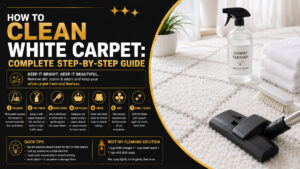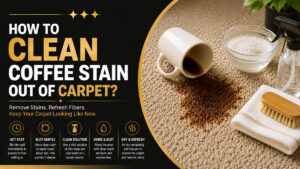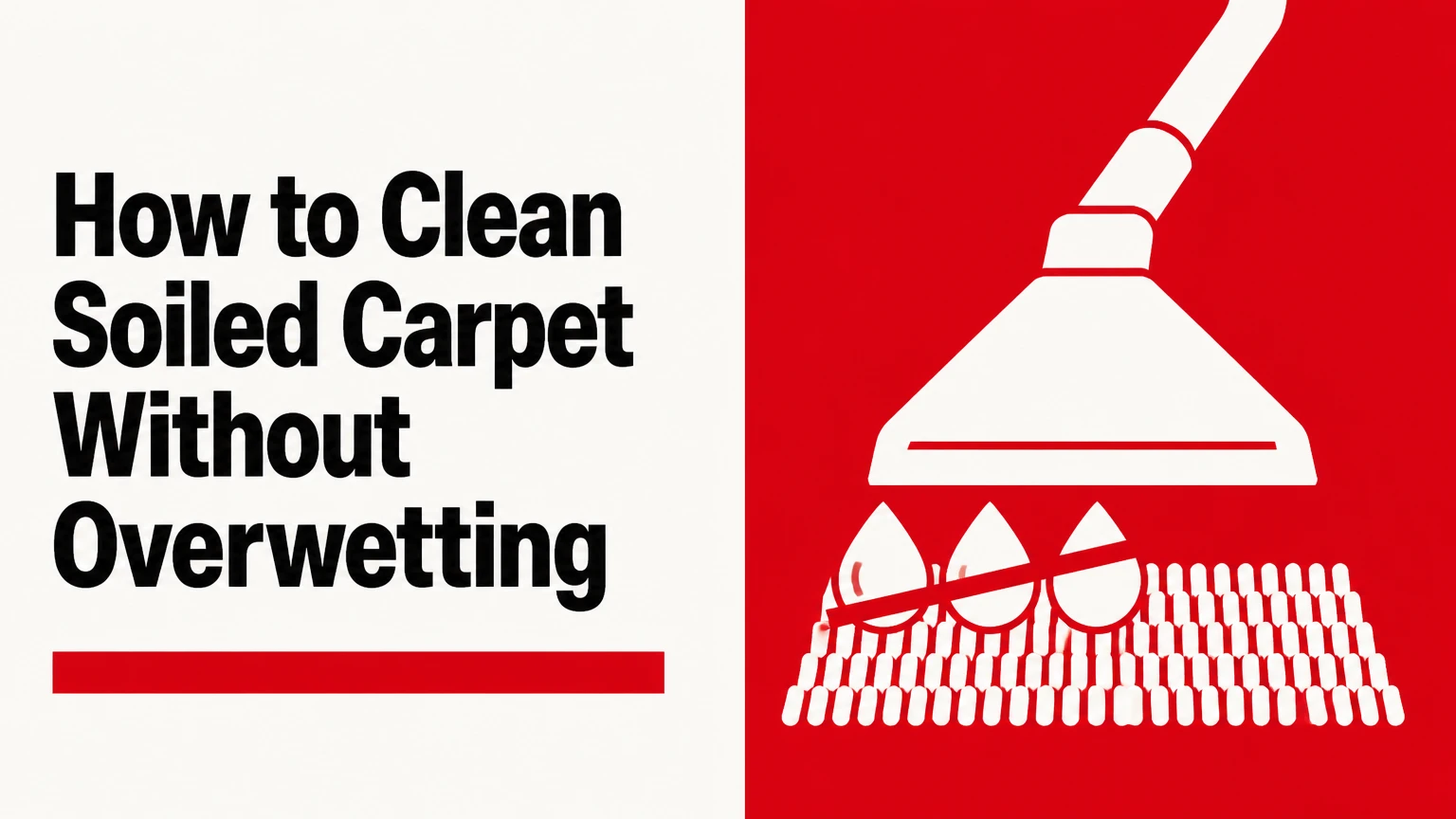
To clean soiled carpet, remove dry particles first, apply a compatible pre-spray, allow controlled dwell time, agitate gently, rinse-extract with minimal water, and dry the carpet quickly. A typical 100-200-square-foot room takes 2-4 hours to clean and 6-24 hours to dry, with fiber type and moisture recovery determining the result.
Key Facts at a Glance
Vacuuming before wet cleaning prevents loose soil from becoming abrasive mud in the carpet pile.
Hot-water extraction provides the deepest practical household cleaning, but over-wetting can damage carpet backing and padding.
Carpet pre-spray needs chemical contact time, usually 5-15 minutes, but must not dry on the fibers.
Carpet should dry completely within 24 hours; persistent dampness or odor requires investigation.
Wool, rayon, antique rugs, and unstable dyes need a professional cleaning method selected for the specific fiber.
A clean carpet can re-soil quickly when detergent residue remains, so use the correct dilution and thorough extraction.
What Does Soiled Carpet Mean?
Soiled carpet contains loose dry particles, oily traffic soil, embedded grit, spills, and possibly biological contamination. Dirt near entryways is often a mixture of silica, clay, skin oils, food residue, and moisture, so one treatment cannot remove every component equally well.
Carpet soil is held by static attraction, mechanical entanglement, oily films, and sticky residues. Dry particles are removed most efficiently by vacuuming, while greasy soil needs a surfactant-based pre-spray and water-based extraction. Biological stains such as urine and vomit may also need enzyme treatment after physical removal.
The carpet fiber changes the safe cleaning range. Nylon and polyester generally tolerate ordinary residential extraction when the manufacturer’s instructions are followed; wool and rayon are more sensitive to heat, alkalinity, agitation, and prolonged moisture.
Why does soiled carpet look dirty again after cleaning?
Soiled carpet can look clean immediately after washing and then develop brown or gray areas as hidden residue migrates upward during drying. This effect, called wicking, is more likely when the backing or pad remains wet, when deep soil was not removed, or when a stain reached the carpet underlay.
A second cause is detergent residue. Excessive soap leaves a sticky film that attracts new soil, especially along doorways and stairs. More detergent does not compensate for weak vacuum recovery.
What You Need Before Cleaning
A successful carpet cleaning job requires dry-soil removal, compatible chemistry, controlled moisture, and forced drying. Gather the equipment before wetting the floor because a damp carpet cannot wait while you search for a fan or read a product label.
Before You Start
| Item | Typical quantity or setting | Purpose |
|---|---|---|
| Vacuum cleaner | 4-6 slow passes on traffic lanes | Removes dry grit before wet cleaning |
| Carpet pre-spray | Manufacturer dilution, often 30-120 mL per liter | Loosens oily and particulate soil |
| White microfiber cloths | 4-8 cloths per room | Blotting and stain transfer |
| Soft carpet brush | 1 brush, 5-10 minutes per section | Distributes pre-spray |
| Extraction machine | 1 machine with upholstery tool or wand | Rinses and recovers suspended soil |
| Air movers or fans | 1 per 100-200 square feet | Accelerates drying |
| Nitrile gloves | 1 pair during chemical handling | Protects skin from cleaning agents |
Move lightweight furniture, protect wood legs from moisture, and inspect the carpet label if one is available. Photograph existing discoloration, fraying, ripples, or bleaching before cleaning so pre-existing damage is not mistaken for cleaning failure.
How Does the CHAT Principle Clean Carpet?
The CHAT principle combines chemicals, heat, agitation, and time, and carpet cleaning works best when these factors are balanced rather than maximized. Stronger chemicals, higher heat, harder scrubbing, and longer dwell time can damage fibers or backing when used without regard to material and soil type.
- Chemicals: Surfactants reduce water’s surface tension and help separate oily soil from fibers. Alkaline cleaners often improve grease removal on synthetic carpet, while wool generally needs a wool-safe, near-neutral product.
- Heat: Warm solution improves soil suspension and chemical activity, but the safe temperature depends on the fiber, dye, adhesive, and equipment. Follow the carpet and machine manufacturer’s limits.
- Agitation: A soft brush distributes chemistry and separates packed soil. Aggressive rotary scrubbing can distort pile, loosen yarn, or spread a stain.
- Time: Pre-spray requires dwell time, commonly 5-15 minutes. Dwell time ends when the product begins drying, not when a fixed timer says the process is complete.
A practitioner rule is to increase only one cleaning variable at a time. If soil remains, improve vacuuming or dwell time before automatically increasing chemical concentration or heat.
How to Clean Soiled Carpet Step by Step
The following six-step process suits most synthetic wall-to-wall carpet with general traffic soil. Stop and reassess when the carpet is wool, rayon, antique, visibly unstable, heavily urine-soaked, moldy, or affected by sewage.
Step 1: Inspect and Test the Carpet
Inspect the carpet for fiber type, dye instability, delamination, loose seams, ripples, and existing stains. Test the planned pre-spray in an inconspicuous corner by applying a small amount to a white cloth, pressing the cloth against the carpet, and checking for color transfer after one minute.
Do not clean over loose backing or bubbling carpet. Moisture can worsen delamination and may permanently deform a carpet that has already lost adhesion.
You’ll know it worked when: the test cloth remains nearly clean and the pile shows no color change, texture change, or sticky residue.
Common mistake: treating a red, brown, or unknown fiber with oxygen bleach before checking colorfastness.
Step 2: Vacuum Away Dry Soil
Vacuum the entire carpet slowly, then make 4-6 passes over visibly dirty traffic lanes. Use overlapping passes in different directions, and empty the machine when airflow drops because a full bag or blocked filter reduces soil removal.
Vacuuming is especially important for sand and grit. Wetting those particles turns them into a paste that can migrate deeper into the pile and increase abrasion during brushing.
For stairs and edges, use a crevice tool or upholstery nozzle rather than forcing a large floor head against the nosing. Remove visible threads, paper, and hair by hand.
You’ll know it worked when: a second slow vacuum pass collects little additional loose debris and the carpet feels less gritty underfoot.
Common mistake: wet-cleaning first because the carpet appears too dirty to vacuum. Dry removal is most valuable before moisture is introduced.
Step 3: Apply Carpet Pre-Spray
Mix a carpet pre-spray exactly according to its label and apply a light, even coat to one manageable section of approximately 25-50 square feet. Do not flood the floor, soak the backing, or combine products from different chemical systems.
Allow 5-15 minutes of dwell time while keeping the surface visibly damp. For heavy greasy soil, a longer dwell period can help, but drying chemistry becomes difficult to remove and may leave residue. Treat urine, vomit, and food-protein stains with a compatible enzyme product only when the label permits use on carpet.
Keep alkaline pre-spray away from wool unless the manufacturer specifically approves it. Never mix bleach, ammonia, acids, peroxide products, or enzyme cleaners.
You’ll know it worked when: soil begins to release under light brushing and the pre-spray remains damp without pooling.
Common mistake: applying concentrated detergent to make a dark lane look instantly wet. Concentration and saturation are separate variables.
Step 4: Agitate the Pre-Spray
Work the solution into the pile with a soft-bristled carpet brush, using short overlapping strokes and light pressure. Agitate only enough to distribute the product and contact the fiber surfaces; do not scrub a stain until the yarn twists or fuzzes.
A pile brush is safer than a stiff deck brush for most residential carpet. Use extra caution on looped carpet because a brush can catch and pull loops. Skip mechanical agitation on delicate wool rugs unless a trained cleaner selects the tool.
Divide large rooms into sections and complete each section before its chemistry dries. Agitation increases soil release, but it can also spread a liquid stain, so work from the outside edge toward the center when treating a localized mark.
You’ll know it worked when: the pile looks evenly groomed and loosened soil appears suspended rather than pressed into a dark ring.
Common mistake: using a hard brush or circular scrubbing motion that creates a visible texture change.
Step 5: Rinse and Extract the Carpet
Fill the extraction machine with clean water or the manufacturer-approved rinse solution. Make a slow wet pass, then make 2-4 slow vacuum-only passes without spraying. Overlap each lane slightly, and avoid repeatedly spraying the same area.
“Steam cleaning” usually refers to hot-water extraction, not literal steam injected into carpet. The machine sprays cleaning solution, agitates or flushes soil, and uses vacuum recovery to remove liquid. Household machines usually deliver less pressure and water recovery than truck-mounted professional systems, so slower vacuum passes matter.
A clean-water rinse can reduce detergent residue, but excess rinse water still causes over-wetting. Professional operators may use acidic neutralizing rinses for suitable synthetic carpet, while wool and specialty fibers require product-specific guidance.
You’ll know it worked when: the extracted liquid becomes progressively clearer, the carpet feels damp rather than saturated, and no water remains pooled at seams.
Common mistake: making repeated wet passes because the recovered water looks dirty. Dirty recovery can indicate successful soil removal, but repeated spraying may saturate the pad.
Step 6: Groom and Dry the Carpet
Use a carpet rake or clean brush to align the pile, then place air movers so air crosses the carpet surface rather than blowing directly into a wall. Open windows only when outdoor humidity is lower than indoor humidity; otherwise, use ventilation and a dehumidifier.
Drying commonly takes 6-24 hours for residential extraction. Dense pile, humid weather, thick padding, poor airflow, and multiple wet passes extend the time. Keep people and pets off damp carpet where possible, and place foil or protective tabs under furniture legs until the floor is dry.
Check the surface and backing area at several points after 6 hours. Carpet that feels dry on top can still contain moisture below.
You’ll know it worked when: the pile feels dry, the room has no damp odor, and a white cloth pressed firmly into the carpet stays dry.
Common mistake: closing the room immediately after cleaning. Trapped humidity prolongs drying and increases odor and wicking risk.
Which Carpet Cleaning Method Should You Use?
Hot-water extraction is the strongest general choice for heavily soiled synthetic carpet because it combines pre-treatment with physical soil recovery. Low-moisture encapsulation suits routine maintenance, dry compound cleaning protects moisture-sensitive materials, and bonnet cleaning is mainly a commercial appearance-maintenance method rather than a deep restorative process.
| Method | Typical moisture and time | Best application | Main limitation |
|---|---|---|---|
| Hot-water extraction | 6-24 hours drying; 2-4 hours per room | Embedded soil, grease, residential restoration | Over-wetting and slow drying |
| Encapsulation | 1-4 hours drying; 30-90 minutes per room | Commercial maintenance and light soil | Limited removal of deep sand and heavy deposits |
| Dry compound | Immediate use; 30-60 minutes per room | Delicate or moisture-sensitive carpet | Weak performance on deeply embedded oily soil |
| Bonnet cleaning | 2-4 hours drying; 30-90 minutes per room | Surface appearance in commercial carpet | Can redistribute soil and distort pile |
Is hot-water extraction the same as steam cleaning?
Hot-water extraction is the standard technical name for a process often marketed as steam cleaning. The machine sprays heated solution and immediately recovers it with vacuum; visible steam is not required for effective carpet cleaning.
Extraction pressure and solution temperature vary substantially between portable and truck-mounted equipment. Professional machines may use substantially more vacuum recovery than domestic rentals, but higher pressure is not automatically safer or better for every carpet.
Can you clean soiled carpet without a machine?
You can improve lightly soiled carpet without a machine by vacuuming thoroughly, applying a small amount of compatible cleaner, brushing gently, and blotting with absorbent towels. Manual cleaning cannot match extraction for embedded soil because it lacks controlled flushing and recovery.
For a low-moisture alternative, use a manufacturer-approved encapsulation product and a suitable carpet brush, then vacuum the dried crystalline residue. Do not use this approach for saturated urine, sewage, mold, or carpet with deep backing contamination.
How Much Does Soiled Carpet Cleaning Cost?
Typical professional carpet cleaning costs range from $0.20-$0.50 per square foot in the United States, while a portable rental commonly costs $30-$80 per day before solution and deposits. Local pricing varies with room minimums, furniture movement, stairs, stain treatment, access, and whether the cleaner uses truck-mounted extraction.
| Cleaning scenario | Typical area or charge | Typical price range | Typical duration |
|---|---|---|---|
| Small residential job | 1-3 rooms or provider minimum | $100-$250 | 2-4 hours |
| Professional extraction | $0.20-$0.50 per square foot | $150-$500 for 750-1,000 square feet | 2-5 hours |
| Portable machine rental | 1 day plus solution | $30-$80 rental, $10-$30 solution | 3-6 hours |
| Pet urine treatment | Per room or affected area | $25-$150 additional | 30-90 minutes extra |
| Commercial encapsulation | $0.10-$0.30 per square foot | $200-$600 per visit | 1-3 hours |
These are typical planning ranges, not fixed quotes. A room with odor below the carpet may require pad removal or subfloor treatment, which ordinary surface cleaning cannot resolve.
What Should You Do for Specific Stains?
Treat a specific stain by removing the source, identifying whether it is water-based, oil-based, protein-based, or dye-based, and testing the product before full application. Blotting is safer than scrubbing because friction can spread liquid and damage carpet yarn.
| Stain or soil | First treatment | Contact time | Important restriction |
|---|---|---|---|
| Wet mud | Let dry, vacuum, then rinse-extract | 5-10 minutes after pre-spray | Do not wet fresh mud immediately |
| Grease or tracked oil | Synthetic-fiber pre-spray | 5-15 minutes | Avoid strong alkaline products on wool |
| Coffee or juice | Blot, then use labeled spotter | 3-5 minutes | Heat can set some dye-based stains |
| Pet urine | Remove solids, enzyme treatment, extraction | Label-directed, often 10-30 minutes | Surface cleaning may not reach the pad |
| Vomit or milk | Remove solids, enzyme cleaner, rinse | 10-30 minutes | Do not seal protein residue under heat |
| Unknown dark stain | Water-only blot test, then professional assessment | Not predetermined | Avoid random chemical mixing |
How do you remove pet urine from carpet?
Remove pet urine odor by treating both the carpet fiber and any contaminated pad, because odor often remains below the visible surface. Blot fresh liquid, apply a carpet-safe enzyme product at the label’s coverage rate, allow its specified dwell time, and extract without flooding the area.
Old urine can alter carpet dye and damage backing. If odor returns after drying, use a moisture meter or professional inspection rather than repeatedly adding cleaner. Large or repeated contamination may require pad replacement and subfloor sealing.
What Are the Biggest Carpet Cleaning Mistakes?
The most damaging mistakes are over-wetting, excessive detergent, aggressive scrubbing, untested stain chemicals, and insufficient drying. Each mistake has a different remedy, so adding more product is rarely the correct response.
| Failure mode | Likely cause | Immediate recovery |
|---|---|---|
| Brown spots return | Wicking from backing or pad | Lightly re-extract, towel-blot, and increase airflow |
| Carpet feels sticky | Excess detergent residue | Perform a controlled clean-water rinse and dry quickly |
| Musty odor remains | Moisture trapped beyond the surface | Use fans and dehumidification; inspect pad if odor persists |
| Carpet ripples | Excess moisture or stretched backing | Dry completely; have carpet professionally re-stretched if needed |
| Fuzzy or distorted pile | Hard brushing or rotary friction | Stop agitation; groom gently after drying |
| Color bleeding | Unstable dye or incompatible chemical | Blot, isolate the area, and call a professional rug cleaner |
A brown spot that appears during drying is not proof that the cleaning failed completely. It often means the cleaning solution mobilized soil that was deeper than the extraction pass could recover.
Do not apply disinfectant automatically. Disinfectants must be labeled for carpet, used at the correct concentration, and left wet for the required contact time; ordinary carpet detergent does not necessarily sanitize.
When Should You Hire a Professional?
Hire a professional when carpet has sewage, extensive pet urine, mold growth, floodwater exposure, delamination, severe dye bleeding, or a valuable wool or antique construction. Professional equipment cannot reverse every type of damage, but trained assessment prevents a contaminated or fragile carpet from receiving an unsuitable treatment.
Professional cleaning is also sensible when the carpet remains wet beyond 24 hours, develops a persistent musty odor, or shows recurring stains after two controlled cleanings. A technician can inspect the pad, measure moisture, identify fibers, and select low-moisture or restorative procedures.
Carpet affected by sewage or floodwater should not be treated as an ordinary stain. Porous pad and backing materials may need removal because surface extraction does not guarantee removal of pathogens or contaminated water.
How Often Should You Clean Soiled Carpet?
Vacuum high-traffic carpet at least twice weekly and clean visible traffic lanes before soil becomes compacted. Typical households benefit from professional or thorough extraction every 6-18 months, while homes with pets, children, allergies, or frequent outdoor access may need cleaning every 3-6 months.
Use entry mats outside and inside doors, remove outdoor shoes, and treat spills immediately. Spot cleaning within the first few minutes usually requires less chemistry and less moisture than correcting a dried stain.
Commercial carpet often benefits from frequent vacuuming and low-moisture encapsulation between periodic restorative extraction cleanings. Bonnet cleaning can improve appearance quickly, but it should not replace a method that removes deep particulate soil.
FAQ
How long should carpet cleaner sit before extraction?
Most carpet pre-sprays need 5-15 minutes of dwell time, provided the product remains wet and the label allows that interval. Shorter dwell time may leave oily soil attached, while allowing the solution to dry can create residue and make extraction harder.
Should you use hot water on every carpet?
No. Hot water is appropriate only within the carpet, equipment, and chemical manufacturer’s limits. Synthetic carpet often tolerates warm extraction, but wool, rayon, unstable dyes, glued backings, and some specialty rugs can shrink, bleed, or distort under unsuitable heat or moisture.
Why does carpet smell worse after cleaning?
Carpet can smell worse after cleaning when the pad or backing remains damp, biological residue was not removed, or detergent residue traps odor compounds. Run air movers and a dehumidifier, but investigate the pad if odor persists after the carpet is completely dry.
Can baking soda remove deep carpet dirt?
Baking soda can absorb limited surface odor, but it does not dissolve oily traffic soil or extract embedded grit. Excess powder can remain in the pile and may strain some vacuum cleaners, so use a carpet-specific dry compound when a dry-cleaning method is appropriate.
How do you dry carpet quickly after cleaning?
Dry carpet quickly by extracting slowly, making multiple vacuum-only passes, grooming the pile, and running air movers across the surface. Reduce indoor humidity with ventilation or a dehumidifier. A typical residential carpet should be dry within 6-24 hours, not merely dry to the touch at the surface.
Can you clean carpet with dish soap?
Dish soap is a poor general carpet cleaner because it can create excessive foam and leave a sticky residue that attracts soil. Use a product labeled for carpet, follow its dilution instructions, and rinse-extract when the product requires removal.
The Bottom Line
To clean soiled carpet safely, vacuum 4-6 times over dirty lanes, pre-spray a small section, allow 5-15 minutes of controlled dwell time, agitate gently, extract with limited water, and force-dry for 6-24 hours. Choose hot-water extraction for embedded synthetic-carpet soil, low-moisture cleaning for routine maintenance, and professional assessment for wool, sewage, mold, delamination, or deep pet contamination. Include how to clean soiled carpet in your maintenance plan, but treat fiber type and moisture control as the deciding safety factors.