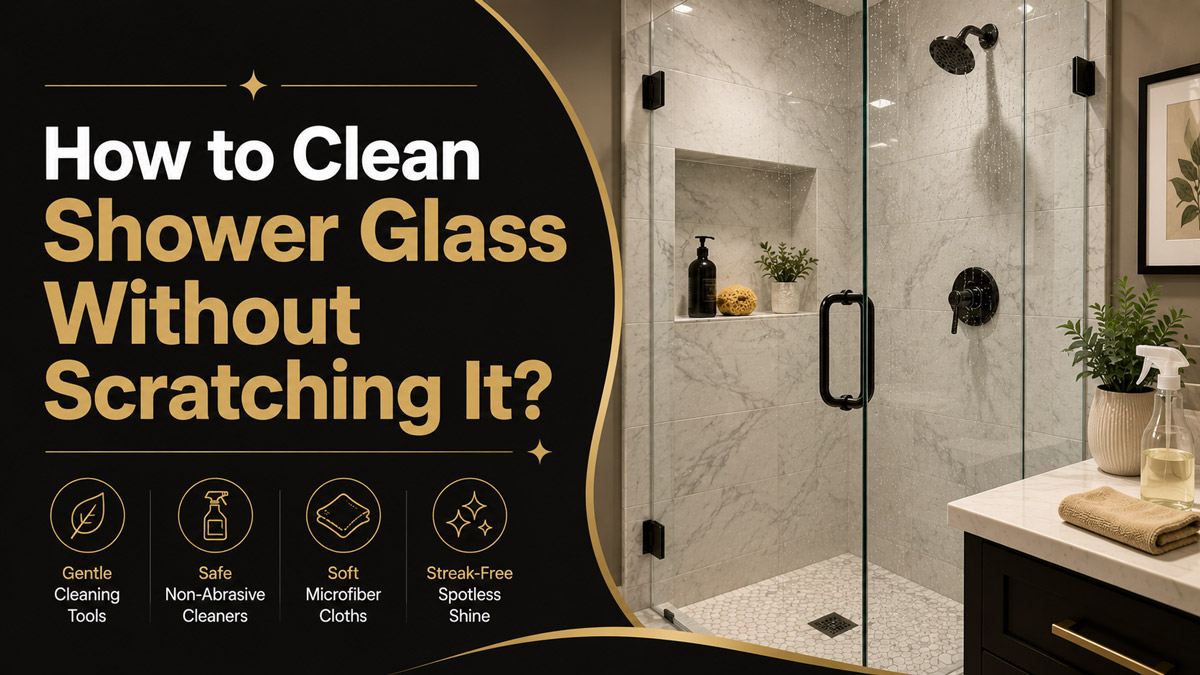
To clean shower glass without scratching it, you must dissolve alkaline mineral deposits using a mild acid—like white vinegar or citric acid—paired with a non-abrasive mechanical tool like a cellulose sponge. Avoid dry scraping, steel wool, or powdered cleansers, which create permanent micro-abrasions on tempered glass surfaces.
Key Facts / At a Glance
- The Chemistry: Water spots and soap scum are highly alkaline; they require an acidic cleaner (pH 2.0 to 3.0) to break the bond without physical force.
- The Hardness Rule: Tempered shower glass sits at 5.5 to 7.0 on the Mohs hardness scale. Any cleaning tool with a higher rating (like green scrubbing pads) will scratch it.
- The Powder Danger: Dry powdered cleansers that fail to dissolve completely leave microscopic silica granules that gouge glass under pressure.
- The Rinse Technique: Always rinse chemicals away with cold water to minimize rapid evaporation and immediate re-spotting.
- Factory Coatings: Glass treated with factory hydrophobic layers (like ShowerGuard) will degrade if exposed to strong acids or heavy agitation.
Before You Start
- Total Time Required: 25 to 45 minutes (depending on dwell time).
- Difficulty: Beginner.
- Estimated Cost: $2 to $12.
- Materials Needed:
- 1 Spray bottle.
- Cleaning solution (White vinegar + dish soap, or commercial foam).
- 1 Non-scratch cellulose sponge or microfiber cloth.
- 1 Silicone-blade squeegee.
- 2 Dry, unwashed microfiber buffing towels.
- Prerequisites: Ensure the shower enclosure is well-ventilated, especially if mixing vinegar solutions or using commercial chemical sprays.
Which Cleaning Method Should You Use?
Select your cleaning solution based on the severity of the biological buildup, your water hardness, and the type of glass installed in your bathroom.
Method Comparison Matrix
| Method | Active Ingredients | Best For | Total Dwell Time | Drawbacks |
| The Natural Acid | 50% distilled white vinegar, 50% water, 1 drop dish soap | Light to medium buildup, regular maintenance | 15–30 minutes | Strong acetic acid odor; requires longer saturation. |
| The Eco-Powder | 2 tbsp citric acid powder, 2 cups warm water | Medium buildup, odor-sensitive households | 15–20 minutes | Must be mixed fresh; powder must dissolve fully before use. |
| The Commercial Chemical | Proprietary surfactants (e.g., Rain-X Shower Door Cleaner) | Heavy soap scum, neglected glass | 10–15 minutes | Higher chemical exposure; fumes require exhaust fan. |
| The Synthetic Scrub | Bar Keepers Friend (Liquid/Cream ONLY) | Severe, calcified hard water stains | 20–40 minutes | Requires extensive rinsing; leaves a white haze if rushed. |
Factory-Coated Glass Exception
If your shower utilizes a factory-applied ion-beam coating like ShowerGuard or Clarvista, you must strictly avoid all acids, commercial solvents, and synthetic scrubs. These hydrophobic layers mimic Teflon. Use only a mild solution of warm water and pH-neutral dish soap paired with a silicone squeegee. Acidic cleaners will strip the proprietary coating and void the manufacturer’s warranty.
6 Steps to Clean Shower Glass Without Scratching It
Follow this procedural sequence exactly to guarantee a scratch-free, optically clear finish on standard tempered glass.
Step 1: Prep and Rinse the Surface
Action: Rinse the entire glass surface with warm water to flush away loose particulate matter.
Specifics: Use a handheld showerhead or a plastic cup to flood the glass top-to-bottom with water between 90°F and 100°F (32°C–38°C).
Success Checkpoint: You’ll know it worked when loose hair, dust, and superficial soap residue flow freely into the drain.
Common Mistake: Cleaning dry glass. Dust contains microscopic silica particles. Dragging a dry cloth over dry dust acts exactly like sandpaper.
Step 2: Apply the Cleaning Solution
Action: Spray your chosen acidic or commercial solution generously onto the wet glass.
Specifics: Start at the highest point of the glass panel and work downward in heavy, overlapping horizontal lines. Ensure complete saturation of heavy white spots.
Success Checkpoint: You’ll know it worked when the entire glass panel is coated in a clinging liquid or foam, with no dry patches remaining.
Common Mistake: Applying cleaner to the aluminum trim, stone tiles, or rubber gaskets. Acidic cleaners will etch natural stone and degrade rubber seals if left to pool.
Step 3: Allow Proper Dwell Time
Action: Let the cleaning chemistry break the alkaline bonds of the mineral deposits.
Specifics: Set a timer for 10 to 15 minutes (or up to 30 minutes for severe vinegar applications).
Success Checkpoint: You’ll know it worked when crusty white calcium spots turn slightly translucent and soft to the touch.
Common Mistake: Letting the solution dry completely. If the acid evaporates, the minerals re-harden, forcing you to start over. Mist lightly with water if the glass begins to dry.
Step 4: Agitate with Non-Abrasive Tools
Action: Wipe down the glass using overlapping circular motions to lift the dissolved scum.
Specifics: Use a clean, damp microfiber cloth or a dedicated non-scratch cellulose sponge. Apply light to medium pressure.
Success Checkpoint: You’ll know it worked when the sponge glides smoothly across the glass without any tactile “grit” or resistance.
Common Mistake: Using abrasive tools. Never use steel wool, green Scotch-Brite pads, or stiff-bristled scrub brushes. These exceed the Mohs hardness of tempered glass and cause permanent micro-abrasions.
Step 5: Rinse Thoroughly with Cold Water
Action: Wash away all suspended minerals, soap residues, and cleaning chemicals.
Specifics: Flood the glass heavily with cold tap water (below 65°F/18°C) from the top down.
Success Checkpoint: You’ll know it worked when the water runs completely clear with zero foaming or sudsing at the bottom of the glass.
Common Mistake: Rinsing with hot water. Hot water evaporates rapidly on the glass, leaving behind new traces of calcium before you have time to dry it.
Step 6: Dry and Polish the Glass
Action: Remove all surface moisture to prevent new water spots from forming.
Specifics: Pull a silicone-blade squeegee from the top left corner down to the bottom. Wipe the squeegee blade with a towel between every pass. Finish by buffing the edges with a dry microfiber cloth.
Success Checkpoint: You’ll know it worked when the glass is optically clear and streak-free under direct bathroom lighting.
Common Mistake: Using a cloth washed with fabric softener. Fabric softeners leave lipid oils on microfiber, which instantly transfer to the glass as greasy, rainbow-colored streaks.
What Are the Most Common Glass Cleaning Mistakes?
Even with the right chemicals, poor technique can ruin a shower enclosure. Avoid these frequent failure modes:
- Using Undissolved Powders: Applying dry baking soda or powdered Bar Keepers Friend directly to glass creates a grinding paste. Always use pre-mixed liquid/cream formats, or ensure your DIY powder is 100% dissolved in water first.
- The Magic Eraser Trap: Melamine foam (Magic Erasers) operates as ultra-fine sandpaper. While its Mohs hardness is slightly lower than raw glass, aggressive scrubbing will aggressively dull factory glass coatings and leave microscopic hazing over time.
- Ignoring the Hardware: Acid-based cleaners (vinegar, citric acid) will corrode brass, pit aluminum frames, and strip the finish off oil-rubbed bronze fixtures if not rinsed immediately.
- Rushing the Chemistry: Physical scrubbing cannot substitute for chemical dwell time. If you find yourself scrubbing hard enough that your arm hurts, your cleaner has not sat on the glass long enough.
How Do You Troubleshoot Stubborn Spots and Haze?
If you complete the standard cleaning process and the glass still looks flawed, evaluate the specific type of defect left behind.
- The glass looks cloudy or milky after drying: This is caused by dried surfactant or cleaner residue. Rinse the glass again with highly diluted hot water, then immediately squeegee and buff.
- Streaks appear when sunlight hits the shower: Your drying cloth is contaminated. Switch to a brand-new, unwashed microfiber cloth, or use a crumpled sheet of black-and-white newspaper for the final polish.
- White, frosty spots remain after heavy scrubbing: This indicates Stage 2 corrosion (silica etching). The hard water has actually eaten into the glass surface. Acid will not fix this; the glass must be professionally machine-polished with cerium oxide, or replaced.
Frequently Asked Questions
Does WD-40 remove hard water stains from shower glass?
WD-40 can displace water and temporarily mask the appearance of hard water stains by filling in micro-abrasions with oil. However, it does not dissolve calcium carbonate. Furthermore, it leaves a greasy, dangerous film on the shower floor and requires harsh degreasers to remove.
Can I use a razor blade to scrape off thick soap scum?
Using a razor blade on tempered shower glass is highly risky. Tempered glass often has microscopic fabricating debris (glass fines) baked into the surface. A razor blade will catch these invisible bumps, dragging them across the panel and leaving deep, permanent scratches.
How often should I deep clean my shower glass?
If you use a silicone squeegee after every single shower to remove standing water, you only need to perform an acidic deep clean once every 3 to 6 months. Without daily squeegeeing, hard water spots will calcify and require deep cleaning every 7 to 10 days.
Is it safe to use toilet bowl cleaner on glass doors?
Never use toilet bowl cleaner on shower glass. These products contain hydrochloric or hydrofluoric acid at extreme concentrations. They will permanently etch the glass within minutes, destroy aluminum framing, and release toxic fumes in enclosed shower stalls.