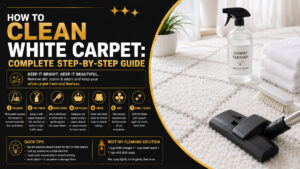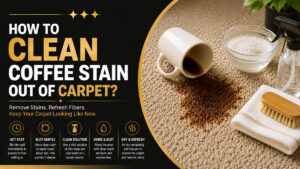
To clean shag carpet safely, identify the fiber and backing, remove loose debris, vacuum with suction and no rotating brush, blot stains without scrubbing, then use the least-moist deep-cleaning method suitable for the material. Most synthetic shag rugs take 4-8 hours to dry; wool and Flokati shag usually require professional care.
Key Facts
Shag carpet commonly has a pile from 2 cm to more than 5 cm, so grit can settle below the visible yarn.
A rotating brush can wrap around long fibers and pull, fray, or unravel them.
Dry powder is safer than water for wool, silk, leather, and uncertain constructions, but it cannot remove every liquid contaminant.
Never saturate shag carpet. The backing must dry completely, generally within 24 hours, to limit odor and microbial growth.
Synthetic polypropylene and polyester shag tolerate more moisture than wool, Flokati, silk, or leather.
Pet urine that reaches the backing usually needs an enzymatic treatment or professional extraction, not baking soda alone.
What Makes Shag Carpet Difficult to Clean?
Shag carpet is a high-pile floor covering made with long cut, looped, or un-sheared yarns that can lie in several directions. Typical pile height ranges from approximately 2 cm to more than 5 cm, while Flokati rugs may exceed 8 cm. The long fibers conceal grit, hair, dust, crumbs, and oily soil near the backing.
The backing determines much of the cleaning risk. A woven synthetic backing may tolerate controlled extraction, whereas latex, cotton, jute, glued, or antique backings can distort, bleed, shrink, or retain moisture. A rug label, manufacturer care sheet, or professional inspection is more reliable than judging safety from the pile alone.
The Carpet and Rug Institute gives a useful general rule: “Always follow the manufacturer’s cleaning recommendations.” That instruction matters especially for shag, because two rugs with the same appearance can contain different fibers, adhesives, dyes, and backing materials.
Before You Start
| Requirement | Typical value | Why it matters |
|---|---|---|
| DIY time | 45-90 minutes plus drying | Includes debris removal, vacuuming, and spot treatment |
| Drying time | 4-12 hours | Synthetic rugs dry faster than dense wool or thick-backed rugs |
| Difficulty | Moderate | Long fibers make ordinary vacuum heads unsuitable |
| DIY supply cost | $10-$40 | Covers microfiber cloths, suction tool, rake, and approved cleaner |
| Vacuum setting | Highest pile or suction-only | Prevents the head from binding in the yarn |
| Moisture limit | Damp, never soaked | Wet backing is the main odor and distortion risk |
Check the care label first. Photograph the rug before treatment if it is valuable or has visible wear. Place a white towel under an inconspicuous corner, then test the cleaner on a hidden section; transferred dye or a sticky backing means you should stop.
How to Clean Shag Carpet Step by Step
The safest routine uses five stages: dislodge dry soil, vacuum from multiple directions, treat spots, deep-clean only when necessary, and dry before grooming. A small synthetic rug typically takes 30-60 minutes of active work, while a large wall-to-wall room may take 1-2 hours.
Step 1: Remove Loose Debris Without Damaging the Pile
Take a small, washable synthetic shag rug outdoors and support it across a sturdy rail. Shake it firmly rather than striking it repeatedly with a hard object, because aggressive beating can stress the backing, loosen seams, and break brittle fibers. Keep wool, antique, glued, or fragile rugs out of this step unless the manufacturer permits it.
For wall-to-wall shag, do not flip the installed carpet. Instead, vacuum the floor beneath accessible edges only if the installation allows it, then use a suction attachment on the carpet surface. An upside-down technique applies to some movable rugs with strong woven backings, not to every shag carpet.
You will know this step worked when visible crumbs and loose grit stop falling during gentle shaking. The common mistake is treating “heavy-duty” pile as indestructible; high pile is soft, not necessarily structurally strong.
Step 2: Vacuum Slowly With the Rotating Brush Disabled
Set the vacuum to its highest pile setting and disable the beater bar or brush roll. Use a wide upholstery or suction-only floor tool that does not pull the yarn into a rotating mechanism. If the vacuum lacks height adjustment, test the attachment on a corner; resistance, yarn movement, or unusual noise indicates excessive agitation.
Vacuum in two directions, first along the length of the rug and then across its width. Work at roughly 30-60 seconds per square metre, empty the canister when airflow drops, and make a slow final pass around edges where grit accumulates. A crevice tool can clean seams and perimeter zones, but do not push its narrow tip deep into the pile.
The success checkpoint is a clean collection bin with less hair and grit after the second direction. The common mistake is dragging a standard upright vacuum through dense shag, where the roller can seize, stretch yarn, and create permanent bare tracks.
For pet hair, a rubber grooming glove or soft rubber brush can loosen hair before suction. Avoid metal rakes and stiff bristles on looped shag because they can snag individual loops.
Step 3: Blot Spills and Treat Stains by Type
Treat liquid spills immediately. Scoop solids with a spoon, place folded white towels over the wet area, and press from the outside toward the centre. Replace towels as they become wet, then apply a small amount of manufacturer-approved carpet cleaner to the towel rather than flooding the pile.
A 1:1 mixture of vinegar and water is not a universal shag cleaner. Vinegar may affect dyes, wool, backing adhesives, or the finish on specialty fibers, and its acidity does not remove every stain. Use a pH-neutral product labeled for the specific fiber whenever possible, and never combine vinegar with chlorine bleach, ammonia, or peroxide products.
| Stain or contamination | First treatment | Avoid |
|---|---|---|
| Coffee or juice | Blot, then use diluted fiber-safe detergent | Hot water and rubbing |
| Grease or oil | Lift solids, apply approved solvent or detergent sparingly | Spreading the oil with water |
| Mud | Let dry, break away particles, vacuum twice | Wet-vacuuming fresh mud into backing |
| Pet urine | Blot, apply enzyme cleaner to affected depth, dry rapidly | Perfume, bleach, or baking soda alone |
| Gum or wax | Freeze with an ice bag, lift brittle pieces with a blunt tool | Cutting yarn with a knife |
| Red dye or ink | Stop and consult a professional if color persists | Repeated home chemistry experiments |
The checkpoint is a smaller, lighter mark with no color transfer to a white cloth. The common mistake is scrubbing. Friction bends and frays long fibers, spreads the contaminant, and can turn a removable spot into a permanently fuzzy patch.
Step 4: Choose a Deep-Cleaning Method
Use dry powder or low-moisture cleaning for wool, Flokati, uncertain backing, and rugs that cannot be dried rapidly. Controlled hot-water extraction is mainly appropriate for colorfast synthetic shag with a compatible backing and a machine designed for upholstery or delicate extraction.
Which Deep-Cleaning Method Is Safest?
| Method | Suitable materials | Typical active time | Main limitation |
|---|---|---|---|
| Dry carpet compound | Synthetic, some wool if labeled | 30-60 minutes | Does not remove urine from backing |
| Low-moisture encapsulation | Colorfast nylon or polyester | 45-90 minutes | Requires thorough compound removal |
| Upholstery-wand extraction | Approved synthetic shag | 60-120 minutes | Overwetting can cause odor or distortion |
| Professional immersion cleaning | Valuable wool, Flokati, antique rugs | 1-3 days including handling | Higher typical cost |
| Steam mop cleaning | None unless manufacturer explicitly approves | Not recommended | Heat and moisture can damage backing |
For dry powder, distribute only the amount stated on the label, work it gently with a soft grooming rake, wait for the specified dwell time, and vacuum slowly in two directions. Do not assume baking soda is equivalent to a formulated carpet compound. Baking soda can absorb some surface odor, but it does not reliably digest pet urine proteins or extract contaminated backing.
For synthetic extraction, remove furniture, pre-vacuum, apply minimal solution, and use an upholstery wand rather than a powered rotating floor head. Make one controlled wet pass followed by several dry suction passes. Stop if the backing feels wet through the underside or if dye appears in the recovery water.
The checkpoint is a uniformly clean surface with no crunchy residue and a backing that is only slightly damp. The common mistake is repeating wet passes because the recovery water remains discolored; old dye, soil, or backing color can continue releasing even after additional cleaning becomes unsafe.
Step 5: Dry Completely and Restore the Texture
Place the rug flat with air moving across both surfaces when possible. Run two or more fans, open windows when outdoor humidity is low, and raise the rug on a drying rack only if the backing will not stretch. Keep foot traffic and furniture off the rug until it is dry throughout.
Press a dry towel into the thickest section after four hours. If the towel feels cool or damp, continue drying. The centre and backing often remain wet after the visible tips feel dry, especially on dense Flokati and heavy synthetic rugs.
Once completely dry, lift flattened strands with clean fingers, a wide-toothed comb, or a soft carpet rake. Groom in the direction of the original pile, using short strokes instead of pulling from the backing. A hair dryer on cool or low heat can separate lightly matted tips, but high heat may shrink, melt, or deform synthetic yarn.
The checkpoint is a dry, neutral-smelling backing with no cool dampness under pressure. The common mistake is grooming while wet, which can lock fibers into new clumps and flatten the pile further.
Which Fibers Can You Clean at Home?
Material identification should determine the cleaning method, not the rug’s color or thickness. Synthetic polypropylene, polyester, and nylon generally offer the widest DIY margin, while wool, Flokati, silk, leather, faux fur, and rugs with uncertain construction require increasingly conservative care.
| Material | Typical behavior | Safer home method | Professional trigger |
|---|---|---|---|
| Polypropylene | Low absorbency, stain-resistant | Suction, dry compound, controlled low moisture | Urine in backing or severe odor |
| Polyester | Soft, colorfastness varies | Suction and labeled spot cleaner | Dye bleeding or crushed pile |
| Nylon | Durable, can hold oily soil | Suction and approved extraction | Extensive matting or recurring stains |
| Wool | Absorbs moisture, can shrink or felt | Vacuum and approved dry method | Any saturation, dye bleed, urine |
| Flokati wool | Very long, dense, un-sheared pile | Gentle shaking and professional care | Almost every deep clean |
| Silk or leather | Specialty surface, moisture-sensitive | Manufacturer-approved dry treatment | Any stain beyond loose dry soil |
| Faux fur | Construction varies widely | Cool suction and label-approved spot test | Heat damage, shedding, glued backing |
Wool contains scales that can interlock under heat, moisture, and agitation, creating felting. Flokati has especially long wool fibers and may require professional washing, controlled drying, and reshaping. A home carpet extractor is not a safe default for either material.
Synthetic does not mean indestructible. Latex-backed rugs can delaminate, printed colors can bleed, and polyester tips can flatten under heat. Treat “machine washable” as a specific manufacturer claim, not a general property of shag.
Dry Powder or Steam Extraction: Which Should You Choose?
Dry powder is the safer default for delicate or uncertain shag; controlled extraction cleans more deeply when a washable synthetic rug has embedded soil. The right choice depends on fiber, backing, contaminant, available drying airflow, and whether the contamination reached the foundation.
| Decision factor | Dry compound | Low-moisture cleaning | Hot-water extraction |
|---|---|---|---|
| Water exposure | Minimal | Low | High |
| Typical drying time | 1-3 hours | 2-6 hours | 4-12 hours |
| Wool suitability | Label-dependent | Usually professional | Generally unsuitable at home |
| Pet urine in backing | Poor | Limited | Better with professional equipment |
| Residue risk | Medium if under-vacuumed | Medium | Low chemical residue, high moisture risk |
| DIY equipment | Vacuum and rake | Machine or applicator | Extractor and upholstery wand |
| Typical DIY cost | $5-$15 | $15-$40 | $30-$80 rental and supplies |
Dry cleaning is not a complete substitute for extraction. It removes loose soil, some oily residue, and surface odor, but it cannot reliably remove a liquid that has soaked through the pile. Conversely, extraction is not automatically “more hygienic” if the operator leaves the backing damp.
Professional rug cleaners may use immersion washing, controlled rinsing, drying towers, and dye correction equipment that household machines lack. That difference matters for expensive wool and for urine contamination, where surface treatment can leave odor below the visible fibers.
How Often Should Shag Carpet Be Cleaned?
Vacuum synthetic shag two or three times weekly in homes with pets, children, allergies, or outdoor footwear, and at least weekly in lower-traffic rooms. Spot-clean spills immediately, use a dry compound or approved low-moisture treatment every 1-3 months when soil accumulates, and schedule professional cleaning according to fiber and traffic.
| Situation | Vacuuming | Deeper cleaning | Practical priority |
|---|---|---|---|
| Low-traffic bedroom | Weekly | Every 6-12 months | Rotate the rug and inspect backing |
| Busy living room | 2-3 times weekly | Every 3-6 months | Remove grit before it abrades yarn |
| Dog or cat household | 3-5 times weekly | Every 2-4 months | Keep enzyme cleaner available |
| Wool or Flokati rug | Gentle weekly vacuuming | Usually every 12-18 months professionally | Avoid DIY saturation |
| Allergy-sensitive home | 3-5 times weekly | Every 2-4 months | Use sealed suction and empty outdoors |
Frequent light soil removal is less damaging than occasional aggressive cleaning. Grit acts like abrasive particles when walked into the backing, so delaying vacuuming can shorten the life of the pile even when the rug looks visually clean.
A useful practitioner rule is to clean by soil load, not by calendar alone. If the vacuum canister fills quickly, the rug smells after being walked on, or the pile looks grey at the base, increase dry-soil removal before adding moisture.
What Are the Most Common Cleaning Mistakes?
The most expensive shag-cleaning mistakes involve excess agitation, excess water, unsuitable chemistry, and incomplete drying. Each failure can often be prevented before the first cleaner touches the pile.
- Using a rotating beater bar: Disable the brush roll or use suction only. If yarn has wrapped around the roller, cut the wrapped strands free carefully rather than pulling them.
- Flooding the rug: Apply cleaner to a cloth or controlled spray, not directly in a large puddle. If saturation occurs, extract with dry suction and use fans immediately.
- Scrubbing a stain: Blot and lift from the perimeter inward. Scrubbing changes the texture and spreads liquid into the backing.
- Skipping the color test: Test a hidden area with a white towel. Dye transfer means stop and seek professional advice.
- Leaving powder behind: Vacuum in multiple directions until the pile no longer feels gritty. Residue can attract more soil and irritate sensitive occupants.
- Using fabric softener to revive matting: Fabric softener can leave a sticky film, attract soil, and affect flame or stain-resistant finishes. Use gentle grooming and controlled cool airflow instead.
One counterintuitive point matters: a rug can look dry while its backing remains wet. The backing is the slowest-drying layer, so towel pressure and underside inspection are more reliable than surface feel.
How Do You Fix Odors, Matting, and Sticky Residue?
Odor, crushed pile, and gum require different remedies; one universal household ingredient cannot solve all three. Remove the contaminant first, restore airflow second, and groom only after the fibers and backing are completely dry.
Pet Urine and Persistent Odor
Blot fresh urine immediately, then use an enzyme cleaner labeled for carpet and compatible with the fiber. Apply enough to reach the contamination depth without flooding the entire rug, follow the product dwell time, and extract or blot according to the label.
If urine reached the backing, repeated surface deodorizing may fail. A professional cleaner can inspect the underside, treat the backing, and dry the rug with commercial airflow. Baking soda may reduce a surface smell temporarily, but it does not replace enzymatic treatment or extraction.
Flattened or Matted Pile
Remove soil first, then lift small flattened areas with fingers or a wide-toothed comb. Use cool or low airflow while gently separating strands, and stop if the yarn remains compressed because heat and force can create permanent damage.
Do not mist fabric softener onto shag carpet. The product can leave residue and may alter the manufacturer’s finish. Severe matting often indicates crushed yarn, heat damage, backing movement, or wear rather than a simple styling problem.
Gum and Wax
Put ice in a sealed plastic bag and place it over the gum or wax until the material becomes brittle. Break it into small pieces with a blunt spoon or plastic scraper, lifting parallel to the fibers; never cut downward into the pile.
For remaining oily residue, use only a solvent approved for the carpet fiber and test it first. Solvents can dissolve latex, remove dye, or create a larger ring.
When Should You Hire a Professional?
Hire a professional rug cleaner for wool, Flokati, silk, leather, antique shag, severe pet urine, widespread dye bleeding, flood exposure, or any rug whose backing has begun to crack or delaminate. Professional cleaning is also sensible when the rug is too large to dry within 24 hours.
| Cleaning situation | Typical DIY cost | Typical professional range | Recommended choice |
|---|---|---|---|
| Small synthetic spot | $2-$8 | $30-$75 minimum visit | DIY if colorfast |
| Medium synthetic rug | $10-$40 | $75-$200 | DIY dry method or professional extraction |
| Large synthetic room | $20-$80 | $150-$400 | Professional if airflow is limited |
| Wool or Flokati rug | $10-$30 inspection supplies | $150-$600+ | Professional rug plant |
| Pet urine in backing | $15-$50 cleaner | $150-$500+ | Professional extraction and drying |
| Smoke, flood, or mold odor | $20-$100 supplies | $200-$800+ | Professional assessment |
Prices vary by country, size, fibre, transport, and contamination. The largest cost is often not the cleaning itself but replacing a rug damaged by shrinkage, dye bleed, or backing failure.
Do not attempt to clean visible mold growth as an ordinary stain. Isolate the rug, avoid spreading spores through aggressive vacuuming, and obtain guidance from a qualified restoration or textile-cleaning professional.
The Bottom Line
How to clean shag carpet safely depends first on fiber and backing, then on the type and depth of soil. Remove dry debris, vacuum slowly with the brush roll off, blot stains with a compatible cleaner, choose dry cleaning for delicate materials, limit moisture on washable synthetics, and dry the backing completely before grooming.
Synthetic shag rewards frequent gentle maintenance. Wool, Flokati, silk, leather, antique, and urine-contaminated rugs reward restraint and professional handling more than repeated home experiments.
FAQ
Can I Use a Regular Vacuum on Shag Carpet?
You can use a regular vacuum only if its brush roll can be disabled and its height or suction can accommodate high pile. Use a suction-only attachment, move slowly, and stop if the head catches yarn. A rotating brush is unsafe for many long, loose shag fibers.
Can I Wash a Shag Rug in a Washing Machine?
Only wash a shag rug in a washing machine when the care label explicitly permits machine washing and states the required cycle. Large rugs, wool, Flokati, glued backings, latex backings, and rugs with fringe should not enter a household washer because twisting and water weight can distort them.
Is Baking Soda Safe for Shag Carpet?
Baking soda is usually safe in a small, tested amount on colorfast synthetic pile, but it is not a complete cleaner or pet-urine treatment. Fine powder can lodge below long fibers, and incomplete vacuuming leaves residue. Avoid it on uncertain specialty fibers unless the manufacturer approves it.
How Do I Clean White Shag Carpet Without Yellowing?
Vacuum white shag thoroughly, test a pH-neutral carpet cleaner in a hidden area, and blot small sections without soaking. Yellowing can result from dye transfer, backing chemicals, residue, oxidation, or overwetting, so repeated vinegar, bleach, or peroxide treatments can worsen the color.
Can I Use a Carpet Cleaner Rental on Shag Carpet?
Use a rental extractor only on a manufacturer-approved, colorfast synthetic shag rug, and use an upholstery wand with minimal solution rather than a rotating floor head. Avoid rental extraction on wool, Flokati, silk, leather, antique rugs, or backing with uncertain moisture tolerance. Dry with fans immediately.
Why Does My Shag Carpet Still Smell After Cleaning?
A lingering smell usually indicates moisture or contamination below the visible pile, especially when urine, spilled milk, smoke, or dirty rinse water reached the backing. Test the underside for dampness, increase airflow, and seek professional extraction if the odor remains after complete drying.