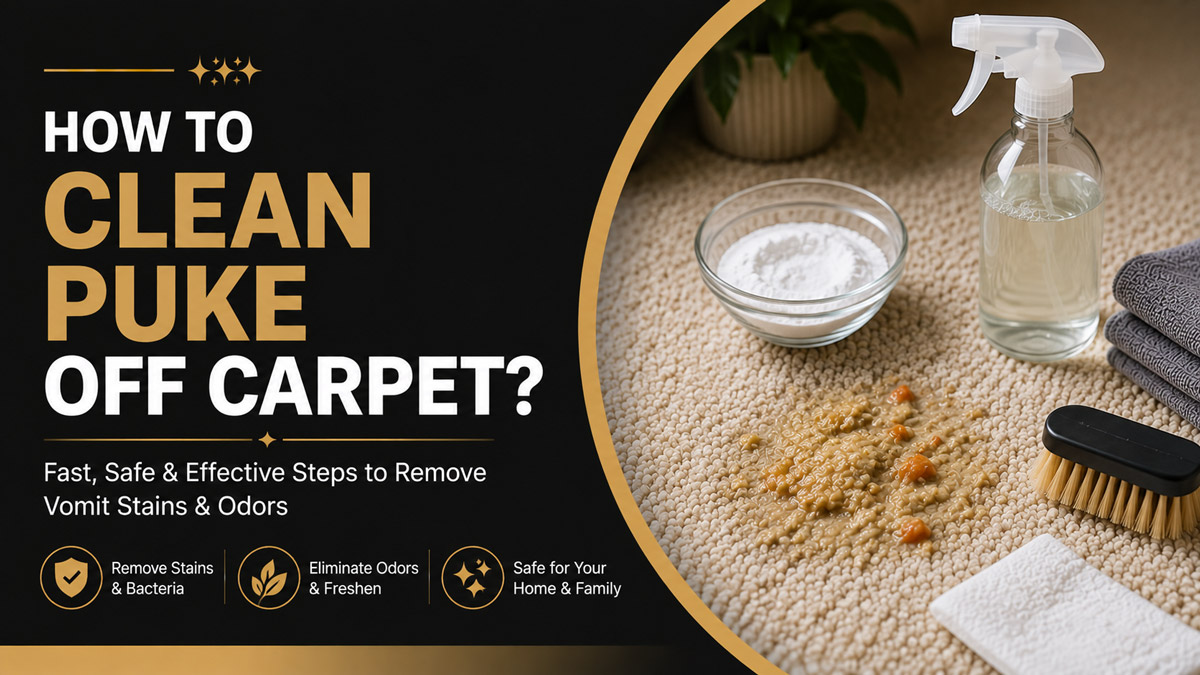
To successfully clean puke (vomit) off carpet, you must immediately scrape up the bulk solids, extract the moisture, and neutralize the highly acidic stomach fluids using a specialized bio-enzymatic cleaner. Failing to remove the digestive proteins completely will result in permanently bleached carpet dyes, dissolved structural adhesives, and deeply rooted bacterial growth that generates a putrid smell.
Key Facts / At a Glance
- Vomit acidity ranges between 1.5 and 3.5 pH, which is acidic enough to dissolve standard carpet backing glues in under 12 hours.
- Scrubbing wet vomit directly creates a permanent mechanical damage known as fiber blossoming, which distorts the carpet yarn forever.
- Live bio-enzymatic cleaners require a 30-minute minimum wet dwell time to consume organic proteins effectively.
- Applying hot water to a fresh vomit stain cooks the proteins, permanently bonding them to the synthetic carpet yarn.
- Complete subfloor odor removal often requires lifting the carpet to replace the contaminated polyurethane foam padding underneath.
Why Does Vomit Destroy Carpet Fibers?
Vomit destroys carpet fibers because it is a highly acidic, protein-dense organic suspension containing aggressive digestive chemicals. Human and pet stomachs produce hydrochloric acid to break down food, resulting in an expelled liquid with a pH level similar to battery acid. When this highly corrosive fluid contacts household textiles, a cascading chemical reaction begins immediately.
The damage occurs in three distinct phases. First, the low-pH hydrochloric acid attacks the synthetic or natural carpet dyes, causing an irreversible chemical burn (bleaching) that alters the color of the yarn. Second, the lipid-heavy bile pigments seep down into the woven primary backing, dyeing the structural fibers yellow or green. Finally, the undigested food proteins and mucin settle into the porous latex adhesive holding the carpet together. Standard household detergents only wash away the surface particles. They leave the heavy proteins behind, creating an active food source for airborne bacteria. As the bacteria consume the rotting proteins over the following weeks, they excrete sulfurous gases, causing the signature putrid smell.
Chemical Components of Vomit and Carpet Impact
| Component | Chemical Classification | Carpet Damage Mechanism | Required Neutralizer |
| Hydrochloric Acid | Corrosive Acid (1.5 – 3.5 pH) | Strips color dyes, dissolves latex glue binders. | Weak Alkaline (Baking Soda) |
| Pepsin & Mucin | Complex Organic Proteins | Bonds to carpet fibers, feeds odor-causing bacteria. | Protease Enzymes |
| Bile (Bilirubin) | Lipid (Fat) Pigment | Stains fibers yellow/green, resists water extraction. | Lipase Enzymes or Oxidizers |
| Carbohydrates | Sugars and Starches | Creates a sticky, hardening crust upon drying. | Amylase Enzymes |
Before You Start: Required Tools and Materials
Executing a successful extraction requires specific mechanical tools and chemical neutralizers. Attempting to clean the area with improper equipment pushes the acidic fluid deeper into the secondary backing matrix.
Gather the following items before touching the spill zone:
- Rigid Plastic Spatula: A flat dustpan edge or a large spoon (Cost: $0 – $3).
- Nitrile Gloves and Face Mask: For handling biological waste and preventing pathogen inhalation (Cost: $5 for a box).
- White Absorbent Paper Towels: Exactly 2-3 rolls. Colored towels can transfer dye into the wet carpet (Cost: $4 – $6).
- Bio-Enzymatic or Oxidizing Cleaner: A specialized protein-digesting spray (Cost: $10 – $20).
- Baking Soda or Cornstarch: Approximately 16 ounces for massive moisture extraction (Cost: $2).
- Microfiber Cloths: At least 3 clean, dry cloths for final rinsing (Cost: $5).
- Electric Floor Fan: To force rapid evaporation (Cost: $20 – $30).
How to Clean Puke Off Carpet: The Six-Step Process
You must follow this precise sequence immediately to prevent the hydrochloric acid from permanently burning the carpet fiber dyes. Missing a step or altering the order will drive the sub-surface solids down into the woven backing matrix and the foam pad below.
Step 1: Isolate the Spill Zone and Ventilate
Put on disposable nitrile gloves and a protective face mask before approaching the biological material. Open all surrounding windows in the room and switch on overhead ceiling fans. Vomit releases aerosolized pathogens and volatile organic compounds into the air. Establishing cross-ventilation minimizes inhalation risks and immediately begins drying the ambient air in the room, which aids in the final evaporation phase. Keep children and pets entirely out of the room to prevent cross-contamination to other areas of the house.
Step 2: Scrape the Mechanical Solids Upward
Slide a rigid plastic spatula, the flat edge of a plastic dustpan, or a large serving spoon gently underneath the solid mass at a very low, flat angle. Lift the debris directly upward and out of the carpet pile. Drop all collected solids directly into a sealable plastic trash bag and tie it closed immediately to contain the odor.
You will know this step is successful when only a flat, wet stain remains on the carpet surface. The most critical mistake at this stage is dragging the spatula or pushing down across the carpet fibers. Downward pressure acts like a hydraulic press, forcing the acidic fluids and microscopic food particles straight through the primary carpet backing and into the polyurethane foam pad underneath. Always lift straight up.
Step 3: Extract Liquid via Capillary Absorption
Layer six to eight highly absorbent, clean white paper towels directly over the wet spot. Press down firmly with the flat palm of your hand to extract the acidic fluid via capillary action. Lift the soiled towels straight up, discard them, and repeat the process using fresh towels until absolutely no fluid transfers upward onto the paper.
For areas that are heavily saturated with fluid, utilize the dry powder extraction method. Pour a thick, quarter-inch structural layer of pure baking soda (sodium bicarbonate) or cornstarch directly across the entire footprint of the spill. Allow this alkaline powder to dwell undisturbed for 15 to 20 minutes. The dry powder acts as a desiccant, drawing up deep moisture from the carpet backing while simultaneously neutralizing the stomach acid. The powder will congeal the remaining fluid into a dry, crusty matrix. Once the powder feels completely dry to the touch, use a vacuum cleaner hose nozzle (without a spinning brush attachment) to carefully suction the crust away.
Expert Insight: The Towel Stomp Method. When dealing with deep pile carpets, hand pressure is often insufficient. Place a thick stack of white towels over the stain, stand directly on the towels wearing clean rubber-soled shoes, and transfer your full body weight onto the spot for 30 seconds. This generates enough hydraulic pressure to pull liquid up from the deepest layers of the carpet pad.
Step 4: Apply the Chemical Neutralizer Dwell
Saturate the remaining stain thoroughly with a professional bio-enzymatic or oxidizing cleaner. You must spray an extra 2-inch radius beyond the visible spill zone. Liquid naturally travels outward in a cone shape as it penetrates the carpet backing, meaning the sub-surface stain is always wider than what you see on the top fibers.
Allow a strict 20 to 30-minute dwell window for the chemical enzymes to actively digest the proteins, or follow the specific timing listed on your manufacturer label. The area must remain wet during this entire phase. If the room is warm and the carpet dries too quickly, the live bacteria die, and the enzymatic reaction stops prematurely. To prevent premature drying, lay a sheet of plastic kitchen wrap flat over the wet, treated area. This traps the moisture and allows the bacteria full time to chop the complex, foul-smelling protein molecules into microscopic, odorless sub-components.
Step 5: Rinse and Extract the Surfactant Residue
Mist a small amount of clean, lukewarm water onto the chemical treatment zone using a spray bottle. Blot the area repeatedly with a fresh, dry microfiber cloth to draw out the cleaning solution residue. Repeat this misting and blotting cycle two to three times until the carpet feels free of soap.
Removing the chemical residue is mandatory. Leftover cleaning soap behaves like a microscopic dirt magnet. As you walk across the carpet over the next several weeks, the sticky surfactant residue will capture normal household dust and dirt from your shoes, creating a large, dark, mysterious spot exactly where the vomit used to be.
Step 6: Force Evaporation to Prevent Wicking
Place an electric floor fan, a high-velocity air mover, or a household dehumidifier focused directly on the wet patch for 4 to 8 hours. The carpet must reach 100 percent dryness as rapidly as possible.
Rapid drying prevents a physical phenomenon known as “wicking.” Wicking occurs when deep stains trapped in the bottom pad rise back up the carpet yarn to the surface during a slow evaporation process. If you allow the carpet to air-dry naturally over two days, the water acts as a transport vehicle, carrying remaining microscopic bile pigments back to the top of the fiber. Forced air breaks this cycle by evaporating the surface water faster than the deep moisture can travel upward.
Which Cleaning Solution Works Best?
Bio-enzymatic sprays work best for permanent odor removal, while oxidizing formulas provide the fastest visual stain removal. Choosing the correct operational mechanism depends heavily on how much time you have, the color of your carpet, and whether you are dealing with a surface spill or a deep subfloor penetration.
Comparison of Cleaning Options
| Cleaning Option | Operational Mechanism | Processing Time | Cost per Unit | Definite Pros | Definite Cons |
| Commercial Bio-Enzymatic Sprays | Live bacteria secrete target-specific enzymes to digest organic bonds. | 30 minutes to 12 hours (requires wet dwell). | $7 – $20 per 32 oz spray bottle. | Eradicates the core odor-causing bacteria permanently. | Requires a long wet-dwell cycle to achieve full chemical efficacy. |
| Household Oxidizers (Hydrogen Peroxide Base) | Alters chemical chromophores via rapid oxygen gas release. | 5 to 15 minutes. | $2 – $8 for basic home solutions. | Fast visual color removal, instantly breaks down bile pigments. | High risk of color-bleaching delicate or dark synthetic carpet fibers. |
| DIY Acid-Base Neutralization | Acetic acid (vinegar) breaks down bile, sodium bicarbonate absorbs it. | 2 to 3 hours (including drying time). | Under $3 using standard pantry staples. | Extremely cheap, eco-friendly, and universally accessible in emergencies. | Weak performance against heavy proteins, leaves a pungent vinegar scent. |
| Mechanical Extraction Rental | High-pressure hot water injection coupled with high-vacuum extraction. | 1 to 2 hours of operating labor. | $30 – $45 daily rental plus $15 formula cost. | Flushes out subterranean materials from deep foam padding. | Demands manual transport, equipment cleaning, and physical setup time. |
Which Should You Choose?
For the Instant Emergency Homeowner: Choose the DIY Acid-Base Neutralization. Mix a precise 1-to-2 ratio of white vinegar to cool water, spray liberally to break down the stomach acids, blot dry, and cover with a thick layer of baking soda to pull up the remaining moisture. This stops the immediate bleaching damage until you can purchase a dedicated enzyme cleaner.
For the Household Pet Parent: Choose a Commercial Bio-Enzymatic Spray. Pet vomit contains highly concentrated bile pigments, animal hair, and dense proteins. Let an enzyme product sit damp for at least 30 minutes to completely digest the pheromones and prevent your dog or cat from returning to re-soil the exact same spot.
For the Deep Contamination Scenario: Choose a Mechanical Extraction Rental. If an adult human was ill and a massive volume of fluid soaked through to the subfloor, surface sprays cannot reach the bottom. Rent a high-vacuum extractor to physically pull the biological waste out of the lower padding.
How Do You Clean Dried Vomit from Carpet?
You clean dried vomit from carpet by mechanically crushing the brittle organic crust, vacuuming away the dust, and chemically rehydrating the remaining stain with a warm surfactant. Once vomit dries completely, the carbohydrates and mucin proteins harden into a cement-like matrix that locks onto the carpet yarn. You cannot simply spray a cleaner onto a dried crust, as the hardened outer shell will repel the liquid.
First, use a dull instrument like a bone folder, a butter knife, or the edge of a spoon to gently tap and crush the dried mass. Break the crust into smaller pieces without pulling or tearing the carpet fibers. Vacuum these dry flakes away immediately using a hose attachment. Next, mix two cups of warm water (never hot) with three drops of clear dish soap. Apply this rehydration fluid directly to the stain and allow it to sit for 10 minutes. The warm surfactant softens the remaining dried proteins, returning them to a semi-liquid state. Once the stain is soft, proceed with the standard Step 3 Capillary Absorption process and follow up with a bio-enzymatic cleaner.
How to Treat Specific Carpet Fiber Types
Different carpet fibers react completely differently to stomach acid and chemical cleaning agents. Applying an aggressive enzyme cleaner to a natural protein fiber will physically dissolve the carpet, while applying peroxide to certain synthetics will instantly strip the color.
Carpet Fiber Treatment Guidelines
| Carpet Fiber Material | Chemical Vulnerability | Best Cleaning Approach | Strict Warning |
| Nylon (Synthetic) | Highly susceptible to acid dye bleaching from stomach acid. | Immediate alkaline neutralization (baking soda), then enzymes. | Do not use heavily acidic DIY cleaners like pure, undiluted vinegar. |
| Polyester (Synthetic) | Oleophilic (attracts oils), traps bile fats deeply. | Oxidizing cleaners or dish soap surfactants to cut lipid fats. | Extremely difficult to remove the yellow/green bile stain once dried. |
| Wool (Natural) | Protein-based fiber, damaged by high pH and enzymes. | Cold water extraction with pH-neutral wool-safe detergents. | Never use bio-enzymatic cleaners, as protease enzymes will eat the wool. |
| Olefin / Polypropylene | Highly chemically resistant, solution-dyed (colorfast). | Standard bio-enzymatic sprays or hydrogen peroxide oxidizers. | Heat sensitive, friction from aggressive scrubbing will melt the fibers. |
If you own a premium wool, Persian rug, or delicate oriental silk weave, you must exercise extreme caution. Do not use aggressive store-bought enzymes or high-pH peroxide oxidizers. Blot exclusively with lukewarm water and a few drops of mild, clear dish soap. If the stain or odor persists after drying, call a professional, certified carpet cleaning service to prevent structural fiber damage.
What Are the Best Commercial Cleaners for Puke?
The best commercial cleaners for puke rely on specialized live bacteria cultures rather than generic, multi-surface soap formulas. When selecting a dedicated cleaner, look for labels explicitly mentioning “protease enzymes” or “bio-enzymatic action.”
1. Rocco & Roxie Professional Strength Stain & Odor Eliminator: Best Overall Performance
This product operates as an industry-standard bio-enzymatic formula certified safe for all synthetic carpets by the Carpet and Rug Institute (CRI). It contains a high concentration of live bacteria that activate immediately upon contact with organic matter, completely eliminating ammonia crystals, bile fats, and deep proteins.
- Processing Time: 30 to 60 minutes dwell.
- Volume: 32 fluid ounces.
- Drawback: The solution carries a strong, lingering wintergreen fragrance that masks odors while the enzymes work, which some users find overpowering in small, unventilated rooms.
- Choose this if: You need guaranteed eradication of heavy, odor-causing proteins from human or pet illness.
2. Nature’s Miracle Cat Stain and Odor Remover Foam: Best for Deep Pile Carpets
This highly targeted, budget-friendly bacteria-based aerosol foam excels at penetrating deep into thick carpet piles. Because it dispenses as a thick shaving-cream consistency, the foam slowly collapses and drips downward along the entire length of the carpet yarn, ensuring complete chemical coverage from the tip of the fiber down to the backing.
- Processing Time: 15 minutes to dry foam.
- Volume: 17.5 fluid ounces.
- Drawback: The aerosol application covers a smaller total square footage per can compared to traditional liquid trigger sprays.
- Choose this if: You have a thick shag, frieze, or high-pile carpet where liquid sprays tend to bead up and roll off the surface.
Common Mistakes and How to Fix Them
Even with the correct chemicals, minor mechanical errors during the extraction process guarantee permanent damage. The following failure modes represent the most common ways homeowners destroy their carpets during emergency cleanups.
The Mistake of Scrubbing (Fiber Blossoming)
Never rub back and forth with rags or use a stiff bristled brush. This abrasive action frays the delicate, tightly twisted tips of the carpet yarn, causing them to untwist and flare outward. This permanent mechanical destruction is known as “fiber blossoming.” It makes the carpet look fuzzy and structurally traps dirt forever. Always blot vertically, applying downward pressure only.
The Danger of Hot Water Protein Bonding
Never apply hot or boiling water to an un-neutralized vomit spot. Extreme thermal heat physically cooks the complex organic proteins found in stomach contents. This heat causes the proteins to coagulate and bond permanently into the microscopic pores of the synthetic carpet fibers, making the stain nearly impossible to remove even by professionals. Always use cool or lukewarm water.
Mixing Bleach and Vinegar (Toxic Gas Creation)
Never combine chlorinated bleach cleaners with white vinegar or acidic vomit components. Some homeowners panic and apply bleach to remove the visual stain, then follow up with vinegar to neutralize the odor. This chemical reaction creates dangerous, toxic chlorine gas, which causes immediate respiratory distress. If you have applied bleach to a biological stain, you must flush the area entirely with plain water and wait 48 hours before applying any acidic neutralizers.
When Should You Hire a Professional?
You should hire a professional carpet cleaner when the biological fluid has heavily saturated the subfloor, when dealing with natural wool or silk fibers, or when the stain spans an area larger than three square feet. Professional technicians utilize truck-mounted extraction units capable of generating water temperatures precisely calibrated for protein removal without causing thermal damage, combined with industrial vacuum suction that pulls moisture out of the secondary backing.
Professional Remediation Costs
| Service Scope | Typical Scenario | Estimated Cost Range | Included Services |
| Spot Treatment Only | A single, isolated illness event in a bedroom. | $75 – $125 (Minimum call-out fee). | Bio-enzyme application, hot water extraction on one spot. |
| Single Room Extraction | Extensive saturation across multiple areas of one room. | $100 – $150 per room. | Pre-spray conditioning, agitation, full room extraction. |
| Subfloor Pad Replacement | Severe penetration causing permanent odor return. | $150 – $250 (Labor plus materials). | Lifting carpet, cutting out contaminated foam pad, installing new pad, relaying carpet. |
| Specialty Wool Rug Cleaning | Vomit on a delicate, natural-fiber Persian area rug. | $3 – $6 per square foot. | Off-site facility washing, pH-balanced submersion, climate-controlled drying. |
Expert Insight: The 24-Hour Rule. If you have treated a spot yourself using DIY methods and the stain remains visibly darker than the surrounding carpet after 24 hours of drying time, call a professional immediately. The longer acidic bile sits on nylon fibers, the deeper the chemical dye transfer goes. After 72 hours, the stain often becomes permanent.
How Do You Remove Lingering Vomit Smell?
You remove lingering vomit smell by finding the exact boundaries of the biological contamination using a blacklight, treating the specific odor-causing bacteria with enzymes, and addressing the subfloor padding if necessary. If a foul odor returns on humid days or weeks after the initial cleaning, the acidic fluid has seeped past the carpet entirely and nested into the polyurethane foam pad or the wooden subfloor beneath the carpet.
First, purchase a simple ultraviolet (UV) blacklight flashlight and wait until nightfall. Turn off all the lights in the room and scan the carpet. The phosphorus and proteins in vomit will fluoresce a bright, pale yellow or green under UV light. This reveals the exact radius of the hidden spill, which is often much larger than the visible stain on the surface.
Once you identify the glowing boundaries, you must saturate the entire glowing area with a bio-enzymatic cleaner, ensuring the liquid penetrates just as deeply as the original vomit did. If the smell persists after this deep enzyme treatment, surface cleaning has failed. To fix this, you must go under the carpet. Go to the nearest wall, grip the carpet with pliers, and lift the carpet corner off the tack strip. Fold the carpet back to expose the foam padding. Locate the dark, stained section of the pad, cut it out with a utility knife, and discard it. Clean the exposed wooden or concrete subfloor with an enzyme treatment, seal the wood with a stain-blocking primer like Kilz, insert a fresh piece of foam padding, and lay the carpet back down.
Frequently Asked Questions
Does baking soda actually remove vomit smell?
Yes, baking soda (sodium bicarbonate) physically neutralizes the highly acidic hydrochloric acid found in vomit, which eliminates the sharp, sour component of the smell. Furthermore, when applied as a thick dry powder, it acts as a desiccant, physically pulling the odor-causing biological moisture out of the carpet fibers so it can be vacuumed away.
Can you use a steam cleaner on puke?
You cannot use a steam cleaner on fresh puke. The extreme heat generated by a steam mop or commercial steam cleaner will instantly cook the complex proteins in the stomach fluids, chemically bonding them to the carpet fibers forever. You must fully extract and neutralize the proteins with cold water and enzymes before any heat is applied.
How long does vomit smell last if untreated?
Untreated vomit smell can last for months or even years. The smell is not just a lingering fragrance; it is the active off-gassing of living bacteria consuming the rotting proteins deeply embedded in the carpet backing. As long as the protein food source remains in the fibers, the bacteria will continue to thrive and produce sulfurous odors, especially in high humidity.
Will white vinegar discolor my carpet?
Standard household white vinegar (5 percent acetic acid) is generally safe for synthetic nylon, olefin, and polyester carpets and will not bleach the color dyes. However, pouring highly concentrated agricultural vinegar or leaving acidic vinegar on delicate natural fibers like dark wool for extended periods can weaken the fiber structure and cause mild color distortion.
Is pet vomit different from human vomit?
Yes, pet vomit typically contains higher concentrations of bile, dense animal hair, and unique territorial pheromones not found in human stomach contents. Because of this high bile content, pet vomit is far more likely to leave a permanent yellow or green dye stain on light-colored carpets, requiring specialized lipases (fat-digesting enzymes) to break down the lipid structures.