To clean poop off a carpet, wear gloves, lift solid waste with a dull scraper, blot rather than rub, apply a carpet-safe enzymatic cleaner, rinse lightly, and dry the area with strong airflow. Fresh spots usually take 20-30 minutes of active work, while deep odor or pad contamination may require professional extraction.
Key Facts
Solid feces should be lifted before liquid cleaning begins.
Rubbing pushes organic residue into carpet fibers, backing, and padding.
Enzymatic carpet cleaners work best when they reach the same depth as the contamination.
Cool or lukewarm water is safer than hot water for the initial cleanup.
A carpet spot is not dry until the carpet, backing, and pad feel dry.
Persistent odor usually indicates residue below the visible carpet surface.
What You Need Before Cleaning Poop
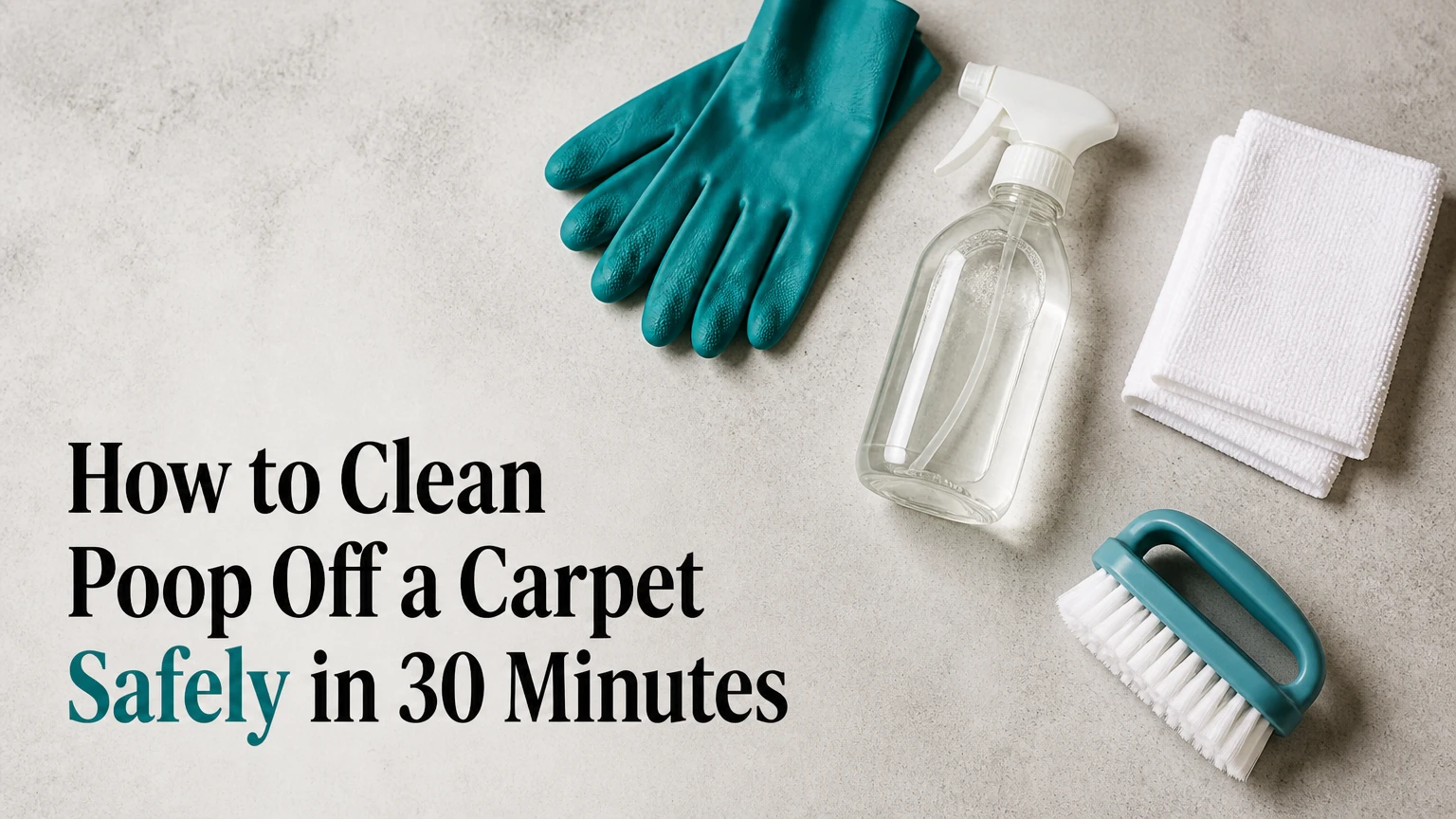
Gather disposable nitrile gloves, a dull plastic scraper or spatula, several white paper towels or white cotton cloths, a sealable trash bag, clean water, and either a carpet-labeled enzyme cleaner or a small amount of mild detergent. A wet-dry vacuum or portable carpet extractor improves results when liquid stool has reached the backing.
Protective equipment matters because animal and human feces can carry pathogens. The Centers for Disease Control and Prevention advises handwashing after contact with animal waste, even when gloves were worn. Keep children and pets away until the carpet is completely dry, and dispose of contaminated towels in a sealed bag.
Before-start checklist
| Item | Typical amount or setting | Purpose |
|---|---|---|
| Nitrile gloves | 1 pair per cleanup | Skin protection |
| White paper towels | 20-40 sheets | Blotting and color transfer checks |
| Plastic scraper | 1 dull edge | Lifting solids without cutting fibers |
| Enzyme cleaner | 250-500 milliliters for a small spot | Organic residue and odor treatment |
| Clean water | 250-500 milliliters | Controlled rinsing |
| Fan | 1 unit, medium or high | Faster drying |
| Trash bag | 1 sealable bag | Contaminated waste disposal |
Do not begin with a carpet shampoo machine if solid material remains. Machines can spread fecal matter across a larger area and contaminate the machine’s brush, hose, and recovery tank.
How to Clean Poop Off a Carpet
Cleaning poop off a carpet requires five stages: remove solids, absorb moisture, treat organic residue, rinse away cleaner, and dry the carpet fully. A fresh, localized accident normally requires 20-30 minutes of active work, but drying can take 4-12 hours depending on carpet thickness, humidity, ventilation, and pad saturation.
Work from the outside edge toward the center. The outer edge is less contaminated than the center, so this direction reduces spreading.
Step 1: Lift the solid waste
Put on gloves and slide a dull scraper, spatula, or folded piece of cardboard under the feces. Lift upward, transfer the waste directly into a sealable bag, and repeat with a clean section of the tool until no solid pieces remain.
Do not use a sharp knife. A sharp edge can cut pile loops, separate tufts, or damage the carpet backing.
You will know Step 1 worked when: no visible solids remain and the carpet pile has not been pulled, cut, or flattened.
Common mistake: pressing down while scraping. Downward pressure drives soft feces into the pile. Use a shallow angle and an upward motion instead.
Step 2: Handle loose or liquid stool
Loose stool and diarrhea require a different first move because scraping alone cannot remove liquid contamination. Cover the wet material with a thin layer of plain baking soda or an approved absorbent powder, wait approximately 5-10 minutes, then lift the absorbed material gently.
Avoid baking soda on wet wool, silk, viscose, or antique rugs unless the manufacturer or a rug professional approves it. Fine powder can lodge in the fibers and backing, and aggressive vacuuming can damage delicate pile.
For a large liquid area, use a wet-dry vacuum or extractor if available. Make slow passes without repeatedly brushing the carpet. Empty and disinfect the recovery tank according to the machine manufacturer’s instructions.
You will know Step 2 worked when: the surface is damp rather than glossy or pooling, and the lifted material can be discarded without spreading.
Common mistake: adding large quantities of powder to a saturated carpet. Powder does not replace extraction and can create a paste that is harder to remove.
Step 3: Blot moisture without rubbing
Place a white paper towel or white cotton cloth over the affected area and press straight down. Replace the towel whenever it becomes damp or discolored. For a small spot, 10-20 firm presses often remove surface moisture; a larger accident may require 30-40 towels.
A heavy book placed over a towel can apply even pressure for 10-15 minutes, but cover the book with a plastic bag and keep the plastic from touching the carpet. Do not stand directly on a delicate rug.
You will know Step 3 worked when: a fresh white towel shows little or no brown transfer and does not become wet after firm pressure.
Common mistake: using colored towels. Dye can transfer into wet carpet and make it difficult to tell whether the stain is still releasing pigment.
Step 4: Apply an enzymatic carpet cleaner
Choose an enzymatic cleaner whose label specifically permits use on carpet. Apply enough product to reach the depth of the original contamination, but do not flood the entire room. A small 10-centimeter spot typically needs about 30-60 milliliters; a saturated 30-centimeter area may need 150-250 milliliters, depending on pile and backing.
Enzymatic products contain enzymes that break down organic proteins and other residue. Some formulas contain microorganisms, while others contain enzyme extracts or surfactants, so “live bacteria” is not a universal feature. The product label determines the correct dwell time, dilution, and safety instructions.
Leave the treated area damp for the label’s stated period, commonly 10-30 minutes. Odor problems below the surface may need a longer damp period, often several hours, but only if the label allows extended contact and the carpet can be dried promptly.
You will know Step 4 worked when: the cleaner has reached the contaminated zone, the odor begins to weaken, and the carpet remains intact without color bleeding.
Common mistake: spraying enzyme cleaner over a residue of disinfectant, bleach, vinegar, or detergent. Previous chemicals can reduce product performance or create an unsafe mixture. Rinse and blot first if another chemical was already used.
Step 5: Rinse and extract the cleaner
Use a small amount of cool, clean water to rinse the treated area. Apply water with a spray bottle or damp cloth, then extract it with a wet vacuum or blot it with fresh white towels. Repeat once if the carpet feels slippery, because detergent residue attracts soil.
A rinse should be controlled, not a soaking. Excess water can migrate into the pad and subfloor, where drying becomes slow and odor can persist.
You will know Step 5 worked when: the carpet no longer feels soapy, the towel shows minimal transfer, and no liquid emerges when the area is pressed.
Common mistake: skipping the rinse because the stain looks gone. Residual surfactant can leave a sticky patch that attracts dirt and creates a visible halo.
Which Cleaner Should You Use?
An enzymatic carpet cleaner is usually the best choice for pet feces and lingering organic odor, while a mild detergent solution is a short-term option for a fresh surface stain. Vinegar can reduce some odors, but vinegar and dish soap do not reliably digest fecal residue below the pile.
| Cleaner or method | Best use | Typical contact time | Main limitation |
|---|---|---|---|
| Carpet-labeled enzyme cleaner | Pet feces and organic odor | 10-30 minutes, sometimes longer | Requires label-compliant dwell time and drying |
| Mild dish detergent solution | Fresh surface residue | 5-10 minutes | Can leave residue and may not remove deep odor |
| Plain water extraction | Final rinse | 1-3 passes | Does not chemically break down organic residue |
| Oxygen-based carpet product | Color residue on tested synthetic carpet | 5-30 minutes | Can lighten dyes and damage wool |
| Chlorine bleach | No carpet application | Do not use | Discolors fibers and creates hazardous exposure |
| Professional extraction | Pad contamination or widespread waste | 1-3 hours service time | Costs more and requires scheduling |
A simple emergency solution can contain 2 cups of cool or lukewarm water and a few drops of mild, clear dish detergent. The frequently repeated mixture of 1 tablespoon of detergent plus 1 tablespoon of vinegar in 2 cups of water is unnecessarily concentrated for many carpets and may leave residue, so use less detergent and test first.
Never mix vinegar with chlorine bleach. Never mix ammonia with bleach. Ammonia-based products are also a poor choice for pet accident areas because the smell may encourage repeat marking.
How Do You Clean Dried Poop From Carpet?
Dried poop should be softened before removal, because dry scraping can break carpet fibers and detach tufts. Place a lukewarm, damp cloth over the residue for 5-10 minutes, or apply a small amount of carpet-safe enzyme cleaner, then lift the softened material with a dull scraper.
Do not pour water onto the stain. Controlled rehydration loosens the residue while limiting penetration into the pad.
After lifting the residue, follow the normal sequence: blot, apply the approved cleaner, observe the label dwell time, rinse lightly, extract, and dry. A dry stain may require two treatment cycles, with complete drying between cycles.
For old stains, inspect the carpet edge and backing if possible. If the odor becomes stronger when the carpet is damp, contamination may have reached the backing or underlay.
How Should You Clean Different Carpet Fibers?
Synthetic nylon and polypropylene carpets tolerate controlled water-based spot cleaning better than wool, silk, viscose, and antique rugs. Fiber type, dye stability, backing construction, and manufacturer instructions determine whether an at-home treatment is appropriate.
| Carpet type | Safer first approach | Avoid | Referral threshold |
|---|---|---|---|
| Nylon | Blot, enzyme product labeled for nylon, controlled rinse | Chlorine bleach, excessive heat | Odor remains after two dry cycles |
| Polypropylene | Blot, mild cleaner, enzyme treatment | Solvent misuse, flooding | Pad or subfloor is wet |
| Polyester | Blot and test cleaner for dye stability | Strong alkaline products | Color bleeding or texture change |
| Wool | Lift, blot with cool water, wool-safe product | Oxygen bleach, vinegar, soaking | Any large or deep accident |
| Silk or viscose | Lift solids, minimal blotting | Water saturation, scrubbing, powders | Immediate professional advice |
| Antique or hand-knotted rug | Isolate, lift, blot carefully | Household carpet machines | Professional rug cleaner |
Wool fibers can felt when exposed to friction, moisture, and heat together. WoolSafe-approved products and a trained rug cleaner are safer choices than general-purpose pet sprays.
Should you use steam or hot water?
Hot water is not the best first treatment for fecal contamination, but the common claim that heat instantly “cooks” every carpet stain is overstated. Heat can accelerate dye setting, damage some fibers, and spread contamination when used before solid removal; professional hot-water extraction is different because it combines controlled solution, agitation, and immediate recovery.
Use cool or lukewarm water for spot treatment. Follow the carpet and machine manufacturer’s temperature limits if professional or rental extraction is necessary.
How Do You Dry Carpet After Fecal Cleanup?
Dry carpet with extraction, towels, ventilation, and airflow rather than leaving a saturated pad to evaporate slowly. A small surface spot commonly dries in 4-8 hours, while thick carpet, humid rooms, and wet padding can require 12-24 hours.
Open windows when outdoor humidity permits, run a fan across the carpet surface, and use a dehumidifier in humid conditions. Do not place furniture back until the carpet and surrounding pad are dry.
Check moisture at three levels:
- Press a dry towel firmly into the carpet for 10 seconds.
- Feel the backing or carpet edge if accessible.
- Compare the treated area with a dry neighboring area.
If the towel becomes damp or the backing feels cold and wet, continue drying. Carpet can feel dry at the tips while the pad remains saturated underneath.
Why Does the Carpet Still Smell After Cleaning?
Persistent odor usually means fecal residue reached the carpet backing, underlay, tack strip, or subfloor. Surface deodorizer cannot solve a contamination pocket below the visible pile, so the affected area needs deeper extraction, controlled enzyme treatment, or removal of contaminated padding.
Reapply an enzyme cleaner only after checking the product label and carpet warranty. Keep the area damp for the permitted dwell time, then extract and dry it thoroughly. Do not cover wet carpet with plastic indefinitely because trapped moisture can delay drying and promote microbial growth.
If odor remains after two complete treatment and drying cycles, lift a carpet edge if practical. A professional can inspect the pad with less disruption than repeated household soaking. Replace a small section of pad when it remains contaminated or develops a persistent odor that extraction cannot remove.
What Causes a Brown or Yellow Ring?
A brown or yellow ring is usually wicking, where dissolved residue moves upward and outward as the carpet dries. Wicking is more likely when the original contamination reached the backing or when the cleaned spot was left wetter than the surrounding carpet.
To correct a mild ring, lightly apply the approved cleaner across the entire affected area rather than treating only the center. Blot from the outside toward the center, extract excess moisture, and dry the area quickly with airflow.
A ring can also indicate dye bleeding, detergent residue, or damaged fiber. If the color changes during the first test or the ring expands after rinsing, stop adding chemicals and contact a carpet or rug professional.
Common Mistakes and How to Fix Them
| Mistake | Result | Recovery |
|---|---|---|
| Scrubbing the feces | Deeper fiber and backing contamination | Stop rubbing, lift remaining solids, then blot |
| Using hot water first | Faster dye movement and greater saturation | Blot, cool the area, and use controlled extraction |
| Flooding the spot | Wet pad, odor, and prolonged drying | Extract repeatedly and increase airflow |
| Using ammonia | Chemical odor and possible pet re-soiling | Rinse with clean water and dry completely |
| Mixing cleaners | Reduced performance or hazardous fumes | Stop, ventilate, and follow label safety guidance |
| Vacuuming loose feces | Contaminated vacuum interior and wider spread | Empty and disinfect the machine according to its manual |
| Using colored cloths | Dye transfer and uncertain stain monitoring | Switch to white towels and test colorfastness |
| Applying bleach | Permanent discoloration and fiber damage | Stop immediately and seek professional repair advice |
One practitioner rule matters above all others: clean to the depth of contamination, not merely to the size of the visible mark. A 10-centimeter stain can require treatment over a 20-centimeter area if moisture spread beneath the pile.
When Should You Hire a Professional?
Hire a professional carpet or rug cleaner when feces cover more than about 0.5 square meters, soak through to the pad, involve repeated diarrhea, remain odorous after two complete treatments, or contaminate a delicate natural-fiber rug. Professional extraction is also sensible when the carpet cannot be lifted for backing inspection.
Typical pricing varies by location, access, room size, and contamination severity.
| Situation | Typical service range | Typical active time | Likely additional work |
|---|---|---|---|
| One localized carpet spot | $75-$150 minimum charge | 30-60 minutes | Deodorizing or spot treatment |
| One average room | $120-$300 | 1-2 hours | Furniture moving or odor treatment |
| Multiple rooms | $250-$600 | 2-4 hours | Whole-area extraction |
| Damaged or contaminated pad | $150-$500 extra | 2-6 hours | Pad removal and replacement |
| Fine wool or silk rug | $100-$500+ | 3-10 days off-site | Specialized rug washing and drying |
Prices are typical North American consumer ranges, not fixed rates. Ask whether the quoted service includes waste extraction, odor treatment, pad inspection, and drying instructions.
Professional cleaning is not a guarantee that every odor disappears. If fecal matter entered the subfloor, the cleaner may recommend pad replacement, subfloor cleaning, or localized carpet removal.
How Can You Prevent Repeat Pet Accidents?
Remove the odor source rather than masking it, then address the animal’s health, access, and routine. Dogs and cats may return to a location when residual odor remains below human detection, even after the visible stain disappears.
Use a carpet-safe enzyme product, rinse away residue, and dry completely. Block access with a gate or closed door during treatment. If accidents recur, consult a veterinarian, especially when stool changes, diarrhea, straining, or sudden house-soiling accompany the behavior.
Do not punish a pet after discovering an accident. Punishment does not remove odor and can complicate house-training or increase anxiety-related accidents.
Frequently Asked Questions
Can I use baking soda to remove poop stains from carpet?
Baking soda can absorb some surface moisture from loose stool, but it does not disinfect carpet or digest organic residue. Sprinkle only a thin layer, wait 5-10 minutes, lift or vacuum it after the waste is removed, and avoid the method on wet wool, silk, viscose, or antique rugs.
Is carpet cleaner enough for human feces?
Carpet cleaner may remove a small, fresh human-feces spot when used after solid removal and followed by thorough rinsing and drying. Wear gloves, wash hands, disinfect reusable tools, and seek professional advice for diarrhea, blood, vomit, extensive contamination, or waste that entered the pad.
Can I use hydrogen peroxide on a carpet poop stain?
Hydrogen peroxide can lighten some organic stains, but household concentrations may bleach or alter carpet dyes. Test an inconspicuous area first, use only a carpet-labeled product according to its instructions, and choose an enzyme cleaner for odor rather than relying on peroxide.
How long should enzyme cleaner sit on carpet?
Most carpet enzyme products require approximately 10-30 minutes of contact, but some odor treatments specify several hours. The product label controls the dwell time. Keep the area damp only as long as directed, then extract and dry it to prevent pad saturation.
Why did the stain come back after drying?
A returning stain usually results from wicking, where dissolved residue rises from the backing as the carpet dries. Treat the surrounding area instead of only the center, extract more moisture, and dry with airflow. Repeated recurrence suggests contamination in the pad or subfloor.
The Bottom Line
To clean poop off a carpet safely, remove solids first, blot liquid without rubbing, use a carpet-labeled enzyme cleaner, rinse with limited water, and dry the carpet and pad completely. Cool water, white towels, gloves, and controlled extraction prevent most secondary damage. Persistent odor, large contamination, and delicate rugs justify professional cleaning.