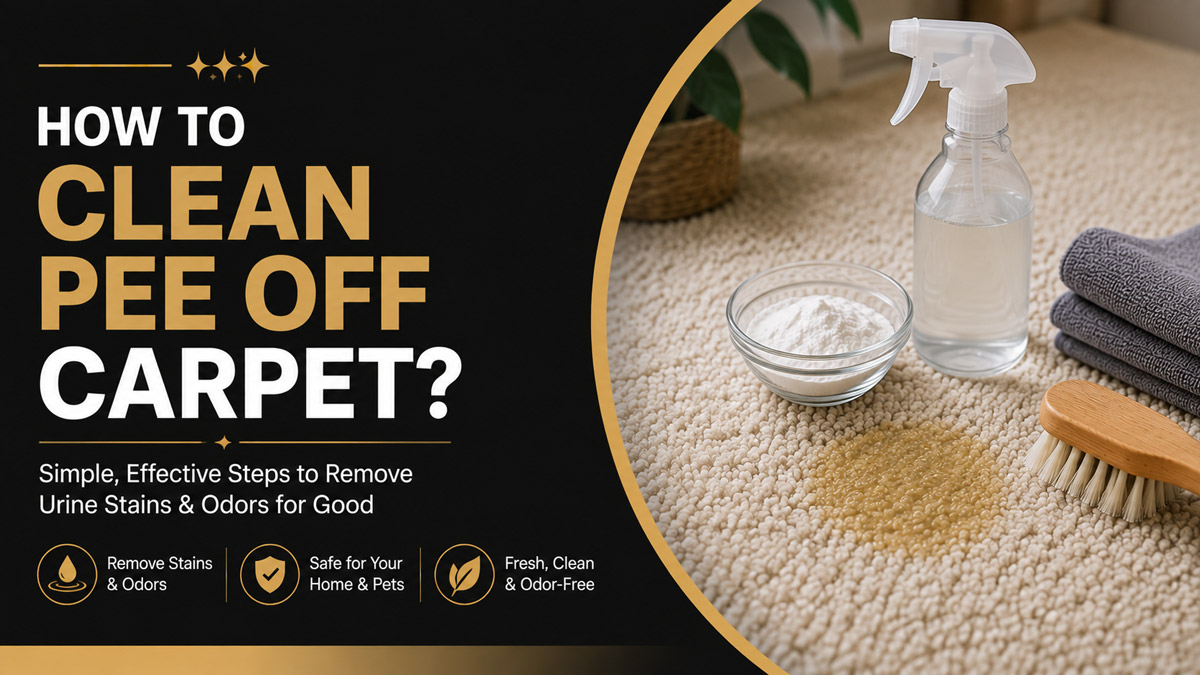
To clean pee off a carpet successfully, immediately blot up 90 percent of the liquid using heavy downward pressure. Saturate the affected area with an enzyme-based cleaner extending two inches beyond the visible stain. Let the solution dwell for 15 minutes to break down uric acid crystals, then extract the remaining moisture completely.
At a Glance
- Scrubbing a wet stain pushes the liquid deeper into the backing pad and spreads it laterally across the subfloor.
- Standard household soaps fail because they cannot dissolve crystallized uric acid.
- A pool of animal waste on the surface covers an area three times larger in the hidden pad underneath.
- Feline urine contains concentrated felinine and requires double the standard enzymatic dwell time.
- Steam cleaning permanently binds waste proteins to synthetic carpet fibers through heat coagulation.
What is the standard protocol for fresh liquid stains?
The correct sequence for removing fresh pet accidents requires immediate extraction followed by chemical breakdown. You must address the spill within two hours before the liquid dries into concentrated crystals. The following procedure isolates the liquid and neutralizes the remaining biological compounds.
- Blot Immediately: Press fresh white paper towels firmly into the surface. Do not apply lateral friction.
- Apply Body Weight: Stand directly on the folded towels for 30 seconds to force the liquid upward. Replace the towels and repeat this action until the paper pulls up entirely dry.
- Saturate with Enzymes: Pour a commercial enzymatic solution directly over the target zone. You must spray the liquid two inches past the visible perimeter to account for the wider spread inside the bottom foam layer.
- Allow Dwell Time: Leave the area untouched for 10 to 15 minutes. The biological agents require this period to consume the urea.
- Extract and Weight: Blot the excess solution with a dry microfiber cloth. Place a fresh stack of paper towels over the damp spot, set a heavy flat object on top, and leave the weight in place for 24 hours to draw out deep residual moisture.
What happens to the flooring materials if you scrub a wet liquid stain?
Scrubbing forces the liquid downward through the primary backing and permanently distorts the carpet pile. When you apply aggressive friction to surface fibers, the physical movement untwists the yarn and pushes the water-soluble compounds into the deeper foam layers.
Carpet fibers are manufactured as tightly wound tufts. Scrubbing unravels these tufts and creates a frayed appearance known as pile distortion or “blooming.” Once the pile blooms, the texture damage is permanent and impossible to reverse with standard grooming tools. Furthermore, lateral scrubbing spreads the contamination over a larger footprint. The physical agitation drives the moisture through the woven mesh backing directly into the porous sponge pad.
Professional technicians use the “3x rule” when assessing scrubbed stains. A spot that appears to be four inches wide on the surface usually covers a twelve-inch diameter in the padding below. Direct downward pressure utilizes capillary action to lift the liquid, while horizontal scrubbing defeats this natural physical process entirely.
How much enzymatic cleaner is required per square inch of the surface mark?
You must apply an equal or greater volume of enzymatic solution to match the original liquid deposit. A common failure point in DIY stain removal is misting the surface fibers lightly with a spray bottle while the bulk of the contamination remains trapped deep in the sponge underlayment.
A typical medium-sized dog releases between four and eight ounces of liquid during an indoor accident. To effectively neutralize eight ounces of animal waste, you must pour at least eight to ten ounces of enzymatic solution directly into the flooring. The cleaner must physically contact every single uric acid crystal to initiate the biological breakdown. If the original spill soaked completely through the one-inch foam pad, your cleaning solution must also soak completely through that same one-inch foam pad.
Using a standard trigger sprayer delivers approximately 0.04 ounces per pull. Attempting to treat a heavy spill with a spray bottle requires hundreds of pulls and often leaves the deepest layers untreated. Always remove the spray nozzle and gently pour the liquid directly from the bottle to achieve proper depth penetration.
Does homemade vinegar and baking soda work as an alternative?
Mixing white vinegar and warm water serves as a functional temporary measure, but it does not completely eliminate the root cause of the odor. You can use a solution of one part distilled white vinegar and one part warm water to dilute fresh spills and alter the pH environment.
Vinegar is an acetic acid. When applied to a high-pH biological spill, the acid neutralizes the ammonia compounds and temporarily masks the smell. However, household vinegar lacks the specific biological enzymes required to digest crystallized uric acid. The baking soda acts as a desiccant to absorb moisture, but it must only be applied after the vinegar solution has dried entirely. Mixing them simultaneously creates a rapid foaming reaction that neutralizes the cleaning power of both ingredients.
If you rely solely on pantry ingredients, the underlying uric acid crystals will remain dormant in the padding. These crystals will eventually rehydrate and emit odors months later. Vinegar is best utilized as an emergency stopgap until you can procure a dedicated enzymatic product.
How does cat urine chemistry differ from dog urine?
Feline waste contains highly concentrated amino acids that require significantly stronger chemical treatments than canine waste. The evolutionary biology of a cat requires it to extract maximum moisture from its diet, resulting in an exceptionally dense and pungent liquid byproduct.
The primary differentiator is felinine, an amino acid unique to domestic cats. As felinine degrades outside the body, it converts into thiols. Thiols are the exact same sulfur-based organic compounds that give skunk spray its notorious scent. This chemical degradation creates a sticky, hydrophobic residue that resists standard water extraction.
| Waste Type | Primary Odor Compounds | Water Solubility | Minimum Dwell Time Required |
| Canine | Urea, Ammonia, Urobilin | High | 10 to 15 minutes |
| Feline | Felinine, Thiols, Uric Acid | Low (Forms sticky resins) | 30 to 45 minutes |
| Human | Urea, Creatinine | Very High | 10 minutes |
Because canine waste lacks felinine, standard enzymatic formulas easily digest the remaining ammonia and urea. Feline waste demands targeted products explicitly formulated for thiol breakdown.
How long does it take for the animal waste smell to completely disappear?
The biological odor will completely dissipate between 12 and 24 hours after the treated area reaches total dryness. During the active chemical digestion phase, the smell will persist and occasionally intensify as the enzymes break down the trapped organic matter.
Drying time dictates the timeline for odor removal. An enzymatic formula requires a damp environment to function, but the chemical reaction only finishes off-gassing once all water evaporates. If a room has poor ventilation or high atmospheric humidity, the drying process can stretch beyond 48 hours. The prolonged dampness allows the bacteria to produce more volatile organic compounds.
To accelerate the timeline, point a high-velocity box fan directly at the treated zone immediately after the 15-minute dwell period concludes. Maintaining the indoor temperature between 68 and 72 degrees Fahrenheit optimizes the enzymatic performance while speeding up the moisture evaporation rate. Do not apply hot air from a hair dryer, as excess heat will destroy the live enzymes before they finish consuming the waste.
Are synthetic carpet fibers easier to treat than natural wool?
Synthetic materials offer significantly higher resilience to harsh chemical cleaners than natural protein-based fibers. Nylon and polyester plastics do not absorb liquids into their cellular structure, meaning the contamination sits on the exterior of the fiber shaft.
Natural wool is highly sensitive to extreme pH levels. Wool fibers are constructed from keratin proteins, which are chemically similar to human hair. Applying heavy alkaline substances or highly acidic vinegar to wool can cause the fibers to become brittle, shed excessively, or lose their organic dye. The WoolSafe Organisation (2019) explicitly warns against using standard off-the-shelf pet cleaners on natural rugs, as many commercial formulas contain aggressive surfactants that strip the natural oils from the fleece.
| Fiber Material | Material Resilience | pH Tolerance Range | Recommended Cleaning Solution |
| Nylon / Polyester | Excellent | 4.0 to 10.0 | Standard Enzymatic formulas |
| Natural Wool | Poor | 5.5 to 8.0 (Neutral only) | WoolSafe-approved neutral enzymes |
| Natural Silk | Very Poor | 5.5 to 7.0 | Dry solvent professional extraction |
When treating synthetic floors, aggressive moisture extraction remains the primary concern. When treating wool or silk, chemical safety takes immediate priority over deep saturation.
Will hydrogen peroxide bleach different carpet materials?
A standard three percent topical hydrogen peroxide solution is generally safe for clear synthetic fibers, but it poses a severe bleaching risk to natural materials and cheaply dyed rugs. Hydrogen peroxide works through rapid oxidation. This chemical process safely breaks down the chromophores (the color-causing molecules) within the biological stain.
However, oxidation does not distinguish between biological stains and the chemical dyes used to color your flooring. Polyester and solution-dyed nylon hold their color permanently because the pigment is baked directly into the plastic during the manufacturing process. Three percent peroxide will not alter these factory-sealed colors. Conversely, wool and standard nylon are dyed topically after manufacturing. Peroxide can permanently lift these topical dyes and leave a stark white spot on the floor.
Always conduct a spot test before broad application. Apply one drop of three percent hydrogen peroxide to a hidden corner inside a closet. Press a white cloth against the wet spot for sixty seconds. If any color transfers to the white cloth, you cannot use peroxide on that floor.
Why does the biological odor return on days with high atmospheric humidity?
The smell returns because dried uric acid salts are highly hygroscopic. Hygroscopic materials actively pull invisible moisture out of the surrounding air. When indoor humidity rises above 50 percent, the dormant salts in your flooring absorb the atmospheric water and chemically rehydrate.
Once rehydrated, the uric acid emits volatile organic gases that travel upward through the room. This mechanism explains why a room smells completely clean during a dry winter but immediately reeks of animal waste during a humid summer rainstorm. The original cleaning effort likely addressed the surface urea and urochrome pigments, leaving the floor looking spotless. However, the heavy uric acid crystals sank into the wooden subfloor and remained untouched by the surface-level wiping.
Until a specialized liquid cleaner physically touches and consumes every single uric acid salt deep in the architecture of the house, the humidity-driven off-gassing cycle will continue indefinitely.
How do you locate hidden dried urine spots?
You can precisely identify invisible dried stains using a 14-watt, 395-nanometer ultraviolet flashlight in a completely darkened room. The biological compounds in animal waste contain natural phosphors that absorb the invisible ultraviolet light and reflect it back as visible light.
To map the contamination, wait until nighttime and turn off every light source in the room. Close the blinds to block ambient streetlights. Hold the UV flashlight roughly two feet above the floor and sweep it slowly across the surface. Dried biological spots will fluoresce brightly, typically presenting as a dull yellow-green or bright chartreuse color. Do not confuse lint or spilled laundry detergent for waste. Detergents often glow a bright, striking blue under blacklight due to optical brighteners.
Once you locate a glowing yellow-green perimeter, outline the borders using blue painter’s tape. Turn the overhead lights back on, and you will have an exact chemical map detailing where you must pour your enzymatic extraction liquids.
How do you inject enzymatic cleaners directly into the carpet padding?
Treating the hidden foam padding requires a subsurface extraction tool or a heavy-gauge carpet syringe. Surface blotting cannot reach the bottom of a one-inch polyurethane pad. You must bypass the top layer entirely to deposit the active biological agents directly into the trapped contamination.
For localized spots, load a specialized carpet syringe with a concentrated liquid enzyme. Push the needle directly through the woven backing until you feel it hit the wooden or concrete floor below. Slowly pull the needle upward a quarter-inch and inject the solution outward in a circular pattern. This technique floods the foam without oversaturating the surface pile above.
For larger areas, professional technicians utilize a tool called a water claw or a FlashXtractor. You pour a heavy volume of liquid over the area to purposefully flood the pad. After the dwell time finishes, you place the heavy extraction tool flat on the wet spot. The tool connects to a high-powered wet vacuum. You stand on the device, using your body weight to compress the foam while the vacuum forcefully pulls the liquid straight upward from the subfloor.
How do you seal a plywood subfloor damaged by pet waste?
When extreme contamination breaches the foam pad and soaks into the wooden structure of the house, you must physically remove the ruined padding and apply a chemical vapor barrier directly to the wood. Wood is highly porous and will hold uric acid indefinitely.
First, peel back the corner of the carpet and cut away the stained section of the foam pad using a utility knife. Discard this ruined foam. Scrub the exposed plywood using a heavy brush and an enzymatic concentrate. Let the wood dry completely with the aid of high-velocity fans. Once dry, you must seal the wood to trap any remaining molecular odors permanently.
Paint the exposed plywood using a heavy oil-based primer or a shellac-based sealer, such as KILZ Original or B-I-N Shellac. You must avoid water-based latex primers. Water-based paint will simply rehydrate the uric acid crystals, allowing the odor to bleed directly through the new coat of paint. Apply two heavy coats of the shellac sealer, wait four hours for the chemical barrier to cure, and install a fresh patch of foam padding using heavy-duty staples.
Can you use a steam cleaner to remove pet odors?
You must never use a heated steam cleaner to treat biological waste on any textile surface. The application of high heat initiates a chemical reaction called protein coagulation, which permanently bonds the biological matter to the synthetic fibers.
Urine contains complex proteins. When exposed to temperatures exceeding 140 degrees Fahrenheit, these proteins undergo a structural change identical to an egg white turning solid in a hot frying pan. The Institute of Inspection, Cleaning and Restoration Certification (IICRC, 2021) strictly prohibits the use of heat on fresh organic spills. Once the proteins cook and bind to the plastic or wool fibers, no chemical or biological cleaner can separate them. The stain and the accompanying odor become a permanent feature of the house.
Instead of steam, you must use cold or lukewarm water extraction machines. A standard wet vacuum or a non-heated carpet extractor provides the mechanical suction necessary to pull the liquid out without triggering the disastrous heat-binding process.
Why does the odor intensity peak right after applying the treatment?
The smell worsens temporarily because the application of a liquid cleaner rehydrates the dormant uric acid salts and initiates an active bacterial off-gassing process. This temporary spike in odor acts as visual and olfactory confirmation that the enzymatic agents are actively working.
The bacteria present in high-quality commercial formulas consume the biological waste and convert it into two harmless byproducts: carbon dioxide and water. During this active digestion phase, the chemical reaction releases trapped volatile organic compounds directly into the ambient air. The heavier the contamination, the stronger the off-gassing spike will be during the 15-minute dwell period.
Do not interpret this sudden stench as a failure of the product. Many homeowners panic during this phase and attempt to wash away the enzyme cleaner prematurely. You must endure the temporary odor spike. Once the bacteria finish consuming their food source, they die off naturally. The smell will vanish completely the moment the residual moisture evaporates from the room.
When should you hire a professional for deep liquid extraction, and what does it cost?
You should hire a professional carpet cleaner when a liquid spill sits untreated for more than a week, when the stain covers more than two square feet, or when the contamination involves expensive natural textiles like Persian rugs. DIY surface blotting rarely succeeds on severe, aged infestations.
Professional technicians possess truck-mounted extraction units that generate hundreds of pounds of vacuum lift. They utilize proprietary subsurface extraction tools that flush the foam padding with hundreds of gallons of pressurized neutralizing agents before sucking the floor completely dry. An experienced practitioner typically charges between $150 and $300 for a targeted biological odor treatment, depending on the severity of the damage and the total square footage involved.
| Situation / Approach | Expected Cost Range | Success Rate for Old Stains |
| DIY Surface Extraction | $20 to $45 | Very Low (15 to 25 percent) |
| Professional Subsurface Extraction | $150 to $300 | High (80 to 90 percent) |
| Complete Subfloor Replacement | $500 to $1,500+ | Absolute (100 percent) |
If a professional determines the waste has compromised the structural integrity of the floor joists or heavily warped the plywood, surface cleaning is no longer viable. At that threshold, physical demolition and replacement remain the only guaranteed solutions.
The Bottom Line
Fast extraction and biological digestion remain the only guaranteed methods for saving your floors. You must skip the standard household soaps and immediately apply a dedicated enzymatic formula to break down the resilient uric acid crystals. By addressing the hidden spread within the underlying foam pad and avoiding the destructive heat of a steam cleaner, you can permanently eliminate the contamination. Always ensure the room is thoroughly ventilated to speed up evaporation, as a completely dry floor is the final requirement for total odor elimination.