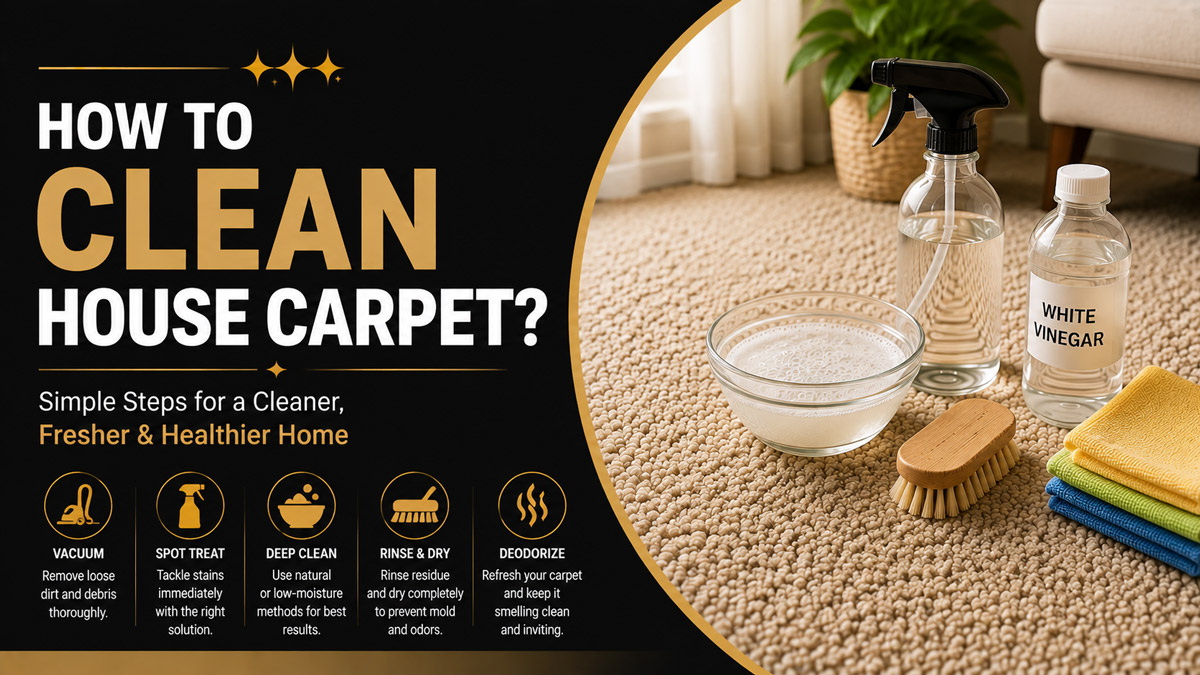
When learning how to clean house carpet, you must systematically remove dry particulate soil, apply a chemical pre-treatment to break oily bonds, and extract the suspended dirt using pressurized hot water. Routine maintenance preserves fiber integrity, while deep restorative extraction improves indoor air quality and removes embedded allergens hidden in the primary backing.
Key Facts / At a Glance
- Optimal deep cleaning frequency ranges from 12 to 18 months for standard households.
- Homes with multiple pets or asthma sufferers require deep extraction every 3 to 6 months.
- Hot water extraction requires a critical water temperature of 115°F to 150°F for residential DIY machines.
- Leaving a carpet soaking wet dissolves backing glues and creates a damp breeding ground for black mold.
- Alkaline detergents demand an acidic neutralizing rinse to prevent a sticky chemical residue that attracts new dirt.
- Removing up to 80% of dry particulate loose soil beforehand prevents it from turning into mud during wet extraction cycles.
What Are the Main Carpet Cleaning Methods?
Carpet cleaning requires matching the chemical application to the specific fiber type and soil level. Unlike superficial vacuuming that only removes loose debris from the upper pile, deep carpet cleaning leverages a combination of chemical solutions, heat, agitation, and pressure. This combination breaks the chemical bonds between oily soils and fiber surfaces to lift contaminants hidden deep within the carpet backing.
The Institute of Inspection, Cleaning and Restoration Certification (IICRC) guidelines state that selecting the wrong method for your fiber type will cause irreversible damage, including shrinking, dye bleeding, or rapid re-soiling.
| Method | Chemical Mechanics | Best For | Typical Cost (per 1,000 sq ft) | Dry Time | Pros | Cons |
| Hot Water Extraction (Steam) | Injects pressurized hot water mixed with detergent. Immediately extracts dissolved grime with vacuum suction. | Deep restorative cleaning, heavy soils, and removing deep biological allergens. | $250 – $400 | 6 – 24 hours | Deepest clean available. Recommended by most manufacturers to maintain warranties. | High risk of mold if over-wetted. Long dry times require active ventilation planning. |
| Dry Cleaning (Compound) | Spreads a moist, solvent-soaked powder compound over the pile. Debris binds to the powder via capillary action, then is vacuumed out. | Delicate natural fibers (wool or silk), commercial spaces, or immediate-turnaround jobs. | $200 – $350 | 20 – 30 minutes | Virtually no dry time. Zero risk of fiber shrinkage or under-pad mold. | Surface-level clean. Does not extract deeply embedded dirt or heavy pet urine. |
| Encapsulation (VLM) | Applies a specialized liquid polymer solution. As it dries, it crystallizes and traps dirt particles into microscopic brittle crystals. | Commercial maintenance, synthetic low-pile carpets, and routine surface brightening. | $220 – $370 | 20 – 45 minutes | Highly eco-friendly. Uses 70% less water than extraction. Leaves no sticky residue. | Ineffective on thick shag piles, deep grease stains, or heavy biological contamination. |
| Carpet Shampooing | Applies a thick foaming alkaline detergent via rotating motorized brushes to scrub fibers aggressively. | Extremely heavy soil, mud, and severe neglect in commercial or industrial settings. | $180 – $300 | 2 – 6 hours | Excellent surface agitation and immediate visual brightening effect on heavily soiled areas. | Leaves a sticky chemical residue that quickly attracts new dirt if not thoroughly rinsed. |
| Bonnet Cleaning | Mists a cleaning agent on the surface, then uses a rotating motorized buffing pad to absorb surface grime into a cotton pad. | Routine commercial maintenance and low-cut piles requiring daily or weekly visual touch-ups. | $120 – $200 | 30 – 60 minutes | Fast, inexpensive, and excellent for rapid visual corrections in hotel hallways. | Strictly superficial. Pushes deeper dirt further down into the backing over time. |
Before You Start: Preparation and Prerequisites
Before operating any water extraction machinery, you must prepare the environment to prevent property damage and ensure chemical efficacy. Attempting to clean an unprepared room results in muddy water streaks, ruined furniture, and extended drying times.
Project Prerequisites
- Total Time Required: 20 to 40 minutes per room for the active cleaning phase, plus 4 to 12 hours of total uninterrupted drying time.
- Difficulty Level: Moderate. Requires the physical ability to push and pull a 40-pound water-filled machine steadily.
- Tools Required: HEPA-filter vacuum, carpet rake or grooming brush, rented or owned extraction machine, clean white cotton towels, and heavy plastic tabs or aluminum foil squares.
- Chemicals Required: High-pH alkaline pre-spray, targeted spot treatments, and an acidic neutralizing rinse formula.
Clear the entire area by removing all loose toys, breakables, and lightweight furniture. You must place plastic blocks, foil squares, or protective tabs under heavy furniture legs that cannot be moved. Metal legs will rust instantly when exposed to damp carpet, and wood finishes will bleed permanent stains into the wet fibers.
How Do You Deep Clean a House Carpet?
The actual cleaning process requires precise timing, specific water temperatures, and strict chemical ratios. Failing to follow these exact steps in order will result in a stiff, sticky carpet that smells worse than when you started.
Step 1: Execute Dry Soil Removal
Removing dry soil before introducing water is the most critical step in the entire process. Up to 80% of carpet dirt is dry particulate matter. If you apply water to this dry dirt, you manufacture mud directly inside your carpet backing, making it significantly harder to extract.
Begin by vacuuming the entire room slowly in overlapping cross-hatch patterns. Move the vacuum forward and backward in a north-to-south direction, then repeat the entire room moving east-to-west. Maintain a speed of roughly 1.5 to 2 feet per second to allow the beater bar to vibrate the dirt loose and give the suction time to pull it up. Use a crevice tool along the baseboards where dust mites and dander accumulate heavily. You will know you have completed this step when the vacuum canister stops filling with fine gray dust.
A common mistake at this stage is rushing the vacuuming process or using a machine with a full bag or clogged filter, which simply pushes the dirt around rather than extracting it.
Step 2: Apply Targeted Spot Treatments
You must address specific chemical and biological stains before treating the rest of the carpet. Different stains require entirely different pH levels to break down.
Identify and pre-treat all visible stains. Apply targeted enzymatic solutions to biological pet stains (urine, vomit, blood). Enzymatic cleaners require a minimum of 15 to 30 minutes of dwell time to digest the organic proteins fully. For oil-based grease or ink, apply volatile dry solvents, blotting them immediately with a clean white cotton towel. Never rub or grind a liquid stain. Rubbing spreads the pigment horizontally and drives it permanently deeper into the primary backing. Always blot inward from the outside edge of the stain toward the center.
Step 3: Pre-Condition the Fibers
Detergents need time to break the chemical bonds between the oily soils and the synthetic carpet fibers. Adding soap directly to the water tank of an extraction machine does not provide adequate dwell time.
Mist a high-pH alkaline pre-conditioning solution (typically a pH between 9.0 and 10.5) over the entire room using a pump sprayer. Apply an even, light coat. Allow this pre-spray to dwell for 10 to 15 minutes to loosen trapped oils. You must not let the pre-spray dry out completely. Gently brush the carpet with a carpet rake or a counter-rotating brush machine during this dwell time. This mechanical agitation pushes the pre-spray deep into the pile, ensuring every side of the fiber is coated.
A common failure mode here is mixing the pre-spray too strongly. Follow the exact dilution ratios on the bottle. Using too much alkaline chemical will permanently strip the protective fluorochemical coating off modern nylon carpets.
Step 4: Extract and Apply Neutralizing Rinse
Extraction flushes the suspended dirt and the alkaline pre-spray out of the carpet simultaneously. To achieve this, you must use a neutralizing agent.
Fill your machine with clean hot water and an acidic neutralizing rinse formula (pH 4.0 to 5.5). Do not pack additional foaming soap into the clean water tank. Press the water trigger and push the machine forward slowly, then release the trigger and pull backwards slowly over the exact same row. Pulling the wand backward at a rate of one foot per second allows the vacuum slot to recover maximum moisture.
Next, perform your dry passes. Go over the same wet row an additional one to two times using suction only, without pulling the water trigger. This extracts maximum remaining moisture to guarantee rapid dry times. You will know it worked when the water pulled through the machine’s clear extraction window changes from muddy brown to mostly clear.
Step 5: Groom the Pile and Accelerate Drying
Proper drying prevents mold growth, eliminates musty odors, and stops wicking (the process where deep stains travel up wet fibers as they dry).
Use a clean carpet brush or grooming rake to pull all the fibers upright in a single uniform direction. This physical grooming aids visual uniformity, removes wand marks, and significantly accelerates airflow between the wet fibers. Position commercial carpet fans across the floor, turn on ceiling fans, or crack open windows to create active cross-ventilation. If you live in a humid climate, turn on the air conditioning to act as a dehumidifier, aiming to bring the room’s relative humidity below 50%.
Failing to ventilate the room is the fastest way to ruin a cleaning job. A carpet that remains wet for more than 24 hours will begin growing bacteria in the under-pad layer.
What is the Average Cost and Time Investment?
Understanding the financial and temporal metrics helps you decide whether to rent a machine or hire a professional service. DIY cleaning saves money upfront but requires significant manual labor and carries a higher risk of user error.
The national average cost for professional carpet cleaning ranges from $120 to $250 per service call, averaging roughly $0.20 to $0.50 per square foot. Professionals utilize truck-mounted commercial rigs capable of generating water temperatures up to 212°F (true steam) and massive vacuum lift that extracts moisture far more effectively than portable units.
An average DIY rental costs $40 per day, plus an additional $15 to $30 for specialized chemical formulas like pre-sprays, defoamers, and acidic rinses. While residential machines max out at water temperatures between 115°F and 150°F, they remain highly effective for routine maintenance if you follow proper pre-conditioning steps. Cleaning a standard 200-square-foot room takes approximately 30 minutes of active labor, followed by 6 to 10 hours of drying time.
| Cleaning Level | Equipment Cost | Chemical Cost | Expected Lifespan Addition |
| Professional Truck-Mount | $200 – $350 per visit | Included in service | 3 to 5 years (heavy traffic) |
| High-End Personal Machine | $250 – $450 (purchase) | $30 – $50 (annual) | 2 to 4 years (moderate traffic) |
| Grocery Store Rental | $40 per day | $20 per job | 1 to 2 years (light traffic) |
| Manual Hand Cleaning | $10 (brushes) | $15 (spray bottles) | Surface appearance only |
What Are the Most Common Cleaning Mistakes?
Most homeowners ruin their carpets by treating them like hard floors, applying excessive water and soap without understanding textile physics. Avoiding these specific errors separates a professional-grade result from a costly disaster.
Over-Wetting and Saturated Backings
Leaving a carpet soaking wet does more than delay your ability to walk on it. Excessive moisture dissolves the latex backing glues that hold the carpet together. This delaminates the primary layer from the secondary backing, creating permanent wrinkles and bubbles. Furthermore, a wet pad under the carpet creates a dark, damp breeding ground for black mold. Always perform two dry suction passes for every wet pass you make with a machine.
The Over-Soap Chemical Addiction
Adding too much shampoo directly to the water tank leaves a sticky, soap-heavy chemical residue behind. Detergents are designed to attract dirt. When you leave soap in the fibers, this chemical residue acts like a dirt magnet, making the carpet look dirty months faster than it normally would. You must rely on pre-sprays for the chemical breakdown and use only clear water or an acidic rinse in your extraction tank.
Vigorous Scrubbing of Fresh Spills
When a spill happens, the instinct is to scrub it aggressively with a towel. Rubbing or grinding a liquid stain actually damages the yarn twist of the carpet fibers, leaving the area looking fuzzy and frayed. It also spreads the pigment horizontally and drives it permanently deeper into the primary backing. Always blot liquids gently, applying downward pressure to absorb the spill into a thick towel.
Premature Furniture Replacement
Placing wood or metal-legged furniture back onto a damp carpet transfers wood stains or rust marks permanently into the clean pile. These stains are nearly impossible for even seasoned professionals to remove. You must leave plastic tabs or foil blocks under all furniture legs for a full 24 hours after cleaning, even if the carpet feels dry to the touch.
How Do You Fix Carpet Cleaning Problems?
Even with proper technique, environmental factors or unknown underlying stains can cause post-cleaning complications. You can resolve most of these issues quickly if you understand the chemical or physical root cause.
| Symptom | Root Cause | Immediate Corrective Action | Prevention Strategy |
| Wicking (Stains reappearing after 2 days). | Liquid from an old spill dried deep in the backing. The wetting process brought it up to the surface via capillary action. | Mist the area lightly with an acidic neutralizer. Place a clean white cotton towel over the spot, weight it down with a heavy book, and let it dry. | Extract spills immediately. Do not over-wet previously heavily stained areas during routine cleaning. |
| Carpet Rippling or Buckling. | The carpet backing became overly saturated, causing the primary latex fibers to swell, stretch, and separate. | Turn on a dehumidifier immediately and maximize ventilation. The carpet will flatten back out entirely on its own once completely dry in 90% of cases. | Perform extra dry passes. Ensure your extraction machine has clear, unclogged vacuum filters to maximize suction lift. |
| Sour Dog or Musty Odor. | The carpet remained wet for over 24 hours, initiating stagnant mold, mildew, or bacterial growth in the under-pad layer. | Treat the room immediately with an active enzymatic odor neutralizer. Use commercial air movers to completely eliminate lingering moisture. | Run air conditioning and ceiling fans immediately after cleaning. Never clean on highly humid, rainy days without a dehumidifier. |
| Crunchy or Stiff Pile. | Dried detergent residue was left behind from skipping a clean water or acidic rinse cycle. | Re-rinse the area using an extraction machine filled purely with hot water and one cup of white vinegar to dissolve the alkaline crust. | Never put foaming detergent in the clean water tank. Always use an acidic rinse (pH 4-5) to neutralize alkaline pre-sprays. |
How Do You Remove Specific Stubborn Stains?
Universal carpet cleaners fail on complex stains because different chemical compounds require exact opposing chemical reactions to dissolve. Knowing the exact pH and chemical base of the stain dictates your treatment approach.
Biological stains like blood or urine require enzymes to consume the proteins. Tannin stains like coffee or wine require low-pH acidic treatments to break the color bonds. Synthetic dyes like red sports drinks require heat transfer methods to lift the artificial color out of the nylon dye sites.
| Stain Type | Chemical Base | pH Treatment Needed | Professional Solution |
| Red Wine & Coffee | Tannins (Organic) | Acidic (pH 3.0 to 5.0) | Apply an oxidizing agent (hydrogen peroxide base) and blot continuously. |
| Pet Urine & Feces | Biological Proteins | Neutral to slightly acidic enzymes | Flood the area with enzymatic digesters. Allow 30 minutes of dwell time before extracting. |
| Grease, Tar & Ink | Hydrocarbons (Oils) | Volatile Dry Solvents | Apply a non-aqueous citrus solvent to dissolve the oil, then extract with alkaline detergent. |
| Red Dye & Kool-Aid | Synthetic Food Dyes | Heat Transfer via Ammonia | Apply specialized reducing agent, cover with a damp white towel, and apply a hot steam iron to transfer the dye into the towel. |
| Rust | Metallic Oxidation | Extreme Acid (pH 1.0 to 2.0) | Apply commercial rust remover (hydrofluoric acid substitute). Extract immediately after the stain turns invisible. |
| Blood | Biological Proteins | Cold Water & Enzymes | Never use hot water (heat cooks the protein into the fiber). Rinse with cold water and apply enzymatic spotter. |
Which Cleaning Approach Fits Your Situation?
Different household compositions demand entirely different maintenance schedules and chemical approaches. A heavy-traffic home with dogs requires aggressive sanitation, while a luxury apartment with imported rugs requires delicate, low-moisture preservation.
The Multi-Pet and Kid Household
Homes with heavy biological traffic face constant battles with organic proteins, ammonia smells, and mud. Approach this situation by investing in a dedicated, high-tier personal carpet cleaner rather than renting dirty grocery store units that may harbor bacteria from previous users.
Perform localized spot-clean extractions immediately as accidents happen. Use a dedicated enzymatic cleaner to completely digest organic pet proteins and neutralize ammonia smells at the molecular level. You should schedule professional truck-mounted steam cleanings every six months. The high heat of a commercial rig sanitizes deep allergens and kills bacteria that residential units simply cannot reach.
The High-End Luxury Homeowner
Natural fibers like wool, silk, and specialized Berber weaves react violently to standard cleaning chemicals. Wool is highly susceptible to chemical burning from high-pH cleaners and will suffer severe fiber shrinkage from excessively hot extraction water.
Hand off deep maintenance strictly to certified professionals. Request professional low-moisture dry-compound cleaning, or insist on specialized wool-safe verified acidic rinses if they use hot water extraction. Standard alkaline pre-sprays will permanently strip the natural lanolin oils from wool fibers, leaving them brittle and prone to shedding.
The Budget DIY Apartment Renter
Renters dealing with standard nylon or polyester carpets need cost-efficient maintenance to ensure the return of their security deposit. Rent a commercial machine from a local hardware store for $40 a day.
Vacuum thoroughly before starting to ensure you do not push dry dirt into the pad. Use a simple household solution mix of one part white vinegar to three parts warm water as a pre-spray. This mild acidic mixture dissolves light odors and minor surface dirt without leaving any sticky chemical residues behind. While it will not remove heavy grease or severe biological stains, it brightens the carpet effectively and guarantees a zero-residue finish.
Frequently Asked Questions
Can I clean my carpet with just hot water?
Yes, extracting with purely hot water is highly effective if you have already applied a separate chemical pre-spray and allowed it to dwell. If you do not use a pre-spray first, plain hot water will fail to break the oily chemical bonds holding the dirt to the fibers, resulting in a visually dull finish.
How long should I stay off the carpet after cleaning?
You should wait a minimum of six to eight hours before walking on a freshly cleaned carpet. If you must cross the room, wear clean white socks. Walking on damp carpet with bare feet transfers natural body oils into the fibers, which immediately attract dirt and create dark traffic lanes.
Does baking soda actually clean carpets?
Baking soda does not clean carpets. It functions as a mild mechanical abrasive and a basic odor absorber. Sprinkling massive amounts of dry baking soda into your pile will eventually clog your vacuum filters, and if it gets wet, it hardens into a paste that ruins the carpet backing.
Why does my carpet smell like a wet dog after cleaning?
A sour or musty smell indicates the carpet remained damp for too long, allowing bacteria or mildew to bloom in the underlying pad. You must apply an enzymatic deodorizer and place high-velocity fans in the room immediately to force the remaining moisture to evaporate.
Will steam cleaning remove the stain protector from my carpet?
High heat and highly alkaline detergents will degrade factory-applied fluorochemical stain protectors over time. Professional cleaning technicians recommend re-applying a topical stain guard after every hot water extraction to restore the fiber’s ability to repel liquid spills and oily soils.
The Bottom Line on How to Clean House Carpet
When you need to know how to clean house carpet, success depends on chemical separation and physical extraction. By removing dry soil first, pre-conditioning with the correct alkaline agents, and extracting with an acidic rinse, you prevent sticky residues and maintain the structural integrity of your floor coverings. Always prioritize rapid drying through aggressive ventilation to ensure a clean, odor-free result.