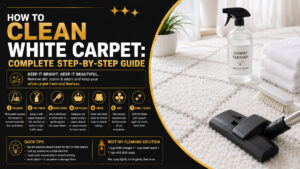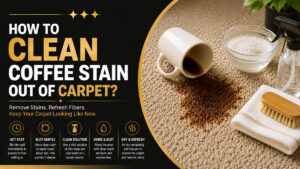
How to clean filthy carpet safely: remove dry soil, treat stains by type, apply the correct pre-spray, agitate, rinse-extract, and dry the carpet quickly. For synthetic carpet with severe traffic soil, the complete process usually takes 2-4 hours of work plus 6-12 hours of drying; wool, jute-backed carpet, flooding, and urine-soaked padding require professional assessment.
Key Facts at a Glance
A thorough dry vacuum removes loose particulate soil before water turns it into mud.
Synthetic carpet commonly tolerates a mildly alkaline pre-spray around pH 8.5-10 when the manufacturer permits it.
Wool and other protein fibers require lower-pH, lower-moisture chemistry and controlled heat.
Hot-water extraction cleans deeper than encapsulation, but it needs more drying time and better moisture control.
Carpet should dry completely, typically within 6-12 hours, to reduce odor and moisture damage risk.
A filthy-looking carpet may contain permanent fiber wear that cleaning cannot reverse.
What Counts as Filthy Carpet?
Filthy carpet has soil embedded below the visible tips of the pile, often combined with oily residue, crushed fibers, sticky detergent, stains, and odor. Dark traffic lanes, grey edges, matted tufts, recurring spots, and a greasy hand feel indicate that ordinary vacuuming is no longer sufficient.
Carpet soil is not one substance. Dry sand and grit are abrasive; skin oil and cooking grease bind particles to yarn; beverage stains contain dyes and tannins; pet urine can migrate into the backing and cushion. Each contaminant responds to different chemistry and mechanical action.
The Carpet and Rug Institute recommends frequent vacuuming because dry soil damages carpet fibers through abrasion. That principle still matters when carpet is filthy: extraction is not a substitute for removing as much dry grit as possible before wet cleaning.
Cleaning also differs from disinfecting. The Centers for Disease Control and Prevention states, “Cleaning removes dirt, impurities, and germs from surfaces.” Carpet cleaning can physically remove contamination, but it does not automatically sterilize the carpet, eliminate mold inside a wet pad, or make an old stain disappear.
Can cleaning restore worn carpet?
Cleaning can remove removable soil, but it cannot rebuild missing fiber, reverse sun fading, repair delamination, or restore a permanently crushed pile. A traffic lane that remains lighter after cleaning may be worn rather than dirty, especially when yarn tips are frayed or the backing has rippled.
Test the likely result before cleaning the whole room. Clean a 12-by-12-inch section, let it dry fully, and compare it under normal lighting. The dried test patch reveals color bleeding, browning, texture change, and the realistic improvement level.
How Does Deep Carpet Cleaning Work?
Deep carpet cleaning works through four interacting controls: chemical action loosens soil, heat speeds some reactions, agitation separates soil from yarn, and dwell time allows the product to work before extraction. No single factor compensates for excessive detergent, inadequate rinsing, or poor drying.
Professional cleaners often describe this as the CHAT principle. Chemistry breaks or weakens bonds, agitation distributes the solution, and extraction removes the suspended contamination. Heat helps with oily soil, but excessive heat can damage dyes, adhesives, backing, or heat-sensitive fibers.
The correct sequence matters because each stage prepares the next one. A wet pass over unvacuumed grit creates slurry; extraction without pre-treatment leaves bonded oil; pre-spray that dries on the carpet can create residue and discoloration.
How much moisture should you use?
Use enough solution to wet the carpet face evenly, but not enough to saturate the backing and cushion. A practical DIY rule is to make overlapping wet passes with a rented extractor, then make two or more slow vacuum-only passes for every wet pass.
Equipment varies widely, so a fixed number of gallons per room is unreliable. A 12-by-12-foot room may require roughly 1-3 gallons of total solution in typical portable extraction, but carpet density, soil level, machine design, and operator speed change that figure substantially.
You have used too much moisture when the carpet feels squishy, the backing remains wet after several hours, moisture reaches the tack strip, or the room develops a damp odor. Stop adding solution and increase extraction and airflow.
Before You Start
Prepare the room and confirm that the carpet can tolerate the intended method before applying cleaner. The following planning table gives typical DIY requirements for one 200-400-square-foot room.
| Requirement | Typical specification | Why it matters |
|---|---|---|
| Active work time | 2-4 hours | Includes vacuuming, treatment, extraction, and setup |
| Drying time | 6-12 hours | Humidity, airflow, pile density, and moisture control alter the window |
| Rental extractor | $30-$50 per day | Portable upright machines suit synthetic wall-to-wall carpet |
| Cleaning solution | $20-$40 | Use the machine manufacturer’s compatible formula |
| Air movement | 1-2 fans | Moves humid air away from the carpet surface |
| Test area | 12-by-12 inches | Reveals dye bleeding, browning, and texture change |
You need a vacuum with a functioning beater bar or brush roll, a carpet-safe pre-spray, white towels, a soft brush or carpet rake, a properly maintained extractor, measuring equipment, fans, and gloves. Keep children and pets out of the room until the carpet is dry.
Read the carpet warranty and fiber label first. Nylon, polyester, and olefin generally tolerate different chemistry and heat than wool, silk, sisal, coir, or rayon. If the fiber is unknown, treat it as delicate until a hidden-area test proves otherwise.
How to Clean Filthy Carpet, Step by Step
The eight-step restoration sequence below suits heavily soiled synthetic carpet that is structurally sound and free from major flooding. Follow the product label, use ventilation, and stop immediately if color transfers to a white towel.
Step 1: Remove furniture and inspect the carpet
Remove small furniture, vacuum underneath larger pieces, and inspect seams, edges, stairs, tack strips, and the carpet backing. Photograph existing stains, ripples, pulled loops, and discoloration so cleaning results are not confused with pre-existing damage.
Check for active leaks, wet padding, sewage, extensive mold, or urine saturation. Water-damaged carpet needs source control and moisture assessment before cleaning; covering contamination with detergent makes the underlying problem harder to identify.
You will know it worked when: the room is accessible and damaged areas are marked.
Common mistake: cleaning around furniture and leaving a visible soil outline.
Step 2: Pre-vacuum slowly and thoroughly
Vacuum the entire carpet slowly in two directions, making 4-6 passes over dark traffic lanes and edges. Empty the canister or replace the bag when suction drops, and use a crevice tool along baseboards where grit accumulates.
Dry vacuuming removes loose particulate soil without spreading it into wet fibers. The exact percentage removed depends on equipment and soil, so claims that one pass removes a fixed 80 percent should be treated as approximate rather than guaranteed.
You will know it worked when: the vacuum collects noticeably less debris and the pile looks less grey before moisture is added.
Common mistake: moving quickly because the carpet still looks dirty; embedded oily soil will remain until later stages.
Step 3: Treat stains according to contaminant
Identify stains before applying the general pre-spray. Blot liquid spills with white towels, scrape hardened material with a dull edge, and work from the outside toward the center without rubbing across the spot.
| Stain or soil type | First treatment | Contact guidance | Avoid |
|---|---|---|---|
| Coffee or tea | Acidic tannin remover labeled for carpet | Follow label, often 3-10 minutes | Chlorine bleach and untested peroxide |
| Grease or cooking oil | Solvent or alkaline degreaser for carpet | Use the label’s short dwell period | Pouring kitchen degreaser directly onto carpet |
| Blood, milk, or egg | Cool-water rinse and enzyme or protein product | Keep below hot-water temperatures initially | Hot water, which can set protein |
| Pet urine | Absorbent extraction, then enzyme product | Repeat only as label permits | Masking odor with fragrance |
| Ink or dye | Specialist dye or solvent treatment | Test hidden fiber first | Aggressive scrubbing and acetone |
| Mud | Dry completely, vacuum, then pre-treat residue | Delay wet cleaning until loose soil is removed | Wet-vacuuming a thick mud layer |
Never mix cleaning chemicals. In particular, do not combine bleach, ammonia, acids, peroxide products, or drain cleaners. Ventilate the room and follow the label’s dilution ratio rather than increasing concentration.
You will know it worked when: the stain lightens without color transfer or a spreading halo.
Common mistake: rubbing. Rubbing frays yarn, drives contamination deeper, and can permanently create a fuzzy patch.
Step 4: Apply a compatible pre-spray
Apply a measured pre-spray evenly, usually with a pump sprayer, using the product’s stated dilution. Synthetic carpet commonly accepts a pre-spray around pH 8.5-10, but the label, carpet manufacturer, dye stability, and soil type control the final choice.
Keep the application light enough that the carpet is damp rather than flooded. Work in sections of approximately 50-100 square feet so the product receives dwell time without drying on the carpet.
For wool, silk, rayon, sisal, and coir, do not use a standard high-pH synthetic prespray unless the manufacturer specifically approves it. Wool is a protein fiber, and strong alkalinity, high heat, agitation, or prolonged wetness can cause felting, color change, or texture damage.
You will know it worked when: oily traffic lanes look evenly damp and begin releasing soil at the surface.
Common mistake: adding extra detergent because the carpet looks exceptionally dirty; residue then attracts soil after cleaning.
Step 5: Agitate the pre-spray
Agitate synthetic carpet with a carpet rake, soft brush, counter-rotating brush machine, or other equipment approved for that carpet. Use overlapping passes, especially in matted traffic lanes, while avoiding aggressive pressure on looped or fragile pile.
Agitation distributes chemistry around the yarn and breaks the mechanical grip of compacted soil. A carpet rake is adequate for a small room, while CRB equipment gives more uniform action on commercial or heavily matted carpet.
Allow the product to dwell for the label’s specified period, commonly 5-15 minutes. Do not let the pre-spray dry; dried cleaner can leave a stiff residue and may create uneven color.
You will know it worked when: the pile separates more easily and a white towel picks up loosened grey soil with light pressure.
Common mistake: scrubbing until the yarn fuzzes. More force is not a substitute for correct chemistry and dwell time.
Step 6: Rinse and extract the carpet
Fill the extractor with clean water and the compatible rinse product, if the machine or chemical manufacturer specifies one. Make one controlled wet pass followed by two or more slow vacuum-only passes, overlapping each lane by approximately one-third.
Hot-water extraction injects solution and immediately recovers it with a vacuum. The method is often called steam cleaning, although many portable and truck-mounted systems primarily use heated water rather than steam.
Typical extraction temperatures may range from 150-200°F, or approximately 65-93°C, at the equipment rather than necessarily at the carpet surface. Use lower heat for heat-sensitive fibers, adhesive-backed installations, unstable dyes, and wool. Do not assume higher temperature means better cleaning.
An acidic rinse can reduce alkaline residue, but the carpet does not need to reach exactly pH 7 in every situation. The correct endpoint depends on fiber, chemistry, and manufacturer instructions; excessive acid can damage dyes or fibers just as excessive alkalinity can.
You will know it worked when: recovered water becomes progressively clearer and the carpet feels damp, not saturated.
Common mistake: making repeated wet passes without enough vacuum recovery, which pushes water into the pad and subfloor.
Step 7: Groom and inspect while damp
Groom the pile with a carpet rake in the normal nap direction, then inspect traffic lanes, edges, stairs, and treated stains under strong light. Grooming aligns fibers, improves appearance, and opens channels for air movement.
Do not mistake grooming for repair. A permanently crushed pile may stand temporarily and collapse again after drying because the yarn or backing has lost resilience.
Check for wicking as the carpet begins to dry. If a stain at the surface came from contamination in the backing, dissolved material can travel upward and reappear.
You will know it worked when: the pile has a consistent direction and no visible puddles or glossy detergent patches.
Common mistake: placing heavy furniture directly on damp carpet, which traps moisture and can transfer stain or rust from furniture feet.
Step 8: Accelerate drying and verify the result
Place fans so air crosses the carpet, run the HVAC system, and use a dehumidifier when indoor humidity is high. Open windows only when outside air is drier than indoor air; humid outdoor air can extend drying.
Typical synthetic carpet should dry in 6-12 hours under good airflow. Dense pile, cold conditions, high indoor humidity, poor extraction, and wet padding can extend drying beyond 24 hours, increasing odor and material-damage risk.
Lift furniture legs with foil or waterproof blocks until the carpet is dry. Do not reinstall rugs, close the room, or allow heavy traffic while the fibers remain damp.
You will know it worked when: the carpet feels dry at the surface and backing, has no sour odor, and shows no dark moisture patches.
Common mistake: relying on surface feel alone; use a moisture meter or compare the cleaned area with a dry control area when the pad may be wet.
Which Carpet Cleaning Method Is Best?
Hot-water extraction is the strongest general choice for filthy synthetic carpet because pre-treatment and flushing remove both surface soil and more deeply suspended contamination. Encapsulation suits maintenance cleaning and fast drying, while dry compound cleaning is safer for selected moisture-sensitive materials but has limited ability to flush contaminated backing or padding.
| Method | Typical drying | Best application | Main limitation |
|---|---|---|---|
| Hot-water extraction | 6-12 hours | Heavy soil, grease, allergens, many synthetic carpets | Overwetting risk and equipment dependence |
| Encapsulation | 30-90 minutes | Commercial maintenance and moderate soil | Limited removal of deep urine or saturated pad |
| Dry compound | 1-3 hours | Selected delicate or low-moisture situations | Less effective against liquid contamination |
| Bonnet cleaning | 1-4 hours | Surface appearance in commercial areas | Can redistribute rather than remove deep soil |
Encapsulation polymers surround loosened soil so subsequent vacuuming can remove the dried residue. The method is efficient, but it is not a substitute for extraction when urine, spilled liquids, or contamination has reached the backing.
Dry compound cleaning places absorbent material into the carpet, agitates it, and removes it with specialized vacuuming. It reduces moisture exposure, but powder left in dense pile can become abrasive or contribute to residue if recovery is incomplete.
Should you rent a carpet cleaner or hire a professional?
Rent a machine for one moderately dirty synthetic room when the carpet has no structural damage, no urine-soaked pad, and you can control water volume and drying. Hire a professional when contamination is extensive, the carpet is wool or specialty fiber, the room has recurring urine odor, or previous cleaning left it wet for more than 24 hours.
| Situation | DIY suitability | Preferred method | Typical cost |
|---|---|---|---|
| One 200-400-square-foot synthetic room | Moderate | Portable extraction | $50-$90 including rental and formula |
| Whole-home heavy traffic soil | Low to moderate | Professional extraction | $150-$500 typical minimum-to-midsize range |
| Pet urine in carpet and pad | Low | Subsurface inspection and extraction | $200-$800 depending on area |
| Wool wall-to-wall carpet | Low | Fiber-specialist low-moisture or controlled cleaning | $150-$600 depending on room size |
| Flooding or sewage contamination | None | Restoration contractor and possible replacement | Often $500-$2,000 or more |
Prices vary by region, access, furniture, stairs, soil level, and service minimums. Per-room quotes around $50-$90 may exclude travel, stain treatment, odor treatment, protectant, or heavily soiled areas, so request an itemized estimate.
A professional should explain the cleaning method, expected drying period, treatment limitations, and whether the pad will be inspected. Certification through organizations such as the Institute of Inspection Cleaning and Restoration Certification can indicate training, but certification alone does not guarantee careful work.
How Do You Remove the Hardest Carpet Problems?
The correct response to a difficult carpet problem depends on whether the contamination is on the fiber, in the backing, or in the cushion. Surface chemistry can remove a stain, but it cannot reliably extract a urine reservoir or repair mold-damaged padding.
Pet urine and persistent odor
Blot fresh urine immediately, rinse-extract the affected area with controlled moisture, and use an enzyme product only when the label permits it for that fiber. Persistent odor usually indicates contamination below the visible pile, especially when odor intensifies during humid weather.
Use ultraviolet light only as a locating aid, not as proof of urine. Fluorescence can come from detergent, optical brighteners, and other substances. A professional may inspect the pad, subfloor, and tack-strip area before deciding whether localized replacement is necessary.
Stains that return after drying
A returning stain is usually wicking, where dissolved soil in the backing or pad migrates into the drying fiber. Blot the area, apply a small amount of compatible low-moisture treatment, cover it with a clean white towel, and weigh the towel lightly so moisture moves upward into the absorbent material.
Do not flood the spot again. Repeated saturation enlarges the contaminated zone and may loosen adhesive.
Brown edges or yellow-brown discoloration
Browning often occurs when cellulose materials such as jute backing become wet and release discoloration into the face yarn. Overwetting, slow drying, high alkalinity, and plant-based fibers increase the risk.
Stop wet cleaning, improve airflow, and contact a professional familiar with browning correction. Acidic treatment can help in some cases, but an improvised vinegar solution is not a reliable universal remedy and may create new residue or color problems.
Mold, mildew, or contaminated water
Do not clean ordinary carpet in place after sewage, floodwater, or extensive mold growth has contaminated the pad. Remove the moisture source, isolate the area, and obtain a restoration assessment because porous cushion and subfloor materials may require removal.
A deodorizer can hide an odor temporarily. It cannot make contaminated padding hygienic.
What Mistakes Make Filthy Carpet Worse?
The most damaging carpet-cleaning mistakes are excessive moisture, excessive detergent, wrong chemistry, and inadequate drying. These errors can cause ripples, delamination, browning, sticky residue, dye bleeding, odor, or permanent texture change even when the carpet initially looks cleaner.
- Skipping dry vacuuming: loose grit becomes muddy slurry and increases the extraction burden.
- Using laundry detergent or dish soap: non-carpet products can foam excessively and leave sticky surfactants.
- Treating every stain with one product: protein, oil, tannin, and dye stains require different approaches.
- Applying heat to blood or milk: heat can set protein-based contamination.
- Using bleach on colored carpet: bleach can remove dye and weaken fibers.
- Cleaning wool like nylon: high-pH chemistry and aggressive agitation can felt wool.
- Leaving carpet damp overnight: slow drying encourages odor and can damage backing or flooring.
- Expecting cleaning to reverse wear: frayed yarn and faded dye are not removable soil.
One practitioner rule is especially useful: if a carpet is too wet to walk on without leaving a dark footprint, extraction has not finished. Make vacuum-only passes before adding any more solution.
When Should You Replace Carpet Instead?
Replace or repair carpet when cleaning reveals structural failure rather than removable contamination. Delamination, exposed backing, persistent rippling, widespread fraying, severe pet damage, and repeated flooding can make restoration uneconomical.
| Condition after cleaning | Likely cause | Recommended action |
|---|---|---|
| Uniform dark traffic lane remains | Fiber wear or permanent dye change | Compare with an inconspicuous area; consider repair |
| Carpet ripples after drying | Stretching, wet backing, or adhesive failure | Professional restretching or replacement |
| Odor returns within 24-48 hours | Contaminated pad or subfloor | Inspect below carpet before another cleaning |
| Brown bleed spreads from edges | Jute or cellulose backing browning | Specialist correction or replacement |
| Tufts pull out easily | Backing deterioration | Avoid aggressive cleaning; assess replacement |
| Black staining after flood exposure | Severe contamination or material damage | Restoration evaluation and possible removal |
A successful cleaning should improve soil and odor without creating new damage. If the carpet remains visibly compromised after a properly tested, correctly dried cleaning, further chemistry is unlikely to restore its original appearance.
How Can You Keep Carpet From Becoming Filthy Again?
Vacuum high-traffic lanes at least twice weekly and the rest of the carpet weekly, using a well-maintained machine with an appropriate height setting. Place entry mats outside and inside exterior doors, remove shoes where practical, and clean spills before they dry into the pile.
Schedule deep cleaning according to traffic rather than a fixed universal calendar. A low-traffic bedroom may need professional cleaning every 12-24 months, while a home with children, pets, or many occupants may need cleaning every 6-12 months.
Use spot treatment sparingly. Residue from repeated household sprays can create a sticky area that attracts more soil than the original spill.
FAQ
Can baking soda clean a filthy carpet?
Baking soda can absorb some odor at the surface, but it does not remove embedded grease, suspended soil, or urine in the padding. If used, apply a light amount and vacuum thoroughly; avoid relying on it as a substitute for extraction, especially in dense pile where powder recovery is difficult.
Is carpet shampoo better than steam cleaning?
Carpet shampoo can loosen surface soil, but hot-water extraction generally removes more dissolved detergent and suspended contamination when operated correctly. Shampoo residue becomes a problem when rinsing is incomplete. Choose the method based on fiber, soil depth, available drying control, and manufacturer instructions.
How long should I wait before walking on cleaned carpet?
Wait until the carpet is fully dry, typically 6-12 hours after controlled extraction. Light sock traffic may be acceptable sooner if the surface is nearly dry, but shoes, pets, and furniture can re-soil or compress damp fibers and transfer dyes from furniture feet.
Can I clean carpet with vinegar?
Diluted vinegar may help with limited odor or mineral residue in some situations, but vinegar is not a universal carpet cleaner and can affect dyes, backing, or protective treatments. Never mix vinegar with bleach or other cleaning products, and test any solution in a hidden area first.
Why does filthy carpet smell worse after cleaning?
A stronger odor after cleaning usually means slow drying, contamination in the pad, or residue that became wet again. Increase airflow, reduce indoor humidity, and inspect below the carpet if odor persists after complete drying. Fragrance sprays mask odor without removing its source.
How often should filthy carpet be deep cleaned?
Deep-clean carpet when traffic lanes remain dirty after thorough vacuuming, spills become recurring stains, or odor persists. Typical homes need extraction every 6-24 months depending on occupancy and pets, while commercial corridors may need more frequent low-moisture maintenance.
The Bottom Line
How to clean filthy carpet successfully comes down to controlled soil removal, fiber-safe chemistry, adequate agitation, thorough extraction, and rapid drying. Start with dry vacuuming, treat stains by contaminant, and use hot-water extraction for heavily soiled synthetic carpet when the backing and padding are sound. Do not saturate wool, specialty fibers, flooded carpet, or urine-contaminated padding without professional guidance.