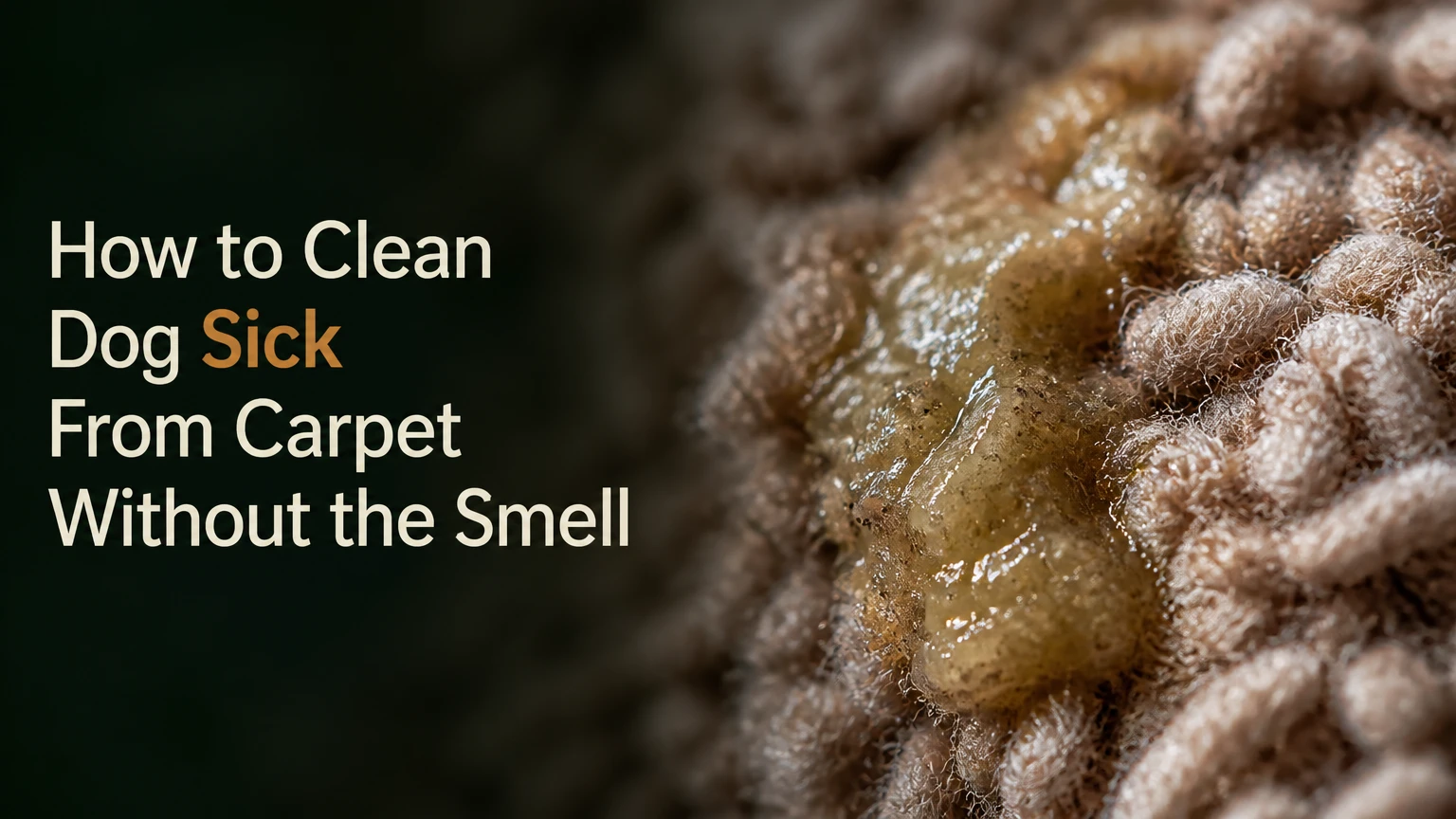
To clean dog sick from carpet, remove solid material with a spoon or cardboard, blot liquid without scrubbing, apply an absorbent powder, vacuum, then use a carpet-safe enzymatic cleaner. Work within 5-10 minutes when possible, use only enough liquid to dampen the affected fibers, and dry the carpet quickly to prevent odor and wicking.
Key facts at a glance
A fresh dog-vomit spot typically takes 20-40 minutes of active cleaning and 6-24 hours to dry fully.
Enzymatic carpet cleaners are usually better for residual food proteins and odor than vinegar alone.
Baking soda absorbs surface moisture and odor, but it does not remove contamination trapped in carpet padding.
Cold or lukewarm water is safer than hot water for protein-rich stains.
Never mix vinegar with hydrogen peroxide, bleach, ammonia, or commercial cleaners.
Wool, silk, viscose, jute, and antique rugs require more conservative treatment than synthetic wall-to-wall carpet.
What You Need Before Cleaning Dog Sick From Carpet
Prepare the tools before touching the stain: disposable gloves, a spoon or stiff cardboard, white paper towels or white microfiber cloths, a sealable waste bag, baking soda or cornstarch, a vacuum, and a labeled enzymatic carpet cleaner. A small spray bottle of cool water can help with dried residue, but avoid preparing a mixture that combines several cleaners.
| Item | Typical quantity | Purpose | Important specification |
|---|---|---|---|
| Disposable gloves | 1 pair | Hand protection | Nitrile or latex, discarded after use |
| Spoon or cardboard | 1 | Lift solid vomit | Dull edge, never a sharp knife |
| White towels | 6-12 | Blotting and drying | No dye transfer, absorbent cotton or microfiber |
| Baking soda | 0.25-1 cup | Surface absorption | Use 0.25 cup for a 6-inch spot |
| Enzymatic cleaner | 100-250 mL | Protein and odor treatment | Carpet-labeled, ready-to-use formula |
| Vacuum | 1 machine | Remove dry powder | Upholstery or hose attachment preferred |
Move children and pets away from the area. If the vomit contains medication, cleaning chemicals, antifreeze, or an unknown substance, wear gloves, isolate the material, and contact a veterinarian or poison-control service rather than treating it as an ordinary food stain.
Check the carpet fiber and backing
Synthetic nylon, polyester, and polypropylene carpet usually tolerates careful spot treatment better than wool or plant-based fibers. Check the carpet manufacturer’s care label, especially if the floor covering is a hand-knotted rug, contains viscose, or has a natural latex backing.
Test every cleaner in a hidden corner first. Apply a small amount, blot it, and wait until dry because dye bleeding and lightening may appear only after evaporation.
Why Dog Vomit Stains and Smells
Dog vomit contains partially digested food, water, mucus, bile, stomach acid, and protein residues. The visible stain can disappear while dissolved material remains in the carpet backing, where bacteria and moisture create a recurring odor.
Baking soda helps absorb surface moisture and can buffer some acidity, but it is not a disinfectant and cannot digest food proteins. Enzymatic cleaners use specific enzymes or biological ingredients to break down organic residue; product formulas differ, so the label’s dwell time and rinsing instructions control the treatment.
The Carpet and Rug Institute recommends following the carpet manufacturer’s care instructions and testing spot-removal products before broad application. That guidance matters because the same cleaner can be acceptable on solution-dyed polypropylene and damaging on wool or unstable rug dyes.
A practical rule is simple: remove the solids first, remove as much liquid as possible second, and apply chemistry only after the carpet contains less contamination. Adding cleaner to a heavily saturated spot creates a larger wet area without necessarily improving removal.
How to Clean Fresh Dog Vomit From Carpet
Fresh dog vomit is easiest to remove when the liquid remains near the carpet surface. Complete the following six steps in sequence, using pressure to transfer moisture into towels rather than friction to drive contamination downward.
Step 1: Lift solid material from the outside inward
Slide a spoon, dull scraper, or folded cardboard under the solids and transfer them into a waste bag. Start at the clean outer edge and move toward the center, keeping the tool nearly parallel with the carpet so the pile does not spread the mess.
Do not press down on chunky food or drag it across a large area. Use a second piece of cardboard when the first becomes soiled.
You will know it worked when: no visible food pieces remain and the stain boundary has not expanded.
Common mistake: using a sharp knife, which can cut loops or pull tufts from the carpet.
Step 2: Blot liquid with white towels
Place a folded white towel over the wet area and press straight down for 5-10 seconds. Lift, rotate to a dry section, and repeat until the towel picks up little or no moisture.
Blot from the outer edge toward the center. Do not rub, scrub, or twist the towel because lateral friction spreads bile and can fuzz cut-pile fibers.
You will know it worked when: the carpet feels damp rather than wet and the towel shows progressively less transfer.
Common mistake: using colored paper towels, which can release dye into pale carpet.
Step 3: Apply a thin absorbent layer
Cover the damp area with approximately 0.25 cup of baking soda or cornstarch for a 6-inch spot, increasing the amount for a larger mark without creating a thick mound. Leave it for 15-30 minutes, or until the powder becomes slightly clumped and dry to the touch.
Cornstarch can absorb moisture but may leave a starchy residue if the carpet is heavily wetted. Baking soda is useful for a surface odor, but neither powder should replace extraction when liquid reached the padding.
You will know it worked when: the powder has absorbed visible dampness and lifts away as dry or lightly clumped material.
Common mistake: combining baking soda and vinegar on the carpet. The fizz is a neutralization reaction, not extra cleaning power, and the added moisture can enlarge the stain.
Step 4: Vacuum the dried powder completely
Use a hose or upholstery attachment when possible, and make several slow passes over the spot. A brush roll is unnecessary for powder removal and can roughen damp carpet fibers.
Empty the vacuum afterward if vomit particles entered the machine. Do not use a household vacuum on wet material because moisture can damage the motor and spread odor inside the canister.
You will know it worked when: no powder remains between the pile and the carpet feels dry on the surface.
Common mistake: spraying cleaner before removing the powder, which forms a paste and makes extraction harder.
Step 5: Treat the remaining stain with carpet-safe cleaner
Apply a ready-to-use enzymatic cleaner labeled for carpet, using enough to dampen the affected fibers without flooding the backing. A 6-inch spot commonly needs 30-60 mL, while a 12-inch spot may need 120-180 mL, depending on pile height and absorbency.
Follow the product label for dwell time. Many enzyme products need 10 minutes to several hours, and some require the area to remain damp during treatment; do not assume every formula is a no-rinse product.
If an enzyme cleaner is unavailable, a 1:1 mixture of cool water and white vinegar can reduce some acid-related odor on compatible synthetic carpet. Vinegar does not reliably digest proteins, and it should not be used as a universal substitute for enzymatic treatment.
You will know it worked when: the treated area has no visible food residue and the odor decreases as the cleaner works.
Common mistake: mixing vinegar with hydrogen peroxide or another product. Use one chemistry at a time and remove the previous product before changing methods.
Step 6: Extract moisture and dry the carpet
Blot the treated area with fresh towels, then place a dry towel over it and apply a flat weight for 30-120 minutes. Replace the towel whenever it becomes damp, and run a fan across the surface to shorten drying time.
Do not cover the area with plastic during ordinary drying. Plastic slows evaporation and can keep the carpet pad wet; only follow a product label’s specific covering instruction, and never leave a sealed wet carpet unattended.
You will know it worked when: the carpet feels dry at the surface and underneath the towel, with no cool, damp patch after several hours.
Common mistake: using a hairdryer on a high-heat setting. Warm airflow can accelerate drying, but excessive heat can damage fibers, backing, or dyes.
Which Cleaning Method Works Best?
An enzymatic carpet cleaner is usually the best choice for persistent organic residue and odor, while baking soda is best for limited surface moisture and vinegar is a short-term fallback for compatible synthetic fibers. A portable extractor helps when liquid reached the pad, but over-wetting can worsen the problem.
| Method | Typical cost | Active time | Best use | Main limitation |
|---|---|---|---|---|
| Baking soda or cornstarch | $1-$5 | 15-30 minutes | Surface dampness | Does not clean carpet padding |
| White vinegar solution | $1-$5 | 20-40 minutes | Mild odor on synthetics | Weak against embedded proteins |
| Enzymatic cleaner | $10-$25 | 15 minutes to 24 hours | Food residue and odor | Requires label dwell time |
| Oxygen cleaner | $5-$15 | 30-60 minutes | Some synthetic discoloration | Can lighten dyes and harm wool |
| Portable extractor | $100-$180 purchase | 20-45 minutes | Deep contamination | Can saturate backing and pad |
| Professional extraction | $50-$150 per room, typical | 1-3 hours service | Large or recurring contamination | Drying may take 6-12 hours |
Hydrogen peroxide and oxygen-based products require special caution. A 3% hydrogen peroxide solution may lighten yellow discoloration on some synthetic carpets, but it can alter dyes, weaken natural fibers, and damage wool. Test first, use a small amount, and never apply it to silk, wool, viscose, or an unidentified antique rug without professional advice.
When should you use an extractor?
Use a portable extractor only after removing solids and pre-blotting the stain. Fill it according to the manufacturer’s instructions, make one controlled wet pass, then make several slow suction-only passes to recover moisture.
Extraction is appropriate when the vomit soaked through the pile or when odor returns after surface treatment. It is not automatically better for a small fresh spot because excess water can move contamination into the pad.
Professional extraction becomes sensible when the area exceeds approximately 12 inches, the stain reaches seams or underlay, the carpet is valuable, or odor persists after two correctly performed treatments. Blood, repeated vomiting, or contamination from chemicals also warrants professional assessment.
What Changes for Dried Dog Vomit?
Dried dog vomit needs controlled rehydration before removal, but the carpet should never be flooded. Place a cloth dampened with cool water over the residue for 5-15 minutes, then lift softened material with a spoon and blot the released moisture.
Repeat the damp-cloth process rather than pouring water directly onto the carpet. Once the solids are removed, apply an enzymatic cleaner according to its label and allow the full dwell time.
Dried residue often leaves a tide mark because dissolved material migrates outward during drying. Treat the entire visible boundary, not only the darkest center, and use a clean towel to wick moisture upward.
How Do You Remove a Returning Odor or Wicking Stain?
A returning odor usually means organic residue remains below the visible pile, while a returning brown or yellow edge often indicates wicking from the backing or pad. Lightly re-treat the full affected area with a compatible enzyme product, blot thoroughly, and use weighted towels to draw moisture upward.
| Symptom | Likely location | First correction | Escalation point |
|---|---|---|---|
| Odor for 1-2 days | Surface fibers | Repeat enzyme dwell | Odor remains after 48 hours |
| Brown edge after drying | Carpet backing or pad | Treat full boundary and wick | Edge returns twice |
| Wet smell | Pad or underlay | Extract and increase airflow | Dampness exceeds 24 hours |
| Sticky texture | Cleaner residue | Rinse or extract per label | Texture persists after drying |
| Bleached patch | Dye or fiber damage | Stop chemical use | Professional color assessment |
Do not keep adding enzyme cleaner to an already wet carpet. Measure the application, recover moisture with towels or extraction, and allow complete drying before deciding whether another treatment is necessary.
If the smell remains after the carpet is fully dry, inspect the pad and subfloor where accessible. A professional may need to lift the carpet edge, replace contaminated pad, or clean the subfloor because surface spraying cannot reach every hidden layer.
What Are the Most Common Cleaning Mistakes?
The most damaging mistakes are scrubbing, saturating, applying incompatible chemicals, and using heat before removing protein residue. Each mistake changes the carpet physically or moves contamination deeper, which makes later treatment more expensive.
- Scrubbing the stain: Stop rubbing, switch to vertical blotting, and trim only loose fuzz with scissors if the pile has already distorted.
- Flooding the area: Stop adding liquid, use towels or an extractor to recover moisture, and run fans until the carpet and pad are dry.
- Using bleach or ammonia: Blot with clean water if the product is still present, ventilate the room, and contact a carpet professional if dye loss appears.
- Layering several cleaners: Remove the previous product with controlled blotting or rinsing allowed by the label before using another chemistry.
- Vacuuming wet vomit: Remove the material manually, clean the vacuum canister, and allow the carpet to dry before powder vacuuming.
- Ignoring the carpet label: Stop immediately on wool, silk, viscose, or unstable dye and seek fiber-specific advice.
Ammonia is especially unsuitable for pet areas because its strong odor can complicate odor identification and may resemble urine to a dog. Bleach can permanently strip carpet color, while acidic or alkaline products can damage natural fibers.
How Should You Clean Wool, Silk, or an Area Rug?
For wool, silk, viscose, jute, and antique rugs, remove solids, blot with cool water, and avoid peroxide, oxygen bleach, bleach, ammonia, steam, and aggressive brushing. Natural fibers can shrink, brown, bleed, or develop permanent texture changes after excess moisture.
Use a barely damp white cloth and a small amount of manufacturer-approved neutral detergent only when the care instructions permit it. Do not soak the rug, and do not place a heavy weight on delicate pile because pressure can flatten the texture.
Professional rug cleaning is the safer option for a valuable or handmade floor covering. Tell the cleaner the fiber, backing type, stain age, products already applied, and whether the vomit contained blood or medication.
How Long Does Cleaning Take and What Does It Cost?
A small fresh spot usually requires 20-40 minutes of active work and 6-24 hours of drying. Typical costs range from a few dollars for household materials to $50-$150 per room for professional extraction, excluding unusual rug restoration or pad replacement.
| Situation | Active cleaning | Drying time | Typical cost |
|---|---|---|---|
| Fresh 6-inch synthetic spot | 20-30 minutes | 6-12 hours | $1-$5 DIY |
| Fresh 12-inch synthetic spot | 30-45 minutes | 12-24 hours | $10-$25 with enzyme cleaner |
| Dried spot under 12 inches | 45-90 minutes | 12-24 hours | $10-$25 DIY |
| Pad-level odor | 45-120 minutes | 24-48 hours | $100-$180 extractor purchase |
| Professional room treatment | 1-3 hours | 6-12 hours | $50-$150 per room |
| Antique or wool rug | 15-30 minutes onsite | 24-72 hours | Professional quote required |
Humidity, carpet density, pad thickness, and ventilation determine drying time more than the amount of visible vomit. A fan, open windows in dry weather, and reduced foot traffic usually shorten drying, while closed rooms and thick underlay extend it.
When Is Dog Vomiting a Veterinary Concern?
Carpet cleaning cannot address the cause of vomiting. Contact a veterinarian promptly if a dog vomits repeatedly, cannot keep water down, has blood or coffee-ground material in the vomit, appears weak or painful, has a swollen abdomen, or may have swallowed a toxin or foreign object.
The American Kennel Club and veterinary hospitals commonly distinguish an isolated episode in an otherwise normal dog from repeated vomiting with systemic signs. Puppies, elderly dogs, and dogs with diabetes, kidney disease, or other chronic conditions have less margin for waiting.
Wear gloves when cleaning vomit and wash hands afterward. The Centers for Disease Control and Prevention recommends hand hygiene after contact with animal waste because contaminated material can carry infectious organisms even when the carpet looks clean.
FAQ
Can I use dish soap to clean dog vomit from carpet?
Use only a small amount of mild, color-safe dish soap diluted in water, and only if the carpet manufacturer permits it. Dish soap lifts some oily residue but can leave a sticky film that attracts soil. Enzymatic carpet cleaner is usually more suitable for protein-rich vomit and lingering odor.
Does baking soda remove dog-vomit smell permanently?
Baking soda can reduce a mild surface odor, but it rarely removes odor permanently when vomit reaches carpet backing or padding. Vacuum the powder thoroughly, then use a compatible enzymatic cleaner and dry the area completely. Persistent odor after drying indicates deeper contamination rather than insufficient deodorizing powder.
Can I steam-clean dog sick from carpet?
Avoid steam or very hot water during the initial stain treatment because heat can set some protein and dye residues and may damage carpet backing. A controlled extractor using the manufacturer’s approved temperature can help after solids are removed, but professional extraction is safer for saturated or valuable carpet.
Why does the dog keep smelling or licking the cleaned spot?
Dogs can detect residual odor below the carpet surface even when people cannot. Clean the backing and pad if necessary, restrict access until the carpet is dry, and avoid masking odor with fragrance. Repeated licking, vomiting, or unusual behavior also warrants veterinary advice.
How do I clean dog vomit from a carpet pad?
Remove the carpet edge only if you understand how to resecure it, then blot or extract the pad with minimal moisture and dry both sides with strong airflow. Replace pad that remains contaminated or smells after drying because porous foam can retain organic residue beyond the reach of surface treatment.
Is vinegar or an enzyme cleaner better for old dog vomit?
An enzymatic cleaner is generally better for old dog vomit because it targets organic protein residue, provided the product is safe for the carpet fiber. Vinegar may help with mild odor on synthetic carpet but does not reliably remove embedded food residue and should never be mixed with other cleaners.
The Bottom Line
The safest way to clean dog sick from carpet is to lift solids, blot moisture, absorb the surface, vacuum, apply one carpet-safe enzymatic cleaner, and dry the area thoroughly. Treat the backing and pad when odor or wicking returns, avoid heat and incompatible chemicals, and use a professional cleaner for large, deep, delicate, or repeatedly contaminated areas.