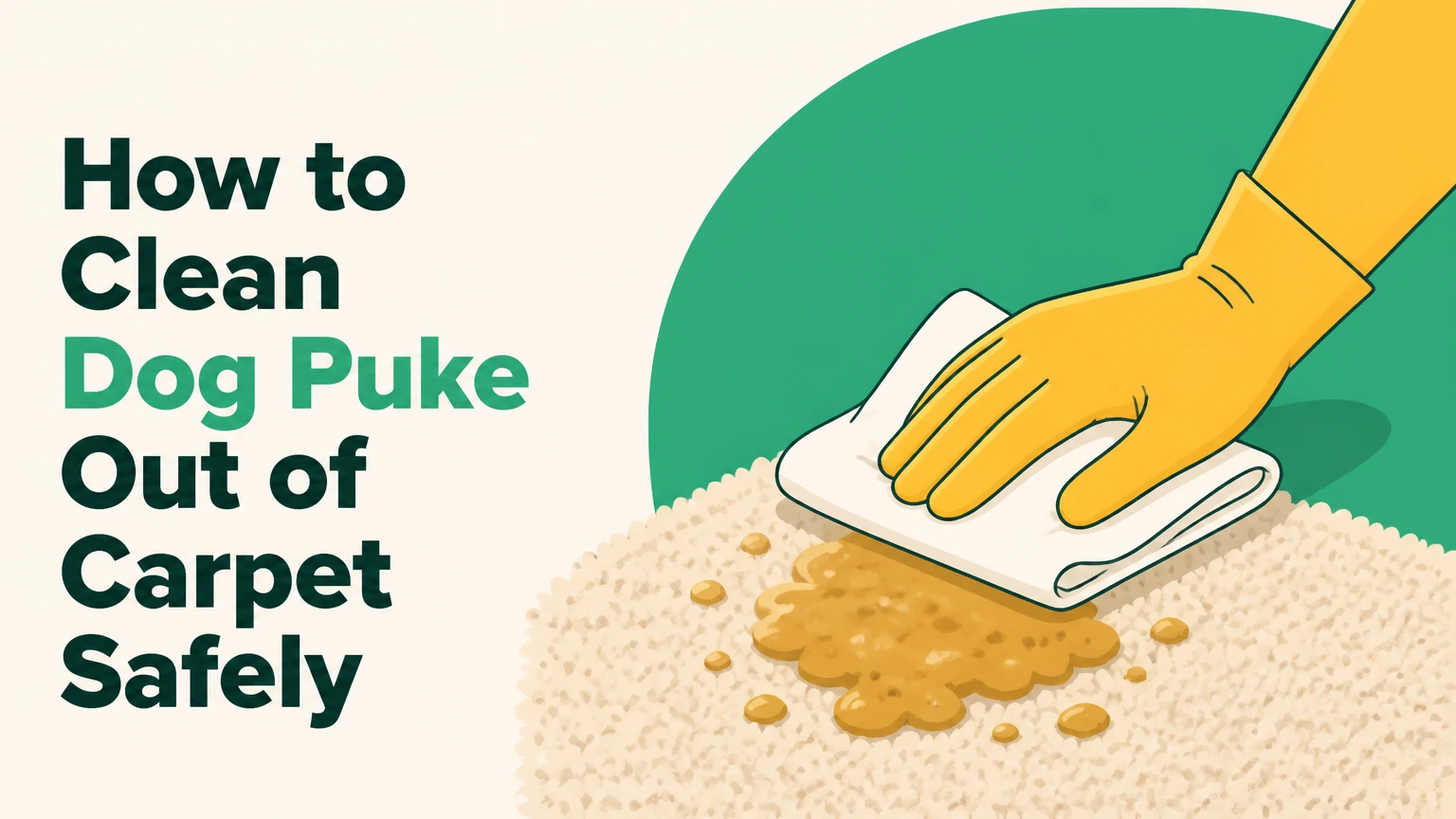
To clean dog puke out of carpet, remove solid material, absorb excess liquid, apply a carpet-safe enzymatic cleaner, blot from the outside inward, and dry the backing completely. A fresh spot usually takes 20-30 minutes of active work and up to 24 hours to dry; the key factor is treating the carpet pad, not only the visible fibers.
Key Facts at a Glance
Remove dog vomit with a scraper or cardboard before applying liquid.
Use a white cloth and cold or lukewarm water, never hot water.
Enzymatic carpet cleaners need to remain wet for the label-stated dwell time.
Baking soda absorbs surface moisture but does not digest proteins inside carpet padding.
Recurring odor usually indicates moisture or organic residue below the carpet surface.
Test every cleaner on an inconspicuous area before treating a visible stain.
What You Need Before Cleaning Dog Vomit
Gather the tools before touching the stain because searching for supplies after wetting the carpet increases the chance of spreading the mess. You need disposable gloves, a plastic scraper or stiff cardboard, white absorbent towels, a trash bag, a vacuum, and either an enzymatic carpet cleaner or a mild detergent solution.
Use a cleaner labeled for carpets and pet biological stains. Product formulas vary: some contain protease, amylase, and lipase enzymes, while others rely mainly on surfactants and odor-counteracting compounds. Follow the product label rather than assuming that every “pet stain remover” requires the same dilution or dwell time.
| Supply | Typical amount | Purpose | Important limit |
|---|---|---|---|
| Disposable nitrile gloves | 1 pair | Protect hands from organic waste | Replace if torn or visibly soiled |
| Plastic scraper or cardboard | 1 tool | Lift solid material | Do not slide it forcefully |
| White microfiber towels | 4-8 towels | Blot liquid and cleaner | Avoid colored or printed fabric |
| Enzymatic carpet cleaner | 100-300 milliliters | Break down organic residue | Use the label’s dwell time |
| Baking soda | 100-250 grams | Absorb surface moisture and odor | Vacuum it fully after drying |
| Fan or air mover | 1 unit | Speed evaporation | Do not blow debris across wet vomit |
Before You Start
- Active cleaning time: 20-30 minutes for a fresh spot.
- Total drying time: 8-24 hours, sometimes longer in humid rooms.
- Difficulty: Low for a small surface stain; moderate if the pad is saturated.
- Typical DIY cost: $5-$25 if supplies are already available.
- Professional spot treatment: Typically $75-$200, depending on location and access.
- Safety requirement: Keep the dog and children away until the carpet is dry and cleaner residue has been removed.
How Does Dog Vomit Affect Carpet?
Dog vomit can stain carpet because it contains food pigments, bile, mucus, stomach fluid, and partially digested fats and proteins. The material is acidic, but ordinary vomit does not automatically “chemically burn” carpet fibers; visible damage is more often caused by dye alteration, prolonged moisture, abrasion, or an aggressive cleaning chemical.
Gastric fluid commonly has a low pH, but the final pH of vomit changes after food, water, and saliva mix with it. The important practical issue is rapid removal of organic solids and moisture. The longer the residue remains wet, the farther it can move into the pile, backing, and pad.
Bile may leave yellow-green coloration, while dyed treats or colored food can create red, orange, or purple marks. A stain that remains after the organic residue is removed may be a dye change rather than removable soil. Carpet fibers can also show a pale or rough area when an unsuitable oxidizer or solvent has altered the carpet dye.
The Institute of Inspection, Cleaning and Restoration Certification, or IICRC, treats blotting and controlled extraction as safer stain-removal practices than aggressive rubbing. The principle is simple: remove material vertically and transfer liquid into a towel instead of driving it sideways through the pile.
How to Clean Dog Puke Out of Carpet in Five Steps
Step 1: Lift the Solid Material
Put on gloves, place a trash bag beside the stain, and lift solid vomit with a plastic scraper, spoon, or two pieces of cardboard. Approach from the outside edge and move underneath the material, keeping the tool nearly parallel with the carpet so it lifts rather than compresses the pile.
Do not scrub, smear, or press down. Sideways movement spreads the stain, while downward pressure can move food particles into the backing. Pick up small fragments with a folded damp white towel after removing the main mass.
You will know Step 1 worked when: no visible chunks remain and the carpet pile has not been flattened into the stain.
Common mistake: Using a paper towel to wipe solids. Paper tears, leaves pulp, and pushes semi-liquid material into the fibers.
Step 2: Absorb Surface Moisture
Blot the wet area with a dry white towel, using firm vertical pressure for 5-10 seconds at a time. Move to a dry section after each press. If the spot is still very wet, apply a thin layer of baking soda for 15-30 minutes, then vacuum it once the powder has absorbed surface liquid.
Baking soda is useful for moisture at the upper carpet surface, but it cannot pull every contaminant out of the pad and cannot replace an enzymatic treatment. Thick powder layers can form a paste when the carpet is saturated, and leftover powder may create a light residue or interfere with later cleaning.
You will know Step 2 worked when: a pressed white towel picks up only a small damp mark rather than liquid food residue.
Common mistake: Vacuuming wet vomit with an ordinary household vacuum. Moisture and organic material can contaminate the machine and spread odor; use a wet-dry vacuum only if its instructions permit liquid pickup.
Step 3: Apply an Enzymatic Carpet Cleaner
Choose a carpet-safe enzymatic cleaner intended for pet stains, and apply enough to reach the same depth as the vomit. For a spot approximately 15 centimeters wide, a typical starting amount is 100-150 milliliters, but the label controls because products differ in concentration and application rate.
Keep the area visibly damp for the label-stated dwell time, often 10-30 minutes. Protease enzymes target proteins, amylase targets starches, and lipase targets fats, although a consumer product may contain only some of these enzyme classes. Enzymes work slowly and require contact with the residue; immediate blotting removes the cleaner before it can act.
Do not combine an enzymatic product with bleach, disinfectant, vinegar, ammonia, or another detergent in the same application. Chemical mixing can create hazardous vapors, alter the carpet dye, or reduce the cleaner’s intended performance. The U.S. Environmental Protection Agency gives the general instruction, “Always read and follow the label directions,” which applies to dwell time, ventilation, and rinsing.
You will know Step 3 worked when: the cleaner has reached the stain’s depth without flooding the surrounding carpet.
Common mistake: Applying a scented deodorizer instead of a biological stain cleaner. Fragrance masks odor temporarily but leaves the organic source in place.
Step 4: Blot From the Edge Toward the Center
Press a folded white microfiber towel into the treated spot, beginning at the outer edge and working toward the center. Hold pressure for 5-10 seconds, lift the towel straight up, and repeat with clean sections until little moisture transfers.
Blotting is more controlled than scrubbing because it limits lateral movement and protects twisted carpet fibers. Replace towels when they become wet or visibly soiled. For a deep spot, kneel beside the area and apply body weight through the towel rather than rubbing with a brush.
You will know Step 4 worked when: the towel shows only faint discoloration and the carpet surface feels damp rather than wet.
Common mistake: Rubbing in circles. Circular friction can fuzz synthetic fibers and disturb the nap, creating a permanent texture difference even when the color improves.
Step 5: Rinse Lightly and Dry the Carpet Pad
Mist the area lightly with cool water if the product label calls for rinsing, then blot again. Do not pour water over the carpet. Excess rinse water can carry dissolved residue into the pad and lengthen drying time.
Cover the spot with a clean, dry white towel and place a flat, washable weight over it for 2-4 hours. Replace the towel if it becomes damp. Remove the weight afterward, raise the carpet edge only if it can be done without damage, and run a fan across the area for 8-24 hours.
The carpet is dry when the pile and backing feel dry to the touch and the area no longer feels cooler than the surrounding carpet. In humid conditions, drying may take 24-48 hours. Persistent dampness is a moisture problem, not proof that more fragrance is needed.
You will know Step 5 worked when: the spot remains clean after drying and no odor returns when the carpet is warmed by normal room conditions.
Common mistake: Replacing furniture before the pad dries. Trapped moisture under furniture restricts airflow and can produce odor or backing damage.
Which Cleaning Method Works Best?
An enzymatic cleaner is the best first choice for fresh or dried dog vomit on most synthetic wall-to-wall carpets because it addresses organic residue rather than only changing its appearance. A mild detergent is reasonable for a small fresh spot when an enzyme product is unavailable, but vinegar, baking soda, and oxygen bleach each have narrower roles and greater limitations.
| Method | Best use | Typical active time | Typical cost | Main limitation |
|---|---|---|---|---|
| Enzymatic carpet cleaner | Organic residue and recurring odor | 10-30 minutes | $8-$25 per bottle | Requires full contact and drying |
| Mild dish-soap solution | Small fresh surface stain | 10-20 minutes | $1-$5 | May leave surfactant residue |
| Baking soda | Surface moisture and mild odor | 15-30 minutes | $1-$4 | Does not clean saturated padding |
| White vinegar solution | Limited odor reduction on colorfast synthetic carpet | 10-15 minutes | $1-$5 | Acidic solution can affect dyes and wool |
| Oxygen-based spot cleaner | Persistent pigment on compatible fibers | 5-15 minutes | $6-$15 | Can lighten carpet color |
| Professional extraction | Large or pad-deep contamination | 1-3 hours onsite | $100-$400 typical | Requires careful drying afterward |
Is Vinegar and Baking Soda Safe?
A diluted vinegar solution can be acceptable on a tested, colorfast synthetic carpet, but vinegar is not a universal vomit remover and should not be used on wool, silk, sisal, or an unknown specialty rug. Baking soda neutralizes some odor and absorbs moisture, while vinegar supplies mild acidity; combining them immediately causes fizzing but largely neutralizes both ingredients.
For an emergency treatment, mix 1 teaspoon of clear, unscented dish soap with 500 milliliters of cool water. Apply the solution to a cloth rather than flooding the carpet, blot the stain, and rinse with a small amount of clean water. Use vinegar only as a separate, tested step if odor remains, and never mix it with bleach.
Vinegar and baking soda are poor choices for a heavily saturated pad. They can leave residue, and neither reliably digests proteins below the surface. Enzymatic treatment followed by controlled extraction is more dependable for recurring odor.
Can Hydrogen Peroxide Remove a Yellow Stain?
Hydrogen peroxide or oxygen bleach can reduce yellow, brown, or food-dye discoloration, but the same oxidation can lighten the carpet’s original color. Test a hidden section for 10 minutes, check it after drying, and use only a product labeled for the specific fiber and carpet application.
Never use chlorine bleach on carpet. Avoid oxygen products on wool, silk, dark unstable dyes, and carpets with a manufacturer warning against oxidizers. If the stain is actually dye loss caused by prolonged exposure or a previous chemical, an oxidizer cannot restore the missing color.
What Changes for Fresh, Dried, or Bile-Stained Vomit?
Fresh vomit is easiest to remove because the organic material has not dried into the pile or migrated deeply into the backing. Dried vomit needs controlled rehydration, while bright yellow-green bile or artificial dye may require fiber testing and professional color correction rather than repeated household treatment.
| Situation | First action | Cleaner approach | Expected result |
|---|---|---|---|
| Fresh, pea-sized spot | Lift solids immediately | Enzyme cleaner for 10-30 minutes | Often resolved in one treatment |
| Fresh, soaked patch | Blot before adding cleaner | Enzyme treatment plus wet-dry extraction | May need 24-48 hours to dry |
| Dried crust | Vacuum loose particles, then soften | Small amount of cool water followed by enzyme cleaner | Usually needs two treatments |
| Yellow-green bile | Remove residue, test colorfastness | Enzyme cleaner; cautious oxygen product only if approved | Pigment may remain after cleaning |
| Vomit on wool | Lift and blot without flooding | Wool-safe, pH-neutral product | Professional care is safer for large areas |
| Unknown antique rug | Stop after dry removal | Contact a rug specialist | Prevents dye bleed and fiber damage |
How Do You Remove Dried Dog Vomit?
Remove dried particles with a soft brush or vacuum attachment, then place a cool-water-dampened white towel over the crust for 5-10 minutes. Lift the softened material with a plastic scraper, apply an enzymatic cleaner, and repeat the blotting process without saturating the backing.
Dried residue often requires two treatment cycles separated by complete drying. Avoid scraping hard enough to pull loops or abrade the face yarn. If the dried material has bonded to a rug’s backing, stop before the backing begins to delaminate.
How Should You Clean Wool Carpet?
Wool carpet requires a wool-safe, pH-neutral cleaning product, minimal moisture, and no untested vinegar, peroxide, ammonia, or alkaline powder treatment. Wool fibers can felt, shrink, bleed dye, or retain moisture when cleaned aggressively.
Blot fresh material, lift solids carefully, test the approved cleaner in a hidden area, and use the smallest effective amount. A professional cleaner is the safer option for a stain larger than a dinner plate, dark bile, an oriental rug, or a spot that has penetrated the rug foundation.
What Are the Common Failure Modes?
Most recurring dog-vomit stains result from incomplete extraction, not from a lack of fragrance. The visible carpet can look clean while dissolved food, mucus, and cleaner residue remain in the backing and travel upward during drying.
Odor Returns After One Week
A returning smell usually indicates wicking from damp carpet padding or residue left below the face fibers. Reapply a small amount of enzymatic cleaner to the original footprint, keep it within the affected area, extract or blot deeply, and dry it with airflow.
If the odor returns after two complete dry cycles, lift an accessible carpet edge or call a professional to inspect the pad. A contaminated pad may need localized replacement when cleaning cannot remove the absorbed material.
The Stain Looks Larger After Drying
A pale ring or enlarged outline is commonly caused by wicking, where dissolved soil moves upward as moisture evaporates. Lightly re-wet the entire visible footprint rather than only the center, extract evenly, and dry from the perimeter inward.
Do not keep adding powder to the ring. Powder can conceal the boundary while leaving the dissolved contaminant in place.
The Carpet Looks Bleached or Yellow
A bleached area indicates possible dye alteration, not necessarily remaining vomit. Compare the dry spot with an undisturbed section under the same light, then stop applying chemicals if the fibers are clean but the color is permanently different.
Professional spot dyeing, carpet repair, or a patch may be required. Repeated peroxide, bleach, vinegar, or strong alkaline treatment can enlarge the damaged area.
The Carpet Feels Sticky
Sticky texture usually means detergent or enzyme residue was not removed. Lightly mist with clean water, blot repeatedly with dry towels, and use a suitable extraction machine if the label permits it.
Do not pour more soap onto sticky carpet. More surfactant increases the residue load and attracts new soil.
Mold-Like Odor Develops
A musty odor after 24-48 hours means the carpet or pad may still be wet. Increase airflow, use a dehumidifier, and check beneath furniture or along the carpet edge if accessible.
Professional water extraction is appropriate when the pad remains damp, the affected area exceeds about 0.5 square meters, or the room has poor ventilation. Carpet mold risk depends on moisture duration and conditions, not on vomit alone.
When Should You Call a Professional Cleaner?
Call a professional carpet or rug cleaner when vomit has soaked through the pad, covers more than 0.5-1 square meter, returns after two enzyme treatments, or affects wool, silk, sisal, antique, or hand-dyed material. Professional extraction is also sensible when you cannot dry the backing within 24-48 hours.
Ask for low-moisture or controlled hot-water extraction, a written estimate, and a plan for drying. A typical residential visit costs $100-$400, while a small spot service may cost $75-$200; local labor, travel, stain size, and pad access determine the actual price.
Hot-water extraction is not automatically wrong, but uncontrolled over-wetting is. Professional technicians can use heated water with extraction and drying equipment, whereas pouring hot water onto a stain and leaving the carpet wet can set discoloration or drive residue deeper.
Is Dog Vomiting a Health Concern?
Carpet cleanup does not address the reason a dog vomited. Contact a veterinarian promptly if vomiting is repeated, contains blood, follows possible toxin ingestion, occurs with weakness or abdominal swelling, or affects a puppy, elderly dog, or dog with a chronic condition.
Wear gloves while cleaning and wash hands afterward. Avoid spraying disinfectants where the dog can lick residue, and keep the animal away until the carpet is dry. If a toxin may be involved, preserve a sample or photograph and contact a veterinarian or an animal poison service before disposal.
How Much Time and Money Does Cleanup Take?
A small fresh stain generally requires 20-30 minutes of active cleaning, $5-$25 in household or commercial supplies, and 8-24 hours of drying. Deep contamination, high humidity, wool fibers, or a stained pad can extend the process to 48 hours and raise professional costs to $100-$400.
| Cleanup level | Active labor | Drying window | Typical DIY cost | Professional option |
|---|---|---|---|---|
| Small fresh spot | 15-30 minutes | 8-24 hours | $5-$15 | $75-$150 |
| Medium surface stain | 30-60 minutes | 12-24 hours | $10-$30 | $100-$250 |
| Pad-deep contamination | 1-2 hours | 24-48 hours | $20-$60 | $150-$400 |
| Wool or specialty rug | 20-45 minutes for containment | 12-48 hours | $10-$40 | $100-$500 |
| Multiple rooms | 2-4 hours | 24-48 hours | $30-$100 | $250-$700 |
Frequently Asked Questions
Can I use a carpet cleaner machine on dog vomit?
Use a carpet extractor after lifting solids and applying an appropriate cleaner, not as the first response. A machine can remove liquid from the backing more effectively than hand blotting, but over-wetting leaves the pad damp. Use the machine’s recommended solution, make slow extraction passes, and dry the area with fans.
Does baking soda permanently remove dog-vomit smell?
Baking soda does not permanently remove odor when vomit has reached the carpet pad. The powder can absorb some surface moisture and reduce mild odor, but proteins, fats, and mucus require physical removal or enzymatic breakdown. Vacuum thoroughly after use, then treat the affected depth if odor persists.
Can I use hot water to clean dog puke from carpet?
Avoid pouring hot water onto dog vomit. Cool or lukewarm water is safer for initial blotting because heat can spread dissolved residue and may affect carpet dyes or adhesives. Professional hot-water extraction is different because the equipment immediately removes much of the applied water.
How long should enzymatic cleaner stay on carpet?
Most pet enzymatic cleaners need 10-30 minutes of wet contact, but the product label determines the correct time. Some formulas require several hours or overnight treatment for deep odor. Keep pets away during application, do not mix cleaners, and allow the carpet to dry completely before judging the result.
Why does dog vomit leave a yellow stain?
Yellow dog-vomit stains commonly come from bile pigments, food coloring, or oxidation of remaining organic residue. Enzymatic cleaning can remove biological material but cannot always reverse dye alteration. If the dry carpet is clean but still yellow, stop escalating chemicals and seek professional color assessment.
Should I clean the carpet again if the dog vomits repeatedly?
Clean each new spot promptly, but repeated vomiting requires veterinary attention rather than repeated carpet treatment alone. Remove solids, blot moisture, and use an enzyme cleaner after the dog is safely separated from the area. Blood, toxin exposure, severe lethargy, or repeated episodes justify urgent veterinary contact.
The Bottom Line
To clean dog puke out of carpet, lift solids first, blot excess liquid, apply an enzymatic carpet cleaner at the vomit’s full depth, blot without scrubbing, rinse lightly when directed, and dry the pad completely. Use baking soda only as a limited absorbent, avoid untested chemicals on wool, and call a professional when odor returns or the backing remains wet.