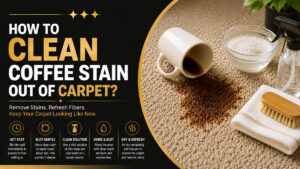
To clean coffee stains from carpet, blot the spill immediately, dilute the remaining coffee with a small amount of cool water, treat it with diluted clear dish soap, rinse out the residue, and dry the carpet quickly. Fresh spills usually take 10-20 minutes to process, while dried or repeatedly resurfacing stains may require extraction.
Key Facts at a Glance
Blotting removes coffee; rubbing spreads pigment and damages the carpet pile.
Use approximately 1 teaspoon of clear dish soap in 2 cups of cool or lukewarm water.
Apply enough liquid to dampen the fibers, not enough to soak the backing or pad.
Rinse treated carpet with small amounts of clean water because soap residue attracts soil.
Test vinegar, peroxide, enzyme products, and commercial spotters in a hidden area first.
A brown mark that returns after drying usually indicates coffee retained below the carpet surface.
What You Need Before Cleaning
A fresh coffee spill needs white absorbent towels, cool water, clear dish soap, a small bowl or spray bottle, and a vacuum. A wet-dry vacuum or portable carpet extractor improves results when the spill is large, has reached the backing, or contains milk.
Before You Start
| Requirement | Typical value | Practical specification |
|---|---|---|
| Active cleaning time | 10-20 minutes | Fresh spill under approximately 12 inches |
| Drying time | 4-12 hours | Faster with fans and low humidity |
| DIY cost | $0-$5 | Household towels, water, and dish soap |
| Soap quantity | 1 teaspoon | Mixed with 2 cups cool or lukewarm water |
| Towels required | 4-8 | White, lint-free, absorbent towels |
| Difficulty | Low | Moderate if the backing or pad is wet |
Remove shoes and furniture from the area so the carpet can dry evenly. Check the carpet manufacturer’s care label, especially for wool, viscose, silk, sisal, or an antique area rug. Natural and plant-based fibers can react differently to water and pH than nylon or polyester.
Why Coffee Stains Persist
Coffee stains persist because coffee pigment, dissolved solids, milk fats, and sugar can remain between carpet fibers or inside the backing after the visible liquid disappears. Tannins contribute brown color, but the exact result depends on coffee concentration, carpet dye, fiber type, temperature, and drying speed.
Coffee is not automatically a permanent chemical dye. The claim that every warm coffee spill chemically bonds to synthetic carpet dye sites overstates the mechanism. In many household carpets, successful blotting and rinsing remove most of the stain before a permanent color change occurs.
Milk and cream create a second problem. Proteins and fats can leave odor-producing residue, while sugar remains sticky and binds airborne dust. A coffee mark that looks clean immediately can become darker after several days if detergent or sweetener remains in the pile.
A carpet technician’s practical rule is controlled contact rather than saturation. Big Red Carpet Cleaners states, “The goal is controlled contact, not soaking.” That principle matters because excess water can move coffee into the backing, where evaporation later carries it back toward the tips.
How to Clean Coffee Stains from Carpet Step by Step
The safest general process has five stages: remove liquid, dilute, treat, rinse, and dry. Work from the outside edge toward the center, and replace wet towels as soon as they stop absorbing.
Step 1: Blot the Fresh Spill
Press a folded white towel firmly onto the coffee for 10-15 seconds, then lift it vertically. Repeat with dry sections until the towel picks up little or no liquid.
Do not scrub in circles. Friction can fuzz cut-pile carpet, distort looped fibers, and spread the brown liquid beyond the original spill. A spoon can lift coffee-soaked foam or grounds from the surface before blotting begins.
You’ll know it worked when: the towel absorbs less liquid after several presses and the spill boundary stops expanding.
Common mistake: pressing with one saturated towel. Use fresh towels because a wet cloth redistributes coffee instead of extracting it.
Step 2: Dilute the Remaining Coffee
Apply 1-2 tablespoons of cool or lukewarm water to a small spot, then blot immediately. For a larger area, mist the surface lightly rather than pouring water directly onto the carpet.
Water lowers the concentration of coffee solids so the towel can remove them. Cool water is a conservative choice for unknown fibers and milk-containing drinks, but lukewarm water is also commonly suitable for synthetic carpet when the manufacturer allows it.
You’ll know it worked when: the brown transfer on the towel becomes progressively lighter.
Common mistake: flooding the spot. Excess water pushes the stain into the backing and increases the chance of wicking.
Step 3: Apply Diluted Clear Dish Soap
Mix 1 teaspoon of clear, dye-free dish soap with 2 cups of cool or lukewarm water. Dip a white cloth into the solution, wring it nearly dry, and dab the stain from the perimeter inward.
Leave the lightly dampened area for 3-5 minutes, not 15-30 minutes. Short contact gives surfactants time to loosen oily milk residue without leaving a large wet zone. Black coffee often needs only water and careful blotting; milk coffee benefits more from the detergent step.
You’ll know it worked when: the brown color transfers to the cloth and the carpet no longer feels sticky after a test touch.
Common mistake: applying dish soap directly from the bottle. Concentrated detergent is harder to rinse and can create a permanently soil-attracting residue.
Step 4: Rinse Out the Cleaning Solution
Dampen a fresh cloth with clean water, wring it well, and dab the treated area several times. Follow each damp pass with a dry towel, or use a wet-dry vacuum to extract the moisture.
Rinsing is essential because dried detergent can attract dust and produce a darker outline around the original stain. Continue until the carpet feels neither slippery nor soapy and the towel shows minimal brown transfer.
You’ll know it worked when: the surface feels clean rather than tacky, and no foam appears when a damp cloth touches it.
Common mistake: skipping the rinse because the stain looks gone. Residue can cause localized re-soiling within days.
Step 5: Dry the Carpet Completely
Place two or three dry white towels over the area and press down firmly. Replace them when damp, then aim a fan across the carpet for several hours.
Avoid sealing moisture under plastic or placing furniture over the spot before it dries. Once the fibers are completely dry, vacuum slowly in two directions to restore the pile and remove loosened particles.
You’ll know it worked when: the carpet feels dry at the surface and when pressed deeply with a clean towel.
Common mistake: judging the result while the carpet is wet. Damp fibers can temporarily look darker, and wicking may not become visible until 24-48 hours later.
Which Cleaning Solution Should You Use?
Diluted dish soap is the best first treatment for most fresh coffee spills because it is accessible, mild when properly diluted, and effective against milk or cream residue. Vinegar, peroxide, baking soda, and enzyme products have narrower uses and higher material-safety requirements.
| Cleaning option | Best use | Quantity and contact time | Main risk |
|---|---|---|---|
| Plain water | Fresh black coffee | 1-2 tablespoons, blot immediately | Spreading if overapplied |
| Clear dish soap | Fresh coffee with milk | 1 teaspoon in 2 cups water, 3-5 minutes | Sticky residue if unrinsed |
| White vinegar | Residual odor or mineral residue | 1 part vinegar to 3 parts water, brief dab | Dye change or odor on sensitive fibers |
| Enzyme cleaner | Milk, cream, or sour odor | Label dilution, usually 5-15 minutes | Unsuitable pH for some wool |
| 3% hydrogen peroxide | Colorfast light synthetic carpet | Small patch test, inspect during treatment | Bleaching or color loss |
| Baking soda | Surface odor after drying | Thin dry layer, vacuum after several hours | Powder trapped in dense pile |
White vinegar is not automatically the strongest stain remover. It may help with odor or residue, but coffee stains are not reliably solved by changing pH alone. Never mix vinegar with chlorine bleach, ammonia, peroxide, or unknown commercial products.
Hydrogen peroxide changes colored molecules through oxidation, but the same action can lighten carpet dye. Use it only after a hidden colorfastness test, and never assume a dark carpet is safe because the bottle says 3%.
How Do Carpet Fibers Change the Method?
Synthetic nylon, polyester, and polypropylene carpet generally tolerates controlled water-based spot cleaning better than viscose, silk, sisal, or untreated wool. Fiber identification matters more than the coffee recipe because an effective solution can still damage the carpet.
| Carpet material | Lowest-risk first method | Avoid | Professional threshold |
|---|---|---|---|
| Nylon | Water, then diluted dish soap | Unchecked peroxide, saturation | Persistent stain after two treatments |
| Polyester | Water and mild dish soap | Excessive agitation | Backing remains wet after 12 hours |
| Polypropylene | Water and mild detergent | Strong solvents | Large spill over 1 square foot |
| Wool | Blot, minimal cool water, wool-safe detergent | Alkaline products, heat, soaking | Any persistent discoloration |
| Viscose or rayon | Blot only and contact a specialist | Water saturation and rubbing | Immediate specialist advice |
| Silk or antique rug | Professional assessment | Household chemistry | Any visible coffee spill |
Wool can tolerate some mild acidic treatments, but household vinegar mixtures are not a universal wool recommendation. Wool responds poorly to excessive moisture, alkaline cleaners, heat, and aggressive brushing, so stop after a cautious first attempt if the mark remains.
Viscose and rayon are particularly vulnerable to browning, texture change, and water rings. A professional rug cleaner is safer than repeated home treatment for those materials.
What Changes When Coffee Contains Milk or Sugar?
Coffee with milk, cream, or sugar requires residue removal, not only color removal. Blot the liquid, use diluted dish soap for fats, rinse thoroughly, and consider a fiber-compatible enzyme cleaner only if sour odor or protein residue remains.
Enzyme products work by breaking down organic residues, but they are not necessary for a small black-coffee spill. Follow the product label because contact time, dilution, and fiber restrictions vary. Do not use a biological cleaner on wool unless the manufacturer specifically identifies it as wool-safe.
Sugar does not need a special chemical neutralizer. Water dissolves it, and thorough extraction removes the resulting syrup. The important step is rinsing, since a thin sugar-soap film can become a dirt-collecting patch.
For a latte or cappuccino, use this sequence:
- Blot as much liquid as possible.
- Apply the diluted dish-soap solution for 3-5 minutes.
- Rinse with small amounts of clean water.
- Extract or towel-dry deeply.
- Use an enzyme product only for persistent milk odor.
How Do You Remove a Dried Coffee Stain?
Rehydrate a dried coffee stain gradually with a small amount of cool or lukewarm water, wait 2-3 minutes, and blot before using diluted dish soap. Repeated controlled applications are safer than one heavily saturated treatment.
A dried mark may contain coffee solids at the fiber tips and deeper in the backing. Treat a small section first so you can see whether color is lifting or spreading. Use a wet-dry vacuum if the stain covers more than approximately 12 inches or if the carpet feels wet beneath the surface.
Do not use an iron or steam-transfer technique on carpet. Heat can distort synthetic fibers, set protein residue, damage adhesive, and create a larger problem than the original stain. Professional technicians have specialized extraction and spotting systems that are safer than pressing a household iron onto a damp carpet.
Why Does the Coffee Stain Come Back?
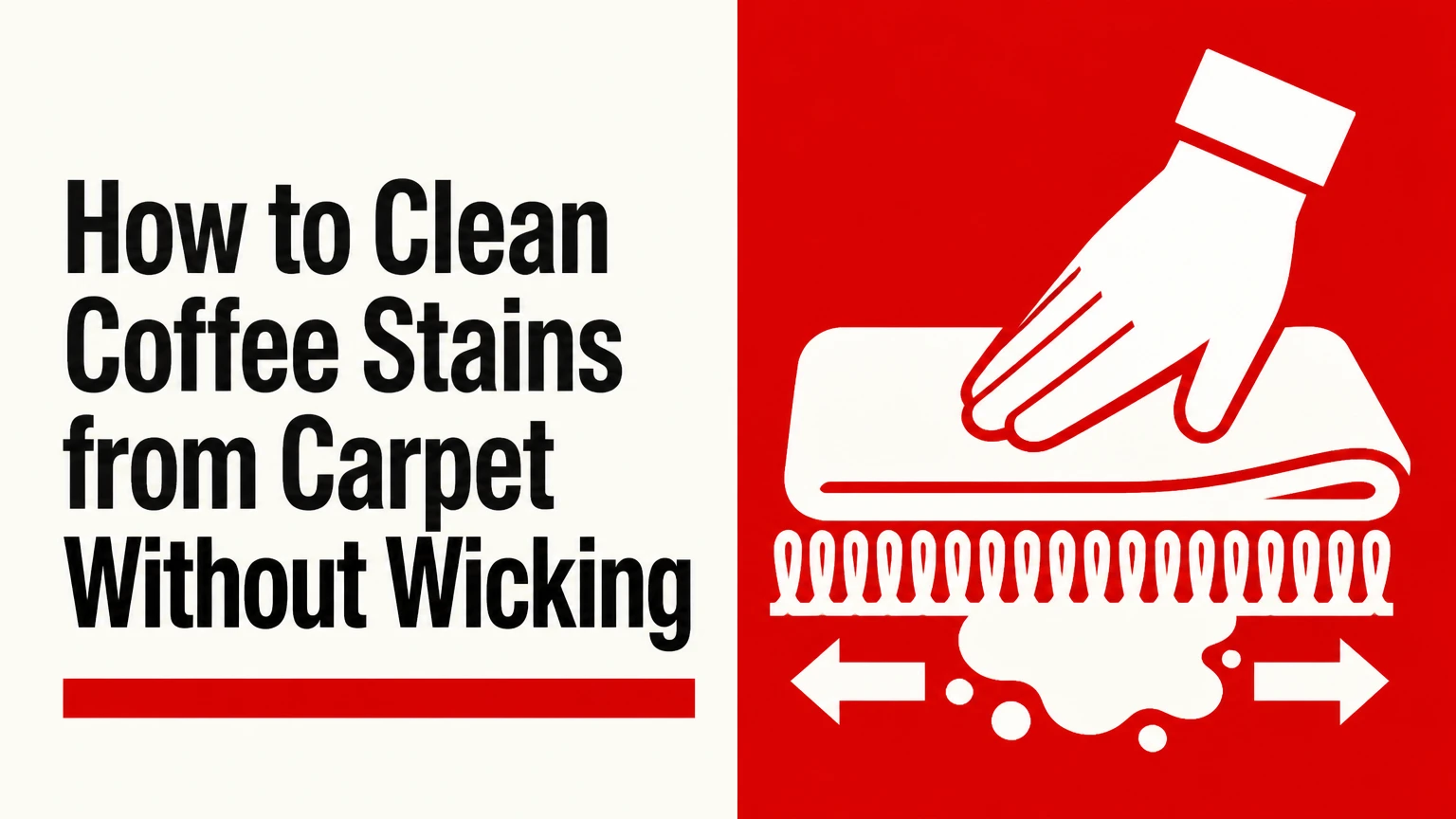
A returning brown coffee mark usually results from wicking, which occurs when coffee retained in the backing or pad migrates upward as moisture evaporates. The visible surface was cleaned, but the deeper contamination was not fully extracted.
Wicking is more likely after over-saturation, large spills, thick carpet, absorbent padding, or slow drying. A ring can also indicate soil attracted by leftover detergent, so examine whether the area feels sticky as well as whether it looks brown.
How to Fix a Returning Stain
Lightly mist the area with clean water, apply a minimal amount of diluted dish soap if residue remains, and extract the liquid with a wet-dry vacuum or portable carpet cleaner. Dry the area rapidly with towels and moving air.
Without an extractor, place several dry towels over the lightly dampened area and apply even downward pressure. Replace wet towels repeatedly. Do not leave a heavy object for 24 hours on a saturated carpet because prolonged moisture can damage backing or flooring beneath it.
Call a professional if the stain returns after one careful re-treatment, the pad is wet, the affected area exceeds roughly 1-2 square feet, or an odor develops. Repeated wetting without extraction increases wicking risk.
Common Mistakes and How to Fix Them
| Mistake | What it causes | Recovery action |
|---|---|---|
| Scrubbing | Fuzzy pile and wider stain | Stop friction, blot from the edge inward |
| Pouring water | Wet pad and wicking | Extract moisture, then increase airflow |
| Using hot water | Possible protein setting and fiber damage | Blot, cool, and rinse without heat |
| Applying excess soap | Sticky soil-attracting residue | Rinse with small amounts of clean water |
| Using peroxide without testing | Permanent light patch | Stop immediately and contact a cleaner |
| Mixing products | Toxic fumes or chemical damage | Ventilate and follow label safety guidance |
Never mix chlorine bleach with vinegar, ammonia, or acids because dangerous gases can form. Do not combine peroxide with vinegar or another oxidizer in a carpet bowl. Use one product at a time, rinse the area, and allow it to dry before evaluating another treatment.
A common practitioner rule is two controlled home treatments, not unlimited experimentation. If the mark remains after two attempts, the carpet may have permanent dye alteration, deep backing contamination, or fiber damage that household products cannot reverse.
How Much Does Coffee-Stain Removal Cost?
A small fresh spill usually costs $0-$5 to treat at home and takes 10-20 minutes of active work. Typical rental extraction costs approximately $39-$45 for 24 hours, plus $15-$25 for cleaning solution, while professional visits commonly begin around $75-$150 depending on region and minimum charges.
| Approach | Typical price | Active time | Best situation |
|---|---|---|---|
| Household DIY | $0-$5 | 10-20 minutes | Fresh spot under 1 square foot |
| Commercial spot spray | $8-$20 | 15-30 minutes | Recurrent household spills |
| Portable extractor rental | $39-$45 per day | 30-90 minutes | Large or deep spill |
| Cleaning solution rental add-on | $15-$25 | Included with rental | Manufacturer-approved formula |
| Professional spot visit | $75-$150 minimum | 30-90 minutes | Persistent or delicate carpet |
| Full-room professional cleaning | $120-$300 typical | 1-3 hours | Multiple stains or broad soiling |
Prices vary by city, room size, access, fiber, and whether furniture must be moved. A rental machine is not automatically better for one small stain because excess water and poor recovery can create wicking.
When Should You Call a Professional?
Call a professional carpet or rug cleaner when the carpet is viscose, silk, antique, heavily saturated, permanently discolored, or still stained after two controlled treatments. Professional help is also appropriate when coffee has reached the pad, produced sour odor, or covered a large area.
Ask which cleaning method and pH range the technician plans to use. For wool or high-value rugs, look for a cleaner experienced with natural fibers rather than choosing solely by the lowest advertised room price.
Home treatment is not a substitute for repair when the carpet has bleaching, melted fibers, delamination, or a damaged backing. Cleaning can remove residue, but it cannot restore missing dye or reconstruct a distorted pile.
FAQ
Can I use club soda on a coffee stain?
Club soda can provide water for dilution, but carbonation does not give it a special stain-removal advantage. Plain cool water is equally practical and avoids leaving mineral or salt residue. Blot first, use a small amount, and follow with diluted dish soap when milk or cream is present.
Does baking soda remove coffee stains from carpet?
Baking soda is more useful for absorbing surface moisture and reducing odor than for removing established coffee pigment. Apply it only after the carpet is nearly dry, leave a thin layer for several hours, and vacuum thoroughly. Avoid it on delicate or tightly woven rugs where powder can remain trapped.
Can I use vinegar on a dark carpet?
You can test diluted white vinegar on a hidden area, but vinegar is not automatically safe for dark carpet. Use 1 part vinegar to 3 parts water, dab briefly, rinse, and inspect after drying. Stop if the test area changes color, texture, or sheen.
How long does a coffee stain take to dry?
A lightly treated spot typically dries in 4-12 hours, depending on carpet density, humidity, ventilation, and the amount of water used. Fans shorten drying time. Do not replace furniture or judge the final color until the carpet is dry throughout.
Will coffee permanently stain carpet?
Coffee does not permanently stain every carpet. Immediate blotting, controlled dilution, complete rinsing, and rapid drying remove many fresh spills, while old stains, deep saturation, unstable dyes, and heat-damaged fibers are harder to reverse.
How do I clean coffee from a carpet pad?
A wet-dry vacuum is the safest household option for extracting coffee that reached the pad. Avoid repeatedly pouring water onto the carpet. If the pad remains damp after 12-24 hours, smells sour, or the brown mark returns, professional extraction may be necessary.
The Bottom Line
The reliable way to clean coffee stains from carpet is to blot immediately, dilute sparingly, use 1 teaspoon of clear dish soap in 2 cups of cool or lukewarm water, rinse away all detergent, and dry the area with towels and airflow. Use extra caution with wool, viscose, silk, dark dyes, dried stains, and any mark that returns after drying. The exact keyword remains the same: how to clean coffee stains from carpet safely, without replacing one visible stain with residue, fiber damage, or wicking.