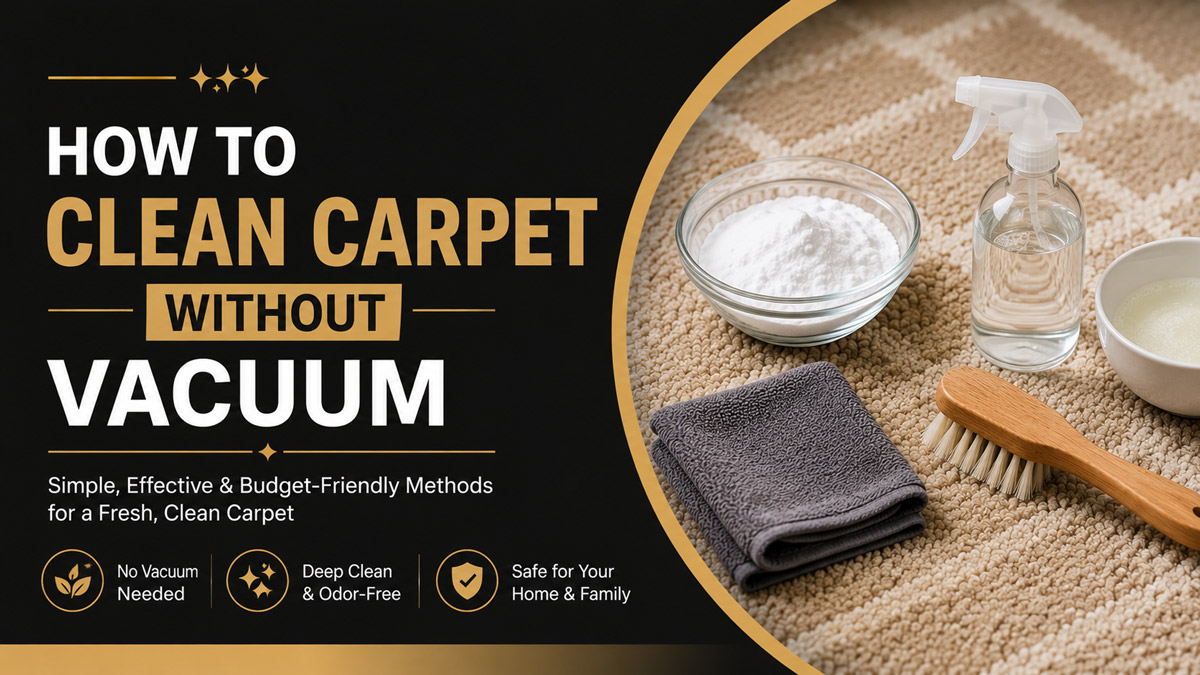
You can effectively clean a carpet without a vacuum by using mechanical agitation, static electricity, and moisture-based lifting methods. While a vacuum provides the easiest routine maintenance, alternative manual methods achieve thorough cleanliness when you follow specific timelines, downward pressure ratios, and targeted sweeping techniques.
At a Glance: Manual Carpet Cleaning
- A standard rubber squeegee applies static electricity to pull embedded hair from low-pile carpets.
- Stiff-bristled brooms lift surface dirt when used in short, one-directional strokes across small quadrants.
- Wide packing tape lifts fine particulate dust without pushing it deeper into the carpet backing.
- Baking soda requires exactly 30 to 60 minutes of dwell time to absorb odors before manual removal.
- Shag carpets and fibers longer than 0.5 inches require manual beating outside over a railing.
What household tools work best for manual carpet cleaning?
The most effective household tools for manual carpet cleaning are stiff-bristled nylon brooms, rubber window squeegees, wide packing tape, and microfiber flat mops. You select the tool based on the specific debris type and the carpet pile height. Using the wrong tool wastes physical energy and risks permanent damage to delicate fibers.
In typical residential cleaning scenarios, professionals categorize manual tools by their mechanism of action. Brooms provide mechanical agitation to break dirt loose. Squeegees generate static friction to pull lightweight materials to the surface. Tape utilizes chemical adhesion for precision lifting. Mops use capillary action and moisture to bind loose dust into manageable clumps.
| Cleaning Tool | Carpet Compatibility | Ideal Debris Target | Physical Pressure Required | Time Per 10×10 Foot Room |
| Nylon Bristle Broom | Low to medium pile | Large crumbs, dry soil | 1-2 lbs per square inch | 15-20 minutes |
| Rubber Window Squeegee | Low pile, synthetic | Pet hair, human hair, lint | 3-5 lbs of downward force | 25-30 minutes |
| Wide Packing Tape | All pile types | Fine dust, shattered glass | Gentle surface pressing | Spot cleaning only (5 mins) |
| Microfiber Flat Mop | Low pile, looped | Surface dust, light stains | 2-3 lbs of gliding force | 15-20 minutes |
| Wood Carpet Beater | Shag, high pile | Deep embedded sand | Heavy swinging force | 10-15 minutes (outdoors) |
How to clean carpet with a stiff broom
You clean a carpet with a stiff broom by sweeping in short, hard strokes across isolated 3×3 foot quadrants. This mechanical agitation technique lifts heavy debris without flicking the bristles upward, which prevents fine dust from going airborne and settling back onto the floor.
- Clear the entire floor area of furniture and large obstacles to create an unobstructed path.
- Mentally divide the room into 3×3 foot square sections.
- Apply firm downward pressure on the broom handle and pull the bristles toward your body in rapid, 12-inch strokes.
- Keep the broom head in constant contact with the carpet fibers. Do not flick the broom at the end of the stroke.
- Collect the gathered debris pile into a dustpan immediately before moving to the next section.
- Sweep the entire room a second time, changing your sweeping direction by 90 degrees to dislodge dirt trapped behind the fiber twists.
How to remove pet hair from carpet without a vacuum
You remove pet hair from a carpet without a machine by dragging a standard rubber window squeegee across the fibers in short, pulling motions. The rubber blade generates intense static electricity and friction against synthetic carpet fibers, forcing embedded hair to roll upward into easily removable clumps.
Standard brooms slide right over pet hair. The squeegee method forces the hair out of the carpet backing. You must apply 3 to 5 pounds of downward pressure to generate the necessary friction. Think of the pressure required to scrub a stubborn, baked-on stain from a dinner plate. Start in the farthest corner of the room and pull the squeegee backward in 24-inch increments. After every three pulls, pick up the accumulated clump of hair by hand and place it in a trash bag.
This technique requires significant lower back engagement. Practitioner consensus indicates that clearing an entire living room with a squeegee takes physical endurance. Take short breaks every ten minutes to prevent fatigue and maintain consistent downward pressure on the tool.
How to spot clean dust from carpet without a machine
You spot clean fine dust by wrapping wide packing tape around your dominant hand with the sticky side facing outward and pressing it firmly against the carpet. The industrial adhesive lifts micro-dust, skin cells, and pollen from the fiber tips without pushing the particles deeper into the backing.
Standard brooms fail against fine dust because the bristles simply push the microscopic particles around. Tape physically bonds with the debris. Press your tape-wrapped hand flat against the target area, hold for two seconds, and peel it upward. You must change the tape every 4 to 6 presses. The adhesive quickly becomes saturated with invisible micro-dust and loses its tackiness.
Duct tape works as an alternative to packing tape, but you must use caution on delicate rugs. Duct tape possesses a highly aggressive adhesive that can pull loose fibers out of older, frayed carpets. Standard clear packing tape offers the ideal balance of surface tack and safe release.
How to deodorize carpet using the hand scrub method
You deodorize a carpet manually by sprinkling a light layer of baking soda over the fibers, waiting 30 to 60 minutes, and scrubbing the area vigorously with a stiff hand brush. The baking soda acts as a chemical sponge that absorbs organic odor molecules and oils trapped in the carpet pile.
Never soak the carpet before applying the powder. You may mist the area very lightly with water using a spray bottle to help the baking soda adhere to the odor-causing oils. The 30 to 60 minute wait time is an absolute requirement. Removing the powder before 30 minutes leaves the odor molecules in the fibers. Waiting longer than two hours risks the powder absorbing ambient humidity from the room and hardening into a paste.
Once the wait time elapses, use a nylon hand brush. Scrub the fibers in tight, circular motions to loosen the powder. The circular action lifts the saturated baking soda to the surface of the carpet.
How do I get baking soda out of the carpet without a vacuum?
You remove baking soda without a vacuum by sweeping up the bulk of the dry powder with a stiff hand brush and dustpan, followed by wiping the remaining fine residue with a damp microfiber towel. The slight moisture in the towel physically traps the stubborn micro-particles that the brush leaves behind.
Many people make the mistake of using a dripping wet towel for this step. Excess water turns residual baking soda into a thick, cement-like paste that bonds permanently to the carpet backing. You must wring the microfiber towel out until it is barely damp.
Wipe the towel firmly across the carpet in one direction. Check the face of the towel after every swipe. When the towel turns white with powder, rinse it in a bucket of warm water, wring it out completely, and resume wiping. You know the process is complete when the carpet fibers feel soft and completely dry to the touch within ten minutes.
How to clean shag carpets without a vacuum
You clean a shag carpet without a vacuum by taking the rug outside, draping it over a sturdy railing, and striking the back of the rug repeatedly with a wooden broom handle. Brooms and squeegees completely fail on shag carpets because the long fibers swallow the tools and block surface friction.
Any carpet with fibers longer than 0.5 inches requires the traditional beating method. Hang the rug over a porch railing or a heavy-duty clothesline with the fuzzy side facing away from you. Strike the flat backing of the rug with flat, even blows. The impact sends shockwaves through the textile, dislodging heavy sand and dirt trapped at the base of the long fibers.
You must beat the rug for 5 to 10 minutes, moving systematically from the top left corner down to the bottom right. Stop hitting the rug only when you no longer see visible dust clouds ejecting from the front fibers upon impact.
How to clean antique or silk rugs without a machine
You clean antique or hand-knotted silk rugs without a machine by gently blotting the surface with a damp microfiber cloth strictly in the direction of the rug grain. You must avoid all mechanical sweeping, squeegees, and stiff brushes entirely to prevent unraveling the delicate natural fibers.
Silk and wool antique rugs possess a specific directional nap. Run your hand across the rug to feel the grain. One direction will feel smooth, while the opposite direction will feel rough. Always wipe in the smooth direction. Wiping against the grain forces dirt deeper into the knots and damages the textile structure.
Prepare a bucket of distilled water. Tap water contains hard minerals that leave white deposits on dark silk. Submerge your microfiber cloth, wring it until it is nearly dry, and blot the surface using a light pressing motion. Never scrub, twist, or rub the cloth back and forth.
How to clean indoor-outdoor needlepunch carpets without a machine
You clean thin, needlepunch indoor-outdoor carpets by using a heavy-duty push broom followed by an adhesive lint roller. Squeegees do not work on needlepunch carpets because the densely matted synthetic surface lacks the distinct fibers necessary to trap and roll debris.
Needlepunch carpets consist of synthetic fibers punched together into a solid, felt-like sheet. They excel at trapping fine, abrasive sand from shoes. First, use a wide outdoor push broom with coarse synthetic bristles. Apply heavy pressure and sweep in long, forceful strokes to dig the sand out of the matted surface.
Once the heavy sand is gone, wrap a large adhesive lint roller attached to an extension pole and roll it over the carpet. This second pass picks up the tiny burrs, seeds, and fine dirt that the coarse push broom missed.
Will sweeping ruin my carpet fibers?
No, sweeping will not ruin standard synthetic carpet fibers if you use a broom with flexible nylon or rubber bristles. Using harsh wire brushes, metal scrapers, or extremely coarse outdoor push brooms on delicate indoor carpets will cause irreversible fraying and fiber blooming.
The safety of manual sweeping depends entirely on matching the tool to the textile material. In typical residential scenarios, carpets consist of durable nylon or polyester blends designed to withstand heavy foot traffic. These materials safely tolerate the friction of a standard household broom.
| Carpet Material | Safe Manual Tools | Unsafe Manual Tools | Risk of Incorrect Tool |
| Synthetic (Nylon/Poly) | Nylon broom, rubber squeegee | Wire brush, metal scraper | Mild fraying over time |
| Wool | Soft bristle brush, damp towel | Stiff broom, rubber squeegee | Fiber blooming, shedding |
| Silk / Antique | Damp microfiber cloth only | Any stiff brush, adhesive tape | Structural unraveling |
| Needlepunch / Olefin | Coarse push broom, lint roller | Squeegee (ineffective) | Surface pilling |
Can I use a damp mop on a carpet?
Yes, you can use a sponge mop or a microfiber flat mop to clean a carpet effectively. You must lightly mist the carpet surface with water or a mild carpet shampoo mixture, then drag the damp mop firmly across the fibers to pull hair and dirt into visible clumps.
The moisture on the mop head creates capillary action, binding loose dust particles together. Spray the carpet evenly, but do not saturate the padding underneath. A wet carpet backing provides a perfect breeding ground for mold and mildew.
Drag the mop toward you in straight lines. As the mop head fills with dirt, rinse it thoroughly in a bucket of clean, hot water and wring it out completely before touching the carpet again. You must ensure the room has adequate ventilation. Turn on ceiling fans and open windows to guarantee the carpet dries completely within 24 hours.
How much time does it take to clean carpet without vacuum?
It takes between 25 and 45 minutes of active manual labor to clean a standard 10×10 foot carpeted room without a vacuum. The exact timeframe depends heavily on the type of debris present, the pile height of the carpet, and the specific manual tool you select.
Using a stiff broom for large crumbs represents the fastest method, generally requiring 15 to 20 minutes for a medium-sized bedroom. Pulling pet hair with a rubber squeegee takes significantly longer, pushing the process toward the 40-minute mark due to the heavy physical pressure required.
If you add a deodorizing step with baking soda, you must add an additional 30 to 60 minutes of passive waiting time. Manual carpet cleaning requires significantly more time than pushing a motorized vacuum, which typically clears a 10×10 room in under 5 minutes. You trade time and physical effort for the ability to clean without electricity.
How often should you manually clean carpets?
You should manually sweep carpets in high-traffic areas like living rooms and hallways at least once a week. You can reduce this frequency to once every two weeks for low-traffic zones like guest bedrooms or formal dining rooms to maintain baseline hygiene and fiber health.
Dirt and grit act like microscopic razor blades against carpet fibers. Every time you step on dirty carpet, the friction cuts the fibers, leading to the dull, gray appearance typical of older rugs. Weekly manual sweeping removes this abrasive grit before it sinks into the backing. If you own pets that shed, you must use the squeegee method bi-weekly during peak shedding seasons to prevent hair from permanently weaving itself into the carpet matrix.
How to clean spilled fine powder from carpet
You clean spilled fine powders like flour, drywall dust, or makeup by scraping the bulk of the powder away with a plastic putty knife, then blotting the remaining residue with a damp, sticky microfiber towel. You must never use a broom to sweep dry powder spills.
Sweeping dry powder is the worst mistake you can make. The bristles force the micro-particles deep into the carpet backing, permanently graying the fibers. Slide a plastic putty knife gently under the pile of powder and lift it straight up into a trash can. Remove as much dry volume as possible using this scraping method.
Once only a thin dusting remains, take a barely damp microfiber towel and press it directly down onto the stain. Do not rub. Rubbing creates a thick paste that stains the carpet. Lift the towel straight up, rinse it, wring it out, and press it down again until the powder vanishes.
How to remove wet mud from carpet without spreading it
You remove wet mud from a carpet without spreading it by waiting 2 to 3 hours for the mud to dry completely into hard crusts. Once dry, you break the crusts apart with a metal spoon, lift the large chunks away, and use the packing tape method to remove the remaining dust.
Brushing or mopping wet mud instantly creates a massive, deep-set stain that dyes the carpet fibers brown. Patience is your primary tool. Block off the area and let ambient air dry the mud entirely.
| Debris Condition | Immediate Action | Required Wait Time | Follow-up Action | Success Rate |
| Wet Mud | Do absolutely nothing | 2 to 3 hours | Break crusts, tape lift | High |
| Dry Dirt/Sand | Sweep with stiff broom | None | Second pass at 90 degrees | High |
| Fine Dry Powder | Scrape with putty knife | None | Damp microfiber blot | Medium |
| Wet Liquid Spill | Blot with dry towel instantly | None | Damp mop with mild soap | Varies by liquid |
Use the rounded edge of a spoon to crack the dried mud. A spoon provides targeted blunt force without cutting the carpet fibers. Pick up the shattered chunks of mud by hand. Finally, wrap packing tape around your fingers and press it against the remaining brown dust spot until the area is clean.
Does manual carpet cleaning remove fleas or bedbugs?
No, manual carpet cleaning with brooms, squeegees, or tape does not remove fleas or bedbug infestations. Manual tools only agitate and remove surface debris, leaving the microscopic pest eggs completely untouched in the deep base of the carpet backing.
Brooms simply push flea dirt and eggs deeper into the dark, protected areas of the rug. If you face an active insect infestation, mechanical agitation fails entirely. You must rely on extreme temperatures or specific chemical interventions.
Practitioner consensus dictates that pest eradication requires high-temperature steam cleaning exceeding 140 degrees Fahrenheit or the application of targeted chemical treatments like diatomaceous earth. While you can manually scrub diatomaceous earth into the carpet fibers using a stiff brush, you will eventually need a strong machine suction to extract the dead insects and the residual pesticide powder safely.
The Bottom Line
You can achieve a thoroughly clean carpet without a vacuum by matching the correct physical tool to the specific debris type. Brooms provide the mechanical agitation necessary for loose dirt, while rubber squeegees generate the static electricity required to lift embedded pet hair. You must avoid sweeping delicate antique rugs or wet mud, as incorrect mechanical force causes permanent fiber damage and sets stains deep into the backing. Mastering these manual techniques ensures your floors remain hygienic regardless of machine availability.