To clean carpet with a steam cleaner, first identify the fiber, vacuum thoroughly, pre-treat stains, fill the machine correctly, and make one controlled wet pass followed by at least two slow dry passes. Hot-water extraction works best when the carpet is cleaned from the farthest corner toward the exit and dried quickly with strong airflow.
Key Facts at a Glance
Carpet steam cleaning is usually hot-water extraction, not dry steam cleaning.
A typical 12-by-12-foot room takes 20-30 minutes to clean with a residential machine.
Carpet commonly dries in 2-6 hours, but over-wet padding can remain damp for 12-24 hours.
Two or more dry vacuum passes for each wet pass remove more moisture and reduce odor risk.
Synthetic nylon and polyester carpet usually tolerate home extraction better than wool or glued carpet.
Excess detergent leaves sticky residue that attracts soil and can make carpet re-soil faster.
What Does Steam Cleaning Actually Mean?
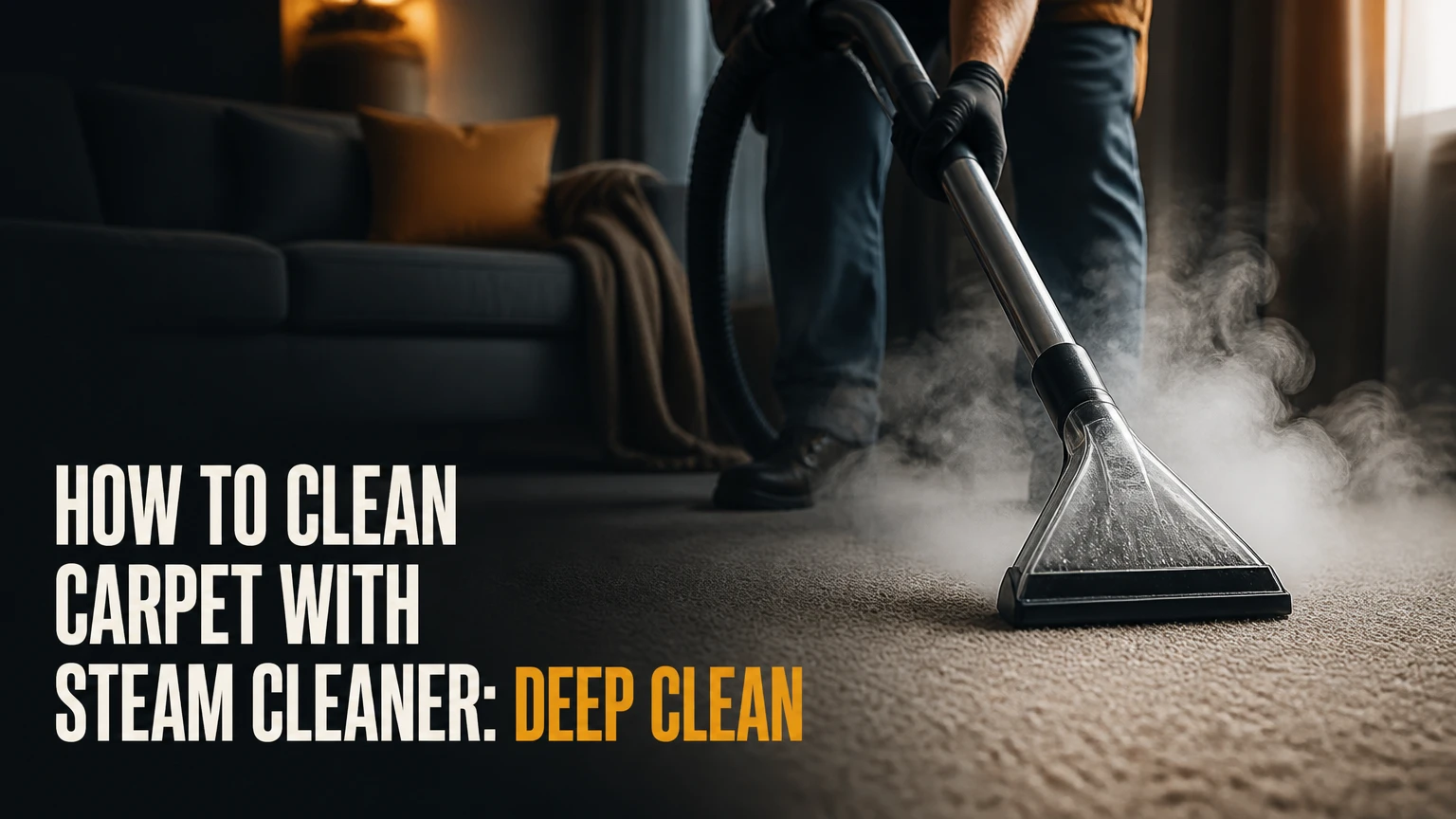
Carpet steam cleaning usually means hot-water extraction, a process that sprays heated water and cleaning solution into carpet fibers before a vacuum system removes the liquid and suspended soil. True vapor steam cleaners use much less water and are not automatically suitable for wall-to-wall carpet because heat and moisture can damage backing, adhesives, or natural fibers.
A hot-water extraction machine performs four linked actions:
- Heating: The machine warms water, commonly to approximately 140-150°F in consumer equipment. Professional truck-mounted systems may deliver hotter solution at the machine, but the temperature reaching carpet varies with hose length, flow, and tool design.
- Injection: A spray jet places water and detergent into the pile.
- Suspension: Heat, alkaline or neutral detergent, and agitation loosen oily soil and particulate matter.
- Extraction: A vacuum motor pulls dirty solution into a recovery tank.
The Carpet and Rug Institute summarizes the maintenance principle plainly: “The best way to keep carpet looking good is to vacuum regularly.” Steam cleaning cannot compensate for months of unremoved dry grit, which acts like sandpaper against carpet fibers.
Why does extraction matter more than heat?
Extraction matters because dissolved soil must leave the carpet rather than dry back into the pile. A very hot machine with weak suction can produce a cleaner-looking surface while leaving excess moisture, detergent, and soil in the backing.
The important performance variables are water flow, vacuum strength, spray control, wand design, and operator speed. Temperature helps dissolve oily contamination, but temperature alone does not sanitize every carpet or remove every stain. Carpet padding, adhesives, and subfloors also impose moisture limits.
Which Steam Cleaner Should You Use?
Choose a portable spot extractor for isolated accidents, an upright rental or owned machine for several rooms, and professional hot-water extraction for heavily soiled carpet, large areas, delicate fibers, or recurring odor in the pad. Machine capacity and suction affect results more than a “steam” label.
| Equipment type | Typical cost | Best coverage | Main limitation |
|---|---|---|---|
| Portable spot extractor | $100-$180 purchase | 1-10 sq. ft. spots, stairs, vehicles | Small tank and narrow nozzle |
| Upright consumer cleaner | $200-$280 purchase | 1-4 residential rooms | Lower suction than truck-mounted equipment |
| Rental upright extractor | $22-$35 per day | 1,000-2,000 sq. ft. | Heavy handling and variable machine condition |
| Professional portable extractor | $150-$304 per visit | Apartments, stairs, upper floors | Higher labor cost |
| Truck-mounted extractor | $0.25-$0.50 per sq. ft. | Whole homes and commercial areas | Hose access and service appointment required |
A rental machine is often the economical choice for an apartment tenant who cleans once or twice yearly. Ownership becomes more practical when pets, children, or frequent spills create repeated spot-cleaning needs. A professional operator has better vacuum recovery, controlled presprays, and fiber-specific tools, but professional service does not guarantee stain removal when dye has chemically altered the carpet.
Which carpet fibers can tolerate hot-water extraction?
Nylon and solution-dyed polyester usually tolerate careful residential extraction, while wool, viscose, sisal, seagrass, and carpet with unstable backing require manufacturer or professional guidance. Berber describes a loop construction rather than one fiber, so loop height, fiber type, and backing determine the safe method.
| Carpet condition | Typical extraction approach | Temperature or moisture caution | Main risk |
|---|---|---|---|
| Nylon cut pile | Controlled hot-water extraction | Follow label, avoid saturation | Resoiling from detergent |
| Polyester cut pile | Low-to-moderate moisture extraction | Rinse thoroughly | Oily soil may remain |
| Olefin or polypropylene | Low-moisture or careful extraction | Avoid excessive heat | Crushing and slow drying |
| Wool loop or cut pile | Professional low-moisture method | Follow wool-care label | Shrinkage, browning, dye bleed |
| Berber loop carpet | Slow extraction with minimal agitation | Avoid snagging loops | Fuzzing, wicking, distortion |
| Viscose, sisal, or seagrass | Do not use a home steam cleaner without approval | Keep moisture very low | Permanent browning or shrinkage |
Read the carpet warranty and care label before adding heat or water. Test a hidden area for color transfer, texture change, and backing stability.
Before You Start
Plan 60-90 minutes for a 12-by-12-foot room, including setup and drying preparation, although the machine operation itself commonly takes 20-30 minutes. The job is moderately physical because a full upright extractor can weigh more than 40 pounds when its tanks are filled.
Before-you-start checklist
Tools: carpet extractor, dry vacuum, measuring cup, white towels, soft brush, spray bottle, fans, and optional dehumidifier.
Materials: manufacturer-approved carpet formula, clean tap water, stain-specific pre-treater, and plastic or foil furniture protectors.
Typical cost: $5-$15 of solution for an owned machine, or $35-$55 for a one-day rental plus detergent.
Prerequisites: confirmed fiber type, accessible electrical outlet, functioning spray and suction, and a place to empty wastewater.
Room condition: windows or ventilation available, pets removed, and furniture reduced enough to create continuous cleaning lanes.
Do not mix ammonia, bleach, vinegar, peroxide, or commercial detergents in the machine tank unless the equipment and product instructions specifically permit the combination. Chemical reactions can damage fibers, create fumes, or destabilize dyes.
How to Clean Carpet With Steam Cleaner
The safest home process has six stages: clear the room, dry-vacuum, pre-treat, prepare the machine, extract in controlled lanes, and dry rapidly. The factor that most determines success is moisture recovery, not the number shown on the machine’s heat setting.
Step 1: Clear and Inspect the Room
Remove movable furniture, toys, cords, and loose objects from the carpet, then inspect seams, thresholds, loose backing, and visible stains. Place foil squares or waterproof blocks beneath furniture that must remain, and do not return heavy furniture until the carpet is fully dry.
Photograph stains before cleaning if a rental deposit or warranty claim matters. Identify urine odor, dye transfer, rust, gum, wax, and oily soil separately because each contaminant responds to different chemistry.
You will know the step worked when: every cleaning lane is unobstructed and damaged or color-unstable areas are marked.
Common mistake: moving furniture onto wet carpet. Wood stain and rust can transfer into damp fibers.
Step 2: Dry Vacuum in Multiple Directions
Vacuum slowly in two directions, then use a crevice tool along baseboards and beneath furniture edges. Dry vacuuming removes hair, crumbs, abrasive grit, and loose pet dander before those materials enter the extractor’s spray path.
For dense carpet, make one slow forward-and-back vacuum pass over high-traffic lanes. Empty the vacuum when airflow drops, because a full bag or clogged filter reduces dry-soil removal and can leave the extraction machine’s recovery tank full of unnecessary debris.
You will know the step worked when: the vacuum collects little visible debris and the pile looks more uniform after brushing.
Common mistake: using the steam cleaner as a wet vacuum for crumbs. Large debris can clog the spray floorhead or recovery float.
Step 3: Pre-Treat Soil and Stains
Apply a carpet-safe prespray evenly at the product’s stated rate, commonly about 1 gallon per 200-400 square feet, then allow 5-10 minutes of dwell time without letting the solution dry. Treat pet urine with an enzyme product labeled for carpet, but do not assume surface spraying reaches urine in the pad.
Blot liquid stains with white towels before applying chemistry. Do not scrub aggressively, because rubbing can spread a stain, fuzz synthetic fibers, or force contamination deeper into the backing.
| Stain type | First treatment | Typical dwell time | Avoid |
|---|---|---|---|
| Pet urine or vomit | Carpet-safe enzyme product | 10-15 minutes | Bleach and high heat first |
| Coffee, tea, or wine | Neutral carpet spotter | 5-10 minutes | Alkaline overuse on wool |
| Grease or cooking oil | Manufacturer-approved solvent or prespray | 5-10 minutes | Saturating the pad |
| Gum or wax | Chill and scrape, then spot-treat residue | 2-5 minutes | Smearing with hot water |
| Rust | Carpet-safe rust remover | Product-specific | Chlorine bleach |
| Unknown dye transfer | Professional assessment | Do not guess | Repeated chemical layering |
Always perform a hidden-area test. If the white towel picks up carpet dye, stop and use a professional cleaner familiar with that fiber and dye system.
You will know the step worked when: oily traffic lanes look softened and stains transfer to a white towel without color bleeding.
Common mistake: adding more product because a stain remains visible. Chemical layering often creates residue without reversing permanent dye loss.
Step 4: Fill and Set Up the Machine
Fill the clean-water tank with hot tap water within the manufacturer’s stated limit, usually not boiling water. Add only the measured quantity of compatible detergent if the manual permits solution in the tank; otherwise, use prespray followed by a clean-water rinse.
A common commercial prespray dilution is 1 part concentrate to 10 parts water, but dilution is product-specific and cannot be safely generalized to every formula. Use a measuring cup rather than estimating by sight.
Check that the dirty-water tank, lid, float, hose, brush roll, and spray jets are seated correctly. Test spray and suction on a towel or inconspicuous carpet section before starting the room.
You will know the step worked when: the spray pattern is even, the recovery tank collects water, and no clean solution leaks from the housing.
Common mistake: filling the tank with concentrated detergent. Excess surfactant leaves sticky residue and can damage seals or produce excessive foam.
Step 5: Extract One Lane at a Time
Start at the farthest corner and work backward toward the exit. Make one slow wet pass while holding the trigger, then release the trigger and make two or more slow dry passes over the same lane.
Overlap adjacent lanes by approximately 1-2 inches so untreated strips do not remain. Keep the machine moving while spraying, and shorten the wet pass on delicate, low-pile, or already damp carpet.
A practical operator rule is to spend more time vacuuming than spraying. The recovery tank should contain visibly dirty water, but the carpet should not feel saturated or squelch underfoot.
You will know the step worked when: the carpet pile looks evenly groomed, no standing water remains, and a folded white towel pressed into the carpet feels damp rather than wet.
Common mistake: moving too quickly while holding the trigger. Fast spraying delivers liquid faster than the vacuum can recover it.
Step 6: Dry the Carpet Completely
Open windows when outdoor humidity is lower than indoor humidity, run fans across the carpet surface, and use a dehumidifier in closed rooms. Keep people and pets off the carpet for at least 4-6 hours, or until a towel pressed into the pile remains dry.
Typical drying time is 2-6 hours for well-extracted synthetic carpet with strong airflow. Carpet with dense padding, poor ventilation, cool temperatures, or excessive water can require 12-24 hours.
Aim for indoor relative humidity below approximately 60% during drying when practical. Do not turn off airflow because the surface feels dry; backing and padding dry more slowly than the visible pile.
You will know the step worked when: the carpet feels neutral in temperature, has no damp odor, and the towel test shows no moisture.
Common mistake: replacing furniture immediately. Furniture legs can stain wet carpet, restrict airflow, and create flattened areas.
What Should You Do for Difficult Carpet Conditions?
Difficult conditions require less water and more diagnosis, not more heat. Pet urine in the pad, recurring brown edges, loose loops, and wick-back stains often exceed what a consumer extractor can correct safely.
Pet urine
Remove surface residue with an enzyme product, extract according to the product label, and repeat the towel test after drying. If odor returns when humidity rises, contamination probably remains in the backing or pad, where surface steam cleaning cannot fully reach.
High-traffic gray lanes
Use a measured prespray and gentle agitation with a soft carpet brush before extraction. Two wet passes usually add moisture without adding proportionate cleaning, so improve dry vacuuming and dwell time instead.
Berber and loop carpet
Use slow machine movement, minimal brush agitation, and no sideways dragging that can catch loops. Inspect the machine head for exposed metal or damaged brush components before cleaning.
Brown stains after drying
Brown discoloration can result from cellulosic browning, soil wicking, overwetting, or chemical imbalance. Do not repeatedly re-wet the area; allow complete drying and ask a carpet professional to identify the cause.
Why Does Carpet Smell Worse After Cleaning?
Carpet smells worse after cleaning when moisture, organic soil, or detergent remains in the pile, backing, or pad for too long. Immediate recovery requires fans and dehumidification, while a persistent odor after 24 hours indicates possible pad contamination, microbial growth, or residue that needs professional evaluation.
First empty and rinse the recovery tank, because dirty equipment can reintroduce odor. Then run additional dry vacuum passes without spraying and increase airflow across the affected area.
Do not mask a sour odor with fragrance. Fragrance does not remove contaminated pad material, and additional liquid can extend the drying problem. If odor persists after the carpet is fully dry, identify whether the source is the carpet, pad, subfloor, baseboard, or HVAC airflow.
What If the Machine Stops Working?
A non-spraying machine usually has an unseated clean-water tank, blocked spray jets, an air lock, or a disconnected hose. A machine that stops extracting commonly has a full recovery tank, activated float shutoff, clogged floor nozzle, or damaged seal.
| Symptom | Likely cause | Safe first action | Stop and escalate when |
|---|---|---|---|
| No spray | Tank not seated or clogged jet | Reseat tank and clear filter | Pump remains silent |
| Weak spray | Low solution level or blocked filter | Refill and rinse filter | Flow remains uneven |
| No suction | Full recovery tank or float shutoff | Empty and reseat tank | Motor sounds abnormal |
| Dirty water leaks | Lid, gasket, or tank misalignment | Turn off and inspect seal | Gasket is split |
| Excess foam | Too much detergent | Empty, rinse, and use clean water | Foam enters motor area |
| Carpet stays very wet | Fast wet passes or weak vacuum | Make dry passes, check nozzle | Moisture remains after 24 hours |
Disconnect power before reaching near brushes, belts, or floor nozzles. Never insert a metal tool into an energized machine.
Is DIY Steam Cleaning Better Than Professional Cleaning?
DIY extraction is cheaper for routine maintenance, while professional hot-water extraction is better for large areas, severe soil, delicate fibers, and moisture-sensitive situations. A professional’s main advantages are vacuum recovery, prespray selection, fiber identification, and the ability to adjust water flow and agitation.
| Decision factor | DIY owned machine | DIY rental | Professional service |
|---|---|---|---|
| Typical direct cost | $5-$15 per job | $35-$55 per day | $150-$304 per home |
| Setup time | 15-30 minutes | 20-40 minutes | 0-15 minutes for homeowner |
| Typical room time | 20-30 minutes | 20-35 minutes | 15-25 minutes |
| Drying range | 4-12 hours | 6-18 hours | 2-8 hours |
| Best area | 1-4 rooms | 1-6 rooms | Whole home or severe soil |
| Main skill demand | Moisture control | Machine handling | Choosing correct chemistry |
Professional pricing commonly ranges from $0.25-$0.50 per square foot, but stairs, furniture movement, deodorization, travel, and stain treatments can raise the invoice. Ask whether the quote includes prespray, rinse, furniture protection, deodorizer, and stain work.
Low-moisture encapsulation and dry-compound cleaning can be preferable when carpet must be usable within a few hours or the backing cannot tolerate substantial water. These alternatives generally do not flush heavily contaminated padding as effectively as extraction.
Common Mistakes and How to Fix Them
- Over-saturating the carpet: Stop spraying, empty the tank, and make repeated dry passes. Use fans immediately.
- Using too much detergent: Rinse with clean water only if the carpet remains stable, then extract thoroughly. Residue can cause rapid resoiling.
- Skipping dry vacuuming: Allow the carpet to dry, vacuum again, and clean with controlled moisture. Loose grit cannot be dissolved by detergent.
- Scrubbing a stain aggressively: Blot from the outside inward with a white towel. Stop if dye transfers or the pile begins fuzzing.
- Cleaning wool without testing: Stop the home process and consult the manufacturer or a wool-certified cleaner.
- Walking on wet carpet: Use clean socks or wait until the towel test shows no moisture. Foot oils can redeposit soil in open, damp fibers.
One counterintuitive practitioner rule is that a slower vacuum stroke often improves results more than a hotter spray. The machine needs contact time to recover liquid, and extraction is the step that carries suspended soil away.
Another rule is to clean less aggressively at carpet edges. Baseboards and tack strips restrict airflow, while concentrated spray at the perimeter can wet the pad without giving the vacuum head full recovery access.
How Often Should You Steam-Clean Carpet?
Most homes need professional or DIY extraction every 6-12 months, while heavy-traffic homes with pets or children may need targeted cleaning every 3-6 months. Frequent full-room wet cleaning is not automatically healthier because repeated moisture can stress backing, adhesives, and padding.
Vacuum high-traffic lanes at least weekly and address spills immediately. A household with one adult and no pets may extend deep cleaning beyond 12 months when vacuuming is consistent, while a multi-pet home may need more frequent spot extraction but fewer full-room wet cleanings.
FAQ
Can I use vinegar in a carpet steam cleaner?
Do not add vinegar unless the machine manufacturer and carpet manufacturer explicitly approve it. Vinegar’s acidity can affect dyes, adhesives, seals, and wool fibers, while its odor does not remove urine contamination in carpet padding.
Can baking soda replace carpet-cleaning detergent?
Baking soda can absorb some surface odor, but it does not replace a formulated extraction detergent for oily soil. Fine powder can also remain in dense carpet or enter equipment if it is not completely vacuumed before wet cleaning.
How long should I wait before walking on cleaned carpet?
Wait until the carpet passes a towel test and feels dry, usually 4-6 hours with good airflow. Keep pets and outdoor shoes away longer if the pile or padding remains cool, damp, or odorous.
Can I steam-clean carpet with furniture in the room?
You can clean around heavy furniture, but do not place unprotected wood or metal legs on damp carpet. Use foil or waterproof blocks, leave airflow around the furniture, and clean the concealed sections during a later move.
Does steam cleaning remove dust mites and allergens?
Hot-water extraction can remove soil, dander, and allergen-containing particles, but a consumer machine should not be described as sterilizing the entire carpet. HEPA vacuuming, humidity control, mattress care, and professional extraction may be needed for allergy management.
When should I stop cleaning and call a professional?
Call a professional when dye bleeds, wool shrinks, urine odor returns after drying, carpet remains wet beyond 24 hours, backing separates, or brown discoloration repeatedly reappears. A professional can inspect the pad and subfloor rather than repeatedly adding water.
The Bottom Line
The best way to clean carpet with a steam cleaner is to remove dry soil first, use measured prespray, control the wet pass, complete at least two dry passes, and force air across the carpet until the backing is dry. Synthetic carpet is the most forgiving DIY surface; wool, viscose, severe pet contamination, and unstable backing warrant professional assessment.