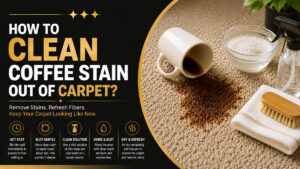
To clean carpet by hand, vacuum loose soil, identify the carpet fiber, pre-treat stains, apply a small amount of diluted cleaner, agitate gently, rinse, towel-extract, and dry rapidly. A typical 10-by-12-foot synthetic-carpet room takes 90-150 minutes of hands-on work and usually needs 4-12 hours to dry.
Key Facts at a Glance
Hand-cleaning carpet works best when the carpet is dampened, not saturated.
Use approximately 1/4 teaspoon of clear, mild dish detergent per 1 quart of warm water for light cleaning.
Test every solution on a hidden area for color transfer, texture change, and dye bleeding.
A clean rinse is necessary because detergent residue attracts new soil and can leave carpet crunchy.
Synthetic carpet normally tolerates more moisture than wool, silk, viscose, or carpet with a jute backing.
Start drying immediately with white towels, moving air, and reduced room humidity.
What Does Cleaning Carpet by Hand Involve?
Cleaning carpet by hand means removing dry soil and stains with manual tools instead of an electric carpet extractor or upright shampoo machine. The method combines chemistry, controlled warmth, mechanical agitation, dwell time, rinsing, and physical moisture removal.
The practical objective is soil removal without driving water into the backing. Carpet fibers may look clean while the adhesive, underlay, or subfloor remains wet, so surface appearance alone is not a sufficient drying test.
How does hand cleaning remove embedded soil?
Hand cleaning loosens soil in four connected stages:
- Chemical action: A low-foaming surfactant separates oily soil from fiber surfaces.
- Warmth: Warm water softens greasy deposits, although excessive heat can set some stains or affect natural fibers.
- Agitation: A soft brush or microfiber cloth lifts loosened soil from the pile.
- Dwell time: Several minutes allow the solution to work before wiping and rinsing.
Vacuuming remains the most important first action. Wetting unremoved grit can turn loose particles into a muddy suspension that spreads deeper between carpet tufts.
Before You Start: Supplies, Time, and Safety
A small room usually needs a vacuum, two buckets, white microfiber towels, a soft nylon brush, a spray bottle, gloves, and a measured detergent solution. Plan 20-30 minutes for setup, 45-90 minutes for cleaning, and at least 4 hours for drying in favorable conditions.
What supplies and quantities do you need?
| Item | Typical quantity | Recommended specification |
|---|---|---|
| Mild detergent | 1/4 teaspoon per quart | Clear, low-fragrance, low-foam dish soap |
| Warm water | 2-4 quarts per 120 square feet | 40-50°C, never boiling |
| Clean rinse water | 2-4 quarts per 120 square feet | Cool or lukewarm water |
| White microfiber towels | 8-15 towels | Undyed, lint-free, absorbent |
| Soft brush | 1 brush | Nylon bristles, approximately 1-2 inches |
| Household vacuum | 1 machine | Crevice tool and adjustable-height head |
| Air movers | 1-2 units | Floor fan or box fan directed across the pile |
For a 10-by-12-foot room, use approximately 2-3 quarts of ready-to-use solution, not several gallons poured directly onto the carpet. Make fresh solution when the bucket becomes visibly gray.
Which carpet fibers require extra caution?
Fiber identification determines how much moisture, agitation, and heat the carpet can tolerate. Check a manufacturer label, flooring invoice, or inconspicuous carpet edge before choosing a wet method.
| Fiber or construction | Typical tolerance | Safer hand-cleaning approach | Avoid |
|---|---|---|---|
| Nylon | High moisture tolerance | Damp cloth, diluted neutral cleaner | Strong bleach and prolonged soaking |
| Polyester | Moderate-high tolerance | Low-detergent damp cleaning | Oily products that leave residue |
| Olefin or polypropylene | Moderate tolerance | Light solution and gentle agitation | Heat, aggressive brushing, greasy soil spread |
| Wool | Low-moderate tolerance | Wool-safe detergent, minimal water | Alkaline soap, vinegar, hot water, hard scrubbing |
| Viscose or rayon | Low tolerance | Professional cleaning preferred | Wet DIY cleaning and vigorous rubbing |
| Silk or antique rug | Very low tolerance | Specialist inspection | Household detergent and immersion |
| Tufted carpet with jute backing | Low drying tolerance | Minimal moisture, rapid extraction | Saturation and repeated wet passes |
Wool and silk are not simply “delicate versions” of synthetic carpet. Their scales, dyes, backing, and response to alkalinity differ enough that a general dish-soap recipe can cause felting, browning, bleeding, or permanent texture change.
How to Clean Carpet by Hand, Step by Step
The safest hand-cleaning sequence has eight steps: inspect, vacuum, treat spots, mix solution, clean small sections, rinse, extract, and dry. The factor that most determines success is moisture control, because residue and wet backing create more problems than insufficient scrubbing.
Step 1: Inspect and test the carpet
Move furniture and inspect the carpet in daylight. Identify fiber, backing, stains, worn areas, loose seams, exposed tack strips, and previous water damage.
Mix a small amount of the intended solution and apply one teaspoon to a hidden edge. Wait 10 minutes, press a white towel onto the spot, and check for transferred dye or a changed texture.
You will know the test passed when: the towel remains unstained and the pile dries without stiffness or discoloration.
Common mistake: testing only for colorfastness while ignoring texture. A carpet can retain its color but become matted or fuzzy.
Step 2: Vacuum slowly in two directions
Vacuum the entire area slowly, first against the pile and then with the pile. Use the crevice tool along skirting boards and under furniture edges, where grit often remains after a normal pass.
A typical 120-square-foot room requires 10-15 minutes of vacuuming. Empty the vacuum when its airflow drops, because weak suction leaves dry soil behind and reduces the benefit of wet cleaning.
You will know it worked when: the carpet pile lifts, visible crumbs disappear, and the vacuum canister collects less soil on the second pass.
Common mistake: wet-cleaning before vacuuming. Water makes remaining dust harder to remove.
Step 3: Prepare a measured cleaning solution
Fill a bucket with 1 quart of warm water, approximately 40-50°C, and add 1/4 teaspoon of clear mild dish detergent. Stir gently rather than whipping air into the mixture.
Use a commercial carpet detergent when the carpet manufacturer specifies one, especially for wool or stain-resistant nylon. Keep the solution weak: excess detergent creates sticky residue that can attract soil after drying.
You will know the mixture is suitable when: it produces little foam and leaves no oily film on a glass or metal measuring spoon.
Common mistake: adding detergent by eye. A tablespoon in 1 quart is four times the stated light-cleaning dose and often causes crunchy pile.
Step 4: Pre-treat individual stains
Blot liquid spills with white towels before applying cleaner. Work from the outside of a stain toward the center, using a small amount of the appropriate product and allowing 5-10 minutes of dwell time when the label permits.
Never scrub a fresh stain aggressively. Pressure can spread liquid through the backing, while rubbing can damage the yarn tips and force pigment between tufts.
| Stain type | First treatment | Dwell or action | Important restriction |
|---|---|---|---|
| Mud | Let dry, vacuum thoroughly | 5 minutes with mild detergent | Do not wet fresh mud |
| Grease | Blot, then use low-detergent solution | 5-10 minutes | Avoid oily solvent residues |
| Pet urine | Blot, use labeled enzyme cleaner | Follow product label, often 10-15 minutes | Do not mix enzyme cleaner with bleach |
| Red wine | Blot, use carpet-safe spotter | 5 minutes, then rinse | Test dyed or wool carpet first |
| Unknown dye | Isolate and stop rubbing | Professional assessment | Water may spread the color |
| Chewing gum | Harden with ice in a bag | 5-10 minutes, lift carefully | Do not smear with warm water |
Enzyme cleaners are the better choice for pet urine because they target organic residues that ordinary soap may leave behind. Household vinegar does not reliably remove the compounds responsible for repeated pet marking.
Step 5: Clean a small section with a damp tool
Divide the carpet into sections of about 3 by 3 feet. Dip a soft brush or folded microfiber cloth into the solution, wring it thoroughly, and work in the direction of the pile.
Use 2-4 damp passes rather than one soaked pass. Circular motion can loosen surface soil, but finish with straight strokes aligned with the pile to reduce visible distortion.
You will know it worked when: the pile feels evenly damp, not wet, and no solution pools around the tufts.
Common mistake: pouring solution directly onto the carpet. Apply moisture to the tool instead, because controlled loading prevents saturated backing.
Step 6: Rinse away detergent residue
Use a second cloth dampened with clean water and wrung nearly dry. Wipe each cleaned section once or twice, replacing the rinse water when it becomes cloudy.
Rinsing is not optional. Carpet that dries with detergent residue often feels stiff, attracts soil quickly, and develops dark traffic lines within days.
You will know it worked when: a clean white towel pressed into the damp pile shows little or no foaming residue.
Common mistake: using a heavily wet rinse cloth. Rinsing with excess water can create the same over-wetting problem as washing.
Step 7: Towel-extract remaining moisture
Place white towels over the section and press down with your hands or body weight. Replace saturated towels with dry ones until the towels become only slightly damp.
Do not twist the carpet or drag towels across it. Pressing removes moisture while preserving pile direction; rubbing can create fuzzing, especially on looped or lower-quality carpet.
You will know it worked when: the surface feels cool and damp rather than squishy, and no moisture transfers readily to a dry towel.
Common mistake: skipping extraction because the carpet “does not look soaked.” Backing moisture can remain hidden beneath a lightly damp surface.
Step 8: Dry the carpet completely
Open windows when outdoor humidity is lower, run a fan across the carpet, and operate a dehumidifier in humid weather. Lift furniture onto plastic tabs or foil until the carpet is fully dry.
Drying commonly takes 4-12 hours for a lightly damp synthetic carpet. Dense pile, cool rooms, poor airflow, underlay, and high humidity can extend drying beyond 24 hours.
You will know it worked when: the carpet has no cool dampness, musty smell, tackiness, or towel moisture after firm pressure.
Common mistake: closing the room overnight. Trapped humidity slows evaporation and increases odor risk.
Which Hand-Cleaning Method Should You Choose?
Low-moisture detergent cleaning is the best general option for lightly to moderately soiled synthetic carpet, while dry compound cleaning suits moisture-sensitive rooms. Vinegar and baking soda should not be treated as a superior universal method because the two substances largely neutralize each other when mixed.
| Method | Typical cost per room | Drying time | Best use | Main limitation |
|---|---|---|---|---|
| Diluted mild detergent | $2-$8 | 4-12 hours | Synthetic carpet and light soil | Residue if overdosed |
| Commercial carpet spotter | $6-$15 | 4-12 hours | Defined stains | Product must match fiber |
| Dry carpet compound | $15-$35 initial kit | 30-90 minutes | Low-moisture maintenance | Limited deep-stain removal |
| Enzyme cleaner | $8-$18 | 6-24 hours | Pet urine and organic residue | Requires label-directed dwell |
| Professional extraction | $100-$250 typical room | 6-24 hours | Heavy soil and large areas | Higher cost and scheduling |
Why should you avoid mixing vinegar and baking soda?
Baking soda and vinegar react immediately, producing carbon dioxide, water, and sodium acetate. The bubbling may look active, but the reaction consumes much of the acidity and alkalinity that users expect to clean or deodorize carpet.
Baking soda can absorb some surface odor when applied dry, left for 15-30 minutes, and vacuumed completely. Vinegar may affect dyes, natural fibers, backing adhesives, or the carpet’s protective finish, so use it only when the manufacturer approves it and a patch test passes.
When is dry compound cleaning better?
Dry compound cleaning is better when a room must return to service quickly or the carpet has a backing that should not become wet. A granular absorbent product is brushed into the pile, allowed to dwell according to its label, and removed slowly with a vacuum.
Dry compounds are not a substitute for extraction after a large liquid spill, urine contamination, greasy buildup, or deeply embedded soil. Their low moisture reduces drying risk, but it also limits how much dissolved contamination can be removed.
How Much Time, Water, and Money Does Hand Cleaning Take?
A typical 120-square-foot synthetic-carpet room costs $2-$15 with household or spot-cleaning products and requires 90-150 minutes of hands-on work. The carpet usually needs 4-12 hours to dry, although dense pile and humid conditions can extend that period.
| Project size | Ready solution | Hands-on time | Typical drying time | Typical DIY cost |
|---|---|---|---|---|
| One stain | 1/2-1 cup | 10-20 minutes | 2-6 hours | $1-$8 |
| 5-by-7-foot rug | 1-2 quarts | 30-60 minutes | 4-12 hours | $2-$12 |
| 10-by-12-foot room | 2-3 quarts | 90-150 minutes | 4-12 hours | $2-$15 |
| 15-by-20-foot room | 5-7 quarts | 3-5 hours | 8-24 hours | $5-$35 |
| Wool or specialty rug | Product-dependent | 30-120 minutes | 12-48 hours | $10-$50 or professional fee |
Use less liquid than intuition suggests. A damp cloth can clean a section effectively when vacuuming has removed dry soil first; soaking the same section adds drying risk without providing proportional cleaning benefit.
What Common Mistakes Damage Carpet?
The most damaging errors are over-wetting, excessive agitation, excessive detergent, skipped rinsing, and delayed drying. Each error affects a different part of the carpet system, including yarn, dye, backing, adhesive, underlay, or subfloor.
| Mistake | Immediate symptom | Likely cause | Recovery |
|---|---|---|---|
| Carpet turns crunchy | Stiff pile after drying | Excess detergent or inadequate rinse | Lightly mist with clean water, towel-extract |
| Stain returns | Dark ring or central spot | Wicking from backing | Re-treat lightly, cover with dry towels overnight |
| Carpet smells musty | Damp or sour odor | Backing or underlay stayed wet | Fans, dehumidifier, lifted edges |
| Pile looks fuzzy | Frayed yarn tips | Hard brush or repeated rubbing | Stop agitation; trim only loose fibers carefully |
| Color bleeds | Towel shows dye | Unstable dye or unsuitable chemistry | Blot with clean water and seek specialist advice |
| Soil returns quickly | Area darkens within days | Sticky detergent residue | Rinse and extract the affected section |
A recurring stain is often a moisture-management problem, not evidence that the spot remover failed. Soil below the visible surface can migrate upward as water evaporates, a process commonly called wicking.
How do you fix crunchy carpet?
To fix crunchy carpet, lightly mist the affected area with clean water, press it with white towels, and repeat until the towel no longer shows foamy residue. Use moving air afterward and avoid adding more detergent.
Do not flood the carpet in an attempt to “wash out” soap. Two or three controlled damp-rinse and extraction cycles are safer than one saturated rinse, especially over wood flooring or foam underlay.
How do you stop carpet from smelling musty?
To stop carpet from smelling musty, increase airflow immediately, lower room humidity with a dehumidifier, and lift carpet edges when possible so the backing and underlay can dry. If odor remains after 24-48 hours, inspect the pad and subfloor for retained moisture.
A persistent musty smell can indicate wet underlay, contaminated backing, or prior water damage. Surface deodorizer cannot solve moisture trapped below the carpet.
Which Situations Need a Different Approach?
Synthetic carpet with light soil is the easiest hand-cleaning situation. Wool, viscose, silk, antique rugs, large urine contamination, flood damage, and carpets with unknown dye stability require a more conservative method or professional assessment.
Pet urine
Blot as much liquid as possible, apply a carpet-labeled enzymatic cleaner at the manufacturer’s coverage rate, allow the required dwell time, and extract with towels. Repeat only after the first treatment dries and the odor can be assessed.
Avoid ammonia-based products because their odor can resemble urine to some animals. Do not combine enzyme products with bleach, vinegar, disinfectants, or other spotters.
Wool and natural fibers
Use a wool-safe, near-neutral detergent and a barely damp cloth. Keep agitation gentle, prevent prolonged wetness, and dry the rug flat with air moving across both surfaces where practical.
Wool can shrink, felt, brown, or bleed when exposed to heat, alkalinity, or aggressive rubbing. Silk and viscose are less forgiving, so professional off-site cleaning is usually the safer choice.
High-traffic paths
Vacuum high-traffic paths in two directions before spot-cleaning. Use several light damp passes rather than one heavy application, and blend slightly beyond the visible edge to reduce a clean-versus-dirty boundary.
Traffic lanes often contain oily soil that binds particles to the yarn. A low-detergent carpet spotter may outperform vinegar because the surfactant is designed to suspend oily contamination.
Large or heavily soiled rooms
Divide the room into sections and finish one section through drying preparation before moving to the next. Stop if the carpet remains squishy after towel extraction or if dirty water continues transferring after repeated passes.
Hand cleaning is not efficient for flood damage, sewage contamination, widespread pet urine, severe mold growth, or a whole-house cleaning project. Professional equipment provides stronger controlled extraction, while a specialist can assess backing, pad, and dye risks.
What Should You Check After the Carpet Dries?
Inspect the carpet after 12-24 hours, not immediately after cleaning. Look for uniform color, normal pile resilience, clean odor, dry backing, and stains that have not reappeared.
A successful hand-cleaning result has four signs:
- The pile feels flexible rather than crunchy.
- No damp or musty odor remains.
- A dry white towel stays dry after firm pressure.
- High-traffic areas look cleaner without sharp cleaning borders.
Replace furniture only after these checks pass. Furniture legs can trap moisture against the carpet and leave rust or wood-transfer marks, while heavy items can flatten a still-damp pile.
Frequently Asked Questions
Can I clean carpet with only water?
Water alone can remove some fresh, water-soluble spills, but it performs poorly against oily soil and may spread stains through the backing. Blot first, use a measured carpet-safe detergent when needed, and rinse with a separate barely damp cloth.
Is hot water better than cold water for carpet?
Warm water around 40-50°C usually helps dissolve light grease and activate detergent, but hotter water is not automatically better. Boiling water can damage dyes, natural fibers, backing adhesives, and carpet shape, so avoid it on every carpet type.
Can I use laundry detergent on carpet?
Laundry detergent is usually a poor carpet choice because many formulas contain builders, brighteners, fragrances, or high-foaming ingredients that are difficult to rinse from carpet fibers. Use a labeled carpet detergent or a very small amount of clear mild dish soap instead.
How often should carpet be cleaned by hand?
Spot-clean spills immediately and perform low-moisture hand cleaning on visibly dirty areas every few months as needed. A household with pets, children, or heavy foot traffic may need more frequent vacuuming, while excessive wet cleaning can shorten carpet life.
Should I clean carpet at night?
Clean carpet early enough to provide at least 4-12 hours of airflow before nighttime humidity rises. If evening cleaning is unavoidable, use fans and a dehumidifier, and do not close the room until the backing is fully dry.
When is carpet beyond DIY cleaning?
Carpet is beyond safe DIY cleaning when it has floodwater contamination, persistent musty odor, widespread urine, unstable dye, severe browning, visible mold, or a delicate fiber such as viscose or silk. Professional assessment is also sensible when the carpet is valuable, antique, or still under warranty.
The Bottom Line
To clean carpet by hand safely, vacuum first, test the fiber and solution, use only a small amount of diluted cleaner, work in 3-by-3-foot sections, rinse, towel-extract, and dry with moving air. The method is affordable and effective for light to moderate synthetic-carpet soil, but natural fibers, deep contamination, and wet backing require greater caution. Hand cleaning carpet succeeds through controlled moisture, not aggressive scrubbing.