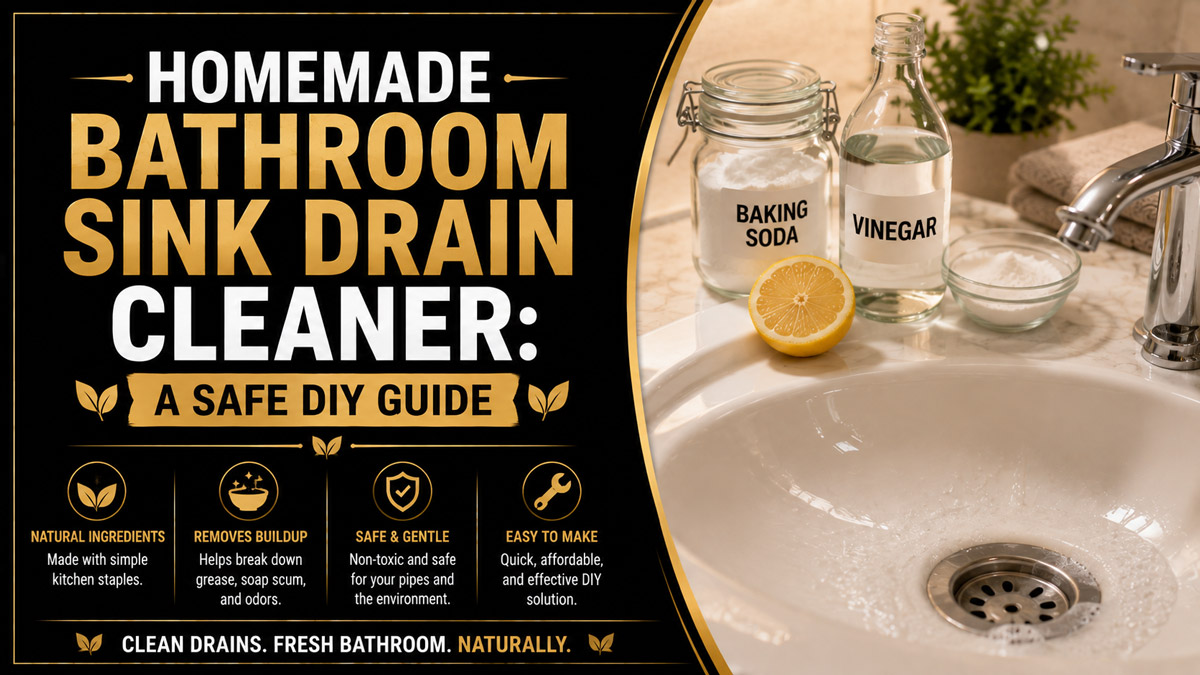
A homemade bathroom sink drain cleaner can loosen light soap, toothpaste, cosmetic residue, and biofilm, but it rarely removes a compact hair clog by itself. The most reliable process is to clean the stopper first, remove visible hair mechanically, apply the appropriate DIY solution, wait 15-30 minutes, and flush with hot water.
Key Facts at a Glance
- Bathroom sink clogs usually contain hair bound together by soap, toothpaste, skin oils, shaving residue, and cosmetics.
- Baking soda and vinegar create carbon dioxide bubbles, but the reaction does not generate enough pressure in an open drain to force out a solid clog.
- A plastic hair-removal tool usually works better than any homemade liquid when hair is the main obstruction.
- Use hot tap water rather than aggressively boiling water when plumbing materials, glued PVC joints, porcelain condition, or pipe age are uncertain.
- Never combine vinegar with bleach, ammonia, or leftover commercial drain cleaner.
- Stop repeating DIY treatments after two unsuccessful attempts because the obstruction probably needs mechanical removal.
Before You Start
Plan for 25-45 minutes, including preparation, treatment, and flushing. The job is usually easy when the drain is merely slow, but it becomes moderately difficult if you must remove the pop-up stopper, plunge the drain, or open the P-trap.
| Item | Typical quantity | Purpose | Approximate cost per use |
|---|---|---|---|
| Baking soda | 1/2 cup | Loosens residue and absorbs odor | $0.15-$0.35 |
| White vinegar | 1 cup | Reacts with baking soda and wets buildup | $0.20-$0.50 |
| Hot water | 4-8 cups | Softens residue and carries debris away | Under $0.10 |
| Dishwashing liquid | 1-2 tablespoons | Helps disperse oily cosmetic residue | $0.05-$0.15 |
| Plastic drain tool | 18-24 inches long | Pulls hair from the stopper and drain throat | $3-$10 reusable |
| Sink plunger | 4-6-inch cup | Moves soft obstructions with pressure | $6-$15 reusable |
Wear gloves and protect your eyes from splashes. Ventilate the room, especially if any cleaner was used recently.
Do not begin until you know what has already entered the drain. A homemade mixture should never be added on top of bleach, toilet cleaner, descaler, ammonia, or commercial drain opener. The CDC warns, “Never mix household bleach with any other cleaners or disinfectants.”
What Usually Clogs a Bathroom Sink?
A bathroom sink clog is usually a layered obstruction rather than one substance. Hair catches around the pop-up stopper or pivot rod, while toothpaste, soap, shaving cream, skin oil, and cosmetic products coat the strands and convert them into a dense plug.
| Clog material | Common signs | Best first response | DIY cleaner value |
|---|---|---|---|
| Loose hair near stopper | Water swirls slowly; visible strands | Remove stopper and pull hair | Low without mechanical removal |
| Soap and toothpaste film | Gradual slowing; white or gray coating | Hot water, dish soap, brushing | Moderate |
| Cosmetic or lotion residue | Waxy ring; oily drain walls | Dish soap and hot water | Moderate |
| Biofilm | Musty or sour odor; slippery coating | Stopper cleaning and detergent | Moderate |
| Compact hair plug | Water barely moves or stands | Plastic hair tool or P-trap cleaning | Very low |
| Foreign object | Sudden complete blockage | Mechanical retrieval | None |
| Mineral scale | Persistent narrowing in hard-water area | Plumbing-safe descaling method | Baking soda mixture has limited value |
| Deeper branch-line clog | Multiple fixtures drain slowly | Plumber or drain auger | None |
A sudden blockage often indicates a dropped object or displaced debris. Gradual slowing points more strongly to accumulated hair and product residue.
Check another fixture before treating the sink. When the sink, tub, or toilet in the same bathroom drains slowly, the problem may be beyond the sink trap.
Does Baking Soda and Vinegar Really Unclog a Sink?
Baking soda and vinegar can loosen soft residue, disturb biofilm, and help carry away material that has already been mechanically broken apart. They do not reliably dissolve human hair, remove a solid object, or create enough pressure to drive a dense blockage through the pipe.
Sodium bicarbonate is alkaline, while vinegar contains acetic acid. When combined, they produce water, sodium acetate, and carbon dioxide. The visible fizz looks powerful, but much of the acid and base neutralize each other during the reaction.
Poison Control specifically notes that bathroom drains are not airtight, so carbon dioxide escapes instead of creating substantial clog-clearing pressure. It also states that the combination is unlikely to melt a tough oily blockage.
That does not make the method useless. The liquid wets deposits, bubbling disturbs loose material, undissolved baking soda can contact residue near the drain opening, and the final hot-water flush transports softened debris. Results are best when the clog is light and water still drains.
The counterintuitive rule is simple: baking soda and vinegar work better after hair has been removed, not before.
Which Homemade Drain Cleaner Should You Use?
The best homemade bathroom sink drain cleaner depends on the material restricting the pipe. No single recipe is the best choice for hair, oily cosmetics, soap film, odor, and a completely blocked drain.
| Method | Exact mixture | Best use | Treatment time | Main limitation |
|---|---|---|---|---|
| Baking soda and vinegar | 1/2 cup soda plus 1 cup vinegar | Light film, odor, slow flow | 15-30 minutes | Does not dissolve dense hair |
| Dish soap and hot water | 1-2 tbsp soap plus 6 cups hot water | Lotion, shaving product, oily cosmetics | 10-15 minutes | Weak against solid debris |
| Baking soda paste | 1/2 cup soda plus enough water to form paste | Stopper and drain-mouth cleaning | 5-10 minutes | Cannot reach deep blockage |
| Salt and baking soda | 1/2 cup each, followed by hot water | Loose residue near drain throat | 20-30 minutes | Salt provides little deep-pipe abrasion |
| Hot water only | 4-8 cups in stages | Routine soap residue | 5 minutes | Cannot remove hair or objects |
| Mechanical cleaning | Drain tool, plunger, auger, or trap removal | Hair and solid clogs | 5-30 minutes | Requires physical access |
For most slow bathroom drains, begin with the pop-up stopper and a plastic hair tool. Use baking soda and vinegar only after visible material is removed.
For greasy lotion, petroleum jelly, hair oil, or makeup residue, dishwashing liquid is more appropriate because surfactants help suspend oily material in water. Bathroom clogs contain less cooking grease than kitchen clogs, so pouring a gallon of boiling water into the sink is unnecessary.
How to Make and Use a Homemade Bathroom Sink Cleaner
Step 1: Confirm That the Drain Still Accepts Water
Run the faucet for five seconds and observe the flow. Continue with a liquid treatment only when water drains, even if it takes several minutes.
Remove standing water with a cup, sponge, or wet vacuum before adding ingredients. A basin full of water dilutes the treatment and prevents baking soda from entering the drain throat.
If the water level does not fall at all, skip the homemade mixture. Use a hair-removal tool, plunger, hand auger, or P-trap cleaning instead.
Success checkpoint: The drain level drops without another fixture bubbling.
Common mistake: Pouring more liquid into a completely blocked pipe. The mixture remains in the basin and increases splash risk.
Step 2: Remove and Clean the Pop-Up Stopper
The pop-up stopper is often the actual clog location. Lift it out if the design permits, or loosen the pivot-rod retaining nut beneath the sink and withdraw the rod carefully.
Remove hair with gloved fingers, a paper towel, or a plastic drain-cleaning tool. Scrub the stopper with dish soap and an old toothbrush, paying attention to the underside, stem, seal, and overflow-facing surfaces.
Insert a plastic barbed tool into the drain opening, rotate it slightly, and pull upward. Repeat until the tool returns with little or no hair.
Place a bucket under the drain assembly before loosening components. Do not force a corroded retaining nut.
Success checkpoint: The stopper stem and drain throat are free of visible hair and slippery buildup.
Common mistake: Treating the pipe while leaving a hair-coated stopper in place. New residue catches on it immediately.
Step 3: Flush the Drain With Hot Water
Pour 2-4 cups of hot tap water slowly into the open drain. The preliminary flush warms the pipe, removes loose toothpaste, and confirms that the passage is open enough to receive the cleaner.
Use water near normal hot-tap temperature when pipe age or material is unknown. Very hot water is not automatically more effective, and repeated thermal stress offers no advantage against a hair plug.
The uploaded AI Overview recommends boiling water but also warns that it may damage vulnerable plastic plumbing. A safer universal instruction is to use hot water and reserve near-boiling water for plumbing known to tolerate it.
Success checkpoint: The water leaves the basin faster than it did before stopper cleaning.
Common mistake: Pouring a full kettle rapidly. Slow pouring controls splashing and lets heat contact the residue.
Step 4: Add 1/2 Cup of Baking Soda
Pour 1/2 cup of dry baking soda directly into the drain. Use a narrow measuring cup, folded paper guide, or funnel so the powder enters the pipe rather than coating the basin.
Push only loose powder past the drain lip with a nonmetal tool. Do not compact it into a hard plug.
For a removable stopper coated with residue, reserve 1 tablespoon of the baking soda. Mix it with a few drops of water, apply the paste to the stopper, scrub, and rinse.
Success checkpoint: Most of the baking soda sits inside the drain opening rather than around the sink.
Common mistake: Using excessive powder. More than 1/2 cup can clump in standing water and become another material that must be flushed away.
Step 5: Add 1 Cup of White Vinegar
Pour 1 cup of ordinary white vinegar into the drain gradually. Foam should rise around the drain opening for several seconds before subsiding.
Cover the drain loosely with the stopper or a folded cloth for 15-30 minutes. The goal is to keep liquid in contact with nearby residue, not to create dangerous pressure. Never seal the drain with a rigid airtight cap.
Use plain white vinegar rather than strongly colored vinegar because colored liquids can stain porous sink materials. Do not use vinegar when bleach, acid cleaner, or commercial drain opener may remain in the pipe.
Success checkpoint: Fizzing occurs without the mixture backing up across the basin.
Common mistake: Assuming vigorous bubbles prove the clog is dissolving. The bubbles mainly show that acid-base neutralization is occurring.
Step 6: Flush in Two Controlled Stages
Pour 3 cups of hot water slowly into the drain. Wait one minute, then add another 3 cups while watching the basin level.
The staged flush tests whether the blockage has moved before the full volume enters the pipe. It also gives softened material time to travel through the P-trap.
Run the faucet for 30-60 seconds after the second flush. Observe whether the stream drains directly, forms a brief shallow pool, or produces a rising basin level.
Success checkpoint: The sink accepts a full faucet stream without accumulating water.
Common mistake: Ending the test after pouring one cup. A partially open drain may accept a small quantity but fail under normal faucet flow.
What Should You Do When Hair Is the Main Clog?
Remove hair physically before applying any homemade cleaner. Human hair is chemically resistant to weak household acid-base mixtures, and the surrounding soap film may loosen without breaking the hair structure that holds the clog together.
Start with the stopper. Then use an inexpensive plastic barbed tool, positioning it along several sides of the drain opening. Pull slowly because a rapid motion can fling contaminated material.
When the blockage is deeper, seal the overflow opening with a damp cloth and use a small sink plunger. Add enough water to cover the plunger cup, position it over the drain, and make 10-15 controlled strokes. The sealed overflow matters because an open overflow allows pressure to escape.
Do not plunge after adding a caustic commercial cleaner. Splashback can expose skin and eyes to corrosive chemicals. Poison Control reports that drain cleaners may cause serious chemical burns and can splash back from a blocked drain.
A practical rule used in drain service is to remove what you can reach before trying to move what you cannot see.
How Do You Remove Oily Cosmetic and Soap Residue?
Use 1-2 tablespoons of grease-cutting dishwashing liquid followed by approximately 6 cups of hot water. Let the soap sit for 10 minutes, then flush in two stages.
This method suits shaving products, heavy conditioner, facial oils, makeup remover, body lotion, petroleum-based ointment, and similar residue. Dishwashing liquid contains surfactants that help water surround and transport oily deposits.
Do not use excessive detergent. Half a cup of dish soap creates foam, wastes product, and may leave additional residue when water flow is weak.
Combine this method with stopper brushing. Much of the visible black or gray sludge in a bathroom drain is biofilm mixed with personal-care products, and it often accumulates above the P-trap where a brush can reach it.
Can Salt Improve a Homemade Drain Cleaner?
Salt can help scrub an accessible stopper or drain lip, but it contributes little abrasive action inside a water-filled pipe. Once salt dissolves or settles in the P-trap, it cannot scour the pipe walls like a brush.
A baking soda and salt mixture may be used for a lightly coated drain:
- Combine 1/2 cup baking soda with 1/2 cup coarse salt.
- Pour the dry mixture into a drain that still flows.
- Let it sit for 20 minutes.
- Flush with 6 cups of hot water.
Do not choose this method for a compact clog. Salt does not dissolve hair, and claims that household quantities create meaningful osmotic shrinkage throughout a clog are overstated. The obstruction is wet continuously, which limits the practical drying effect.
Salt is most useful outside the pipe, where direct scrubbing provides measurable friction.
Is Homemade Drain Cleaner Safe for PVC Pipes?
Small quantities of baking soda, white vinegar, dish soap, and hot tap water are generally less aggressive than caustic commercial openers, but no recipe should be described as universally safe for every plumbing system.
Pipe condition matters. Old glued joints, thin plastic components, poorly supported traps, corrosion, existing cracks, and repeated exposure to extreme heat can create problems that the ingredients alone do not reveal.
Use hot tap water instead of boiling water when:
- The plumbing material is unknown.
- The drain assembly contains lightweight plastic.
- Joints have leaked previously.
- The sink is cracked or temperature-sensitive.
- Water is standing and could cause hot splashback.
- The home has older plumbing with uncertain repairs.
Commercial drain cleaners may contain strongly corrosive alkaline or acidic chemicals and can generate heat. Poison Control notes that many non-enzymatic drain cleaners contain concentrated corrosive substances and may cause severe burns when mishandled.
Never assume “natural” means risk-free. Vinegar can damage certain natural-stone surfaces around the sink, while hot liquid can burn skin regardless of its ingredients.
Is Homemade Drain Cleaner Safe for Septic Systems?
Occasional small amounts of baking soda, vinegar, or dish soap are different from pouring concentrated caustic drain opener into a septic system. However, septic owners should still prioritize mechanical clog removal and avoid unnecessary additives.
The EPA advises homeowners to avoid chemical drain openers for septic-connected drains and recommends boiling water or a drain snake instead. It also explains that toxins poured down drains can harm the organisms that treat household wastewater.
The EPA does not recommend routine bacteria or enzyme additives for domestic septic systems. Existing septic systems already contain microorganisms needed for treatment, and marketed additives may be ineffective or harmful.
Therefore, a fermented citrus “enzyme cleaner” should not be presented as essential septic maintenance. It may add liquid and organic matter without solving a physical hair clog.
For a septic-connected bathroom sink, use this order:
- Clean the stopper.
- Pull out hair.
- Use a plunger or drain snake.
- Flush with a moderate amount of hot water.
- Seek professional diagnosis when the clog returns.
Homemade, Commercial, or Mechanical: Which Works Best?
Mechanical cleaning is the best first choice for hair, foreign objects, and complete blockages. Homemade solutions are best for light residue and maintenance, while commercial chemical products require strict label compliance and carry greater exposure risks.
| Option | Best target | Typical time | Reusability | Main risk or limitation |
|---|---|---|---|---|
| Baking soda and vinegar | Light film and odor | 20-40 minutes | Ingredients repurchased | Weak against hair |
| Dish soap and hot water | Oily bathroom products | 10-15 minutes | Ingredients repurchased | Limited on solids |
| Plastic hair tool | Hair near drain opening | 5-10 minutes | Sometimes reusable | May not reach trap |
| Sink plunger | Soft localized blockage | 5-15 minutes | Years | Overflow must be sealed |
| Hand auger | Deeper hair or debris | 15-30 minutes | Years | Can damage finishes if mishandled |
| P-trap cleaning | Object or trap blockage | 20-45 minutes | No chemical needed | Leaks possible after reassembly |
| Commercial opener | Product-specific organic clog | 15 minutes to several hours | Single use | Corrosive exposure and mixing risk |
| Professional service | Recurring or branch-line clog | Varies | Not applicable | Higher upfront cost |
The EPA’s household hazardous-waste guidance lists a plunger or plumber’s snake as the alternative to drain cleaner.
Common Mistakes and How to Fix Them
Mixing Vinegar With Bleach or Other Cleaners
Never add vinegar when bleach or an unknown cleaner may be present. Household bleach can release dangerous gas when mixed with incompatible products, and the CDC advises people not to mix household cleaners.
Flush only when the product label permits it. When an accidental mixture produces a strong odor, coughing, chest tightness, eye irritation, or breathing difficulty, leave the area and seek emergency or poison-control guidance.
Repeating the Recipe Too Many Times
Limit a homemade treatment to two attempts. Repeating it three, four, or five times rarely changes a compact hair plug and may leave more material in the trap.
After the second failure, move to a drain tool, plunger, auger, or trap inspection.
Ignoring the Overflow Opening
A bathroom sink overflow channel can harbor sludge and odor even after the main drain improves. Clean the accessible opening with a narrow brush and mild dish-soap solution.
Do not force rigid metal tools into the overflow channel because they can scratch finishes or become lodged.
Pouring Boiling Water Into Standing Water
Boiling water can splash from a blocked basin and expose the user to burns. Remove standing water first and use a controlled hot-water flush only after confirming some flow.
Assuming Odor Always Means a Clog
A drain can smell even when it flows normally. Biofilm on the stopper, residue in the overflow channel, a dry trap in an unused sink, or a plumbing vent problem can produce odor.
Clean accessible surfaces first. When the smell resembles sewer gas and persists after running water, investigate the trap seal or plumbing system.
What If the Drain Is Still Slow?
A drain that remains slow after two treatments probably contains hair, a solid obstruction, mineral narrowing, or a problem beyond the drain opening. Stop adding ingredients and diagnose the location.
Use the following sequence:
- Remove the stopper and inspect the pivot rod.
- Insert a plastic hair tool.
- Seal the overflow and plunge the sink.
- Place a bucket under the P-trap.
- Remove and clean the trap if you are comfortable doing so.
- Use a hand auger beyond the trap.
- Call a plumber when several fixtures are affected.
A clog in the P-trap often causes rapid basin filling followed by very slow drainage. A deeper branch-line obstruction may produce gurgling, air bubbles, or slow drainage in another fixture.
When reinstalling a slip-joint P-trap, align the washers correctly and hand-tighten the nuts before applying a small additional turn. Excessive force can deform plastic washers and create leaks.
How Much Does a DIY Drain Treatment Cost?
A basic homemade treatment usually costs approximately $0.40-$1.00, depending on local ingredient prices and quantities. Mechanical tools cost more initially but offer better value for recurring hair clogs because they can be reused.
| Approach | Initial cost | Cost per later use | Expected useful life |
|---|---|---|---|
| Baking soda and vinegar | $0.40-$1.00 | $0.40-$1.00 | One treatment |
| Dish soap and hot water | $0.10-$0.30 | $0.10-$0.30 | One treatment |
| Plastic drain tool | $3-$10 | Near $0 | Several uses, design dependent |
| Sink plunger | $6-$15 | Near $0 | Several years |
| Hand auger | $20-$50 | Near $0 | Several years |
| Professional drain service | Varies by market | New fee per visit | One service visit |
Avoid unsupported success-rate claims such as a universal 70-80 percent effectiveness figure. Success depends on clog composition, location, pipe geometry, water flow, tool access, and whether the stopper has been cleaned.
How Can You Prevent Another Bathroom Sink Clog?
Preventive maintenance works best when it removes hair before residue binds it into a plug. A two-minute weekly routine is more effective than pouring reactive mixtures into an already obstructed drain.
Wipe loose hair from the basin instead of rinsing it away. Clean the stopper every two to four weeks in bathrooms used for shaving, hair styling, or heavy cosmetic routines.
Run warm water for 20-30 seconds after brushing teeth or using thick products. The extra water dilutes toothpaste and carries suspended residue through the trap.
Use a removable drain screen when the sink design allows it. A screen must be cleaned frequently because a blocked screen slows flow and encourages residue to settle.
Once a month, remove the stopper, clean it with dish soap, brush the drain throat, and flush with several cups of hot water. Baking soda and vinegar are optional, not mandatory.
When Should You Call a Plumber?
Call a plumber when multiple fixtures drain slowly, the sink repeatedly clogs within days, sewage odor persists, water appears in another fixture, the pipe leaks, or a hand auger cannot pass the obstruction.
Recurring problems may involve:
- A clogged bathroom branch line
- Improper drain slope
- Corroded or narrowed metal pipe
- A damaged pop-up assembly
- A venting problem
- An object lodged beyond the trap
- Root intrusion in a building drain
- A failing or overloaded septic system
Stop DIY work immediately when wastewater backs up from another fixture. That pattern suggests a wider drainage problem rather than residue confined to the bathroom sink.
Frequently Asked Questions
Can baking soda and vinegar dissolve hair?
Baking soda and vinegar do not reliably dissolve a bathroom hair clog. The reaction produces bubbles, but the mixture is too weak to break down a compact bundle of human hair effectively. Pull the hair out with a stopper-cleaning tool, plastic drain strip, plunger, or auger before treating the remaining soap film.
How long should a homemade cleaner sit in the drain?
Let baking soda and vinegar remain in a slow drain for 15-30 minutes. A longer overnight treatment does not necessarily improve performance because the acid and base react quickly and become largely neutralized. After the waiting period, flush with 4-8 cups of hot water in controlled stages.
Can I use baking powder instead of baking soda?
Baking powder is not an equivalent replacement. Baking powder contains sodium bicarbonate plus dry acids and starch, so its formula is designed for baking rather than drain treatment. The starch adds unnecessary material to the pipe. Use plain sodium bicarbonate labeled as baking soda.
Will vinegar damage a porcelain bathroom sink?
Diluted white vinegar is generally tolerated by intact glazed porcelain during brief cleaning, but it should not remain on natural stone, damaged grout, specialty coatings, or unknown decorative surfaces. Pour it directly into the drain, wipe spills promptly, rinse the basin, and follow the sink manufacturer’s care instructions.
Why does my bathroom sink smell even though it drains?
Odor with normal drainage often comes from biofilm on the stopper, residue inside the overflow channel, or a dry P-trap in a rarely used sink. Remove and scrub the stopper first. Run water to refill the trap. Persistent sewer odor may indicate a seal, vent, or drain-system problem.
Can I pour homemade drain cleaner down the sink weekly?
Weekly baking soda and vinegar treatments are usually unnecessary when the sink drains normally. Prevention should focus on catching hair, cleaning the stopper, limiting thick products, and flushing residue with warm water. Frequent treatments consume ingredients but cannot correct a poorly aligned stopper, narrowing pipe, or recurring branch-line obstruction.
The Bottom Line
The most dependable homemade bathroom sink drain cleaner is not a single chemical recipe. It is a process: remove the stopper, extract hair, identify the residue, use either baking soda and vinegar or dish soap in measured quantities, wait 15-30 minutes, and flush with hot water.
Use baking soda and vinegar for light film and odor, not as a substitute for mechanical hair removal. Avoid unsafe chemical combinations, limit the treatment to two attempts, and move to a plunger, drain tool, P-trap cleaning, or professional diagnosis when normal flow does not return.