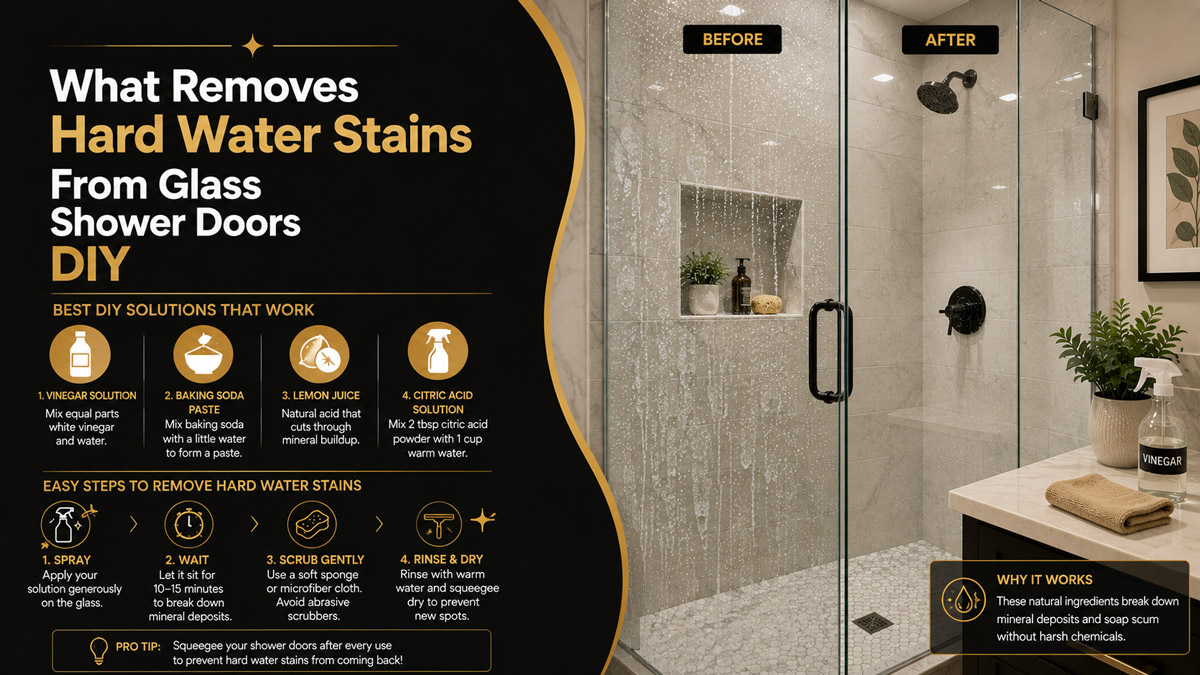
When determining exactly what removes hard water stains from glass shower doors DIY, homeowners will find that a 1:1 mixture of hot white vinegar and heavy-duty dish soap is the most effective solution. The acetic acid chemically breaks the bonds of alkaline mineral deposits, while the soap’s surfactants dissolve the protective layer of soap scum covering the stains.
Key Facts / At a Glance
- Hard water stains are highly alkaline deposits of calcium carbonate and magnesium that form a chemical bond with the silica in glass.
- DIY removal relies on acid-base neutralization, requiring mild acids with a pH of 2.0 to 3.0 to dissolve the mineral bonds.
- A 30-minute wet dwell time is mandatory; if an acidic solution dries on the glass, the chemical neutralization process stops immediately.
- Mixing acidic DIY cleaners like vinegar with bleach produces lethal chlorine gas and must be strictly avoided.
- Permanent glass etching mimics the cloudy appearance of hard water stains but involves physical pitting of the glass that chemical cleaners cannot fix.
Which DIY Solutions Best Remove Hard Water Stains?
White vinegar mixed with dish soap is the most effective DIY solution for removing hard water stains, though baking soda and lemon juice offer viable alternatives for specific situations. The correct agent depends on the severity of the mineral buildup and your tolerance for scrubbing.
| DIY Method | Best Used For | Chemical Mechanism | Pros | Cons | Est. Cost |
| White Vinegar & Dish Soap | Heavy, layered mineral crusts | Acetic acid (pH 2.4) neutralizes alkaline calcium. | Safest for glass; breaks bonds hands-free. | Strong, lingering acetic odor. | $2 – $4 |
| Baking Soda Paste | Textured or frosted glass | Mild mechanical abrasion physically lifts deposits. | Excellent agitation; zero toxic fumes. | Requires intense physical scrubbing. | $1 – $2 |
| Lemon Juice Rub | Light, recent water spots | Citric acid (pH 2.3) acts as a mild solvent. | Pleasant scent; completely natural. | Expensive; requires fresh lemons. | $3 – $5 |
| Hydrogen Peroxide & Dawn | Mixed soap scum and mildew | Oxidization loosens organic and inorganic bonds. | Brightens grout lines simultaneously. | Less effective on pure calcium deposits. | $3 – $5 |
Quick Verdicts:
- For the Budget-Conscious: Straight, heated white vinegar in a spray bottle offers the highest acidity-to-cost ratio.
- For the Time-Crunched: Keep a pre-mixed spray bottle of vinegar and Dawn in the shower and apply it immediately after turning off the water.
- For the Toughest Buildup: Create a thick paste using baking soda and vinegar, utilizing both chemical neutralization and mechanical abrasion.
Before You Start Your DIY Glass Cleaning Project
Before applying any acids to your shower, you must prepare the environment and protect surrounding materials. Natural stone floors, such as marble, travertine, and limestone, are highly alkaline; acidic runoff from glass cleaners will instantly etch and permanently ruin these stone surfaces.
- Total Time Required: 45 minutes (15 minutes active scrubbing, 30 minutes passive dwell time).
- Difficulty: Beginner.
- Total Cost: $2 to $5 per application.
- Materials Needed:
- 2 cups distilled white vinegar (5% acidity).
- 2 cups blue Dawn dish soap (contains optimal surfactants).
- 1 standard 32oz plastic spray bottle.
- 1 roll of heavy-duty paper towels.
- 1 non-scratch nylon scrubbing sponge (e.g., Scotch-Brite Non-Scratch).
- 1 silicone-blade squeegee.
- Old towels (to protect stone floors or metal tracks).
How Do You Deep Clean the Glass Shower Door?
To successfully execute this DIY cleaning process, you must strictly control the chemical dwell time and avoid aggressive abrasives. Follow these steps in exact order to safely dissolve calcium carbonate without permanently scratching your tempered glass doors.
Step 1: Heat and Mix the Cleaning Solution
Heating white vinegar in the microwave increases the kinetic energy of the acetic acid, significantly accelerating its ability to break down mineral deposits. Pour 2 cups of white vinegar into a microwave-safe bowl and heat for 60 to 90 seconds until it reaches approximately 120°F (warm to the touch, not boiling). Carefully pour the hot vinegar into your spray bottle, then add 2 cups of blue Dawn dish soap. Shake gently to integrate the liquids without creating excessive foam.
- Success Checkpoint: The mixture should have a thick, gel-like consistency that clings to the sides of the bottle.
- Common Mistake: Boiling the vinegar. Boiling evaporates the water content rapidly, concentrating the acid to a point where the fumes become highly irritating to the eyes and lungs.
Step 2: Apply and Anchor the Solution to the Glass
Applying the gel mixture heavily to the glass requires a strategy to fight gravity, ensuring the acid stays in contact with the stains. Spray the mixture generously over a 2×2 foot section of the glass. For severe, crusty buildup, immediately press a single layer of dry paper towels directly against the wet glass. Spray the outside of the paper towels until they are saturated. This “paper towel anchor” technique traps the moisture against the glass and prevents the solution from sliding down into the drain.
- Success Checkpoint: The paper towels should stick flat against the glass like papier-mâché, with no dry spots visible.
- Common Mistake: Spraying the entire enclosure at once. Working in zones larger than 2×2 feet allows the perimeter to dry out before you can scrub it.
Step 3: Allow for Chemical Dwell Time
Chemical neutralization requires a strict 30-minute passive dwell time to convert hardened calcium carbonate into a water-soluble salt. Leave the bathroom and let the acid work. Check the glass at the 15-minute mark; if the edges of the paper towels or the bare glass are drying out, mist them lightly with warm water or more vinegar. The chemical reaction ceases entirely the moment the surface dries.
- Success Checkpoint: The glass remains slick, wet, and slightly sudsy for the full 30 minutes.
- Common Mistake: Wiping the glass after 5 minutes out of impatience. Premature wiping forces you to rely on mechanical scrubbing rather than chemical breakdown.
Step 4: Agitate the Mineral Bonds
Mechanically agitating the dissolved minerals lifts them away from the microscopic pores of the glass. Remove and discard the paper towels. Using a wet, non-scratch nylon sponge, scrub the glass in tight, overlapping circles. Apply moderate pressure, focusing heavily on the lower third of the door where water naturally pools and evaporates. You should feel the texture of the glass transition from a rough, sandpaper-like resistance to a smooth glide as the minerals detach.
- Success Checkpoint: The sponge glides silently and smoothly across the glass surface without catching or grinding.
- Common Mistake: Using standard kitchen sponges with green, heavy-duty scouring pads. The aluminum oxide in heavy-duty pads will permanently scratch tempered shower glass.
Step 5: Rinse Thoroughly and Extract Moisture
Rinsing with hot water removes both the dissolved mineral salts and the heavy surfactant residue left by the dish soap. Use a detachable showerhead or a bucket to flood the glass with the hottest water your tap provides. Immediately follow with a silicone squeegee, pulling horizontally from the top corner downward in slightly overlapping strokes. Wipe the squeegee blade with a dry microfiber cloth between every pass to prevent streak marks.
- Success Checkpoint: The glass is crystal clear, squeaks when rubbed with a clean finger, and shows no milky white streaks.
- Common Mistake: Letting the rinse water air dry. Allowing tap water to evaporate will immediately deposit a fresh layer of hard water minerals on your newly cleaned door.
Common DIY Cleaning Mistakes and How to Fix Them
Even with the right chemical solutions, incorrect application techniques can damage your bathroom fixtures or render the cleaning process useless.
- Using Steel Wool or Pumice: Coarse abrasives permanently scratch tempered glass. If you have already scratched the glass, chemical cleaners cannot fix the cloudy appearance. You must hire a professional glass restorer to polish the surface with cerium oxide.
- Ignoring the Aluminum Frame: Acidic solutions like vinegar and lemon juice rapidly oxidize and erode unsealed aluminum shower frames, leaving black or white pitted marks. Always tape off metal frames with painter’s tape, or immediately wipe off any acidic drips with a damp cloth.
- Mixing Vinegar and Bleach: Attempting to kill mold and remove hard water simultaneously by mixing bleach and vinegar creates toxic chlorine gas. If you have accidentally mixed these, evacuate the bathroom immediately, turn on the exhaust fan, and do not return until the fumes have completely dissipated.
How Can You Tell If Your Glass Is Etched vs. Stained?
Stained glass holds mineral deposits on its surface, whereas etched glass has suffered permanent microscopic pitting due to prolonged exposure to alkaline water and silicates. To diagnose your door, perform the Vinegar Drop Test.
Soak a cotton ball in pure white vinegar and tape it to a cloudy section of the glass for 15 minutes. Remove the cotton ball and wipe the area clean. If the spot is crystal clear, you are dealing with hard water stains that can be chemically removed. If the spot remains cloudy, opaque, and rough to the touch, the glass is permanently etched. Etching cannot be removed with DIY cleaners; the glass must be mechanically polished or entirely replaced.
Frequently Asked Questions
Can you use WD-40 to remove hard water stains from shower doors?
WD-40 can temporarily hide hard water stains by filling the microscopic mineral pores with penetrating oil, restoring visual clarity. However, it does not chemically dissolve the calcium deposits. Once the oil washes away, the stains will immediately reappear, and the oil residue creates a dangerous slipping hazard on shower floors.
Do magic erasers scratch glass shower doors?
Magic Erasers are made of melamine foam, which acts as a micro-abrasive equivalent to 3000-grit sandpaper. While they can effectively scrub away light soap scum without visible damage, pressing too hard or using them dry on tempered glass can leave fine, permanent micro-scratches that trap future mineral deposits.
How do you prevent hard water stains from coming back?
Preventing hard water stains requires creating a hydrophobic barrier so water beads up and rolls off rather than evaporating in place. After deep cleaning, apply a commercial polymer glass sealant (like Rain-X) or a ceramic coating. Additionally, use a squeegee to extract water from the glass after every shower.
Is CLR better than vinegar for hard water stains?
CLR (Calcium, Lime, and Rust remover) contains stronger, engineered acids (lactic and gluconic acid) that dissolve severe mineral bonds much faster than household vinegar. CLR is superior for extreme, multi-year mineral crusts, but vinegar is safer for weekly maintenance, cheaper, and less toxic to inhale in enclosed shower spaces.
To maintain the results achieved by determining what removes hard water stains from glass shower doors DIY, integrate a 30-second daily squeegee routine into your shower habits. Stopping the water from evaporating on the silica surface is the only guaranteed way to prevent chemical bonding.