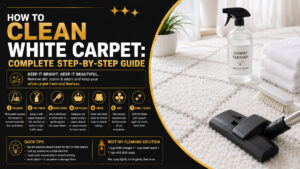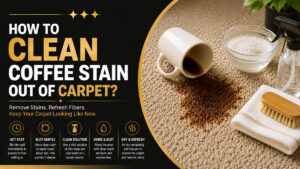
Baking soda can clean carpet in a limited sense: it can freshen surface odors and absorb small amounts of moisture or oil from synthetic fibers. Baking soda cannot remove deeply embedded pet urine, protein stains, dye stains, or greasy soil by itself, and excessive powder can leave residue or burden a vacuum filter.
Key Facts at a Glance
- Baking soda is sodium bicarbonate, NaHCO₃, with a mildly alkaline pH of about 8.3 in water.
- A dry application is most useful for light odors and shallow surface soil on synthetic carpet.
- Baking soda does not contain enzymes, surfactants, or oxidizers, so it cannot digest proteins or dissolve every stain.
- A thin layer left for 15-30 minutes is usually enough for refreshing; overnight contact is not automatically more effective.
- Wool, silk, viscose, jute, antique rugs, and damp carpet require greater caution or professional care.
- Vinegar and baking soda fizz because they react chemically, but the fizz does not turn the mixture into a powerful carpet detergent.
Can Baking Soda Clean Carpet?
Baking soda can deodorize and lightly refresh carpet, but it is not a complete carpet-cleaning product. The useful distinction is between removing loose soil, reducing odor, absorbing shallow residue, and chemically removing a stain, because baking soda performs only the first three tasks under limited conditions.
A carpet is a layered system. The face fibers hold visible soil, the primary and secondary backing stabilize the structure, and the pad beneath can retain liquid. Dry baking soda mainly contacts the upper fibers. It rarely reaches the full depth of a liquid spill without adding moisture, and adding moisture creates a separate risk of over-wetting.
The Carpet and Rug Institute advises consumers to “blot, don’t rub” when treating spills. That instruction matters here: scrubbing baking soda into a wet stain can spread liquid, abrade fibers, and drive residue toward the backing instead of removing the contaminant.
Baking soda is inexpensive, widely available, and low in toxicity when used as directed. Its limitations are equally important. It does not replace an enzyme cleaner for urine, a detergent for oily soil, an oxygen product for some organic discoloration, or hot-water extraction for heavy embedded soil.
What Does Baking Soda Actually Do?
Baking soda works through mild alkalinity, physical adsorption, and drying rather than through enzymatic stain destruction. Sodium bicarbonate can alter the local chemical environment and bind some odor compounds, while its dry particles contact shallow moisture and oily residue at the carpet surface.
The common explanation that baking soda neutralizes all acidic odors is too broad. Household odors are mixtures of volatile compounds, and baking soda will not reliably neutralize every compound in that mixture. A dry powder can reduce the perception of an odor without removing its source.
Baking soda also does not behave like a microscopic sponge in the same way as a high-capacity absorbent. It may take up limited surface moisture, but carpet fibers, backing, and padding can hold much more liquid than a household sprinkle can capture. The powder becomes less useful as depth and volume increase.
Baking soda’s capabilities and limits
| Carpet problem | Baking soda action | Typical result | Better treatment |
|---|---|---|---|
| Light stale odor | Surface odor reduction | Noticeable improvement in 15-60 minutes | Source removal and ventilation |
| Dry body oil on synthetic fibers | Limited surface absorption | Slightly less greasy texture | Carpet detergent or extraction |
| Fresh water spill | Absorbs a small surface amount | Minor moisture reduction | White towels and air movement |
| Pet urine in padding | Contacts upper fibers only | Odor may return within days | Enzyme treatment or extraction |
| Red wine or food dye | No reliable dye removal | Stain remains | Compatible stain-specific product |
| Dried mud | Adds mild powder friction | Loose particles may release | Vacuuming followed by detergent |
| Mold or mildew odor | Does not kill growth | Temporary masking or reduction | Moisture correction and remediation |
Is Baking Soda Safe for Every Carpet?
Baking soda is generally lower risk on colorfast nylon and polypropylene than on wool, silk, viscose, jute, or antique rugs, but no fiber is automatically safe without a label and spot test. Carpet manufacturers can impose warranty conditions that homemade powders and wet mixtures may violate.
Synthetic fibers are commonly made from nylon, polyester, or polypropylene. These fibers tolerate a wider range of routine maintenance products, although strong alkalinity, dyes, heat, and aggressive brushing can still cause discoloration or texture change.
Wool is a protein fiber with a scaly surface and a naturally different moisture and pH response. The WoolSafe Organisation recommends products tested for wool and advises caution with unsuitable chemicals. A small amount of dry powder may not instantly destroy wool, but repeated alkaline exposure, vigorous agitation, or residue can alter appearance and soil behavior.
Viscose and rayon rugs are especially vulnerable to water marks, browning, pile distortion, and fiber weakening. Silk, jute, sisal, hand-knotted rugs, and antique textiles should not receive an improvised baking soda treatment without a textile-care professional’s recommendation.
Fiber-specific decision guide
| Carpet or rug material | Dry baking soda | Wet vinegar mixture | Safer default |
|---|---|---|---|
| Nylon, colorfast | Patch test first | Limited spot use | Manufacturer-approved cleaner |
| Polyester, colorfast | Usually lower risk | Patch test and minimal moisture | Low-residue detergent |
| Polypropylene | Usually lower risk | Avoid saturation | Synthetic-carpet cleaner |
| Wool | Avoid routine use | Avoid | WoolSafe-approved product |
| Viscose or rayon | Avoid | Avoid | Professional rug cleaner |
| Silk, jute, antique | Avoid | Avoid | Specialist textile treatment |
How Should You Use Baking Soda on Carpet?
Use baking soda as a thin, dry deodorizing treatment on a clean, dry, colorfast synthetic carpet. The process takes about 45 minutes for a light refresh, or several hours when odor requires longer contact, but success depends more on removing the odor source and vacuuming completely than on using a large quantity.
Before You Start
| Requirement | Typical specification |
|---|---|
| Carpet area | One 10-by-12-foot bedroom |
| Baking soda quantity | 1-2 cups for a thin overall layer |
| Local spot quantity | 1-3 tablespoons per square foot |
| Contact time | 15-30 minutes for light odor, 2-8 hours for stale odor |
| Direct cost | About $1-$3 per 1-pound box in typical U.S. retail pricing |
| Tools | Vacuum, fine sieve, white towels, soft brush, fan |
| Prerequisite | Dry, colorfast synthetic carpet and a successful hidden-area test |
Do not use enough powder to turn the carpet white. A visible, light dusting is the target. Thick piles and shag rugs need less powder than many users expect because particles settle between fibers and become difficult to extract.
Step 1: Remove Loose Soil
Vacuum slowly before applying baking soda, using overlapping passes in two directions. Remove hair, grit, crumbs, and loose dust first, because powder mixed with debris is more likely to settle into the pile and overload the vacuum later.
For a standard room, make one slow forward pass and one cross-directional pass. Empty a bagless canister when it reaches the manufacturer’s fill line, and inspect the filter before adding any fine powder.
You will know this step worked when: loose debris no longer appears in the vacuum path and the pile recovers after brushing.
Common mistake: applying baking soda over visible grit. Powder cannot improve a surface that still contains abrasive soil.
Step 2: Apply a Thin Layer
Sift baking soda through a kitchen sieve or fine-mesh shaker instead of pouring directly from the box. Apply roughly 1-2 cups across a 10-by-12-foot room, reducing the amount for low-pile carpet and increasing coverage only slightly for dense, high-pile synthetic carpet.
Keep powder away from carpet edges, floor vents, electronic equipment, and areas where children or pets can disturb it. Do not mix essential oil into the powder. Oil droplets can create a sticky residue that attracts soil and may stain porous fibers.
You will know this step worked when: the carpet has a light, even dusting rather than visible mounds or white patches.
Common mistake: using a heavy layer to treat a strong odor. More powder usually means more residue, not deeper source removal.
Step 3: Allow Controlled Dwell Time
Leave baking soda undisturbed for 15-30 minutes for a routine refresh and up to 2-8 hours for a dry, stale odor. Overnight contact is optional, not mandatory, and a long dwell period cannot compensate for urine, milk, vomit, or another liquid that has reached the pad.
Keep the room ventilated but avoid blowing powder throughout the home. Close the room to pets and children, especially when animals may lick or inhale disturbed dust.
You will know this step worked when: the powder remains dry and the room odor is reduced before vacuuming.
Common mistake: leaving powder on a damp carpet. Moisture turns loose particles into residue that can bind to fibers and backing.
Step 4: Remove the Powder Safely
Vacuum slowly with several overlapping passes, then check the carpet from different angles for white residue. Use the vacuum manufacturer’s instructions as the final authority, because some machines prohibit fine powders while others use sealed filtration designed to contain them.
A bagged vacuum with a fresh bag is generally a more conservative choice than a small bagless stick vacuum. Do not repeatedly run a motorized brush over thick deposits. If the machine becomes hot, loses suction, smells dusty, or shows a clogged filter, stop and clean it according to the manual.
You will know this step worked when: no powder transfers to a dark cloth rubbed lightly across the pile.
Common mistake: vacuuming a large powder deposit with a full or poorly filtered machine.
Can Baking Soda Damage a Vacuum Cleaner?
Baking soda can stress or clog some vacuum cleaners because its fine particles load filters and seals, but the claim that one use will inevitably destroy every motor is inaccurate. Risk increases with thick applications, bagless designs, poor filtration, clogged filters, and repeated use.
Fine powder can pass through or rapidly block parts of a vacuum’s filtration path. A clogged filter reduces airflow, increases heat, and can trigger loss of suction. A sealed HEPA machine may contain powder better than an unsealed model, but filtration performance does not make unlimited powder safe.
The safest practice is to use a minimal amount, choose a vacuum approved for fine dust, and inspect filters afterward. A household vacuum is not a substitute for a commercial dust extractor, and a shop vacuum is not automatically suitable unless its filter is rated for fine particulate.
| Vacuum type | Powder risk | Practical rule | Follow-up |
|---|---|---|---|
| Bagged upright | Moderate | Use a thin layer only | Replace or inspect bag |
| Bagless upright | Moderate-high | Avoid heavy applications | Clean pre-motor filter |
| Cordless stick | High for thick deposits | Use very little or skip | Follow manual restrictions |
| Sealed HEPA vacuum | Lower, not zero | Confirm fine-powder approval | Inspect seals and filter |
| Shop vacuum with fine filter | Variable | Install rated cartridge filter | Never use an open coarse filter |
Should You Mix Baking Soda With Vinegar?
Mixing baking soda with vinegar creates carbon dioxide bubbles, water, and sodium acetate, but the reaction neutralizes much of both ingredients and does not create a superior carpet cleaner. The fizz may loosen superficial soil mechanically, yet it has no enzyme action and can over-wet carpet backing.
Use vinegar and baking soda separately when possible. For a fresh spill, blot first, apply a small amount of a compatible cleaner, blot again, and dry the area. If vinegar is used, dilute it and test a hidden section because acidic solutions can affect dyes, backing, or odor perception.
The fizz is visually persuasive but chemically short-lived. Once the reaction ends, the remaining liquid can carry dissolved soil deeper into the carpet, especially when a user sprays heavily and rubs the spot.
Never combine vinegar with chlorine bleach or products containing bleach. That combination can release dangerous chlorine gas.
Which Carpet Problems Need Something Else?
Baking soda is appropriate for light surface odor, while detergents, enzymes, oxygen-based products, and professional extraction address different contaminant types. Choosing the treatment by soil chemistry prevents the common failure of using a deodorizer where actual removal is required.
Treatment comparison
| Method | Best target | Typical contact or service time | Main limitation |
|---|---|---|---|
| Dry baking soda | Light surface odor | 15 minutes-8 hours | Does not remove deep contamination |
| Low-residue detergent | Food, body oil, tracked soil | 5-15 minutes | Requires correct dilution and extraction |
| Enzyme cleaner | Urine, vomit, milk, organic residue | 10 minutes-24 hours | Must reach the contaminated depth |
| Oxygen-based stain product | Some coffee and organic stains | 5-30 minutes | Can alter sensitive dyes |
| Hot-water extraction | Embedded soil and broad contamination | 2-6 hours including drying | Costs more and requires moisture control |
| Professional rug cleaning | Wool, silk, viscose, antique textiles | 1-14 days depending on service | Higher cost and transport may apply |
Does baking soda remove pet urine?
Baking soda may reduce the smell on the carpet surface, but it does not reliably remove pet urine from padding or subfloor. Urine contains compounds that can crystallize as they dry, and a surface powder cannot reach every contaminated layer.
Use a urine-specific enzyme product according to its label, applying enough liquid to reach the contamination without creating uncontrolled saturation. Blot or extract as directed, ventilate the room, and repeat only if the product instructions permit it.
If the odor returns when humidity rises, the source is probably deeper than the face fibers. A professional may need ultraviolet inspection, moisture measurement, pad replacement, subfloor sealing, or hot-water extraction.
Does baking soda remove coffee or red wine?
Baking soda alone usually does not remove coffee or red wine discoloration because these spills contain soluble dyes and organic compounds that require liquid treatment. Blotting speed, carpet dye stability, and the product’s chemistry determine the result.
For coffee, blot immediately with white towels and use a manufacturer-approved carpet detergent. For red wine, avoid aggressive scrubbing and avoid heat until the stain has been treated. Some oxygen products can help colorfast synthetic carpet, but they require a hidden-area test and exact label dilution.
What Mistakes Cause Carpet Damage?
The most damaging baking soda errors are excessive application, wet-powder mixing, aggressive scrubbing, unsafe fiber selection, and incomplete removal. Each mistake increases either residue, abrasion, dye migration, backing moisture, or vacuum stress.
- Applying powder to saturated carpet: remove liquid with towels or extraction first; do not form a paste.
- Scrubbing a wet stain: blot from the outside toward the center to limit spread.
- Treating wool or viscose casually: use a fiber-appropriate product or a specialist.
- Adding essential oils: avoid oily residues that can attract new soil.
- Repeating deodorizing treatments: investigate the source when odor returns.
- Using a clogged vacuum: stop when suction drops or the motor heats up.
A white halo usually indicates excess powder, incomplete vacuuming, or moisture migration. A gray film may indicate soil suspended in residue and then redeposited as the area dried.
How Do You Fix Powder Residue?
Remove baking soda residue by dry vacuuming first, then using minimal moisture only when the residue remains. Do not saturate the area or pour vinegar directly onto the carpet, because dissolving powder without extracting the liquid can move residue into the backing.
Use a soft brush to loosen dry deposits, vacuum with a suitable filter, and inspect the pile. If residue persists, lightly mist clean water over a small section and immediately extract with a wet vacuum or press with white towels, repeating in controlled areas.
A dilute vinegar solution may dissolve alkaline residue on some synthetic carpets, but it is not a universal fix. Test first, use the smallest workable amount, and rinse or extract according to the carpet manufacturer’s guidance.
What Should You Use for Different Situations?
The correct method depends on the contaminant, carpet fiber, moisture depth, and available extraction equipment. Baking soda is the lowest-cost choice for a dry surface odor, but it becomes a poor choice when the problem involves liquid, protein, dye, grease, or delicate textiles.
| Situation | First action | Baking soda role | Recommended next step |
|---|---|---|---|
| Musty room odor, dry carpet | Ventilate and vacuum | Optional light refresh | Find moisture source |
| Fresh pet urine | Blot and contain liquid | Skip as primary treatment | Enzyme cleaner |
| Dried pet odor | Identify affected area | Surface deodorizing only | Deep enzyme application or extraction |
| Greasy food spill | Lift solids, blot oil | Limited surface absorption | Low-residue detergent |
| Red wine | Blot immediately | Not a stain remover | Colorfast stain treatment |
| Wool area rug | Read care label | Usually avoid | WoolSafe specialist |
| Wet carpet after leak | Extract water | Do not apply powder | Drying equipment and moisture check |
What Do the Options Cost?
A baking soda refresh typically costs $1-$5 in materials, while a professional carpet cleaning visit commonly costs about $100-$300 for an average home in the United States. Actual pricing varies with room count, location, furniture, stain severity, travel fees, and whether pad or subfloor work is required.
| Option | Typical household cost | Typical time | Appropriate scope |
|---|---|---|---|
| Baking soda refresh | $1-$5 | 45 minutes-8 hours | Light surface odor |
| Spot detergent | $5-$15 | 15-45 minutes | Small synthetic-carpet spill |
| Enzyme treatment | $8-$25 | 30 minutes-24 hours | Organic liquid contamination |
| Rental extractor | $30-$80 per day | 2-6 hours | Several rooms |
| Professional extraction | $100-$300 per visit | 2-6 hours | Embedded soil and odor |
| Rug specialist | $75-$300 per rug | 3 days-2 weeks | Wool, silk, viscose, antique rugs |
Drying time matters more than the product price after a wet treatment. Typical synthetic carpet may dry in 4-12 hours with ventilation, while dense padding, high humidity, or poor airflow can extend drying beyond 24 hours.
When Is Professional Cleaning the Better Choice?
Professional cleaning is the better choice when odor reaches the pad, carpet remains damp for more than 24 hours, staining covers a large area, or the textile is valuable or fragile. A trained technician can identify fiber type, measure moisture, select a compatible chemistry, and extract more solution than household towels can hold.
The Institute of Inspection Cleaning and Restoration Certification, or IICRC, treats carpet cleaning as a system involving inspection, identification, cleaning-agent selection, agitation, and extraction. That framework explains why a dry powder cannot solve every carpet problem: the treatment must match both the contaminant and the carpet construction.
Book an assessment when odor returns repeatedly, liquid has reached the tack strip, backing separates, mold is visible, or a pet has repeatedly used the same location. Deodorizing without correcting the source can delay necessary drying or structural repair.
FAQ
Can I leave baking soda on carpet overnight?
You can leave a thin layer on a dry, colorfast synthetic carpet for several hours, but overnight contact is not necessary for most light odors. Keep people and pets away, avoid damp areas, and vacuum thoroughly afterward. Longer contact will not remove urine from padding or dissolve permanent stains.
How often can I use baking soda on carpet?
Use baking soda occasionally rather than weekly, especially when the vacuum has a small filter or the carpet has a dense pile. A practical limit is once every one to two months for a dry synthetic carpet refresh. Repeated odor means the source needs investigation, not increasingly large powder applications.
Can baking soda remove smoke smell from carpet?
Baking soda may reduce a mild surface smoke odor, but it cannot remove smoke residues embedded in carpet backing, walls, upholstery, or HVAC components. Vacuuming, ventilation, washing nearby surfaces, and professional low-moisture or hot-water cleaning provide more complete remediation when smoke exposure is substantial.
Is baking soda safe around pets?
Small amounts of fully removed baking soda are generally less hazardous than many concentrated cleaning chemicals, but pets should not walk through, lick, or inhale loose powder. Keep animals out during application and vacuuming, and contact a veterinarian or poison-control service if a pet ingests a significant quantity.
Why does carpet smell worse after baking soda?
Carpet can smell worse after baking soda when the powder masks a deeper odor temporarily, mixes with moisture, or leaves residue that holds soil. Returning pet urine, mildew, or sour-food odors indicate contamination below the surface. Stop repeating the dry treatment and locate the moisture or organic source.
Can I use baking soda in a carpet shampooer?
Do not put dry baking soda into a carpet shampooer unless the manufacturer explicitly permits it. Powder can clog pumps, filters, hoses, or recovery systems, while undissolved particles may remain in the carpet. Use the machine’s approved low-foam solution and rinse or extract according to its instructions.
The Bottom Line
Can baking soda clean carpet? Yes, but only as a limited dry deodorizer and surface refresher. Use a thin layer on dry, colorfast synthetic carpet, leave it for 15-30 minutes or several hours, and vacuum it with a machine that can safely handle fine powder.
Baking soda is not a substitute for stain chemistry, enzyme treatment, moisture extraction, or professional rug care. For pet urine, saturated carpet, recurring odors, visible mold, wool, silk, viscose, jute, and valuable rugs, choose a targeted or professional method instead.