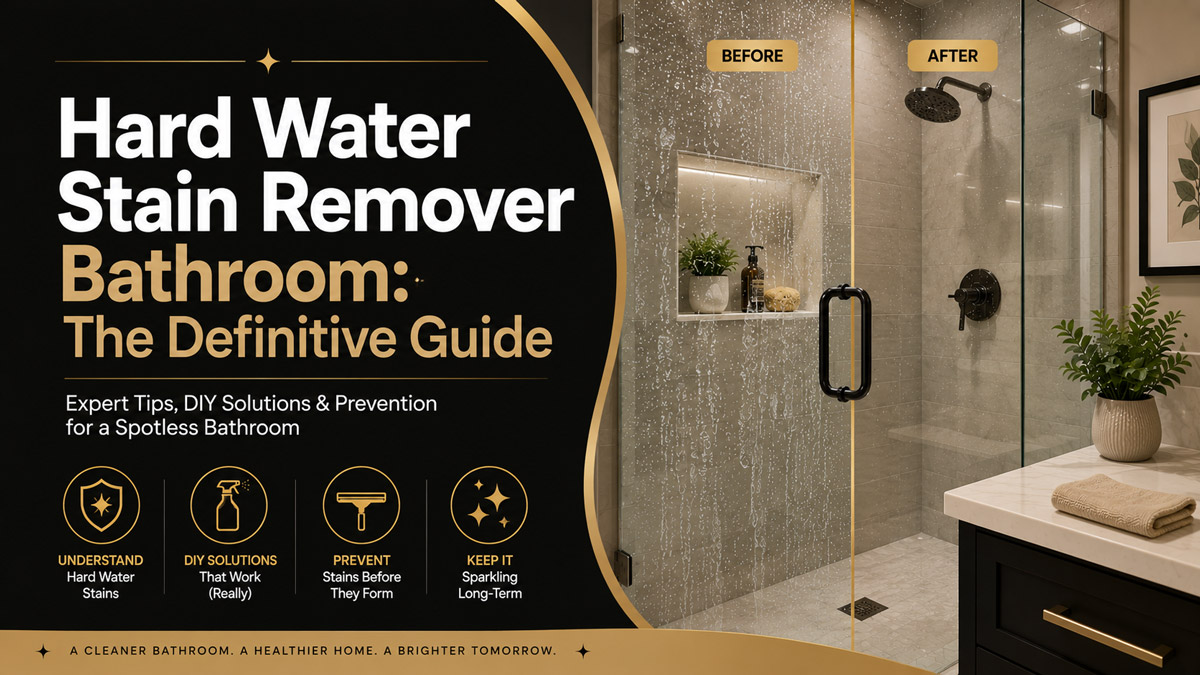
A hard water stain remover for the bathroom is a specialized chemical agent or physical abrasive designed to break down crusty mineral deposits left by mineral-dense water. These removers use acid-base neutralization to dissolve calcium carbonate and magnesium sulfate bonds, converting hard chalky residue into water-soluble salts. Choosing the correct hard water stain remover bathroom product prevents permanent etching on glass, ruined metal finishes, and etched natural stone.
Key Facts / At a Glance
- Chemical Mechanism: Acidic removers donate hydrogen ions to alkaline limescale, converting solid calcium carbonate into soluble calcium acetate or citrate and carbon dioxide.
- Optimal pH Level: Effective chemical mineral removers require a pH level between 1.0 (heavy duty) and 3.0 (mild maintenance).
- Dwell Time is Critical: Chemical removers require 3 to 15 minutes of uninterrupted contact time to dissolve molecular bonds; immediate wiping stops the chemical reaction prematurely.
- Never Mix Cleaners: Combining acidic hard water removers with chlorinated bleach releases lethal chlorine gas instantly.
- Surface Exclusions: Never use acidic removers on marble, travertine, or granite; the acid will dissolve the calcium within the stone, causing permanent white chemical burns called “etching.”
How Does a Hard Water Stain Remover Work?
Hard water stain removers work on the principle of acid-base neutralization. Bathroom limescale is highly alkaline, consisting primarily of calcium carbonate and magnesium sulfate left behind when water evaporates. Acidic hard water removers (containing acetic, citric, sulfamic, or phosphoric acid) donate hydrogen ions to the calcium carbonate crust.
This chemical reaction severs the mineral bonds and converts the solid crust into soluble salts, liquid water, and carbon dioxide gas (which causes the visible fizzing). Once the solid mineral structure is converted into a soluble salt, you can effortlessly wipe it away with a microfiber cloth. Physical removers skip the chemistry entirely, using mild friction to mechanically shear the mineral bonds from the substrate without scratching the underlying surface.
What Are the Main Types of Bathroom Removers?
Bathroom hard water stain removers fall into four distinct categories based on their active mechanisms. Selecting the wrong type for your surface guarantees either chemical damage or wasted effort.
1. Natural Acids (DIY Household)
Natural acids utilize household ingredients like distilled white vinegar (acetic acid) or lemon juice (citric acid). Standard kitchen vinegar contains 5% acidity, giving it a pH of roughly 2.5. Natural acids are non-toxic and lack harsh fumes, making them ideal for light, weekly maintenance. However, acetic acid reacts slowly; removing moderate buildup requires 15 to 60 minutes of contact time.
2. Commercial Spray and Foam Cleaners
Commercial foam cleaners utilize engineered acids combined with clinging surfactants. The addition of surfactants allows the acid to grip vertical shower doors and tiled walls without immediately running down the drain. These formulas act fast (30 to 60 seconds for light stains) and are generally safe for standard acrylics, ceramic, and chrome, but often contain strong chemical perfumes.
3. Abrasive Creams and Powders
Abrasive creams blend mild chemical acids (like oxalic acid) with finely milled physical minerals (like feldspar or silica). This dual-action approach provides mechanical scrubbing power alongside chemical breakdown. Abrasive pastes excel at cutting through layered combinations of hard water scale and oily soap scum. Because they rely on friction, they can scratch delicate fiberglass, plastic, or high-gloss acrylic tubs if applied with heavy pressure.
4. Mechanical Removers (Pumice and Erasers)
Mechanical removers are 100% chemical-free solid blocks (pumice stone) or melamine foam pads that physically shear off hard scale. Pumice stones possess a specific Mohs hardness level that is harder than calcium buildup but softer than vitreous porcelain. You must only use pumice wet, and it is strictly reserved for porcelain toilet bowls; using pumice on fiberglass, glass, or chrome will cause catastrophic, irreversible scratching.
Hard Water Stain Remover Comparison
| Remover Type | Active Mechanism | Typical pH | Best Surface Application | Unsafe Surfaces | Contact Time |
| White Vinegar | Acetic Acid (5%) | 2.5 | Chrome fixtures, daily glass maintenance | Natural stone, unsealed grout | 15–60 mins |
| Commercial Foams | Lactic / Citric Acid + Surfactants | 2.0–3.0 | Vertical shower glass, acrylic tubs, ceramic tile | Brass, bronze, painted surfaces | 1–3 mins |
| Heavy-Duty Liquids | Sulfamic / Phosphoric Acid | 1.0–1.5 | Severe toilet scale, thick shower floor crusts | Chrome, aluminum, fiberglass | 3–5 mins |
| Abrasive Creams | Oxalic Acid + Feldspar | 3.5–4.5 | Baked-on glass scale, layered soap scum | High-gloss plastics, acrylics | Immediate scrub |
| Pumice Stones | Physical Abrasion | N/A | Vitreous porcelain toilet bowls | Glass, chrome, fiberglass, tile | Immediate scrub |
How to Apply Hard Water Stain Removers
Executing the correct removal procedure is just as important as the chemical you choose. Misapplying an acid leads to evaporation, which halts the chemical reaction and leaves the stain intact.
Step 1: General Surfaces (Glass, Tile, and Acrylic)
Glass and tile require sustained chemical contact to dissolve broad areas of mineral spotting.
- Apply the Acid: Spray your chosen commercial foam or acidic liquid directly onto the dry stained area. Applying acid to a wet surface dilutes the formula.
- Implement Dwell Time: Let the formula sit untouched for 10 to 15 minutes. For vertical glass, press a vinegar-saturated paper towel flat against the pane to prevent the liquid from running off.
- Agitate: Gently scrub using a non-scratch nylon sponge in tight, overlapping circular motions.
- Rinse and Buff: Rinse completely with warm water. You will know it worked when the water sheets off the glass smoothly. Buff entirely dry with a microfiber cloth immediately to prevent new tap water minerals from drying into fresh spots.
Step 2: Metal Faucets and Fixtures
Faucets feature complex geometry and delicate metal plating (like brushed nickel or chrome) that can degrade under prolonged acid exposure.
- Create an Evaporation Lock: Soak a clean rag in undiluted white vinegar. Wrap it tightly around the faucet base and tap aerator. Wrap the wet rag in plastic cling wrap to trap the moisture and force the acid into the calcium crust.
- Monitor the Dwell Time: Leave the wrap in place for exactly 15 to 30 minutes. Do not leave acids on custom metal finishes overnight, as it will strip the plating.
- Detail the Crevices: Remove the wrap and scrub the tight seams using an old, soft-bristled toothbrush.
- Neutralize and Polish: Rinse thoroughly with water to neutralize the remaining acid, then buff to a high shine with a dry microfiber towel.
Step 3: Toilet Bowls
Toilet bowls develop thick, stubborn rings at the waterline because the minerals are constantly submerged and compounding.
- Drop the Water Line: Force a plunger rapidly down the drain hole 5 to 6 times to push the water level below the mineral ring. Acid poured into a full bowl dilutes instantly and loses efficacy.
- Saturate the Ring: Pour 1 to 2 cups of heavy-duty toilet cleaner or straight vinegar directly onto the exposed stains. For upper rim stains, pack vinegar-soaked toilet paper under the lip.
- Wait: Allow the chemical to sit for 2 to 3 hours. For severe, multi-year buildup, leave it overnight.
- Mechanically Shear: Scrub vigorously with a stiff nylon toilet brush. If a thick ring remains, wet a pumice stone and gently erase the ring using back-and-forth strokes, then flush to rinse.
Which Hard Water Stain Remover Should You Choose?
Selecting a hard water stain remover depends entirely on the severity of the scale and the delicacy of your bathroom surfaces.
1. CLR Brilliant Bath Cleaner — Best for Vertical Shower Glass
CLR Brilliant Bath Cleaner utilizes an EPA Safer Choice-designated formula that balances effective acid-base neutralization with safety for daily household use.
- Key Specs: Foaming trigger, lactic acid base, bleach-free, ~3.0 pH.
- Why it wins: The powerful foaming action clings to vertical shower doors and tiled walls better than watery alternatives, maximizing the dwell time necessary to break down calcium without producing harsh chemical fumes.
- Honest Drawback: CLR Brilliant Bath struggles against heavy, multi-year baked-on scale inside toilet bowls; it is formulated for surface-level glass and tile maintenance, not heavy restoration.
- Choose this if: You need a weekly maintenance spray for glass shower enclosures and acrylic tubs.
2. Lime-A-Way Bathroom Cleaner — Best for Severe, Neglected Buildup
Lime-A-Way is an aggressive, fast-acting chemical agent engineered specifically to eradicate thick calcium crusts, lime scale, and orange rust stains.
- Key Specs: Sulfamic acid base, highly acidic (~1.0 pH), fast-acting liquid.
- Why it wins: When dealing with restore-to-clean projects—such as moving into a neglected rental property—Lime-A-Way breaks the molecular bonds of ancient, layered calcium crusts in under three minutes.
- Honest Drawback: The aggressive acidity easily damages delicate metal finishes like oil-rubbed bronze, brushed nickel, and aluminum if left on for more than a minute. It also produces strong fumes requiring excellent ventilation.
- Choose this if: You are tackling severely neglected porcelain basin areas, heavy toilet rings, or thick crusts on ceramic tile.
3. Lysol Limescale Remover — Best for Quick Cleaning and Sanitizing
Lysol Limescale Remover Trigger Spray offers a versatile hybrid formula that cuts through tough bathroom mineral buildup while actively sanitizing surfaces.
- Key Specs: Citric acid base, kills 99.9% of viruses/bacteria, works in 30 seconds.
- Why it wins: It eliminates the need for a two-step cleaning process by dissolving moderate limescale and disinfecting the bathroom simultaneously without relying on bleach.
- Honest Drawback: Because it balances disinfection with mineral removal, it lacks the raw acidic bite required to dissolve severe, millimeter-thick mineral deposits.
- Choose this if: You are a busy parent who wants to wipe down, descale, and sanitize a bathroom sink or tub in a single quick pass.
What Are the Most Common Cleaning Mistakes?
Homeowners frequently cause permanent chemical damage to their bathrooms by misunderstanding how acidic removers interact with different materials.
- Mixing Vinegar and Baking Soda Too Early: Combining acetic acid (vinegar) and sodium bicarbonate (baking soda) in a spray bottle creates a spectacular fizzing reaction. However, this reaction is the two chemicals completely neutralizing each other into sodium acetate, water, and carbon dioxide. The resulting liquid is essentially weak saltwater that possesses zero ability to break down calcium carbonate. Apply acid first to dissolve scale; use baking soda later strictly as a separate physical scrubbing paste.
- Using Acids on Natural Stone: Applying vinegar, lemon juice, CLR, or any acidic hard water stain remover to marble, travertine, or limestone will instantly etch the stone. The acid attacks the calcium makeup of the stone itself, leaving permanent, dull white chemical burn scars that require expensive professional diamond-pad polishing to repair.
- Scrubbing with Steel Wool: Using metal steel wool or aggressive green scouring pads on glass shower doors or chrome fixtures leaves thousands of micro-scratches. These invisible abrasions permanently ruin the high-gloss shine and create microscopic grooves that allow future hard water minerals to bond even tighter to the surface.
- Cross-Contaminating Acids with Bleach: Never apply acidic hard water removers over standard chlorinated bleach (or vice versa). The chemical reaction between acid and sodium hypochlorite instantly releases toxic chlorine gas, which causes severe respiratory damage and chemical burns to the lungs.
Hard Water Stain Troubleshooting Guide
- The stain turned into a white gummy goo but won’t wash away.This occurs when the acid successfully breaks down the calcium, but the dissolved minerals get trapped inside heavy layers of body oils and soap scum. Acid does not cut grease. Wash the area thoroughly with a grease-cutting dish soap first to strip away the organic lipid barrier, rinse it, and then reapply your acid treatment to target the exposed minerals.
- The stain is gone, but the glass door still looks permanently cloudy.This indicates “glass etching.” When highly alkaline hard water spots bake onto glass for years, the minerals permanently corrode and alter the molecular structure of the glass itself. Perform the White Vinegar Test: soak a paper towel in vinegar, press it to the cloudy spot for 30 minutes, and wipe. If the glass remains cloudy, the damage is permanent structural etching, not a stain. The glass requires professional polishing or replacement.
- The metal faucet turned dark gray or black after cleaning.The acidic hard water stain remover was left on a sensitive, thinly plated finish (like brushed nickel, brass, or oil-rubbed bronze) for too long. The acid chemically stripped the protective coating and oxidized the raw metal underneath. This damage is irreversible and requires replacing the fixture. Always spot-test a hidden area at the back of the faucet for 60 seconds before full application.
Frequently Asked Questions (FAQ)
Does WD-40 remove hard water stains from bathroom glass?
No, WD-40 is a water displacement solvent and lubricant. It does not possess the acidic pH required to chemically break down calcium carbonate bonds. While spraying WD-40 on glass may temporarily mask the white chalky appearance by coating it in oil, the hard water stain remains underneath and will reappear once the oil washes away.
How do I tell the difference between hard water stains and soap scum?
Hard water stains feel rough, chalky, and crusty, resembling tiny white droplets. Soap scum feels greasy, waxy, and creates a broad, opaque film. To test, scratch the stain lightly with your fingernail. If a waxy film peels up under your nail, it is soap scum. If it feels like scraping a rock, it is hard water scale.
Can I use a razor blade to remove hard water stains on shower doors?
Yes, a new, single-edge razor blade can mechanically shear thick mineral deposits off flat, tempered glass. You must lubricate the glass with soapy water first, keep the blade at a shallow 45-degree angle, and push forward in straight lines. Never drag the blade backward, as trapped mineral grit will scratch the glass.
How can I prevent hard water stains from coming back?
The most effective prevention is physical removal of tap water before it evaporates. Keep a rubber squeegee inside the shower and wipe down the glass and tile walls immediately after every use. For longer-term protection, apply an automotive hydrophobic ceramic coating or polymer sealant to the dry glass, which prevents minerals from adhering to the microscopic pores of the surface.