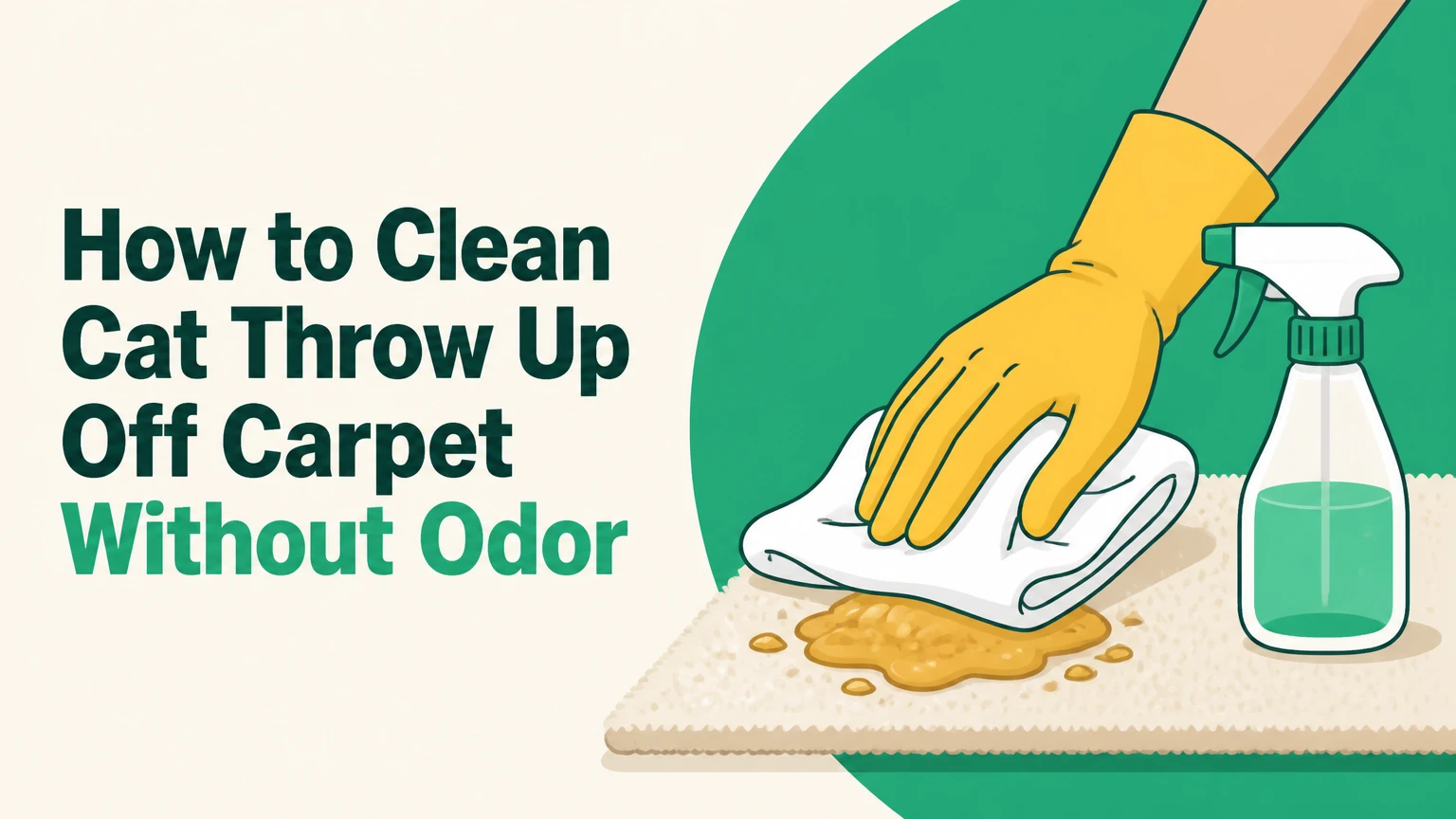
To clean cat throw up off carpet, lift solids with a spoon or cardboard, blot liquid without rubbing, apply a carpet-safe enzyme cleaner, follow its labeled dwell time, rinse-extract residue, and dry the area fully. Fresh cleanup usually takes 15-30 minutes of active work, while complete drying takes 12-24 hours.
Key Facts at a Glance
Remove solid vomit before applying liquid, because rubbing spreads food particles into carpet fibers.
Enzyme cleaners work best on organic residue, but the cleaner must remain wet for the label-specified contact time.
Treat 1-2 inches beyond the visible mark because liquid can spread below the carpet surface.
Never use hydrogen peroxide, vinegar, or chlorine bleach on wool, silk, sisal, or dark carpet without testing first.
Fresh cleanup costs about $3-$25 for household supplies or a ready-to-use pet cleaner.
A returning odor usually means residue reached the carpet backing, pad, or subfloor.
Why Cat Vomit Stains and Smells
Cat vomit is a mixture of partially digested food, saliva, gastric fluid, mucus, bile, and sometimes hair. The visible color may come from food ingredients or dyes, while the odor comes from organic residue that remains in carpet pile, backing, or padding.
The acidic fluid can discolor some fibers, but acid alone does not explain every persistent stain. Food proteins, fats, and pigments can cling to synthetic fibers and carpet backing after the liquid evaporates. A surface spray may remove the visible mark while leaving odor-producing material underneath.
Enzyme carpet cleaners are useful because they help break down organic residues rather than merely adding fragrance. However, enzyme products are not magic solvents: they require sufficient contact, moisture, and time, and they do not reverse fiber bleaching or repair a damaged carpet backing.
What should you gather before cleaning?
Gather disposable gloves, a spoon or dull scraper, white paper towels or white microfiber cloths, a sealable waste bag, clean water, and a carpet-labeled enzyme cleaner. A wet-dry vacuum or carpet spot extractor is helpful when the vomit was liquid, soaked through, or left a broad damp area.
Avoid colored towels because dye can transfer into wet carpet. Keep cats and children away until the treated area is dry and the product label permits normal contact.
Step-by-Step: How to Clean Cat Throw Up off Carpet
The six-step process takes about 15-30 minutes of active work and 12-24 hours to dry. The factor that most determines success is complete removal of organic residue from the carpet pile and backing without over-wetting the pad.
Before You Start
| Item | Typical amount or specification | Typical cost |
|---|---|---|
| Disposable nitrile gloves | 1 pair | $0.25-$1 |
| Spoon, cardboard, or dull knife | 1 tool | $0-$5 |
| White paper towels or microfiber cloths | 10-20 towels or 3-5 cloths | $2-$8 |
| Carpet enzyme cleaner | 8-16 fluid ounces for one spot | $10-$25 per 32-ounce bottle |
| Lukewarm rinse water | 1-3 cups for spot rinsing | Under $1 |
| Wet-dry vacuum or spot extractor | 1 machine, optional | $0-$30 rental per day |
Check the carpet fiber before applying any chemical. Nylon and solution-dyed polypropylene generally tolerate labeled pet-stain products better than wool, silk, viscose, sisal, jute, or an unknown antique rug.
Step 1: Lift the Solid Material
Put on gloves and lift the solid vomit from the carpet with a spoon, a piece of stiff cardboard, or a dull butter knife. Start at the outer edge and move inward, using a second piece of cardboard to support wet material instead of pressing it into the pile.
Place the waste in a sealed bag. Hairballs may be cohesive, but partially dissolved food can break apart easily, so use several shallow passes rather than one forceful scrape.
Success checkpoint: The carpet surface contains no visible chunks, hair, or loose food particles.
Common mistake: Do not scrub or drag the tool across the spot. Friction can spread liquid, distort the pile, and push solids toward the backing.
Step 2: Blot the Remaining Liquid
Fold a white towel into a thick pad and press it straight down over the damp area for 5-10 seconds. Lift the towel, replace the wet section with a dry one, and repeat until little or no moisture transfers.
Work from the outside toward the center. Do not twist the towel, rub sideways, or pour water onto a fresh stain before removing the original liquid. If the spot is large, divide it into sections roughly 6 inches across so pressure remains controlled.
Success checkpoint: A fresh towel stays nearly clean and only slightly damp after firm vertical blotting.
Common mistake: Do not step directly on a thin paper towel. A thick folded towel distributes pressure better and reduces the chance of forcing liquid into the pad.
Step 3: Apply a Carpet-Safe Enzyme Cleaner
Read the product label, then apply enough enzyme cleaner to wet the visible stain and the surrounding 1-2 inches. The goal is contact with the contaminated fibers, not a light mist that evaporates before reaching the residue.
For a small 4-inch spot, begin with approximately 2-4 fluid ounces, then add more only if the carpet remains visibly contaminated or the label calls for saturation. Avoid flooding the area, especially on carpet installed over wood, laminate, or a thick cushion.
Test the product first on an inconspicuous corner. Wait for the test area to dry and check for color change, texture change, or a visible ring.
Success checkpoint: The entire affected area is evenly damp, including the perimeter, without liquid pooling beneath the carpet.
Common mistake: Do not combine enzyme cleaner with bleach, ammonia, disinfectant, vinegar, or another stain remover. Chemical mixtures can deactivate the biological formula or create hazardous vapors.
Step 4: Allow the Cleaner to Dwell
Keep the treated area wet for the contact time printed on the bottle, commonly 15-60 minutes. A dried stain may need a longer labeled treatment or a second application after the first round, but extending dwell time beyond the instructions does not guarantee better results.
For dried vomit, gently loosen surface residue with a damp white cloth before applying the enzyme product. Covering a small treated area with loose plastic can slow evaporation during the labeled dwell period, but do not seal a large saturated patch for many hours because trapped moisture can damage backing or encourage microbial growth.
Success checkpoint: The cleaner has stayed wet for the full label-specified contact period and the residue is visibly softened.
Common mistake: Do not let an enzyme product dry immediately. Once dry, its active treatment largely stops, so a thin mist often underperforms a controlled, evenly wet application.
Step 5: Rinse and Extract the Residue
Blot the softened material with clean white towels. Then use a wet-dry vacuum or spot extractor to remove both residue and cleaner, applying a small amount of lukewarm water as a rinse.
Use the least water that removes the product. Make two or three slow extraction passes, followed by additional dry passes with no added water. Excess detergent left in carpet can attract soil and create a gray or sticky spot.
If you use a rental carpet machine, follow its upholstery or spot-cleaning instructions rather than assuming its strongest setting is appropriate. Never use a regular household vacuum on wet carpet.
Success checkpoint: The carpet feels damp rather than saturated, and no slippery or sticky residue remains when you touch the pile with a clean glove.
Common mistake: Do not skip extraction after heavily applying cleaner. Enzymes can digest organic residue, but the loosened material still has to leave the carpet.
Step 6: Dry and Restore the Carpet Pile
Press dry towels into the area, then direct a fan across the carpet and increase room ventilation. Keep foot traffic off the spot until it is dry throughout, not merely dry on top.
Drying commonly takes 12-24 hours, although dense padding, high humidity, and heavy application can extend that period. Press a dry towel into the spot after several hours; if the towel feels cool or shows moisture, continue drying.
Vacuum only after the carpet is fully dry. Use the normal floor setting or a gentle brush attachment to lift flattened fibers without roughening the treated area.
Success checkpoint: The spot feels the same temperature and texture as nearby carpet, with no damp smell when pressed.
Common mistake: Do not use a hair dryer, radiator, or high-heat steam setting. Heat can accelerate color setting and may damage synthetic fibers, adhesive, or carpet backing.
Which Cleaning Method Should You Use?
A labeled enzyme cleaner is the best general option for cat vomit on synthetic carpet because it targets organic residue and odor. Plain water extraction is useful for rinsing, while vinegar and peroxide have narrower applications and higher compatibility risks.
| Method | Typical cost | Contact or drying time | Suitable use | Main limitation |
|---|---|---|---|---|
| Ready-to-use enzyme cleaner | $10-$25 per 32 oz | 15-60 minutes, then 12-24 hours drying | Fresh or dried organic residue on synthetic carpet | Requires label contact time and extraction |
| Water-only blot and extraction | Under $5 | 10-20 minutes, then 6-18 hours drying | Very fresh, small spills after solids are removed | May leave proteins and odor behind |
| White vinegar solution | $2-$5 | 10-20 minutes, then 2-8 hours drying | Limited deodorizing on colorfast synthetic carpet | Does not reliably digest protein residue |
| 3% hydrogen peroxide treatment | $3-$8 | 5-15 minutes, then 6-12 hours drying | Light, colorfast synthetic carpet with a stubborn pigment | Can bleach dark or natural fibers |
| Professional extraction | $100-$300 typical minimum visit | 1-3 hours, then 12-36 hours drying | Deep contamination, recurring odor, large areas | Higher cost and possible over-wetting |
Is vinegar and baking soda safe for cat vomit?
Vinegar and baking soda are not the preferred treatment for cat vomit because the combination largely neutralizes itself and does not reliably remove proteins from carpet backing. Vinegar may reduce some odors on colorfast synthetic fibers, but its acidity can affect wool, natural dyes, and carpet finishes.
Sprinkling dry baking soda over a wet vomit stain can absorb surface moisture, but it does not extract contamination from the pad. Baking soda can also leave powder that is difficult to remove from dense pile. If used for a mild residual odor, apply it only after the carpet is dry, leave it for 15-30 minutes, and vacuum with a functioning household vacuum.
Can hydrogen peroxide remove a yellow stain?
Three-percent hydrogen peroxide can lighten some food and bile pigments on light, colorfast synthetic carpet, but it can also lighten the carpet itself. Peroxide is an oxidizer, not a substitute for removing the organic residue that caused the stain.
Test a hidden area and wait until it dries before proceeding. Apply a small amount to a white cloth rather than pouring it directly onto carpet, dab the pigment, and rinse-extract afterward. Do not use peroxide on wool, silk, sisal, dark carpet, antique rugs, or fibers containing unknown dyes without professional advice.
Carpet Material Changes the Safe Method
Carpet material determines whether an acidic household solution, oxidizer, or enzyme product is acceptable. Synthetic nylon and polypropylene are usually more forgiving, while wool, silk, viscose, sisal, and jute require low-moisture, fiber-specific treatment.
| Carpet or rug material | Safer first response | Avoid without testing | Escalation threshold |
|---|---|---|---|
| Nylon | Blot, labeled enzyme cleaner, rinse extraction | Peroxide on dark colors | Odor remains after two treatments |
| Polypropylene | Blot, enzyme cleaner, controlled extraction | High heat and excessive detergent | Saturation reaches pad |
| Polyester | Blot, mild labeled cleaner, extraction | Aggressive brushing and strong oxidizers | Dye transfers to white towel |
| Wool | Lift, blot, pH-neutral wool product | Vinegar, peroxide, bleach, flooding | Any color bleed or fuzzy pile |
| Sisal or jute | Dry lift, minimal moisture, rug specialist | Saturation and alkaline cleaners | Water ring or edge browning appears |
| Silk or viscose | Isolate area and call a specialist | Home chemical treatment | Any visible wetting or color change |
How do you clean dried cat vomit from carpet?
Dried cat vomit requires controlled rehydration before extraction. Place a barely damp white cloth over the residue for 5-10 minutes, lift softened material with a spoon, blot the loosened liquid, and then apply a compatible enzyme cleaner according to its label.
Do not scrape aggressively because dried food can bind to individual fibers. Do not soak dried vomit immediately, since rapid saturation can carry dissolved pigment into the backing and enlarge the stain. On wool, viscose, sisal, or a valuable rug, skip home rehydration and contact a cleaner experienced with that fiber.
Troubleshooting Persistent Stains and Odors
Why does the odor return in humid weather?
A returning odor usually indicates that vomit residue remains in the carpet backing, pad, or subfloor. Humid air increases moisture around that residue, allowing odor molecules to become noticeable again even when the pile looks clean.
Inspect the area from several angles and compare it with adjacent carpet. Apply a compatible enzyme cleaner deeply enough to reach the contamination, but do not saturate wood flooring or unprotected seams. Use extraction and strong airflow afterward. If odor persists after two properly timed treatments, professional subsurface extraction or partial pad replacement may be more effective than repeated surface spraying.
How do you remove a yellow or orange ring?
A yellow or orange ring commonly comes from bile, food pigment, or a cleaning halo created when dissolved material dries at the perimeter. First remove remaining residue with a carpet-safe enzyme cleaner and extract the area evenly beyond the visible ring.
If the carpet is light-colored and synthetic, an oxygen-based product may help with residual pigment after compatibility testing. Apply the treatment across the entire affected section rather than only the center, because spot-only application can create a new light or dark boundary. Never use chlorine bleach on carpet.
What if the carpet feels sticky after cleaning?
A sticky carpet usually contains cleaner residue that was not adequately rinsed and extracted. Lightly rinse with small amounts of clean lukewarm water, extract slowly, and repeat until the pile no longer feels slick.
Avoid adding dish soap to compensate. Dishwashing liquid is designed for hard-surface rinsing and can leave surfactant behind in carpet, where it attracts soil. If the spot becomes gray again within days, residue remains or the carpet has been damaged by repeated treatment.
What if the smell remains after extraction?
Persistent smell after extraction can come from the pad, tack strip, subfloor, or an overlooked second vomit spot. Use your nose at floor level, inspect nearby furniture and baseboards, and check whether the smell intensifies when the area is humid.
A professional cleaner may use a moisture meter, subsurface treatment, or controlled pad access. Typical professional carpet cleaning costs range from $100-$300 for a minimum visit, while isolated odor treatment may cost more when furniture moving, pad replacement, or subfloor sealing is required.
Common Mistakes and Recovery Actions
| Mistake | What it causes | Recovery action | When to escalate |
|---|---|---|---|
| Scrubbing sideways | Spread, fuzzing, crushed pile | Stop friction, blot vertically, reapply compatible cleaner | Visible fiber distortion |
| Using heat first | Faster pigment setting or backing damage | Cool the area, enzyme-treat if compatible, extract | Ring remains after one treatment |
| Flooding the spot | Wet pad, wicking, subfloor risk | Extract repeatedly, use fans, inspect underside if possible | Dampness lasts over 24-48 hours |
| Mixing cleaners | Deactivation or chemical fumes | Ventilate, remove residue with water extraction | Irritation, strong fumes, or discoloration |
| Vacuuming wet solids | Contaminated vacuum and spread | Empty and clean vacuum, return to manual removal | Vomit entered the machine |
| Applying only fragrance | Hidden residue and recurring odor | Use residue-removing treatment and extraction | Odor returns in humidity |
Three practitioner rules prevent most repeat failures:
- Treat the contamination footprint, not only the visible color. Liquid often travels below the pile farther than the stain appears on top.
- Rinse after chemical action. A successful enzyme treatment still leaves dissolved material that must be physically removed.
- Judge dryness by compression, not appearance. Carpet can look dry while the pad remains cool and damp underneath.
How Much Time and Money Does Cleanup Take?
Fresh cleanup usually requires 15-30 minutes of active work, while dried or deep stains may require 30-90 minutes and a second treatment. Complete drying commonly takes 12-24 hours for a small controlled spot and up to 36 hours when padding becomes wet.
| Situation | Active labor | Drying period | Typical DIY cost | Likely professional cost |
|---|---|---|---|---|
| Fresh 3-6 inch spot | 15-25 minutes | 6-12 hours | $3-$15 | $100-$200 minimum visit |
| Dried 4-8 inch spot | 30-60 minutes | 12-24 hours | $10-$25 | $100-$250 |
| Repeated vomiting in one location | 45-90 minutes | 18-36 hours | $15-$40 | $150-$400 |
| Large area over soaked pad | 1-2 hours | 24-48 hours | $25-$75 | $200-$600 or more |
| Wool or specialty rug | 10-20 minutes of containment | Specialist-dependent | $5-$15 | $75-$300 or more |
Prices vary by region, minimum service charge, furniture moving, rug transport, and whether the pad or subfloor requires treatment. Do not choose a quote based only on room size; a small deep odor can require more work than a large surface stain.
When Should You Call a Professional?
Call a professional carpet or rug cleaner when vomit reaches the pad, the odor returns after two correctly performed treatments, the stain covers more than a few square feet, or the carpet is wool, silk, viscose, sisal, jute, antique, or expensive. Professional treatment is also sensible when the subfloor may have been saturated.
Ask the cleaner which method will be used, how much moisture will be applied, whether they treat the pad, and how long drying should take. Tell the technician exactly what products were already applied. That information helps prevent incompatible chemical combinations and unexpected color changes.
A carpet cleaner cannot guarantee restoration of fiber that has been bleached, melted, delaminated, or permanently dyed. Cleaning removes contamination; it does not reverse chemical color loss or replace damaged backing.
How Can You Prevent the Next Carpet Stain?
Place a washable mat or low-sided tray near the cat’s usual resting and feeding areas, especially if hairballs occur regularly. Keep a sealed waste bag, disposable gloves, scraper, white towels, and enzyme cleaner together in a small cleanup kit.
Frequent vomiting deserves attention beyond carpet care. Contact a veterinarian promptly if vomiting is repeated, contains blood or foreign material, accompanies lethargy or breathing difficulty, or occurs with appetite loss, diarrhea, pain, dehydration, or a suspected toxin. Carpet cleaning addresses the spill, not the medical cause.
Brush long-haired cats as appropriate for their coat and ask a veterinarian about diet, hairball management, or gastrointestinal evaluation when episodes recur. Do not give human anti-nausea medicine or laxatives unless a veterinarian specifically directs you.
Frequently Asked Questions
Can I use dish soap on cat vomit in carpet?
Use dish soap only as a last-resort, highly diluted spot treatment on compatible synthetic carpet, and rinse-extract it thoroughly. Dish soap can leave a sticky surfactant film that attracts dirt. A labeled enzyme cleaner is generally better for protein-rich vomit because it addresses organic residue and odor rather than only surface grease.
Should I steam-clean cat vomit from carpet?
Do not steam-clean fresh cat vomit before removing solids and treating the residue. High heat and water can spread dissolved material, set some pigments, and push contamination into the backing. After mechanical removal and compatible pretreatment, professional hot-water extraction may be appropriate when the technician controls moisture and performs complete extraction.
Can I use bleach to remove cat vomit stains?
Do not use chlorine bleach on carpet. Chlorine bleach can permanently remove dye, weaken fibers, damage backing, and create hazardous reactions when mixed with acidic or ammonia-containing products. Use a carpet-labeled enzyme or oxygen-based product after a hidden-area color test.
How do I clean cat vomit from a carpet pad?
Lift the carpet edge only if you can do so without damaging tack strips, then blot the pad and extract contaminated moisture with a wet-dry vacuum. Apply a compatible enzyme product sparingly, keeping wood or laminate subfloor from becoming saturated. Persistent odor often requires pad replacement or professional subsurface treatment.
How long should I leave baking soda on the carpet?
Leave dry baking soda on a fully dry carpet for about 15-30 minutes for limited surface odor absorption, then vacuum it thoroughly. Baking soda does not remove vomit from carpet padding and should not replace mechanical removal, enzyme treatment, rinsing, or extraction.
Is cat vomit dangerous to clean?
Most small household spills can be cleaned with gloves, ventilation, prompt waste disposal, and thorough handwashing. Avoid direct contact, protect cuts, and keep children and pets away from cleaning products. Seek medical advice after eye exposure, ingestion, significant skin exposure, or contact with vomit from a cat known to carry an infectious illness.
The Bottom Line
The reliable way to clean cat throw up off carpet is to remove solids first, blot without rubbing, apply a compatible enzyme cleaner across the full contamination footprint, follow the label dwell time, rinse-extract residue, and dry the carpet completely. Use extra caution with wool and other natural fibers, and call a professional when odor reaches the pad or keeps returning.