To clean feces from carpet, wear gloves and eye protection, remove solid matter without rubbing, blot moisture, apply a carpet-safe enzymatic cleaner, rinse sparingly, and dry the area completely. Fresh pet feces usually takes 20-40 minutes to treat, while human waste, dried stains, padding contamination, or persistent odor may require professional extraction.
Key Facts at a Glance
A carpet enzyme cleaner breaks down organic residue and odor compounds, but it is not automatically a disinfectant.
Remove solid feces before adding liquid, because moisture spreads contamination through carpet fibers and backing.
Use cool or lukewarm water, never boiling water, and avoid aggressive scrubbing that damages fibers.
Dry treated carpet within 12-24 hours with ventilation, fans, and controlled moisture.
Human feces, diarrhea, blood, repeated contamination, and soaked padding justify professional cleaning or replacement assessment.
Wool, silk, viscose, jute, and antique rugs require fiber-specific treatment before applying household chemicals.
Before You Start
A small, fresh pet accident usually needs disposable gloves, paper towels, a scraper, enzyme cleaner, a spray bottle or measuring cup, trash bags, and a fan. Typical household cost is $8-$25, excluding equipment rental, and the active work takes 20-40 minutes; complete drying commonly takes 12-24 hours.
Materials and quantities
| Item | Typical amount | Purpose | Replacement or limitation |
|---|---|---|---|
| Nitrile or rubber gloves | 1 disposable pair | Protect hands from biological residue | Use a second pair for human waste or diarrhea |
| Eye protection | 1 pair | Reduce splash exposure | Wash after use |
| Cardboard or plastic scraper | 1 tool | Lift solids without cutting fibers | Do not use a sharp knife |
| White paper towels | 20-40 sheets | Blot liquid and transfer residue | Avoid dyed cloth that can bleed |
| Enzyme carpet cleaner | 4-12 fluid ounces | Digest organic residue and odor sources | Follow the product label |
| Cool rinse water | 1-2 cups maximum | Remove cleaner residue | Use less on wool or wood subfloors |
| Plastic trash bags | 2 bags | Contain waste and used towels | Tie securely before disposal |
| Fan | 1 unit | Accelerate evaporation | Keep airflow across, not directly against, loose fibers |
Safety checks
Keep children and pets away until the carpet is dry and the product label permits re-entry. Open windows if possible, wash hands with soap and water after removing gloves, and disinfect reusable tools on a hard, nonporous surface.
Human feces deserves more caution than a routine pet accident. If the waste came from a person with a known gastrointestinal infection, contains blood, has a strong diarrheal consistency, or contaminated a large area, avoid creating spray or aerosol and contact a professional cleaner.
The Centers for Disease Control and Prevention states that “cleaning removes dirt, germs, and impurities from surfaces or objects.” That distinction matters here: removing visible feces does not necessarily disinfect porous carpet.
How to Clean Feces From Carpet
The safest sequence is mechanical removal, controlled blotting, enzyme treatment, limited rinsing, and complete drying. The order prevents solid waste from spreading, gives the cleaner contact with embedded organic residue, and limits the moisture that can reach carpet padding or a wood subfloor.
Step 1: Remove solid feces without spreading it
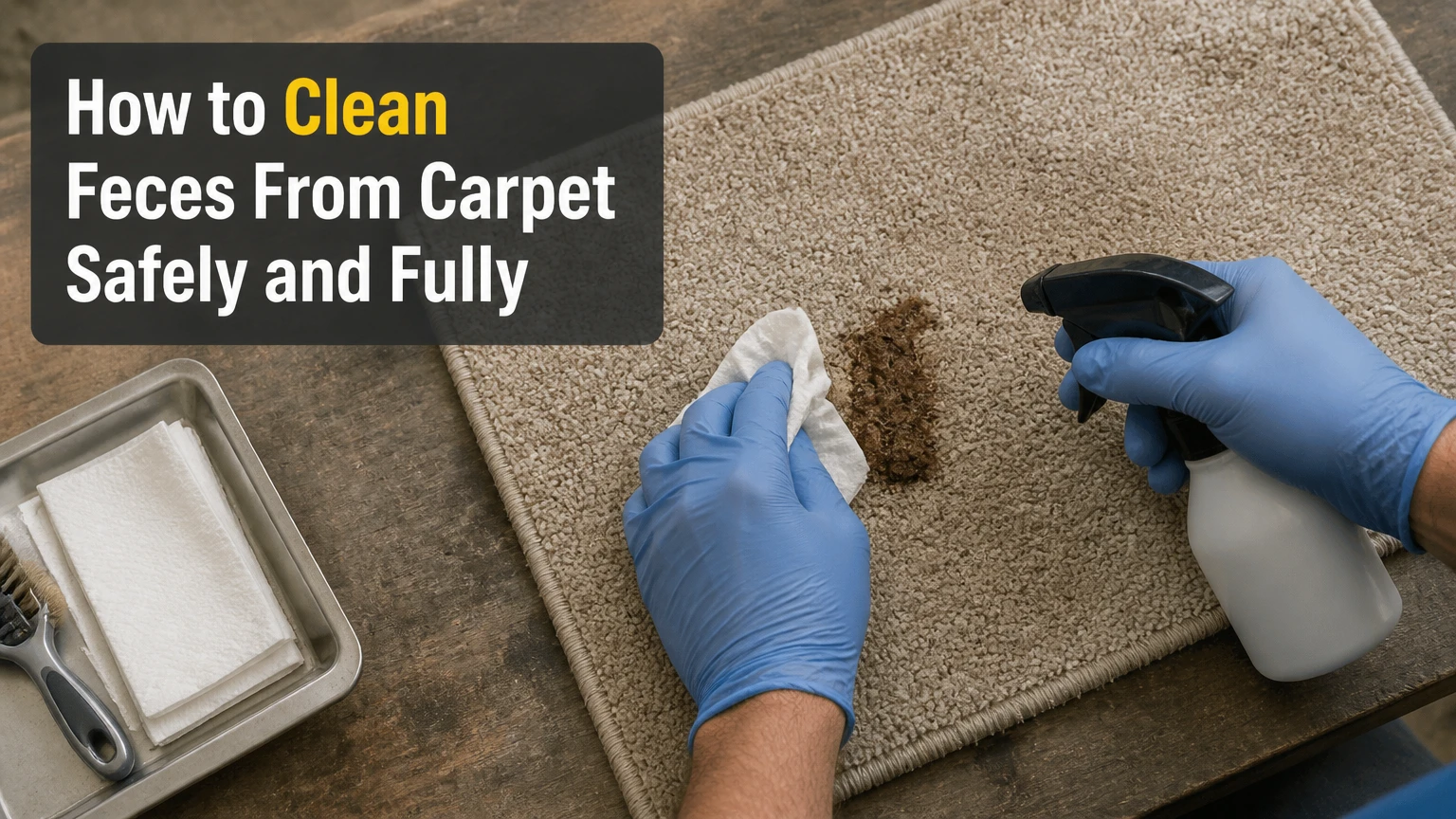
Put on gloves and eye protection, place a plastic bag beside the accident, and lift solid feces with cardboard, a disposable spoon, or a dull plastic scraper. Work from the outside edge toward the center, then place the waste and contaminated disposable materials directly into the bag.
Do not press down on soft feces. Pressing forces residue between carpet tufts and can drive it toward the backing. For dried feces, hold a barely damp white towel over the crust for 5-10 minutes, then lift softened pieces with a dull scraper.
Success checkpoint: The carpet should have no raised solid material, although a damp or discolored patch may remain.
Common mistake: Vacuuming feces before removing it. A household vacuum can spread contaminated particles through its hose, filter, and exhaust, and feces can damage the machine.
Step 2: Blot liquid and loosen dried residue
Fold white paper towels into a thick pad and press straight down on the spot. Replace the towel when it becomes soiled, using pressure rather than rubbing, until the towel picks up little additional moisture.
For dried residue, apply 1-2 tablespoons of cool water to the affected fibers, wait 3-5 minutes, and blot again. Do not flood the carpet. A lightly dampened towel is safer than pouring water directly onto the stain, particularly over laminate, hardwood, or carpet with an absorbent pad.
Success checkpoint: The surface feels damp rather than wet, and no loose residue transfers when a clean white towel is pressed down.
Common mistake: Scrubbing with a brush. Friction spreads pigments sideways, roughens cut-pile fibers, and can create a larger visible area than the original accident.
Step 3: Apply a carpet-safe enzyme cleaner
Choose an enzymatic product labeled for carpet and organic pet or fecal stains. Protease enzymes target protein residue, while surfactants help release oily material from fibers; the cleaner must remain wet long enough for those ingredients to work.
Apply enough product to wet the affected carpet fibers and, only when the backing or pad is known to be contaminated, enough to reach that layer without saturating the floor. A typical spot treatment uses 4-12 fluid ounces for a 6-inch area, but the product label takes priority because formulas vary.
Let the product dwell for 10-20 minutes, or for the label’s stated time. Covering the spot loosely with plastic can slow evaporation, but do not seal a large wet area against a wood floor or leave it accessible to pets.
Success checkpoint: The cleaner has contacted all affected fibers for the stated dwell time, and odor begins to reduce before extraction.
Common mistake: Assuming enzyme cleaner disinfects carpet. Enzymes digest organic material; they do not guarantee pathogen destruction. Never claim a porous carpet is sterile merely because the stain disappeared.
Step 4: Blot and rinse with controlled moisture
Press clean towels into the treated area until no obvious liquid transfers. Then apply approximately 1-2 cups of cool water in small amounts, using a spray bottle or damp sponge, and blot after each application.
Rinsing removes leftover surfactant and enzyme residue that could attract soil. A portable extraction machine can improve removal when the carpet is synthetic and the backing is water-safe, but use short passes and avoid repeatedly soaking the pad.
Success checkpoint: The carpet feels damp, not saturated, and a dry white towel shows little or no cleaner transfer.
Common mistake: Leaving concentrated cleaner in the pile. Residue can cause rapid re-soiling, stickiness, or a stiff patch after drying.
Step 5: Dry the carpet completely
Place several dry towels over the spot and press with a flat, washable object for 5-10 minutes. Remove the towels, position a fan to move air across the carpet, and use ventilation or a dehumidifier when indoor humidity is high.
Most small synthetic-carpet spots dry in 12-24 hours. Padding, thick rugs, humid rooms, and heavy treatment may require 24-48 hours. Do not replace furniture or allow pets onto the area until the pile and backing feel dry.
Success checkpoint: The carpet feels dry at the surface and has no cool, clammy sensation when pressed with the back of your hand.
Common mistake: Covering damp carpet with plastic or a closed mat. Trapped moisture can damage latex backing, stain wood, and support microbial growth.
Step 6: Vacuum and inspect after drying
Once the carpet is fully dry, vacuum slowly over the area to restore the pile and remove dried residue. Use the standard floor setting rather than a powered beater bar if the fibers are loose, shaggy, antique, or already damaged.
Inspect the spot from several angles and under normal room lighting. A remaining odor, brown edge, sticky feel, or damp backing indicates that the cleanup is incomplete rather than proof that more baking soda is needed.
Which Cleaner Works Best?
A labeled enzymatic carpet cleaner is usually the best first choice for feces because organic residue can remain below the visible surface. Dish soap and water can remove some surface soil, while professional hot-water extraction is better for broad contamination or soaked padding.
| Method | Typical cost | Active treatment time | Drying time | Best use |
|---|---|---|---|---|
| Enzyme carpet spray | $10-$25 per bottle | 10-20 minutes | 12-24 hours | Fresh pet feces and localized odor |
| Mild detergent solution | Under $2 | 5-10 minutes | 6-12 hours | Small surface residue when enzyme cleaner is unavailable |
| Portable extractor rental | $30-$70 per day | 30-90 minutes | 12-24 hours | Several spots or contaminated synthetic carpet |
| Professional extraction | $150-$300 typical minimum | 45-120 minutes | 12-48 hours | Human waste, padding contamination, broad staining |
Can vinegar and dish soap clean feces from carpet?
A mild detergent solution can remove surface residue, but vinegar and dish soap do not reliably digest embedded fecal proteins or disinfect porous carpet. If no enzyme cleaner is available, mix 1 teaspoon of unscented dish detergent with 2 cups of cool water, apply sparingly, blot, and rinse.
Do not mix vinegar with bleach, ammonia, hydrogen peroxide, or commercial disinfectants. Avoid combining vinegar with an enzyme product because the acidic solution can reduce enzyme performance. The homemade solution is an emergency surface-cleaning option, not the preferred treatment for odor or padding contamination.
Is a carpet extractor worth using?
An extractor is worthwhile when contamination covers more than one small spot, liquid reached the backing, or several accidents occurred in the same area. Extraction removes diluted residue more effectively than repeated towel blotting, but the machine cannot correct fiber dye damage, contaminated cushion that remains wet, or a damaged subfloor.
Use a carpet-compatible formula, make slow extraction passes, and follow with additional dry passes. Do not add undiluted enzyme concentrate to a rental machine unless the product instructions specifically permit machine use.
What Changes for Different Carpet Fibers?
Synthetic nylon, polyester, and polypropylene carpet generally tolerates a labeled enzyme product and controlled moisture better than wool, silk, viscose, or plant-fiber rugs. Fiber identification should determine the cleaning method before any chemical is applied.
| Carpet or rug fiber | Enzyme cleaner | Water tolerance | Main risk | Safer approach |
|---|---|---|---|---|
| Nylon | Usually suitable after testing | Moderate to high | Dye bleeding or browning | Spot-test, treat, extract lightly |
| Polyester | Usually suitable after testing | Moderate | Residue and wicking | Use less product and rinse thoroughly |
| Polypropylene | Usually suitable after testing | High relative tolerance | Backing damage from flooding | Control moisture and dry quickly |
| Wool | Product-dependent | Low to moderate | Felting, dye bleed, browning | Wool-safe cleaner or certified cleaner |
| Viscose or rayon | Avoid household wet treatment | Low | Permanent distortion and water marks | Professional rug specialist |
| Silk, jute, or antique rug | Avoid enzyme spraying | Low | Color loss and structural damage | Specialist assessment |
Test any cleaner on an inconspicuous area for color transfer, texture change, and lightening. A successful test does not guarantee safety on the entire rug because dyes, backing adhesives, and previous treatments can vary within one item.
How Do You Remove Feces Odor?
Persistent feces odor usually means organic material remains in the carpet backing, pad, subfloor, or nearby upholstery. Re-treating only the visible fibers may temporarily mask the smell while leaving the source untouched.
Use an enzyme product according to its label, target the contaminated depth, and extract or blot excess moisture afterward. Dry slowly enough for the cleaner to work, but provide continuous airflow so the backing does not remain wet for multiple days.
Baking soda can absorb some surface odor after the carpet dries, but it does not neutralize embedded fecal contamination. Apply a thin layer only to dry carpet, leave it for 2-4 hours, and vacuum without a beater bar if the fiber is delicate.
An odor that returns after drying points to one of four conditions:
- The pad was contaminated but never treated.
- The backing remains damp.
- Fecal material reached the subfloor or tack strip.
- The odor source is urine, vomit, upholstery, or a nearby waste bin rather than the visible stain.
Why Did a Brown or Yellow Ring Appear?
A brown or yellow ring is usually wicking, soil migration, dye change, or cellulosic browning rather than new feces. As water evaporates, dissolved soil can move toward the perimeter and concentrate at the drying edge.
Do not immediately pour vinegar onto the ring. First vacuum the dry area, lightly mist a carpet-safe product across the entire affected patch rather than only the center, blot from the outside inward, and dry with airflow. Localized wetting often creates another ring.
| Visible problem | Likely cause | First response | Escalation point |
|---|---|---|---|
| Brown perimeter | Wicking soil from backing | Lightly re-clean full patch | Ring returns after second drying cycle |
| Yellowing on wool | Cellulosic browning or dye change | Stop wet treatment | Contact a wool specialist |
| Sticky pile | Cleaner residue | Controlled cool-water rinse | Residue persists after extraction |
| Odor after 24 hours | Pad or backing contamination | Inspect depth and dry | Professional extraction |
| Bleached spot | Chemical or dye damage | Stop applying products | Carpet repair or replacement |
What Are the Most Common Cleanup Mistakes?
The most damaging mistakes are rubbing, flooding, mixing chemicals, and treating only the visible stain. Each mistake either spreads contamination, damages the carpet system, or leaves enough residue for odor and browning to return.
Using boiling or very hot water
Boiling water can set some protein and pigment stains, soften adhesives, and damage carpet backing. The claim that every hot-water application permanently “cooks” every fecal stain is too broad, but household boiling water is still an unnecessary risk.
Use cool or lukewarm water for spot treatment. Professional hot-water extraction is different because trained cleaners control temperature, chemistry, pressure, and recovery.
Saturating the padding
Padding acts like a sponge and can hold far more moisture than the carpet face. If the pad is soaked, blotting the top may leave contamination below, while prolonged dampness can affect adhesives and wood flooring.
Treat only the depth that contamination reached. Professional cleaners may lift a carpet edge, replace a section of pad, or use subsurface extraction when contamination is extensive.
Using bleach or ammonia
Bleach can remove color and weaken fibers, while ammonia can damage some carpet systems and create hazardous fumes when mixed with other products. Neither is a sensible default for feces on carpet.
Use a carpet-labeled product, check the fiber and backing instructions, and keep every chemical in its original labeled container.
Vacuuming contaminated solids
A vacuum is designed for dry particulate soil, not feces. Vacuum only after the carpet has been cleaned and fully dried, and clean or replace the vacuum filter if contaminated material was accidentally collected.
Applying several products at once
Layering detergent, vinegar, peroxide, disinfectant, and enzyme cleaner can create residue, fumes, color loss, or chemical incompatibility. Rinse and dry between different treatment strategies, and never mix products unless the manufacturer explicitly allows it.
When Should You Call a Professional?
Call a professional carpet or rug cleaner when human feces, diarrhea, blood, repeated accidents, large-area contamination, soaked padding, or persistent odor is involved. Professional assessment is also appropriate when the rug is wool, silk, viscose, antique, hand-knotted, or too valuable to risk with a household experiment.
Typical professional pricing is $150-$300 as a minimum call-out range, with larger areas, furniture moving, pad replacement, odor treatment, and emergency service increasing the total. Ask whether the quote includes extraction, deodorization, antimicrobial treatment, pad inspection, and disposal of contaminated materials.
A professional cleaner cannot promise sterilization of every porous carpet. The practical goal is removal of fecal matter, reduction of biological residue, safe drying, and a decision about whether the carpet or pad remains serviceable.
When should carpet or padding be replaced?
Replacement becomes more reasonable when contamination soaked deeply into the pad, the backing delaminated, the subfloor remains stained or odorous, or the carpet cannot dry within 48 hours. Small, isolated pet accidents on synthetic carpet usually do not require replacement when promptly removed and dried.
Renters should photograph the affected area, record the incident date, and report substantial contamination to the landlord or property manager before removing carpet. Insurance coverage varies, and unauthorized replacement can complicate a claim.
How Much Time and Money Should You Expect?
A fresh, small pet accident typically costs $8-$25 for household supplies and takes 20-40 minutes of active work. Older stains, repeated accidents, natural fibers, contaminated padding, and high indoor humidity increase both treatment time and cost.
| Scenario | Active labor | Total drying or resolution | Typical cost |
|---|---|---|---|
| Fresh pet feces, 6-inch spot | 20-40 minutes | 12-24 hours | $8-$25 |
| Dried pet feces, 6-12-inch spot | 35-60 minutes | 12-24 hours | $10-$30 |
| Several synthetic-carpet spots | 1-2 hours | 12-24 hours | $30-$70 rental |
| Human waste or soaked pad | 1-3 hours | 24-48 hours | $150-$300 minimum |
| Wool or specialty rug | 30-90 minutes assessment | 24-72 hours | Specialist quote |
These are typical ranges, not guaranteed prices. Local labor rates, contamination severity, access, furniture movement, and whether the pad must be removed can change the final cost.
How Should You Handle Special Situations?
Special situations require changing the process rather than adding stronger chemicals. The safest variation depends on whether the feces is fresh, dried, human, pet-related, on a natural fiber, or spread into the padding.
Fresh, firm pet feces
Lift the pieces immediately, blot any moisture, apply enzyme cleaner, and dry with airflow. Prompt removal reduces the time pigments and organic material remain in contact with the pile.
Dried feces
Soften the residue with a damp white towel for 5-10 minutes, lift it gently, and avoid scraping aggressively. Enzyme treatment is still useful after mechanical removal, but a dried stain may require two complete treatment and drying cycles.
Human feces
Use disposable gloves, eye protection, a mask if splashing or dust is possible, and double-bagged waste. Do not use a household vacuum, do not create spray, and seek professional help for diarrhea, blood, illness-related contamination, or a large affected area.
Wool or delicate rugs
Remove solids with minimal moisture, blot rather than scrub, and stop if color transfers to the towel. A certified rug cleaner is safer than vinegar, peroxide, bleach, or a general-purpose enzyme product.
Contamination near a wood floor
Use the smallest practical amount of liquid, place absorbent towels around the spot, and inspect the floor edge after drying. Swelling, darkening, cupping, or odor below the carpet signals possible subfloor moisture.
Frequently Asked Questions
Can I use hydrogen peroxide on feces stains in carpet?
Hydrogen peroxide can lighten dyes and damage some natural or solution-sensitive fibers, so it is not a universal feces-stain treatment. Use it only when the carpet manufacturer and product instructions permit it, after an inconspicuous colorfastness test. An enzyme carpet cleaner is usually the safer first option for organic residue.
How do I clean dog poop from a shag carpet?
Remove solid material with cardboard or a disposable spoon, then separate the shag fibers gently with gloved fingers or a dull tool. Apply enzyme cleaner to the contaminated depth without flooding the backing, blot with towels, and use a fan for 24-48 hours because shag retains more moisture than low-pile carpet.
Can a steam cleaner remove feces from carpet?
A steam or hot-water extractor can remove diluted residue after solid matter has been lifted, but steam alone does not guarantee disinfection or odor removal. Use a carpet-compatible solution, moderate moisture, and multiple recovery passes. Avoid household steam on wool, viscose, antique rugs, or unstable carpet backing.
Why does the carpet still smell after the stain disappears?
Odor can remain because fecal material reached the backing or pad, because cleaner residue remains, or because the area is still damp. Inspect the depth, apply an enzyme product according to its label, extract excess moisture, and dry fully. Recurring odor after two cycles warrants professional inspection.
How long should I keep pets away from treated carpet?
Keep pets away until the carpet is completely dry and the product label permits contact. Many small spots dry within 12-24 hours, but heavily treated padding can remain damp for 24-48 hours. Prevent pets from licking wet cleaner, towels, or treated fibers.
Does baking soda remove feces stains?
Baking soda can reduce some surface odor after cleaning, but it does not remove embedded fecal material or disinfect carpet. Use it only after the carpet is dry, leave a thin layer for 2-4 hours, and vacuum carefully. Persistent odor requires source removal and controlled enzyme treatment.
The Bottom Line
The correct way to clean feces from carpet is to remove solids first, blot without rubbing, apply a carpet-safe enzyme cleaner, rinse with limited cool water, and dry the carpet and backing completely. Use professional cleaning for human waste, soaked padding, delicate fibers, repeated odor, or contamination that remains after two controlled treatment cycles.