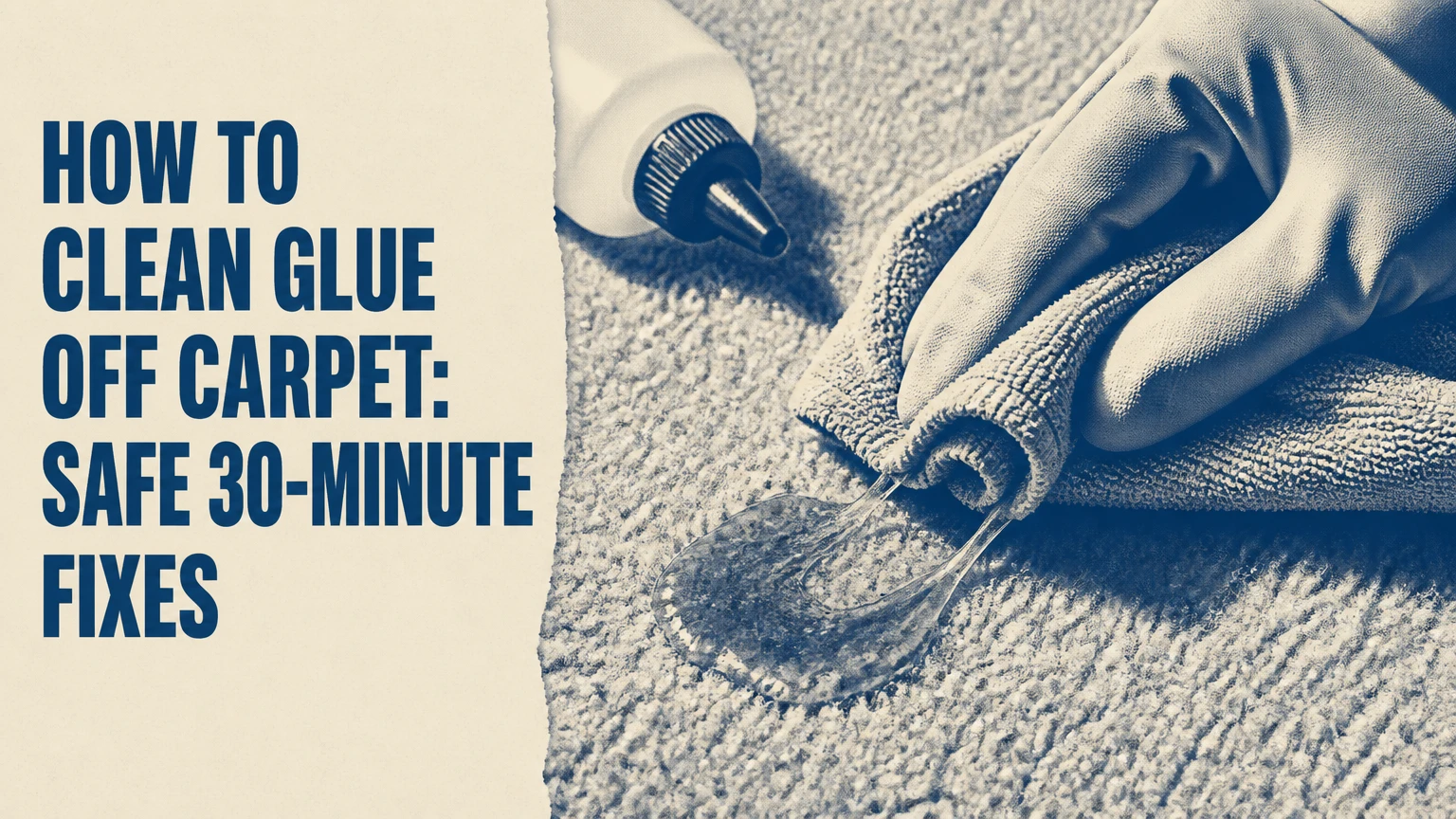
To clean glue off carpet, identify the adhesive, remove the bulk without pulling the pile, then use water, controlled heat, freezing, or a tested solvent suited to that glue. Work from the outside toward the center, use white absorbent cloths, avoid saturation, and let the carpet dry fully before judging the result.
Key Facts at a Glance
Water-based school glue usually responds to warm water and a small amount of dish soap.
Dried hot-melt glue can often be transferred to paper with controlled, dry heat.
Super glue and construction adhesive can permanently damage carpet backing or fibers when solvents are misapplied.
Acetone is flammable and can damage acetate, triexta, some dyes, and carpet backings; never assume it is safe.
A dull scraper removes surface glue more safely than scissors, a razor, or aggressive brushing.
Typical spot treatment takes 15-30 minutes, but complete drying can take 6-24 hours.
How to Clean Glue Off Carpet Safely
The safest glue-removal sequence is scrape, soften, lift, rinse, and dry. The adhesive type determines the softening method, while the carpet fiber and backing determine which chemicals are acceptable. A small hidden test is more reliable than a generic solvent recommendation because dye systems, latex backings, and fiber blends vary between carpets.
Before You Start
Prepare the area before applying any liquid or solvent. Remove furniture, open a window if a chemical product is involved, and photograph the spot if you rent the property.
| Requirement | Typical specification | Why it matters |
|---|---|---|
| Treatment time | 15-30 minutes | Covers one spot up to approximately 4 inches |
| Drying time | 6-24 hours | Prevents false color or odor judgments |
| Basic tools | 1 dull spoon, 4-6 white cloths, 1 bowl | Supports lifting and controlled blotting |
| Water solution | 2 cups warm water plus 1 teaspoon dish soap | Limits detergent residue |
| Chemical quantity | 1 teaspoon or less per test area | Reduces backing exposure |
| Ventilation | 1 open window or outdoor treatment | Controls solvent vapor |
Wear nitrile gloves when handling alcohol, acetone, adhesive remover, or uncured polyurethane glue. Keep acetone and solvent-based removers away from flames, pilot lights, cigarettes, and children. The U.S. Environmental Protection Agency and product safety data sheets classify many solvent removers as flammable or irritating, so label directions take priority over household cleaning advice.
Test the Carpet Before Using Chemicals
Find an inconspicuous area under a sofa or inside a closet. Apply one drop of the proposed product to a white cloth, press it onto the carpet for 10 seconds, and inspect the cloth and fibers after 5 minutes.
Stop if the cloth picks up carpet dye, the pile becomes tacky, the backing softens, or the test area develops a lighter ring. Wool, viscose, acetate, and antique rugs need greater caution than solution-dyed polypropylene because natural and regenerated fibers can react differently to moisture and solvents.
Which Removal Method Should You Use?
Choose the least aggressive method that can soften the particular adhesive. Warm water suits water-soluble glue, dry heat suits many thermoplastic glue sticks, freezing suits flexible rubbery residue, and solvent treatment suits only compatible adhesive and carpet combinations.
| Glue or residue | First method | Typical dwell time | Main risk |
|---|---|---|---|
| Elmer’s or school glue | Warm water and dish soap | 5-10 minutes | Moisture ring or detergent residue |
| Hot-melt glue stick | Dry paper and low heat | 10-15 seconds per press | Melted or flattened synthetic pile |
| Rubber cement or tacky residue | Ice in a sealed bag | 10-20 minutes | Brittle fibers from forceful scraping |
| Super glue | Professional assessment first | 5-15 minutes | Dye loss, fiber damage, backing damage |
| Construction adhesive | Label-approved remover | 3-10 minutes | Oily residue or delamination |
| Cured polyurethane glue | Mechanical removal or repair | 10-30 minutes | Permanent bond to fibers and backing |
Freezing does not make every adhesive harmless. Ice is useful for rubbery, flexible residue and some tacky products, but it is less effective on fully cured epoxy, polyurethane, or cyanoacrylate. Place ice in a sealed plastic bag, never directly on the carpet, and lift the brittle material with a spoon rather than crushing it into the pile.
How Does Glue Removal Work?
Glue removal works by changing the adhesive’s physical state or dissolving its bond. Water rehydrates water-based polymers, heat softens thermoplastic glue, cold makes some flexible residues brittle, and compatible solvents swell or dissolve selected adhesive films.
That mechanism explains why the wrong method can worsen a stain. Heat can drive soft glue deeper, water can spread latex-based residue, and solvent can dissolve the carpet backing instead of the adhesive. Adhesive manufacturers such as Henkel and 3M publish product-specific removal guidance because cyanoacrylate, rubber cement, acrylic pressure-sensitive adhesive, and polyurethane do not share one solvent response.
Step 1: Remove Excess Glue Without Pulling Fibers
Lift hardened glue from the carpet surface using the edge of a plastic card, a dull spoon, or a blunt butter knife. Hold the tool almost parallel to the floor and push under the adhesive in short strokes, working from the outside edge toward the center.
Do not cut the glue out with scissors unless a professional has confirmed that the affected fibers can be trimmed. Pulling can loosen tufts, while a razor can create a visible bald patch. Vacuum loose chips with a crevice tool before adding moisture.
You will know this step worked when the remaining glue forms a thin, localized film rather than a raised lump. The common mistake is scraping downward, which presses the adhesive into the backing and increases the treated area.
Step 2: Identify the Carpet Fiber and Backing
Check a leftover installation label, purchase record, or manufacturer website for the fiber type. Common carpet fibers include nylon, polyester, polypropylene, triexta, wool, and blended constructions, each with different chemical and heat tolerances.
| Carpet material | Water response | Solvent and heat concern | Safer starting point |
|---|---|---|---|
| Nylon | Usually tolerates controlled moisture | Some dyes and backing adhesives react to solvents | Scrape, then mild detergent |
| Polyester | Low water absorption | High heat can distort or glaze pile | Mild detergent or cold lifting |
| Polypropylene | Low water absorption | Heat can flatten or melt fibers | Scrape and cool treatment |
| Triexta | Low water absorption | Acetone and strong heat require avoidance | Manufacturer-approved cleaner |
| Wool | Absorbs moisture | Solvents, alkali, and agitation can damage scales | Wool-safe cleaner and blotting |
| Viscose or acetate | Absorbs and weakens when wet | Solvents and friction can cause permanent damage | Professional cleaner |
The carpet backing matters as much as the face fiber. Latex, polyurethane, jute, and secondary backing can soften, stain, or separate when exposed to excess water or solvent. The Carpet and Rug Institute advises following the carpet manufacturer’s care instructions, and that guidance is especially important for glued-down carpet tiles and delicate rugs.
Step 3: Choose a Controlled Softening Method
Select one method from the table rather than combining several chemicals. Mixing alcohol, acetone, citrus remover, bleach, ammonia, or vinegar can create unpredictable reactions and increases the amount of residue left in the carpet.
| Method | Use on | Application | Stop condition |
|---|---|---|---|
| Warm water | School or white craft glue | Press damp cloth for 5 minutes | Glue spreads instead of lifting |
| Ice bag | Rubber cement or flexible tack | Chill 10-20 minutes | Fibers become wet or brittle |
| Isopropyl alcohol | Some tape or craft residue | Dab 70% alcohol through cloth | Dye transfers or backing feels soft |
| Commercial remover | Label-approved adhesive | Use 1 teaspoon on cloth | Odor, dye loss, or oily halo |
| Acetone | Only after fiber and label checks | Pinpoint cotton-swab application | Any color or texture change |
Isopropyl alcohol is not automatically safe for carpet. It evaporates faster than water, but repeated applications can affect dyes, latex, or adhesive coatings. A product label, manufacturer care sheet, and hidden test should decide whether it is appropriate.
Step 4: Rehydrate Water-Based Glue
Mix 1 teaspoon of clear, dye-free dish soap with 2 cups of warm, not hot, water. Dampen a white cloth, wring it until it no longer drips, and press it onto the dried school glue for 5 minutes without rubbing.
Blot upward with a second dry cloth, lifting the rehydrated glue into the cloth. Replace the cloth section as it becomes dirty, and repeat for a maximum of three cycles. If the glue reaches the backing, use less liquid and increase blotting rather than pouring solution onto the spot.
You will know it worked when the glue turns cloudy, soft, and transferable to the cloth. Rinse with a cloth dampened in plain water, then press dry towels over the area for 30-60 seconds. The common mistake is scrubbing back and forth, which spreads dissolved glue across neighboring fibers.
Step 5: Transfer Hot Glue With Controlled Heat
Cover dried hot glue with a clean, unprinted brown paper bag or white cotton cloth. Set a household iron to its lowest dry setting, turn off steam, and press for 5-10 seconds at a time.
Lift the paper vertically while the adhesive is warm, then move to a clean section of paper before repeating. Never slide the iron, and never leave it in place for 15 seconds if the carpet is polypropylene, polyester, or an unknown synthetic blend. The American Cleaning Institute recommends following fiber-care instructions before applying heat to textiles, and carpet manufacturers can impose lower temperature limits.
You will know the transfer worked when softened glue appears as a translucent patch on the paper rather than remaining glossy on the carpet. The common mistake is using newspaper or printed paper, whose ink can transfer into light carpet.
If the carpet pile looks shiny, flattened, curled, or fused, stop immediately. Further heating cannot restore melted fibers; a carpet repair technician may need to replace tufts from a hidden area.
Step 6: Treat Super Glue With Extreme Caution
Super glue, or cyanoacrylate, is the least forgiving common household adhesive. Do not apply acetone to unknown carpet, wool, acetate, triexta, dyed fibers, carpet backing, or a large area without a successful hidden test and the carpet manufacturer’s approval.
First remove the raised portion mechanically with a dull scraper. Then place a tiny amount of product recommended by the carpet manufacturer on a cotton swab, touch only the adhesive, and wait 30-60 seconds. Blot immediately with a white cloth, remove softened residue, and rinse the treated fibers with a barely damp cloth.
Acetone is a powerful solvent and is highly flammable. The common online claim that acetone is generally safe for nylon and wool is unreliable: nylon may tolerate a brief, localized exposure in some constructions, while dyes, coatings, blends, or latex backing can still be damaged. Wool can lose color or surface integrity.
You will know the treatment is acceptable when the glue reduces without a pale halo, sticky backing, or color transfer. Stop after two small applications. A professional cleaner or carpet repair specialist is usually safer for a visible super-glue spill.
Step 7: Handle Heavy-Duty Adhesive
Construction adhesive, carpet adhesive, duct-tape residue, and polyurethane glue require product-specific treatment. Read the remover label and adhesive technical data sheet before applying anything, because a remover designed for pressure-sensitive tape may not dissolve cured polyurethane.
Apply no more than 1 teaspoon of approved remover to a white cloth, not directly to the carpet. Dab the glue from the outside toward the center, allow the label-specified dwell time, and blot into fresh paper towels. Use a plastic scraper between applications.
Do not use a shop vacuum to collect solvent, and do not operate electrical equipment near flammable vapors. A standard household vacuum can ignite vapor or spread liquid into the backing. Ventilate the room, wear gloves, and keep the treated area isolated from pets and children.
Cured polyurethane and carpet glue may not be removable without fiber loss. If adhesive has bonded to the primary backing, replacement of the affected carpet section can produce a better result than increasingly aggressive chemical treatment.
Step 8: Rinse, Extract, and Restore the Pile
After the adhesive is gone, rinse the spot with a white cloth dampened in plain water. Use only enough water to remove cleaner residue, then press dry towels over the area and place a weighted, towel-wrapped object on top for 10 minutes.
Remove the weight and allow air circulation. A fan can reduce drying time, but avoid high heat from a hair dryer because it may set dye, distort synthetic fibers, or leave a hard ring. Once dry, vacuum gently in the direction of the pile and lift flattened fibers with a carpet grooming brush.
You will know the job is complete when the carpet has no tackiness, solvent odor, stiff film, color halo, or crunchy texture. The common mistake is judging the result while the carpet is damp, when moisture temporarily darkens fibers and conceals residue.
Common Mistakes and How to Fix Them
Scrubbing the Glue Into the Pile
Scrubbing breaks a surface spot into a wider film and can permanently fuzz cut-pile carpet. Stop rubbing, let the area dry if saturated, scrape the remaining film, and resume with vertical blotting.
Pouring Solvent Directly Onto Carpet
Direct application can carry solvent through the face yarn into latex or polyurethane backing. Blot the area with dry towels, ventilate the room, and do not add another product until the carpet is dry and the backing remains firm.
Using Steam on Hot Glue
Steam adds water and uncontrolled heat, two variables that can spread adhesive and flatten synthetic pile. Use dry, brief contact with paper only when the carpet manufacturer permits heat treatment.
Using a Colored Towel
Dyes from red, blue, or printed cloth can migrate into wet carpet or solvent. Remove loose transferred dye by blotting with a clean white cloth and stop if the color does not lift quickly.
Mixing Cleaning Chemicals
Vinegar, bleach, ammonia, alcohol, acetone, and commercial removers should not be combined. If products have already been mixed, leave the area, ventilate it, and follow the product safety instructions rather than adding a neutralizer.
Leaving Detergent Behind
Dish soap residue attracts soil and can create a stiff patch. Rinse with small amounts of plain water, blot repeatedly, and dry completely before vacuuming.
Variations for Wool, Rugs, and Carpet Padding
Wool carpet needs a wool-safe detergent, minimal moisture, and almost no agitation. Avoid household acetone, alkaline cleaners, prolonged soaking, and high heat because wool fibers can felt, shrink, or lose dye.
Area rugs should be treated on a waterproof surface only if the manufacturer permits spot cleaning. Do not saturate a rug with jute backing, hand-tufted construction, silk content, or unstable dyes. A rug specialist is appropriate when the glue has reached the foundation.
Glue on carpet padding is a separate problem. If adhesive has penetrated through the carpet, surface cleaning may leave a persistent odor or re-bond the pile. Lift a carpet edge only when you can safely re-stretch and reattach it; otherwise, have a flooring professional inspect the pad and backing.
What Should Parents, Renters, and DIY Renovators Do?
Parents and pet owners should begin with scraping, ice, or the mild water solution, then keep the area inaccessible until dry. Renters should photograph the damage, use the least aggressive method, and avoid acetone because color loss or backing damage can exceed the original stain.
DIY renovators dealing with carpet glue near tack strips should stop before pulling carpet or using industrial solvent. Construction adhesive can bond carpet to subfloor, and a flooring contractor can often replace a small section more cleanly than a household treatment.
Typical Time and Cost
Typical household spot treatment costs $0-$20 for water, dish soap, ice, cloths, and a scraper. A specialty remover usually adds $8-$25, while professional spot treatment commonly costs about $75-$200 depending on access, adhesive type, minimum service charge, and whether carpet repair is required.
| Situation | DIY materials | Treatment time | Likely professional route |
|---|---|---|---|
| 2-inch school-glue spot | $0-$5 | 10-20 minutes | Usually unnecessary |
| 3-inch hot-glue spot | $2-$8 | 15-25 minutes | $75-$150 minimum visit |
| Super glue on visible carpet | $3-$15 | 10-30 minutes | $100-$250 or fiber repair |
| Construction adhesive | $10-$25 | 20-45 minutes | $150-$400 depending on removal |
| Glue through carpet backing | $0-$15 for inspection | 30-60 minutes | $150-$500 for pad or section repair |
These are typical U.S. consumer ranges, not fixed prices. Local labor, carpet material, access, and the size of the affected area can change the total substantially.
When Should You Call a Professional?
Call a professional when the glue covers more than 1 square foot, has soaked into the backing, appears on wool or viscose, contains unknown chemicals, or remains after two controlled treatment cycles. Professional help is also appropriate when a rental deposit, antique rug, patterned carpet, or expensive custom installation is at risk.
A technician may use a controlled extraction system, manufacturer-approved adhesive remover, or localized tuft replacement. Professional cleaning cannot always dissolve cured polyurethane or cyanoacrylate without cosmetic damage, so ask whether repair or section replacement is the more realistic outcome.
Frequently Asked Questions
Can I use vinegar to remove glue from carpet?
Vinegar is not a reliable primary remover for cured glue. A diluted solution may help reduce mild detergent residue after the adhesive has already been removed, but vinegar will not safely dissolve most hot-melt, cyanoacrylate, or construction adhesives. Do not combine vinegar with bleach, ammonia, alcohol, acetone, or commercial removers.
How do I remove sticky tape residue from carpet?
Lift the tape slowly, scrape the remaining film with a plastic card, and test 70% isopropyl alcohol or a carpet-approved adhesive remover in a hidden area. Apply the product to a white cloth, dab the residue for 10-20 seconds, and blot. Finish with plain water to remove the cleaner.
Can baking soda remove dried glue?
Baking soda can absorb odor and loosen some surface dirt, but it does not dissolve dried adhesive. Applying dry powder before glue removal can make the area harder to inspect and may leave grit in the pile. Use mechanical lifting and the adhesive-specific method instead.
How do I get glue out of carpet without chemicals?
Use a dull scraper for hardened glue, an ice bag for flexible rubbery residue, or controlled dry heat and paper for compatible hot glue. Water and a small amount of dish soap are mild chemical agents, but they are often sufficient for school glue. Avoid force, steam, and cutting the fibers.
Will a carpet cleaner remove glue?
A carpet extractor may remove water-soluble glue residue after it has been loosened, but extraction alone usually will not dissolve cured hot glue, super glue, polyurethane, or construction adhesive. Excess water can spread adhesive into the backing, so pre-treat the spot and follow the machine and carpet manufacturer’s instructions.
The Bottom Line
To clean glue off carpet, start with identification and mechanical lifting, then use the mildest compatible treatment. Warm water handles school glue, controlled dry heat can transfer hot glue, ice can harden flexible residue, and strong solvents belong only on tested, compatible materials. When the adhesive reaches the backing or the carpet is wool, delicate, expensive, or visibly discolored, professional assessment is safer than repeated chemical applications.