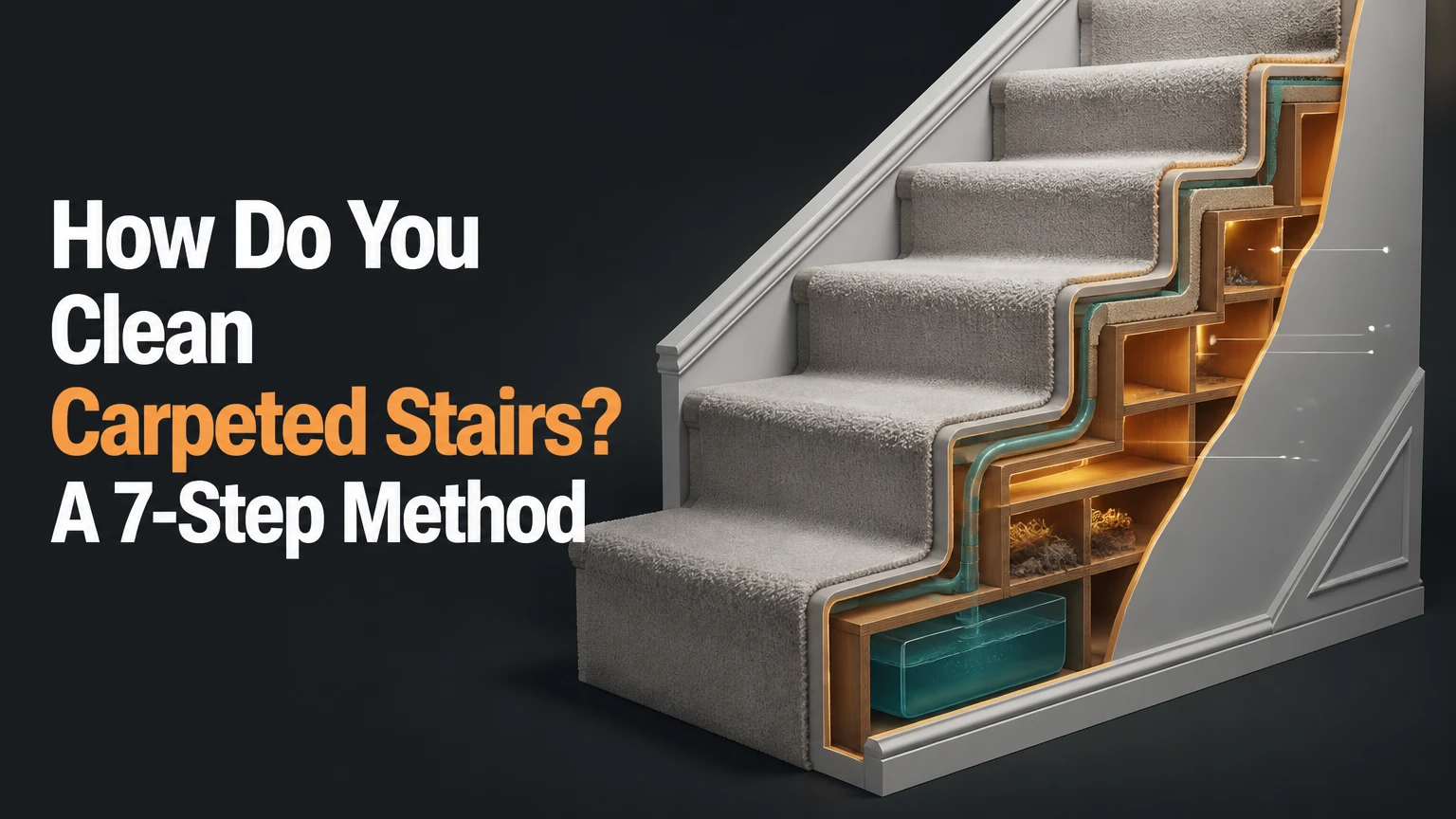
To clean carpeted stairs, remove dry grit first, treat stains selectively, then use a small amount of compatible cleaning solution followed by strong extraction. Work from the top step downward, clean the tread, riser, nosing, and junction, and dry the carpet quickly with airflow. The safest method depends on the carpet fiber, backing, stain, and equipment.
Key Facts at a Glance
Dry vacuuming before moisture cleaning removes abrasive grit that can otherwise form muddy residue.
A portable extractor should make one controlled wet pass and two or three slow suction-only passes.
Most synthetic stair carpet dries in approximately 4-8 hours after careful extraction, but padding and humidity can extend that time.
Wool, viscose, jute-backed, and heavily glued carpet require fiber-specific testing and often professional cleaning.
Carpeted stairs usually need less solution than a flat room because moisture can collect against risers, tack strips, and wood.
Typical professional stair cleaning costs $60-$150 for a standard staircase, with location, soil level, and minimum service charges affecting the total.
How Do You Clean Carpeted Stairs Safely?
The safest process has seven stages: inspect, loosen debris, vacuum, treat spots, apply controlled moisture, extract thoroughly, and dry completely. A typical 12-15-step staircase takes 45-90 minutes of active work with a portable machine, excluding 4-8 hours of drying. The most important success factor is moisture control.
Stair carpet receives concentrated traffic along the middle of each tread, where footwear deposits sand, skin oils, outdoor soil, and pet hair. Grit acts like an abrasive between fibers and can accelerate pile wear even when the carpet looks merely dull. The tread-riser crease also traps debris that upright vacuums often miss.
The Carpet and Rug Institute gives simple consumer guidance: “The best way to keep carpet clean is to vacuum regularly.” That advice matters more on stairs because frequent dry maintenance reduces the amount of wet cleaning needed.
Before You Start
| Requirement | Typical specification | Why it matters |
|---|---|---|
| Active cleaning time | 45-90 minutes | Includes setup and tank changes |
| Drying time | 4-8 hours | Synthetic carpet after controlled extraction |
| Difficulty | Moderate | Kneeling, hose handling, and balance required |
| Portable extractor | 1 machine with stair or upholstery tool | Narrow tools fit treads and risers |
| Vacuum | 1 crevice tool plus brush attachment | Reaches junctions and nosings |
| Cleaning solution | 60-120 mL, machine-label dilution | Excess detergent causes sticky residue |
| Air movement | 1-2 fans | Reduces drying time and odor risk |
Move shoes, toys, stair baskets, and loose stair rods. Inspect for exposed staples, loose carpet, lifted seams, damaged nosings, or wet areas. Do not operate an electrical machine near a leaking radiator, open water, or an unstable stair edge.
Which Cleaning Method Fits Your Stair Carpet?
Hot water extraction is usually the strongest choice for heavily soiled synthetic carpet, while low-moisture encapsulation suits delicate fibers or homes that need faster access. Hand cleaning works for small spots and light soil but rarely matches extraction for embedded grit.
| Method | Best carpet or situation | Moisture and equipment | Typical access time |
|---|---|---|---|
| Portable hot water extraction | Nylon or polyester with heavy traffic | Low-flow hand tool and vacuum recovery | 4-8 hours |
| Professional truck-mounted extraction | Dense soil, urine contamination, large homes | High vacuum and heated solution | 3-6 hours |
| Low-moisture encapsulation | Wool, delicate pile, limited drying capacity | Polymer solution and agitation | 30-90 minutes |
| Hand foam cleaning | Small spots, light refresh, no machine | pH-balanced foam and white cloth | 2-4 hours |
| Dry compound cleaning | Moisture-sensitive installation | Absorbent compound and counter-rotating brush | 1-3 hours |
“Steam cleaning” is a common consumer term for hot water extraction, although many machines do not produce true steam at the carpet surface. The machine sprays solution, suspends soil, and recovers the liquid through a vacuum nozzle. Calling the method extraction is more technically accurate.
Identify the Fiber Before Applying Product
Nylon and polyester generally tolerate standard carpet extraction when the manufacturer’s instructions permit it. Wool needs lower alkalinity, moderate agitation, and controlled moisture because excessive heat, alkalinity, or friction can cause felting, shrinkage, or browning.
Berber describes a looped construction rather than one specific fiber. A stiff brush or snagged tool can pull loops, so use suction and gentle agitation. Viscose, rayon, sisal, seagrass, jute, and cotton-containing carpets are poor candidates for casual wet cleaning because water can create permanent rings, texture change, or browning.
Test every product in an inconspicuous corner. Apply a small amount, blot with a white cloth, and check for color transfer after the area dries.
Step 1: Inspect and Clear Every Stair
Remove objects and inspect every tread, riser, nosing, edge, and tread-riser junction before cleaning. Photograph pre-existing damage, because moisture cleaning cannot repair loose carpet, worn pile, exposed tack strips, or discolored backing.
Check whether the staircase has a continuous runner, individually fitted stair carpet, stair rods, or carpet attached directly over underlay. Remove stair rods only if the fittings are secure and reinstalling them will not disturb the carpet.
Look for dark bands at the nose, oily patches in the center, pet staining near the side edges, and dry soil packed into corners. Smell the carpet before wet cleaning. A strong urine or mildew odor may indicate contamination below the visible fibers.
You will know this step worked when: all loose objects are removed, damage is recorded, and every carpet section is accessible.
Common mistake: starting with a machine before finding a loose edge. Suction can lift an unsecured runner or pull a weak seam.
Step 2: Loosen Embedded Dry Soil
Use a soft-to-medium nylon carpet brush or rubber pet-hair brush on synthetic carpet, moving from the upper surface toward the open stair edge. Use light strokes on the tread center, nose, side edges, and junction; do not rake aggressively across loops or wool.
Dry agitation releases hair, sand, and compacted grit so the vacuum can remove them. The center of a stair tread often needs more attention than the riser because foot pressure pushes soil downward into the pile.
A brush is not a substitute for vacuuming. Its job is to expose debris, not grind it deeper or create fuzzing.
You will know this step worked when: loose hair and sand appear on the carpet surface instead of remaining buried at the base of the pile.
Common mistake: using a powered rotating brush on Berber or looped wool. A single snag can pull a loop several inches.
Step 3: Vacuum Treads, Risers, and Creases
Vacuum from the top step downward, using a crevice tool along the tread-riser junction and a brush or upholstery head on the main pile. Make two slow passes over the center of each tread and one pass along each side edge.
A lightweight canister or handheld vacuum is easier to control than dragging an upright machine across stairs. Keep the vacuum body on a stable landing or lower floor, and never leave a heavy appliance balanced on a step.
Spend extra time where the vertical riser meets the horizontal tread. That narrow angle collects grit that later becomes muddy when solution is applied.
| Stair area | Tool | Recommended passes | Soil commonly removed |
|---|---|---|---|
| Tread center | Upholstery head | 2 slow passes | Sand, skin oil, outdoor grit |
| Tread-riser crease | Crevice tool | 1-2 passes | Hair, crumbs, compacted dust |
| Nosing | Brush or narrow head | 1 pass | Surface dust, loose fibers |
| Vertical riser | Upholstery head | 1 slow pass | Dust, dander, hair |
| Side edge | Crevice tool | 1 pass | Grit, pet hair, lint |
You will know this step worked when: the vacuum canister collects visible dry soil and the pile appears lighter before any liquid is used.
Common mistake: wet-cleaning over unvacuumed grit. Water turns loose soil into a slurry that can migrate into backing and seams.
Step 4: Treat Spots Without Spreading Them
Blot fresh liquid with white towels, then apply a labeled carpet spotter to the towel or stain rather than flooding the whole step. Allow the product’s stated dwell time, usually 2-10 minutes, and blot from the outside toward the center.
Different stains need different actions. Coffee and many food stains respond to a neutral or mildly acidic carpet spotter. Grease needs a compatible detergent that can emulsify oil. Gum should be hardened with ice in a sealed bag and lifted carefully; scraping wet gum usually spreads it.
Pet urine requires more caution. Remove liquid quickly, use an enzyme product only if its label permits the carpet fiber and backing, and avoid saturating the stair structure. Old urine that reached pad or wood may require carpet lifting and subfloor treatment.
| Stain | First action | Avoid | Escalate when |
|---|---|---|---|
| Coffee | Blot, then neutral spotter | Hot ironing or bleach | Brown ring remains after drying |
| Grease | Absorb, then detergent spotter | Rubbing outward | Oily shadow reaches backing |
| Pet urine | Extract liquid, then labeled enzyme product | Flooding the step | Odor returns after 48 hours |
| Gum | Chill and lift with a blunt tool | Solvent soaking | Gum is bonded to backing |
| Red dye | Stop and use professional dye treatment | Household bleach | Color remains after one attempt |
| Mud | Dry fully, vacuum, then spot clean | Wet scrubbing immediately | Soil has penetrated pad |
Never combine bleach, ammonia, vinegar, peroxide, or commercial spotters in the same area. Chemical mixtures can create toxic vapors or produce permanent color loss.
You will know this step worked when: the spot is smaller, lighter, and contained before general cleaning begins.
Common mistake: scrubbing back and forth. Friction can fuzz synthetic yarn, felt wool, and distort the pile.
Step 5: Apply Controlled Moisture
Fill the extractor with warm water and the manufacturer’s measured detergent dose. For a portable machine, solution temperatures around 54-65°C, or 130-150°F, are typical, but the carpet manufacturer’s limit takes priority; do not pour boiling water into a consumer machine.
Clean one step at a time, beginning at the top. Make a short, even spray pass on the tread, then a lighter pass on the riser. Keep the hand tool moving and avoid spraying directly into the tread-riser seam, carpet edge, stair rod hole, or exposed backing.
The goal is to suspend soil while leaving the least liquid possible in the carpet. More detergent and water do not guarantee better cleaning. They increase residue, drying time, and the chance that moisture reaches wood or padding.
You will know this step worked when: the carpet is evenly damp, not dripping, and no solution runs down the riser.
Common mistake: holding the trigger while stationary. A small stair area can become over-wet within seconds.
Step 6: Extract Slowly and Rinse Residue
Release the spray trigger and make two or three slow suction-only passes over every damp section. Place the nozzle flat against the carpet, overlap passes slightly, and empty the recovery tank when dirty water reaches its fill line.
If the machine supports a clean-water rinse, use it sparingly after detergent cleaning. A rinse pass can reduce residue, but excessive rinse water can recreate the over-wetting problem. Strong vacuum recovery is more valuable than repeated spraying.
A practical checkpoint is the towel test: press a dry white towel firmly against the cleaned tread for 5-10 seconds. A slightly damp towel is normal; a wet towel or visible dirty transfer indicates more extraction or a wicking risk.
You will know this step worked when: the carpet feels damp rather than wet, the recovery water becomes progressively clearer, and the towel shows little soil transfer.
Common mistake: making fast suction passes. Slow extraction gives the vacuum more time to recover liquid from dense pile.
Step 7: Dry the Staircase Completely
Set one fan at the base to move air up the staircase and another near the top if available. Open windows only when outdoor humidity is lower than indoor humidity, and run a dehumidifier when the room feels damp or the carpet remains cool and wet.
Keep people and pets off the stairs until the carpet is dry. Walking on damp carpet compresses the pile, transfers soil from socks, and can push moisture toward the backing. Groom synthetic pile lightly in its normal direction after extraction, but do not brush wet wool.
Typical drying time is 4-8 hours for carefully extracted synthetic carpet. Dense padding, high indoor humidity, weak machine suction, or over-application can extend drying beyond 12 hours.
You will know this step worked when: the carpet feels dry at the nose and junction, shows no dark damp patches, and has no cool, clammy backing.
Common mistake: relying on surface dryness. The pile tips can feel dry while the underlay remains wet underneath.
Is a Carpet Cleaner Safe to Use on Stairs?
A carpet cleaner is safe on compatible synthetic stair carpet when the machine has a narrow hand tool, the solution is correctly diluted, and each step receives controlled spray followed by slow extraction. A full-size upright machine is less suitable because its weight, shape, and long wet passes make stair edges and moisture control difficult.
Portable extractors are useful for isolated spills and routine maintenance. Their smaller vacuum motors may leave more moisture than professional truck-mounted equipment, so drying and suction-only passes matter.
Do not use a machine without checking the carpet warranty or manufacturer instructions. Avoid home extraction on viscose, sisal, jute, untested wool, loose runners, severely delaminated carpet, and areas with suspected mold.
| Option | Typical purchase or service cost | Main strength | Main limitation |
|---|---|---|---|
| Handheld spot extractor | $100-$180 | Convenient for spills | Small tank and modest suction |
| Portable full-size extractor | $150-$500 rental or purchase range | Better coverage | Heavy hose and longer drying |
| Professional portable extraction | $75-$175 staircase service | Controlled stair access | Lower heat than truck mount |
| Truck-mounted professional | $100-$250 minimum service range | Highest vacuum recovery | Hose access and service minimum |
| Low-moisture professional cleaning | $80-$200 typical staircase range | Fast reuse | Less effective on heavy greasy soil |
Prices vary substantially by city, minimum charge, furniture moving, stain treatment, and the number of stairs. Per-step pricing of $3-$7 is common in some markets, but a staircase may still incur a $75-$150 minimum visit charge.
When Is Professional Cleaning Better?
Professional cleaning is the better choice for wool, viscose, widespread urine, recurring odor, water damage, severe grease, or carpet that remains wet after a DIY attempt. A qualified technician can identify fiber and backing, measure moisture, adjust chemistry, and use stronger vacuum recovery.
Ask the company whether the technician has IICRC training, what method will be used, how moisture will be controlled, and whether the quoted price includes stairs, stain treatment, deodorizer, and minimum fees. Certification does not guarantee quality, but vague answers about fiber testing or drying are warning signs.
Professional cleaning is not automatically better for every small spill. For a fresh coffee mark on durable nylon, immediate blotting and a correctly labeled spotter can prevent permanent staining without a service call.
DIY or Professional: Which Fits the Situation?
| Situation | DIY suitability | Preferred method | Reason |
|---|---|---|---|
| Fresh coffee on nylon | High | Spot treatment and extraction | Small, localized area |
| Weekly traffic dullness | Moderate | Vacuuming plus low-moisture cleaning | Limits repeated wetting |
| Old pet urine odor | Low | Professional inspection and extraction | Contamination may be below pad |
| Wool runner | Low to moderate | Wool-approved low-moisture service | Reduces shrinkage and browning risk |
| Loose stair carpet | None | Repair before cleaning | Suction can worsen detachment |
| Mold or flood exposure | None | Water-damage professional | Carpet and pad may require removal |
Common Mistakes and How to Fix Them
The Carpet Looks Darker After Cleaning
Darkening after drying often results from wicking, where dissolved soil moves upward from the backing or pad as moisture evaporates. Lightly mist the area with clean water, cover it with a thick white towel, weight the towel for several hours, then extract the transferred soil.
Do not add strong detergent to a wicking stain. Excess chemistry can make the next drying cycle worse.
The Stairs Smell Musty
A musty smell usually means padding, backing, or wood retained moisture. Increase airflow, run a dehumidifier, and inspect the junctions; if odor remains after 48 hours, stop adding water and arrange an inspection.
Fragrance sprays mask odor without removing its source. Enzyme deodorizer is appropriate only for biological contamination and only when the label permits use on the carpet system.
The Carpet Resoils Within Days
Rapid resoiling usually indicates detergent residue, oily spotting that was not emulsified, or traffic before complete drying. Rinse lightly with clean water if the carpet manufacturer permits, extract thoroughly, and reduce detergent to the machine’s labeled amount.
A sticky surface is a diagnostic clue. More soap is usually the wrong correction.
The Pile Looks Fuzzy or Flattened
Fuzzing comes from excessive brushing, abrasive grit, or a rotating brush used on a fragile construction. Stop agitation, vacuum gently, and avoid trimming fibers unless a carpet professional confirms that loose tips can be safely removed.
Flattening from foot traffic may improve after drying and grooming, but crushed or melted yarn cannot be restored through cleaning.
The Stair Edge Becomes Loose
Stop immediately if carpet lifts, a seam opens, or tack strips become visible. Do not continue extraction over the area, because water and suction can enlarge the failure. A carpet installer should repair the attachment before cleaning resumes.
Variations for Different Homes
Cleaning by Hand Without a Machine
Vacuum thoroughly, apply a small amount of low-foam carpet cleaner to a white cloth, and work one 30-by-30-centimeter area at a time. Blot with a second cloth dampened with clean water, then press with dry towels and use fans.
Hand cleaning is suitable for surface refreshes and small spots, not deeply embedded soil. Repeated scrubbing can leave the top of the pile clean while pushing moisture and dissolved soil downward.
Cleaning Pet-Soiled Stairs
Blot fresh urine immediately, extract with cool or lukewarm water, and apply a labeled enzymatic treatment at the manufacturer’s dilution. Keep the application localized and prevent liquid from running into the riser or wood.
If the odor returns after the carpet dries, the urine may have reached pad, tack strip, or subfloor. Repeated surface applications can worsen the problem, so professional inspection is more effective than adding more product.
Cleaning Wool or Berber Stairs
Vacuum with suction rather than an aggressive beater bar, test for dye stability, and use a wool-approved low-moisture product. Avoid high-alkaline presprays, boiling water, stiff brushes, and prolonged wetness.
For Berber, use a narrow smooth tool and move in the direction of the loops. A snagged loop should be secured by a carpet professional rather than pulled.
How Often Should Carpeted Stairs Be Cleaned?
Vacuum high-traffic stairs two or three times weekly in a busy household and schedule deep cleaning every 6-12 months, with pets, outdoor shoes, allergies, and visible soil shortening the interval. Spot-clean spills immediately because dried residues are harder to remove.
Use a washable entry mat, keep outdoor shoes off the staircase, and vacuum the landing before cleaning the stairs. Prevention reduces the abrasive grit that causes permanent wear.
A useful rule is to clean based on soil load, not calendar dates. If the tread center is visibly darker, feels sticky, or releases dust when brushed, maintenance is overdue.
Frequently Asked Questions
Can I clean carpeted stairs with dish soap?
Dish soap is not the preferred cleaner for stair carpet because it can create foam and leave a sticky residue that attracts soil. Use a carpet product labeled for the specific fiber and machine, diluted according to its instructions. For a tiny spot, blotting with clean water may be safer than experimenting with household detergent.
Should I clean stairs from the bottom or top?
Clean carpeted stairs from the top downward so cleaned areas are not crossed while wet and the operator can maintain a dry standing position. Work one step at a time, leaving a safe route off the staircase. Never block the only exit with equipment or wet carpet.
Can baking soda remove carpet odors from stairs?
Baking soda can absorb some surface odor temporarily, but it cannot remove urine, mildew, or contamination inside padding. If used, apply a light layer, allow it to sit briefly, and vacuum it completely before wet cleaning. Excess powder can load filters and remain in dense carpet.
How can I dry stair carpet faster?
Use fans to move air up the staircase, run a dehumidifier, maintain moderate indoor warmth, and perform extra suction-only passes. Do not use a high-temperature heater directly against wet carpet, because uneven heating can damage fibers or dry the surface while the backing remains wet.
Why are carpeted stairs still dirty after vacuuming?
Vacuuming removes loose dry soil but cannot fully dissolve body oils, greasy outdoor residue, or embedded staining. Controlled extraction or low-moisture encapsulation is needed when the carpet feels sticky or remains dark after thorough vacuuming. Stairs with worn or permanently stained fibers may not return to their original color.
Can I use bleach on white stair carpet?
Household chlorine bleach can weaken fibers, damage backing, and create yellow or orange discoloration, even on white carpet. Use a manufacturer-approved product or professional spot treatment instead. Never mix bleach with ammonia, acids, peroxide products, or other carpet chemicals.
The Bottom Line
The reliable answer to “how do you clean carpeted stairs” is to vacuum deeply first, spot-treat selectively, apply minimal compatible moisture, extract slowly, and dry the staircase completely. Durable synthetic carpet is often manageable with a portable extractor, while wool, viscose, loose carpet, old urine, and persistent odor justify professional assessment.