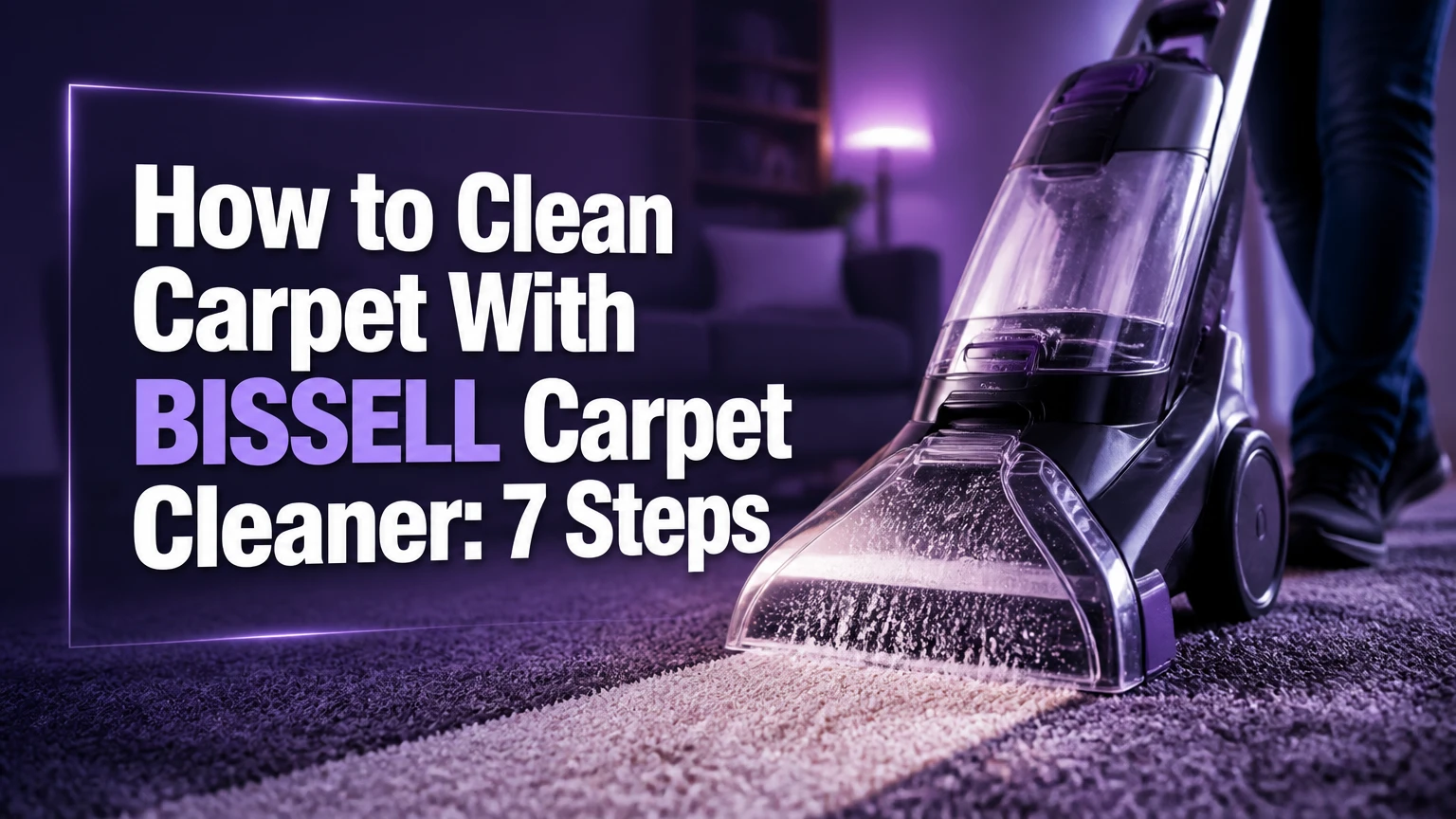
To clean carpet with a BISSELL carpet cleaner, vacuum dry soil first, pretreat stains, fill the machine with the model-approved BISSELL formula and water, then make slow spray passes followed by extra extraction-only passes. Complete one section at a time, avoid saturating the pad, and dry the carpet with ventilation within 4-8 hours.
Key Facts at a Glance
- A BISSELL carpet cleaner injects cleaning solution, agitates carpet fibers, and extracts suspended soil into a separate dirty-water tank.
- BISSELL formula should be measured according to the exact machine manual because tank capacities and concentration requirements differ by model.
- Dry vacuuming before wet cleaning removes hair and grit that otherwise become muddy debris inside the nozzle and brush area.
- A slow cleaning pass followed by one or more trigger-free extraction passes removes more moisture than repeated spraying.
- Typical carpet drying takes 4-8 hours after deep cleaning, although airflow, humidity, carpet thickness, and pad saturation can change that range.
- Never add dish soap, laundry detergent, bleach, boiling water, or unapproved chemicals to a BISSELL carpet cleaner.
What a BISSELL Carpet Cleaner Does
A BISSELL carpet cleaner is a household hot-water extraction machine, also called a carpet extractor or carpet shampooer. The machine applies diluted solution to carpet, loosens soil with brushes or a handheld tool, and vacuums the dirty liquid into a wastewater tank. It does not function like a dry vacuum, and it is not the same as a professional steam-cleaning system.
The cleaning cycle has three connected actions:
- Injection: The pump delivers water and formula through spray jets.
- Agitation: A powered brush roll or handheld brush works the solution through the pile.
- Extraction: A vacuum shoe lifts dirty liquid from the fibers and transfers it to the recovery tank.
The Carpet and Rug Institute recommends following the carpet manufacturer’s cleaning instructions because fiber type, dye stability, backing, and installation method determine whether wet extraction is suitable. A BISSELL machine is generally appropriate for synthetic nylon, polyester, and olefin carpet when the carpet warranty permits water-based extraction. Wool, silk, viscose, loose-lay rugs, and delicate antique textiles require extra caution or professional cleaning.
A BISSELL cleaner removes suspended soil effectively, but it cannot correct every carpet problem. Permanent dye loss, bleach marks, melted fibers, delamination, and urine that has penetrated the pad may remain after cleaning.
Before You Start
Prepare the room, carpet, machine, and drying plan before pressing the spray trigger. Most poor results come from skipped dry vacuuming, excessive formula, slow drying, or treating a stain with the wrong chemistry rather than from insufficient machine power.
| Requirement | Typical amount or time | Practical specification |
|---|---|---|
| Dry vacuuming | 10-20 minutes per room | Two directions, with extra passes in traffic lanes |
| Pretreatment dwell | 5-10 minutes | Keep treated areas damp, never allow spray to dry completely |
| BISSELL formula | Manual-defined | Use the tank cap, fill line, or EasyFill instructions for your model |
| Cleaning water | Model-defined | Use hot tap water only when the manual permits it |
| Drying airflow | 2-4 fans | Aim across the carpet surface, not directly into one wet spot |
| Furniture protection | 4-8 foil or plastic blocks | Place beneath legs that remain in the room |
Before cleaning, check the carpet label or installation documentation. Test the formula in an inconspicuous corner, blot the test area with a white cloth, and inspect for color transfer after it dries. If dye transfers, stop and use a professional cleaner.
Remove small furniture and vacuum beneath movable pieces. Put foil squares or waterproof furniture coasters under legs that must stay in place. Do not return wooden furniture to damp carpet without protection because moisture can transfer dye or damage unfinished feet.
How to Clean Carpet With BISSELL Carpet Cleaner
Use the following seven-step sequence for a BISSELL upright carpet cleaner. Portable Little Green and SpotClean machines use the same basic injection and extraction principle, but their spray trigger, tool angle, tank layout, and recommended motion may differ, so the owner’s manual overrides this general workflow.
Step 1: Clear and Inspect the Carpet
Remove toys, cables, baskets, and furniture from the cleaning area. Inspect the carpet for loose seams, exposed tack strips, damaged backing, and objects that could enter the brush roll.
Do not wet-clean a carpet with detached seams or bubbling. Water can worsen delamination and cause the backing to separate further. Mark fragile areas with removable tape so the machine does not cross them.
You’ll know it worked when: the cleaning path is unobstructed and damaged sections are identified.
Common mistake: dragging furniture across carpet before cleaning, which compresses fibers and leaves hidden debris in the machine path.
Step 2: Vacuum Dry Soil and Treat Stains
Vacuum slowly in two directions, then use a crevice tool along baseboards. Pet owners should remove loose hair from corners and traffic lanes before wet cleaning because long hair can wrap around a brush roll and restrict the nozzle.
Apply a BISSELL-compatible pretreatment to greasy traffic lanes, food spots, and visible stains. Follow the product label for dwell time, usually 5-10 minutes. Blot liquid stains first; rubbing can spread pigment sideways and drive it deeper into the pile.
Use different methods for different soils:
| Soil or stain | First treatment | Dwell or action | Avoid |
|---|---|---|---|
| Fresh urine | Blot, then enzyme pretreatment | Label-defined, often 10-15 minutes | Hot treatment before odor removal |
| Grease or tracked soil | Carpet pretreatment | 5-10 minutes | Undiluted dish soap |
| Red wine or fruit dye | Blot, then labeled carpet stain product | Product-defined | Chlorine bleach |
| Mud | Allow to dry, vacuum thoroughly | 30-60 minutes drying before vacuuming | Wet-cleaning muddy clumps |
| Pet hair | Dry vacuum and remove brush-roll buildup | 2 vacuum directions | Sending loose hair into the extractor |
You’ll know it worked when: loose debris is gone and pretreatment remains slightly damp without puddling.
Common mistake: spraying a large amount of cleaner onto a stain and then repeatedly scrubbing it. Excess liquid increases wicking and drying time.
Step 3: Fill the Clean-Water Tank Correctly
Remove the clean-water tank and fill it according to the model’s manual. Many BISSELL machines use hot tap water, but the permitted temperature and fill procedure vary. Do not use boiling water, microwaved water, or water hotter than the machine instructions allow, because excessive heat can deform plastic components and damage carpet fibers or dyes.
Add only BISSELL formula approved for the specific machine. Some models use a measured cap, while EasyFill systems accept a formula bottle directly. Do not guess the concentration. Too little formula may reduce soil suspension, while too much leaves a sticky residue that attracts dirt.
Never add laundry detergent, dishwashing liquid, fabric softener, bleach, disinfectant, vinegar, or essential oils unless the manufacturer explicitly approves that product for the machine. Suds can interfere with the recovery system, and incompatible chemicals can damage seals or alter carpet color.
You’ll know it worked when: the clean tank reaches its water and formula marks without exceeding either line.
Common mistake: filling the entire tank with concentrated formula. The machine needs diluted solution, not undiluted detergent.
Step 4: Choose the Far Corner and Set Up Drying
Start at the corner farthest from the room entrance and work toward the exit. Plan lanes before spraying so you do not walk repeatedly across freshly cleaned carpet.
Open windows when outdoor humidity is low, run the HVAC system, and position fans to move air across the surface. In humid weather, a dehumidifier can reduce drying time more reliably than an open window.
For an area rug, place a waterproof sheet beneath it only if the rug manufacturer permits wet cleaning and the underlying floor cannot tolerate moisture. Never clean a rug over an unsealed wood floor without confirming that water cannot reach the flooring.
You’ll know it worked when: the exit route remains available and air movement begins before the carpet becomes wet.
Common mistake: leaving drying until the machine is empty. Stagnant humid air prolongs drying and increases odor risk.
Step 5: Make One Controlled Wet Pass
Recline the handle as instructed, turn on the machine, and press the spray trigger. Move slowly along one lane, then return over the same lane while following the model’s operating instructions. A typical pace is about 1 foot per second, but the machine manual and carpet response matter more than a stopwatch.
Overlap the next lane by approximately 2-3 inches. Keep the machine straight because angled passes can leave visible stripes or uneven moisture. On an upright, let the brush roll provide agitation. On a portable cleaner, press the tool firmly enough for the suction channel to contact the carpet without grinding the fibers.
The wet pass should apply enough solution to suspend soil, not flood the carpet. If dirty water rises visibly through the nozzle, extraction is occurring. If the carpet looks glossy or water pools at the lane edge, release the trigger and extract before continuing.
You’ll know it worked when: the lane is evenly damp, not saturated, and the recovered liquid becomes progressively less cloudy.
Common mistake: holding the trigger continuously while moving back and forth over the entire room. That pattern adds water faster than the vacuum can remove it.
Step 6: Extract With Trigger-Free Dry Passes
Release the spray trigger completely and move over the same lane one or more times. These dry passes do not add solution; they use the vacuum to remove dirty water from the carpet.
Continue extraction until the nozzle shows little additional liquid and the carpet feels damp rather than wet. High-pile carpet, dense padding, and heavily soiled areas may require two or three dry passes. A second extraction pass often improves drying more than a second wet pass.
Inspect the lane from several angles. Consistent color, no standing water, and a low-suction sound indicate reasonable extraction. Do not keep spraying simply because the recovered water is still gray. Gray water can result from soil suspended throughout the fiber and does not automatically mean the carpet needs more detergent.
You’ll know it worked when: the surface has no puddles, the machine recovers little liquid, and the cleaned lane does not feel squishy underfoot.
Common mistake: treating a trigger-free pass as optional. Extraction controls drying time and is one of the strongest safeguards against musty odor.
Step 7: Empty, Rinse, and Dry the Machine
Power off the BISSELL carpet cleaner before removing either tank. Empty the recovery tank when it reaches its maximum line, then rinse the tank, lid, float area, and seals with clean water.
Rinse the removable nozzle, brush-roll cover, brush roll, hose, and accessory tool. Remove hair and lint from the brush-roll ends and suction opening. Check the dirty-water float because debris can cause premature suction shutoff.
Allow components to air-dry separately before reassembly. Leave tank lids open and store the machine upright in a dry area. Never seal a wet recovery tank or damp hose inside the machine.
You’ll know it worked when: no gray residue remains, the hose drains freely, and every washable component is dry before storage.
Common mistake: cleaning the carpet but not the machine. Residual formula and pet debris can create odor, restrict airflow, and contaminate the next room.
Which BISSELL Machine Fits the Job?
An upright BISSELL cleaner is usually the efficient choice for whole rooms, while a portable BISSELL spot cleaner is better for stairs, car interiors, upholstery, and isolated spills. The correct choice depends on cleaning width, tank capacity, weight, and whether the job involves a few square feet or several rooms.
| BISSELL category | Typical cleaning area | Typical weight range | Best use | Main limitation |
|---|---|---|---|---|
| Little Green or SpotClean portable | 1-20 sq. ft. per incident | 9-14 lb | Stairs, upholstery, pet spots | Small tanks require frequent refills |
| PowerClean or TurboClean upright | 100-500 sq. ft. per session | 12-18 lb | Apartments and small rooms | Narrower feature set than premium models |
| ProHeat 2X Revolution upright | 500-2,000 sq. ft. per session | 17-25 lb | Whole-floor deep cleaning | Heavier on stairs and harder to store |
| Big Green rental or commercial unit | 1,000-3,000 sq. ft. per session | 40-50 lb | Large areas and severe soil | Bulky transport and higher rental cost |
Portable machines require more manual passes around stains, but their narrow tools improve control. Uprights cover more carpet per stroke and generally agitate more consistently, although they are awkward on stairs and may not fit beneath low furniture.
A rented commercial extractor can make sense for an annual whole-house cleaning. Typical rental pricing is approximately $40-$60 for 24-48 hours, while consumer machines commonly cost about $100-$400 depending on model and included tools. Prices change by retailer, region, promotions, and rental availability.
How Long Does Carpet Take to Dry?
A professionally extracted or carefully cleaned carpet typically dries in 4-8 hours, while lightly cleaned express areas may dry in 30-60 minutes. Dense padding, high humidity, poor ventilation, multiple wet passes, and urine contamination can extend drying beyond 12 hours.
Use touch and compression checks rather than relying only on a clock. Press a clean white towel into the carpet for five seconds. If the towel feels damp or shows transfer, continue airflow and keep furniture off the area.
| Condition | Typical drying time | Recommended response |
|---|---|---|
| Low-moisture spot treatment | 30-60 minutes | Use one extraction pass and a fan |
| Synthetic carpet, moderate cleaning | 4-6 hours | Run HVAC and two fans |
| Dense pile with thick pad | 6-12 hours | Add dehumidification and extra extraction |
| Humid room or over-wet carpet | 12-24 hours | Stop adding water, increase airflow |
| Pet urine in pad | 12 hours or longer | Consider pad treatment or professional inspection |
Do not walk barefoot on damp carpet if oils or cleaning residue remain on your feet. Keep pets away until the surface is dry because paw soil can recontaminate damp fibers.
What Should You Do for Special Situations?
Special carpet materials and stains need modified procedures because a standard BISSELL cycle cannot identify dye instability, backing damage, or contamination below the surface. Use the least aggressive method that can solve the problem, and stop when the carpet responds poorly.
Wool, Silk, and Viscose Rugs
Do not assume a BISSELL machine is safe for wool, silk, viscose, jute, or antique rugs. Check the care label and manufacturer instructions first. Viscose can develop browning, distortion, or texture change after moisture exposure, while wool may bleed or felt under excessive agitation.
A professional rug cleaner is the safer choice for valuable or delicate textiles. A successful test on one corner does not guarantee that a full rug will remain colorfast.
Pet Urine and Odor
Blot fresh urine, apply a labeled enzyme product compatible with the carpet, allow its specified dwell time, and extract carefully. A BISSELL machine can remove surface contamination, but urine that reaches the pad or subfloor may require inspection, pad replacement, or treatment from below.
Avoid masking odor with fragrance or adding disinfectant to the clean tank. Heat and fragrance do not neutralize every urine compound, and incompatible additives can leave residue.
Stairs and Upholstery
Use a BISSELL portable cleaner with the approved stair or upholstery tool. Work in small sections, use short spray bursts, and make several suction-only passes. Upholstery dries more slowly when foam cushions retain water, so do not saturate cushions unless the care code and manufacturer permit water extraction.
Area Rugs
Confirm the rug fiber, backing, dye stability, and floor protection before cleaning. Avoid wet cleaning rugs with latex backing that is cracking, loose fringe, unstable dye, or a label that says “dry clean only.”
What Are the Common Mistakes and Recovery Steps?
Most BISSELL carpet-cleaning failures come from excessive moisture, excess detergent, inadequate extraction, or incorrect stain treatment. The recovery method is usually to stop spraying, remove as much liquid as possible, and improve airflow.
| Failure | Likely cause | Immediate recovery | Prevention |
|---|---|---|---|
| Sticky carpet that resoils quickly | Too much formula or wrong detergent | Extract with clean water only if the manual permits rinsing | Measure BISSELL formula precisely |
| Musty odor | Pad remained wet too long | Run fans and dehumidifier; inspect after drying | Use extra dry passes |
| Brown edges after drying | Soil wicking or fiber browning | Blot, lightly treat, and extract; seek professional help if persistent | Avoid flooding and over-wetting |
| Streaks or stripes | Uneven lane overlap or dirty nozzle | Rinse nozzle and make even extraction passes | Overlap lanes 2-3 inches |
| Pet hair in nozzle | Inadequate dry vacuuming | Power off and remove hair manually | Vacuum in two directions |
| Color bleeding | Unstable dye or unsuitable chemical | Stop immediately and blot with white towels | Perform an inconspicuous test |
Expert rule: one additional dry pass is usually safer than one additional wet pass. The dry pass removes moisture; another spray pass may push water into the pad faster than the extractor can recover it.
Expert rule: do not judge cleaning quality by wastewater color alone. Gray recovery water may remain after effective soil suspension, while clear water can occur when a lightly soiled surface has already been cleaned.
Expert rule: the recovery tank and nozzle are part of the cleaning system. A blocked air path can reduce extraction so severely that an otherwise correct chemical and motion sequence still leaves the carpet wet.
How Do You Troubleshoot a BISSELL Cleaner?
Check the tank seating, trigger, spray jets, hose door, dirty-water float, nozzle seal, and filter before assuming the pump or vacuum motor has failed. Troubleshoot in that order because simple seating and blockage problems are more common than major component failure.
The Machine Does Not Spray
Turn off and unplug the machine. Remove and reseat the clean-water tank until it sits fully in its cradle, then verify that the tank cap is sealed and the trigger operates normally.
Inspect spray tips for dried formula or hair. Clean them only as the manual permits; avoid forcing a metal pin into a jet because the opening can be damaged or enlarged. If the machine has a hose mode, check that the accessory door is closed when the floor head is in use.
If the machine still does not spray, consult the model-specific BISSELL support page. Pump priming, belt, and internal-valve procedures differ across product families.
The Machine Has Weak or No Suction
Empty the dirty-water tank first. A full tank can activate the float shutoff and stop liquid recovery.
Next, reseat the lid, inspect the rubber gasket, close the hose-access door, and clear lint from the nozzle and brush-roll channel. A small gap around the recovery lid can admit air and reduce suction even when the motor sounds normal.
Do not operate the machine with a missing filter, damaged gasket, or cracked tank. Continued use can spread liquid into areas that are not designed for water.
The Brush Roll Does Not Turn
Switch off and unplug the cleaner before inspecting the brush roll. Remove wrapped hair, thread, and carpet fibers from the ends, then check whether the brush cover is correctly installed.
A damaged belt, seized end bearing, or motor fault requires model-specific repair. Do not pull a jammed brush roll while the machine is powered because the motor can overheat.
Time, Cost, and Formula Planning
Cleaning one average bedroom usually takes 30-60 minutes of preparation and machine work, followed by 4-8 hours of drying. A heavily furnished living room can take longer because moving furniture, vacuuming edges, and making extra extraction passes often consume more time than the spray cycle itself.
Typical consumer costs include $0 for an owned machine, approximately $5-$15 of formula for a single-room session, and roughly $40-$60 for a 24-48-hour rental. A new BISSELL portable cleaner commonly falls near $100-$170, while upright models often range from $150-$400. These are typical retail ranges, not fixed manufacturer prices.
Plan formula by the model’s tank instructions rather than by room size. A large room may need multiple tank fills, and overconcentrating each fill does not make the cleaning proportionally stronger. It usually creates residue instead.
FAQ
Can I use vinegar in a BISSELL carpet cleaner?
Do not add vinegar unless BISSELL and the carpet manufacturer specifically approve it for your model and fiber. Vinegar can alter pH, affect dyes or backings, and interact poorly with other residues. Use a BISSELL-approved extraction formula and apply a separate labeled spot treatment when appropriate.
Should I rinse carpet after using BISSELL formula?
A separate rinse is not automatically required. Use the formula concentration printed in the manual, then make trigger-free extraction passes. If the carpet feels sticky after drying, a clean-water rinse may help only when the machine manual and carpet warranty permit it.
Can a BISSELL carpet cleaner remove old stains?
A BISSELL carpet cleaner can reduce many old food, soil, and pet stains, but it cannot restore fiber that has permanently changed color. Test pretreatment first, use the recommended dwell time, and avoid repeated wet cycles when the stain is actually dye loss or bleach damage.
How often should carpet be cleaned with a BISSELL machine?
Clean high-traffic synthetic carpet about every 6-12 months, with spot treatment after spills. Homes with pets, children, allergies, or frequent outdoor soil may need more frequent cleaning, but repeated deep extraction before the carpet dries fully can damage the pad and increase odor.
Can I walk on carpet immediately after cleaning?
Limit traffic until the carpet is dry, typically 4-8 hours after deep cleaning. If walking is unavoidable, wear clean socks, use the shortest route, and keep pets away. Footwear and bare feet can transfer soil or oils to damp fibers.
Why does carpet look clean and then become dirty again?
Rapid resoiling usually results from detergent residue, incomplete extraction, or soil wicking from the backing. Reduce formula concentration, make more dry passes, and improve airflow. If spots return after the carpet dries, contamination may be below the visible pile.
The Bottom Line
To clean carpet with BISSELL carpet cleaner successfully, vacuum and pretreat first, use the correct diluted formula, spray slowly in overlapping lanes, and spend extra time extracting without the trigger. Keep the carpet only as wet as necessary, dry it with active airflow, and rinse every machine component before storage. That sequence delivers cleaner fibers while reducing residue, odor, and backing damage.