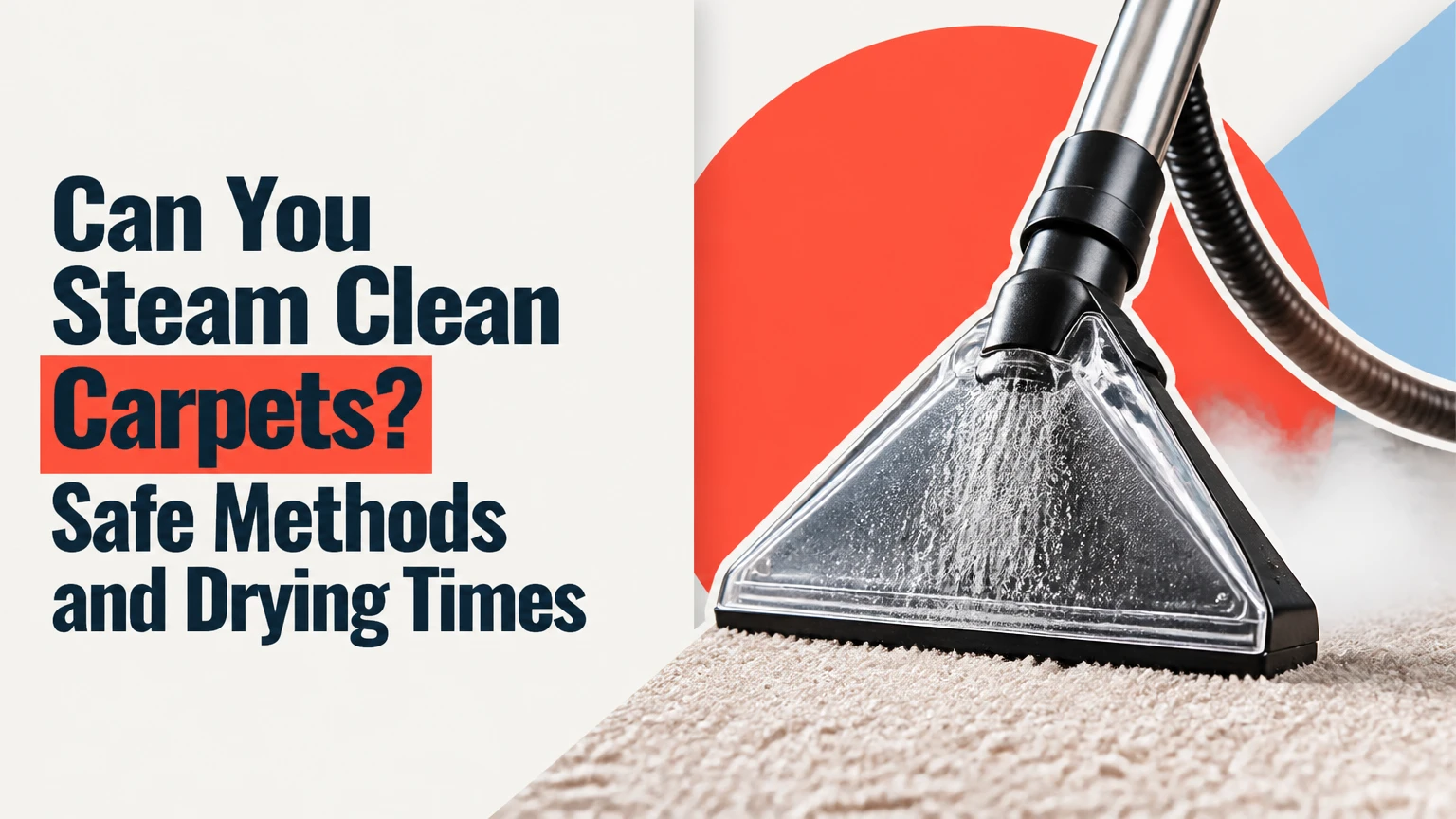
Yes, you can steam clean most synthetic carpets, but the technical method is hot water extraction rather than dry steam cleaning. Hot water extraction sprays heated water and cleaning solution into carpet fibers, then removes suspended soil and moisture with powerful vacuum recovery. The method cleans deeply when the carpet fiber, backing, and drying conditions are suitable.
Key Facts at a Glance
- Professional carpet “steam cleaning” usually means hot water extraction, abbreviated HWE.
- Carpet should feel dry within about 6-12 hours after a well-executed professional cleaning.
- Rental machines commonly leave more moisture than truck-mounted systems because they use less heat and weaker vacuum recovery.
- Wool, viscose, jute, silk, and unstable carpet backings require fiber-specific testing before wet cleaning.
- More detergent does not produce a cleaner carpet; leftover surfactant can accelerate resoiling.
- Carpet manufacturers commonly recommend professional cleaning every 12-18 months, but warranty instructions take priority.
Can You Steam Clean Carpets Safely?
You can safely steam clean nylon, polyester, and many olefin carpets when you use the correct solution, moderate moisture, and enough vacuum-only passes. Hot water extraction becomes risky when a cleaner floods the pad, applies excessive heat to natural fibers, overwets unstable backing, or leaves the carpet damp for an extended period.
The word “steam” causes confusion. Standard carpet equipment generally does not inject dry steam into the pile. Instead, the machine delivers hot water, detergent, or both, while a vacuum head recovers the liquid almost immediately. Professional truck-mounted units usually recover moisture more effectively than consumer rentals.
The Environmental Protection Agency states, “The best way to control mold growth is to control moisture.” That principle matters more than a machine’s advertised temperature. A moderately hot system with strong recovery and effective airflow can produce a safer result than a hotter machine that leaves the pad saturated.
What Is Hot Water Extraction?
Hot water extraction is a carpet-cleaning process that combines pre-treatment, controlled water application, agitation, and immediate vacuum recovery. The solution loosens oily and particulate soil, while the recovery system removes liquid carrying dissolved or suspended contamination.
The water temperature at the machine can differ substantially from the temperature reaching carpet fibers. Pressure, hose length, spray-tip design, fiber type, and operator technique all affect the final result. A claim that one temperature guarantees sanitation is therefore unreliable.
Hot water extraction can remove embedded dry soil, food residue, pet dander, and many water-soluble stains. It cannot guarantee removal of every dye, oxidized stain, odor molecule, or contaminant inside a saturated pad.
How Does Carpet Steam Cleaning Work?
Carpet steam cleaning works by loosening soil with a pre-spray and heated rinse, then extracting the liquid before it remains in the backing. The cleaning result depends on four linked variables: chemical action, heat, agitation, and time, followed by sufficient vacuum recovery.
1. Remove Dry Soil First
Vacuum slowly in two directions before applying liquid. A large share of ordinary carpet soil is dry particulate matter, so removing it first reduces the amount that can become wet sludge during extraction.
Empty the vacuum bag or canister before starting. Check edges, stairs, and traffic lanes because those areas often contain more grit than open floor.
2. Apply a Compatible Pre-Spray
Use the product label’s dilution, commonly measured in ounces per gallon. Apply enough to dampen the pile without soaking the backing. Alkaline products often suit synthetic carpet with greasy traffic-lane soil, while wool usually requires a wool-safe, near-neutral product.
Keep pre-spray away from unsealed wood, metal furniture feet, and natural stone. Test a hidden area for color transfer before treating the room.
3. Agitate High-Traffic Areas
Work the pre-spray into dense or greasy carpet with a carpet brush or suitable counter-rotating machine. Agitation improves contact between the cleaning chemistry and soil, but aggressive brushing can damage looped, cut-loop, or fragile fibers.
Allow the product to dwell for the label’s stated time, often 5-10 minutes. Do not allow the treated carpet to dry before extraction.
4. Extract in Controlled Passes
Move the extraction wand slowly enough for the vacuum to recover liquid, but do not hold the spray trigger continuously. Make overlapping wet passes, then return over each section with the trigger released.
A practical rental rule is one wet pass followed by two or more slow suction-only passes. This is a guideline, not a guarantee, because machine performance and carpet construction vary.
5. Groom and Accelerate Drying
Use a carpet rake only when the carpet construction permits it, then place air movers so air crosses the surface. Open windows only when outdoor air is drier than indoor air; otherwise, use air conditioning or a dehumidifier.
You will know the process worked when the pile feels evenly damp rather than wet, no liquid transfers to a white towel, and the carpet loses its cool, clammy feel during drying.
What Equipment Can You Use?
Equipment choice affects heat, spray pressure, recovery strength, and drying time. Truck-mounted HWE generally produces the deepest rinse and fastest drying, while rental units cost less but require slower work and careful moisture control.
| Equipment type | Typical solution temperature | Typical pressure | Typical drying time |
|---|---|---|---|
| Truck-mounted HWE | 180-240°F at the machine | 300-500 PSI | 4-8 hours |
| Professional portable extractor | 140-200°F | 100-300 PSI | 6-12 hours |
| Consumer rental extractor | 100-160°F | 20-100 PSI | 12-24 hours |
| Dry-vapor machine | 250-310°F vapor | Manufacturer-specific | 1-4 hours |
Temperature and pressure figures are typical operating ranges, not universal specifications. Hose length, water flow, vacuum motor design, carpet density, and indoor humidity can change the outcome substantially.
Dry-vapor equipment uses very little water and can help with light surface cleaning or targeted sanitation. It does not provide the flushing volume or soil recovery required for heavily soiled wall-to-wall carpet.
Is a Rental Machine Good Enough?
A rental machine can improve a moderately dirty synthetic carpet, especially when the operator vacuums thoroughly and removes moisture with repeated suction passes. A rental machine is less suitable for thick carpet, severe pet contamination, large rooms, or a carpet that already has a damp odor.
Do not judge cleaning quality by the amount of dirty water in the tank. Some recovered water may come from the machine’s rinse, while poor recovery can leave soil and moisture in the pad.
Which Carpet Fibers Can You Steam Clean?
Nylon and polyester carpet usually tolerate properly controlled hot water extraction, while wool, viscose, jute, cotton, and silk need specialized procedures. Fiber identification should come before chemical selection because heat, alkalinity, agitation, and moisture affect each material differently.
| Fiber or construction | Wet-cleaning suitability | Main risk | Practical approach |
|---|---|---|---|
| Nylon | Usually suitable | Dye bleeding or browning | Test colorfastness, use controlled rinse |
| Polyester | Usually suitable | Oily soil and slow drying | Pre-treat grease, extract thoroughly |
| Olefin or polypropylene | Usually suitable | Crushing and petroleum-based stains | Use moderate heat and careful agitation |
| Wool | Specialist only | Shrinkage, felting, browning | Use wool-safe chemistry and low moisture |
| Viscose or rayon | Usually unsuitable for DIY | Browning, distortion, cellulosic damage | Use a rug specialist |
| Jute, cotton, or silk | Specialist only | Bleeding, shrinkage, structural damage | Follow manufacturer or conservator guidance |
Wool is not automatically damaged by every hot-water process, but uncontrolled heat, alkaline chemistry, and aggressive agitation can cause permanent changes. Never assume a “steam cleaner” setting is safe because the carpet looks thick or expensive.
Viscose is particularly deceptive. The fiber may look dry at the surface while its wet strength and appearance change underneath, creating fuzzing, browning, or texture distortion.
How Long Does Carpet Take to Dry?
Professionally extracted carpet typically dries in 4-12 hours, while a rental-machine job can take 12-24 hours or longer. Drying time increases with high indoor humidity, a wet pad, dense pile, poor ventilation, cool temperatures, and excessive solution application.
| Condition | Typical drying range | Recommended action |
|---|---|---|
| Professional HWE, low humidity | 4-8 hours | Run fans and normal HVAC |
| Professional HWE, humid weather | 8-16 hours | Use dehumidification and air movement |
| Rental machine, synthetic carpet | 12-24 hours | Make extra suction-only passes |
| Thick pile or saturated pad | 24-48 hours | Stop foot traffic and seek professional drying |
| Wool or specialty rug | 12-72 hours | Follow specialist drying instructions |
Keep people and pets off the carpet until it is nearly dry. Place foil or protective blocks under furniture legs if furniture must return before complete drying, and never place rust-prone metal directly on damp carpet.
If a carpet remains wet after 24 hours, inspect the pad and room humidity rather than adding fragrance or more cleaning product. A musty smell, browning, or persistent coolness indicates a moisture-management problem.
How Much Does Carpet Steam Cleaning Cost?
Professional hot water extraction commonly costs about $0.20-$0.50 per square foot, or roughly $120-$250 for a typical multi-room home in the United States. Actual pricing varies with minimum service charges, stairs, furniture movement, heavy soil, pet treatment, location, and carpet accessibility.
| Cleaning option | Typical base cost | Consumables or add-ons | Typical time |
|---|---|---|---|
| Consumer rental | $30-$60 per day | $15-$35 solution | 3-8 hours |
| Professional portable | $100-$300 per visit | $20-$75 specialty treatment | 2-5 hours |
| Truck-mounted HWE | $120-$250 typical home | $20-$150 pet or stain treatment | 1.5-4 hours |
| Low-moisture encapsulation | $0.15-$0.35 per square foot | $0-$100 furniture or odor work | 1-3 hours |
Ask whether a quote includes pre-vacuuming, pre-treatment, deodorizer, stairs, furniture movement, and return visits for unresolved stains. A low advertised room price may exclude minimum charges or required treatment.
Cleaning frequency should follow traffic and warranty instructions. A household with children, pets, or muddy entrances may need targeted cleaning more often than a lightly used adult-only home.
Is Steam Cleaning Better Than Other Methods?
Hot water extraction is usually the strongest choice for embedded soil and contaminated carpet, while encapsulation is better when rapid drying matters. No method is best for every carpet because soil depth, fiber stability, occupancy, and drying capacity determine the appropriate process.
| Method | Soil depth reached | Typical drying time | Best use |
|---|---|---|---|
| Hot water extraction | Deep pile and backing when recovered correctly | 4-24 hours | Periodic restorative cleaning |
| Encapsulation | Surface and upper pile | 1-2 hours | Commercial maintenance |
| Bonnet cleaning | Mostly surface pile | 1-4 hours | Short-term appearance improvement |
| Dry compound cleaning | Surface and moderate pile | 1-4 hours | Moisture-sensitive settings |
| Shampooing | Surface to moderate pile | 12-48 hours | Older systems with strong recovery limits |
Encapsulation uses polymer chemistry to surround soil, which is later removed through vacuuming. It works well for routine commercial maintenance but cannot substitute for deep extraction after severe oil, urine, or sediment buildup.
Bonnet cleaning can improve appearance quickly, but rotary action may redistribute soil instead of removing it from the backing. Shampooing can leave detergent residue when the rinse and recovery stages are weak.
How Do You Handle Stains, Pet Odor, and Wicking?
Hot water extraction removes many residues, but stain and odor success depends on the substance, age, dye stability, and contamination depth. Surface pet urine may improve after extraction, while urine that reached the pad or subfloor usually needs targeted subsurface treatment or material replacement.
Returning Stains
A stain that reappears during drying is often wicking. Residue in the carpet backing or pad moves upward as moisture evaporates.
Blot the area with a clean white towel, avoid adding household detergent, and contact the cleaner if the stain returns repeatedly. A professional may need a controlled spot treatment, weighted towel extraction, or localized pad replacement.
Pet Urine
Black-light detection can identify some urine residues, but it cannot measure contamination depth or prove that every affected area is clean. Enzyme products may help with suitable organic residues, but they require correct dwell time and cannot repair chemically damaged fibers.
For repeated odor, request moisture mapping, subsurface extraction, and an inspection beneath the carpet. Repeatedly spraying fragrance masks the symptom while leaving the source in place.
Red Wine, Coffee, and Dye Transfer
Do not scrub colored spills aggressively. Blot from the outside toward the center, remove solids with a spoon, and avoid mixing vinegar, bleach, ammonia, and commercial products.
Some stains are permanent because the dye has chemically altered the fiber. Professional cleaning can remove soil around the stain without restoring the original color.
What Mistakes Cause Carpet Cleaning Problems?
The most damaging carpet-cleaning mistakes are over-wetting, excess detergent, unsuitable chemistry, aggressive agitation, and delayed drying. Each mistake increases the chance of residue, browning, shrinkage, odor, or stains returning from the backing.
- Applying too much water: Use shorter trigger passes and more suction-only passes. If the pad is saturated, stop cleaning and increase air movement.
- Adding extra detergent: Follow the product dilution exactly. Residue can make carpet feel sticky and attract soil faster.
- Skipping dry vacuuming: Remove grit before wet cleaning so abrasive particles do not remain in the pile.
- Using household laundry detergent: Laundry products can foam excessively and leave optical brighteners or residue.
- Ignoring furniture and backing: Test for color transfer and protect wood, painted surfaces, and metal legs.
- Cleaning without a drying plan: Fans, HVAC, and dehumidification should be ready before water is applied.
A counterintuitive practitioner rule is that slow vacuum recovery usually matters more than maximum spray heat. Heat helps loosen soil, but unrecovered water carries that soil into the backing and extends drying.
Another rule is to clean the least soiled areas first and the traffic lanes last. The sequence reduces cross-contamination on equipment and gives heavily soiled zones the longest controlled dwell time.
When Should You Hire a Professional?
Hire a professional for wool or viscose carpet, widespread pet urine, flood exposure, severe odor, large areas, delicate rugs, or carpet that remains wet after a DIY attempt. Professional equipment provides stronger recovery, while trained technicians can test fibers, identify backing problems, and use subsurface tools.
Professional cleaning is also sensible when the carpet warranty specifies a particular method or when the cost of replacement is high. Request the cleaning system, expected drying time, chemical types, included services, and treatment limits in writing.
A professional cannot guarantee removal of permanent dye damage, bleach marks, delamination, or odor trapped in a deteriorated pad. Honest service includes identifying when cleaning will not restore the original condition.
How Should You Choose a Cleaning Method?
Choose hot water extraction for deep soil, annual restorative cleaning, and many residential carpets; choose encapsulation for frequent commercial maintenance with a short drying window. Choose specialist low-moisture or hand-cleaning procedures for vulnerable fibers, unstable rugs, and moisture-sensitive construction.
For a Pet-Owning Household
Use professional HWE for routine deep cleaning, but request separate urine assessment when odor persists. Do not treat extraction alone as guaranteed disinfection or subsurface odor removal.
For a Rental Home
Photograph stains before cleaning, check the lease requirements, and use a method that can dry within the available vacancy period. Keep receipts and record the machine, solution, and drying time.
For a Commercial Office
Use encapsulation monthly or as traffic requires, then schedule deeper extraction when soil accumulates. HWE may be more appropriate during a weekend closure than during occupied hours.
For a Budget DIY Job
Choose a rental extractor only for colorfast synthetic carpet in fair condition. Pre-vacuum, use label dilution, move slowly, and make enough suction-only passes to leave the pile damp rather than wet.
FAQ
Can I Steam Clean Carpet With a Regular Steam Mop?
A regular steam mop is not designed to flush and recover soil from wall-to-wall carpet. Steam can damage some fibers, adhesives, and backings, while the mop leaves loosened soil and moisture behind. Use a carpet extractor designed for the specific fiber, or hire a technician for broad areas.
Does Steam Cleaning Kill Dust Mites?
Hot water extraction can reduce dust mites and allergen-containing debris when heat, contact, and recovery are adequate, but performance is not a universal 99.9% guarantee. Washing bedding, controlling humidity, and using effective vacuum filtration remain necessary because carpet cleaning does not prevent future allergen buildup.
Can I Steam Clean Carpet Without Detergent?
You can rinse and extract with heated water, but water alone may not dissolve oily traffic-lane soil. A compatible pre-spray improves soil suspension, while excessive detergent creates residue. For wool and sensitive fibers, use only a product approved for that material and follow its dilution instructions.
Should I Vacuum After Steam Cleaning?
Vacuum before hot water extraction, not immediately after while the carpet is damp. Once the carpet is fully dry, a gentle vacuuming pass can remove remaining crystallized soil or loosened particles. Aggressive vacuuming on damp carpet can distort the pile and stress seams.
Can Steam Cleaning Remove Mold From Carpet?
Hot water extraction is not a complete mold-remediation method. Porous carpet and pad exposed to substantial mold growth or floodwater may require removal, containment, and structural drying under professional remediation guidance. Cleaning surface soil does not prove that hidden microbial growth has been eliminated.
How Often Can You Steam Clean Carpet?
Many homes need professional deep extraction every 12-18 months, while high-traffic homes may need targeted cleaning sooner. Cleaning too frequently with excessive moisture can damage carpet or accelerate resoiling, so routine vacuuming and prompt spot treatment should carry most of the maintenance load.
The Bottom Line
Can you steam clean carpets? Yes, hot water extraction is an effective deep-cleaning method for many synthetic carpets when the operator controls solution, heat, agitation, and moisture recovery. Use a rental machine for limited DIY work, hire a professional for specialty fibers or deep contamination, and treat complete drying as part of the cleaning process rather than an optional final step.