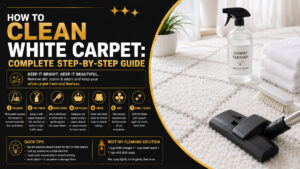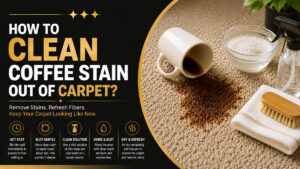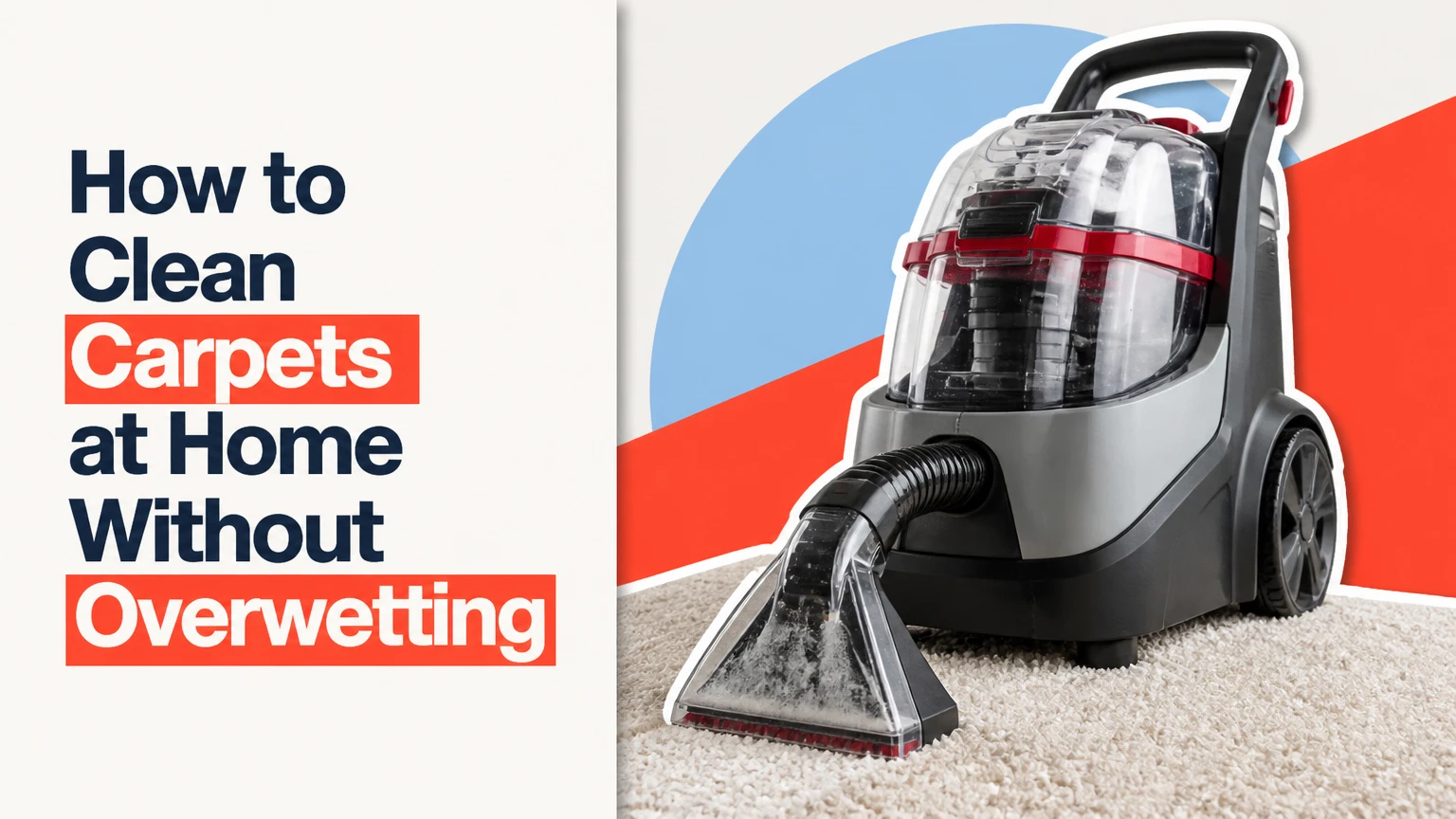
To clean carpets at home, remove loose soil with slow vacuuming, test the cleaner, pre-treat stains, use the least moisture that works, extract with overlapping passes, and dry the carpet quickly. Hot-water extraction gives the deepest clean for compatible synthetic carpet, while low-moisture or dry methods suit delicate fibers, apartments, and fast-drying needs.
At a Glance
Dry vacuuming before wet cleaning prevents loose soil from becoming muddy residue.
Carpet-cleaning machines work best with slow, overlapping passes and minimal detergent.
Carpet should usually dry within 6-12 hours after thorough hot-water extraction.
Wool, jute, viscose, and unknown fibers require a label check and cautious testing.
Pet urine that reaches carpet padding often requires inspection below the surface.
Vinegar is not automatically safe for every carpet fiber, backing, or machine.
How Does Carpet Cleaning Remove Embedded Dirt?
Carpet cleaning removes embedded dirt through four interacting actions: chemical separation, heat, agitation, and dwell time. This model is often summarized as CHAT, a framework used in professional cleaning to explain why one aggressive step rarely produces the best result.
A detergent loosens oily soil from carpet fibers. Warm water accelerates that separation, while brushing or the machine’s agitation breaks soil loose from the pile. Dwell time gives the pre-spray approximately 10-15 minutes to work before extraction, provided the product does not dry.
Dry soil should be vacuumed first. Carpet and Rug Institute guidance consistently places regular vacuuming at the center of carpet maintenance because frequent soil removal reduces abrasion against fibers. Wet cleaning then removes material that ordinary vacuuming cannot lift, including oily residue and particles held near the backing.
The strongest cleaning method depends on fiber, soil, moisture tolerance, and drying conditions. More water is not automatically a deeper clean.
What Should You Do Before Cleaning Carpet?
Before cleaning carpet, remove portable furniture, inspect the fiber label, vacuum edges and the full floor, and test every chemical in a hidden area. Preparation prevents color bleeding, furniture stains, and avoidable overwetting.
- Read the care label. Identify wool, nylon, polyester, polypropylene, jute, or viscose. Stop if the label says dry clean only.
- Move what you safely can. Place foil or waterproof blocks under furniture that must remain.
- Vacuum slowly. Make north-south passes, then east-west passes, concentrating on edges and traffic lanes.
- Inspect stains. Identify grease, protein, tannin, dye, mud, or unknown contamination.
- Test the product. Apply a small amount to an inconspicuous area, blot with white cloth, and check color transfer after drying.
- Protect nearby surfaces. Tape vulnerable baseboards and keep cleaning solution away from unsealed wood.
A household vacuum may remove a large share of loose dry soil, but the exact percentage varies by pile height, vacuum design, and maintenance. Preparation is also the moment to identify carpet that should not receive home extraction.
How Do You Deep-Clean Carpet With a Machine?
Deep-clean carpet with a machine by vacuuming first, applying a compatible pre-spray, extracting with controlled moisture, and completing extra suction passes. A six-stage sequence produces more reliable results than repeatedly soaking a visibly dirty patch.
- Clear and vacuum. Remove furniture and loose soil before adding liquid.
- Pre-treat. Apply a carpet-safe product to traffic lanes and stains. Keep the surface damp for 10-15 minutes.
- Fill correctly. Use the manufacturer’s measured detergent ratio and warm water, not an improvised concentrated mixture.
- Extract slowly. Move at roughly 1 foot per second, using overlapping passes. Follow the machine manual if its speed differs.
- Make dry passes. Release the solution trigger and make suction-only passes until little water enters the recovery tank.
- Dry immediately. Open suitable windows, run fans, and limit traffic until the carpet is fully dry.
Clean one manageable section at a time. A homeowner should not make a second wet pass merely because the carpet looks darker during cleaning. That temporary color change is normal; excessive moisture is not.
How Much Water and Detergent Should You Use?
Use enough solution to clean the pile, but never enough to saturate the backing or padding. The correct amount depends on the machine, carpet density, soil load, and manufacturer’s formula, so the machine’s marked fill line and detergent instructions take priority.
| Situation | Typical approach | Main limit |
|---|---|---|
| Lightly soiled synthetic carpet | One controlled wet pass | Avoid repeated trigger pulls |
| Heavy traffic lane | Pre-spray plus one slow extraction pass | Do not flood the lane |
| Low-pile apartment carpet | Low-moisture or fast extraction | Protect flooring below |
| Wool or unknown fiber | Label-approved low-moisture method | Stop if dye transfers |
| Pet-contaminated area | Enzyme product plus targeted extraction | Inspect the pad if odor persists |
Too much detergent leaves sticky residue that attracts new soil. Too much water delays drying and can affect carpet adhesive, padding, and the subfloor. A practical rule is to make the carpet damp, not saturated, and to follow wet cleaning with several suction-only passes.
Do not add white vinegar to a machine reservoir unless the machine and carpet-care instructions permit it. Acidic products can affect seals, finishes, dyes, and warranties.
How Long Does Carpet Take to Dry After Cleaning?
Carpet usually takes 6-12 hours to dry after careful hot-water extraction, although humidity, airflow, carpet density, padding, and water volume can extend drying beyond 24 hours. Low-moisture methods commonly dry in 1-2 hours.
| Cleaning situation | Typical drying range | Conditions that extend it |
|---|---|---|
| Small spot clean | 2-4 hours | Dense pile or poor airflow |
| Hot-water extraction | 6-12 hours | Humidity, thick pad, over-wetting |
| VLM encapsulation | 1-2 hours | Heavy soil and weak ventilation |
| Dry powder cleaning | Immediate to 1 hour | Residual powder or damp compound |
| Humid basement | 12-24 hours | Closed windows and high humidity |
Use box fans to move air across the carpet, ceiling fans to circulate air, and a dehumidifier to lower indoor moisture. Keep children, pets, and furniture off the area until the fibers and backing feel dry.
A carpet that feels dry on top may still hold moisture underneath. If a musty odor develops, increase airflow immediately and check the padding rather than masking the smell with fragrance.
Which Carpet-Cleaning Method Is Best for Your Situation?
Hot-water extraction is usually best for heavily soiled, colorfast synthetic carpet, while encapsulation suits routine maintenance and dry powder suits moisture-sensitive situations. No method is universally best because fiber construction and drying conditions change the risk.
| Method | Best use | Equipment cost | Typical drying time |
|---|---|---|---|
| Hot-water extraction | Heavy soil and periodic deep cleaning | $30-$50 rental | 6-12 hours |
| VLM encapsulation | Maintenance and quick room turnover | $100-$200 machine | 1-2 hours |
| Dry powder | Delicate or moisture-limited carpet | $20-$40 powder | Immediate to 1 hour |
| Manual spot cleaning | Small spills and emergencies | $5-$10 supplies | 2-4 hours |
Hot-water extraction removes suspended soil deeply but creates the greatest overwetting risk. Encapsulation leaves crystallized soil for later vacuum removal and may not remove contamination deep in the backing. Dry powder reduces water exposure but can leave residue if vacuuming is incomplete.
For rented homes, low-pile synthetic carpet, or uncertain drying conditions, a low-moisture approach is often safer than an ambitious deep extraction.
Can You Clean Carpet Without a Machine?
Yes, you can clean carpet without a machine when the problem is surface soil, odor, or a small fresh spill. Manual cleaning is unsuitable for large areas, deeply embedded grease, widespread pet urine, or carpet that needs substantial water recovery.
- Vacuum the area slowly in two directions.
- Blot liquid with white towels, working from the outside toward the center.
- Apply a small amount of labeled carpet spot cleaner.
- Agitate lightly with a soft brush only when the product instructions allow it.
- Blot again, then rinse with a small amount of clean water.
- Dry the spot with airflow and vacuum when completely dry.
Baking soda can reduce odors temporarily, but baking soda does not remove the contamination causing urine odor or grease. Club soda is not a universal stain remover, and vinegar should not be mixed with bleach, ammonia, or unknown chemicals.
Manual spot cleaning works because it controls moisture. The common failure is applying too much liquid, which pushes the spill into the backing and encourages wicking.
How Do You Clean Wool, Nylon, and Polyester Carpet?
Wool carpet needs the most conservative cleaning, nylon generally tolerates controlled hot-water extraction, and polyester often resists water-based staining but can retain oily residue. Fiber identification should determine the method before any product touches the floor.
| Fiber | Normal characteristic | Safer home approach | Main warning |
|---|---|---|---|
| Wool | Absorbent and dye-sensitive | Wool-approved low-moisture cleaning | Avoid alkaline products and heat |
| Nylon | Durable and resilient | Label-approved extraction | Test dyes and protect backing |
| Polyester | Hydrophobic and stain-resistant | Low-moisture or controlled extraction | Grease can cling to fibers |
| Polypropylene | Moisture-resistant | Targeted cleaning and extraction | Oils may spread visibly |
| Viscose | Highly moisture-sensitive | Professional cleaning preferred | Water can distort or brown fiber |
Wool should not receive a generic enzyme, bleach, or high-pH cleaner unless the manufacturer specifically approves it. Viscose, jute, sisal, and antique rugs are poor candidates for casual home shampooing because moisture can cause shrinkage, browning, texture change, or dye migration.
If the carpet label is missing, test a hidden area and choose the lowest-moisture compatible method.
How Do You Remove Common Carpet Stains?
Remove common carpet stains by identifying the substance, lifting solids, blotting liquid, and applying a product designed for that stain. Treating an unknown mark with several chemicals in succession can permanently set color or damage the fiber.
| Stain | First response | Suitable treatment direction |
|---|---|---|
| Coffee or tea | Blot immediately | Tannin-targeted carpet product |
| Grease or oil | Lift solids without spreading | Carpet-safe solvent or degreaser |
| Mud | Let it dry, then vacuum | Mild detergent for remaining mark |
| Blood | Blot with cool water | Protein stain product |
| Red wine | Blot, do not scrub | Manufacturer-approved oxygen product |
| Pet urine | Absorb, then treat deeply | Enzyme cleaner made for carpet |
Apply products to a white cloth or small area first when the label permits. Work from the stain’s outer edge toward the center to reduce spreading. Rubbing back and forth can fray carpet twist, a defect sometimes called blooming.
Never combine bleach, ammonia, vinegar, peroxide, or commercial stain removers. A chemical reaction can create hazardous vapors or produce a larger discolored patch than the original stain.
How Do You Clean Pet Urine From Carpet?
Clean fresh pet urine by absorbing as much liquid as possible, applying a carpet-labeled enzyme cleaner at the contamination depth, and extracting without flooding the floor. If urine has reached the pad or subfloor, surface treatment alone may not remove the odor.
For a fresh accident, place several white towels over the area and press firmly. Do not scrub. Apply an enzyme product according to its label, allowing the required dwell time while keeping the area damp, then blot or extract as directed.
Use ultraviolet inspection cautiously because old urine spots can appear larger than expected. A persistent odor after drying usually indicates contamination below the carpet face. The pad may need localized replacement, and contaminated subfloor may require sealing after professional assessment.
Pet zones often need cleaning every 3-6 months, depending on accidents, traffic, and odor. Avoid ammonia-based products because ammonia-like odor can encourage repeat marking in some animals.
Keep pets away until the carpet is completely dry and all product instructions permit re-entry.
How Often Should Carpet Be Cleaned?
Most homes should vacuum carpet at least once weekly and deep-clean every 6-12 months. Homes with pets, allergies, young children, or heavy entry traffic may need targeted cleaning every 3-6 months.
| Household condition | Vacuuming | Deep-cleaning guideline |
|---|---|---|
| One or two adults | Weekly | Every 12 months |
| Children under five | 2-4 times weekly | Every 6-12 months |
| Indoor pets | 2-4 times weekly | Every 3-6 months |
| Allergy-sensitive household | 2-7 times weekly | Every 6 months |
| Heavy shoes-at-door traffic | Daily lanes as needed | Every 3-6 months |
The schedule should respond to soil load, not a rigid calendar. Carpet that looks clean may still contain abrasive grit, while a lightly used guest room may need less frequent extraction.
Use entry mats, remove outdoor shoes, and vacuum slowly enough for the machine to lift soil. Frequent dry maintenance usually extends the interval between wet cleanings and reduces the need for aggressive chemical treatment.
What Mistakes Damage Carpet During Cleaning?
The most damaging carpet-cleaning mistakes are over-wetting, excessive detergent, aggressive scrubbing, skipped testing, and delayed drying. Each mistake creates a different failure, so repeating the same cleaning pass rarely solves the underlying problem.
- Over-wetting: Moisture can reach carpet backing, adhesive, padding, and wood subfloors.
- Over-dosing detergent: Sticky residue attracts soil and leaves fibers crunchy.
- Scrubbing hard: Friction can distort the pile and spread a stain.
- Skipping a test patch: Dyes can bleed or lighten unexpectedly.
- Ignoring ventilation: Slow drying encourages musty odors and microbial growth.
- Using household chemistry blindly: Vinegar, bleach, ammonia, and peroxide are not interchangeable.
- Walking too soon: Traffic presses damp soil back into the pile.
Do not assume a hotter setting produces a better result. Wool and some dyed carpets can react badly to heat or alkaline chemistry, while synthetic carpet can still suffer from excessive moisture.
The professional rule is simple: use the least aggressive method that removes the soil, then stop.
Why Do Stains Return After Carpet Cleaning?
Stains return after carpet cleaning when liquid contamination remains in the backing or padding and migrates upward as the carpet dries. This process is called wicking, and it is different from a stain that was never fully removed from the surface.
A returning mark often has a broad, faint outline rather than the sharp edge of the original spill. The solution is not to soak the entire area again. Lightly dampen the spot with the appropriate product, place a clean white towel over it, and weigh the towel down for several hours or overnight when safe for the carpet.
The towel can draw dissolved contamination upward from the pile. Replace the towel if it becomes visibly soiled, then dry the area thoroughly.
Wicking is more likely when a spill reached the carpet backing, when the cleaner used too much water, or when the machine recovered too little solution. Stain-blocking treatment may reduce surface absorption, but stain resistance does not prevent contamination in the pad.
When Should You Hire a Professional Carpet Cleaner?
Hire a professional when carpet has widespread pet urine, sewage, mold concerns, color bleeding, water damage, delicate fibers, or persistent odor after one careful home attempt. Professional equipment and fiber-specific chemistry reduce risk when contamination extends below the pile.
A rental machine is reasonable for colorfast nylon or polyester in a well-ventilated room. Professional service becomes more appropriate when the carpet is wool, viscose, antique, glued, heavily padded, or attached over a moisture-sensitive floor.
Call a water-damage specialist rather than a routine carpet cleaner when clean water, gray water, or sewage has soaked the padding. Carpet that remains wet beyond roughly 24-48 hours needs prompt assessment because the backing and subfloor may be affected.
Ask a provider which method, detergent, drying equipment, and extraction standard will be used. A credible cleaner should inspect the fiber and explain moisture control before starting.
How Should Allergy Sufferers, Toddlers, and Renters Adapt Cleaning?
Allergy sufferers should prioritize frequent HEPA-filtered vacuuming and controlled extraction, toddlers require residue and drying precautions, and renters should favor reversible low-moisture methods when flooring construction is unknown. Household exposure and building limitations change the safest procedure.
For allergy-sensitive homes, the U.S. Environmental Protection Agency recommends source control and effective filtration as part of an indoor-air strategy; carpet cleaning should complement, not replace, ventilation and dust management. A HEPA-equipped vacuum can reduce airborne redistribution during maintenance.
Parents should use labeled products, keep children away during application, ventilate the room, and wait until carpet is fully dry. “Natural” does not automatically mean non-irritating or safe to ingest.
Renters should photograph the carpet condition, check lease requirements, and avoid soaking carpet over unknown wood or laminate flooring. A rented hot-water machine may cost $30-$50, but a low-moisture spot-cleaning approach can reduce damage risk when drying conditions are poor.
The Bottom Line
The safest way to clean carpets at home is to vacuum thoroughly, test the product, pre-treat stains, use controlled moisture, extract slowly, and dry the carpet within 6-12 hours whenever possible. Hot-water extraction suits heavily soiled synthetic carpet, while low-moisture cleaning is safer for delicate fibers and quick drying. Wool, viscose, severe pet contamination, and water damage deserve professional assessment.