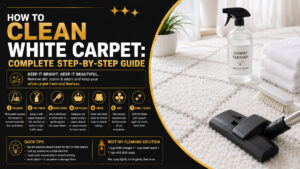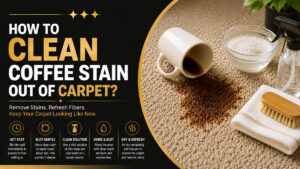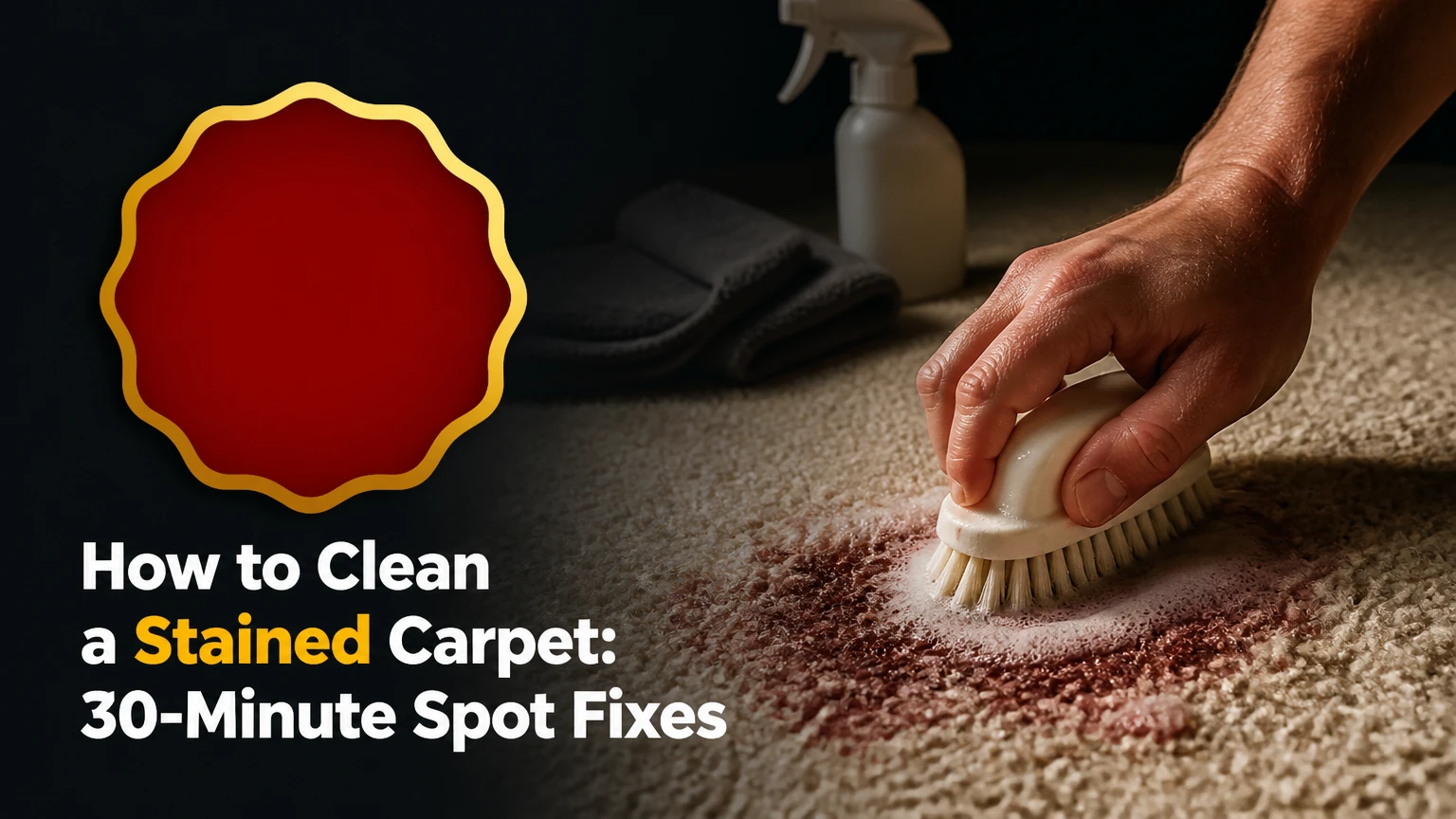
To clean a stained carpet, remove solids, blot excess liquid, apply a material-safe solution, work from the stain’s edge toward its center, rinse away residue, and extract moisture thoroughly. Fresh stains usually take 10-30 minutes to treat; the carpet fiber, stain chemistry, and speed of response determine whether the discoloration disappears completely.
Key Facts at a Glance
Blotting removes liquid without driving the stain deeper into the carpet pile.
A typical spot-cleaning solution uses 1/4 teaspoon of clear dish detergent in 1 cup of lukewarm water.
Carpet cleaning solution should be applied sparingly because over-wetting can damage backing and underlay.
Wool carpet requires a neutral, wool-safe detergent and should not be treated with ammonia or chlorine bleach.
Enzyme cleaners are the preferred option for pet urine because they target odor-causing organic residue.
A stain that reappears after drying usually indicates wicking from the backing or pad, not a new spill.
Before You Start: Time, Tools, and Safety
A single carpet stain typically requires 15-30 minutes of active treatment and 2-12 hours of drying, depending on moisture volume, airflow, and carpet thickness. The essential equipment is simple: white absorbent towels, a spoon or dull scraper, a spray bottle, lukewarm water, a vacuum, and one cleaner matched to the stain.
| Item | Typical amount or specification | Purpose | Important limitation |
|---|---|---|---|
| White microfiber towels | 6-10 towels, 30 x 30 cm | Blotting and rinsing | Colored cloth can transfer dye |
| Clear dish detergent | 1/4 teaspoon per 1 cup water | Food, soda, mud, and soil | Excess soap leaves sticky residue |
| Lukewarm water | 1-2 cups per small spot | Dilution and rinsing | Hot water can set some protein stains |
| Dull spoon or scraper | 1 utensil | Lifting dried solids | Sharp blades can cut pile |
| Enzymatic cleaner | Label-directed dose | Pet urine, vomit, organic odor | Test colorfastness first |
| Wet vacuum or spot machine | 1 unit, low-moisture pass | Extracting rinse water | Repeated wet passes can saturate backing |
Open a window and keep children and pets away from the wet area. Test every homemade or commercial solution on an inconspicuous carpet edge for 10 minutes, then press a white towel onto it; color transfer means the product is unsafe for that carpet.
Never mix ammonia, vinegar, bleach, hydrogen peroxide, or other cleaners. Chemical combinations can produce irritating vapors, damage dyes, or create a reaction that is harder to remove than the original stain.
How Does Carpet Stain Removal Work?
Carpet stain removal combines chemical separation with mechanical extraction. The cleaning agent loosens the bond between the contaminant and fiber, while blotting, towel pressure, or vacuum extraction moves the dissolved material into an absorbent medium rather than leaving it in the carpet.
Water-based stains respond to water and mild surfactants because those ingredients surround soil particles and help suspend them. Oil-based marks require a compatible solvent, while protein stains often need an enzyme product or cool-water treatment. No single carpet cleaner safely removes every stain class.
Capillary action explains both successful towel extraction and returning stains. Moisture moves through narrow spaces between fibers and backing materials, so a deep spill can travel upward as the surface dries. The Carpet and Rug Institute’s spot-removal guidance summarizes the central physical rule as “blot, don’t rub,” because pressure transfers liquid without the fiber damage caused by friction.
What should you identify before treating the mark?
Identify the carpet fiber, stain substance, stain age, and moisture level before selecting a chemical. Nylon and polyester tolerate more routine spot-cleaning products than wool, viscose, silk, or plant-based fibers, which can bleed, shrink, distort, or develop water marks.
Check the manufacturer’s care label when available. A stain that looks small on the surface may have penetrated the backing, especially after a drink spill, pet accident, or repeated household cleaning.
Step 1: Remove Solids and Blot the Spill
Remove food, mud clumps, vomit, or other solids with a spoon, dull scraper, or folded card before applying liquid. Place a white towel over the remaining moisture and press straight down for 10-15 seconds, repeating with dry sections until the towel absorbs little or no liquid.
Do not rub, brush, or scrub. Friction can untwist synthetic pile, spread dissolved dye, and force liquid toward the carpet backing. The first towel may become heavily colored, which is useful evidence that extraction is occurring.
You will know this step worked when: the surface feels damp rather than wet, no loose solids remain, and a fresh towel shows progressively less transfer.
Common mistake: pressing one saturated towel repeatedly onto the same spot. Replace or fold the towel frequently so removed soil does not return to the carpet.
Step 2: Choose a Cleaner for the Stain Type
Choose a cleaner according to the contaminant, not the stain’s color. A red mark may be wine, blood, tomato sauce, dye transfer, or a chemically bleached area, and each requires a different response.
| Stain type | Suitable first treatment | Contact time | Avoid |
|---|---|---|---|
| Soda, coffee, tea, food | 1/4 tsp clear dish soap in 1 cup lukewarm water | 3-5 minutes | Hot water and excess detergent |
| Fresh blood | Cold water, then enzyme cleaner if needed | 5-10 minutes | Heat, ammonia, and hot extraction |
| Pet urine | Enzymatic carpet cleaner at label strength | 10-30 minutes | Ammonia and perfume-only sprays |
| Grease or cooking oil | Carpet-safe solvent, tested first | 1-3 minutes | Flooding and oily household products |
| Ink or makeup | 70% isopropyl alcohol on a towel, if label permits | 30-60 seconds | Pouring alcohol directly onto carpet |
| Candle wax | Ice, dull scraping, then low heat through paper | 5-15 minutes | High heat and iron contact |
| Nail polish | Professional advice, or tested acetone only on compatible carpet | Immediate | Acetone on acetate, wool, or unknown fiber |
| Dried mud | Vacuum after complete drying, then mild detergent | 3-5 minutes | Wetting thick mud before removal |
A translucent dish detergent is preferable to a colored or heavily fragranced product because dyes and additives can leave secondary discoloration. Commercial products should carry carpet-fiber instructions and should be used at the label dilution, not concentrated for extra strength.
Is vinegar safe for carpet stains?
Diluted white vinegar is not a universal carpet stain remover. Vinegar can help reduce alkaline browning on some synthetic carpets, but acidic solutions can affect dyes, natural fibers, backing adhesives, and protective finishes, so testing and limited application are essential.
Do not use vinegar immediately after an unknown cleaner. Residual chemicals can react, and vinegar does not extract the soil that caused the mark. A clean-water rinse and thorough extraction usually matter more than adding another chemical.
Step 3: Apply the Solution From the Outside In
Apply the selected solution to a white towel or lightly mist the stained area, using approximately 1-2 teaspoons for a spot no larger than 15 cm across. Work from the outer edge toward the center, pressing and lifting rather than dragging the towel across the pile.
Limit the wet area to the visible stain plus a small margin. Spraying a large circle often creates a new water mark and increases the chance that moisture reaches the pad. For solvent-based products, place the towel beneath or against the spot only when the manufacturer’s instructions permit it, and provide ventilation.
You will know this step worked when: the stain becomes lighter on each blot and the towel shows transfer without the mark spreading outward.
Common mistake: using baking soda, detergent, vinegar, and peroxide in sequence. Layered chemicals leave residues that are difficult to identify and can create permanent color changes.
Step 4: Rinse Away Cleaner Residue
Dab the area with a separate towel dampened with clean water, using 1-2 teaspoons at a time. Rinse twice if the carpet feels slippery, because detergent residue attracts soil and can create a dark outline after the area returns to service.
The rinse must be controlled. Pouring water onto a carpet stain can drive dissolved material into the backing, while insufficient rinsing leaves surfactant behind. A portable spot machine can improve results when its recovery tank visibly collects dirty water and its final pass uses minimal clean water.
You will know this step worked when: the towel shows less chemical or soil transfer and the fibers no longer feel slick after drying for several minutes.
Common mistake: skipping the rinse because the stain appears gone. Residual soap can cause rapid resoiling, which makes a successful first treatment look temporary.
Step 5: Extract Moisture and Dry the Carpet
Press dry towels into the rinsed spot, or make slow suction-only passes with a wet vacuum or carpet spot machine. Cover the area with a dry towel and place a flat, moderate weight over it for 30-60 minutes, then replace the towel and continue drying with airflow.
Use a fan aimed across the carpet, not directly downward, and keep room ventilation active. Most small spots dry within 2-8 hours; dense wool, thick pile, or pad contamination can require 12-24 hours.
You will know it worked when: the carpet feels dry at the pile base, has no cool damp sensation, and the stain does not darken as moisture evaporates.
Common mistake: using a hair dryer on high heat. Direct heat can distort synthetic fibers, set protein residue, accelerate dye migration, or create an uneven drying ring.
Which Cleaner Matches the Carpet Material?
Synthetic nylon, polyester, and polypropylene carpets generally accept mild, label-approved spot treatments, but each still requires a colorfastness test and low-moisture application. Wool, silk, viscose, and sisal need more conservative treatment because water, alkalinity, friction, and heat can permanently alter their structure.
| Carpet material | Safer approach | Moisture limit for a small spot | Products to avoid |
|---|---|---|---|
| Nylon | Mild detergent or approved spotter | 1-2 tbsp per 15 cm spot | Undiluted bleach and strong solvents |
| Polyester | Mild detergent, enzyme cleaner if labeled | 1-2 tbsp per 15 cm spot | High heat and oily residue |
| Polypropylene | Mild detergent, controlled rinsing | 1-3 tbsp per 15 cm spot | Aggressive scrubbing |
| Wool | WoolSafe or neutral wool detergent | Damp towel treatment only | Ammonia, chlorine bleach, high-pH powder |
| Viscose or rayon | Professional cleaning preferred | Minimal surface moisture | Water flooding and brushing |
| Silk or antique rug | Specialist rug cleaner | No home saturation | Household stain removers and heat |
Wool carpet should not be treated with ammonia, chlorine bleach, strong alkaline cleaner, or oxygen bleach unless a qualified specialist explicitly approves the product. Wool fibers can felt under agitation, and excessive moisture can produce tide marks or shrinkage.
Carpet manufacturers and the WoolSafe Organisation commonly distinguish wool-safe products from general household cleaners because pH, solvent choice, and residue levels affect natural fibers differently. A luxury rug is not a suitable place to experiment with a viral cleaning shortcut.
How Do You Remove Common Specific Stains?
Specific stain treatment depends on whether the mark contains water-soluble dye, protein, oil, wax, or a combination of substances. Treat fresh residue first, use the smallest effective amount of solution, and stop when the carpet’s color begins transferring to the towel.
| Stain | Treatment sequence | Typical time | Escalate when |
|---|---|---|---|
| Coffee or tea | Blot, mild detergent, water rinse, extract | 15-25 min | Brown ring remains after drying |
| Red wine | Blot, cool water, mild detergent, rinse | 20-30 min | Dye remains or carpet is wool |
| Chocolate | Lift solids, vacuum crumbs, detergent blot | 15-20 min | Cocoa oil leaves a shadow |
| Grease | Scrape, solvent on towel, detergent rinse | 20-30 min | Backing feels oily |
| Pet urine | Blot, enzyme saturation per label, extract | 30-60 min | Odor returns after 24 hours |
| Ink | Isolate, alcohol on towel, repeated blotting | 10-20 min | Color spreads or fiber dye transfers |
| Candle wax | Chill, scrape, paper blot with low heat | 15-25 min | Wax is deep in the backing |
| Paint | Identify water-based or oil-based type first | 20-45 min | Paint is dried, thick, or solvent-based |
Blood
Use cold water first because heat can coagulate blood proteins and make removal harder. Blot with a damp white towel, then apply a compatible enzyme product if the carpet label permits it; never combine enzyme cleaner with bleach or harsh disinfectant.
Pet urine
Use an enzyme cleaner at the manufacturer’s stated strength and allow its full dwell time before extraction. Surface deodorizer may hide odor temporarily, but urine crystals in the backing or pad can continue releasing odor whenever humidity rises.
Oil and makeup
Lift excess material without spreading it, then apply a small amount of carpet-safe solvent to a towel. Solvent dissolves hydrophobic oil more effectively than water, but excess solvent can mobilize carpet dye or damage backing adhesive.
Candle wax
Harden wax with an ice-filled bag for 5-10 minutes, scrape gently, and place plain white paper over the residue. Use the lowest heat setting briefly, allowing the paper to absorb softened wax; never place a hot iron directly on carpet.
Should You Use a Spot Machine or Hire a Professional?
Hand treatment is usually best for a fresh spot under 15 cm, while a portable extractor is more efficient for several spots or a small traffic area. Professional hot-water extraction becomes the safer choice when stains penetrate the pad, odor persists, carpet is delicate, or repeated DIY treatment has already saturated the backing.
| Method | Suitable area | Typical cost | Active time | Main risk |
|---|---|---|---|---|
| Hand spot treatment | 1-3 spots under 15 cm | $2-$10 in supplies | 15-30 min | Residue or incomplete extraction |
| Portable spot cleaner | 1-10 m² | $80-$250 purchase | 30-90 min | Over-wetting |
| Rental extractor | 10-50 m² | $30-$70 per day | 2-4 hr | Slow drying and overwet pad |
| Professional extraction | Whole room or contaminated area | $100-$400 typical room | 1-3 hr onsite | Cost and scheduling |
| Rug specialist | Wool, silk, viscose, antique rug | $3-$8 per square foot | 1-3 weeks including facility work | Transport and restoration cost |
Prices vary by country, room size, access, furniture, stain type, and local labor rates. The figures above are typical consumer ranges, not universal quotes.
Professional cleaning is not automatically better for every mark. A technician can extract more water and reach deeper contamination, but even professional extraction cannot restore fiber that has been bleached, melted, permanently dyed, or physically abraded.
When should you stop treating the carpet yourself?
Stop DIY treatment when the carpet changes color beyond the original stain, fibers become fuzzy, a chemical smell develops, the spot grows after each application, or the backing becomes wet. Also stop when a pet accident covers more than approximately 0.5 square meter, because the pad may require separate treatment or replacement.
Seek professional help for sewage, floodwater, mold, unknown industrial chemicals, large blood contamination, and stains on silk, viscose, antique, or hand-knotted rugs. Wear gloves for biological waste and follow local disposal guidance.
What Causes a Stain to Reappear?
A returning carpet stain usually results from wicking, detergent residue, or incomplete extraction from the backing and pad. As moisture evaporates, dissolved soil can travel upward through the pile, leaving a visible outline even after the surface initially looks clean.
Re-treat only after the spot is completely dry. Lightly dampen the surface with clean water, blot or extract the lifted soil, and dry it rapidly with airflow. Avoid adding baking soda to a wet, heavily soiled area as a default fix, because powder can become difficult to remove and does not extract contamination from the pad.
A yellow or brown area may indicate browning from slow drying, alkaline residue, backing material, or cellulosic fibers. Vinegar is not a guaranteed remedy; a trained carpet cleaner can identify whether the discoloration is removable soil, chemical damage, or permanent fiber change.
Common Mistakes and How to Fix Them
| Mistake | What it causes | Better correction | Recovery window |
|---|---|---|---|
| Scrubbing aggressively | Fuzzy, distorted pile | Stop friction, blot vertically | Immediate |
| Pouring on cleaner | Wet backing and wicking | Towel application, controlled rinse | Within 1 hour |
| Using colored towels | Secondary dye transfer | White cotton or microfiber towels | Before drying |
| Applying heat | Set protein, melted fiber, dye migration | Cool water and airflow | Immediately |
| Leaving soap behind | Rapid resoiling and dark outline | Clean-water rinse and extraction | Before full drying |
| Mixing chemicals | Vapors and unpredictable reactions | Stop, ventilate, rinse with water | Immediately |
| Repeating treatments while wet | Saturated pad and delamination | Wait for complete drying | 12-24 hours |
Delamination is a backing failure in which the carpet’s primary and secondary layers separate. Over-wetting, aggressive extraction, and weakened adhesive increase the risk, particularly in older glued-down carpet and areas near seams.
One practitioner rule is especially useful: if the towel is still extracting visible color after three controlled applications, do not increase chemical strength automatically. The color may be carpet dye rather than stain, and stronger chemistry can remove the carpet’s original color.
How Much Time and Money Does Carpet Stain Removal Take?
A fresh surface stain usually costs $2-$10 to treat at home and takes 15-30 minutes of active work, followed by several hours of drying. Old, oily, deeply absorbed, or pet-related contamination can require 30-90 minutes of treatment, equipment rental, or professional extraction.
| Situation | Home supplies | Typical active time | Likely total drying time |
|---|---|---|---|
| Fresh drink spill | $2-$5 | 10-20 min | 2-4 hr |
| Dried food or mud | $2-$8 | 15-30 min | 3-6 hr |
| Grease or makeup | $5-$15 | 20-40 min | 4-8 hr |
| Pet urine spot | $8-$20 | 30-60 min | 8-24 hr |
| Several traffic stains | $10-$30 | 1-2 hr | 6-12 hr |
| Professional deep cleaning | $100-$400 | 1-3 hr onsite | 4-12 hr |
Active time excludes dwell time and drying. A carpet can look clean while the pad remains wet, so judge dryness at the base of the pile rather than by surface appearance alone.
How Can You Prevent Future Carpet Stains?
Preventing carpet stains depends more on rapid response and soil control than on applying stronger chemicals. Keep white towels and a tested spot cleaner in an accessible container, remove outdoor shoes, vacuum high-traffic lanes two or more times weekly, and address spills before they dry.
Carpet protector can reduce absorption for some fibers, but it does not make carpet stain-proof. Reapply only according to the product label and carpet manufacturer’s guidance, especially after professional cleaning or heavy traffic.
Place absorbent mats at entrances and use washable, waterproof barriers beneath pet bowls. For homes with children, a small portable extractor can reduce response time, but the operator must still use controlled moisture and complete extraction.
Frequently Asked Questions
Can I clean a carpet stain with only water?
Water alone can remove fresh, water-soluble residue when blotting begins immediately, especially from plain water or diluted soft drinks. Water will not dissolve most grease, makeup, wax, or oil-based ink, and repeated wetting without extraction can spread the stain or cause wicking.
Is baking soda effective for removing carpet stains?
Baking soda can absorb limited surface moisture and reduce some odors, but it does not chemically remove every stain and cannot extract urine from carpet padding. Apply it only to a mostly dry, lightly contaminated area, vacuum it thoroughly, and avoid using it as a substitute for enzyme treatment or water extraction.
How do you clean an old carpet stain?
Vacuum the dry area, identify the likely stain chemistry, test a suitable cleaner, and treat with small blotting cycles rather than flooding the carpet. Old stains may have permanently altered dye or fiber, so professional inspection is appropriate when the mark remains after one controlled treatment.
Can hydrogen peroxide remove carpet stains?
Hydrogen peroxide can lighten some organic stains, but it can also bleach carpet dye and create a visibly lighter patch. Use it only when the carpet manufacturer permits it, test an hidden area first, and never mix it with vinegar, ammonia, chlorine bleach, or other cleaners.
How long should carpet stay wet after cleaning?
A treated spot should normally dry within 2-8 hours with ventilation, while dense carpet or pad contamination can require 12-24 hours. If carpet remains wet beyond 24 hours, reduce foot traffic, increase airflow, and consider professional extraction to limit odor, microbial growth, and backing damage.
Will professional carpet cleaning remove every stain?
Professional extraction can remove deeply embedded soil and many persistent stains, but it cannot guarantee removal of bleach marks, permanent dye transfer, melted fibers, severe abrasion, or long-term discoloration. Ask the cleaner to identify the fiber and explain the probable outcome before treatment.
The Bottom Line
To clean a stained carpet safely, blot first, match the product to the stain and fiber, apply minimal moisture, rinse away detergent, and extract until the area dries quickly. The exact keyword, how to clean a stained carpet, describes a controlled removal process rather than a single miracle product. Fresh treatment gives the best result; delicate fibers, pet-pad contamination, chemical damage, and recurring stains require professional assessment.