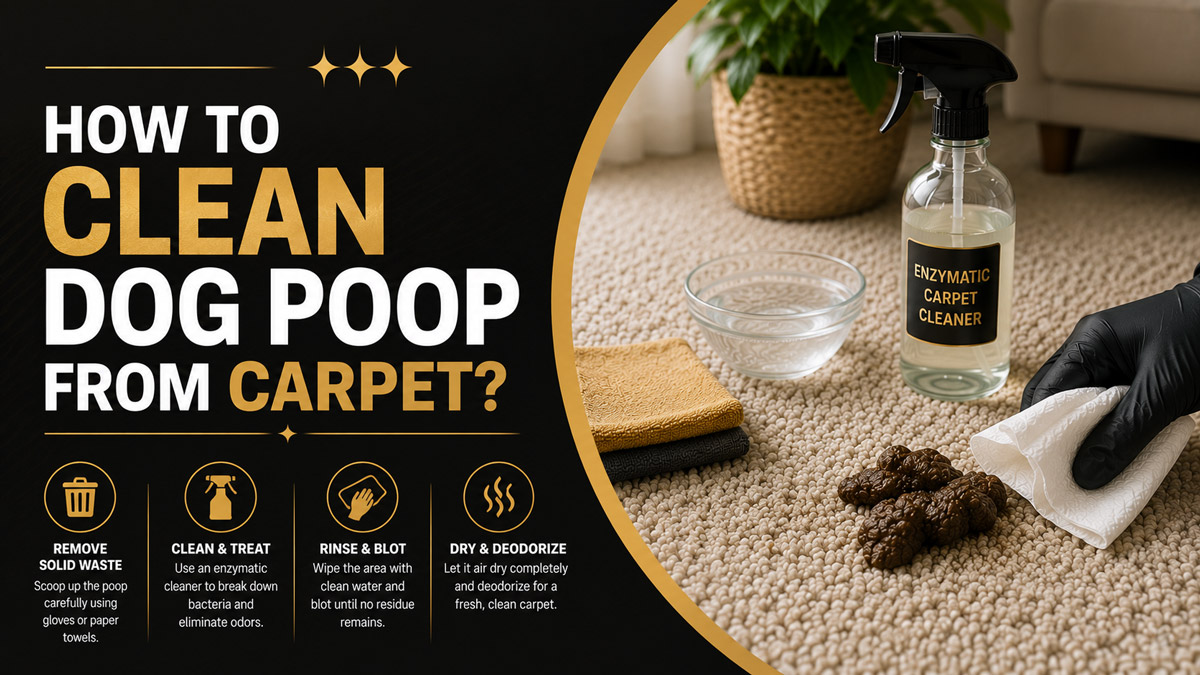
To clean dog poop from carpet, you must immediately scoop the solid waste using a rigid scraper. Next, apply a cold water and dish soap solution to lift the pigment. Saturate the remaining spot with an enzymatic cleaner, extract the moisture, and finish by neutralizing the area with baking soda.
At a Glance: Fecal Stain Removal Facts
- Fresh dog feces should sit for 60 seconds before scooping to prevent immediate smearing into the carpet fibers.
- Hot water permanently sets protein-based stains into synthetic carpet threads.
- Enzymatic cleaners require a minimum of 10 to 15 minutes of undisturbed dwell time to consume organic proteins.
- Fecal stains that turn green or yellow indicate a chemical reaction involving canine stomach bile.
- A stain reappearing after three days means moisture is traveling up from the carpet pad.
- Wool carpets dissolve when exposed to standard alkaline pet stain removers.
What Tools and Supplies Are Required for Cleaning Canine Feces?
You need a rigid scraping tool, clean white cotton towels, a specialized enzymatic cleaner, liquid dish soap, white vinegar, and standard baking soda. Gathering these materials before beginning the extraction prevents the biological waste from drying into the synthetic weave. Using colored towels transfers dye to the carpet during the extraction phase.
Professional technicians recommend keeping a dedicated pet cleanup kit in the home. A plastic putty knife works perfectly for the initial scraping phase. Heavy paper towels tear easily when wet, pushing organic matter deeper into the carpet base. Thick cotton cloths absorb moisture quickly while providing enough friction to lift the fecal pigment.
Veterinary research from the American Animal Hospital Association (2022) indicates that immediate isolation of the biological waste reduces indoor pathogen transmission by 90 percent. Preparing your supplies in advance keeps you from leaving the contaminated zone unguarded.
How Do You Remove Fresh, Solid Dog Poop Without Spreading It?
- Put on thick rubber gloves to prevent direct contact with zoonotic bacteria.
- Slide a stiff piece of cardboard or a plastic putty knife completely under the solid waste.
- Lift the mass straight up vertically.
- Place the waste immediately into a plastic bag.
- Avoid pressing down on the carpet fibers at any point during this initial extraction.
Lifting the solid matter vertically is the most important step in the entire procedure. Scraping the waste horizontally forces the organic material sideways and down into the structural backing of the rug. If the feces appear slightly soft, allow the mass to sit for exactly two minutes. The outer layer will form a very thin crust. This microscopic crust prevents the waste from smearing when you slide the cardboard underneath.
Once the large mass is removed, you will see a damp, discolored spot left behind. Do not rub this spot. Rubbing creates heat and friction, which drives the protein stains deep into the primary backing of the flooring.
How Do You Clean Diarrhea or Liquid Dog Poop From Carpet?
You must solidify the liquid using an absorbent powder before attempting to lift the waste. Never blot wet diarrhea immediately, as the downward pressure forces the liquid feces straight into the underlying foam pad.
- Sprinkle a half-inch layer of pure baking soda directly over the entire liquid mess.
- Wait 20 to 30 minutes for the powder to completely absorb the moisture.
- Slide a wide plastic putty knife under the newly formed solid paste.
- Lift the clumped material straight up and discard it into a trash bag.
- Vacuum the remaining dry powder using a high-efficiency particulate air (HEPA) filter machine.
Liquid stool spreads rapidly through the structural fibers of any floor covering. The baking soda acts as a desiccant. It pulls the moisture upward into the powder layer before the liquid can reach the subfloor. According to the Institute of Inspection, Cleaning and Restoration Certification (2023), employing dry extraction methods on liquid biological spills reduces permanent subfloor contamination by over 70 percent. Once you lift the paste, you can proceed with a standard enzymatic cleaner to treat the underlying discoloration.
How Do You Remove Dried or Crusty Dog Feces From Carpet Fibers?
You must rehydrate the organic matter using a one-to-one mixture of warm water and white vinegar before scraping. Attempting to pull dry, crusty feces from a rug will rip the carpet fibers directly out of the latex backing.
- Mix one cup of warm water with one cup of distilled white vinegar in a spray bottle.
- Mist the dried organic matter lightly until the crust is visibly damp.
- Wait exactly five minutes for the acidic solution to soften the biological material.
- Scrape the softened mass gently upward using a dull butter knife.
- Repeat the misting and scraping process until all solid pieces are gone.
Dried feces act like cement on synthetic textiles. The acetic acid in the white vinegar breaks down the hardened outer shell of the waste. You must use warm water, not hot water, for this specific rehydration step. Hot water bonds the proteins to the carpet threads, while warm water simply softens the crust. Once the physical matter is completely removed, treat the remaining stain with a standard enzyme solution.
What Is the Best Cleaning Solution for Canine Fecal Stains?
The most effective cleaning solution is a specialized commercial enzymatic cleaner containing both protease and amylase bacteria. These specific enzymes digest the complex proteins and starches found in dog waste. Standard household soaps only mask the odor, while enzymes physically consume the organic matter causing the stain.
Table 1: Cleaning Solutions and Their Efficacy on Canine Feces
| Cleaning Solution Type | Active Mechanism | Best Used For | Efficacy on Fecal Odor |
| Commercial Enzymatic Cleaner | Protease bacteria digestion | Deep biological stains | 99% elimination |
| Oxygen-Based Bleach (3%) | Chemical oxidation | Dye removal on white rugs | 40% elimination |
| Dish Soap and Water | Surfactant lifting | Surface pigment removal | 10% elimination |
| White Vinegar and Water | pH neutralization | Crust rehydration | 25% elimination |
Enzymatic formulas physically alter the chemical makeup of the stain. The bacteria in the bottle remain dormant until they make contact with the organic waste. Once activated, they feed on the proteins until the food source is entirely depleted. You must follow the manufacturer instructions exactly, as applying other chemicals before the enzymes can kill the active bacteria.
How Long Do Enzymatic Cleaners Take to Break Down Pet Waste?
Enzymatic cleaners require a minimum of 10 to 15 minutes of undisturbed dwell time. Removing the solution before the 10-minute mark stops the biological digestion process prematurely.
The bacteria need time to multiply and consume the proteins trapped in the carpet fibers. During this 15-minute window, you must not blot, scrub, or touch the wet area. If the room is exceptionally dry, place a damp white towel over the saturated spot. The damp towel prevents the enzymatic liquid from evaporating before the digestion cycle completes. Once 15 minutes have passed, the biological waste is structurally destroyed. You can then begin pressing dry cotton towels into the carpet to extract the remaining liquid.
How Do You Clean Dog Waste From Wool or Natural Fiber Carpets?
You must use only pH-neutral detergents specifically approved by the Carpet and Rug Institute for natural fibers. You cannot use standard enzymatic cleaners or white vinegar on natural materials. Wool and silk fibers are composed of animal proteins.
- Remove the solid waste using a piece of stiff cardboard.
- Mix one cup of cold water with one drop of a certified wool-safe, pH-neutral detergent.
- Blot the area gently with a white cotton cloth.
- Rinse the spot by misting it with pure cold water.
- Extract the moisture immediately using a wet-dry vacuum.
Standard pet stain removers contain high-alkaline compounds designed to strip proteins. Because wool is a protein fiber, these aggressive chemicals will literally dissolve the carpet threads. The aggressive enzymes cannot differentiate between the proteins in the dog feces and the proteins in the sheep wool. Always check the back of your cleaning bottle for a specific “wool-safe” designation before applying any liquid to an expensive natural rug.
Why Does the Fecal Stain Turn Bright Yellow or Green?
This discoloration indicates a chemical reaction between the dog’s stomach bile and the synthetic carpet dyes. Canine digestive tracts produce strong biliary acids to break down commercial dog kibble. When these highly acidic fluids hit a nylon or polyester rug, they strip the color directly from the textile.
If your enzymatic cleaner removes the physical waste but leaves a neon yellow ring, the carpet is not dirty. The carpet is bleached. Standard cleaning agents cannot fix dye loss. To repair this chemical damage, you must apply a specialized oxidizing stain remover or hire a professional to re-dye the affected fibers. The exact hue of the stain often correlates directly with the artificial coloring used in your dog’s daily food supply.
Why Does the Dog Poop Stain Reappear Days Later?
The stain reappears due to a physical process called wicking. Moisture from the deep padding travels upward to the tips of the fibers as the carpet dries. As the water moves vertically, it carries trapped microscopic fecal pigments back to the visible surface.
Wicking occurs when you fail to extract enough liquid during the initial cleaning phase. To fix a wicking problem, you must reverse the capillary action.
- Mist the visible stain lightly with pure water.
- Place a stack of dry, white cotton towels directly over the spot.
- Set a flat, 10-pound weight (like a stack of heavy books) on top of the towels.
- Leave the weight completely undisturbed for 24 hours.
The heavy weight forces the dry cotton to maintain direct contact with the wet fibers. As the moisture evaporates, it travels up into the cotton towel instead of stopping at the tips of the carpet threads. When you remove the weight the next day, the pigment will be trapped in the towel, leaving the carpet completely clean.
How Do You Remove Returning Fecal Odors From Carpet Padding?
You must inject a commercial enzymatic cleaner directly through the carpet backing into the underlying foam pad using a specialized carpet syringe. Surface cleaning never reaches the spongy pad beneath the rug. When high humidity hits the room, the moisture reactivates the dormant bacteria trapped inside the foam.
Table 2: Odor Location vs. Required Treatment Method
| Odor Source Location | Primary Symptom | Required Treatment Method |
| Surface Fibers | Smell only noticeable up close | Topical enzyme spray |
| Carpet Backing | Smell triggered by vacuuming | Heavy enzyme saturation |
| Foam Padding | Smell returns on humid or rainy days | Sub-surface syringe injection |
| Wooden Subfloor | Permanent, room-filling stench | Pad replacement and floor sealing |
Carpet padding acts exactly like a dense sponge. If the original mess was liquid, gravity pulled the biological waste straight through the primary backing. Injecting the enzymes directly into the foam ensures the active bacteria reach the trapped proteins. If the contaminated area exceeds eight inches in diameter, injection usually fails. In these severe cases, a technician must physically cut out the ruined padding, seal the wooden subfloor with an odor-blocking primer, and install a fresh patch of foam.
Why Do Carpet Fibers Feel Crunchy After Cleaning Dog Waste?
Fibers become crunchy because residual soap dries inside the weave. Dish soap and heavy detergents are highly concentrated surfactants. When you apply soap to a stain without properly extracting it, the liquid evaporates, leaving behind a sticky, hardened chemical film.
This sticky residue acts as a magnet for everyday household dust and dirt. A spot that feels crunchy on Tuesday will often turn dark gray by Friday as walking over the area grinds dirt into the soap film. To resolve this texture issue, you must rinse the affected zone. Mist the crunchy fibers with pure warm water to reactivate the dried soap. Use a wet-dry shop vacuum to suck the soapy water directly out of the carpet. Repeat this pure-water rinse until the fibers feel soft and completely natural to the touch.
Which Household Chemicals Permanently Damage Synthetic Carpets?
You must strictly avoid using bleach, ammonia, and high-pH degreasers on standard residential carpets. These common household chemicals trigger irreversible structural damage to synthetic flooring materials.
Ammonia is particularly dangerous when dealing with pet waste. Canine urine and feces naturally contain low levels of ammonia. Applying an ammonia-based glass cleaner to a biological stain signals to the dog that this location is an acceptable indoor bathroom. Bleach will immediately strip the factory dye from nylon and polyester fibers, leaving permanent white blotches across the floor. Stick exclusively to pH-neutral soaps, white vinegar, and dedicated biological enzyme formulas to ensure your flooring remains intact.
Can You Use a Steam Cleaner to Sanitize Dog Poop Stains?
No. Heat permanently sets protein pigments into synthetic fibers. You must never use a steam cleaner, a hot water extractor, or boiling water on a fresh biological pet stain.
Dog feces consist heavily of organic proteins. When you expose proteins to temperatures exceeding 140 degrees Fahrenheit, they coagulate and bond chemically with the plastic polymers in nylon and polyester rugs. This thermal bonding makes the stain and the associated odor nearly impossible to remove, even for professional restoration crews. You must strictly use cold or lukewarm water during the initial cleaning and extraction phases. You may only introduce hot water extraction machines after the stain and odor are completely eliminated by enzymatic treatments.
Is Dog Poop on a Carpet Considered a Biohazard?
Yes. Canine feces contain zoonotic pathogens including Salmonella, Giardia, Hookworms, and E. coli. These microscopic organisms can transfer directly from the carpet fibers to human skin, making proper sanitation an absolute necessity.
The American Veterinary Medical Association (2022) notes that Giardia cysts can survive in damp indoor environments for up to several weeks. Young children crawling on the floor are exceptionally vulnerable to these intestinal parasites. You must always wear thick rubber gloves during the cleanup process. Keep all household pets and children entirely out of the contaminated room for a minimum of two hours after the carpet dries. Once the fibers are dry to the touch, vacuum the room thoroughly to pull up any remaining desiccated bacteria.
How Much Does Professional Pet Stain Removal Cost?
Professional pet stain removal typically costs between $150 and $300 for a standard residential visit. The final price depends entirely on the depth of the contamination and the specific extraction methods required.
Table 3: Professional Carpet Cleaning Cost Breakdown
| Service Level | Description of Work | Typical Cost Range |
| Basic Surface Extraction | Hot water extraction of surface stains | $100 to $150 |
| Sub-Surface Odor Treatment | Pad injection with commercial enzymes | $175 to $250 |
| Biohazard Pad Replacement | Cutting and replacing ruined foam padding | $250 to $400 |
| Subfloor Sealing | Applying shellac primer to wooden subfloors | $300 to $500+ |
If you catch the mess immediately, a standard surface cleaning is usually sufficient. However, if the waste has saturated the padding or warped the underlying subfloor, technicians must pull back the carpet entirely. Professional companies possess ultraviolet lighting tools that reveal exactly how far the biological waste has spread under the visible surface, ensuring no hidden bacteria remain inside your home.
How Do You Disinfect Cleaning Tools After Removing Pet Waste?
You must submerge all non-disposable tools in a 10 percent bleach solution for ten minutes. Rinsing a plastic putty knife in the kitchen sink spreads fecal coliform bacteria directly onto your food preparation surfaces.
- Fill a dedicated plastic bucket with one gallon of cold water.
- Add one cup of standard household bleach to the water.
- Place all plastic scrapers, brushes, and rubber gloves into the bucket.
- Leave the items submerged for exactly 10 minutes.
- Rinse the tools outside using a garden hose.
You should always discard the paper towels and cardboard scraps used during the initial extraction. Any cotton towels utilized for moisture absorption must go directly into the washing machine. Wash these contaminated textiles on the highest possible heat setting using heavy-duty laundry detergent. Never mix pet cleanup towels with your standard clothing or bath towels.
The Bottom Line
To successfully clean dog poop from carpet, you must rely on cold water, minimal pressure, and high-quality enzymatic cleaners. Scraping the solid waste vertically prevents the organic matter from embedding deep into the structural weave. Applying specialized bacteria ensures the underlying proteins are physically digested rather than simply masked by scented soaps. By controlling the moisture levels and avoiding heat, you can fully extract the biological waste and permanently eliminate returning odors.