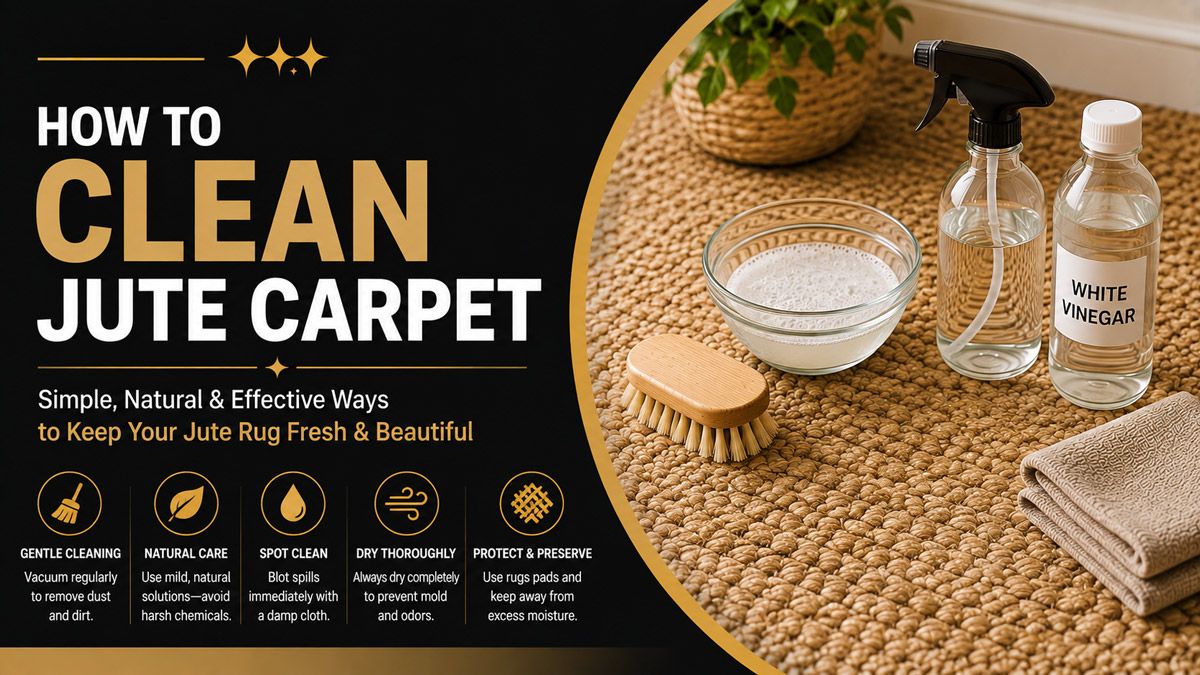
To clean jute carpet, vacuum the material at least twice weekly using a suction-only setting, and never use steam or water extraction. Because jute is a natural plant fiber, liquid saturation causes the weave to expand, discolor, and rapidly rot. Stick exclusively to dry extraction methods.
At a Glance
- Vacuuming frequency determines the long-term structural integrity of natural plant fibers.
- Water exposure causes permanent cellulosic browning and material failure in woven rugs.
- Liquid spills require aggressive blotting within 60 seconds using plain white paper towels.
- Acidic solutions neutralize the alkaline browning reaction caused by accidental water marks.
- Dry powder extractors represent the only safe deep-cleaning mechanism for these textiles.
How often should you vacuum a jute rug?
Vacuum a jute rug two to three times per week using a suction-only setting. Disable the rotating beater bar entirely before placing the machine on the natural fiber.
Grit acts like microscopic shards of glass when foot traffic presses dirt into the woven texture. These sharp soil particles slice through the brittle plant bonds over time, causing the rug to fray and degrade from the inside out. Regular suction removes this abrasive particulate before mechanical damage occurs. You should pass the vacuum nozzle over each section multiple times from alternating directions. Start by moving north to south, then switch to east to west, ensuring you lift dirt trapped beneath the thick overlapping loops.
The Institute of Inspection, Cleaning and Restoration Certification (IICRC) notes that dry soil removal accounts for 75 percent of total soil management in natural textiles. Skipping this foundational step guarantees a shorter lifespan for the flooring. If your vacuum lacks a suction-only floor setting, use the handheld upholstery attachment to draw the dirt out safely. The aggressive friction of a spinning brush will pull the spun threads apart, leading to irreversible unraveling.
Can you use a carpet shampooer or steam cleaner on jute?
No, you cannot use a carpet shampooer or steam cleaner on any jute material. The intense moisture causes irreversible shrinkage, fiber buckling, and rapid mold growth.
Jute behaves exactly like a biological sponge. When subjected to hot water extraction, the structural integrity of the plant stalk dissolves rapidly. The high heat and liquid activate the natural lignin oils present inside the fibers. As the rug eventually dries, these oils migrate to the surface, creating massive, permanent yellow or brown discolorations across the entire rug. Professional rug restorers universally reject wet cleaning methods for these specific items.
If a carpet cleaning service offers to steam clean your natural rug, cancel the appointment immediately. Even low-moisture encapsulation systems carry significant risk if the technician lacks specific training with cellulosic fibers. You must choose dry chemical compound cleaning instead. This strict zero-water mandate applies to all variations of the material, including blended rugs where the plant fiber represents only a partial percentage of the total weave.
Can you put a jute rug in the washing machine?
Never place a jute rug inside a washing machine. A single wash cycle will unravel the woven fibers, dissolve the structural integrity entirely, and destroy the rug.
The aggressive mechanical agitation from a washing machine drum snaps the brittle plant stalks immediately. As the fibers break down in the water, the rug loses its shape completely, emerging warped and permanently buckled. Furthermore, the massive volume of loose shedding generated during a wash cycle will likely clog your washing machine drainage pump, resulting in costly appliance repairs.
You must treat specific stains locally rather than submerging the whole textile in water. Even small decorative accent rugs or thin hallway runners strictly require dry spot treatment. Manufacturers build these items by twisting dry organic matter tightly together. Total liquid submersion reverses that manufacturing process, turning a structured home decor item back into loose, wet hay.
How do you protect jute flooring in high traffic areas?
Protect jute flooring in high traffic areas by rotating the rug 180 degrees every six months to distribute wear patterns evenly across the surface. Place walk-off mats at all exterior entrances to capture incoming dirt.
Plant fibers lack the natural elasticity found in wool or synthetic nylon carpets. When you walk upon a synthetic carpet, the fibers bend and then spring back to their original vertical position. When you walk repeatedly in the exact same spot on a woven plant fiber, the material crushes and permanently flattens. Rotating the rug ensures that the main walking paths wear down at the same rate as the edges situated under furniture.
You must also employ a dense felt rug pad underneath the textile. A high-quality pad provides essential shock absorption. This cushioning reduces the grinding friction that occurs between the tough knots of the rug and the hard subfloor beneath it. Avoid thin rubber grip pads, as they offer no impact protection and often degrade into a sticky residue when placed under heavy, textured flooring.
How do you clean dry mud and dirt from natural rugs?
Clean dry mud from natural rugs by letting the soil harden completely for two to four hours before gently scraping the debris away with a dull butter knife.
Attempting to wipe wet mud with a cloth pushes the dark soil deeper into the porous plant fibers, turning a surface issue into a permanent internal stain. Waiting for the mud to dry converts the problem from a liquid disaster to a manageable dry soil extraction. You must exercise patience and block off the area to prevent foot traffic from grinding the wet mud downward.
Once the mud transforms into a hard, chalky crust, take a dull butter knife or a plastic pan scraper and gently chip away the top layer. Scrape parallel to the weave direction to avoid snagging the loops. After you remove the bulk of the hardened debris, attach the soft bristle brush tool to your vacuum hose. Suck up the remaining fine soil particles hovering near the surface. If a faint shadow remains, sprinkle a small amount of dry extraction powder onto the spot, wait 20 minutes, and vacuum again.
What is the emergency protocol for liquid spills on jute?
Handle liquid spills by pressing a clean white paper towel firmly onto the wet area within the first 30 to 60 seconds. Do not rub the fibers under any circumstances.
Rubbing forces the liquid sideways into adjacent unsoiled loops, expanding the stain footprint instantly. Apply heavy, direct downward pressure to transfer the liquid up into the absorbent towel. Stand on the paper towels if necessary to exert maximum extraction force. Always use plain white towels; colored napkins will transfer synthetic dyes directly into the damp plant fibers, creating a secondary stain.
If the spill threatens to leave a sticky residue or a dark mark, lightly mist the affected area with a solution of 50 percent white vinegar and 50 percent lukewarm water. Limit this application to a maximum of three light mists. Saturated fibers rot, so apply the absolute minimum amount of moisture required to neutralize the spill. Finally, dry the damp spot immediately using a hair dryer set to a cool temperature setting. Keep the dryer moving over the spot for five to ten minutes until the material feels completely dry to the touch.
How do you remove red wine and coffee stains from plant fibers?
Remove red wine or coffee stains by applying a tiny amount of a 50/50 white vinegar and water mixture, blotting instantly, and immediately covering the damp spot with a dry extraction powder.
Standard blotting protocols fail when dealing with dark tannins found in wine and coffee. The mild acidity of the vinegar solution helps release the dark dye from the plant fiber structure before it sets permanently. However, you cannot use enough liquid to wash the stain out. Therefore, you must apply a specialized dry extraction product directly over the damp, treated spot.
Pack a heavy layer of a dry compound, such as Host Dry Carpet Cleaner, over the spill. The absorbent sponges inside the powder will draw the loosened pigment upward through capillary action. Let the powder sit undisturbed for 30 to 45 minutes to absorb the maximum amount of moisture and dye. Once the powder dries completely, vacuum it away slowly using the hose attachment.
How do you get pet urine out of a natural fiber rug?
Extract pet urine by blotting the puddle immediately, applying a specialized enzyme-based cleaner formulated specifically for natural fibers, and drying the treated area instantly with a high-velocity fan.
Urine breaks down into alkaline crystals as it dries, and high alkalinity permanently chemically burns plant fibers. You must neutralize this specific reaction immediately. Traditional pet store chemicals often contain heavy moisture, optical brighteners, and bleaching agents that ruin natural dyes and dissolve cellulosic materials. You must ensure the enzyme cleaner label explicitly states it is safe for sisal, seagrass, and other botanical textiles.
Blot up as much liquid as physically possible before applying the enzyme treatment. Mist the enzyme cleaner sparingly over the stain, allowing the biological agents to consume the odor-causing proteins. Because you must avoid leaving the rug wet, place a high-velocity floor fan directly next to the stain. Continuous airflow must hit the damp spot until it is bone dry. The total drying time must not exceed 24 hours to prevent mold proliferation.
Liquid Stain Treatment Specifications
| Stain Type | Recommended Cleaning Agent | Exact Ratio / Recipe | Application Limit |
| Water Spills | Clean dry towels | N/A | Blot instantly, zero added liquid |
| Coffee / Tea | Vinegar Solution | 1 cup white vinegar + 1 cup warm water | Max 3 light mists per spot |
| Pet Urine | Natural Fiber Enzyme Cleaner | Use product exactly as bottled | Light mist, never pour directly |
| Red Wine | Dry Extraction Powder | 100% Host Dry Cleaner | Let sit for 30 to 45 minutes |
| Sticky Syrups | Detergent Mix | 1 tsp mild clear detergent + 1 cup water | Blotting only, immediate fan drying |
How to clean jute carpet mold and mildew?
To clean jute carpet mold and mildew, move the rug into direct sunlight for two to three hours so the ultraviolet rays can naturally kill the active spores.
Mold only occurs when the plant material stays damp for more than 24 hours. This often happens from a hidden pet accident, a slow leak from a potted plant, or excessive humidity in a poorly ventilated room. Never attempt to wash the mold away with liquid cleaners, as adding moisture will only feed the fungal growth and accelerate the damage.
Once the rug has baked in the sun, brush the dried mold colonies gently with a soft bristle hand brush. Vacuum the loosened organic residue immediately, ensuring your vacuum utilizes a HEPA filter to prevent blowing spores back into the room. To destroy any surviving root structures hidden deep in the weave, lightly mist the affected area with pure, undiluted white vinegar. The high acidity kills the remaining fungus. Prop the rug up on blocks to ensure airflow hits both the top and the bottom until it is completely dry.
How do you fix brown water stains on woven rugs?
Fix brown water stains by misting the discolored borders lightly with a 50/50 white vinegar and water solution, followed by rapid forced-air drying with a cool hair dryer.
These dark, jagged rings appear because water dissolves the natural oils, called lignin, found naturally inside the plant stalk. As the accidental water spill evaporates, it acts like an elevator, carrying these dark brown oils upward to the tips of the fibers. The industry terms this phenomenon “cellulosic browning.” The mild acidity of the white vinegar neutralizes the high alkaline state that causes this browning reaction.
Lightly spray the perimeter of the brown stain, working from the outside edge toward the center to prevent the ring from expanding outward. Blot the damp area firmly with a clean white cloth to lift the oils. You must dry the treated area immediately. Hold a hair dryer six inches away from the fibers on the cool setting. Firm blotting combined with immediate forced air forces the remaining moisture to evaporate before it can carry more lignin to the surface.
How do you get rid of the earthy smell in new jute?
Eliminate the earthy smell from a new jute rug by sprinkling a thin, even layer of standard baking soda across the entire surface and letting it sit undisturbed for two hours.
Freshly woven plant fibers naturally release a hay-like, musty odor upon unrolling. This smell comes from the natural oils of the plant combined with the enclosed shipping environment. The baking soda acts as a powerful desiccant and odor neutralizer, absorbing these volatile organic compounds without introducing dangerous moisture to the textile.
After allowing the powder to dwell for two hours, vacuum the rug thoroughly using a suction-only floor head. You may need to empty the vacuum canister several times during this process. Repeating this dry powder application twice over the course of a week typically removes the smell completely. Never spray liquid air fresheners or fabric deodorizers onto the rug; the water content in these aerosol sprays can trigger cellulosic browning and permanently stain the brand-new item.
Why does a new jute rug shed so many fibers?
New jute rugs shed fine fibers because the manufacturing process fractures the brittle plant stalks, leaving thousands of short, loose pieces trapped inside the tightly woven loops.
This shedding represents a normal lifecycle phase rather than a symptom of structural damage or poor quality. When artisans twist and braid the raw stalks into thick yarns, the tension breaks the weaker outer fibers. These broken pieces eventually work their way out of the rug when you begin walking on it. You will find small piles of dust and fiber gathering under the rug and around the baseboards.
Do not attempt to wash the textile to stop the shedding. According to standard manufacturer care guidelines published by retailers like Rugs USA in 2023, regular dry vacuuming reduces this shedding behavior by 70 to 80 percent after four to six weeks of standard foot traffic. Vacuuming without a beater bar pulls the loose debris free while leaving the structural knots perfectly intact.
What are the best dry carpet cleaning products for jute?
The best dry carpet cleaning products for jute utilize highly absorbent, sponge-like organic compounds lightly moistened with specialized, low-residue detergents. Products like Host Dry Carpet Cleaner and Capture Carpet Dry Cleaner consistently rank highest among professionals.
These proprietary dry compounds contain trace amounts of moisture mixed with degreasing agents, formulated to clean without saturating the subfloor. You sprinkle the slightly damp granules heavily over the soiled areas, then gently brush them into the rug fibers using a soft-bristled scrub brush. As the compound rests over the next 30 minutes, the sponges absorb the embedded dirt, dead skin cells, and tracked-in body oils.
Once the compound dries completely into a hard, dusty state, you vacuum the granules away. This physical extraction method provides genuine deep cleaning without risking the shrinkage, color bleeding, or browning associated with hot water extraction. Avoid cheap supermarket carpet foams; they deposit sticky chemical residues that actually attract dirt faster once they dry.
Dry Cleaning Compound Comparison
| Product Name | Primary Mechanism | Safe for Plant Fibers | Typical Drying Time | Estimated Cost Per Lb |
| Host Dry Carpet Cleaner | Organic micro-sponges | Yes, approved by manufacturers | 20 to 30 minutes | $8.00 – $12.00 |
| Capture Dry Powder | Synthetic polymer particles | Yes, safe for cellulosic fibers | 30 minutes | $6.00 – $9.00 |
| Baking Soda | Odor absorption only | Yes, zero moisture | 2 hours | $1.00 – $2.00 |
| Spray Foam Cleaners | Chemical surfactant foam | No, causes severe browning | 2 to 4 hours | N/A (Do Not Use) |
How much does professional dry cleaning cost for natural fiber rugs?
Professional dry cleaning for natural fiber rugs typically costs between $3 and $6 per square foot depending on your geographic region and the level of localized soiling.
A standard 8×10 foot area rug requires approximately 80 square feet of labor, resulting in an estimated invoice between $240 and $480. Specialized rug cleaning practitioners charge a premium for this service because they must utilize manual, low-moisture encapsulation tools or dry compound extraction methods. They cannot simply run a standard wand over the material.
Standard truck-mount carpet cleaning businesses often refuse to clean natural fiber rugs entirely due to the extreme liability of cellulosic browning and shrinkage. When hiring a professional, verify that their facility holds certifications in specialty rug cleaning. Ask them explicitly to explain their moisture control protocol. If they mention steam, hot water extraction, or standard shampooing, find a different company immediately.
How does jute maintenance compare to sisal and seagrass?
Jute maintenance requires a significantly softer touch than sisal or seagrass because jute possesses the softest, most porous, and most highly absorbent fibers among all common natural floor coverings.
Sisal fibers originate from the rigid leaves of the agave plant. Sisal offers substantially higher durability and tensile strength, making it the superior choice for high-friction areas like stairs, entryways, or narrow hallways. Seagrass grows in underwater coastal meadows and naturally repels liquid spills much better than both alternatives due to its inherent waxy biological coating.
However, all three botanical materials share a strict, non-negotiable zero-water cleaning requirement. A liquid spill on a tightly woven seagrass rug gives you a few extra minutes to react before the liquid penetrates the core. Conversely, a spill on highly porous jute requires immediate, frantic intervention within seconds. You must handle jute as a delicate decorative element, whereas sisal and seagrass function better as utilitarian floor coverings.
Natural Fiber Characteristics Comparison
| Fiber Material | Softness Level | Traffic Durability | Liquid Spill Resistance | Best Room Placement |
| Jute | Very High | Low to Medium | Poor (absorbs instantly) | Bedrooms, low-traffic living rooms |
| Sisal | Low (Coarse) | Very High | Fair (absorbs slowly) | Hallways, stairs, home offices |
| Seagrass | Medium | High | Good (waxy barrier) | Dining rooms, enclosed patios |
| Coir (Coconut) | Extremely Coarse | Extreme | Excellent | Exterior entryways, mudrooms |
The Bottom Line
Maintaining a natural plant fiber rug requires strict adherence to dry cleaning methods and immediate intervention during liquid accidents. You must vacuum the material twice weekly with suction only to prevent abrasive dirt from slicing the delicate weave over time. Never use a steam cleaner, a washing machine, or excessive liquid solutions on these textiles, as moisture triggers permanent cellulosic browning and structural failure. If you memorize the immediate blotting protocol and keep a specialized dry extraction powder on hand, your flooring will remain pristine for years.