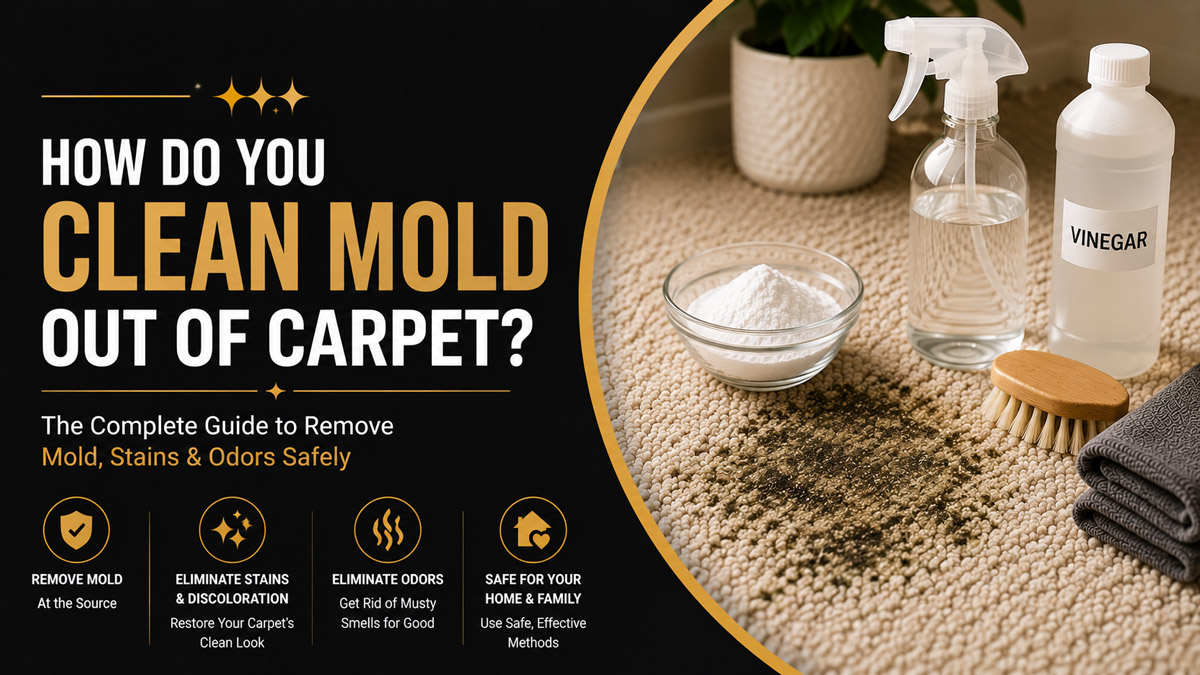
To properly clean mold out of a carpet, you must disrupt the fungal cell walls using an EPA-registered antimicrobial solution, physically extract the dead spore matter with a HEPA-filtered vacuum, and aggressively dehumidify the ambient air to below 45 percent relative humidity. This mechanical and chemical combination prevents the structural mycelium from regenerating inside the porous carpet backing.
Key Facts / At a Glance
- The Environmental Protection Agency (2023) recommends professional remediation for any fungal contamination exceeding 10 square feet.
- Fungal spores can germinate in carpet padding within 24 to 48 hours of a water intrusion event.
- Chlorine bleach destroys carpet dyes and fails to kill fungal root structures embedded in porous materials.
- Commercial quaternary ammonium disinfectants require a continuous 10-minute wet dwell time to achieve a complete microbial kill.
- Carpet padding acts as a dense sponge and must almost always be replaced following active mold colonization.
What Are the Prerequisites and Tool Requirements?
Before attempting any remediation protocol, you must accurately assess the scope of the biological hazard. Removing surface discoloration is meaningless if the underlying subfloor remains compromised by elevated moisture levels. Fungal colonies feed on organic debris trapped in the carpet pile and rely on a constant water source to thrive.
The total working time for a localized spot treatment typically spans two to three hours of active labor. The passive drying time extends to 48 hours. If the affected area spans more than a 3-foot by 3-foot section, the spore load exceeds safe limits for untrained homeowners. Attempting to tackle a massive infestation without commercial air scrubbers will actively contaminate the central HVAC system of your home.
You must assemble precise materials to execute this process without spreading dormant spores.
| Equipment Category | Specific Item Required | Estimated Cost | Core Purpose in Remediation |
| Personal Protection | N95 Respirator, Nitrile Gloves, Safety Goggles | $15 to $35 | Prevents inhalation of toxic mycotoxins and chemical burns. |
| Containment | 6-mil Polyethylene Sheeting, Painter’s Tape | $20 to $40 | Isolates the contaminated room from the rest of the building. |
| Fungal Eradication | Concrobium Aerosol or RMR-141 Disinfectant | $15 to $45 | Crushes spore structures or chemically denatures fungal proteins. |
| Physical Extraction | HEPA-Certified Wet/Dry Vacuum | $40 to $80 (Rental) | Captures microscopic particulates down to 0.3 microns. |
| Desiccation | Centrifugal Air Mover & LGR Dehumidifier | $80 to $150 (Rental) | Forces evaporation and pulls moisture out of the subfloor. |
How Do You Clean Mold Out of Carpet Using the 6-Step Method?
This rigorous six-step protocol targets isolated surface fungal spots resulting from topical spills, minor condensation, or tracked-in moisture. You must follow the steps sequentially. Skipping the dry extraction phase or shortening the chemical dwell time guarantees a biological recurrence.
Step 1: Contain the Area and Establish Ventilation
The immediate priority is preventing microscopic spores from drifting into uncontaminated living spaces. Fungal spores are highly aerodynamic and will ride natural air currents throughout a structure.
Close all supply and return HVAC vents in the affected room. Tape 6-mil polyethylene plastic sheeting over the interior doorway to create a temporary barrier. Open a single exterior window and place a box fan facing outward. This configuration generates negative air pressure. Air will flow from the clean parts of the house into the contaminated room and exhaust safely outside. Leave this fan running continuously throughout the entire remediation process.
You will know this step is successful when the plastic sheeting over the doorway bows slightly inward toward the room. A common mistake at this stage is pointing a high-velocity fan directly at the dry carpet spot. This blasts billions of dormant spores into the air before the chemical treatment can neutralize them.
Step 2: Perform Dry Extraction with HEPA Filtration
Physical removal of the dry, surface-level fungal crust drastically reduces the chemical workload required in the next step. You must break the top layer loose without grinding it deeper into the carpet backing.
Put on your N95 respirator mask and heavy-duty nitrile gloves. Take a stiff-bristled nylon utility brush and lightly agitate the visible mold colony. Work from the outside edges of the stain toward the center to prevent outward spreading. Immediately vacuum the loosened debris using a vacuum equipped with a genuine high-efficiency particulate air (HEPA) filter. You must utilize overlapping, extremely slow passes to pull the maximum amount of organic matter out of the primary carpet weave.
You will know this step is successful when the thick, three-dimensional crust is gone, leaving only flat discoloration on the fibers. A severe mistake here involves using a standard household vacuum cleaner. Normal paper filters cannot trap 0.3-micron fungal spores. A standard vacuum simply acts as a spore dispersion cannon, aerosolizing the hazard directly into your breathing zone.
Step 3: Apply the Antimicrobial Treatment
The chosen chemical agent must penetrate past the top pile and reach the primary backing where the mycelial root network anchors itself. You must saturate the area without heavily flooding the structural subfloor beneath it.
Transfer your chosen liquid treatment into a dedicated pump sprayer or trigger bottle. Hold the nozzle approximately six inches above the carpet surface. Apply an even, heavy mist to the discolored zone and extend the spray radius outward by at least six inches in all directions. Fungal roots spread horizontally beneath the surface long before visible colonies erupt on the top fibers. The carpet should be thoroughly saturated but not pooling liquid on the surface.
You will know this step is successful when the treated area feels uniformly wet to the touch down to the base of the fibers. A common failure mode involves lightly misting only the very top of the carpet. Fungi survive easily in the dry layers underneath when topical misting is too shallow.
Step 4: Allow Proper Dwell Time and Agitate
Chemical disinfectants do not instantly eradicate biological organisms on contact. The active ingredients require uninterrupted contact time to break down the lipid layers of the fungal cellular walls.
Leave the antimicrobial solution undisturbed for exactly 10 to 15 minutes. Review the back label of your specific product to verify the manufacturer’s required wet contact time. During this waiting period, do not run fans directly on the spot. Premature evaporation stops the chemical kill process entirely. Once the dwell time elapses, take a clean nylon brush and scrub the chemical deeply into the base fibers using circular motions. This physical agitation ensures the liquid coats the entire circumference of every single carpet yarn.
You will know this step is successful when the original dark discoloration begins to fade or lift into a muddy slurry. A frequent mistake is rushing the dwell time. Wiping the chemical away after two minutes leaves millions of resilient spores completely viable and ready to reproduce.
Step 5: Execute Wet Extraction
Leaving dead organic matter and spent chemicals inside the carpet creates a sticky residue that rapidly attracts future dirt and provides a food source for new mold. You must pull the slurry out of the textile matrix entirely.
Deploy a dedicated wet/dry extraction vacuum for this procedure. Press the vacuum nozzle firmly into the carpet pile and pull backward slowly. The pressure forces the liquid up from the primary backing. Repeat these slow extraction passes until no visible liquid travels through the clear plastic nozzle of the vacuum wand. If you do not have a wet vacuum, fold heavy white cotton towels in half, place them over the wet spot, and stand on them. Your body weight will wick the moisture upward. Swap out for fresh, dry towels until no more liquid transfers.
You will know this step is successful when the carpet feels only slightly damp, rather than soaking wet. A critical mistake at this stage involves scrubbing the area with rags. Aggressive side-to-side rubbing physically frays the synthetic carpet yarns, causing permanent textural damage known as pile blooming.
Step 6: Dehumidify and Monitor Moisture Levels
Moisture control is the ultimate defense mechanism against biological growth. If the treated area remains damp for more than 48 hours, the surviving dormant spores will instantly germinate and re-colonize the floor.
Position a high-capacity centrifugal air mover so the airstream flows directly across the surface of the wet patch. Place an LGR (low grain refrigerant) dehumidifier in the center of the room to pull the evaporating water vapor out of the ambient air. Close the exterior window that was used for initial ventilation to seal the room. Run both pieces of equipment continuously for a minimum of 24 to 48 hours. The ambient room humidity must drop below 45 percent.
You will know this step is successful when the carpet fibers, the primary backing, and the underlying pad are completely dry to the touch, and the room smells clean and neutral. A common mistake is turning off the fans after 12 hours because the top fibers feel dry. Moisture naturally wicks downward via gravity, meaning the pad often remains soaking wet long after the surface appears safe.
Which Treatment Solution Should You Select?
The chemical agent you choose dictates the effectiveness of the remediation. Different active ingredients utilize vastly different biological mechanisms to destroy fungal cellular structures. You must align your treatment choice with your specific carpet material, your budget, and the severity of the infestation.
Natural Acidic Solutions (White Vinegar)
White vinegar contains a 5 percent concentration of acetic acid, which effectively disrupts the internal pH balance of many fungal species. It is a highly preferred option for minor, surface-level outbreaks in homes with pets or sensitive individuals. Acetic acid is non-toxic, will not strip the synthetic dyes from your carpet fibers, and costs only a few dollars per gallon. However, vinegar only eliminates roughly 82 percent of known mold species. It leaves a distinct sour odor during the evaporation phase and provides zero residual protection against future microbial growth.
Commercial Encapsulants (Concrobium)
Concrobium and similar encapsulating sprays utilize sodium carbonate as their primary active ingredient. Instead of relying on toxic chemical burns, these formulas work mechanically. As the solution dries on the carpet fibers, it crushes the fungal spores physically. These products are incredibly safe, EPA-registered, and do not contain bleach, ammonia, or VOCs (volatile organic compounds). They also leave an invisible antimicrobial shield on the carpet fibers to prevent immediate regrowth. The primary drawback is that encapsulants do not contain bleaching agents, meaning they kill the organism but may leave dark structural stains behind on light-colored carpets.
Professional Quaternary Disinfectants (RMR-141)
Quaternary ammonium compounds (quats) represent the highest tier of fungicidal efficacy. These hospital-grade formulas provide a 99.9 percent broad-spectrum kill rate against highly resilient black molds like Stachybotrys chartarum. They denature the fungal proteins rapidly and excel at neutralizing intense musty odors embedded in synthetic textiles. Because these are highly aggressive chemical agents, they require strict adherence to personal protective equipment protocols. You must keep all pets and children completely out of the space until the carpet is 100 percent dry.
Chemical Oxidizers (Hydrogen Peroxide)
A 3 percent hydrogen peroxide solution acts as a potent oxidizer. It destroys fungal cell walls through rapid effervescence upon contact with organic material. It is inexpensive, readily available, and breaks down into harmless water and oxygen after reacting, leaving zero toxic residue. Hydrogen peroxide also acts as a mild bleaching agent, which helps remove the dark melanin stains left by fungal colonies. However, you must perform a small patch test in an inconspicuous corner of the room first. High concentrations of peroxide can permanently fade darker carpet dyes.
| Solution Category | Specific Product Example | Primary Mechanism of Action | Estimated Material Cost |
| Natural Acid | Undiluted White Vinegar | Disrupts internal cellular pH | $3 to $8 total |
| Commercial Encapsulant | Concrobium Mold Control | Mechanically crushes spores | $15 to $20 per bottle |
| Professional Chemical | RMR-141 Disinfectant | Denatures fungal proteins | $35 to $45 per unit |
| Oxidizer | 3% Hydrogen Peroxide | Oxidizes cellular walls | $2 to $5 total |
What Are the Most Common Remediation Mistakes?
Fungal remediation in porous textiles leaves zero margin for error. A single fundamental mistake during the chemical application or drying phase will absolutely guarantee a biological recurrence within a matter of weeks.
Relying on Chlorine Bleach
Standard household bleach is the most widely misused chemical in mold remediation. Chlorine bleach relies on an ion structure that prevents it from penetrating porous surfaces like nylon carpet fibers or wooden subfloors. It effectively oxidizes the melanin inside the spore, stripping away the color and rendering the mold invisible. However, the root structure remains completely unharmed beneath the surface. Furthermore, the high water content in a bleach solution actively feeds the surviving roots. Bleach will also instantly and permanently destroy the factory dyes in any colored carpet, leaving massive yellow or white chemical burns. If you accidentally apply bleach, you must neutralize it immediately by flooding the area with cold water and aggressively extracting it with a wet vacuum.
Leaving a Soaked Carpet Pad Intact
Carpet padding is primarily manufactured from bonded polyurethane foam. This cellular structure acts as a massive, highly efficient sponge. When water infiltrates the floor, the padding absorbs and traps the moisture tightly against the subfloor. Cleaning the top carpet fibers while ignoring a saturated pad is entirely useless. The mold colonies will simply digest the organic materials in the pad and migrate upward through the primary backing. Unless the moisture event was a tiny, localized surface spill caught immediately, you must pull back the carpet, slice out the affected padding, dispose of it in a sealed trash bag, and install a fresh piece of foam.
Oversaturating the Treatment Zone
Flooding a carpet with excessive amounts of chemical cleaner or water in an attempt to flush out the mold actually exacerbates the problem. Pushing gallons of liquid into the textile simply drives the surviving microscopic spores deeper into the subfloor crevices where extraction vacuums cannot reach them. This extreme moisture load dramatically extends the required drying timeline past the 48-hour threshold, ensuring new spore germination. Apply liquids strictly through controlled pump sprayers, never by pouring directly from a heavy bucket.
Does the Subfloor Material Change the Remediation Strategy?
The architectural material sitting directly beneath your carpet padding significantly alters how moisture travels and how fungal colonies behave. You must adjust your drying and treatment strategy based on the specific subfloor composition.
Concrete Slab Subfloors
Concrete is a highly porous, alkaline material that frequently suffers from hydrostatic pressure issues. Moisture vapor from the soil can push upward through a concrete slab and condense directly beneath the carpet padding. While mold cannot eat concrete itself due to the lack of organic cellulose, the trapped moisture creates a perfect environment for fungi to digest the dust, skin cells, and dirt trapped in the carpet.
When remediating carpet over concrete, you must verify that the moisture did not originate from below. Taping a square of clear plastic to the bare concrete for 24 hours will reveal condensation if hydrostatic pressure is the culprit. Concrete is extremely slow to release moisture, requiring high-heat centrifugal air movers directed explicitly at the bare slab before the carpet can be safely re-laid.
Plywood and OSB Subfloors
Wooden subfloors, including plywood and oriented strand board (OSB), act as an abundant organic food source for fungal growth. Wood contains massive amounts of cellulose. If a carpet remains wet over a wooden subfloor, the mold will rapidly colonize the wood grain itself.
When dealing with a wooden subfloor, pulling back the carpet to inspect the wood is absolutely mandatory. If the OSB shows black discoloration or structural rot, treating the carpet alone is insufficient. You must dry the wooden subfloor until its internal moisture equivalent drops below 16 percent, verified by a penetrating moisture meter. If the wood has delaminated or feels soft to the touch, you must physically cut out the ruined section of the subfloor with a circular saw and install fresh decking.
How Does Carpet Fiber Type Affect Fungal Removal?
Carpets are manufactured from highly diverse synthetic and natural materials. The chemical reaction between your cleaning agent and the specific fiber type dictates whether the carpet survives the remediation process unharmed.
Synthetic Fibers (Nylon and Olefin)
Nylon and olefin represent the vast majority of residential broadloom carpets. These synthetic plastics are incredibly resilient and highly resistant to chemical damage. Because the fibers themselves are essentially plastic, mold cannot consume them directly. Fungi on synthetic carpets are actually eating the organic dust and soil trapped between the yarns. You can safely aggressively treat nylon and olefin with quaternary ammonium disinfectants, commercial encapsulants, and stiff mechanical agitation. Olefin is particularly hydrophobic, meaning it releases water quickly and speeds up the desiccation phase.
Natural Fibers (Wool)
Wool carpets are constructed from natural animal hair, meaning the fibers are highly organic. In a wet environment, mold will actually consume the wool fibers themselves, leading to rapid structural deterioration. Wool is exquisitely sensitive to high pH levels and heat. Applying harsh alkaline chemicals or quaternary disinfectants to wool will permanently strip the natural oils from the fiber, causing it to become brittle and snap.
When cleaning mold out of wool carpet, you must rely strictly on mild, acidic solutions like a precisely diluted acetic acid mixture. You must also avoid utilizing high-heat air movers during the drying process, as excessive heat will shrink the natural fibers and warp the entire carpet backing.
| Fiber Material | Fungal Food Source | Chemical Tolerance | Required Drying Method |
| Nylon | Trapped dirt and dust | High (Tolerates Quats) | Aggressive heat and airflow |
| Olefin | Trapped dirt and dust | High (Tolerates Quats) | Standard air movement |
| Wool | The fiber itself | Low (Requires mild acids) | Low heat, high dehumidification |
Action Plans for Specific User Situations
Every mold remediation scenario carries unique financial, liability, and safety constraints. Choose the operational path that aligns with your specific housing situation.
The Budget-Conscious Renter
Renters dealing with small, window-condensation mold spots should prioritize low-cost, non-destructive mitigation. Stick to a one-to-one mixture of warm water and white household vinegar. Scrub the isolated spot thoroughly. Once extracted, scatter a heavy layer of dry baking soda over the area and leave it overnight. The baking soda acts as a highly effective desiccant, pulling remaining moisture out of the fibers while neutralizing the sour vinegar odor. Vacuum the dried powder the next morning using a HEPA filter. Immediately notify your landlord in writing if the spot exceeds a few inches, as structural moisture intrusion is a building maintenance liability.
The Homeowner with Small Children or Pets
Families must prioritize indoor air quality and toxicity avoidance above all else. Avoid harsh quaternary chemicals, and absolutely never mix chemical classes in an attempt to create a stronger formula. Opt for an EPA-registered, botanically derived solution or a mechanical encapsulant like Concrobium Mold Control. Ensure children and animals remain completely physically separated from the treatment zone until the drying equipment is removed and the carpet is completely dry to the touch. The most significant health risk during remediation is the inhalation of disturbed spores, making the containment phase critical for families.
Property Managers Dealing with Commercial Floods
Property managers overseeing multi-room water intrusions must immediately abandon DIY surface mitigation. The liability risks associated with black mold exposure in tenant-occupied spaces are immense. According to the Institute of Inspection, Cleaning and Restoration Certification (IICRC S520) standard, porous materials like carpet padding subjected to Category 2 (grey) or Category 3 (black) water must be entirely discarded. Instantly contact a certified restoration specialist. The carpet, padding, and affected drywall partitions must be strategically cut out, double-bagged in hazmat plastic, and replaced to protect structural integrity and comply with modern municipal health codes.
Frequently Asked Questions
What if the musty odor returns after cleaning?
If the distinct, earthy odor of mold returns after the carpet feels dry, the fungal colony is still alive in the subfloor or the polyurethane pad. Pull back the corner of the carpet with a pair of pliers. Check the wooden subfloor for dark staining. You must cut out the ruined pad section and apply a chemical encapsulant directly to the subfloor to seal the remaining hazard.
Why are the mold stains gone but testing shows live spores?
Cleaners like Concrobium and quaternary disinfectants kill fungi effectively without utilizing bleaching agents. This leaves dead structural stains behind, but if live spores show on an air test, the chemical dwell time was likely too short. Re-treat the area heavily, ensure a full 15-minute wet contact time, and deploy a HEPA air scrubber in the room to capture any airborne components that evaded the surface treatment.
Can I use an ozone generator to kill the carpet mold?
You should never use an ozone generator to treat localized carpet mold. Ozone is a highly unstable, toxic gas that damages human lung tissue. While high concentrations of ozone can degrade airborne spores, it cannot penetrate the dense fibers of a carpet or reach the subfloor. It simply damages the indoor air quality without solving the root moisture or structural contamination problem.
Does steam cleaning kill mold in carpets?
Steam cleaning is generally detrimental to active mold remediation. While extreme heat kills spores on contact, standard steam cleaners blast massive amounts of vapor pressure deep into the carpet pad and subfloor. This physically drives surviving spores deeper into the structure while providing them with the exact hot, wet environment they need to trigger immediate hyper-growth.
How long does it take for mold to grow in wet carpet?
Fungal spores require exactly three things to colonize: oxygen, organic food, and moisture. Because dust and oxygen are always present in residential flooring, the introduction of water starts a rapid biological clock. Mold spores germinate and begin forming structural mycelium within 24 to 48 hours of a water intrusion event.
The Bottom Line
Understanding exactly how to clean mold out of carpet fundamentally relies on moisture control and cellular disruption. You cannot simply wipe away the visible discoloration. You must isolate the room, apply a targeted chemical agent like quaternary ammonium or acetic acid to destroy the spore structures, extract the slurry mechanically, and enforce aggressive 48-hour desiccation. By following these precise steps and avoiding standard household bleach, you can effectively neutralize fungal hazards and restore the safety of your flooring.