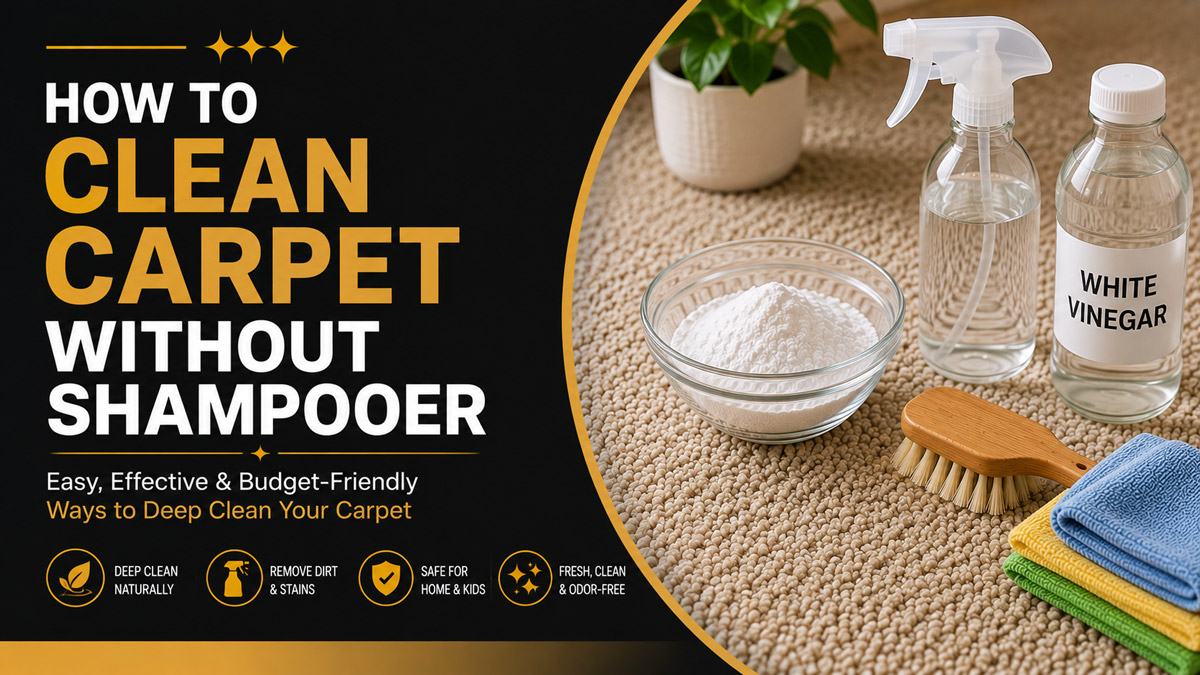
You can execute how to clean carpet without shampooer using standard household chemistry and manual agitation. This eight-step process takes roughly 60 minutes per standard room. Success relies entirely on moisture control. Overwetting destroys backing materials, while precise moisture management lifts dirt without leaving residues behind.
Before You Start
Manual carpet extraction relies on mechanical friction and specific chemical ratios rather than high-powered vacuum suction. This method demands physical exertion. You will spend considerable time working on your knees.
Time Required: 15 minutes preparation, 45 minutes active cleaning per 120 square feet, 4 to 8 hours drying.
Difficulty Level: Intermediate.
Typical Cost: $5 to $12 for basic household supplies.
Tools and Materials Required
| Item | Specification / Quantity | Typical Cost | Primary Purpose |
| Vacuum Cleaner | Motorized brush roll model | Owned | Removes 75% of dry particulate matter |
| Sodium Bicarbonate | 1 cup per 100 square feet | $2.00 | Absorbs volatile lipid compounds and oils |
| Dish Detergent | 1 teaspoon, clear, bleach-free | $3.00 | Surfactant to encapsulate grease |
| Water Temperature | 4 cups, exactly 110°F to 120°F | $0.00 | Solubilizes soap without setting stains |
| Agitation Brush | Handheld, medium nylon bristles | $6.00 | Dislodges soil from fiber shafts |
| Extraction Towels | 4 to 6 thick, white microfiber | $8.00 | Absorbs suspended soil via capillary action |
| Spray Bottles | Two 32 oz commercial bottles | $4.00 | Distributes liquids in a controlled mist |
| White Vinegar | 1 cup (5% acidity) | $3.00 | Neutralizes alkaline detergent residue |
Step Summary Guide
| Step Number | Core Action | Time Allocation | Most Common Mistake |
| Step 1 | Deep Vacuuming | 10 minutes | Rushing single passes |
| Step 2 | Dry Extraction | 15 minutes | Applying to wet carpet |
| Step 3 | Solution Mixing | 5 minutes | Using excessive detergent |
| Step 4 | Spot Testing | 5 minutes | Skipping this entirely |
| Step 5 | Mist and Agitate | 15 minutes | Over-saturating the backing |
| Step 6 | Pressure Blotting | 10 minutes | Rubbing instead of pressing |
| Step 7 | Neutralizing Rinse | 10 minutes | Leaving soap in fibers |
| Step 8 | Force-Drying | 4 to 8 hours | Poor room ventilation |
Phase 1: Preparation and Dry Soil Removal
Removing loose particulate matter dictates the success of liquid cleaning. Adding water to unvacuumed dirt creates heavy mud that manual blotting cannot extract.
Step 1: Execute a Deep Vacuuming Pattern
Set your vacuum height adjustment to its lowest appropriate setting so the beater bar actively vibrates the carpet backing. Push the machine slowly in straight north-to-south rows across the entire room, taking three seconds per forward and backward stroke. Next, vacuum the exact same area in intersecting east-to-west rows.
The physical vibration shakes heavy sand out of the lower pile structure. The intersecting pattern lifts twisted yarns from multiple angles, exposing hidden debris. You will know this step worked when the carpet pile stands uniformly upright and the vacuum canister holds a visible layer of fine gray dust. Rushing the vacuum passes is the most common mistake here. Moving too fast prevents the brush roll from separating the fibers.
Step 2: Extract Oils with Baking Soda
Sprinkle exactly 1 cup of dry baking soda evenly across every 100 square feet of flooring. Leave the powder completely undisturbed for 15 minutes to absorb ambient odors and surface body oils.
Baking soda acts as a dry sponge for lipid molecules. Waiting 15 minutes allows the alkaline powder to neutralize acidic odors trapped in the fibers. After the time elapses, vacuum the powder using slow, overlapping strokes until no white residue remains. You will know it worked when the room smells neutral and the carpet feels slightly less slick underfoot. Applying baking soda to a damp carpet is a catastrophic mistake. Moisture turns the powder into a hardened paste that ruins vacuum filters and bonds to carpet backing.
Phase 2: Solution Mixing and Safety Checks
Proper chemical formulation ensures dirt releases from the synthetic or natural yarns. High concentrations of soap attract soil rapidly after drying.
Step 3: Mix a Low-Residue Cleaning Solution
Pour 4 cups of 110°F to 120°F water into your first 32-ounce spray bottle, followed by exactly 1 teaspoon of clear, bleach-free liquid dish detergent. Swirl the bottle in gentle circles for 30 seconds to incorporate the surfactant without generating dense foam.
Dish detergent contains amphiphilic molecules that trap grease, but excessive amounts require heavy machine extraction to rinse away. The specific water temperature accelerates the chemical reaction without melting synthetic fibers or setting protein stains. You will know this worked when the liquid appears slightly cloudy but remains entirely fluid without a thick head of bubbles. Vigorously shaking the bottle is a frequent error. This creates thick suds that sit on top of the carpet instead of penetrating to the dirt layer.
Step 4: Perform a Colorfastness Spot Test
Mist your detergent solution lightly onto a hidden 2-inch square of carpet inside a closet or behind a heavy piece of furniture. Press a damp, white microfiber cloth heavily onto the test spot for exactly 30 seconds.
Many older carpets or natural wool rugs use unstable dyes that migrate when exposed to alkaline detergents. This test prevents you from ruining the entire room. Check the white cloth under bright light. You will know it worked and is safe to proceed when the cloth shows zero color transfer. Skipping this step is the most costly mistake a beginner makes. If you see dye on the towel, stop immediately and hire a professional dry-cleaning service.
Phase 3: Active Cleaning and Agitation
This phase replaces the mechanized scrubbing and suction of a commercial rental unit. Your physical force and the towels’ capillary action do the heavy lifting.
Step 5: Mist and Agitate the Target Area
Spray your cleaning solution evenly over a 3-foot by 3-foot section until the surface fibers feel distinctly damp but the backing remains dry. Scrub the dampened area using your medium-bristle nylon brush in tight circular motions for 60 seconds, then switch to aggressive back-and-forth strokes for another 30 seconds.
The initial misting delivers the surfactant to the soil bond. The circular brushing action shears dirt away from all sides of the twisted yarn, while the back-and-forth motion pulls the dislodged soil upward. You will know this worked when the moisture on the carpet turns slightly gray or brown, indicating suspended soil. Squeezing the spray bottle trigger too many times is a dangerous mistake. Over-saturating the floor pushes water into the latex adhesive backing, leading to structural rot.
Step 6: Extract Moisture Through Blotting
Fold a dry, white microfiber towel into quarters and place it directly over the agitated area. Press straight down onto the towel using your full body weight, holding the compression for 5 seconds to force the moisture upward into the cloth.
Microfiber contains millions of tiny hooks that grab moisture and soil through capillary action. Compression forces the liquid out of the carpet and into the absorbent towel layer. Unfold the towel to a clean, dry section and repeat the downward pressing until no more liquid transfers. You will know it worked when the carpet feels only slightly damp to the touch and the towel is visibly soiled. Rubbing the towel side-to-side is a severe mistake. Lateral friction distorts the yarn twist permanently and pushes dirt deeper into the pile.
Phase 4: Rinsing and Curing
Failing to remove the detergent leaves a sticky residue. Proper curing resets the physical structure of the flooring.
Step 7: Apply a Neutralizing Rinse
Fill your second 32-ounce spray bottle with 4 cups of warm water and 1 cup of standard white vinegar. Mist the exact 3-foot by 3-foot section you just cleaned, then immediately perform the same heavy compression blotting technique using a fresh, dry microfiber towel.
The dish soap used in step 3 is highly alkaline. According to the Institute of Inspection, Cleaning and Restoration Certification (IICRC) chemical guidelines, leaving alkaline residue causes rapid resoiling. The mild acetic acid in the vinegar neutralizes the soap, returning the fibers to a safe, neutral pH level. You will know this worked when the fibers feel soft and separate easily under your fingers, rather than feeling slick or gummy. Leaving the soap in the fibers is the most common reason manually cleaned floors look dirty again within a week.
Step 8: Force-Dry the Fibers
Turn all ceiling fans in the room to their maximum speed setting and position a portable oscillating fan to blow directly across the carpet surface. Open two windows on opposite sides of the room to create a cross-breeze, assuming outdoor humidity sits below 50 percent.
Evaporation requires moving air to carry away the boundary layer of moisture resting just above the damp fibers. Stagnant air allows water to pool at the base of the yarns. Keep all foot traffic off the surface entirely. You will know it worked when the carpet feels bone-dry to the touch, which typically takes 4 to 8 hours depending on ambient temperature. Poor room ventilation is a critical error. Drying times exceeding 12 hours often trigger dormant mold spores inside the floor pad.
Common Mistakes and How to Fix Them
Even careful practitioners occasionally encounter issues during manual extraction. Recognizing the chemical or mechanical failure allows you to correct it rapidly.
The Carpet Smells Musty After Drying
This indicates the backing remained wet for too long, allowing anaerobic bacteria to multiply in the dark, damp environment. You must arrest the bacterial growth immediately. Position a mechanical dehumidifier directly in the center of the room and run it on continuous mode. Spray the specific musty area with a light mist of straight white vinegar, which acts as a mild antibacterial agent. Let the carpet dry completely, then sprinkle a heavy layer of baking soda over the area. Wait 2 hours and vacuum it up.
The Fibers Feel Crunchy or Sticky
Crunchy or sticky fibers confirm that detergent residue remains bonded to the yarn shafts. The soap has dried hard, creating a magnet for new dirt. You need to re-activate the dried soap and extract it. Mix a solution of 2 cups hot water and 1 cup white vinegar. Mist the stiff areas generously. Wait 3 minutes for the acid to break down the hardened alkaline soap crust. Use your stiff brush to agitate the fibers gently, then apply maximum body weight on thick towels to extract the soapy liquid.
Dark Spots Reappeared After 24 Hours
Professionals call this phenomenon “wicking.” The surface looks clean initially, but a large liquid stain remains trapped deep in the sponge-like carpet pad. As the surface dries, capillary action draws the deep moisture and soil up the fiber shafts to the top. To stop wicking, you must address the deep moisture. Re-treat the surface spot with your dish soap spray and agitate lightly. Blot it as dry as possible. Finally, place a stack of dry paper towels over the spot and weigh them down with a 10-pound object, like a heavy stack of books. Leave this overnight. The heavy pressure forces the towels to absorb the deep moisture as it rises.
The Yarns Look Frayed or Fuzzy
This is pile distortion caused by aggressive lateral scrubbing. Synthetic fibers essentially untwist and fray when subjected to high friction while wet. Unfortunately, severe pile distortion is permanent mechanical damage. To minimize the visual impact, lightly mist the fuzzy area with warm water. Use a specialized carpet rake or a wide-toothed comb to gently pull all the fibers in one uniform direction. Allow it to dry completely without touching it.
Variations Based on Carpet Material
Standard instructions assume you own a common nylon or polyester cut-pile carpet. Altering the process for different textiles prevents irreversible damage.
Cleaning Natural Wool Carpets
Wool fibers resemble human hair under a microscope, featuring an outer cuticle layer that overlaps like roof shingles. Wool is highly sensitive to high pH levels and high heat. Never use standard dish soap on wool, as it strips the natural lanolin oils and leaves the fibers brittle. Purchase a dedicated wool-safe, neutral-pH detergent. Keep your water temperature strictly below 100°F (38°C) to prevent the fibers from shrinking. Limit your mechanical agitation. Hard scrubbing forces the wool cuticles to lock together, creating a permanently felted patch.
Cleaning Olefin (Polypropylene) Carpets
Olefin is a petroleum-based synthetic fiber highly resistant to water-based stains but extremely attractive to oils. It also possesses a very low melting point. Friction from aggressive brushing generates localized heat that can actually melt or fuse olefin fibers together. When cleaning olefin, skip the dish soap entirely and use an encapsulation cleaner designed for synthetic fibers. Use a soft-bristled brush, and rely heavily on the dry-extraction baking soda step to pull out bonded oils before introducing any liquid.
Cleaning Berber (Loop Pile) Carpets
Berber carpets feature continuous loops of yarn anchored into the backing, rather than cut tufts. This structure makes them highly durable but vulnerable to snagging. Never use a stiff-bristled brush on Berber. A single caught bristle will pull a loop out of the backing, creating a “run” that spans the entire room. Instead of brushing, use a clean microfiber cloth to gently massage the detergent into the loops. Blotting pressure must be firm and strictly vertical to avoid distorting the loop structure.
Handling Specific Stains Without a Machine
A general room cleaning lifts ambient soil, but concentrated chemical spots require targeted interventions before you clean the wider area.
Tannin Stains (Coffee, Tea, Wine)
Tannins are plant-based compounds that require an acidic environment to release their bond. Alkaline dish soap often sets tannin stains permanently. For a coffee spill, mix 1 part white vinegar with 2 parts water. Saturate the stain and blot immediately. Do not brush tannin stains, as this drives the dye deeper. Continue alternating vinegar applications and dry towel blotting until the brown transfer stops.
Protein Stains (Blood, Pet Urine, Milk)
Proteins coagulate and bond firmly to fibers when exposed to heat. Never use warm or hot water on a protein stain. Mix 1 cup of cold water with 2 drops of dish soap. For pet urine, the primary issue is uric acid crystals that form as the liquid dries. Standard soap cannot dissolve uric acid. You must purchase an enzymatic cleaner specifically formulated for pet stains. Enzymes literally digest the organic matter over a 12-hour dwell time.
Oil and Grease (Butter, Makeup, Engine Oil)
Water repels oil, making standard water-based extraction frustrating. Treat oil spills entirely dry first. Cover the stain under a quarter-inch mountain of cornstarch or baking soda. Press the powder firmly into the stain and leave it for 4 hours. The fine powder absorbs the heavy lipids. Vacuum the dry powder away. If a stain remains, apply a small amount of isopropyl alcohol (rubbing alcohol) to a white cloth and dab the spot. Alcohol acts as a solvent, breaking the lipid bonds without requiring heavy water volume.
Time and Cost Analysis for Manual Carpet Cleaning
Understanding the investment required helps determine whether manual extraction fits your current situation.
The primary investment is time. A standard 120-square-foot bedroom takes 15 minutes of preparation, followed by 45 minutes of rigorous physical labor to mist, agitate, and blot in 3-foot sections. Including the mandatory 4 to 8 hours of curing time, the room remains unusable for an entire day.
Financially, this method costs very little. Baking soda ($2), dish soap ($3), white vinegar ($3), and a basic scrub brush ($6) total under $15. Most households already possess these items. Conversely, renting a commercial carpet extraction machine from a hardware store typically costs $35 to $45 for a 24-hour period, plus another $20 for the proprietary shampoo formula. Professional truck-mounted services average $50 to $75 per room, subject to minimum call-out fees.
Manual extraction provides an excellent, low-cost solution for maintenance cleaning in small areas or apartments where storing or renting heavy machinery is impractical. However, for heavily soiled homes exceeding 1,000 square feet, the physical toll of manual extraction generally outweighs the financial savings.
Frequently Asked Questions
Can I use laundry detergent instead of dish soap?
Do not use laundry detergent on carpets. Laundry formulas contain optical brighteners, heavy dyes, and excessive sudsing agents designed to be rinsed away by 15 gallons of washing machine water. Manual blotting cannot extract laundry detergent, guaranteeing a sticky residue.
How often should I manually clean my carpets?
Perform manual deep cleaning every 12 to 18 months for normal traffic areas. High-traffic zones or homes with multiple pets may require spot treatment every 6 months. Over-cleaning degrades the factory stain-resistant treatments applied to synthetic fibers.
Is it safe to walk on the carpet while it dries?
Keep all traffic off the carpet until it feels completely dry. Wet fibers act like a sponge, pulling dirt directly off your socks or bare feet. Furthermore, walking on wet carpet crushes the pile, causing it to dry in a matted, flat position.
Will manual cleaning remove old, set-in stains?
Manual cleaning removes suspended dirt and recent spills efficiently. Stains older than six months have often bonded with the yarn dye sites permanently. You can lighten them using targeted chemical treatments, but physical scrubbing alone will not reverse chemical dye bonding.
What happens if I skip the vinegar rinse?
Skipping the acidic rinse leaves alkaline soap molecules trapped in the yarn. These molecules remain active and attract new dirt particles from shoes and ambient air. Your freshly cleaned carpet will look heavily soiled again within a few weeks due to rapid dirt binding.
Mastering how to clean carpet without shampooer transforms standard household supplies into a highly effective extraction system. By strictly controlling your liquid volume and prioritizing chemical neutralization, you can maintain pristine floors indefinitely without renting heavy equipment.