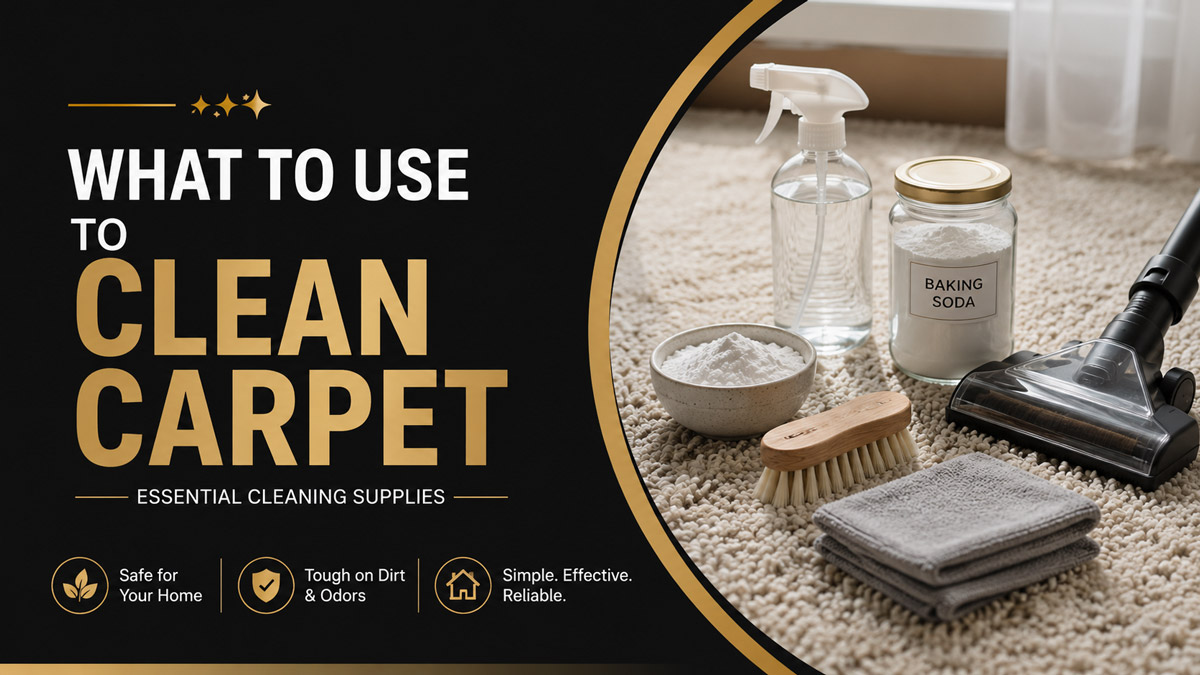
To clean carpet effectively, you must use a specialized chemical formulation matched to the soil type, followed by a mechanical extraction system to remove the suspended dirt. Professional-grade liquid alkaline extraction cleansers are best for heavily soiled synthetic carpets, while neutral encapsulation polymers or dry absorbent compounds are required for delicate natural fibers and fast-drying commercial environments. Selecting the wrong chemical pH or leaving detergent residue behind will permanently damage the fibers and attract new dirt within weeks.
Key Facts at a Glance
- Liquid extraction cleansers require a highly alkaline pH of 9.5 to 11.5 to dissolve greasy, acidic soils from synthetic nylon or polyester fibers.
- Natural wool carpets dictate a strict neutral to mildly acidic cleaning profile between pH 5.5 and 7.5 to prevent irreversible structural damage.
- Every 18 degrees Fahrenheit (10 degrees Celsius) increase in water temperature above 118 degrees Fahrenheit doubles the reactivity of carpet cleaning chemicals.
- Failing to follow an alkaline pre-spray with an acidic fiber rinse leaves sticky soap residue that actively attracts dry particulate soil.
- True dry cleaning compounds utilize biodegradable cellulose granules moistened with solvent, requiring zero drying time and permitting immediate foot traffic.
The Science of Cleaning: How Chemistry and Mechanics Work Together
Carpet cleaning agents and mechanical systems rely on specific chemical formulas engineered to separate, encapsulate, or dissolve soils embedded within carpet fibers without causing fabric degradation. You cannot simply apply soap and water. The process requires a calculated balance of chemical reactivity and physical force to break the bonds holding dirt to the yarn.
What is the C.H.A.T. Principle?
The C.H.A.T. principle dictates that any effective cleaning cycle must balance four core variables. If you reduce one variable, you must increase another to achieve the same level of soil removal.
- C for Chemical Action: Cleaning solutions utilize surfactants (surface active agents) that lower the surface tension of water. This allows the liquid to penetrate densely woven fibers. The molecules feature a hydrophilic (water-loving) head and a lipophilic (oil-loving) tail. They surround oily, hydrophobic soils, emulsifying them into tiny droplets that can be flushed away.
- H for Heat: Elevated temperatures break down the molecular bonds in heavy grease and sticky sugars. Heat increases molecular kinetic energy. Moving from cold water to professional truck-mounted water temperatures of 200 degrees Fahrenheit exponentially accelerates the chemical breakdown of embedded soils.
- A for Agitation: Mechanical brushing breaks the physical bonds between the soil and the carpet pile. Whether using a manual carpet rake or a motorized counter-rotating brush machine, agitation physically moves foreign particles into suspension within the chemical solution.
- T for Time (Dwell Time): Chemicals do not act instantly. A cleaning agent requires a window of 10 to 15 minutes to actively penetrate, separate, and break down deep soils before the extraction phase begins. Rushing the extraction process renders the chemicals useless.
What Chemical Formulations to Use Based on Soil Type
The exact substance you use to clean your carpet depends entirely on the chemical composition of the dirt you are trying to remove. Applying a generic soap to a specialized stain often sets the stain permanently.
Liquid Extraction Cleansers for Hot Water Systems
Liquid extraction cleansers are highly concentrated, low-foaming formulas containing synthetic surfactants, specialized builders, and water-soluble solvents. These chemicals are designed exclusively for standard hot water extraction (steam cleaning). To dissolve the acidic grease brought in from asphalt driveways and human skin oils, these cleansers maintain a highly alkaline profile between pH 9.5 and 11.5. They represent the best option for deep restorative cleaning of heavily soiled household carpets made from synthetic materials.
Encapsulation Polymers for Low-Moisture Maintenance
Encapsulation formulas rely on crystallizing liquid polymers that actively seek out soil particles. Once applied and agitated into the carpet, the solution dries into a brittle, microscopic crystal structure that traps the dirt. These solutions typically feature a neutral pH profile of 7.0 to 8.5. Encapsulation polymers are best for commercial offices with high foot traffic requiring rapid maintenance. The trapped dirt is simply vacuumed away during subsequent routine dry maintenance, leaving absolutely no sticky detergent residue behind.
Dry Cleaning Compounds for Sensitive Environments
Dry cleaning compounds consist of natural, biodegradable cellulose or polymer granules. Manufacturers moisten these sponge-like particles with specialized organic solvents, detergents, and a minor amount of water. You broadcast the neutral-pH powder over the carpet and brush it into the pile. The granules act like microscopic sponges, absorbing oil and dirt. Dry powder is the mandatory choice for ultra-delicate, non-colorfast rugs, moisture-sensitive jute backing, and environments where zero dry time is permitted.
Enzymatic Cleaners for Biological Stains
Enzymatic cleaners contain live bio-enzymatic cultures that physically digest organic waste matter. Protease enzymes break down protein bonds, amylase targets starches, and lipase dissolves fats. Operating within a neutral to slightly alkaline range (pH 7.0 to 8.5), the bacteria consume the organic matter until the food source is depleted. You should use enzymatic formulas exclusively for eliminating biological odors and stains resulting from pet urine, feces, vomit, or blood.
Target-Specific Chemical Spotters
Standard detergents cannot remove specialized chemical stains. You must match the spotter to the specific chemical compound of the spill.
- Oxidizers: These hydrogen peroxide-infused chemical treatments add oxygen molecules to organic stains like wine, coffee, and urine. The oxidation process alters the stain’s light-reflecting properties, rendering it invisible.
- Reducers: These specialized sulfur-based chemical agents strip oxygen away from synthetic dyes. You must use reducers for artificial red food coloring or sports drink stains.
- Volatile Dry Solvents: Fast-evaporating, water-free liquids formulated to dissolve pure oil, paint, grease, cosmetics, and adhesives. These contain no water and will not cause carpet backing to shrink.
What to Use to Clean Carpet Based on Fiber Material
Using a highly alkaline chemical on a natural fiber will destroy the carpet. Using a mild neutral shampoo on a synthetic fiber will fail to remove the dirt. You must identify your carpet fiber before selecting a cleaning agent.
| Fiber Material | Safe pH Range | Optimal Chemical Base | Primary Vulnerability |
| Nylon (Synthetic) | pH 7.0 to 10.0 | High-alkaline synthetic surfactants | Easily stained by acid dyes (red food coloring) |
| Polyester (Synthetic) | pH 7.0 to 10.5 | Heavy-duty degreasers, volatile solvents | Highly attractive to oil-based stains (lipophilic) |
| Wool (Natural) | pH 5.5 to 7.5 | Neutral to mild acidic shampoos | High heat, chlorine bleach, high alkalinity |
| Olefin (Polypropylene) | pH 8.0 to 11.0 | Olefin-specific pre-sprays, intense heat | Friction melting from heavy brush agitation |
| Jute or Sisal (Natural) | pH 6.0 to 7.0 | Dry absorbent powder compounds | Cellulosic browning and rotting from moisture |
Synthetic Fibers (Nylon and Polyester)
Nylon and polyester constitute the vast majority of residential carpeting. These petroleum-based fibers are highly resilient and can withstand aggressive mechanical agitation, high heat up to 220 degrees Fahrenheit, and alkaline pre-sprays up to pH 10.5. Polyester is specifically oleophilic (oil-loving), meaning you must use heavy-duty solvent-based pre-sprays to break the strong bond between the plastic fiber and cooking greases or skin oils.
Natural Fibers (Wool and Silk)
Natural wool possesses a cuticle layer containing natural lanolin oils. High-alkaline solutions will dissolve this protective lanolin coating, causing irreversible fiber browning, shrinking, and structural degradation. You must stick exclusively to specialized chemical solutions carrying the WoolSafe certification stamp. These chemicals maintain a strict, non-destructive pH range between 5.5 and 7.5. Furthermore, you must cap water temperatures at 150 degrees Fahrenheit to prevent the wool scales from locking together in a process known as felting.
What Household Items Can You Safely Use to Clean Carpet?
Many homeowners attempt to clean carpets using pantry ingredients. While cost-effective, these DIY remedies often cause more harm than good due to their chemical limitations.
Baking soda is highly abrasive. While it absorbs surface odors temporarily, residential vacuum cleaners lack the suction power to extract the fine powder from the base of the carpet pile. The remaining baking soda acts like sandpaper against the fibers every time you walk on it, and it can destroy the bearings inside your vacuum motor.
White vinegar is a mild acetic acid with a pH of roughly 2.5. It holds no surfactant properties and cannot emulsify oils, grease, or heavy soils. However, vinegar is highly effective as a neutralizing rinse. Mixing one part vinegar with three parts water provides a safe, low-cost acidic rinse to neutralize alkaline soap residues left behind by commercial spotters.
Dish soap is engineered to create massive amounts of foam to hold grease in suspension in a sink. Carpet extraction machines cannot process this foam. Applying dish soap to a carpet leaves a heavy, sticky residue that acts as a dirt magnet. You should never use dish soap or laundry detergent to clean carpet fibers.
How to Deep Clean Carpets Using Standard Hot Water Extraction
For standard hot water extraction or deep machine cleaning, follow this exact sequence to achieve maximum soil removal without damaging the subfloor. Missing a single step guarantees rapid re-soiling.
Step 1: Dry Commercial Pre-Vacuuming
Vacuum the area thoroughly using overlapping strokes, covering the floor in a North-South direction followed by an East-West direction. Skipping this step turns dry dust into unremovable mud the moment you apply water. Up to 79 percent of soil in a carpet is dry particulate matter that must be removed dry.
Step 2: Stain Pre-Treatment
Identify and target stubborn spots with a dedicated specialized spotter. Apply oxidizers to organic stains and volatile dry solvents to oil or tar. Allow these specialized chemicals to penetrate for 5 minutes before moving to the next step.
Step 3: Alkaline Pre-Spray Application
Evenly mist a high-alkaline traffic lane cleaner across the entire surface using a pump sprayer. Apply at a rate of roughly one gallon per 400 square feet. Allow a strict 10-minute dwell time to loosen embedded oils, but do not allow the chemical to dry.
Step 4: Mechanical Agitation
Use a manual carpet grooming rake or a motorized counter-rotating brush machine to work the pre-spray deep into the pile. This mechanical action ensures the chemical coats every side of the yarn, breaking the physical bonds of the dirt.
Step 5: Extraction and Acidic Rinse
Run a hot water extractor over the carpet. Fill the machine tank with clean, hot water and a dedicated acidic fiber rinse (pH 4.0 to 5.0). Do not put soap or detergent in the machine’s water tank. The hot acid neutralizes the alkaline pre-spray, flushing the suspended dirt into the recovery tank while preventing crunchy detergent residue.
Step 6: Dry Extraction Passes
Run the machine over the wet areas a second time with the water trigger completely turned off. This step relies solely on the machine’s suction to extract maximum moisture from the backing pad. Repeat until no more water flows through the extraction window.
Step 7: Ventilation and Grooming
Rake the pile in a single direction to align the fibers and promote fast drying. Deploy high-velocity carpet fans directly across the floor and open windows to clear humidity. Proper ventilation prevents mold spores from germinating during the 6 to 12 hour drying window.
Expert Insight: The biggest mistake non-professionals make is placing detergent directly into the fresh water tank of the extraction machine. The machine is designed to rinse, not wash. Detergent belongs solely in the pre-spray applied in Step 3. Rinsing with soapy water guarantees you will leave sticky residue behind.
Cost and Performance Benchmarks for Carpet Cleaning Solutions
Understanding the performance metrics of different methods allows you to choose the correct system for your budget and timeline. Professional-grade extraction systems run from specialized vans remove up to 98 percent of embedded allergens, compared to just 50 to 70 percent managed by consumer-grade rental hardware.
| Cleaning Method | Average Drying Time | Allergen Removal Rate | Typical Cost Parameter |
| Hot Water Extraction (Pro Truck-Mount) | 4 to 8 Hours | 95% to 98% | $40 to $125 per room |
| Hot Water Extraction (Portable Unit) | 8 to 14 Hours | 85% to 90% | $30 to $60 per room |
| Encapsulation (Low Moisture) | 1 to 2 Hours | 60% to 70% | $0.20 to $0.35 per sq. ft. |
| Dry Powder Cleaning | 0 Hours | 40% to 50% | $0.30 to $0.50 per sq. ft. |
| Consumer DIY Rental Machine | 12 to 24 Hours | 50% to 70% | $35 to $50 daily rental |
A standard ready-to-use professional pre-spray covers roughly 400 to 800 square feet per gallon. Professional services average roughly $183 for a standard 3-room home, though premium restorative treatments can reach $1.00 to $2.00 per square foot.
What Methods Are Best for Specific Home Environments?
Different environments require different cleaning modalities. A method that works perfectly in an empty office building may cause severe damage in a residential home containing antique rugs.
| Cleaning Method | Deepest Clean Ability | Pros (Advantage) | Cons (Drawback) |
| Hot Water Extraction | Excellent (Flushes backing) | Removes deepest soils, kills bacteria, extracts 98% of allergens. | Long dry times; high risk of overwetting if performed poorly. |
| Polymer Encapsulation | Moderate (Surface to mid-pile) | Rapid turnaround; leaves absolutely no sticky soap residues behind. | Cannot pull up deeply buried heavy grease mud or pet urine. |
| Absorbent Dry Powder | Poor (Surface fiber refresh) | Zero structural moisture risk; perfect for antique wool or sisal. | Minimal stain removal power; requires intense vacuuming. |
| Bonnet Cleaning (Pad) | Low (Absorbs top layer only) | Exceptionally fast and highly economical for large commercial floors. | Can distort carpet pile; drives deep dirt further down over time. |
The Active Family (Pets, Kids, High Spills)
Invest in a consumer-grade upright deep cleaner featuring a specialized dual-tank system, such as the Bissell ProHeat or Shark Stain Striker series. Always keep an enzymatic pre-spray on hand to quickly break down pet accidents immediately after they occur. Supplement this with an oxygenated peroxide spotter to safely neutralize organic food spills. Schedule a professional hot water extraction annually.
The Delicate Homeowner (Premium Wool, Antique Rugs)
Avoid harsh mechanical brushing and high heat entirely. Rely on a certified professional holding Institute of Inspection, Cleaning and Restoration Certification (IICRC) credentials, or opt for a gentle dry powder system. Stick exclusively to specialized chemical solutions carrying the WoolSafe certification stamp to maintain the structural integrity of the natural yarns.
The Commercial Property Manager (High Traffic, No Down-Time)
Rely on a monthly low-moisture encapsulation polymer system paired with a commercial counter-rotating brush machine. Utilize high-crystallizing polymers formulated to shatter cleanly upon drying. This allows standard nightly janitorial vacuuming routines to maintain floor cleanliness without disrupting daytime office hours or leaving the building smelling damp.
Common Pitfalls and Troubleshooting Carpet Cleaning Failures
Even with the correct chemicals, improper application causes severe secondary problems. Most carpet cleaning failures stem from excess moisture or unrinsed alkaline chemistry.
How Do You Fix Stains Reappearing After Drying (Wick-back)?
Wick-back occurs when excess water trapped in the backing pad dissolves deep stains. As the surface of the carpet dries, capillary action draws the contaminated moisture up to the tips of the fibers. Once the water evaporates, the stain remains on the surface.
To fix wick-back, lightly mist the affected area with an acidic rinse solution to neutralize the stain. Place a clean, weighted white microfiber towel directly over the spot. The heavy towel will absorb the remaining moisture drawing upward from the backing pad over a 12-hour period, trapping the stain in the towel rather than the carpet tips. Never rub a wick-back stain.
What Causes Carpets to Feel Crunchy or Sticky?
Unrinsed alkaline detergents drying directly onto the yarn create a stiff, crunchy texture. This residue is highly alkaline and acts as a dirt magnet. To solve this, run an extraction machine over the stiff areas using only hot water mixed with a dedicated acidic fiber rinse. Do not add any more soap or detergent. The acid will dissolve the crystallized alkaline salts, restoring the soft texture of the fiber.
How to Eliminate Musty Odors Post-Cleaning
A damp, sour, or musty odor develops when the carpet pile and the backing pad remain wet for longer than 24 hours, allowing mold spores and mildew to germinate. You must immediately maximize airflow to halt the biological growth. Set up heavy-duty floor fans pushing air across the surface, run a high-capacity dehumidifier, and open windows. Lightly treat the surface with a specialized anti-microbial sanitizer or a fine mist of 70 percent isopropyl alcohol to kill the odor-causing bacteria without adding more water to the backing.
Frequently Asked Questions
Is it better to shampoo or steam clean a carpet?
Steam cleaning (hot water extraction) is vastly superior to shampooing. Shampooing leaves heavy, foamy detergents in the carpet fibers that cannot be fully extracted, resulting in rapid re-soiling. Steam cleaning flushes suspended dirt and chemicals entirely out of the carpet using hot water and high-pressure suction.
How often should residential carpets be professionally cleaned?
Major carpet manufacturers mandate professional hot water extraction every 12 to 18 months to maintain the fiber warranty. Homes with multiple indoor pets, smokers, or heavy foot traffic should increase this frequency to every 6 to 9 months to prevent permanent abrasion from embedded dry soils.
Does hot water extraction cause carpets to shrink?
Synthetic carpets will not shrink from hot water extraction. However, natural fibers like woven wool or carpets featuring a natural jute backing can shrink severely if over-saturated. Technicians must use specialized low-moisture tools and rapid drying fans when processing natural backing materials.
Can I use OxiClean on my carpet?
Standard laundry OxiClean contains high levels of sodium carbonate (pH 11) which is too alkaline for carpet fibers and leaves a severe residue. You should only use specialized, carpet-specific oxygenated spotters designed to break down cleanly without requiring heavy water rinsing.
The Bottom Line
Selecting what to use to clean your carpet requires identifying the fiber type and the nature of the soil. Synthetic carpets facing heavy traffic demand highly alkaline pre-sprays followed by acidic hot water extraction. Natural wools require strict pH-neutral shampoos. Commercial spaces benefit from fast-drying encapsulation polymers. Never place detergent directly into an extraction machine’s water tank, and always prioritize rapid drying to prevent odors and structural damage.