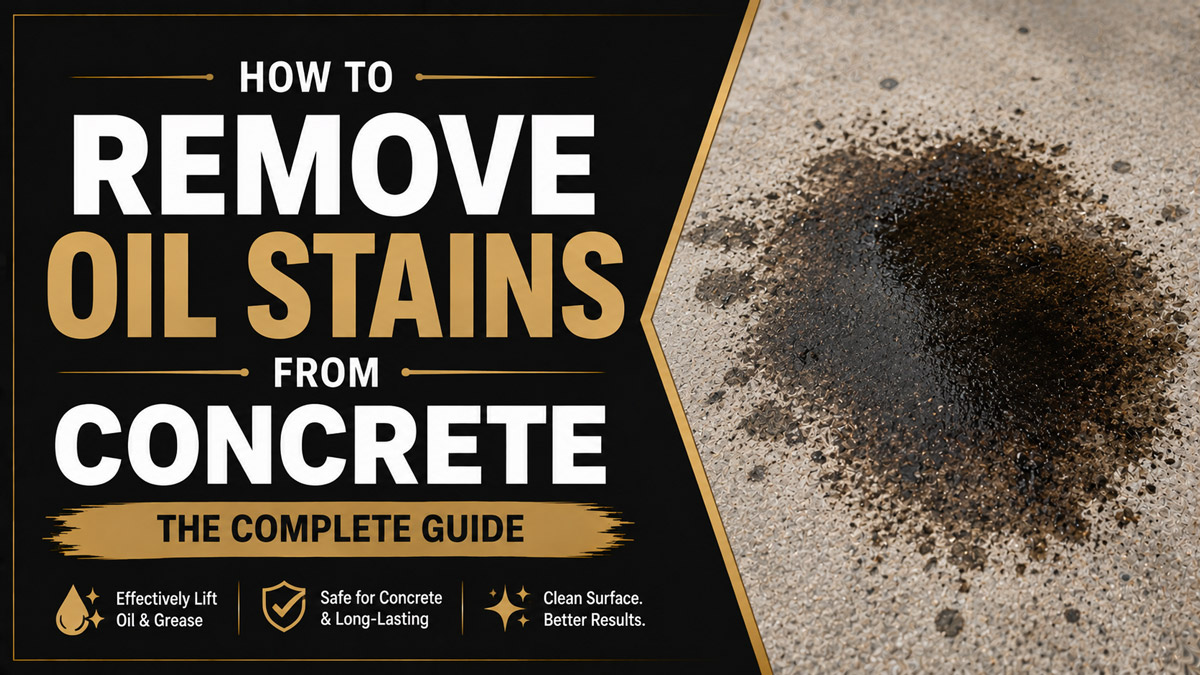
To remove oil stains from concrete, you must extract the embedded petroleum from the microscopic surface pores using a poultice process. Apply a heavy-duty liquid degreaser to break down the oil molecules, cover the liquid with an absorbent powder like baking soda, allow the mixture to dry completely, and rinse the residue away.
Key Facts / At a Glance
- Fresh oil spills require immediate absorption using clay-based cat litter or baking soda before applying any water or chemicals.
- Liquid dish soap mixed with hot water tackles a large majority of minor residential driveway drips effectively.
- Commercial concrete degreasers utilize chemical surfactants to emulsify oxidized petroleum within 15 to 30 minutes.
- Enzymatic bioremediation cleaners consume deep oil stains automatically but require surface temperatures above 60 degrees Fahrenheit to function.
- Pressure washing fresh oil without absorbing it first forces the petroleum deeper into the concrete capillary network.
Before You Start
Removing petroleum from a porous surface requires proper preparation. Assess your resources and environmental conditions before applying any chemicals to your driveway or garage floor.
- Total Time: 1 to 24 hours depending on the chosen method.
- Difficulty: Beginner to Intermediate.
- Estimated Cost: $5 to $50.
- Prerequisites: Dry weather with no rain forecasted for 24 hours. The concrete surface temperature must sit above 50 degrees Fahrenheit.
- Tools Required: Stiff nylon bristle scrub brush (1), heavy-duty paper towels (1 roll), safety goggles (1 pair), heavy-duty liquid dish soap or commercial degreaser (32 ounces), and an absorbent powder like baking soda (2 pounds).
Why Does Concrete Trap Motor Oil?
Concrete acts as a rigid, highly absorbent sponge. The curing process of Portland cement leaves behind millions of microscopic voids and capillary networks within the hardened calcium silicate hydrate matrix. When you spill synthetic motor oil on a driveway, capillary action instantly draws the low-viscosity liquid down into these microscopic voids.
The oil then oxidizes in the presence of atmospheric air and ultraviolet light. This chemical reaction hardens the petroleum polymers. Hardened oil bonds physically to the alkaline cement paste, making surface-level scrubbing completely ineffective. To successfully remove the discoloration, you must use reverse capillary action to draw the oil back out of the stone matrix.
The Role of Concrete Finishes
Different concrete finishes dictate how fast oil penetrates the surface. Understanding your specific slab type determines how aggressively you must clean it.
| Finish Type | Porosity Level | Oil Penetration Speed | Cleaning Difficulty |
| Broom Finish | Very High | Immediate (Seconds) | High (Requires aggressive scrubbing) |
| Smooth Trowel | Medium | Moderate (Minutes) | Medium (Oil spreads wider laterally) |
| Stamped | Low | Slow (Hours) | Low (Usually protected by sealers) |
| Polished | Very Low | Minimal | Very Low (Wipes clean easily) |
Assessing the Stain: Fluid Types and Viscosity Challenges
Not all automotive fluids react to concrete cleaners in the exact same way. The chemical composition of the spilled fluid directly dictates the necessary removal strategy.
Synthetic motor oil behaves differently than conventional motor oil. Synthetic molecules possess a uniform size, allowing them to penetrate deeper into the capillary matrix of a driveway at a much faster rate. Hydraulic fluid operates under high pressure and often hits the ground hot. Heat lowers the fluid viscosity, which accelerates concrete penetration significantly. Automatic transmission fluid contains specific chemical detergents and red dyes that complicate the extraction process, often requiring specialized solvent poultices to prevent permanent pink discoloration.
| Fluid Type | Viscosity Characteristic | Penetration Speed | Recommended Cleaning Agent |
| Conventional Oil | High (Thick) | Slow | Heavy-duty dish soap |
| Synthetic Oil | Medium (Uniform) | Fast | Commercial solvent degreaser |
| Transmission Fluid | Low (Thin) | Very Fast | Acetone-based poultice |
| Power Steering | Low (Thin) | Very Fast | Enzymatic bacteria cleaner |
Which Method Should You Use?
Select your cleaning approach based on the age of the stain, the severity of the discoloration, and your available time. The table below outlines the primary extraction methods used by masonry professionals.
| Method | Active Ingredients | Best For | Cost Range | Time Required |
| Household Poultice | Surfactants, baking soda | Fresh, wet surface spills | $2 to $10 | 1 to 12 hours |
| Degreasers | Sodium metasilicate | Light, wide surface stains | $10 to $25 | 30 to 60 minutes |
| Chemical Poultice | Acetone, natural clay | Deep, localized old stains | $15 to $40 | 8 to 24 hours |
| Microbial Cleaner | Live oil-eating bacteria | Eco-conscious maintenance | $20 to $50 | 1 to 7 days |
| Acid Etching | Hydrochloric acid | Final resort for severe spots | $15 to $30 | 1 to 2 hours |
The Budget Homeowner
Choose the Household Poultice method. Hot water, standard baking soda, and heavy-duty liquid dish soap cost almost nothing and solve the majority of recent driveway drips effectively.
The Time-Poor Professional
Opt for an Enzymatic Microbial Cleaner. You simply pour the biological liquid onto the dark spot and walk away. The bacteria consume the petroleum over several days without requiring any manual scrubbing or heavy equipment.
The Automotive Enthusiast
Buy a high-quality commercial solvent degreaser and rent a pressure washer rated at a minimum of 2,500 PSI. This combination rapidly emulsifies heavy mechanical fluids and blasts the residue out of the pores, leaving a pristine workspace finish.
How Do You Remove Fresh Oil Spills? (Method 1)
The household poultice method works exceptionally well on fresh oil spills that have not yet oxidized or bonded to the cement paste. This procedure requires basic household items and relies on the chemical surfactants found in modern dish soap to break surface tension.
Step 1: Blot the Excess Surface Oil
Dab up the fresh oil immediately using heavy-duty paper towels or dedicated shop rags. Press straight down on the liquid. Do not wipe or rub the towels back and forth across the concrete. Wiping physically forces the low-viscosity petroleum deeper into the microscopic pores and expands the footprint of the stain.
Step 2: Apply the Absorbent Powder
Cover the entire wet area with a generous, half-inch layer of dry baking soda, powdered laundry detergent, or crushed clay-based cat litter. Ensure the powder extends one inch past the visible edges of the spill. Leave this absorbent layer completely undisturbed for 30 to 60 minutes. Sweeping it away too early prevents the reverse capillary action from drawing the fluid upward.
Expert Insight: When dealing with massive spills exceeding one quart of oil, standard baking soda lacks the bulk to absorb the volume. Use inexpensive, non-clumping clay cat litter for the initial absorption phase, step on it to crush the clay into the pores, and sweep it up before applying any soap.
Step 3: Mix the Detergent Paste
Combine a heavy-duty liquid dish soap with extremely hot water in a plastic bucket. The water must reach at least 120 degrees Fahrenheit to effectively melt the hardened petroleum fats. Stir the solution until you create a highly concentrated, sudsy mixture. Pour this hot mixture directly onto the remaining powder covering the stain, creating a thick paste that resembles pancake batter.
Step 4: Scrub the Concrete Surface
Spread the soapy paste evenly over the discoloration. Scrub the mixture vigorously using a stiff nylon bristle brush. Apply heavy downward pressure and scrub in tight, circular motions. The stiff bristles physically agitate the surface tension of the oil, while the surfactants in the dish soap encapsulate the individual petroleum molecules.
Step 5: Seal and Dry the Poultice
Cover the wet paste with a square sheet of heavy plastic wrap. Tape all four edges down tight to the concrete using heavy-duty duct tape. Let this sealed environment sit for a full 24 hours. The plastic prevents the moisture from evaporating into the air, forcing the emulsified oil to travel upward into the baking soda matrix as the concrete breathes.
You will know this step worked when the paste hardens into a dry, crusty cake upon removing the plastic wrap.
Step 6: Rinse and Inspect the Area
Remove the plastic wrap and tape. Scrape the dry, contaminated crust off the driveway using a plastic putty knife. Scrub the remaining white dusty residue lightly while adding warm water. Rinse the entire area clean using a standard garden hose. Inspect the concrete once it dries completely, as wet concrete naturally hides dark discolorations.
How to Remove Oil Stains from Concrete Using Commercial Degreasers (Method 2)
Commercial concrete degreasers utilize aggressive chemical agents like sodium metasilicate or d-Limonene to rapidly emulsify oxidized petroleum. This method suits large, stubborn stains located on older garage floors or commercial workspaces.
Step 1: Prepare the Surface
Sweep away all loose dirt, leaves, and dust debris from the dry concrete slab. Moisture acts as a barrier to chemical solvents. You must apply the commercial degreaser to a completely dry surface to maximize its penetration depth into the capillary network.
Step 2: Apply the Solvent Degreaser
Pour the heavy-duty commercial concrete degreaser directly onto the dark stain. Do not dilute the chemical with water unless the manufacturer specifically instructs you to do so. Allow the concentrated degreaser to sit completely undisturbed for 15 to 20 minutes. This dwelling time allows the chemical agents to seep down into the cement paste and break the physical bonds holding the petroleum polymers in place.
Common mistake at this step: Allowing the degreaser to dry out completely in direct sunlight. If the chemical evaporates, it redeposits the oil back into the pores. Mist the area lightly with more product if it begins to dry.
Step 3: Agitate the Porous Matrix
Scrub the soaking chemical intensely using a stiff-bristle push broom or a handheld nylon brush. The mechanical agitation forces the degreaser deeper into the structural valleys of the concrete finish. Work the brush back and forth across the stain until the chemical turns a dark, muddy color, indicating that the oil has lifted into the solution.
Step 4: Flush with a Pressure Washer
Blast the chemical residue away using a pressure washer. The machine must be rated at a minimum of 2,500 PSI to mechanically flush the loosened oil particles out from the deep pores. Hold the nozzle exactly 12 inches from the surface and use a 25-degree fan tip to avoid etching the cement paste. Direct the wastewater toward a designated capture zone.
How Do Enzymatic Cleaners Work on Concrete? (Method 3)
Enzymatic bioremediation cleaners use living, oil-eating bacteria cultures to consume petroleum hydrocarbons. This eco-friendly method requires zero physical scrubbing and eliminates the need for harsh chemical solvents entirely.
The bacteria produce specific lipase enzymes that target and break the complex lipid bonds found in synthetic motor oil. Once the enzymes split the dense oil molecules into smaller fractions, the bacteria literally eat the residue, converting the toxic petroleum into harmless carbon dioxide and water.
Applying an enzymatic cleaner requires patience. You pour the biological liquid directly onto the stain, cover it lightly to prevent rapid evaporation, and wait. The bacteria continue working for up to seven days as long as the concrete retains slight moisture.
Expert Insight: Enzymatic cleaners stall out completely if the ambient concrete surface temperature drops below 55 degrees Fahrenheit. The biological microbes go dormant in the cold. For optimal results, apply bioremediation products during summer months when the concrete surface temperature ranges between 70 and 90 degrees Fahrenheit.
When Is Muriatic Acid Etching Necessary? (Method 4)
Muriatic acid etching serves as an absolute final resort for severe, unyielding oil stains that have permanently dyed the concrete surface. Muriatic acid is a highly corrosive chemical formulation of hydrochloric acid.
Muriatic acid does not actually clean the oil out of the pores. It works by physically dissolving the top 0.05 inches of the cement paste itself, turning the hardened surface layer into a liquid slurry. The oil washes away completely because the concrete holding the oil is removed.
You must dilute the acid precisely. Mix one part muriatic acid to ten parts water in a plastic bucket. Always pour the acid into the water, never the reverse, to prevent violent chemical splashing. Apply the dilution to the stain, allow it to bubble for two minutes, and neutralize the reaction immediately using a solution of ammonia and water.
This permanent texture alteration leaves the treated spot looking rough and porous compared to the surrounding slab. You should only utilize acid etching if you plan to cover the entire concrete floor with an epoxy coating or a heavy-duty paint shortly afterward.
Navigating Environmental Laws and Wastewater Runoff
Removing oil from outdoor concrete carries specific legal and environmental responsibilities. The United States Environmental Protection Agency regulates residential stormwater discharge heavily under the Clean Water Act.
Municipal storm drains typically connect directly to local rivers, lakes, and streams without passing through commercial water treatment facilities. Washing emulsified engine oil, transmission fluid, or harsh chemical degreasers into a street grate constitutes an illegal hazardous discharge. Residential fines for improper chemical disposal can exceed substantial financial thresholds depending on local municipal enforcement policies.
You must manage your runoff responsibly. Use physical containment booms or heavy sandbags to block the flow of wastewater away from the street. Vacuum the resulting toxic slurry using a heavy-duty wet-dry vacuum rated for hazardous liquids. Dispose of the collected fluid at a municipal hazardous waste facility.
Common Mistakes and How to Fix Them
Many homeowners unintentionally damage their concrete or permanently set the oil stain by using incorrect techniques during the initial panic of a spill. Avoid these specific failure modes.
The Wire Brush Rust Trap
Using carbon steel or brass wire brushes on concrete leaves microscopic metal fragments embedded in the porous surface. When these invisible metal shards get wet during the next rainstorm, they oxidize rapidly. This creates permanent orange rust stains that look significantly worse than the original oil spot. You must always use a stiff nylon bristle brush instead.
Immediate Power Washing
Blasting a fresh oil spill with a high-pressure washer immediately seems logical, but it causes severe damage. The extreme water pressure forces the un-emulsified surface oil much deeper into the concrete capillary network. Always absorb the surface oil using dry powder first, and only use a pressure washer to rinse away the chemically broken-down residue at the end of the process.
Applying Sealers Over Oil
Never apply a clear concrete sealer or an epoxy coating over an existing oil stain. The petroleum acts as a chemical bond-breaker. The coating will fail to adhere to the cement paste, resulting in massive peeling and blistering within a few weeks. You must extract 100 percent of the petroleum before coating the slab.
Troubleshooting Deep Failures
If you complete a comprehensive cleaning process and the concrete still looks flawed, you are likely dealing with a secondary chemical reaction rather than a failed cleaning attempt.
| Visual Symptom | Root Cause | Required Solution |
| A phantom dark ring remains | Soil contamination below the slab | Re-apply a poultice for 48 hours |
| White powdery residue | Efflorescence from moisture | Brush off dry; do not add water |
| Orange or brown specks | Rusted metal from a wire brush | Apply a mild rust remover |
| The stain returned after a week | Oil wicking up from deep cracks | Use a heavy enzymatic cleaner |
The phantom ring occurs when an oil spill penetrates all the way through a thin slab into the dirt below. After you clean the surface, moisture wicks the residual oil from the soil back up through the concrete. You must apply a commercial acetone poultice and leave it covered for a full 48 hours to draw the deepest contamination upward.
White powdery residue appearing after a heavy wash is called efflorescence. The heavy water usage brings natural mineral salts from inside the concrete to the surface. Do not wash it again. Simply wait for the concrete to dry completely and sweep the salt away with a stiff dry brush.
How Much Does Professional Concrete Cleaning Cost?
When DIY methods fail, hiring a professional exterior cleaning service guarantees results through industrial-grade equipment and restricted chemical access. The American Concrete Institute (ACI, 2025) suggests that untreated concrete has a capillary porosity of roughly 15 percent by volume, making professional hot-water extraction highly effective.
| Service Type | Scope of Work | Estimated Cost Range | Typical Duration |
| Standard Residential Driveway | Hot water pressure washing (2-car) | $150 to $300 | 2 to 3 hours |
| Deep Stain Extraction | Poultice application on specific spots | $75 to $150 per spot | 24 hours |
| Commercial Garage Floor | Chemical degreasing and runoff capture | $400 to $800 | 4 to 6 hours |
| Epoxy Preparation | Acid etching and heavy degreasing | $0.50 to $1.50 per sq ft | 1 to 2 days |
Professional contractors utilize hot-water pressure washers capable of heating water to 200 degrees Fahrenheit. Boiling water melts oxidized petroleum polymers instantly, allowing the industrial vacuums to extract the oil without requiring aggressive, surface-damaging chemicals.
How Can You Prevent Future Concrete Stains?
The only guaranteed way to stop oil from staining concrete is to block the capillary pores before a spill occurs. Bare concrete will always absorb liquids instantly.
For outdoor driveways, apply a penetrating silane-siloxane concrete sealer. These sealers soak into the microscopic voids and create a hydrophobic chemical barrier below the surface. They do not alter the appearance or the traction of the concrete. When oil drips onto a siloxane-sealed driveway, the fluid simply beads up on the surface like water on a freshly waxed car, giving you ample time to wipe it away with a simple paper towel.
For indoor garage floors, install a high-build, two-part polyaspartic or epoxy floor coating. These thick resin systems create an impenetrable plastic shield over the cement paste. Motor oil, transmission fluid, and harsh automotive chemicals cannot penetrate cured epoxy. You simply wipe up spills using a shop rag and standard surface cleaner.
The Bottom Line
When you need to remove oil stains from concrete, patience matters just as much as chemistry. Never attack a fresh spill with high-pressure water, and always match your cleaning agent to the age and severity of the discoloration. By utilizing the correct poultice techniques, respecting environmental runoff laws, and applying a preventative sealer afterward, you can permanently protect your property from unsightly petroleum damage.
Frequently Asked Questions
Will baking soda remove oil from concrete?
Baking soda effectively removes fresh, wet oil from concrete by acting as a highly absorbent powder that draws the liquid upward. However, baking soda alone lacks the chemical strength to break down old, oxidized, or deeply embedded petroleum stains without the addition of a heavy-duty solvent.
Does WD-40 remove oil stains?
WD-40 acts as a penetrating solvent that can successfully re-liquefy older, hardened oil stains on a driveway. You spray the WD-40 generously over the dark spot, let it sit for 20 minutes to break the chemical bonds, and then scrub the area using dish soap and hot water to rinse both oils away.
Can I use bleach on concrete oil stains?
You should never use household bleach to remove motor oil from concrete. Bleach is a sodium hypochlorite disinfectant designed to kill organic biological growth like mold, mildew, and algae. It contains zero chemical degreasers or surfactants and will not break down petroleum hydrocarbons at all.
How do you remove hydraulic fluid from a driveway?
Hydraulic fluid requires immediate absorption using crushed clay cat litter due to its exceptionally low viscosity and rapid penetration speed. Once you sweep up the surface fluid, apply a commercial enzymatic cleaner to consume the deep fluid trapped within the microscopic capillary network.
Will a pressure washer alone remove oil?
A pressure washer utilizing cold water cannot remove embedded motor oil from porous concrete by itself. The high-pressure water simply pushes the unbroken petroleum molecules deeper into the structural matrix. You must always apply a chemical surfactant or degreaser first to emulsify the oil before rinsing.