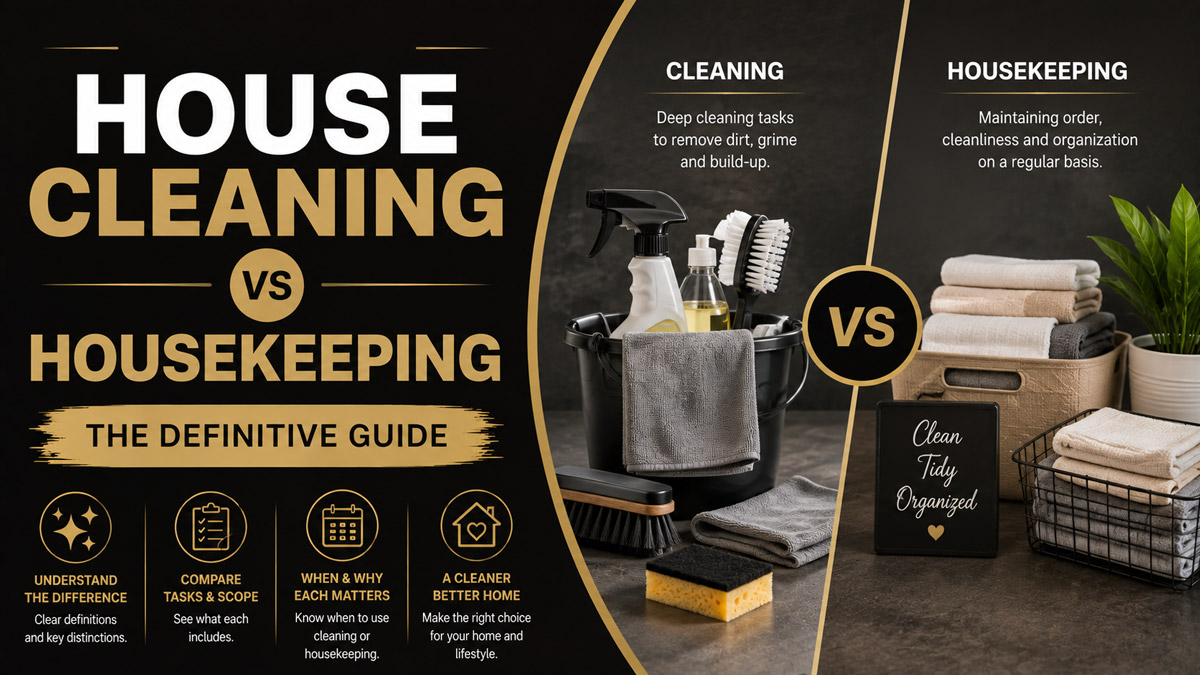
The house cleaning vs housekeeping decision comes down to dirt versus clutter. House cleaners sanitize grease, grime, and grout using industrial chemicals during periodic visits. Housekeepers manage daily household chaos, process laundry, and organize clutter on a continuous basis. Choose a cleaner for heavy scrubbing. Hire a housekeeper for daily domestic management.
Quick Verdict by Situation:
- For busy families with kids: Housekeeping prevents the daily accumulation of laundry and toys.
- For budget-conscious professionals: House cleaning provides a bi-weekly reset at a fraction of the cost.
- For renters moving out: House cleaning guarantees the deep sanitization required for deposit returns.
- For seniors aging in place: Housekeeping provides the necessary light daily operational support.
Master Comparison of Core Differences
The following table breaks down exactly how these two distinct professional services operate across the most critical household metrics.
| Criterion | House Cleaning | Housekeeping |
| Core Objective | Deep sanitization and physical soil extraction. | Daily organization, tidiness, and functional order. |
| Primary Tasks | Scrubbing showers, mopping, dusting, disinfecting. | Doing laundry, loading dishes, making beds, sorting mail. |
| Average Cost | $120 to $280 per visit (flat rate). | $500 to $1000+ per week (part-time retention). |
| Service Frequency | Weekly, bi-weekly, or monthly. | Daily or multiple times per week. |
| Clutter Requirement | You must pick up floors and counters beforehand. | They handle the clutter as part of the job. |
| Supplies & Gear | Provided entirely by the service provider. | Uses the homeowner’s personal supplies and vacuum. |
| Employment Status | Independent contractor or agency employee (1099). | Often classified as a household employee (W-2). |
Task Scope and Cleaning Depth
House cleaners perform heavy physical labor to remove biological buildup and environmental dirt. They arrive to execute a highly structured sanitization routine. Housekeepers perform light maintenance tasks designed to keep the home functional and visually neat. The distinction becomes obvious when you look at specific rooms.
In the kitchen, a house cleaner will degrease the stovetop, scrub the inside of the microwave, and sanitize the sink basin. They typically ignore the pile of dirty dishes. A housekeeper will empty the dishwasher, reload it with the dirty dishes, wipe down the counters, and take out the trash. They will rarely scrub the oven interior or degrease the range hood.
The bathroom shows a similar divide. House cleaners use acidic cleaners to remove hard water stains from glass doors and bleach to kill mildew in the grout. Housekeepers will hang fresh towels, wipe toothpaste off the mirror, and restock the toilet paper. If your home requires mold remediation or heavy calcium removal, a housekeeper will not solve the problem.
Typical house cleaning tasks include vacuuming carpets, mopping hard floors, dusting high ceiling fans, wiping baseboards, and disinfecting toilets. Typical housekeeping tasks include ironing clothes, folding laundry, organizing pantry shelves, watering plants, and occasionally prepping simple meals.
Winner for Task Scope: House cleaning wins for sanitation and hygiene. Housekeeping wins for functional organization and laundry management.
Cost Breakdown and Pricing Models
House cleaning requires a lower overall financial commitment because you pay per visit rather than funding a continuous payroll. Housekeeping requires a massive monthly budget because you are essentially buying a block of someone’s weekly time.
House cleaning services use either flat-rate or hourly pricing. An agency generally charges $45 to $75 per cleaner per hour. Independent solo cleaners usually charge $30 to $45 per hour. For a standard three-bedroom home, a flat-rate routine clean typically ranges from $120 to $280 per visit. If you neglect the home for months, a one-time deep clean will cost between $250 and $600. These figures represent the typical national averages for urban and suburban markets.
Housekeeping operates on an entirely different financial model. Private housekeepers charge $25 to $50 per hour. Because they work in multi-hour shifts several days a week, the cumulative cost scales rapidly. A part-time housekeeper working three hours a day, five days a week will cost $500 to $1,000 weekly. A full-time, live-in housekeeper commands $1,200 to $2,500 per week, which often includes room, board, and benefits.
Cleaning Agency vs Independent Cleaner Pricing
| Provider Type | Hourly Rate | Liability Protection | Reliability |
| Corporate Agency | $45 to $75 | Fully bonded and insured. | High (backups available). |
| Independent Solo | $30 to $45 | Rarely insured. | Variable (no sick coverage). |
Winner for Cost: House cleaning wins for predictable pricing and lower annual financial burden.
Frequency and Scheduling Reality
House cleaners operate on a rigid periodic schedule designed to reset the home to a baseline level of sanitation. Housekeepers operate on a continuous schedule designed to prevent the home from ever reaching a state of chaos.
Most homeowners book house cleaners on a bi-weekly schedule. This 14-day gap allows dust to settle, floors to acquire footprints, and bathrooms to lose their shine. Some high-traffic homes require weekly visits, while budget-conscious singles might stretch visits to a monthly cadence. The schedule is highly predictable. The crew arrives at a specific time, works for two to three hours, and leaves. You adapt your life around their visit.
Housekeepers integrate directly into your daily routine. They might work Monday through Friday from 8:00 AM to 12:00 PM. This daily presence means messes never accumulate. If a child spills juice on Tuesday morning, the housekeeper handles it Tuesday morning. You do not wait for a bi-weekly reset. This frequency requires a high level of comfort with someone constantly occupying your personal space.
Winner for Frequency: Housekeeping wins for immediate mess resolution and daily environmental control.
Equipment, Supplies, and Chemicals
House cleaners bring a massive arsenal of commercial-grade equipment to your property. Housekeepers rely entirely on the infrastructure, chemicals, and machines you already own.
When a professional cleaning crew arrives, they bring HEPA-filter backpack vacuums, microfiber mop systems, and specialized chemical solvents. They carry heavy-duty degreasers for the kitchen, commercial descalers for the bathroom, and professional glass cleaners. You do not need to supply a single paper towel. This hands-off approach eliminates the mental load of tracking inventory. You simply open the door and let them work.
Housekeepers use your household supplies. If you want the floors vacuumed, you must provide a functioning vacuum cleaner. If you want the laundry done, you must stock detergent and fabric softener. You are responsible for replacing the mop heads, buying the stainless steel polish, and ensuring the sponges are fresh. Many homeowners prefer this because it allows them to mandate non-toxic or eco-friendly products like Mrs. Meyer’s or Method. However, it forces you to act as a supply chain manager for your own home.
Typical Chemical Loadouts
| Cleaning Target | House Cleaner Arsenal | Housekeeper Arsenal |
| Kitchen Grease | Zep Commercial Citrus, TSP substitutes. | Dawn Dish Soap, standard all-purpose spray. |
| Bathroom Grout | Bleach gels, Bar Keepers Friend, pumice stones. | Scrubbing Bubbles, daily shower spray. |
| Wood Floors | Bona professional concentrates. | Swiffer wet pads, diluted Murphy Oil Soap. |
Winner for Equipment: House cleaning wins for a completely frictionless, zero-inventory experience.
Pre-Visit Preparation and Clutter Rules
House cleaning services require you to perform a frantic tidying session before they arrive. Housekeeping services exist entirely to eliminate that exact chore from your life.
Cleaners cannot mop a floor covered in Lego bricks. They cannot wipe down a kitchen island buried under mail, school projects, and unboxed Amazon packages. If you leave clutter on surfaces, a cleaning crew will simply clean around it. They will pick up a localized object, wipe beneath it, and put it back. They will not organize your mail or fold the clothes on your bedroom chair. To get your money’s worth from a house cleaner, you must spend 30 to 45 minutes decluttering your home the night before.
Housekeepers solve the clutter problem directly. You can leave the house in absolute disarray. A housekeeper will pick up the toys, sort the mail into designated bins, put the dirty clothes in the hamper, and clear the counters. You never experience the anxiety of “cleaning for the cleaner.” They impose order on the physical environment before executing light surface cleaning.
Winner for Pre-Visit Prep: Housekeeping wins easily by absorbing the mental burden of daily organization.
Legal Liability and Tax Implications
Hiring a house cleaning agency shields you from employment liabilities. Hiring a regular housekeeper often turns you into a legal employer with significant tax obligations.
When you hire a commercial house cleaning agency, the workers are W-2 employees of that company. The agency pays their payroll taxes, carries workers’ compensation insurance, and holds surety bonds against theft. If a cleaner slips on your wet floor and breaks an arm, the agency’s insurance covers the medical bills. You pay an invoice and hold zero legal risk. Even if you hire an independent 1099 cleaner, your liability is relatively low assuming they operate as a distinct business entity.
Housekeepers trigger entirely different legal mechanisms. The Internal Revenue Service has strict rules regarding household employees. If you pay a private housekeeper more than the annual threshold (which sits around $2,700 for recent tax years), the IRS legally considers you a household employer. You must issue them a W-2. You must withhold and pay Social Security and Medicare taxes using Schedule H on your tax return. Furthermore, if your housekeeper falls down your stairs, your standard homeowner’s insurance might deny the claim, requiring you to carry specific workers’ compensation policies.
Winner for Legal Liability: House cleaning wins for maintaining a simple, risk-free vendor relationship.
Which Should You Choose?
The decision requires absolute honesty about your budget, your pain points, and your tolerance for sharing your living space.
The High-Income Dual-Career Parent
Choose housekeeping. When both partners work 50 hours a week, the structural integrity of the home collapses. You do not have time to do four loads of laundry on a Tuesday. A housekeeper ensures you walk into a functional, reset home every evening. The high cost is justified by the massive return of free time and the reduction in marital friction over chores.
The Tidier on a Budget
Choose house cleaning. If you run the dishwasher every night, put your clothes in the hamper, and wipe the counters after dinner, you are already managing the clutter. You do not need a housekeeper. You need someone to do the exhausting physical labor you hate. Setting up a bi-weekly house cleaning service handles the mopping and scrubbing for a fraction of a housekeeper’s salary.
Tenants and Property Sellers
Choose house cleaning. Real estate staging and security deposit returns require aggressive grease extraction and mineral buildup removal. A housekeeper wiping counters will not satisfy a landlord inspecting the oven interior. You need a specialized deep cleaning visit armed with industrial solvents and commercial vacuums.
The Aging-in-Place Senior
Choose housekeeping. Seniors rarely generate the heavy grime that requires a professional cleaning crew. Instead, they struggle with daily physical maintenance. A housekeeper can change the heavy bed linens, carry laundry up the stairs, manage the recycling bins, and provide vital social continuity.
Hidden Limitations of Both Services
Nobody in the domestic service market wants to talk about the structural flaws inherent in these business models. Both options carry distinct, frustrating limitations.
House cleaning agencies suffer from catastrophic employee turnover. The physical labor is brutal, and the pay is often mediocre. According to standard service industry figures, commercial cleaning agencies often experience turnover rates exceeding 60% annually. This means you will rarely get the same crew twice. You will constantly find things put back in the wrong place. The quality will fluctuate wildly from month to month based on which specific individuals are assigned to your route. Agencies also operate on tight margins, meaning crews are rushed. If a spot takes more than three minutes to scrub, they will leave it.
Housekeepers present a completely different set of frustrations. The learning curve is immense. You must spend the first month intensely managing and training them to understand exactly how you like your clothes folded, where the specific dishes go, and which products to use on the marble counters. Furthermore, because a housekeeper is a single point of failure, your household operations halt completely when they get sick or take a vacation. Finally, the intimate nature of the work means personality conflicts are inevitable. If you do not naturally click with the person, having them in your home four days a week feels highly intrusive.
Frequently Asked Questions
Is a maid the same thing as a housekeeper?
Historically, yes. Today, the term maid is considered outdated by many professionals. Most commercial companies use the term “cleaning technician” or “house cleaner” for periodic sanitization work. “Housekeeper” is strictly reserved for individuals providing ongoing daily management, laundry, and organizational support.
Can I hire a house cleaner to do my laundry?
Usually, no. Most commercial cleaning agencies explicitly forbid their employees from operating client washing machines due to liability risks regarding ruined clothing. Independent solo cleaners might agree to fold a single load for an extra fee, but they will not manage your wardrobe.
Do I tip my house cleaner or housekeeper?
You should tip agency house cleaners. A standard tip is $10 to $20 per cleaner per visit, as they receive only a fraction of the total invoice. Private housekeepers and independent solo cleaners set their own hourly rates and keep the entire fee, so daily tipping is unnecessary. Give them an annual bonus instead.
What happens if a cleaner breaks something?
If you hired a corporate agency, they carry general liability insurance. You submit a claim, and the agency replaces the item. If you hired an independent, uninsured cleaner or housekeeper, you generally absorb the loss yourself. Always ask for proof of insurance before allowing a vendor to handle fragile items.