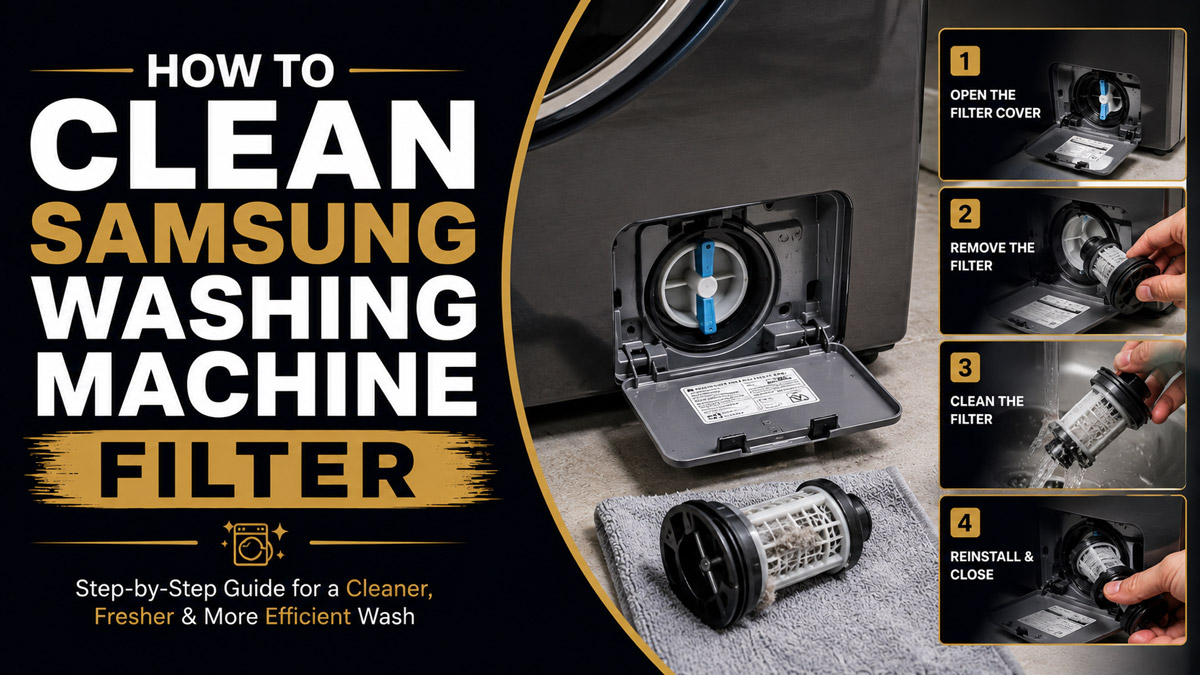
To clean a Samsung washing machine filter, turn off the power, unplug the unit, and open the bottom access panel. Drain the residual water using the emergency hose, unscrew the debris cap counterclockwise, and scrub the plastic mesh under warm water. Reinstall the cap tightly to prevent leaks.
At a Glance
- Wait 60 minutes after a hot wash before opening the bottom panel to avoid severe scalding.
- Use the small emergency drain hose to empty standing water before you ever twist the main cap.
- Standard top-load units do not have bottom drain access panels and use internal “Magic Filters” instead.
- A filter that refuses to turn past a quarter-inch is blocked by hard debris and requires internal pump access.
- Always tighten the cleaned cap clockwise until it locks securely to prevent catastrophic floor flooding.
What Tools Do You Need To Clear A Drain Pump Filter?
You need a thick floor towel, a shallow collection bowl, a soft-bristled brush, and a strong flashlight to clean the drain pump assembly. The collection bowl must be under two inches tall to fit beneath the low-hanging emergency drain hose. Tall cups or standard kitchen bowls will not slide under the chassis.
The thick floor towel protects your flooring from the inevitable drips that escape when you pull the rubber plug. The soft-bristled brush, an old toothbrush works perfectly, dislodges compacted lint from the fine plastic mesh of the filter head. You need a strong flashlight or headlamp to visually inspect the dark pump cavity once the filter is removed. Practitioners always check the internal cavity because clearing the filter mesh is only half the job. You must also confirm that the magnetic impeller blade at the back of the housing is free of wrapped hair or string.
Keep a pair of slip-joint pliers nearby but only for emergencies. You should never use pliers to force a stubborn filter cap to turn, but they are necessary if you need to compress the spring clamps on the internal eco-valve hose during advanced troubleshooting.
How Much Water Comes Out During A Routine Filter Cleaning?
Expect between 500 milliliters to 1 liter (roughly 2 to 4 cups) of standing water to drain from the emergency hose during a routine cleaning. This specific volume of water intentionally remains inside the pump housing at all times. It acts as a trap seal to prevent sewer gases from flowing backward through your home plumbing and entering the washing machine drum.
The volume changes drastically if the machine paused mid-cycle due to a drainage error. If the drum is full of wet clothes and the cycle aborted, the machine holds up to 15 gallons of water. You must drain this entire volume through the tiny emergency hose before touching the main filter dial. Draining a full drum takes roughly 20 to 30 minutes of continuous bucket swapping.
Never open the large circular debris cap until the small emergency hose stops dripping entirely. The water inside the lower pump housing sits below the level of the glass door. It will not leak out of the door seal, but it will flood your laundry room floor the second you break the watertight seal on the filter threads.
How Often Do You Realistically Need To Clean The Front Debris Filter?
Samsung recommends cleaning the front debris filter every 30 to 40 wash cycles. For an average household doing four loads of laundry a week, this translates to maintenance every 6 to 8 weeks. Waiting longer than two months allows lint and detergent residue to calcify around the rubber gasket.
You must increase this frequency under specific household conditions. If you own heavy-shedding pets, wash highly soiled outdoor work clothes, or frequently wash thick cotton towels, you should clean the trap once a month. Pet hair combines with fabric softener to create a dense sludge that rapidly chokes the water flow. The Association of Home Appliance Manufacturers (2023) reports that 60% of apparent washer drainage failures originate from simple blockages rather than mechanical faults.
Consistent maintenance prevents the common 5C, 5E, ND, and SE error codes. These codes trigger when the main control board detects that the water level has not dropped within a specific timeframe. A partially clogged filter slows the drain rate enough to trip this sensor long before the pump completely fails.
Where Is The Filter On A Samsung Top Load Washing Machine?
Standard Samsung top-load washing machines do not feature a front-bottom drain pump door. These top-loading machines utilize internal lint captures called “Magic Filters” located directly inside the stainless steel wash basket.
To locate these internal filters, open the main top lid and look at the vertical plastic columns mounted to the inside walls of the drum. Most large-capacity top loaders feature two of these rectangular filter cartridges positioned opposite each other. To clean them, simply press the plastic tab at the top of the cartridge and pull the entire unit down and away from the wall.
Unclip the plastic hinge to open the cartridge like a book. You will find trapped lint and hair compressed into a thick mat. Rinse the internal screens out under warm running water, snap the cartridge shut, and click it firmly back into the wall of the drum. You must hear an audible click to ensure the filter does not detach and damage the agitator during a high-speed spin cycle.
Where Is The Drain Filter On Bespoke AI Laundry Combos?
The drain filter on premium Samsung Bespoke AI combination units sits behind the lower front panel directly next to the auto-dispenser drawer. The modern design of these combo units hides the access door to maintain a sleek aesthetic.
To reach the filter on a Bespoke AI model, you must first pull out the auto-dispenser tray completely. Removing this tray exposes the hidden seams of the lower access panel. Press the designated release latch to drop the lower panel forward. Because the filter sits slightly recessed in these premium models, you need a highly flexible collection tray to catch the residual water from the emergency drain line.
These premium models pack heavy internal component density. The space around the filter housing is tight. Take extra care when pulling the rubber emergency hose forward to avoid disconnecting it from its internal mounting bracket. The cleaning process for the plastic mesh component remains identical to standard front-loading units.
Can You Open The Filter While There Is Water In The Drum?
No. You absolutely cannot open the main filter cap while water is visible inside the main washing drum. If a cycle pauses halfway and the glass door reveals a pool of water, unscrewing the filter dial will instantly release gallons of dirty water onto your floor.
The filter housing sits at the absolute lowest point of the appliance plumbing system. Gravity forces every drop of water inside the machine out through that opening the moment you break the seal. You must use the tiny rubber emergency drain hose to empty the system first. Pull the rubber plug from the small hose and let the water drain bucket by bucket.
Wait until the drum is visibly empty and the small hose stops dripping completely. Only then is it safe to turn the large debris filter cap counterclockwise. If the emergency hose is clogged and water will not drain from it, you must use a wet-dry shop vacuum directly on the end of the emergency hose to forcefully extract the blockage before touching the main dial.
What Is The Difference Between Drain Filters And Water Inlet Filters?
The drain filter catches solid debris exiting the washing machine, while the water inlet filters catch mineral deposits entering the machine from your home plumbing. The drain filter sits at the bottom front of the machine. The water inlet filters sit at the top rear of the machine where the hot and cold supply hoses connect.
Understanding this difference is critical for troubleshooting error codes. If your machine flashes a 5C or ND code, it is failing to pump water out, meaning the front drain filter requires attention. If your machine flashes a 4C or 4E code, it is failing to pull water in, indicating the rear inlet filters are choked with hard water scale.
Both systems require regular maintenance but serve completely opposite functions. The front drain filter protects the internal drain pump propeller from coins and zippers. The rear inlet filters protect the delicate electronic water inlet valves from sand, rust, and calcium particles traveling through municipal city water lines.
| Filter Type | Location on Machine | Primary Function | Associated Error Codes |
| Drain Debris Filter | Bottom Front Panel | Catches exiting solid objects | 5C, 5E, ND, SE |
| Water Inlet Filters | Top Rear Hose Connections | Blocks entering mineral scale | 4C, 4E, nF |
| Magic Filters | Inside Top-Load Drum | Captures floating fabric lint | Unbalanced Load (Ub) |
How Do You Clear The 4C Or 4E Water Supply Error Code?
You clear the 4C or 4E water supply error code by cleaning the rear water inlet mesh filters, not the front drain pump filter. These error codes activate when the machine detects that the tub is not filling with water fast enough to meet the programmed cycle parameters.
First, turn off the hot and cold water supply valves on your laundry room wall. Unplug the washing machine and carefully unscrew the two fill hoses from the back of the appliance. Look inside the threaded plastic ports on the back of the washer. You will see small, thimble-shaped plastic mesh screens (usually colored blue for cold and red for hot).
Use a pair of needle-nose pliers to gently grab the center plastic bar of each screen and pull them straight out. Wash these tiny screens under running water to remove rust flakes and calcium buildup. Do not use a sharp needle to clear the holes, as puncturing the mesh allows sediment to permanently destroy the internal solenoid valves. Push the clean screens back into place, reattach the hoses tightly, and turn the water back on to clear the code.
What To Do When A Samsung Washing Machine Filter Is Completely Stuck?
If you try to twist the filter counterclockwise and it refuses to budge past a quarter-turn, do not force it with pliers. Forcing a stuck filter will snap the plastic gripping tabs off the cap, permanently trapping the assembly inside the machine housing.
A jammed filter cap occurs when a rigid object like a bobby pin, bra wire, or wood screw bypasses the drum and wedges itself sideways across the internal plastic threads. This object acts like a physical deadbolt. To fix this safely, you must bypass the front panel. Unplug the machine, tilt it backward slightly at a 45-degree angle, and support it securely. Remove the bottom access plate or the rear metal panel to expose the internal pump motor.
Locate the thick black rubber corrugated hose (the eco-valve hose) that connects the bottom of the wash tub to the plastic pump housing. Squeeze the metal spring clamp with pliers and detach this hose from the pump body. Reach your fingers into the pump housing from the inside out. You can manually dislodge the trapped object from the internal threads before attempting to unscrew the front cap again.
Which Objects Most Commonly Block The Drain Pump Propeller?
Coins, hairpins, collar stays, and bra underwires are the most common objects that bypass the door seal and block the drain pump propeller. These small, rigid items slip through the small gap between the spinning metal wash basket and the static rubber door boot.
Once an object enters the outer plastic tub, water flow carries it directly down into the drain pump housing. Soft items like lint, tissues, and dog hair wrap around the center shaft of the pump impeller. This restricts the rotational speed of the magnetic motor, causing the pump to overheat and fail. Rigid items like coins slide directly into the spinning propeller blades. A metal coin hitting plastic blades spinning at 3,600 RPM will physically shatter the impeller fins.
Professional repair technicians note that baby socks and color-catcher sheets frequently cause invisible blockages. These flat cloth items lie flush against the suction port of the drain pump. They do not damage the blades, but they act like a closed valve, completely stopping water flow while remaining difficult to see during a visual inspection.
| Debris Type | Blockage Location | Damage Risk to Pump | Removal Difficulty |
| Bobby Pins & Screws | Filter Threads | Moderate (Jams cap) | High (Requires internal access) |
| Coins & Keys | Propeller Blades | Severe (Shatters fins) | Low (Sits in filter basket) |
| Hair & String | Impeller Shaft | Moderate (Overheats motor) | Medium (Requires tweezers) |
| Baby Socks | Intake Port | Low (Blocks flow only) | High (Often hidden in hoses) |
Why Does The Washer Not Drain After The Filter Is Cleaned?
If you clean the filter, reinstall it correctly, and the machine still fails to pump out water, you likely have a disconnected impeller or a siphoning issue. The drain pump utilizes a magnetic drive motor. The internal spinning rod uses magnetism to grab and spin the external plastic propeller blades.
While looking into the empty filter cavity with a flashlight, poke the plastic propeller blades with a long screwdriver. The blades should offer magnetic resistance and snap forward in quarter-turn increments. If the plastic blades spin freely and loosely like a pinwheel, the internal magnetic bond has broken. The motor hums and receives power, but the blades do not push water. You must replace the entire pump assembly.
Alternatively, check your external drain hose height. If the gray corrugated hose on the back of the machine is shoved too far down into your wall standpipe, it creates a vacuum trap. The pump exhausts itself trying to push water against trapped air pressure. Ensure the drain hose sits no more than six to eight inches inside the wall pipe.
Why Does The Washer Smell Like Rotten Eggs After Cleaning The Trap?
When you unscrew the filter cap, you breach a stagnant puddle of water that permanently sits at the lowest point of the drain plumbing, releasing hydrogen sulfide gas into the room. This residual water serves a vital mechanical purpose. It seals out external sewer gases from entering your home.
Because this trapped water sits in a dark, warm environment mixed with organic soil and fabric softener residue, anaerobic bacteria rapidly colonize it. Opening the filter exposes this bacterial colony to the air, causing the sudden rotten egg smell. The smell originates from the machine plumbing, not the municipal water supply.
To eliminate this odor after completing your maintenance, you must sanitize the newly formed water trap. Reinsert the filter securely and lock it. Pour one cup of liquid chlorine bleach directly into the empty wash drum. Run the machine on its “Self Clean”, “Pure Cycle”, or standard hot water setting with no clothes inside. The bleach flushes out the bacterial biofilm clinging to the internal hoses and replaces the dirty trap water with clean, sanitized water.
Why Is The Samsung Washer Leaking From The Bottom Filter?
A Samsung washer leaks from the bottom filter because the plastic cap is cross-threaded or the rubber O-ring seal is compromised. The filter housing operates under high internal water pressure during the drain cycle. If the seal is not perfectly flush, water will spray aggressively across your floor.
When you reinstall the filter, you must wipe the circular rubber gasket clean with a damp cloth. A single grain of sand or a single strand of hair trapped between the rubber O-ring and the plastic housing breaks the watertight seal. Insert the filter perfectly straight. If you feel severe resistance during the first rotation, stop immediately. You are cross-threading the plastic grooves.
Twist the cap clockwise until it physically stops turning. Most modern Samsung models feature a prominent vertical line on the filter cap that must point straight up to the 12 o’clock position when fully locked. If the cap is tight but sits at the 10 o’clock position, it is not sealed. If the rubber O-ring appears cracked, dry, or flattened, you must purchase a replacement filter cap, as the rubber ring is rarely sold separately.
What Happens If You Run A Washing Machine Without The Debris Filter?
Running a washing machine without the debris filter installed results in catastrophic floor flooding within seconds of the fill cycle starting. The filter housing is not a secondary bypass tube, it is the primary structural wall holding water inside the appliance.
When the inlet valves open and water pours into the drum, it immediately drops down into the eco-valve hose and enters the open pump cavity. Without the solid plastic cap of the filter to stop it, the water pours straight out of the front of the machine. The internal water level sensors never detect the tub filling, so the main control board keeps the intake valves wide open indefinitely.
Furthermore, if you somehow manage to run a drain cycle with a damaged or missing filter mesh, rigid debris flows straight into the pump. A single coin hitting the exposed impeller at full speed will crack the pump volute (the outer casing). A cracked volute requires a complete appliance teardown and a total replacement of the drainage system.
How Much Does It Cost To Replace A Damaged Samsung Drain Pump?
Replacing a damaged Samsung drain pump costs between $35 and $65 if you buy the part and perform the labor yourself. If you hire a professional appliance repair technician, the total cost ranges from $150 to $250 depending on your local labor rates and the specific washer model.
The drain pump assembly is highly accessible on most front-load Samsung models. You access it by removing the front lower panel or the back metal plate. The replacement process requires basic hand tools: a Phillips head screwdriver, slip-joint pliers to remove the hose clamps, and a smartphone to take pictures of the wiring harness before disconnection.
If your filter cap tabs are snapped off but the motor still works, you cannot buy just the plastic housing. You must order the entire pump and housing assembly. Ensure you search for replacement parts using the exact model number located on the sticker inside the washing machine door frame, as pump housing shapes vary wildly between manufacturing years.
| Component / Service | DIY Replacement Cost | Professional Repair Cost | Total Estimated Time |
| Debris Filter Cap Only | $15 – $25 | N/A (Plumbers minimum: $100) | 2 Minutes |
| Drain Pump Motor Assembly | $35 – $65 | $150 – $250 | 45 – 60 Minutes |
| Tub-to-Pump Eco-Valve Hose | $20 – $40 | $120 – $180 | 30 – 45 Minutes |
How Do You Manually Drain The Tub Using The Eco-Valve Hose?
You manually drain the tub using the eco-valve hose when the front emergency drain line is completely clogged with debris. The eco-valve hose is the thick, black, accordion-style rubber pipe that carries water from the bottom of the stainless steel wash tub directly into the plastic drain pump.
First, unplug the appliance and secure the door with tape. Tilt the washing machine backward at a steep angle and prop it up on sturdy wooden blocks. Lay on the floor and look upward into the bottom chassis of the machine. Locate the large silver spring clamp securing the thick black hose to the white plastic pump body.
Place a large, flat collection pan directly underneath this connection. Use slip-joint pliers to squeeze the tabs of the metal spring clamp and slide the clamp backward up the hose. Slowly pull the rubber hose off the plastic pump neck. Water will immediately rush out in a massive volume. Once the tub empties, you can reach inside the hose to extract the baby sock or coin jam that originally blocked the front emergency drain.
The Bottom Line
Cleaning your Samsung washing machine debris filter is a mandatory maintenance task that requires emptying the emergency drain hose before unscrewing the main cap. Performing this task every six to eight weeks prevents foul odors, clears minor blockages, and stops the appliance from throwing drainage error codes. If the filter is totally stuck, never force it with tools. You must access the internal plumbing to safely remove the obstruction and protect the expensive drainage motor.