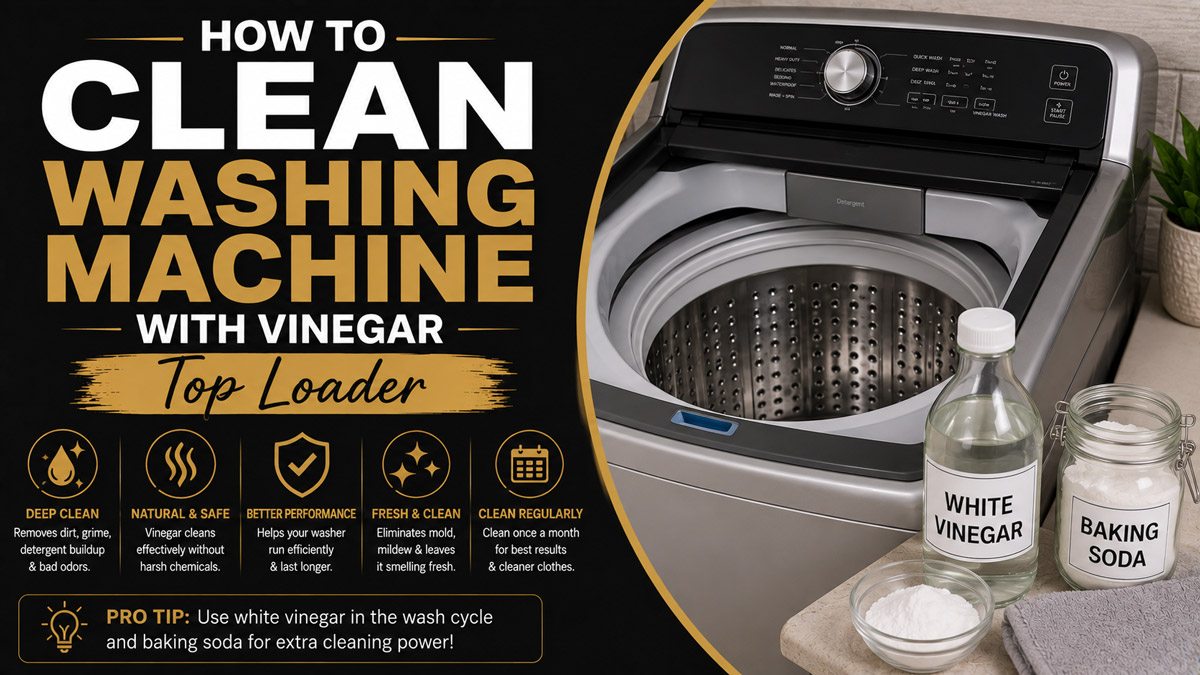
To clean a top-loading washing machine with vinegar, pour four cups of distilled white vinegar directly into the empty wash drum. Run the machine on its longest cycle using the hottest water setting available. Pause the machine after initial agitation to let the liquid soak for 60 minutes before finishing the cycle.
At a Glance
- Standard top-loading washers require 4 cups (1 liter) of 5.0 percent distilled white vinegar.
- High-efficiency models without a central agitator require a reduced dose of 2 cups (500 milliliters).
- Water temperature must reach at least 140 degrees Fahrenheit (60 degrees Celsius) to dissolve waxy residue effectively.
- Mixing chlorine bleach and white vinegar creates toxic chlorine gas and should never be done in the same cycle.
- Natural rubber appliance seals will degrade if exposed to acidic vinegar solutions more than once every 30 days.
- Baking soda and vinegar neutralize each other upon contact and must be run in separate, consecutive wash cycles.
What is the exact step-by-step method for vinegar cleaning?
The standard method for cleaning a top-loading washer requires a hot water fill, a manual addition of acid, a soaking period, and a complete drain cycle. Follow these exact steps to ensure mineral deposits dissolve completely.
- Empty the Wash Drum: Remove all clothing, stray socks, and debris from the machine.
- Configure the Settings: Select the largest load capacity, the longest wash duration, and the hottest water temperature available on the control panel.
- Fill the Tub: Start the machine and allow the tub to fill completely with hot water.
- Add the Acid: Open the top lid once the machine begins to agitate. Pour 4 cups (1 liter) of distilled white vinegar directly into the stagnant water.
- Agitate and Soak: Close the lid to let the machine agitate for exactly one minute. Pause the cycle by opening the lid or pressing the pause button. Leave the machine completely undisturbed for 60 minutes.
- Wipe Down Surfaces: Dip a clean microfiber cloth into the diluted vinegar water inside the tub. Wipe down the upper rim, the lid hinges, and the top of the agitator.
- Complete the Cycle: Close the lid and resume the wash cycle. Allow the machine to agitate, drain, and perform its final spin.
- Air Dry: Leave the machine lid open for four hours to allow residual moisture to evaporate completely.
Which type of vinegar is best for washing machines?
Standard 5.0 percent distilled white vinegar is the best option for cleaning a washing machine. This specific concentration holds enough acetic acid to dissolve calcium deposits without being corrosive enough to immediately melt natural rubber gaskets or hoses.
Apple cider vinegar contains organic sugars and tannins that leave behind sticky residues inside the drain lines. Cleaning vinegar contains up to 10 percent acetic acid, which cleans aggressively but accelerates the degradation of internal plastic water pumps. Industrial agricultural vinegar reaches up to 45 percent acidity and will cause catastrophic failure of appliance seals upon first contact.
| Vinegar Type | Acidity Level | Residue Risk | Appliance Seal Safety | Best Application |
| Distilled White | 5% | None | Safe (monthly use) | General tub cleaning |
| Apple Cider | 5-6% | High (Sugars) | Safe (monthly use) | Not recommended |
| Cleaning Vinegar | 6-10% | None | Marginal (dilution required) | Heavy mineral scale |
| Industrial Grade | 30-45% | None | Dangerous (melts rubber) | Weed control only |
How much vinegar is needed for different machine types?
Standard agitator top loaders require 4 cups (1 liter) of vinegar, while high-efficiency top loaders require only 2 cups (500 milliliters). The required volume depends entirely on the total water capacity used during a standard deep fill cycle.
Standard top-loading washers use between 30 and 40 gallons of water per load. Pouring 4 cups of vinegar into 40 gallons of water creates a mildly acidic bath that safely loosens scale. High-efficiency top loaders use internal sensors to restrict water usage to just 15 to 20 gallons per wash. Adding 4 cups of vinegar to an HE machine doubles the acid concentration in the water. High acid concentrations confuse the electronic load sensors and prematurely wear out the synthetic rubber drain valves. Compact portable washers using under 10 gallons of water require exactly 1 cup of vinegar to maintain the correct dilution ratio.
What temperature water works best for vinegar cleaning cycles?
Water temperatures must reach between 120 and 140 degrees Fahrenheit (49 to 60 degrees Celsius) to successfully clean a washing machine drum. Cold or lukewarm water fails to activate the cleaning properties of the acid.
Liquid fabric softeners and concentrated laundry detergents contain animal fats, petroleum derivatives, and waxy stabilizers. These ingredients congeal inside the outer drum walls when washed in cold water. Acetic acid cannot cut through hardened wax on its own. Hot water melts the waxy outer layer of this buildup. Once the wax melts, the vinegar penetrates the underlying mineral scale and bacterial colonies. If a residential water heater is set below 120 degrees Fahrenheit, the homeowner must manually boil two gallons of water on a stove and carefully add it to the washing machine tub to raise the ambient temperature.
Where should you pour vinegar in a top-loading washing machine?
Vinegar must be poured directly into the main metal wash drum. Pouring vinegar into the fabric softener dispenser or the bleach cup prevents the acid from working during the primary wash cycle.
Washing machines operate on mechanical timers or electronic control boards that release specific compartments at specific times. The fabric softener dispenser opens during the final rinse cycle. The bleach dispenser opens during the last five minutes of the main wash. A successful deep clean requires the vinegar to mix with the water immediately, agitate for a minute, and soak for an hour. Bypassing the dispensers ensures the acid remains active for the entire 90-minute process.
How long does a vinegar washing machine cleaning cycle take?
A complete vinegar cleaning cycle takes between 90 and 120 minutes from start to finish. The duration includes the machine filling, the mandatory soaking period, and the final drain and spin phases.
The tub takes roughly 10 to 15 minutes to fill with hot water depending on residential water pressure. The initial agitation phase lasts exactly one minute. The soaking phase (where the machine sits paused and silent) requires a strict 60-minute waiting period. The final mechanical wash, rinse, and spin cycles consume the remaining 25 to 40 minutes depending on the manufacturer settings. Rushing the 60-minute soak drastically reduces the effectiveness of the treatment, as acetic acid requires prolonged contact time to dissolve crystallized calcium carbonate.
Can you mix vinegar and baking soda to clean a washing machine?
No, mixing baking soda and white vinegar in the same wash cycle destroys the cleaning power of both ingredients. Combining them creates a rapid chemical reaction that leaves behind nothing but saltwater and carbon dioxide gas.
Baking soda operates as a base with a pH of 8.3. White vinegar operates as an acid with a pH of 2.5. When poured into a washing machine tub together, the two substances instantly neutralize each other. The resulting chemical byproduct is sodium acetate (a mild salt), plain water, and carbon dioxide bubbles. The visual bubbling effect looks impressive but provides absolutely zero grease-cutting or descaling power. To utilize both household items, the homeowner must run a hot water cycle with only vinegar, followed immediately by a second hot water cycle using exactly one cup of baking soda.
Does white vinegar damage washing machine rubber seals?
Routine exposure to vinegar will eventually harden and crack natural rubber washing machine seals if used more frequently than once a month. White vinegar is corrosive to polyisoprene (natural rubber) but generally safe for synthetic rubbers.
According to a 2023 technical bulletin from the Association of Home Appliance Manufacturers, continuous exposure to solutions with a pH below 3.0 accelerates polymer degradation. The internal drain hoses, tub gaskets, and water inlet valves in budget-friendly top loaders often consist of cheaper natural rubber blends. When soaked in acid weekly, these hoses lose their elasticity, become brittle, and eventually leak. Modern high-end machines utilize EPDM (ethylene propylene diene monomer) rubber, which easily withstands acidic environments. Regardless of the machine brand, limiting acid soaks to a monthly schedule protects all gasket types from premature failure.
How do you clean the agitator and dispensers during the cycle?
Removable dispensers must be soaked in a sink, while the central agitator should be wiped down manually during the 60-minute pause phase of the main cleaning cycle.
The central agitator column in a top-loader collects heavy detergent residue above the water line. While the main tub soaks, a homeowner should dip a microfiber cloth directly into the hot vinegar water inside the drum. The wet cloth easily scrubs away the softened grime on the agitator fins and the upper rim of the tub. Removable bleach and fabric softener cups must be extracted from their slots. Submerge these plastic cups in a kitchen sink filled with hot water and one cup of vinegar. Scrub the small plastic crevices with an old toothbrush before reinstalling them.
Why does a washing machine smell worse after cleaning?
A washing machine smells worse after a cleaning cycle because the acid successfully killed the surface layer of mold, which then detached and exposed a deeper, rotting biofilm underneath.
The visible stainless steel drum in a top loader hides a secondary plastic outer tub. Soap scum, dead skin cells, and mold spores accumulate in the dark space between these two tubs. The one-hour vinegar soak loosens large sheets of this stagnant sludge. When the machine drains, some of this dislodged sludge gets trapped beneath the agitator or sticks to the lower drain hose. The newly exposed bacteria emit severe sulfur odors. The homeowner must immediately run a plain hot water cycle with no additives to flush this detached debris completely out of the drainage system.
How do you flush out scrud after a vinegar soak?
Scrud is a dense, waxy substance that requires a high-alkaline flush cycle if vinegar fails to break it down. Homeowners can flush remaining scrud by running a second hot water cycle with liquid dishwasher detergent.
Scrud forms when the zeolites in powdered laundry detergents bind with the animal fats found in liquid fabric softeners. Acetic acid struggles to penetrate thick fat deposits. If brown or black waxy flakes appear on clothing immediately following a vinegar clean, the tub requires chemical degreasing. Liquid dishwasher gel possesses a high alkaline pH and contains advanced grease-cutting enzymes. Pouring one cup of liquid dishwasher detergent directly into the empty drum during a hot wash cycle will strip the remaining fatty scrud from the outer tub walls.
What are the best alternatives if vinegar fails to clean the tub?
Targeted chemical alternatives are necessary when a top loader exhibits symptoms that weak acids cannot solve. The correct alternative depends entirely on the specific symptom the machine displays.
Standard grocery store vinegar operates as a mild, slow-acting cleaner. It fails against industrial-grade scale, deep fungal root systems, and petroleum-based fabric softener wax. Appliance repair technicians typically utilize stronger commercial chemicals when servicing neglected machines.
| Machine Symptom | Cause of Failure | Best Alternative Solution |
| Black flakes on clothes | Waxy scrud buildup | 1 cup liquid dishwasher detergent (Alkaline degreaser) |
| Persistent swamp odor | Established mold colonies | 1 quart liquid chlorine bleach (Fungal killer) |
| White chalky residue | Severe calcium scaling | Commercial descaler with citric or sulfamic acid |
| Slow draining water | Lint trapped in pump | Manual removal of the drain pump filter |
Is it safe to use bleach after a vinegar cleaning cycle?
Using chlorine bleach immediately after a vinegar cycle is extremely dangerous unless the machine undergoes a thorough plain water rinse in between the two applications.
Mixing any form of acid with sodium hypochlorite (chlorine bleach) triggers an immediate chemical reaction that releases toxic chlorine gas. If a washing machine fails to drain completely after the vinegar soak, trace amounts of acid remain pooled in the bottom water pump. Pouring bleach into the machine for a follow-up cycle will mix with these acidic remnants. The resulting gas causes severe respiratory distress and lung damage. A user must run one complete, empty cycle using only warm water to flush all residual acetic acid from the plumbing lines before introducing bleach to the appliance.
Can you use vinegar to descale severe hard water buildup?
Vinegar lacks the chemical strength to descale severe calcium carbonate deposits thicker than one millimeter. Hard water scaling requires dedicated commercial descaling acids for complete removal.
Homes supplied by well water routinely pump high concentrations of dissolved calcium and magnesium into household appliances. Over three years, these minerals form a rigid, cement-like crust behind the washing machine drum. The 5 percent acetic acid in standard household vinegar takes hours to dissolve even a thin layer of this scale. A standard 60-minute washing machine soak is simply too short to break down severe crust. Homeowners living in hard water regions must purchase commercial appliance descalers containing sulfamic acid or citric acid. These concentrated products dissolve heavy mineral scale up to five times faster than diluted household acids.
How does vinegar compare to commercial washing machine cleaners?
Distilled white vinegar is significantly cheaper and more environmentally friendly than commercial washing machine tablets, though it requires more manual effort and soaking time to achieve identical results.
Commercial tablets like Affresh or OxiClean utilize sodium percarbonate and sodium carbonate. These chemical tablets fizz upon contact with water, creating mechanical scrubbing action that physically knocks debris loose from the drum walls. Vinegar relies purely on a slow chemical breakdown of soils. While tablets finish the job in a standard 40-minute wash, the acid method requires a mandatory 60-minute pause.
| Comparison Metric | Distilled White Vinegar | Commercial Cleaning Tablets |
| Average Cost Per Wash | $0.40 per application | $2.50 per application |
| Active Cleaning Agent | Acetic Acid (5%) | Sodium Percarbonate |
| Required Soak Time | 60 minutes minimum | Zero minutes (works instantly) |
| Environmental Impact | Biodegradable, zero toxins | Contains synthetic binders |
Can a vinegar cycle remove rust stains from a washing machine drum?
A concentrated vinegar soak can successfully dissolve superficial rust stains from a stainless steel tub, but it cannot repair porcelain tubs where the underlying metal has permanently oxidized.
Rust occurs in top loaders when zippers, coins, or paperclips sit in stagnant water at the bottom of the drum. Iron oxide forms on the surface of the metal. Acetic acid chemically reacts with iron oxide, converting it into a water-soluble salt called iron acetate. To treat a specific rust spot, the homeowner must soak a rag in pure vinegar and lay it directly over the rust stain for two hours before running the hot wash cycle. If the machine features an older porcelain-coated steel tub that has chipped, the rust originates from the machine itself. Acid will clean the stain temporarily, but the rust will return until the chipped enamel is painted with an appliance epoxy.
How often should you clean a top-loading washing machine?
Appliance manufacturers mandate that a top-loading washing machine should undergo a deep cleaning cycle every 30 days or after every 30 consecutive wash loads.
Consistent monthly maintenance prevents the accumulation of sticky biofilm before it has the opportunity to harden into permanent scale. A typical family of four runs roughly five loads of laundry per week, reaching the 30-load threshold in just over a month. Homes that exclusively use cold water cycles or heavily rely on liquid fabric softeners must increase this frequency to every three weeks. Cold water fails to rinse away waxy detergents, accelerating the growth of odor-causing bacteria. Setting a recurring monthly calendar reminder to pour four cups of acid into the empty tub extends the mechanical lifespan of the water pump by up to five years.
The Bottom Line
Cleaning a top loader with household vinegar requires four cups of the liquid, the hottest water setting available, and a mandatory 60-minute soaking period to dissolve scale effectively. Skipping the soaking phase or using cold water renders the acid completely useless against waxy detergent buildup. Never mix the acid with chlorine bleach or baking soda during the same cycle. Stick to a strict monthly maintenance schedule to keep the internal appliance hoses flexible and the wash drum entirely free of mold.