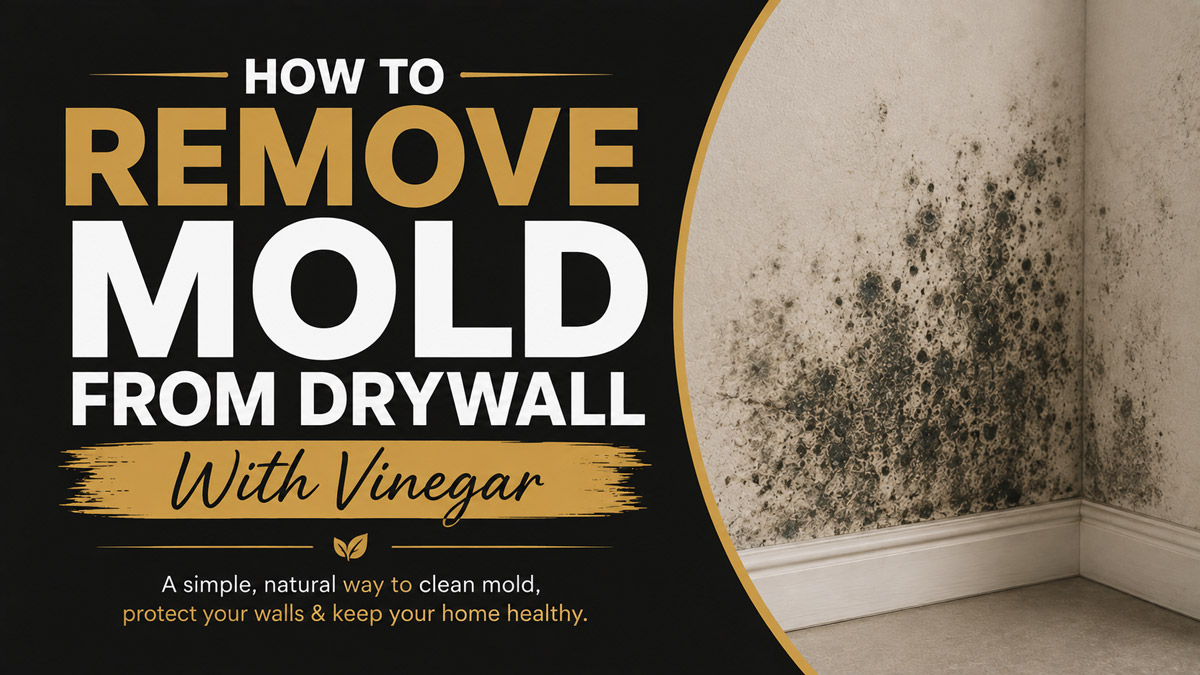
Undiluted white vinegar effectively kills surface mold on painted drywall for infestations under 10 square feet. The acetic acid penetrates the porous paint layer to destroy fungal roots. Unpainted drywall cannot be treated with vinegar and requires physical removal due to deep root penetration into the gypsum core.
At a Glance
- White vinegar kills approximately 82 percent of known mold species upon direct contact.
- Treatment requires undiluted 5 percent acetic acid left undisturbed for exactly 60 minutes.
- Unpainted drywall, wallpaper, and textured ceilings require alternative remediation methods or total replacement.
- Mixing vinegar with bleach creates lethal chlorine gas and is strictly prohibited in any environment.
- The US EPA mandates professional remediation for any continuous mold cluster exceeding 10 square feet.
- Vinegar kills the living fungus but does not erase the dark cosmetic stains left behind.
Does vinegar actually kill mold on drywall?
Yes, white vinegar kills surface mold on painted drywall by penetrating the cellular structure of the fungi. The mild acetic acid disrupts the mold spore’s cell membrane and destroys the root system. Vinegar successfully eliminates roughly 82 percent of mold species found in residential environments. The solution works effectively only on painted drywall because the paint acts as a semi-permeable barrier that keeps the acid localized near the surface colony.
Unpainted gypsum boards allow mold hyphae (roots) to grow entirely through the core material. Vinegar applied to the surface of unpainted drywall leaves the deep root system alive inside the wall. The US EPA (2023 guidelines) specifies that DIY surface treatments remain viable only when the total affected area measures less than 10 square feet. For larger infestations, the structural integrity of the wall board is usually compromised beyond repair.
Homeowners must fix the underlying moisture problem before applying any chemical treatment. Mold will return to the treated drywall within 48 hours if indoor humidity remains above 60 percent or if an active leak persists.
What types of mold resist vinegar treatments?
Vinegar fails to kill approximately 18 percent of mold species, primarily heavy spore-producing molds and deep-seated toxic fungi. Acetic acid works well against common household surface molds like Cladosporium and Penicillium. These species typically form light dust-like patches on bathroom walls and window casings. The acid easily breaches their thin cellular walls to neutralize the organism entirely.
Highly toxic molds like Stachybotrys chartarum (commonly known as black mold) exhibit high resistance to standard 5 percent vinegar solutions. Stachybotrys builds dense, multi-layered root structures deep inside the cellulose backing of drywall paper. Surface applications of vinegar only burn off the top layer of a Stachybotrys colony. The surviving roots simply absorb the water content from the vinegar solution and use it to accelerate new growth.
Aspergillus is another fungal genus that frequently survives acid treatments. When homeowners spray Aspergillus colonies with vinegar, the mold often reacts to the chemical stress by releasing millions of defensive spores into the air. Professional remediators typically rely on heavy-duty biocides or physical containment and removal when encountering these resistant strains.
What concentration of vinegar kills drywall mold?
A standard concentration of 5 percent acetic acid is the minimum requirement to kill mold on painted drywall. Standard white distilled vinegar purchased at the grocery store contains exactly 5 percent acidity. This baseline concentration provides enough acidic power to destroy fungal cell membranes without immediately burning the user’s skin or emitting overwhelming fumes.
Cleaning vinegar contains a 6 percent acetic acid concentration. This slight one percent increase makes the solution 20 percent stronger than standard dietary vinegar. The 6 percent concentration acts faster on dense fungal clusters and penetrates thicker paint layers more effectively. Homeowners dealing with stubborn bathroom mold frequently achieve better results using cleaning vinegar.
Industrial or horticultural vinegars contain between 20 and 30 percent acetic acid. Homeowners must never use industrial vinegar indoors on drywall. Concentrations above 10 percent emit toxic fumes that damage lung tissue and will aggressively strip the paint and primer completely off the wall. The user must never dilute 5 or 6 percent vinegar with water, as adding water lowers the acidity below the lethal threshold for fungi.
The Exact Process For How To Remove Mold From Drywall With Vinegar
Follow this precise six-step protocol to clear fungal growth from painted wall surfaces using white vinegar. Skipping any step increases the risk of spore inhalation and guarantees the fungus will return.
- Gear Up: Put on an N95 respirator mask, non-vented safety goggles, and nitrile gloves. Airborne spores release mycotoxins when disturbed by the spray bottle. A standard surgical mask cannot filter mold particles, which range from 1 to 3 microns in size.
- Ventilate: Open all exterior windows in the room and run exhaust fans to maximize outward airflow. Turn off the central HVAC system to prevent spores from circulating into other rooms through the return vents.
- Spray Full Strength: Fill a clean spray bottle with undiluted white distilled vinegar (5 percent acidity). Do not dilute the solution with water. Saturate the affected wall surface completely.
- Wait 60 Minutes: Let the vinegar sit undisturbed for exactly 1 hour. Spraying and wiping immediately will fail to kill the mold root system. The acid requires continuous contact time to penetrate the cellular walls.
- Scrub Gently: Use a soft-bristled nylon brush or a clean sponge dipped in warm water to gently scrub away the dead organic matter. Do not scrub aggressively. Heavy scrubbing will tear the paper backing of the drywall and create a permanent divot.
- Wipe and Dry: Wipe the wall clean with a damp microfiber cloth, then thoroughly dry the area with a highly absorbent towel. Position a box fan blowing directly at the wall to evaporate any remaining moisture.
How much vinegar is needed per square foot?
A standard 16-ounce spray bottle of undiluted white vinegar provides enough liquid to treat roughly 8 to 10 square feet of painted drywall. The wall surface requires heavy saturation, not just a light mist. The liquid must visibly coat the entire mold cluster and extend at least two inches past the visible perimeter to catch microscopic satellite spores.
Highly porous flat paints absorb more liquid than semi-gloss or high-gloss finishes. Treating 10 square feet of flat-painted drywall might require up to 24 ounces of vinegar to maintain a wet surface for the required duration. The applicator should prepare two full spray bottles before beginning the remediation process to avoid stopping midway through the treatment.
Using too little vinegar is a common failure point in DIY remediation. A light mist evaporates in less than 20 minutes in a well-ventilated room. Rapid evaporation halts the chemical reaction before the acetic acid reaches the root system, leaving the base of the colony fully intact and ready to regrow.
How long should vinegar sit on drywall before wiping?
Vinegar must sit on drywall for exactly 60 minutes to kill mold root systems effectively. Fungal cells possess thick cell walls made of chitin. The 5 percent acetic acid works slowly to dissolve this chitin barrier. Wiping the wall after 10 or 20 minutes only removes the visible surface spores, leaving the living root matrix perfectly intact beneath the paint.
During the 60-minute dwell time, the homeowner must not touch or scrub the area. Agitating the liquid prematurely introduces air and breaks the continuous chemical seal the liquid forms over the colony. If the room is exceptionally warm and the vinegar begins to dry before the hour passes, the user must apply a second, lighter coat to keep the colony saturated.
Leaving vinegar on the wall for significantly longer than an hour provides no additional antifungal benefits. After 60 minutes, the acetic acid has fully reacted with the organic matter and neutralized. Leaving the liquid on the wall for several hours simply increases the risk of water damage to the underlying gypsum core.
How do you dry the wall after a vinegar treatment?
Drying the drywall completely within 24 hours of treatment is mandatory to prevent immediate mold recurrence. Vinegar contains 95 percent water. Once the 5 percent acetic acid completes its job, the remaining water becomes a liability. The homeowner must manually extract this moisture from the environment.
Start by pressing thick microfiber towels against the treated area to absorb standing water. Do not rub the towels aggressively across the paint. Next, position a high-velocity air mover or box fan three feet away from the wall, pointing the airflow directly at the damp patch. Keep the fan running continuously for at least 12 hours.
Introduce a mechanical dehumidifier into the room to pull evaporated moisture out of the air. Set the dehumidifier target to 40 percent relative humidity. Maintaining humidity below 45 percent halts all potential fungal reproduction. Never aim a heated blow dryer at the wall. Intense, concentrated heat can blister the paint and cause the drywall paper to separate from the gypsum core.
How do you get rid of leftover mold stains on drywall?
Vinegar kills the living fungus but rarely removes the dark cosmetic stains left embedded in the paint. Mold organisms produce melanin, a dark pigment that permanently dyes porous surfaces. Once the wall is completely dry from the vinegar treatment, homeowners must use a separate bleaching agent to address the discoloration.
Apply a 3 percent hydrogen peroxide solution directly to the stained area. Hydrogen peroxide acts as a mild, non-toxic bleaching agent that breaks down melanin pigments without generating hazardous fumes. Let the peroxide bubble and lift the stain for 15 minutes, then wipe it clean. Alternatively, mix a thick paste of oxygen-based bleach powder and water, apply it over the stain, and wipe it away after 30 minutes.
If chemical bleaching fails to lift the dark marks, the homeowner must encapsulate the stain with paint. Apply a high-quality, stain-blocking primer like Kilz or Zinsser BIN over the affected area. Standard latex interior paint will not hide mold stains. The dark pigment will bleed through standard paint within weeks. Only a dedicated shellac-based or oil-based primer provides a permanent cosmetic seal.
Can you use vinegar on unpainted or raw drywall?
No, you cannot use vinegar or any liquid cleaner to salvage unpainted or raw drywall. Unpainted drywall consists of highly porous paper encasing a chalky gypsum core. When mold lands on raw drywall, the roots immediately burrow deep into the center of the gypsum board to feed on the cellulose in the paper backing.
Applying vinegar to unpainted drywall only treats the outer millimeter of the surface. The liquid acid cannot penetrate deeply enough to reach the central root mass. Worse, introducing a water-based liquid like vinegar into raw gypsum actually feeds the hidden roots, triggering an explosive growth phase days later.
The only recognized protocol for mold on unpainted drywall is physical removal. The homeowner must use a utility knife or drywall saw to cut out the affected section, extending the cut at least 12 inches past the visible mold boundary.
| Drywall Condition | Porosity Level | Vinegar Success Rate | Root Penetration | Required Action |
| Painted (Gloss/Satin) | Low | High (80-90%) | Shallow | Spray and wipe |
| Painted (Flat/Matte) | Moderate | Medium (60-70%) | Moderate | Heavy saturation, scrub |
| Unpainted (Raw) | Extremely High | Zero (0%) | Deep / Total | Cut out and discard |
| Wallpapered | Variable | Zero (0%) | Behind paper | Strip paper, assess |
Does vinegar work on wallpapered walls?
Vinegar is highly destructive to wallpapered walls and fails to resolve underlying mold issues. Most residential wallpaper adheres to the drywall using water-based pastes or glues. When a user sprays liquid vinegar onto wallpaper, the moisture immediately begins to dissolve the underlying adhesive, causing the paper to bubble, peel, and detach from the wall.
Fungal growth on wallpaper almost always indicates a deeper problem inside the wall cavity. Fungi rarely start growing on the exterior face of wallpaper unless the room experiences extreme, constant steam (like an unventilated bathroom). Typically, the mold grows on the drywall paper first, digests the wallpaper glue, and then blooms through to the visible surface.
Homeowners must completely strip the affected wallpaper to evaluate the situation properly. Once the paper is removed, the user can inspect the bare drywall beneath. If the exposed drywall is painted and structurally sound, a vinegar treatment may proceed. If the underlying drywall is soft, crumbling, or raw, it requires immediate replacement.
How do you treat mold on textured popcorn ceilings?
Spraying vinegar on a textured popcorn ceiling causes immediate structural failure of the material. Popcorn ceilings created before 1990 often contain asbestos, but even modern acoustic textures consist of delicate, water-soluble acoustic caulking or styrofoam beads. Any liquid applied to this texture causes the material to instantly soften, dissolve, and fall away in heavy clumps.
Wiping or scrubbing a popcorn ceiling is physically impossible without scraping the texture entirely off the drywall. Because physical agitation is banned, liquid DIY treatments fail completely. The rough, porous landscape of the texture also provides thousands of microscopic hiding places for mold spores, making topical sprays highly ineffective.
Treating textured ceilings requires specialized encapsulation or professional removal. Small, isolated mold spots can be sealed using a spray-on aerosol primer designed specifically for acoustic ceilings. If the mold covers a large area, professionals typically set up full containment barriers, scrape the entire ceiling flat while wet, treat the bare drywall, and apply a fresh finish.
How do you know if mold is hidden behind the drywall?
Surface mold often serves as an early warning sign of a massive hidden colony growing inside the wall cavity. Because drywall is porous, mold originating from a leaking pipe inside the wall will eventually digest its way through the gypsum and bloom on the painted interior wall. Cleaning this surface bloom with vinegar achieves nothing, as the colony behind the wall continues to thrive.
The most obvious indicator of hidden mold is a persistent, earthy, musty odor that remains in the room even after surface cleaning and ventilation. This odor stems from Microbial Volatile Organic Compounds (MVOCs) off-gassing from the hidden fungal mass. Warped baseboards, peeling paint, and soft, spongy wall panels also strongly indicate internal moisture and rot.
Practitioners rely on non-destructive moisture meters to diagnose hidden colonies. By pressing a pinless moisture meter against the drywall, an inspector can read the moisture content inside the wall cavity. Normal drywall registers between 5 and 12 percent moisture. Any reading above 15 percent confirms an active leak, virtually guaranteeing the presence of hidden mold requiring wall demolition.
Does vinegar ruin drywall paint or primer?
Vinegar can permanently damage certain types of drywall paint if left on the surface too long or applied too aggressively. Acetic acid is a corrosive substance. While a 5 percent concentration is relatively weak, it possesses enough chemical strength to etch or dull sensitive paint finishes.
High-gloss and semi-gloss paints withstand vinegar treatments exceptionally well. The hard enamel-like finish resists acid degradation during the mandatory 60-minute soak time. However, flat, matte, and eggshell finishes are highly vulnerable to acid etching. Vinegar left on flat paint will frequently dissolve the top layer of pigment, leaving a permanently discolored, chalky ring on the wall.
Vigorous scrubbing compounds this chemical damage. When users scrub acid-soaked flat paint with a stiff brush, they routinely strip the paint entirely, exposing the raw drywall paper beneath. To minimize damage, practitioners recommend testing the vinegar solution on a small, hidden corner of the wall before saturating the main area. If the paint transfers onto a white cloth during the test, the user must proceed with extreme caution.
Should you mix vinegar with bleach to make it stronger?
You must never mix vinegar and bleach together under any circumstances. Combining a weak acid (vinegar) with sodium hypochlorite (bleach) triggers a violent chemical reaction that instantly releases highly toxic chlorine gas into the air.
Chlorine gas attacks the mucous membranes in the human respiratory system. Inhalation causes immediate coughing, burning eyes, severe chest pain, and vomiting. In an enclosed, poorly ventilated space like a residential bathroom, inhaling chlorine gas causes rapid respiratory failure and chemical pneumonia. The gas is heavier than air, meaning it sinks and concentrates near the floor, posing a lethal risk to children and pets.
Even sequential use requires extreme caution. If a homeowner attempts to clean a wall with bleach, realizes it failed, and immediately follows up with a vinegar spray, the chemical residue on the wall will still produce chlorine gas. Users must wait at least 72 hours and thoroughly wash the wall with plain water before switching from bleach to vinegar.
Is bleach or vinegar better for drywall?
Vinegar is vastly superior to bleach for treating mold on porous surfaces like drywall. Bleach is a highly alkaline, water-based solution. The chemical structure of sodium hypochlorite prevents it from penetrating the microscopic pores of painted drywall or wood.
When applied to drywall, bleach only burns off the top layer of the mold colony. The water component of the bleach mixture then sinks deep into the gypsum, directly hydrating the surviving root structure. This dynamic explains why bleach-treated mold often returns darker and denser within a week. Bleach successfully treats mold only on non-porous surfaces like glass, glazed tile, and stainless steel.
Vinegar penetrates porous materials much more effectively than bleach. The acidic structure allows the liquid to soak past the paint layer and reach the hyphae rooted in the paper backing.
| Treatment Attribute | White Vinegar (5%) | Chlorine Bleach | Hydrogen Peroxide (3%) |
| Penetration Depth | Deep (Reaches roots) | Surface only | Moderate |
| Root Kill Efficacy | High (82% of species) | Low (Feeds roots) | Medium |
| Stain Removal | Poor (Leaves dark marks) | Excellent (Bleaches pigment) | Good |
| Gas Toxicity Risk | Low (Mild fumes) | High (Chlorine risk) | Low (Oxygen release) |
| Best Drywall Use | Primary killing agent | Never use on drywall | Post-treatment stain removal |
Is white vinegar or cleaning vinegar better for mold?
Cleaning vinegar outperforms standard white vinegar for mold remediation due to its higher acidity level. Standard white distilled vinegar sits at a 5 percent acetic acid concentration. Food manufacturers design this baseline concentration specifically for culinary safety and basic household wiping.
Cleaning vinegar contains 6 percent acetic acid. While a one percent difference sounds negligible, it represents a 20 percent increase in overall chemical strength. This elevated acidity breaches tough fungal cell walls faster and penetrates thick coats of interior paint more aggressively. Professional remediators prefer 6 percent solutions because the stronger acid reduces the likelihood of surviving satellite spores.
Homeowners can find cleaning vinegar in the laundry or hardware aisle, rather than the grocery section. When using cleaning vinegar, the user must wear gloves, as the 6 percent concentration will cause mild skin irritation and redness upon prolonged contact. Neither version should ever be diluted with water before application.
What are the best alternatives to vinegar for drywall mold?
If the smell of vinegar is intolerable, hydrogen peroxide serves as the best accessible alternative for drywall mold. A 3 percent hydrogen peroxide solution kills mold through oxidation. It essentially boils the fungal cells on contact. Peroxide produces no toxic fumes, breaks down harmlessly into water and oxygen, and offers the added benefit of fading the dark melanin stains left by the colony.
Concrobium is a highly effective commercial alternative that relies on sodium carbonate rather than acid or bleach. When sprayed on drywall, Concrobium crushes the mold spores as it dries, physically destroying the cellular structure. It leaves behind an invisible antimicrobial shield that prevents new spores from colonizing the treated area.
Tea tree oil acts as a powerful natural fungicide. Mixing one teaspoon of tea tree oil with one cup of water creates a solution capable of killing most surface molds. However, tea tree oil is expensive, leaves a strong medicinal odor for several days, and can leave a slightly greasy residue on flat-painted walls.
What is the cost difference between DIY vinegar treatment and professional remediation?
DIY vinegar treatments cost less than 20 dollars, while professional mold remediation starts at 500 dollars and scales rapidly based on the infestation size. The cost delta reflects the vast difference in scope between surface cleaning and structural biohazard removal.
A DIY approach requires only a gallon of white vinegar, a spray bottle, basic safety goggles, and an N95 mask. This method remains cost-effective and appropriate for small, isolated surface blooms (like minor condensation mold behind a toilet) measuring under the EPA’s 10-square-foot threshold.
Professional remediation costs average between 15 and 25 dollars per square foot. Professionals do not simply spray chemicals. A standard 1500-dollar remediation includes setting up negative air pressure containments, deploying industrial HEPA scrubbers, physically cutting out the compromised drywall, applying commercial-grade antimicrobial sealants to the wall studs, and hauling away the biohazard materials.
| Remediation Method | Area Size Limit | Material Cost | Labor Cost | Total Typical Cost | Success Probability |
| DIY Vinegar | Under 10 sq ft | $15 – $25 | $0 | $15 – $25 | High (If surface only) |
| DIY Chemical | Under 10 sq ft | $40 – $60 | $0 | $40 – $60 | High (If surface only) |
| Pro Remediation | 10 to 100 sq ft | Included | Included | $500 – $2,500 | Absolute (Guaranteed) |
| Pro Structural | Over 100 sq ft | Included | Included | $3,000 – $10,000+ | Absolute (Guaranteed) |
The Bottom Line
Undiluted white vinegar provides a highly effective, non-toxic method for killing surface mold on painted drywall, provided the affected area measures less than 10 square feet. The 5 percent acetic acid penetrates porous paint to destroy the fungal roots, a critical function that standard bleach cannot perform. Homeowners must leave the solution undisturbed for 60 minutes and follow up with thorough mechanical drying to ensure success. Ultimately, any DIY treatment will fail completely if the underlying moisture source remains unaddressed or if the drywall is raw and unpainted.