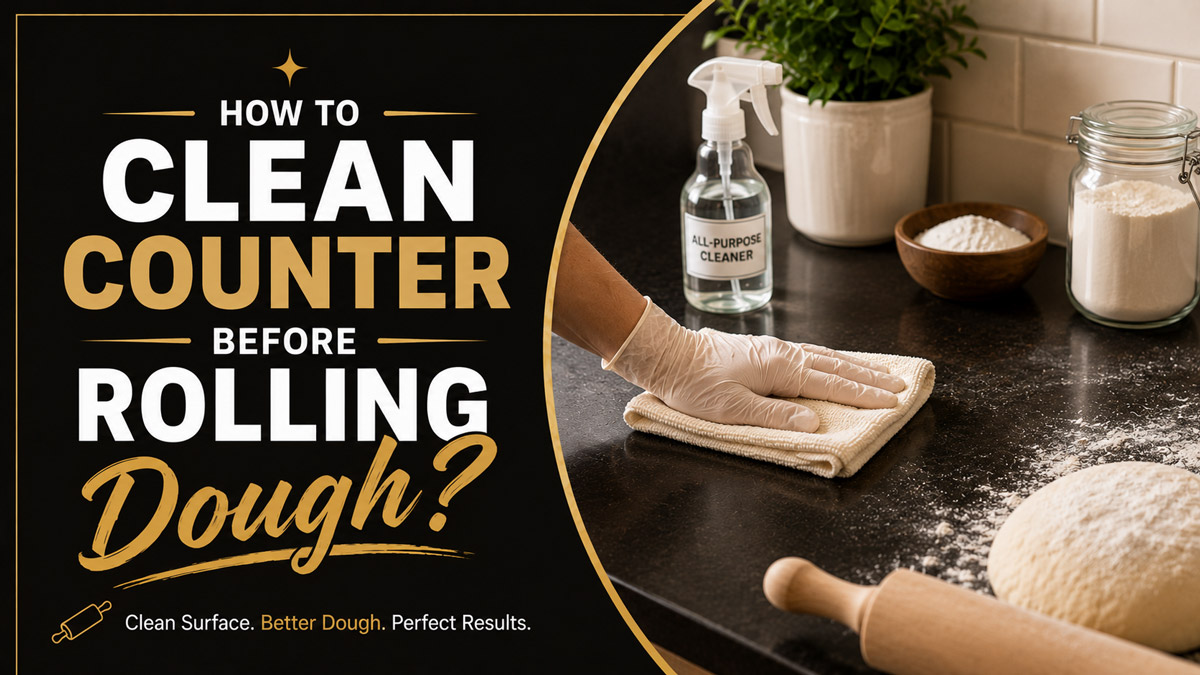
Knowing exactly how to clean counter before rolling dough prevents harmful bacterial transfer, eliminates lingering chemical off-flavors, and stops your pastry from adhering to the surface. You must physically scrape away micro-debris, degrease the area with soapy water, double-rinse the soap film, and apply a food-safe sanitizer that air-dries completely. This sequence transforms an everyday kitchen surface into a sanitary, temporary cutting board for your baked goods.
Key Facts / At a Glance
- Mechanical scraping removes 80% of flour dust and dried egg that chemical sprays cannot penetrate.
- The FDA Food Code requires a minimum of 60 seconds of dwell time for most food-contact surface sanitizers.
- Soap residue chemically alters dough elasticity and introduces a distinctly bitter taste to baked breads.
- Spraying 70% isopropyl alcohol offers the fastest sanitation method because it evaporates in under two minutes without requiring a rinse.
- Dusting flour onto a damp countertop creates a thick adhesive paste that will immediately tear delicate laminated doughs.
The Core Process of Surface Preparation
Preparing a surface for raw food contact requires two completely different actions executed in a specific order. Cleaning removes physical soils like dried food, grease, and dust. Sanitizing kills the microscopic pathogens, fungal spores, and bacteria left behind. You cannot sanitize a dirty counter. If you spray bleach or alcohol directly onto a crumb-covered surface, the chemical binds to the food particles instead of the counter, leaving the actual surface contaminated.
Professional kitchens rely on a strict order of operations known as wash, rinse, and sanitize. This protocol ensures the surface acts as a sterile environment for the 15 to 45 minutes your dough rests upon it. Any shortcut in this sequence means whatever touched your counter previously will embed directly into the hydration network of your bread or pie crust.
Before You Start
Understanding your equipment and time commitment ensures you do not pause halfway through the sanitation process.
- Total Time Required: 5 to 12 minutes (depending on sanitizer dwell time).
- Difficulty: Easy.
- Estimated Cost: Under $2 per cleaning session.
- The Determining Success Factor: Allowing the sanitizer to completely air-dry rather than wiping it away.
- Required Tools: A metal or stiff plastic bench scraper, two clean microfiber cloths (300 GSM or higher), mild dish soap, and a food-safe sanitizer spray.
- Prerequisites: Clear the counter of all small appliances, mail, and decorative items to prevent chemical overspray from contaminating them.
How to Clean Counter Before Rolling Dough: Step-by-Step
This protocol guarantees a food-safe, chemically neutral environment for rolling out any hydration level of dough. Follow these steps exactly to prevent flavor contamination and dough tearing.
Step 1: Clear and Sweep Micro-Debris
Begin by physically removing all loose particles from the work zone. Take a dry bench scraper and hold it at a 45-degree angle to the countertop. Scrape the entire surface from the back splash pulling toward the front edge. Catch the debris in your hand or a dustpan.
Scraping lifts dried sugar spots, microscopic flour dust, and salt grains that sponges simply push around. You will know this step worked when running a dry, bare hand over the counter yields zero granular friction.
Common Mistake: Using a wet cloth to wipe away dry flour. Water instantly hydrates raw flour dust, turning it into a glue-like paste that requires heavy scrubbing to remove.
Step 2: Wash and Degrease the Surface
Apply warm, soapy water to the counter to break down invisible fat residues. Fill a small bowl with water heated to roughly 110-120 degrees Fahrenheit (43-49 degrees Celsius) and add three drops of mild dish detergent. Submerge a clean microfiber cloth, wring it out until merely damp, and scrub the surface using tight, circular motions.
The surfactants in the soap sever the lipid bonds holding cooking oils and butter to your counter. This mechanical scrubbing physically lifts the remaining microscopic debris into the cloth. You will know this step worked when the surface looks uniformly wet with no water beading up around greasy patches.
Common Mistake: Using an old, sour-smelling kitchen sponge. Used sponges harbor millions of bacteria, and wiping your counter with one actively cross-contaminates the surface you plan to put food on.
Step 3: Double Rinse to Eliminate Soap Film
Wipe the entire area twice using a fresh cloth dampened only with hot water. After the first pass, rinse the cloth thoroughly in the sink, wring it tight, and wipe the counter a second time.
Soap leaves a highly alkaline film on surfaces. If raw dough touches this residue, the alkalinity reacts with the yeast and the flour’s proteins, causing localized discoloration and a bitter, soapy taste in the final bake. You will know this step worked when the counter squeaks slightly under a clean, wet finger.
Common Mistake: Doing a single, hasty rinse. A single wipe merely dilutes the soap rather than removing it. Always execute two distinct water rinses.
Step 4: Apply Food-Safe Sanitizer
Spray your chosen sanitizing solution evenly across the entire degreased surface. Hold the spray bottle roughly eight inches above the counter to achieve a fine, overlapping mist.
Sanitizers rupture the cell walls of surface bacteria and neutralize ambient mold spores. The surface must be completely saturated to ensure a uniform kill rate across the rolling area. You will know this step worked when the counter possesses a continuous, unbroken sheen of liquid.
Common Mistake: Spot-spraying only the exact center of the counter. Dough stretches unpredictably, and your rolling pin will inevitably cross into the unsanitized perimeter if you do not cover a wide area.
Step 5: Dwell and Air-Dry Completely
Leave the liquid sanitizer untouched on the counter for its required contact time. Once the time elapses, allow the moisture to evaporate naturally into the air.
Chemical sanitizers require time to destroy cellular walls. Wiping the liquid away prematurely stops the sanitization process. Furthermore, air-drying ensures the chemical components dissipate entirely, leaving a bone-dry surface ready for flour dusting. You will know this step worked when the counter returns to its natural room temperature and shows zero visible moisture.
Common Mistake: Rushing the process and dusting flour onto a damp spot. The flour will absorb the moisture, stick to the counter, and tear the bottom of your dough sheet during rolling.
What Are the Best Food-Safe Sanitizers for Baking Preparation?
The ideal sanitizer evaporates quickly, leaves no toxic residue, and effectively neutralizes common kitchen pathogens like Salmonella and E. coli. Depending on your kitchen setup and budget, different chemical agents provide varying advantages.
Table 1: Food-Safe Sanitizer Comparison for Baking Surfaces
| Sanitizer Option | Active Chemical Agent | Required Dwell Time | Average Price per Ounce | Safe Counter Materials | Post-Dry Dough Impact |
| 70% Isopropyl Alcohol | Isopropanol | 60 seconds | $0.15 | Quartz, Granite, Stainless | None (Evaporates fully) |
| Diluted Liquid Bleach | Sodium Hypochlorite (50-100 ppm) | 2 to 5 minutes | $0.05 | Stainless, Formica, Corian | Requires strict dilution to avoid chemical taste |
| White Vinegar (5%) | Acetic Acid | 10 minutes | $0.03 | Wood, Stainless, Laminate | Slight lingering acidity if not fully dried |
| Commercial Kitchen Spray | Alkyl Dimethyl Benzyl Ammonium | 1 to 2 minutes | $0.40 | All non-porous surfaces | None (Formulated for food contact) |
| Quaternary Ammonia (Quat) | Quaternary Ammonium Compounds | 60 seconds | $0.10 | All materials | Can leave a slight film if mixed too strongly |
When evaluating these options, 70% isopropyl alcohol remains the most efficient choice for home bakers. It flashes off rapidly at room temperature, requiring no secondary water rinse. Commercial kitchens often rely on quaternary ammonia tabs diluted in water, adhering strictly to FDA guidelines for food-contact surfaces.
How Do Different Countertop Materials Alter the Cleaning Process?
Every countertop material features a unique porosity rating and chemical sensitivity. Applying the wrong sanitizer will etch expensive stone, warp wood, or melt laminate finishes.
Quartz and Granite Surfaces
Quartz and sealed granite provide excellent, temperature-stable surfaces for rolling pastry. However, these stones react poorly to acidic cleaners. Vinegar or citrus-based solutions will eat through the protective sealant on granite and can dull the resin binders used in manufactured quartz. Always use pH-neutral soaps and alcohol-based sanitizers on these stones to maintain their integrity.
Wood and Butcher Block Surfaces
Wood is highly porous and absorbs liquids rapidly. You should never flood a butcher block with soapy water, as this causes the grain to swell, warp, and eventually splinter into your food. Scrape wood aggressively with a metal bench scraper to remove dough fragments. Clean it with a barely damp cloth, sanitize with a light mist of 5% white vinegar, and re-oil the surface monthly with food-grade mineral oil to block bacterial penetration.
Stainless Steel Prep Tables
Stainless steel represents the industry standard for commercial baking. It is completely non-porous, highly durable, and chemically inert. You can safely apply diluted bleach, heavy surfactants, and high-percentage alcohols without degrading the metal. For best results, always wipe parallel to the grain of the steel to prevent microscopic debris from lodging in the factory polishing lines.
Laminate and Solid Surface
Laminate surfaces consist of plastic layers bonded to a particleboard core. While the top surface resists stains, the seams where laminate sheets join are highly vulnerable to water intrusion. Never pool water or sanitizer near the edges or seams. Use a fast-drying alcohol spray to minimize moisture exposure, and rely on plastic bench scrapers instead of metal to avoid scratching the softer plastic finish.
Marble Countertops
Pastry chefs prize marble because its high thermal mass keeps butter-heavy doughs chilled. However, marble is exceptionally soft and highly reactive. Any acidic substance (like vinegar) will cause permanent etching within seconds. Clean marble exclusively with specialized stone soaps or heavily diluted dish detergent, and sanitize with low-concentration hydrogen peroxide or rubbing alcohol.
Table 2: Material Vulnerabilities and Best Practices
| Countertop Material | Surface Porosity | Recommended Sanitizer | Banned Chemical Agent | Dough Sticking Risk |
| Granite (Sealed) | Low | 70% Isopropyl Alcohol | White Vinegar | Low |
| Butcher Block | High | White Vinegar | Bleach | Medium (Requires flouring) |
| Stainless Steel | Zero | Any Food-Safe Agent | None | Low (Excellent release) |
| Marble | Medium | Hydrogen Peroxide | White Vinegar | Low (Cold surface aids release) |
| Laminate | Low (High at seams) | Commercial Kitchen Spray | High-heat steam | Medium |
What Happens if You Roll Dough on an Improperly Cleaned Surface?
Failing to properly sanitize a surface introduces physical, chemical, and biological threats to your baked goods. Understanding these failure modes helps troubleshoot mysterious issues in your final product.
Why Does Soap Residue Ruin Dough Elasticity?
Dish soap operates as an alkaline surfactant. When dough absorbs residual soap from a poorly rinsed counter, the alkalinity immediately begins breaking down the gluten network on the exterior of the dough ball. This chemical reaction causes the surface of the dough to become slack, sticky, and difficult to shape. Furthermore, baking does not destroy the surfactant chemicals, resulting in a distinct, synthetic aftertaste in the crust.
Which Sanitizers Are Safest for Sourdough Cultures?
Wild yeast cultures are highly sensitive to antimicrobial agents. If you roll sourdough on a counter freshly wiped with heavy bleach, the residual chlorine can kill the yeast on contact, leading to a dense, un-proofed loaf. For artisan sourdough baking, utilize hot water and physical friction as your primary cleaning method, or use white vinegar (acetic acid) which natural yeast cultures can tolerate far better than synthetic bactericides.
Common Mistakes and How to Fix Them
Even experienced bakers occasionally compromise their prep surfaces. Identifying and correcting these errors immediately prevents dough failure.
Table 3: Troubleshooting Countertop Contamination
| The Cleaning Mistake | Visual or Textural Symptom | Chemical or Physical Cause | Immediate Fix / Recovery Action |
| Flouring a damp counter | Dough firmly glues itself to the surface | Water hydrated the dusting flour into a binding paste | Scrape dough off, wash area, dry completely with a towel, re-flour. |
| Skipping the water rinse | Dough surface feels oddly slick or smells synthetic | Alkaline surfactants (soap film) breaking down gluten | Perform a double hot-water rinse before placing new dough down. |
| Wiping sanitizer too soon | Surface smells clean but bacteria remain | Insufficient chemical dwell time | Reapply sanitizer and allow full air-dry evaporation. |
| Using an old kitchen sponge | Surface smells mildly sour or musty | Anaerobic bacteria transfer from the sponge | Re-wash counter using a boiled, fresh microfiber cloth. |
If you realize the counter is sticky mid-roll, do not attempt to add more flour over the wet spot. You must lift the dough, completely dry the affected area with a paper towel, and apply a fresh, even dusting of flour.
Alternative Solutions for Damaged or Unsafe Counters
Sometimes a countertop is heavily cracked, deeply stained with non-food chemicals, or constructed from unsealed tile with deep grout lines. In these scenarios, cleaning is insufficient to guarantee food safety. You must introduce a physical barrier.
- Silicone Pastry Mats: These large, food-grade silicone sheets grip the counter underneath while providing a sterile, non-stick surface on top. They wash easily in the sink and often feature printed measurement rings.
- Wooden Pastry Boards: A large, dedicated wooden board with a lip that hooks over the counter edge provides a traditional, warm surface for kneading. You only use the board for dough, ensuring it never contacts raw meat.
- Stainless Steel Overlays: For heavy production, you can purchase custom-cut stainless steel sheets that sit directly on top of your existing counters, providing an instant, commercial-grade sanitary workspace.
Frequently Asked Questions
Can I use Clorox wipes before rolling dough?
Standard disinfecting wipes contain synthetic chemicals and fragrances not rated for direct food contact. The FDA prohibits their use on food prep surfaces unless followed by a thorough potable water rinse. Always use a dedicated food-safe sanitizer instead of household bathroom wipes.
How do I get hardened, dried dough off the counter?
Never use a sponge on dried dough, as it will ruin the sponge instantly. Instead, spray the dried dough with plain water, let it sit for five minutes to rehydrate the starch, and then scrape it away cleanly with a metal bench scraper.
Does it matter what temperature the water is for cleaning?
Yes. Water below 110 degrees Fahrenheit struggles to melt butterfat, shortening, and cooking oils. You need hot water to properly emulsify these fats so the soap can lift them away from the counter surface.
How long should counters air-dry before dusting with flour?
At normal room temperature and average humidity, a 70% alcohol sanitizer will dry in 60 to 90 seconds. Water-based sanitizers or bleach dilutions may require up to 5 minutes. Touch the surface with the back of a dry knuckle to verify absolute dryness before applying flour.
Can I just put parchment paper down instead of cleaning?
Parchment paper slides easily on a smooth counter, making it very difficult to roll out stiff doughs. Even if you use parchment, you must still clean and sanitize the counter, as flour dust inevitably migrates under the edges of the paper during the rolling process.
The Bottom Line
Preparing your workspace properly ensures your baking remains uncontaminated by household bacteria and chemical residues. Understanding exactly how to clean counter before rolling dough relies entirely on the mechanical removal of debris, thorough surfactant degreasing, and the correct dwell time for a food-safe sanitizer. Follow the wash, rinse, and sanitize protocol, match the chemical to your specific countertop material, and never rush the air-drying phase.