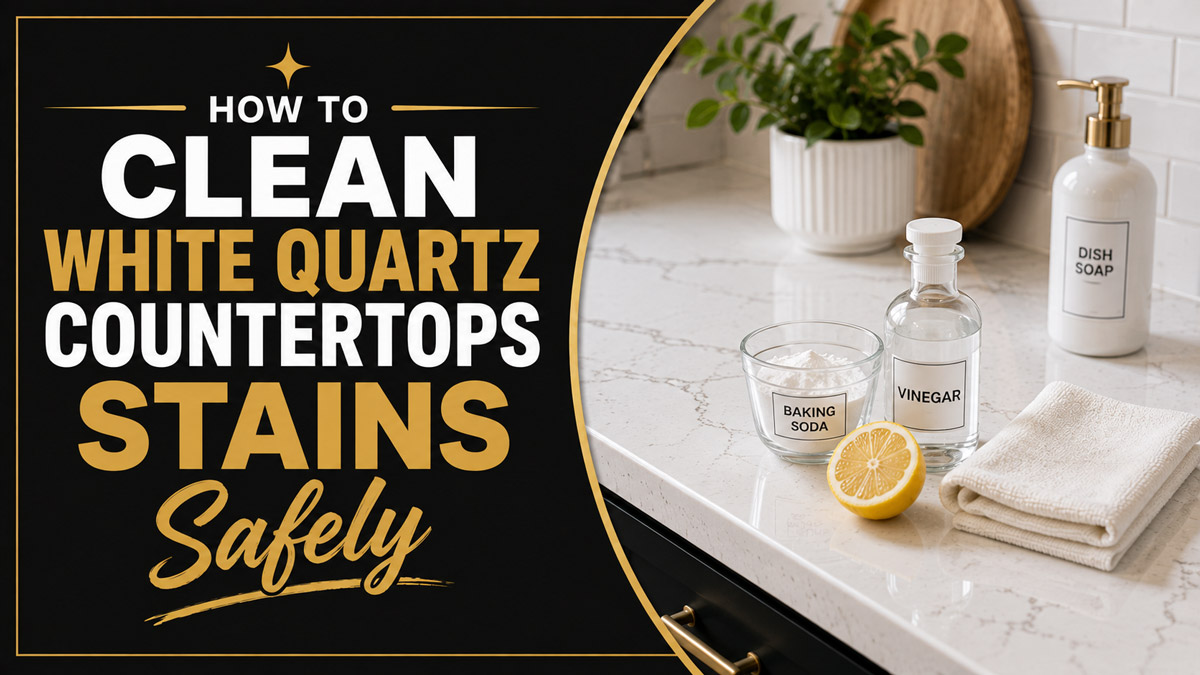
To learn exactly how to clean white quartz countertops stains, you must use targeted, non-abrasive treatments that protect the engineered polymer resin. Clean fresh food spills using warm water and pH-neutral dish soap. Extract set-in organic marks with a baking soda paste, and dissolve chemical blemishes using 91% isopropyl rubbing alcohol.
At a Glance:
- White quartz consists of 90-93% natural stone aggregates bound by 7-10% engineered polymer resins.
- You must remove aggressive solvent treatments like acetone or rubbing alcohol within 1-2 minutes to prevent severe resin degradation.
- Bleach permanently discolors white quartz resin by breaking down chemical bonds and leaving a cloudy yellow halo.
- Metal transfer marks from aluminum pans require a white pencil eraser rather than chemical liquid cleaners.
- Melamine foam sponges act like 3000-grit sandpaper and will permanently dull a factory-polished quartz finish upon repeated use.
How quickly do liquids penetrate white quartz polymer resin?
Liquids do not penetrate white quartz countertops quickly because the engineered surface is almost entirely non-porous. Standard engineered quartz features an absorption rate of approximately 0.02%, which prevents most common household spills from soaking into the physical material structure.
The 7-10% polymer resin binder fills the microscopic voids between the crushed quartz crystals during manufacturing. This industrial process creates a solid, impermeable barrier across the slab. Water, wine, and cooking oils remain sitting on surface tension rather than wicking into the stone matrix. You typically have a strict 24-hour window to wipe up basic liquid spills before the foreign substance begins to chemically adhere to the top layer of the resin itself. Highly acidic liquids like lemon juice, balsamic vinegar, or tomato sauce can cause surface-level chemical reactions much faster. Field observations from professional countertop fabricators indicate that acidic compounds left untouched for more than 12 hours often require poultice treatments rather than simple surface wiping. You should treat every spill immediately to avoid testing the maximum chemical limits of the resin binder.
What is the difference between a stain and an etch on quartz?
A stain is a foreign colored substance resting on top of the quartz resin, while an etch is permanent physical damage where acidic chemicals have dissolved the top surface layer. You can wash a stain away, but you must physically grind and polish an etch to restore the smooth finish.
Stains change the color of the countertop without altering its physical texture. When you run your fingernail over a dried coffee ring, the surface feels completely smooth and continuous. Etching leaves a dull, rough, or cloudy patch that looks identical to a permanent hard water ring. Common acidic household items like vinegar, citrus juice, and commercial chemical cleaners cause this structural damage by breaking the polymer chains inside the resin binder. The Natural Stone Institute definitions classify etching as chemical corrosion rather than discoloration. If your white quartz features a grey mark from a cast-iron skillet, that represents metal transfer (a type of superficial surface stain). If the spot feels slightly depressed or lacks the surrounding glossy shine, the resin has degraded. You cannot wash an etch away. Professional restoration requires specialized diamond polishing pads to grind down the surrounding area and re-level the surface entirely.
How do you remove fresh food stains from white quartz?
You remove fresh food stains from white quartz using a mixture of two to three drops of mild, pH-neutral dish soap and warm water. Apply this soapy solution using a soft microfiber cloth in gentle, circular motions over the spill.
Start the cleaning process as soon as a kitchen spill occurs. Coffee, red wine, grape juice, and hot cooking grease sit on the surface tension of the countertop initially. The mild dish soap breaks down the lipid bonds in food oils and lifts the organic pigments without shocking the resin chemically. Once you wipe away the visible material, you must rinse the area thoroughly with clean tap water. Leaving invisible soap residue on the surface will create a cloudy film that attracts more dust and dirt over time. Dry the countertop completely with a separate cotton or microfiber towel within 30 seconds of rinsing. This fast drying process prevents hard water spots from forming as the municipal water evaporates. Never use abrasive scouring pads or rough scrubbing sponges during this daily cleaning routine. Standard liquid dish soap provides all the necessary surfactant power to handle daily kitchen spills safely.
What is the best method for set-in organic quartz stains?
The best method for lifting set-in organic stains involves applying a thick paste made of three parts baking soda and one part water. You apply this mixture directly over the discoloration and let it sit undisturbed for 10-15 minutes.
Organic pigments from turmeric, strawberries, or dried tomato sauce often bind to the microscopic surface texture of the polymer resin. Baking soda (sodium bicarbonate) acts as a highly effective, low-abrasion lifting agent for these specific pigments. Mix the dry ingredients with water until they form a consistency similar to thick toothpaste. Spread this paste over the affected area in a layer about one-quarter inch thick. Cover the paste tightly with a square of plastic wrap to prevent the water from evaporating too quickly into the room. The trapped moisture helps break the pigment bond, while the baking soda draws the organic color upward. After the precise dwell time elapses, remove the plastic and wipe the paste away using a damp, soft cloth. Do not scrub the paste into the countertop aggressively. Baking soda features a mild abrasive quality that can dull polished finishes if you rub it in tight circles with heavy downward pressure.
How do you lift chemical marks like ink and nail polish?
You lift chemical marks from white quartz by applying 70-91% isopropyl rubbing alcohol to a cotton ball and holding it flat against the stain for one to two minutes. The fast-acting solvent breaks down the synthetic polymers in the ink or polish.
Permanent markers, printer ink, and nail cosmetics contain fast-drying solvents designed to bond permanently to hard surfaces. Dish soap and baking soda cannot dissolve these engineered synthetic compounds. Isopropyl alcohol provides the exact chemical disruption required without instantly melting the countertop resin. Pour a small amount of the alcohol onto a soft cloth or cotton pad. Press it completely flat over the stain and let it dwell undisturbed. This dwell time allows the alcohol to re-liquefy the dried ink or cosmetic polish. After two minutes, wipe the area firmly in one single direction to lift the pigment away cleanly. Do not smear the dissolved ink across a wider area of the white countertop. Once the stain is gone, immediately wash the spot with soapy water to neutralize any remaining active alcohol. Prolonged exposure to high-concentration alcohol will slowly degrade the glossy factory polish on your counters.
What specific treatments fix the hardest white quartz stains?
You fix the most severe white quartz stains by matching specific chemical solvents to the exact type of foreign material. Use Bar Keepers Friend for oxidized rust, pure acetone for heavy adhesives, and a flat plastic scraper for dried paint.
General cleaning advice often fails entirely when dealing with reactive chemicals or hardened construction materials. When dish soap and baking soda produce absolutely no results, you must escalate to targeted interventions. These advanced chemical treatments carry a much higher risk of permanent resin damage. You must adhere strictly to maximum dwell times to prevent etching the surface structure.
| Problem Stain Type | Advanced Chemical Fix | Maximum Dwell Time | Critical Application Rule |
| Rust or Hard Iron | Bar Keepers Friend Soft Cleanser | 60 seconds | Wet the surface first, scrub lightly, and rinse completely. |
| Adhesives or Tree Sap | 100% Pure Acetone or Goo Gone | 30 seconds | Apply only to the exact stain using a cotton swab. |
| Permanent Marker | 91% Isopropyl Rubbing Alcohol | 2 minutes | Press flat against the mark to liquefy, do not scrub. |
| Dried Paint or Wax | Plastic Putty Knife | N/A | Hold blade at a 45-degree angle and scrape in one direction. |
Typical field data from countertop fabricators confirms that leaving acetone on a quartz surface for more than five minutes will permanently dissolve the top layer of resin. Always neutralize these strong chemicals with plenty of fresh water immediately after the stain lifts.
Can you safely remove rust marks from white quartz?
Yes, you can safely remove rust marks from white quartz using a soft cleanser containing oxalic acid, such as Bar Keepers Friend Soft Cleanser. You must limit the chemical exposure strictly to 60 seconds to prevent severe resin etching.
Rust stains usually occur when wet cast-iron skillets or metal food cans sit on the countertop overnight. The raw iron oxidizes and deposits an orange-brown mineral stain directly onto the pristine white surface. Normal alkaline kitchen cleaners will not break down oxidized iron. Oxalic acid specifically targets and dissolves rust molecules at a structural level. Wet the stained area with water first to provide a thin protective barrier for the underlying resin. Apply a small dime-sized drop of the liquid soft cleanser directly to the rust spot. Rub it gently with a soft wet sponge for a few seconds until the bright orange color lifts. Immediately flood the area with clean water to neutralize the acid completely. Powdered abrasive cleansers can scratch the stone, so always use the liquid soft cleanser version. If you leave oxalic acid on white quartz for several minutes, the surface will turn permanently dull and require professional repolishing.
How do you fix metal transfer scratches from pots and pans?
You fix grey or black metal transfer marks on white quartz by rubbing the line lightly with a standard white pencil eraser. The rubber eraser lifts the soft metal particles off the surface without requiring any harsh liquid chemicals.
Homeowners often mistake dark metal transfer lines for deep physical scratches in the actual quartz. Engineered quartz ranks at a solid 7 on the Mohs hardness scale. Kitchen knives, aluminum baking sheets, and cast-iron pans are much softer than the quartz crystals. When you drag a heavy metal pan across the counter, the hard stone essentially sands a microscopic layer of metal off the bottom of the pan. That grey streak is simply metal residue sitting loosely on top of the counter. Chemical cleaners and bleach will not remove solid metal particles. A standard white polymer pencil eraser creates just enough friction to grab the metal dust and roll it away safely. Brush away the rubber eraser shavings and wipe the area with a damp cloth. Never use steel wool to remove these marks. Steel wool contains aluminum oxide abrasives that will physically scratch the actual resin binder holding the counter together.
Does white vinegar remove hard water rings from quartz?
White vinegar removes hard water rings from quartz when you mix it at a 50/50 ratio with distilled water and apply it for no more than two minutes. The mild acetic acid safely dissolves the hardened calcium and magnesium deposits.
White rings commonly form around kitchen and bathroom faucets where tap water repeatedly dries on the surface over time. Municipal tap water contains high levels of dissolved minerals that leave a chalky residue behind as the water evaporates. Because general quartz maintenance rules strictly say “never use acid,” many homeowners struggle to clean these specific hazy spots. A heavily diluted vinegar solution provides a safe workaround if you control the application tightly. Spray the 50/50 mixture exclusively onto the white mineral deposit. Let the mild acid break down the calcium for a maximum of two minutes. Wipe the area completely clean and rinse it heavily with fresh water. Do not let vinegar dry on the countertop. Daily use of acidic cleaners will slowly strip the factory polish. For routine cleaning around faucets, simply wiping the area completely dry after doing dishes prevents these mineral halos from forming initially.
How do you scrape dried paint or glue off quartz surfaces?
You scrape dried paint or glue off quartz by holding a fresh plastic putty knife at a flat 45-degree angle against the counter. You must scrape smoothly in one continuous direction to sheer the hardened material off the surface safely.
Construction adhesives, dried latex paint, and melted candle wax require mechanical removal rather than chemical dissolving. Start by using a plastic scraper, which carries zero risk of scratching the dense stone. Push the edge of the plastic tool firmly under the outer lip of the dried material. If the plastic cannot break the bond, you can carefully upgrade to a fresh, rust-free metal razor blade. Lay the metal blade almost entirely flat against the white quartz. Glide it forward smoothly and slowly. Never use the sharp corner of the blade to pick or gouge at the center of the spot. A tilted blade will slice directly into the polymer resin, creating a permanent structural gouge that accumulates dark dirt forever. Once you pop the bulk of the glue or paint off the counter, use a small dab of rubbing alcohol to clean up any remaining sticky residue left behind.
Does finish type change how white quartz resists stains?
The finish type changes white quartz stain resistance significantly, with honed or matte finishes requiring twice as much routine cleaning as polished finishes. Polished quartz reflects light and seals microscopic pores, while matte finishes feature a rougher, highly exposed texture.
When manufacturers create a standard polished finish, the heavy grinding process smooths the resin and crystals until they form a highly tight, reflective surface. This slick exterior naturally repels loose liquids and finger oils. Honed, concrete, or leathered finishes intentionally stop the polishing process early to create a soft, non-reflective visual look. This rougher surface area catches metal transfer from pots easily. It absorbs natural oils from human skin upon touch, which look like dark, greasy stains on the bright white background. Typical field data from installation professionals shows that homeowners with honed white quartz submit complaint calls about staining at three times the rate of those with standard polished quartz. If you install a matte finish, you must commit to daily wipe-downs with soap and water to prevent oils from settling into the microscopic valleys of the stone texture.
| Quartz Finish Type | Surface Texture Profile | Stain Susceptibility Level | Typical Cleaning Frequency |
| Polished Finish | Highly smooth and reflective | Low (Liquids bead easily) | 1-2 times weekly |
| Honed / Matte Finish | Flat, smooth, non-reflective | High (Absorbs finger oils) | Daily wiping required |
| Concrete / Rough Finish | Heavily textured and pitted | Very High (Catches debris) | Daily scrubbing required |
Can you use a Magic Eraser on white quartz countertops?
You can use a Magic Eraser on white quartz countertops only in extreme cases, as the material acts exactly like ultra-fine sandpaper. Repeated use in the exact same spot will permanently strip away the factory polish and leave a cloudy, dull patch.
Magic Erasers consist entirely of melamine foam. When activated by water, the microscopic internal structure of the foam becomes incredibly hard and abrasive. The material operates at an equivalent grit of roughly 3000 to 5000 on the traditional sandpaper scale. The sponge removes stains effectively precisely because it physically sands the top microscopic layer of the countertop away along with the stain itself. If you apply heavy downward pressure while scrubbing a tea stain, you will permanently alter the light reflection of that specific area. You will notice a dull halo when bright sunlight hits the counter at a low angle. Use melamine foam solely as a final last resort for isolated, highly stubborn marks. Wet the sponge completely, squeeze out the excess water, and wipe the surface with the lightest possible touch.
Why does bleach turn white quartz countertops yellow?
Bleach turns white quartz countertops yellow because its highly alkaline pH level chemically breaks down the polymer bonds inside the resin. This chemical degradation permanently alters the physical structure of the resin, revealing a dingy yellow hue beneath the surface.
Many homeowners mistakenly assume that liquid bleach will make white surfaces look whiter. While bleach removes pigment from organic fabrics efficiently, it operates destructively on synthetic polymers. Countertop resins are essentially advanced engineered plastics. Exposing these plastics to raw sodium hypochlorite causes the molecular chains to oxidize and fracture quickly. You cannot reverse this specific yellowing process. Once the chemical burn occurs, no amount of heavy scrubbing or diamond polishing will restore the pure white color. The damage extends deep into the cross-section of the stone itself. Manufacturers of engineered stone explicitly void their comprehensive warranties if you apply bleach or bleach-based cleaning wipes to the surface. If you need to disinfect your kitchen counters after preparing raw meat, use a dedicated antibacterial stone cleaner or 70% isopropyl alcohol, which evaporates safely before it can damage the polymers.
What cleaning products will permanently damage quartz resin?
High-pH chemical degreasers, heavy paint strippers, foaming oven cleaners, and silver polishes will permanently damage quartz resin. You must also avoid any abrasive physical cleaning tools like green scouring pads or coarse steel wool, which physically scratch the surface.
The chemical limits of quartz are strictly defined by the vulnerability of the 10% polymer binder holding it together. Products with a pH above 8 or below 5 present a severe structural risk to this binder. Oven cleaners contain highly caustic lye (sodium hydroxide), which will visibly melt the top layer of the countertop within minutes. Paint strippers containing methylene chloride break down the chemical adhesion holding the solid quartz crystals together. Commercial bathroom cleaners formulated to dissolve thick shower limescale usually contain high concentrations of hydrochloric or phosphoric acid. If these harsh acids sit on white quartz, they create permanent white etching scars. Physical abrasives present a direct mechanical threat. The aluminum oxide found in heavy-duty green kitchen scrubbing pads registers higher on the Mohs hardness scale than the countertop resin. Scrubbing your counters with these pads leaves micro-scratches that trap dirt and make the bright white surface look permanently grey over time.
Can you use hydrogen peroxide to whiten stained quartz?
You can use a low-concentration 3% hydrogen peroxide solution to treat stubborn organic stains on white quartz if a baking soda paste fails. The chemical oxidizing action bleaches the pigment of the stain without presenting the same severe alkalinity risks as household chlorine bleach.
Hydrogen peroxide works exceptionally well on set-in blood, heavy red wine, or dark beet juice marks. The extra oxygen molecule heavily attacks and breaks down the color-causing compounds in organic stains. Pour a small amount of the 3% liquid solution onto a soft cotton pad and lay it flat over the discoloration. Let it dwell for approximately 10 minutes. Keep a very close watch on the area during this time. While hydrogen peroxide is much safer than chlorine bleach, leaving any active oxidizing agent on the surface for several hours can eventually stress the polymer bonds. Wipe the area thoroughly with a damp cloth afterward. Do not use high-concentration peroxide (such as 12% professional hair developer) on your counters under any circumstances. The standard brown bottle from the local pharmacy aisle provides the perfect balance of stain-lifting power and chemical safety.
How much does professional white quartz restoration cost?
Professional white quartz restoration typically costs between $300 and $600 for localized stain or etch removal. Complex repair jobs requiring full-surface diamond polishing across a large kitchen can easily exceed $1,200 depending on the total square footage.
When DIY chemical and mechanical cleaning methods fail, you must hire a professional stone fabricator to resurface the material entirely. Quartz restoration presents a highly unique technical challenge. Unlike natural marble, which polishes relatively easily, grinding the polymer resin in quartz generates extreme physical heat. If the technician does not control the ambient heat using specialized wet-polishing equipment, the resin will melt and scorch permanently. Typical field pricing models from stone restoration contractors base the final cost on the physical depth of the damage. Superficial resin burnishing takes about two hours and sits at the lower end of the pricing tier. Repairing a deep chemical etch caused by oven cleaner often requires grinding the entire countertop section perfectly flat to ensure an even reflection, which drives the required labor price up significantly.
| Type of Professional Repair | Description of Restoration Work | Typical Price Range |
| Localized Spot Polishing | Removes minor chemical etching or dull spots caused by Magic Erasers. | $250 to $400 |
| Deep Etch Resurfacing | Grinds down the surface deeply to remove heavy acid burns or deep scratches. | $500 to $800 |
| Full Countertop Repolishing | Restores factory shine completely across the entire kitchen installation. | $1,000 to $1,500+ |
Do you need to apply a stone sealer to white quartz?
No, you never need to apply a chemical stone sealer to white quartz countertops. The industrial manufacturing process creates a completely non-porous surface that physically cannot absorb standard liquid penetrating sealers.
Natural stones like granite, marble, and quartzite contain microscopic open pores and physical fissures. Installers apply chemical impregnating sealers to natural stone to clog those open pores and block spilled liquids from entering. Engineered quartz eliminates this requirement entirely. During factory fabrication, massive industrial vacuums extract all the ambient air from the raw quartz and liquid resin mixture before it undergoes high-frequency vibration and heavy heating. This precise methodology creates an impenetrable slab. If you apply a standard natural stone sealer to white quartz, the liquid will just sit harmlessly on the top of the surface. Once the sealer dries completely, it creates a hazy, sticky film that ruins the glossy finish and attracts heavy dirt. If your white quartz feels sticky or looks perpetually smudged, a well-meaning homeowner likely applied a chemical sealer to it previously. You must strip this topical film off using a mild solvent like isopropyl alcohol to restore the original clean finish.
The Bottom Line
You can remove almost all stains from white quartz countertops by matching the correct non-abrasive solvent exactly to the specific type of spill. Stick strictly to mild dish soap for daily messes, baking soda paste for set-in food marks, and rubbing alcohol for synthetic ink or polish. Always limit the dwell time of any strong chemical treatment to prevent permanent resin etching. Avoid chlorine bleach, abrasive scrubbing sponges, and highly acidic bathroom cleaners completely to preserve the bright factory finish for decades.