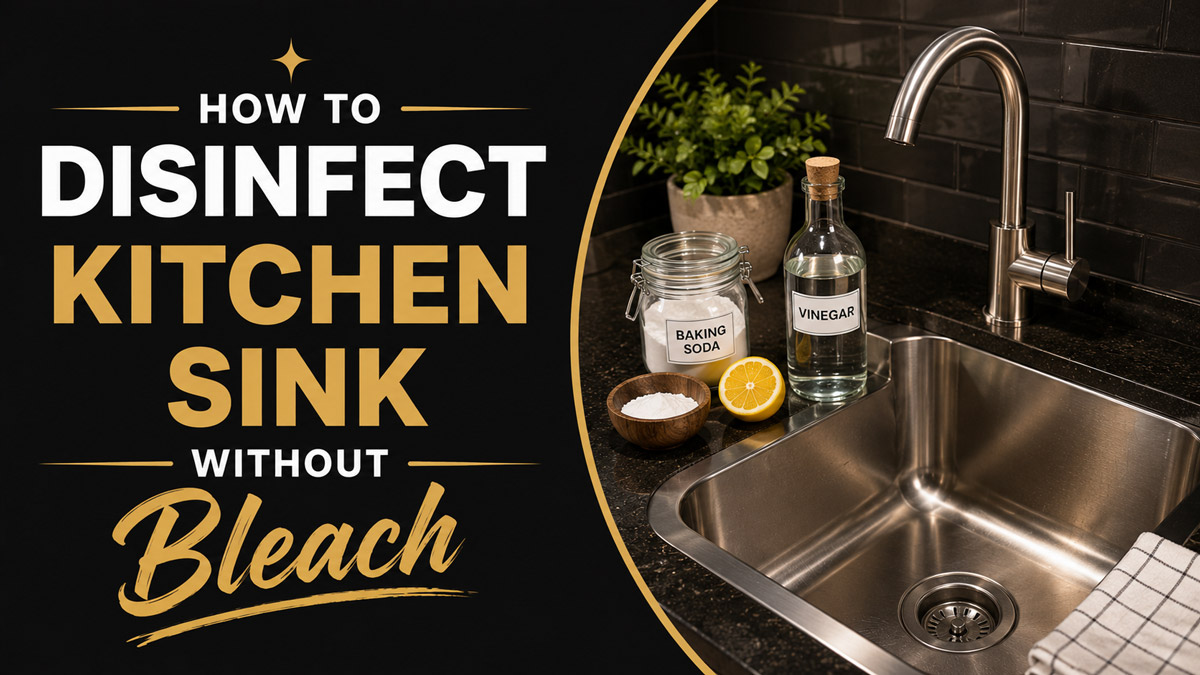
You can effectively disinfect a kitchen sink without bleach by applying 70 percent isopropyl alcohol, 3 percent hydrogen peroxide, or an EPA-registered botanical disinfectant. These chemical agents reliably kill disease-causing bacteria and viruses through cellular oxidization when left wet on the surface for their specific required contact times.
Key Facts / At a Glance
- Primary Agents: 70 percent isopropyl alcohol, 3 percent hydrogen peroxide, or Thymol sprays.
- Required Contact Time: Ranges from 1 minute (alcohol) to 10 minutes (peroxide and botanicals).
- Preparation Rule: You must clean away grease and food debris with soap before applying any disinfectant.
- Safety Warning: Never mix hydrogen peroxide and vinegar in the same container.
- Effectiveness: Vinegar and baking soda are mild cleaners, not hospital-grade disinfectants.
What Are The Best Non-Bleach Disinfectants?
Selecting the right chemical agent dictates the success of your cleaning routine. The Environmental Protection Agency (2023) confirms that several non-bleach chemicals meet the rigorous standards required to eliminate household pathogens. Each option utilizes a different chemical mechanism to destroy the cellular structure of bacteria and viruses.
70 Percent Isopropyl Alcohol (Rubbing Alcohol)
Isopropyl alcohol is a fast-acting, volatile solvent that destroys pathogens by denaturing their internal proteins. You must use exactly the 70 percent concentration formulation. Formulations at 90 percent or higher evaporate too rapidly to penetrate the bacterial cell wall, rendering them ineffective for hard surface disinfection. The 70 percent mixture contains enough water to slow the evaporation rate, allowing the alcohol sufficient time to breach the cell membrane. This option requires a contact time of 30 seconds to 1 minute. It costs roughly $2 to $4 per 16-ounce bottle and leaves absolutely no residue behind.
3 Percent Hydrogen Peroxide
Hydrogen peroxide is a powerful oxidizing agent that breaks down cellular walls through a violent chemical reaction. When the liquid contacts organic material, you will often see a bubbling effect. This occurs because an enzyme called catalase within the bacteria reacts to the peroxide, rapidly releasing oxygen gas and tearing the pathogen apart. You must purchase the standard 3 percent topical solution and keep it stored in an opaque brown bottle. Exposure to ultraviolet light degrades the chemical bonds, turning the peroxide into plain water. This agent requires a contact time of 5 to 10 minutes and costs $1 to $3 per bottle.
EPA-Registered Botanical Sprays (Thymol)
Botanical disinfectants rely on plant-derived essential oils to neutralize pathogens. The most common active ingredient is Thymol, a component extracted from thyme oil. Brands such as CleanSmart and Seventh Generation utilize these botanical compounds to achieve commercial-grade disinfection without synthetic chemicals. You must check the back label for a specific EPA Registration Number to verify the product has passed independent laboratory efficacy testing. These sprays are completely safe around food preparation areas and require a contact time of 10 minutes. Expect to pay between $5 and $9 per spray bottle.
Thermal Disinfection (Boiling Water)
Thermal disinfection uses extreme heat rather than chemical reactions to destroy microorganisms. Pouring boiling water over an inert surface instantly coagulates the proteins inside bacteria, causing immediate death. The water must reach a rolling boil of at least 212 degrees Fahrenheit (100 degrees Celsius). You must maintain a continuous pour over the target area for 1 to 3 minutes. While this method is virtually free and leaves zero chemical residue, it presents severe burn risks. Additionally, repeated exposure to boiling water can crack fireclay sinks and weaken polyvinyl chloride (PVC) plumbing joints beneath the drain.
Non-Bleach Disinfectant Agents Compared
| Disinfectant Method | Required Contact Time | Primary Mechanism | Cost Per 16oz | pH Level |
| 70% Isopropyl Alcohol | 1 minute | Protein denaturing | $3.00 | 5.5 (Slightly acidic) |
| 3% Hydrogen Peroxide | 10 minutes | Cellular oxidization | $2.00 | 4.5 (Acidic) |
| Botanical (Thymol) | 10 minutes | Cell membrane disruption | $7.00 | 5.0 to 7.0 (Variable) |
| Boiling Water (212°F) | 3 minutes | Thermal protein coagulation | $0.00 | 7.0 (Neutral) |
How Does Disinfection Differ From Sanitization?
Disinfection and sanitization represent two entirely different regulatory standards for cleanliness. Understanding this distinction ensures you apply the correct chemical process when handling high-risk food items like raw poultry.
Sanitization reduces the total population of bacteria on a surface to levels deemed safe by public health codes. A sanitizer must kill 99.9 percent of specific bacteria within 30 seconds. Mild household acids, including white vinegar, fall into this category. They excel at light daily maintenance but lack the chemical strength to reliably eliminate resilient viruses or fungal spores.
Disinfection involves a much more aggressive chemical intervention. A true disinfectant must completely destroy or permanently inactivate 99.999 percent of all pathogenic microorganisms on an inert surface. Disinfectants break apart the physical structure of viruses and dissolve the dense protective layers surrounding dangerous bacteria. You must use a true disinfectant rather than a sanitizer after preparing raw meats, handling pet bowls, or cleaning up bodily fluids.
Pathogen Elimination Timetables
| Target Pathogen | 70% Alcohol Contact Time | 3% H2O2 Contact Time | Thermal (Boiling) Time |
| Salmonella enterica | 1 minute | 5 minutes | 1 minute |
| Escherichia coli (E. coli) | 1 minute | 5 minutes | 1 minute |
| Staphylococcus aureus | 1 minute | 10 minutes | 2 minutes |
| Influenza A Virus | 1 minute | 5 minutes | 1 minute |
Before You Start: Preparation And Materials
Successful disinfection requires specific physical tools to prepare the surface. Disinfectants cannot penetrate heavy organic matter. If you spray hydrogen peroxide directly onto a layer of bacon grease, the chemical will exhaust its oxidizing power attacking the fat lipids rather than the underlying bacteria.
- Total Process Time: 15 to 20 minutes (including wait times).
- Difficulty Level: Beginner.
- Estimated Cost: $2 to $5 per month for supplies.
- Required Materials:
- 1 bottle of your chosen non-bleach disinfectant (Alcohol, Peroxide, or Thymol).
- 1 spray nozzle attachment.
- 2 clean microfiber towels.
- Standard liquid dish soap.
- 1 non-abrasive scrubbing sponge.
- Warm tap water.
How To Disinfect Kitchen Sink Without Bleach (Step-by-Step)
Learning how to disinfect kitchen sink without bleach requires strict adherence to order of operations. You must physically remove the biological barriers protecting the bacteria before applying your chemical agent. Follow these six steps exactly.
Step 1: Clear The Basin And Rinse
Begin by removing all physical objects from the sink environment. Remove every dish, utensil, drying rack, and sponge from the basin. Pathogens frequently transfer from contaminated dishes to the sink walls during the washing process. Turn on your faucet and use warm water to thoroughly rinse away all visible food debris, coffee grounds, and loose particles down the drain.
- Success Checkpoint: You will know this step is complete when the sink basin is entirely empty and free of loose, visible food particles.
- Common Mistake: Leaving the dish sponge sitting in the corner of the sink. Sponges harbor massive bacterial colonies and will immediately recontaminate the surface if left in the basin during disinfection.
Step 2: Clean Grease And Biofilm First
Apply a generous squirt of standard liquid dish soap directly to your non-abrasive sponge. Scrub the entire sink surface aggressively, focusing heavily on the drain rim, the corners of the basin, and the faucet handles. Bacteria create a microscopic, sticky shield called a biofilm to protect themselves from chemical attacks. Dish soap contains heavy surfactants that break the surface tension of oils and physically lift this biofilm away from the metal or ceramic surface.
- Success Checkpoint: The entire sink basin should be coated in a thick, soapy lather with no greasy patches remaining.
- Common Mistake: Attempting to use a disinfectant as a primary cleaner. Disinfectants kill germs; they do not dissolve grease. Applying alcohol to a greasy sink is a waste of chemicals.
Step 3: Rinse Thoroughly And Dry The Surface
Turn the water back on and rinse away all soap suds. Ensure no soapy film remains on the walls or floor of the basin. Once the soap is gone, take your first clean microfiber towel and wipe the entire sink completely dry. You must remove all standing water from the surface. Residual tap water will dilute your incoming disinfectant, lowering its concentration below the threshold required to kill pathogens.
- Success Checkpoint: The sink walls and floor should feel completely dry to the touch, with no pooled water around the drain.
- Common Mistake: Skipping the drying phase. Spraying 70 percent alcohol onto a wet sink instantly dilutes it to a 40 or 50 percent concentration, rendering it ineffective against stubborn bacteria.
Step 4: Apply Your Chosen Disinfectant Generously
Attach a spray nozzle to your bottle of 70 percent isopropyl alcohol, 3 percent hydrogen peroxide, or botanical disinfectant. Spray the chemical heavily across every inch of the sink. Start at the top of the basin walls and work your way down to the drain. Ensure you thoroughly coat the faucet spout, the hot and cold handles, and the silicone caulking where the sink meets the countertop.
- Success Checkpoint: The entire surface of the sink and faucet should appear visibly wet and glossy with the chemical agent.
- Common Mistake: Pouring the chemical directly from the bottle instead of using a sprayer. Pouring wastes liquid and leaves large dry patches where bacteria will survive.
Step 5: Maintain The Required Wet Contact Time
You must allow the chemical to sit undisturbed on the surface for its specific required contact time. Also known as dwell time, this is the exact number of minutes the liquid needs to physically dismantle the cellular walls of the bacteria. Refer to your chosen agent’s specifications: wait 1 full minute for 70 percent isopropyl alcohol, or wait 10 full minutes for 3 percent hydrogen peroxide and botanical sprays.
- Success Checkpoint: The surface remains visibly wet for the entire duration of the timer.
- Common Mistake: Wiping the surface dry immediately after spraying. Wiping a disinfectant away early merely pushes live bacteria around the sink basin. If the chemical begins to evaporate before the timer expires, you must spray more to keep the surface wet.
Step 6: Allow The Sink To Air Dry Completely
Once the required contact time has elapsed, step away and let the sink air dry. Do not wipe the chemical away. Isopropyl alcohol and hydrogen peroxide both break down cleanly and leave no hazardous residues. Hydrogen peroxide naturally degrades into plain water and oxygen molecules. Allowing the sink to air dry provides maximum exposure time and ensures the destruction of any remaining microscopic pathogens.
- Success Checkpoint: The sink is entirely dry through natural evaporation and ready for safe food preparation.
- Common Mistake: Rinsing the sink with tap water immediately after the timer finishes. Tap water is not sterile and can introduce new microorganisms to your freshly disinfected surface.
Which Disinfectant Fits Your Sink Material?
Chemical disinfectants interact differently with various manufacturing materials. Applying the wrong acid to a porous surface can cause irreversible cosmetic damage, etching, or structural weakening. You must match your chosen agent to your specific sink type.
Stainless Steel Sinks
Stainless steel remains the most durable and common kitchen sink material. It features a microscopic chromium oxide layer that prevents rust and corrosion. You can safely use 70 percent isopropyl alcohol, 3 percent hydrogen peroxide, and botanical sprays on stainless steel. However, hydrogen peroxide can occasionally leave a chalky, cloudy streak after it evaporates. You can instantly restore the metallic shine by buffing the dry sink with a single drop of olive oil on a clean cloth.
Composite Granite And Quartz Sinks
Composite sinks consist of crushed stone dust bound together by acrylic resins. These resins are highly sensitive to harsh chemicals. You should use 70 percent isopropyl alcohol or mild botanical sprays for these surfaces. Avoid leaving hydrogen peroxide pooled in the basin for extended periods, as prolonged exposure to acidic liquids can degrade the resin binders and cause the dark stone colors to appear hazy or bleached over time.
Fireclay And Porcelain Enamel Sinks
Fireclay and porcelain sinks feature a ceramic core coated in a glass-based glaze. This non-porous glaze resists chemical damage exceptionally well. You can use hydrogen peroxide, alcohol, or botanical sprays safely. However, you must absolutely avoid the thermal disinfection method. Pouring heavy volumes of boiling water into a cold ceramic sink causes rapid thermal expansion, which will crack the glaze and compromise the waterproof seal.
Copper Sinks
Copper sinks require highly specialized care due to their living finish. Copper naturally develops a dark patina over time through oxidation. Applying any highly acidic liquid, including hydrogen peroxide, will instantly strip this patina away, leaving bright, shiny, uneven spots on the metal. Fortunately, copper possesses inherent antimicrobial properties. The metal naturally disrupts bacterial cell membranes. You only need to wash a copper sink with mild dish soap and warm water; avoid chemical disinfectants entirely.
Kitchen Sink Material Compatibility Matrix
| Sink Material | Recommended Agent | Agents To Avoid | Post-Disinfection Care |
| Stainless Steel | 70% Alcohol, 3% H2O2 | Bleach | Buff with olive oil for shine. |
| Composite Granite | Botanical Sprays, Alcohol | Heavy pooling of H2O2 | Rinse thoroughly after dwell time. |
| Fireclay / Porcelain | 3% H2O2, Botanical Sprays | Boiling Water | Wipe away hard water spots. |
| Copper | Mild Dish Soap Only | Alcohol, H2O2, Botanicals | Allow natural patina to recover. |
What Are The Most Common Mistakes To Avoid?
Even experienced homeowners make dangerous errors when attempting to mix household chemicals. Incorrect application methods can endanger your respiratory health and leave bacteria thriving in your kitchen.
Mixing Vinegar And Hydrogen Peroxide
Never mix white vinegar and hydrogen peroxide in the same spray bottle or apply them simultaneously to a surface. Combining these two common household items triggers a chemical reaction that creates peracetic acid. This highly corrosive, unstable chemical will burn your skin, severely irritate your eyes, and damage your respiratory system if inhaled. If you choose to use both liquids, you must apply one, wipe the sink completely dry, and then apply the other.
Wiping The Surface Dry Immediately
Disinfectants operate on a strict biological timeline. It takes a measurable amount of time for a chemical to dissolve a lipid membrane and destroy internal proteins. If you spray 3 percent hydrogen peroxide onto a surface and immediately wipe it away with a sponge, you have accomplished nothing. The bacteria survive the brief exposure, and your wiping motion simply spreads the living pathogens across a wider surface area. You must respect the required dwell times.
Using Vinegar As A Primary Disinfectant
Countless internet tutorials promote white vinegar as a universal green cleaner. While acetic acid excels at dissolving hard water calcium deposits and polishing glass, it fails completely as a broad-spectrum disinfectant. The Centers for Disease Control and Prevention (2023) do not recognize vinegar as an effective agent against dangerous foodborne pathogens like Staphylococcus aureus. Relying on vinegar to sanitize your sink after handling raw chicken puts your household at significant risk for food poisoning.
How To Choose The Right Method For Your Household?
Different household routines demand different hygiene strategies. You should select your non-bleach disinfection method based on your available time, budget constraints, and sensitivity to chemical odors.
The Busy Parent Strategy
Parents managing chaotic schedules should use 70 percent isopropyl alcohol. The fast 1-minute contact time allows you to thoroughly spray the sink, turn your back to handle other kitchen tasks, and return to a safe, completely dry surface almost instantly. Alcohol evaporates rapidly and cleanly, making it the most efficient choice for high-traffic kitchens that require multiple cleanings per day.
The Eco-Conscious And Chemical-Sensitive Strategy
Households prioritizing indoor air quality should opt for EPA-certified Thymol sprays or 3 percent hydrogen peroxide. These options leave zero volatile organic compounds (VOCs) in your indoor air environment. Thymol provides a natural, herbal scent, while hydrogen peroxide is completely odorless. Both options require a longer 10-minute wait time, but they offer maximum safety for households with sensitive pets or respiratory concerns.
The Budget-Focused Strategy
Homeowners looking to minimize cleaning costs should rely on a rigorous dish soap scrub followed by a 3 percent hydrogen peroxide mist. A standard bottle of peroxide costs less than two dollars and contains enough liquid for dozens of applications. This two-step routine costs pennies per application while delivering hospital-grade pathogen destruction, proving that optimal hygiene does not require expensive, branded chemical products.
Expert Insights On Kitchen Hygiene
Achieving true kitchen hygiene requires accepting the limitations of your tools. A common misconception regarding non-bleach disinfectants is their ability to remove aesthetic stains. Hydrogen peroxide and isopropyl alcohol will kill 99.999 percent of bacteria in your sink, but they will not brighten a white porcelain basin or remove deep coffee stains the way chlorine bleach does.
According to public health guidelines, you must separate the concept of visual cleanliness from biological safety. A sink heavily stained by tomato sauce can be biologically sterile if treated with alcohol. Conversely, a gleaming, visually spotless stainless steel sink can harbor millions of active Salmonella bacteria if it was only wiped down with a wet rag. Professionals prioritize biological safety over aesthetics. You should perform a chemical disinfection routine two to three times per week, increasing to immediate treatment anytime raw meat juices or unwashed root vegetables contact the basin.
Frequently Asked Questions
Can I use baking soda to disinfect my kitchen sink?
No. Baking soda (sodium bicarbonate) is a mild abrasive alkaline powder excellent for absorbing odors and scouring away cooked-on grease. It possesses virtually no antimicrobial properties and cannot kill dangerous bacteria or viruses.
How often should I disinfect my kitchen sink?
You should perform a full disinfection routine two to three times per week under normal use. You must disinfect the sink immediately after washing raw poultry, butchering meat, bathing a pet, or washing heavily soiled garden vegetables.
Does lemon juice kill bacteria in the sink?
Lemon juice contains citric acid, which acts as a mild antibacterial agent against a very narrow range of microbes. Like vinegar, it is not a registered disinfectant and will not reliably protect your household from severe foodborne illnesses.
Is 50 percent rubbing alcohol effective for disinfection?
No. Alcohol concentrations below 60 percent lose their ability to rapidly penetrate and destroy bacterial cell walls. You must use a minimum of 70 percent isopropyl alcohol to achieve reliable hard-surface disinfection in a residential kitchen.
Can I put hydrogen peroxide in a clear spray bottle?
No. Hydrogen peroxide is highly unstable when exposed to ultraviolet light. Placing it in a clear plastic or glass spray bottle allows ambient room light to break the chemical bonds, rapidly turning the active peroxide into ineffective water and oxygen gas.
The Bottom Line
Mastering how to disinfect kitchen sink without bleach guarantees a safer food preparation environment without exposing your household to harsh, corrosive chlorine fumes. By understanding the strict contact times required for alcohol or hydrogen peroxide, and properly removing physical grease beforehand, you can achieve professional-grade pathogen elimination using inexpensive, accessible household alternatives.